Bonnieux to Buoux & The Fort

Today’s agenda was eclectic including a walking tour of Bonnieux, a hike along the cliffs to Buoux and a clamber up (and down) a steep hill/mountain to a 13th century fort 400 metres above the valley floor.

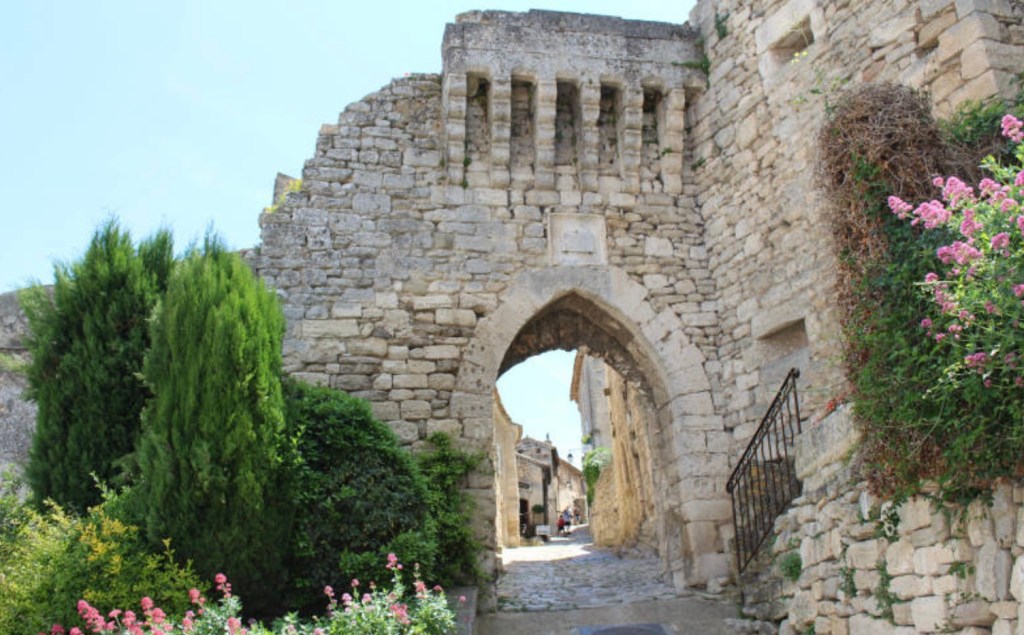
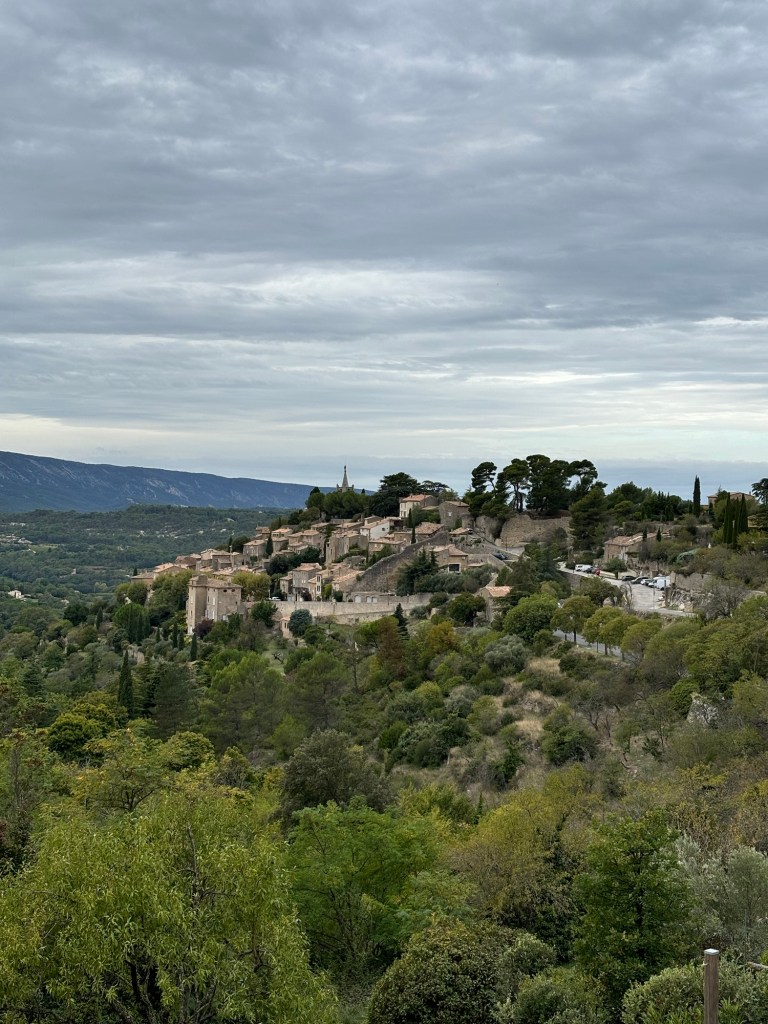
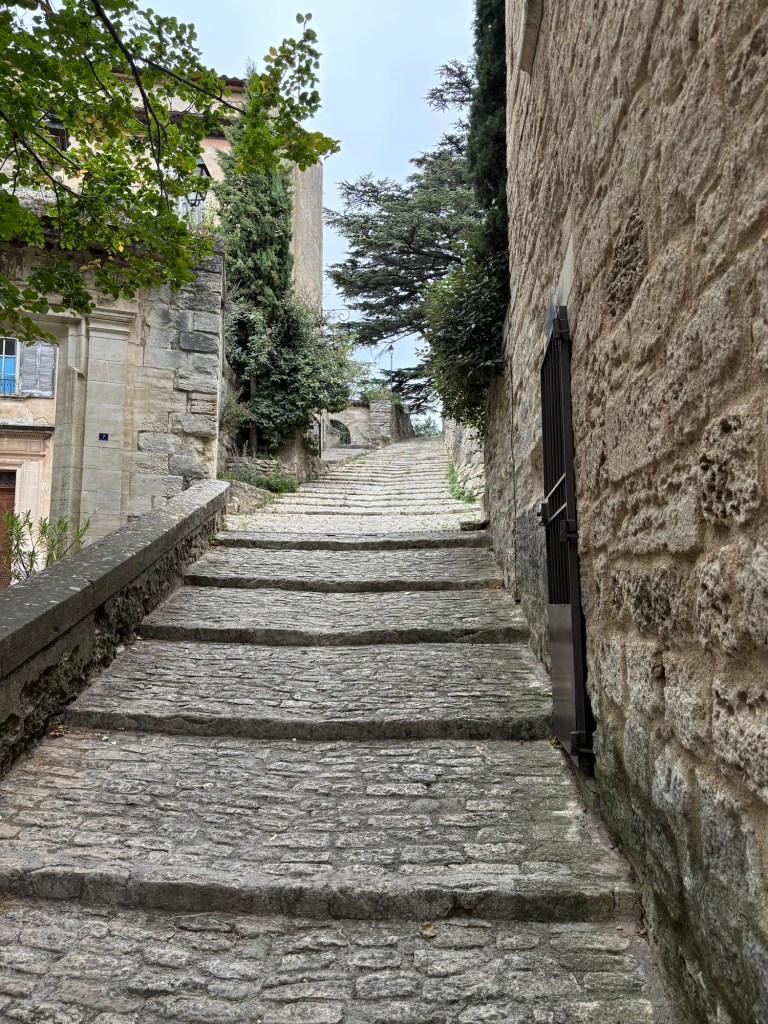
We were greeted by an enthusiastic transplanted English woman who walked us up through the entire village of Bonnieux, a 20 minute van ride from our hotel. Nary a fact or date was left out as we learned and looked at the history of this ancient enclave.

Known to have existed since at least 3 BC when the Romans built the still standing Pont Julien, the village was a compilation of narrow lane ways and ancient dwellings.
We then set off on the day’s trek heading to Buoux and the fort above it, a total of 17 Kms away.

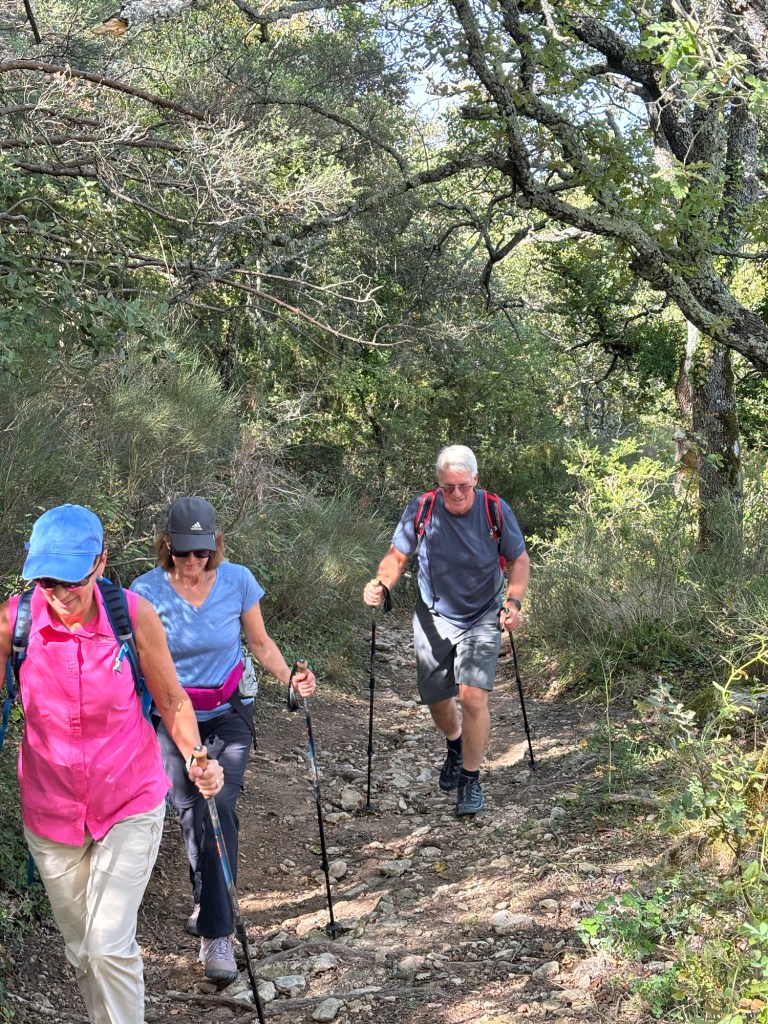
The hike covered a variety of styles of trails but most were easily handled given our use of hiking poles.
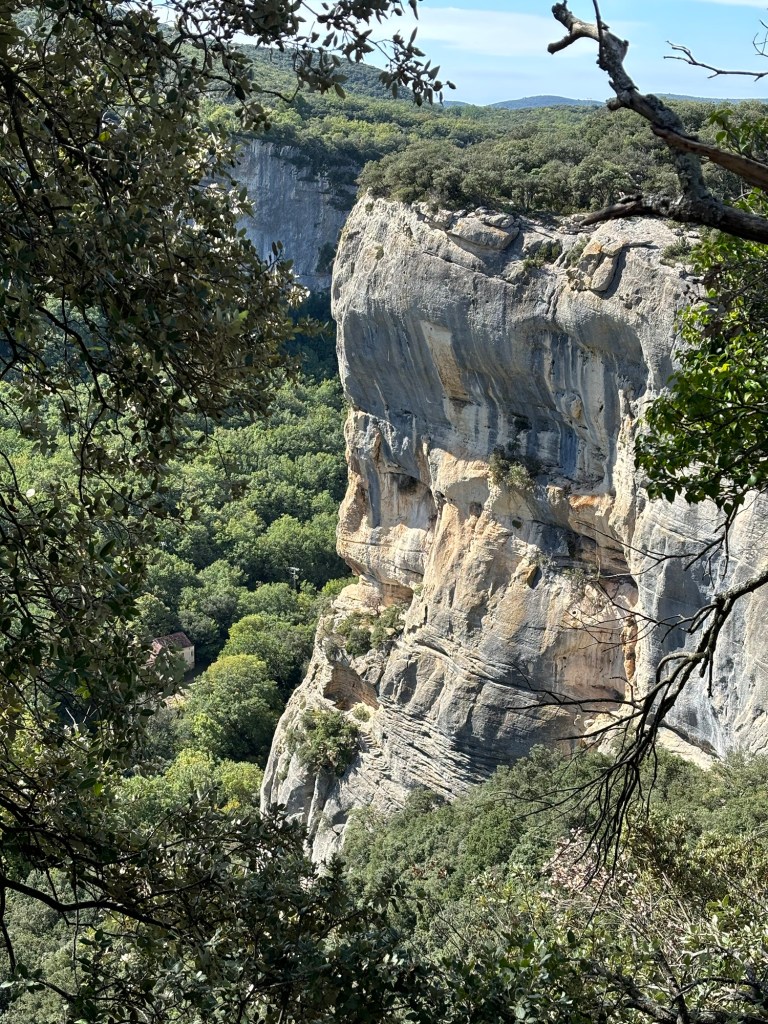
The route took us along the cliff tops overlooking parts of the Luberon Valley.

We passed through the hamlet of Buoux and descended to the valley floor where a welcomed lunch and rest awaited.

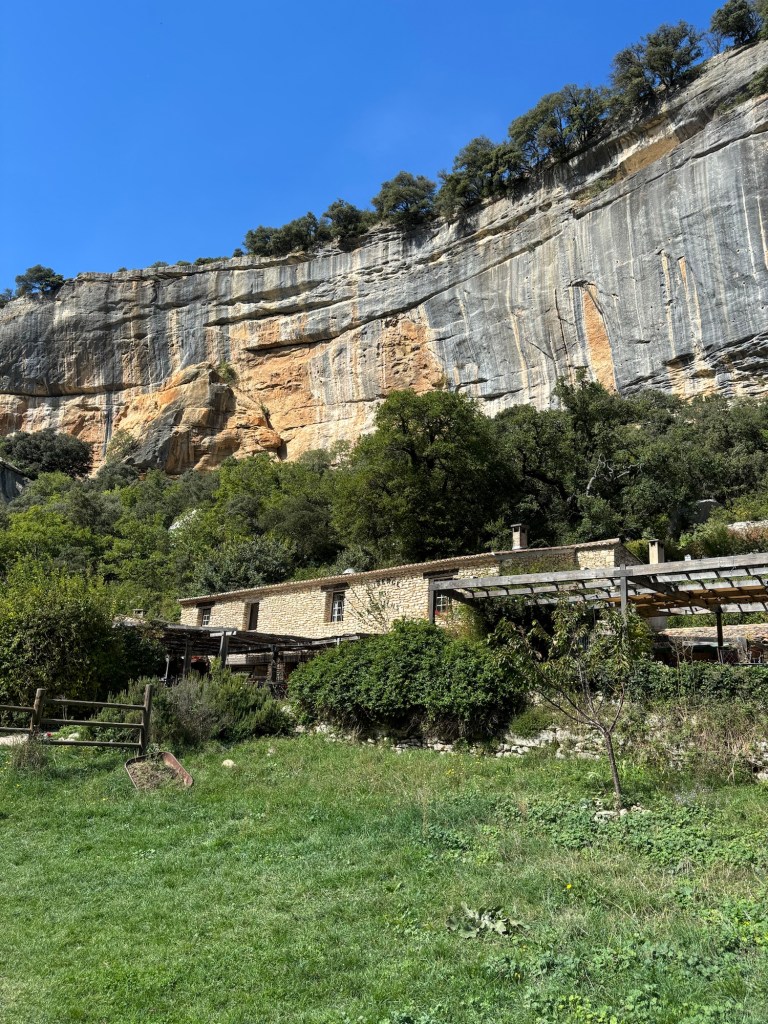
From the restaurant the canyon walls were very impressive.
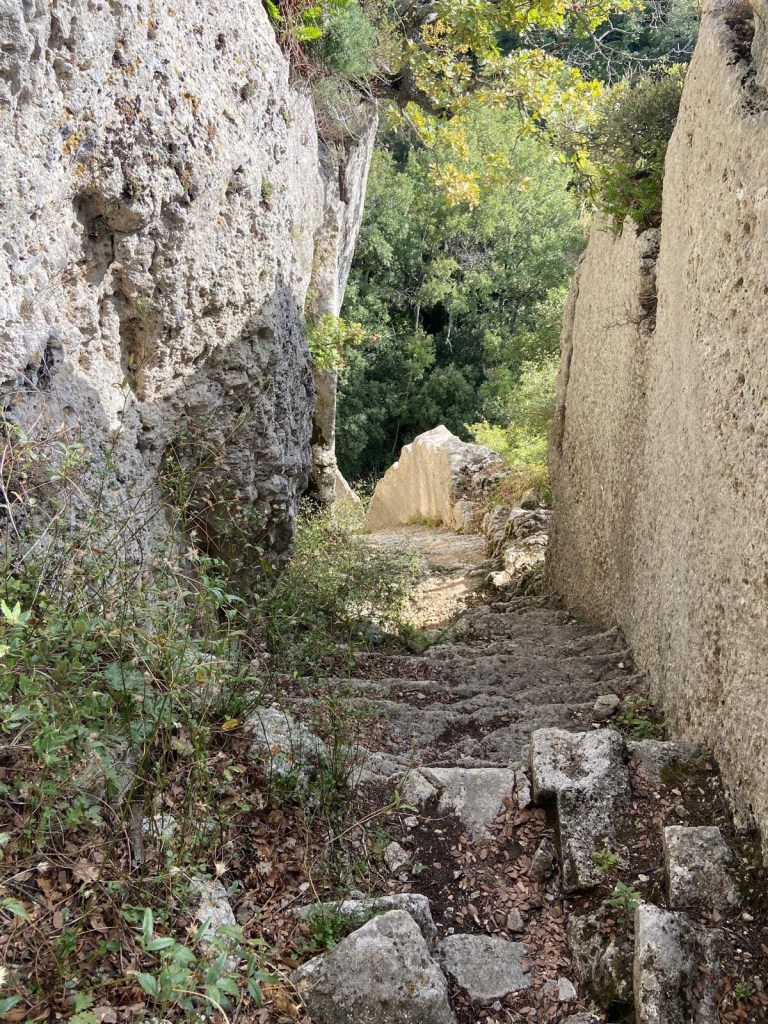
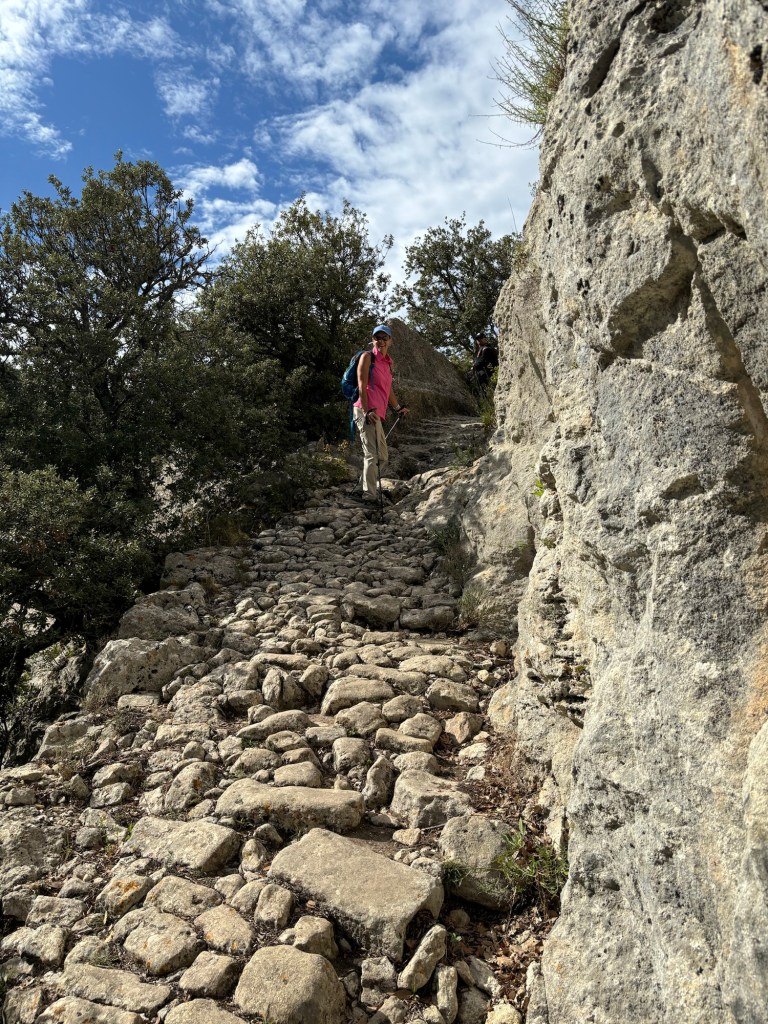
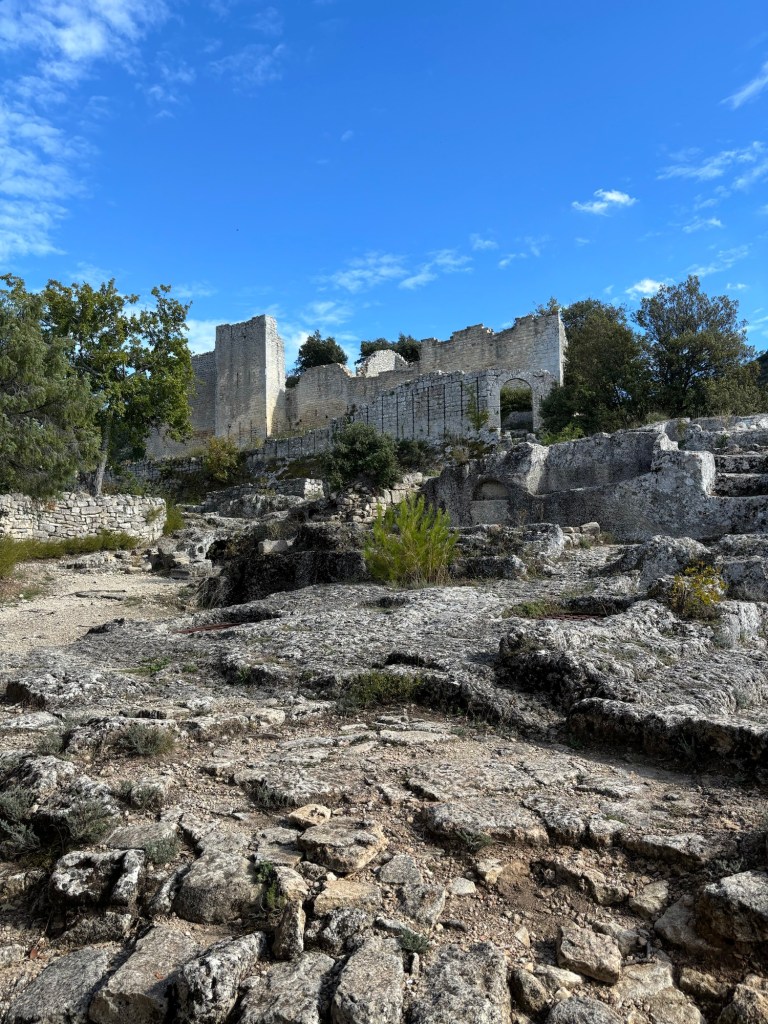
After lunch six of us chose to continue on foot up the mountain on the other side of the canyon to the remains of the 13th century fort (the rest of the group took the vans to the hotel). It was quite a challenge negotiating the rocky path while the return leg involved an incredibly steep stone staircase featuring a huge drop off on one side. Needless to say we hugged the wall!
The van met us following the descent and we were grateful to be shuttled to the hotel.

A gourmet dinner in the small town of Lumieres finished off a novel day. Tomorrow the hiking involves another mixed bag of trails as we make our way from the Pont Julien to Roussillon and Gordes before finishing in Saint Remy de Provence.
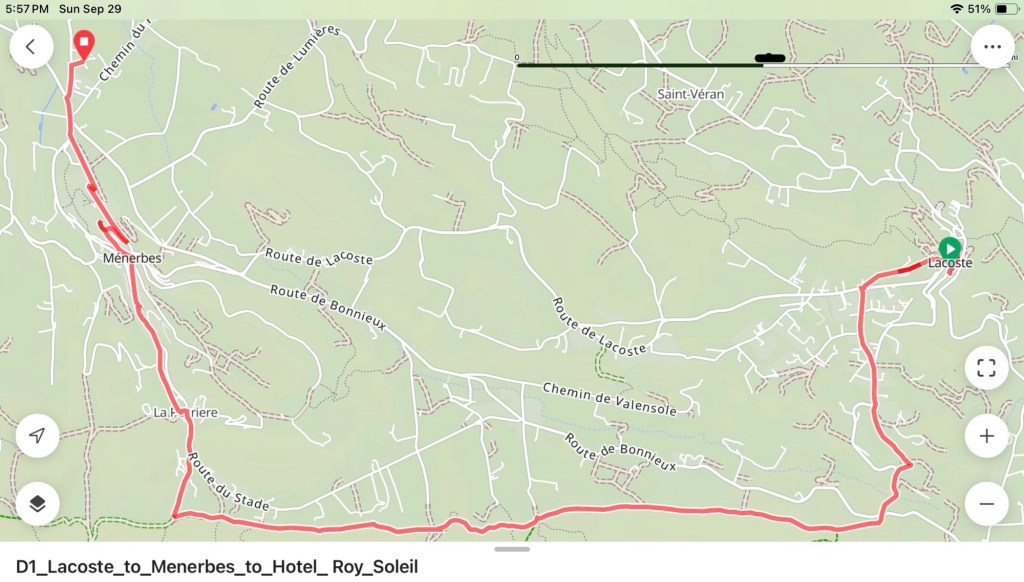
Lacoste to Menerbes

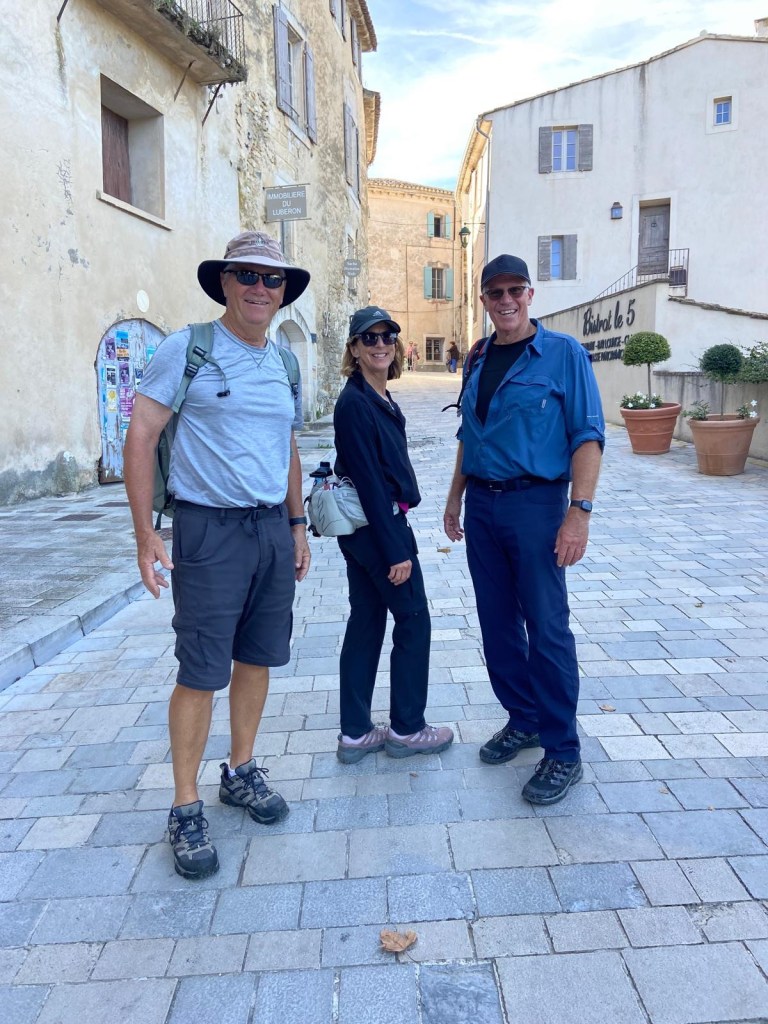
We met the tour group as well as one of our two guides at the Avignon train station. There are 16 hikers – 4 Canadians and 12 from the USA comprising a real mixture of ages and hiking experiences.

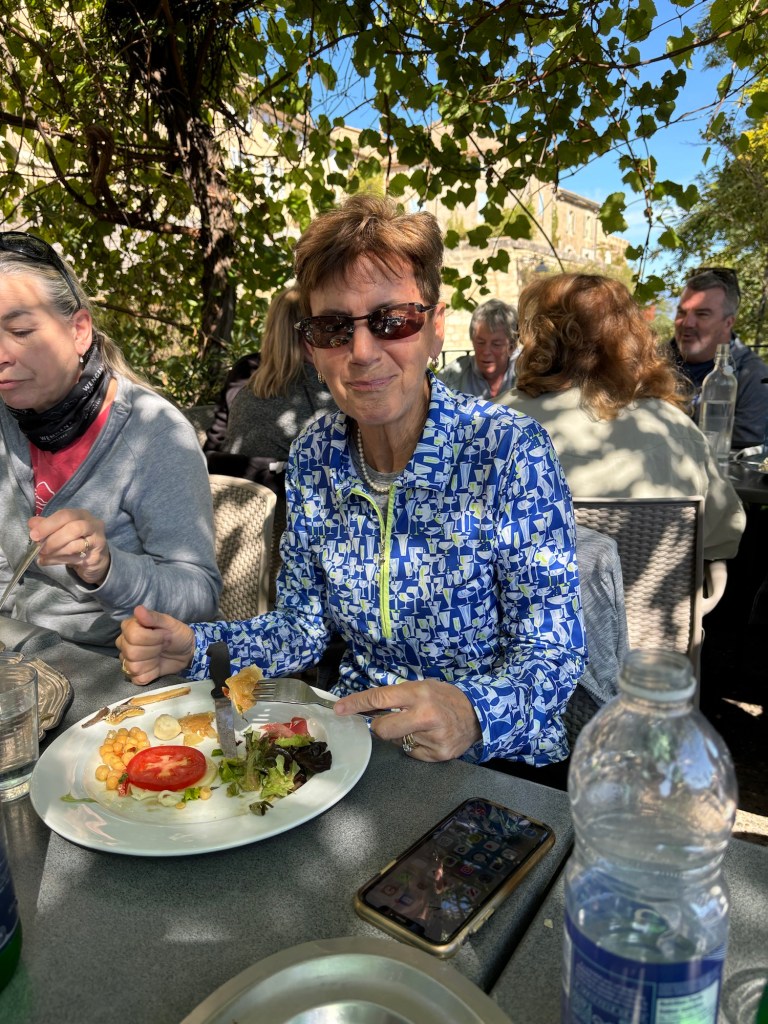
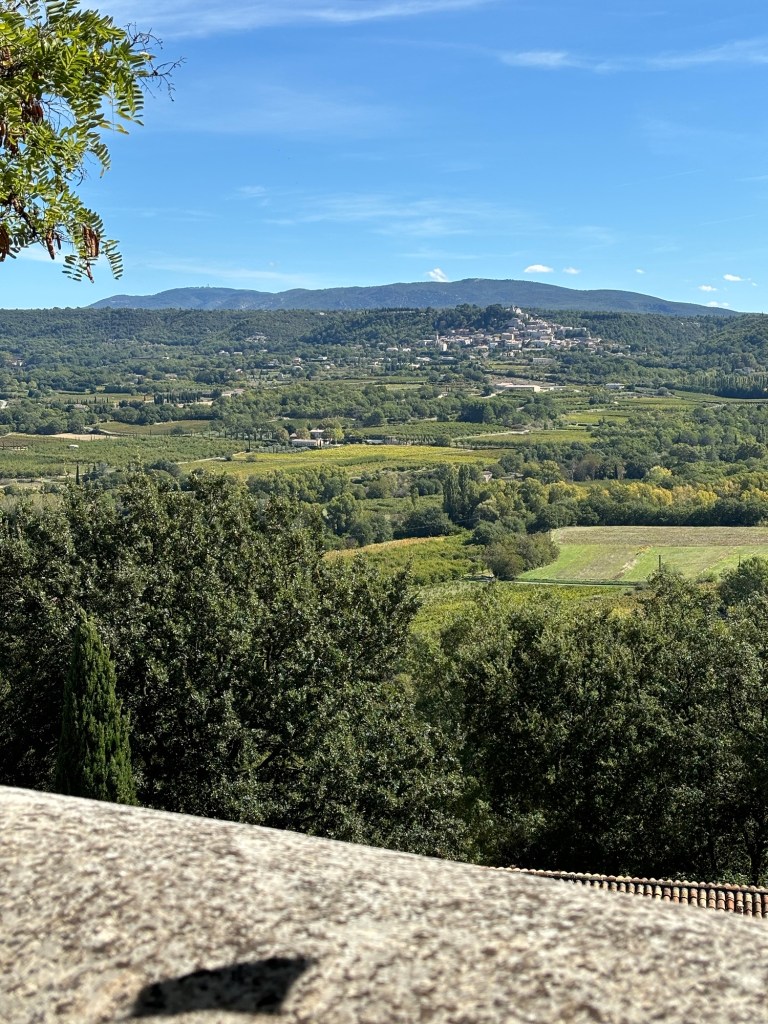
Today’s hike was a bit of a warm up comprising just over 12 Kms. But first we bussed to Lacoste, a hill top village 45 minutes east of Avignon. A delicious lunch awaited us in an outdoor restaurant overlooking a portion of the Luberon Valley.

From there we walked up into the town proper.

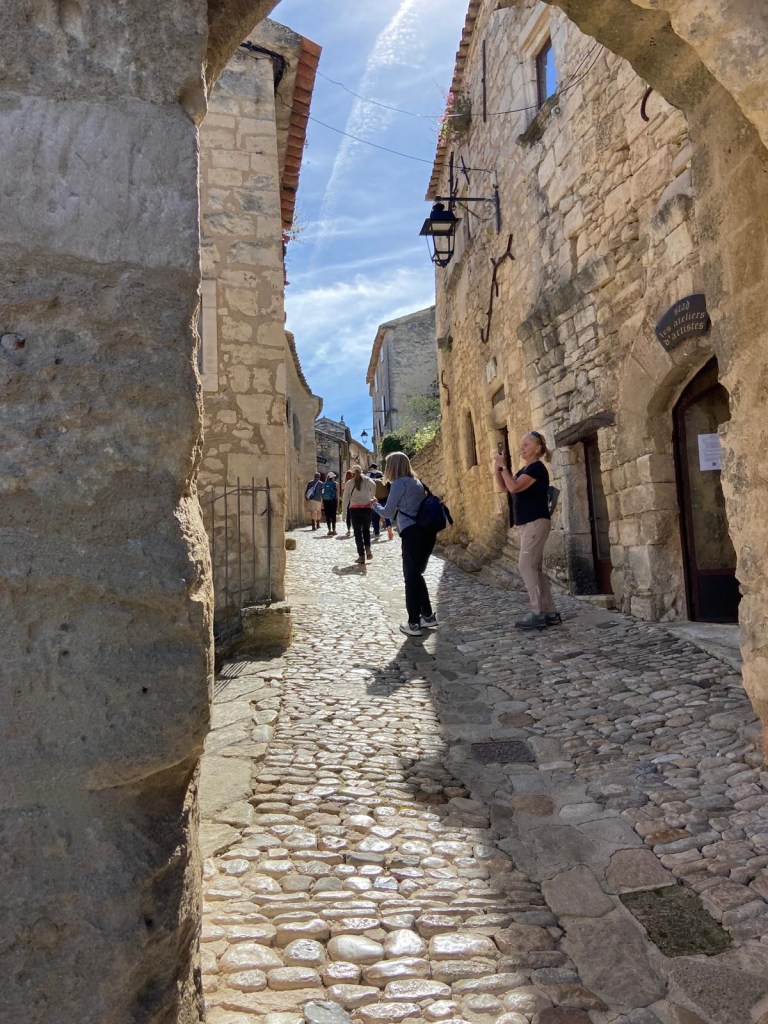
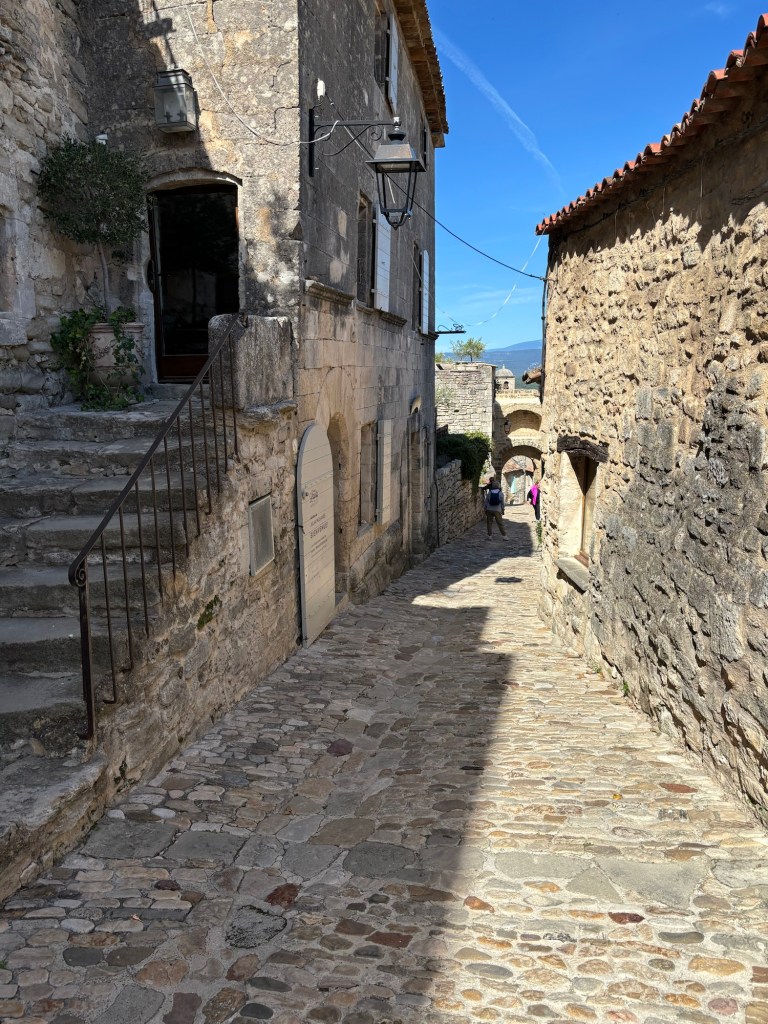
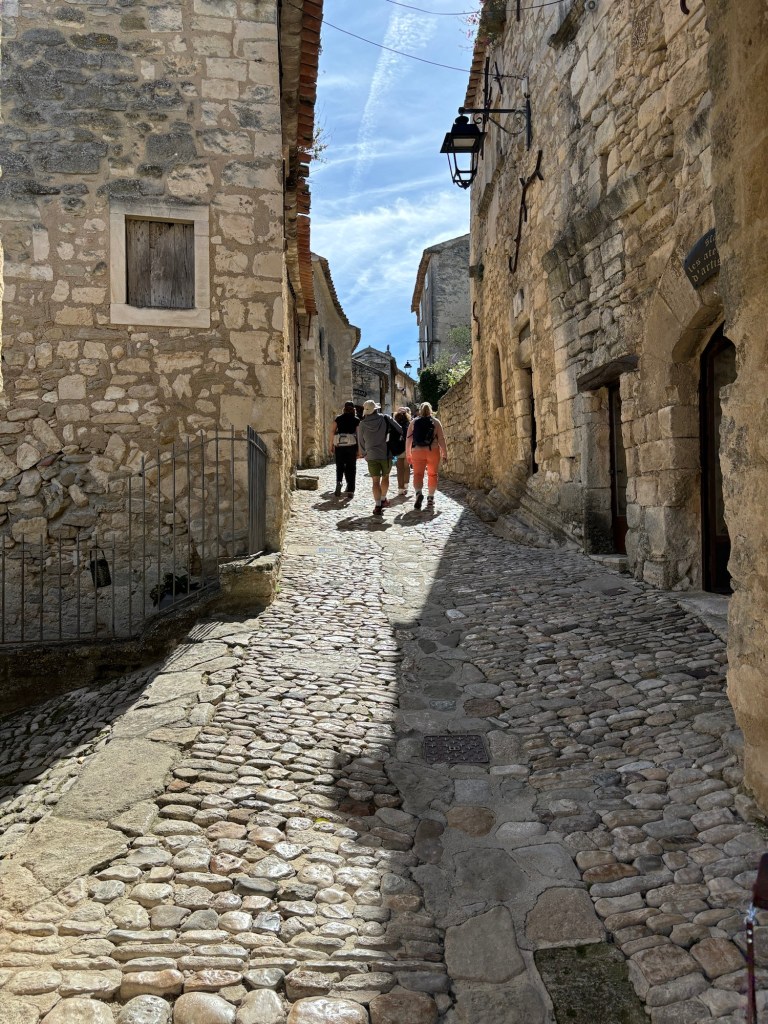
Narrow cobblestone streets and ancient buildings everywhere one looked. The climb to the top was quite steep and we shedded clothes as we went given the hot sunny weather.

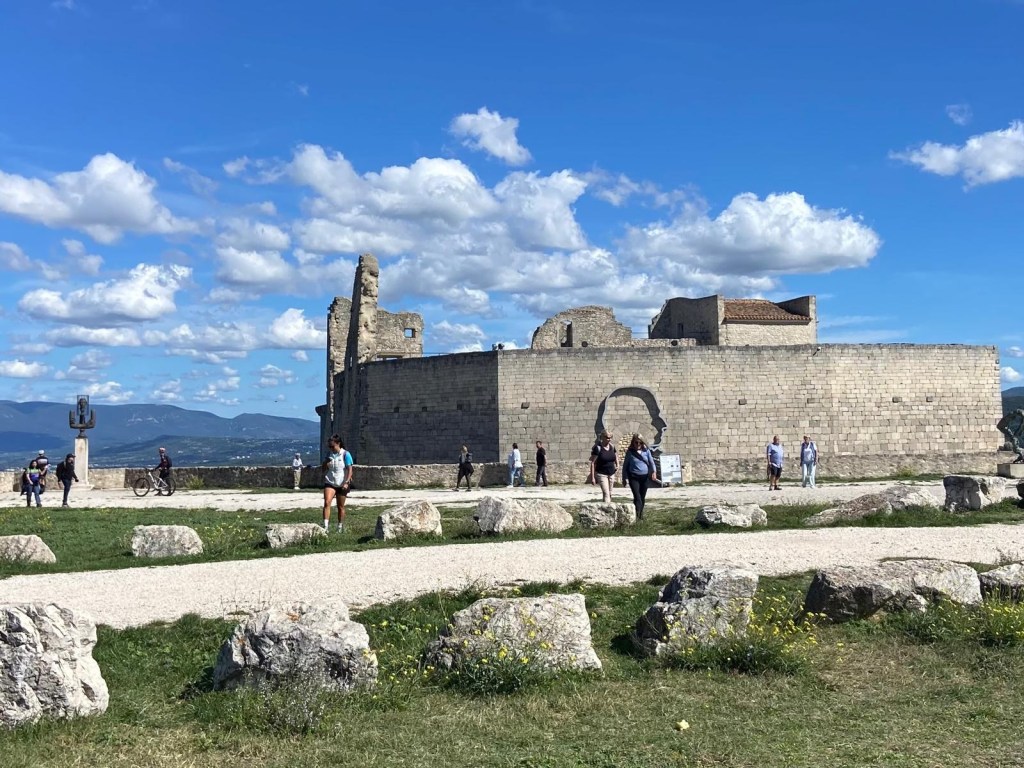
At the summit were the remains of the castle once occupied by the Marquis de Sade, the 18th century writer who spent many years in prison for his deviant and corrupt writings.

Then we began our walk/hike to Menerbes and beyond to our hotel.

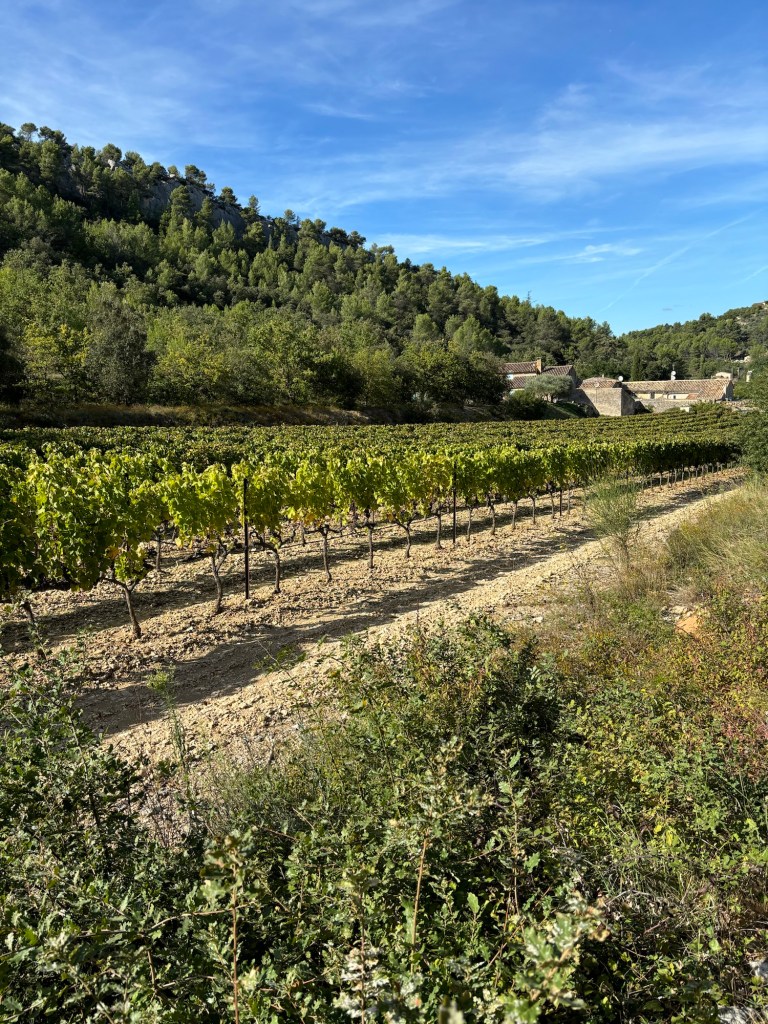
The trail was a mix of gravel roads beside farmer’s fields and the odd vineyard along with the occasional stretch of roadway.

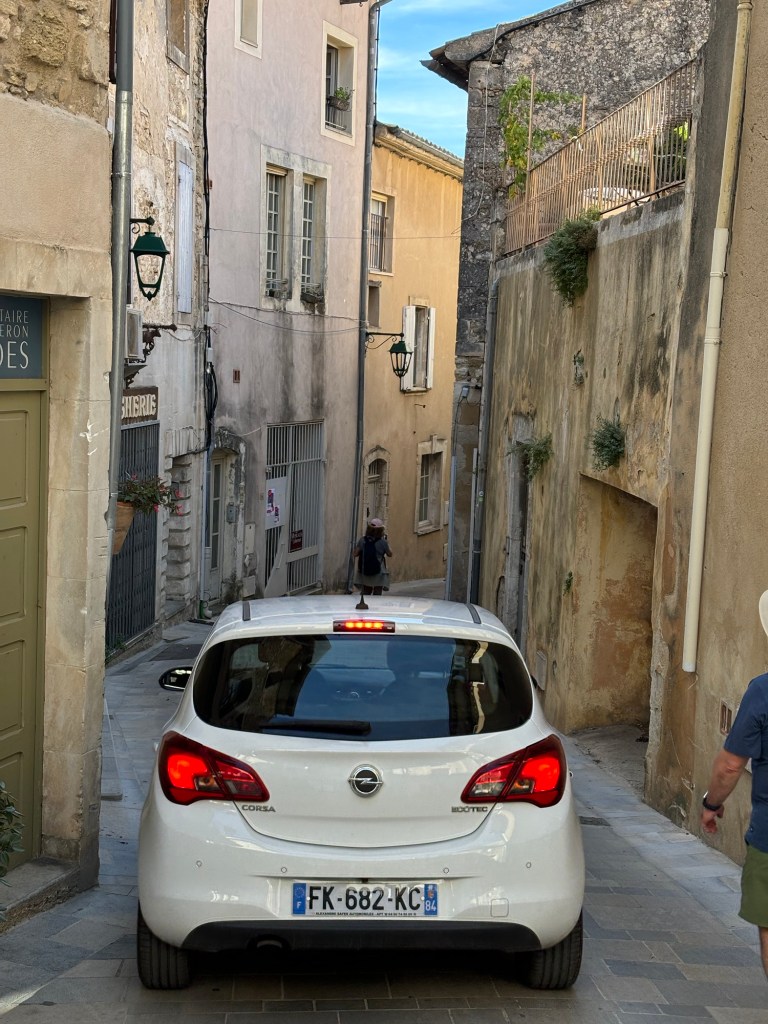
Then there was a steep climb up into Menerbes. There the roads were crazy narrow yet cars could ascend most of the way into the town.

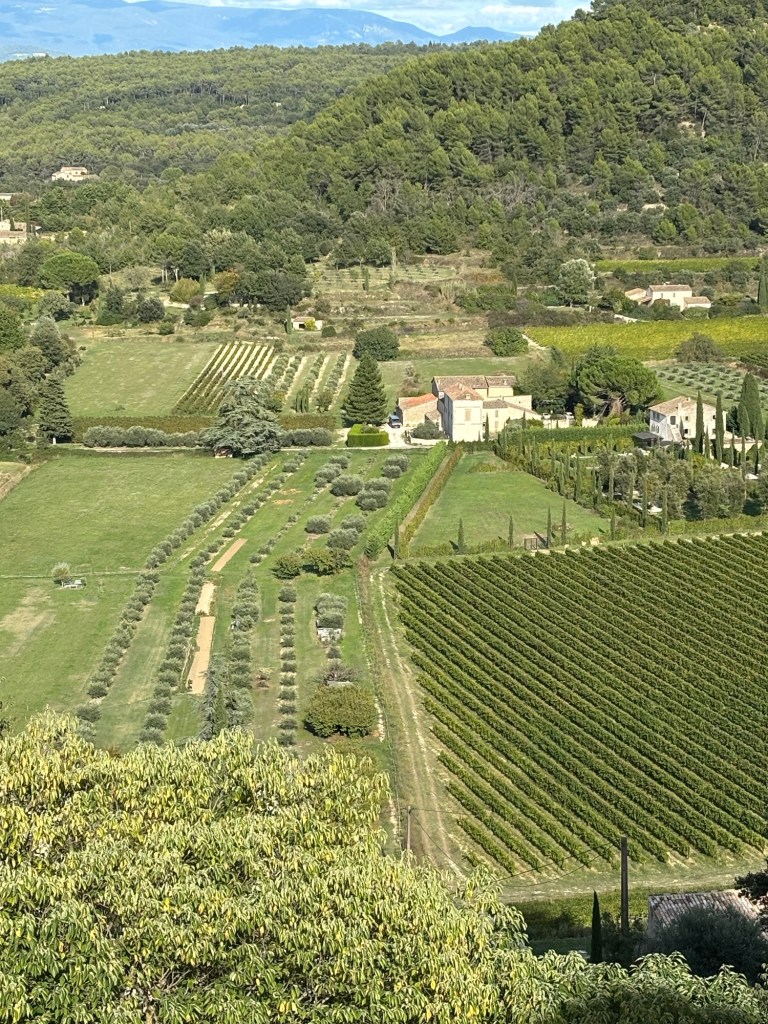
The view out over the Luberon valley was breathtaking as we wended our way down the back side of the hill/mountain to our hotel.

A very nice dinner as a group with plenty of the local wine capped off the day. Hopefully the remaining days of this portion of the trip are of the meandering type that we experienced today although tomorrow’s schedule is a bit more robust with two segments totaling 27 Kms.

Avignon

After a long overnight flight we navigated Charles de Gaulle airport and found the TVG train to Avignon. Although the seats were a little cramped the incredible speed and smoothness of the ride more than compensated.

A bit more wandering was required before we found the taxi stand and were treated(?) to a hair raising Tesla ride (103 km in a 30 zone at one point) to our hotel. Then it was off to the old town section of the city to link up with Doug & Louise Pegg (long time friends and travel buddies – Peru, Chile).

Between 1309 and 1377, during the Avignon Papacy, seven successive popes resided in Avignon and in 1348 Pope Clement VI bought the town from Joanna I of Naples. Papal control persisted until 1791 when during the French Revolution, it became part of France.
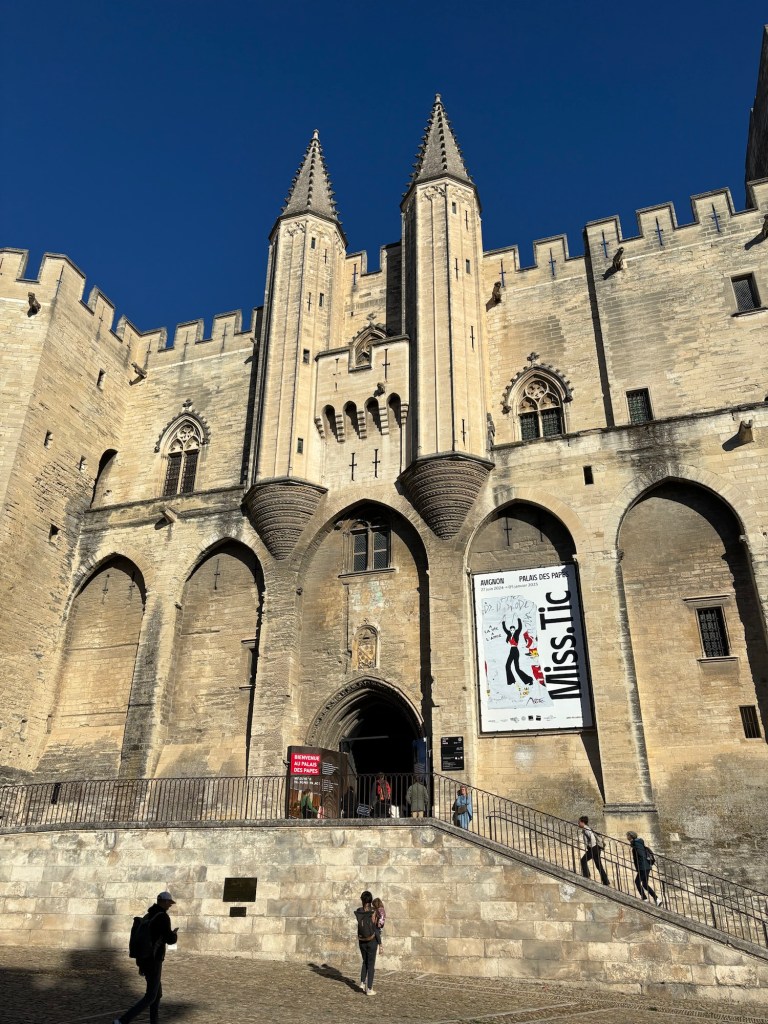
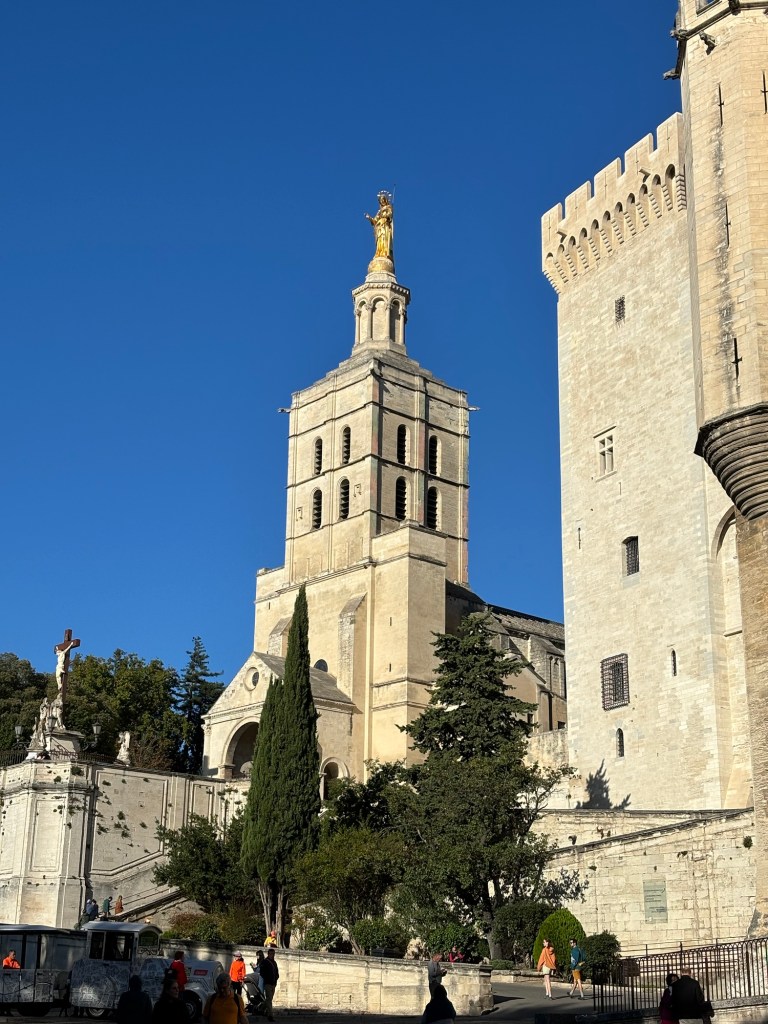
The old town is dominated by the Papal Palace.
The main square bustled with tourists despite the strong wind that had a dramatic cooling effect. We walked for a bit admiring a variety of very old buildings that surround the square.

A view from above the palace meant we could see down to the Rhône River and the famous Pont Benezet, better known as the Pont Avignon.
Built between 1177 and 1186, the bridge had 22 arches and spanned 900 meters. Destroyed during the siege of 1226, the bridge was rebuilt in stone and raised. The bridge was repeatedly damaged by floods and continually repaired. In 1668 it was deemed to be too dangerous and was closed to traffic. Today, only four arches of the original 22 remain.

A nice dinner in the old town and a less dramatic taxi ride back to the hotel ended a very long day.

Tomorrow we meet the tour and set off on our first hike which includes stopping at the castle of the Marquis de Sade. Yikes.

Planes, Trains, Boots & Bikes

Our next adventure encompasses flying to France and linking up with a small group of like minded travellers in Avignon to hike around the southern area of Provence before relocating to the Costa Brava in Spain for more hiking. From there it’s on to Barcelona for a quick visit before taking an express train to Madrid where bicycles await for a week of cycling across the north of Spain ultimately landing in Porto Portugal.

Parts of me are sore and starting to chafe just reading the detailed itinerary of the trip.

Week One.

Week Two

Hopefully the physical exertions won’t preclude enjoying the countryside, culinary delights and local wine. Stay tuned.

Driving On Irish Roads

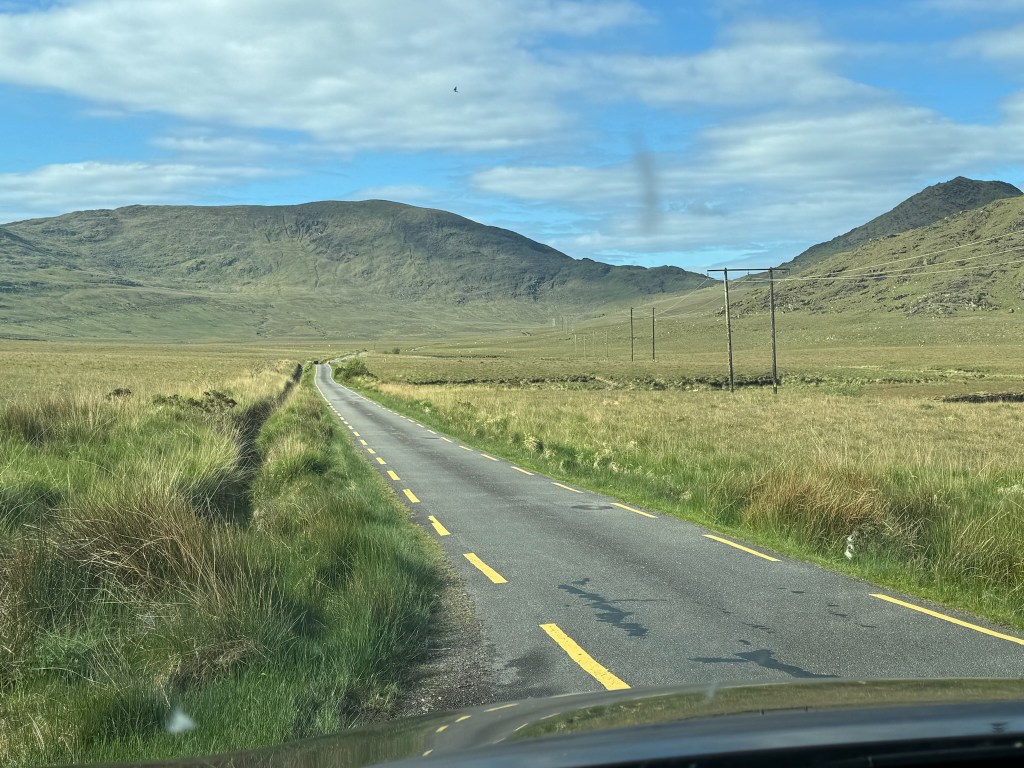
To fully appreciate the following description of the roads in Ireland, please first find Robin Williams monologue of golf on You Tube. My post will then make more sense. I’ve tempered the language to appeal to all audiences. You make the appropriate substitution.

This is a conversation between two Irishmen in advance of creating the road system. One is asking the questions, the other is responding.

So you know that people will want to move about the country to see family, shop and get to their fields.

Oh aye. Let’s build some roads to help them.

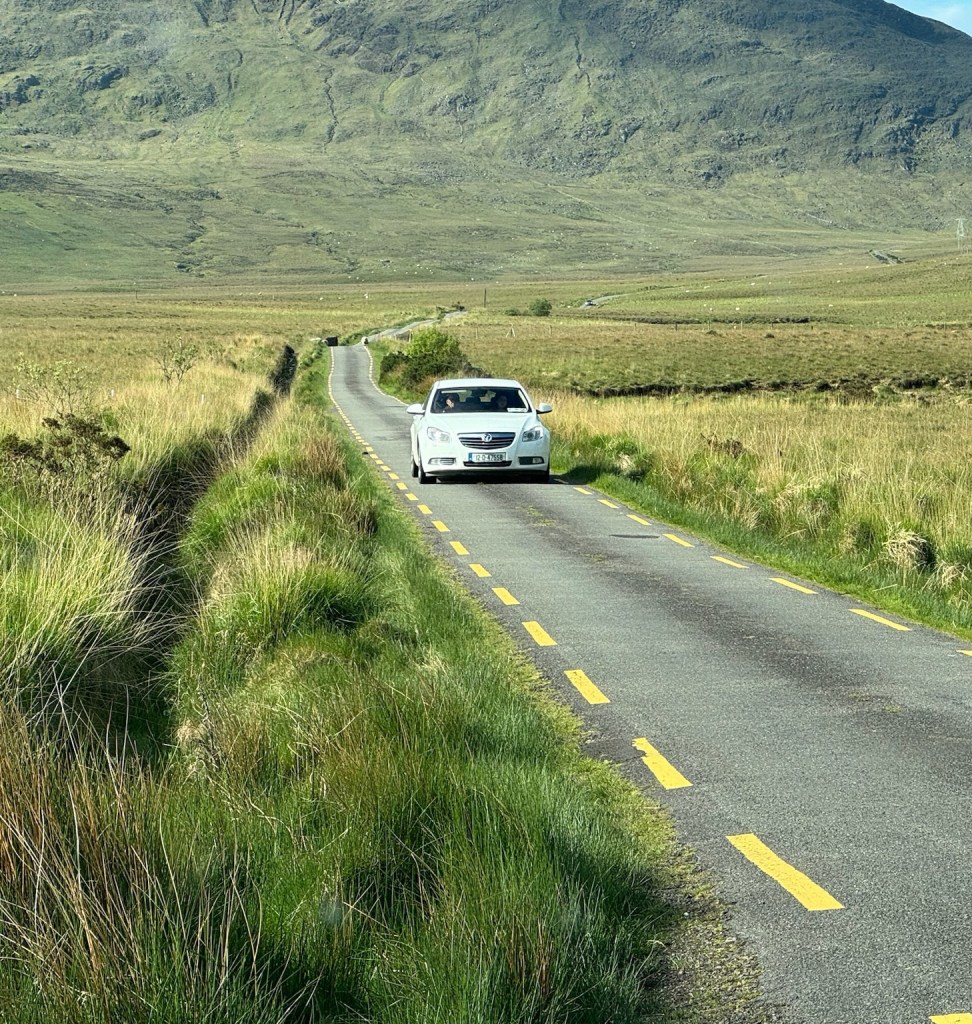
So the road will be sufficiently wide to let two cars pass comfortably in opposite directions.

Ack noooooo. Why make it so simple.

So what about having a shoulder to the road?

Ack noooo. That’s just a waste of pavement.

Well at least we can add space at the edge of people’s property.

Ack nooooo. People need to build stone walls right up to the edge of the road to have the biggest lawn possible.

Well what about telephone poles? They should be set back from the road.

Ack nooooo. Let’s put them on the edge of the road just because.

OK but then we should trim the hedges so one can see all the road.

Ack noooo. Let the hedges grow as close as possible so they can appreciate Irish greenery as it slaps the outside mirrors.

Alright but what about lines on the road to show the edge and middle of the road?

Ack noooo. That’s just a waste of paint. Let them decide what’s their side.

Given all the rolling countryside it will be easy to build roads in a straight line.

Ack noooo. We’ll put in dozens of tight, blind turns just to see what the driver is made of.

We will have to build separate roads for the farm tractors to move from field to field.

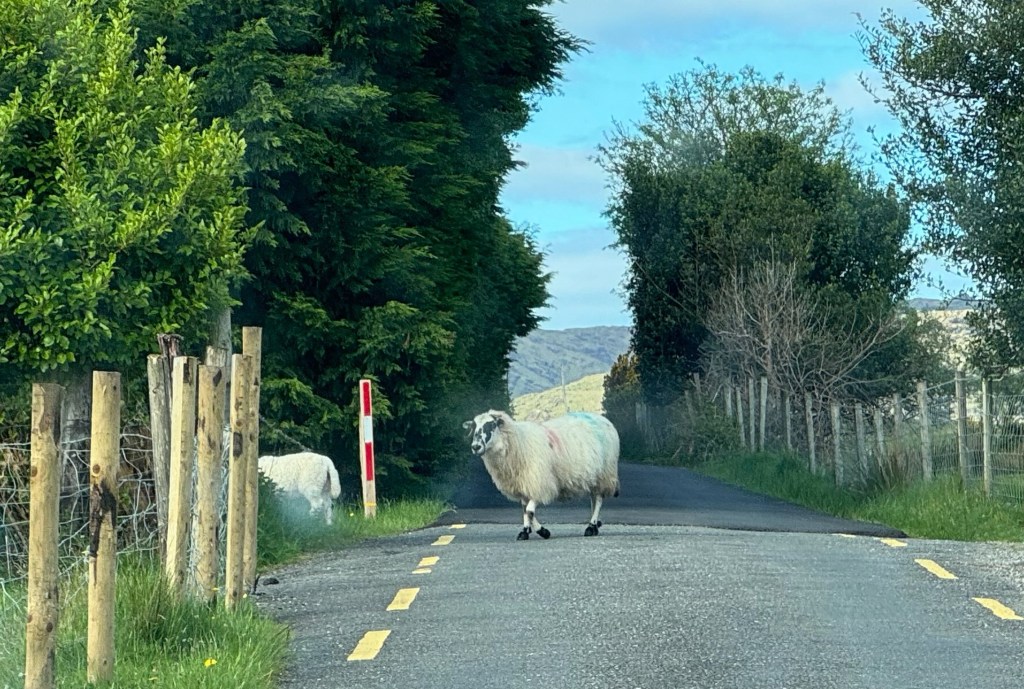
Ack noooo. Let the big buggers go where they want and at whatever speed they want.

So given all of these building ideas of course we’ll have a low speed limit to make it safe.

Ack noooo. The greater the speed the more fun. In fact, let’s give a country lane a speed limit of 100 KPH just to bring it all together.

One final question. Since most of the world has left hand drive we should follow suit.

Ack noooo. Let the foreigners figure it out as they go so we can send them home shaking their heads.

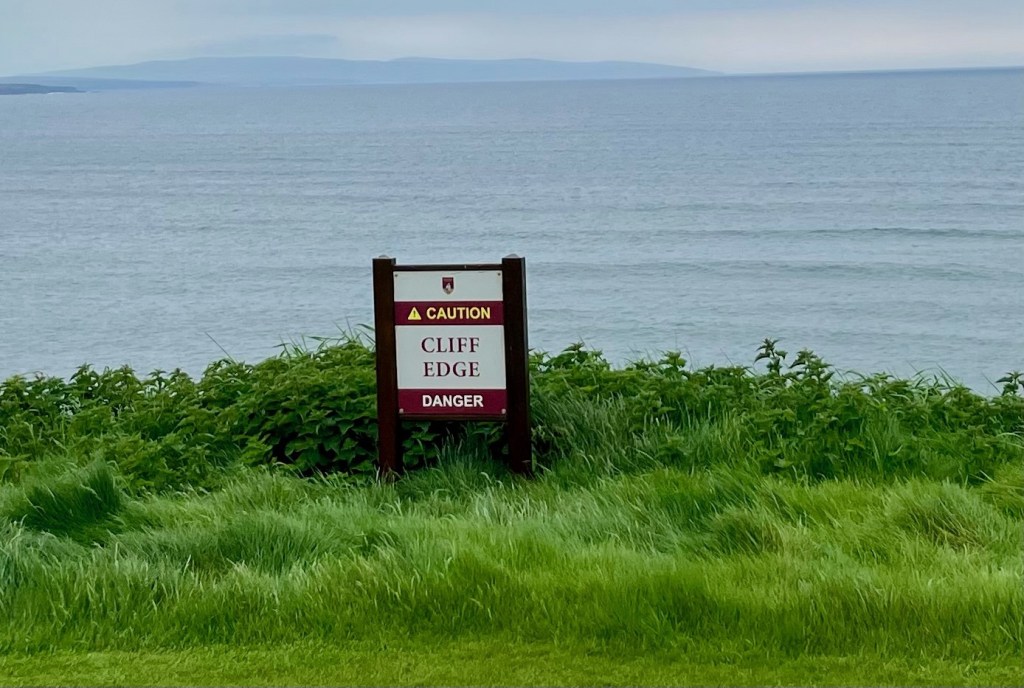
Having “survived” nearly a month driving a rental car on the “wrong” side, going down country lanes with ridiculously limited pavement, having zero visibility past hedges and sharp curves and facing oncoming cars doing the insane posted speed limit, we look forward to heading home in one piece. Ironically the Irish rental car system charges a daily insurance fee even if you decline any coverage. I guess their experience knows better. Safe travels to anyone who takes on the Irish road system. Cheers.
The European Club

Our penultimate day in Ireland meant M&M went off to play one final round of golf while P&G extended their Pit Day in Kilkenny. We planned to reunite in Dublin at days end for dinner.

The European Club is the brainchild of Pat Ruddy, one of Ireland’s most prolific course designers. He began as a golf writer then morphed to publishing a golf magazine before taking on golf architecture. His dream was to build his own links course which he finally achieved in 1992 having discovered the perfect landscape in Brittas Bay south of Dublin in the early 80’s.

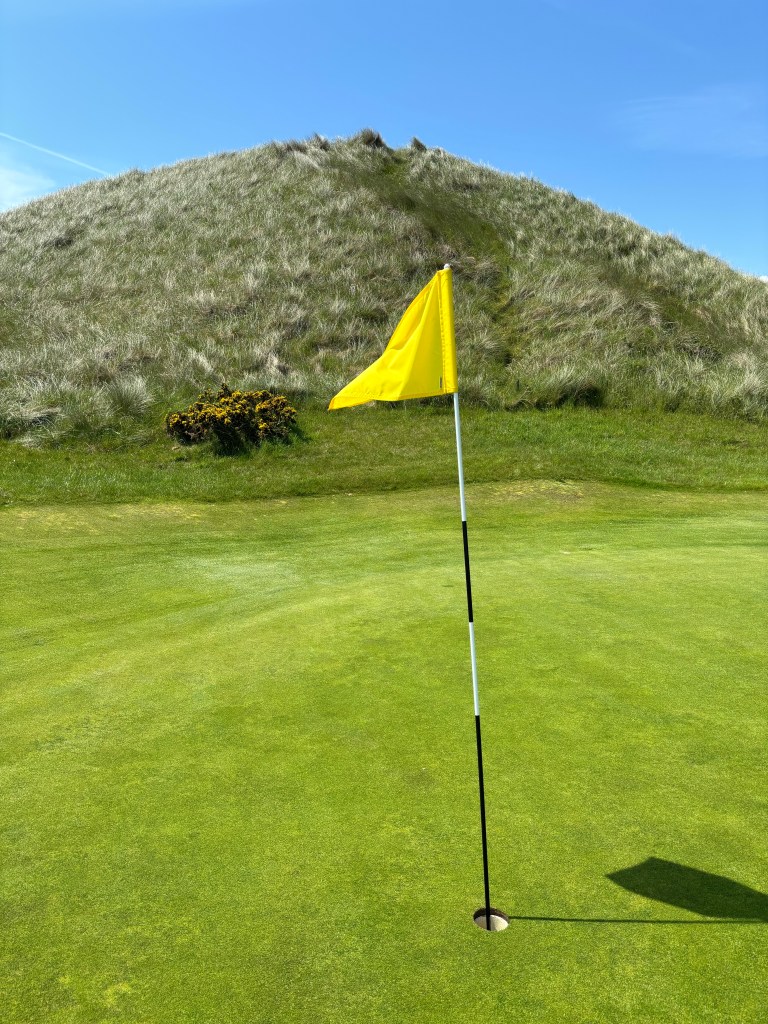
A version of an Irish Standing Stone complete with a golf ball

We had the pleasure of meeting Mr. Ruddy on the first tee and enjoyed ten minutes of his story telling and humorous antidotes. His pride in what he created and spent the past 30 years tweaking to improve was very evident. Then it was into the teeth of what transpired to be the most challenging and strategic course I’ve faced, maybe ever.

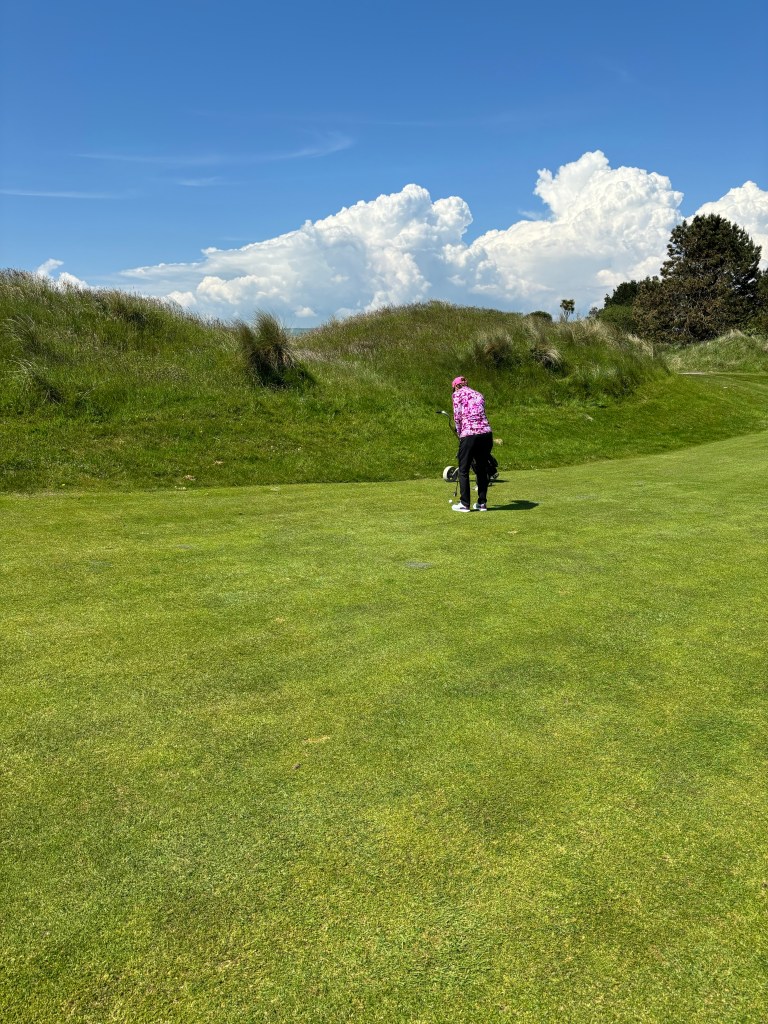
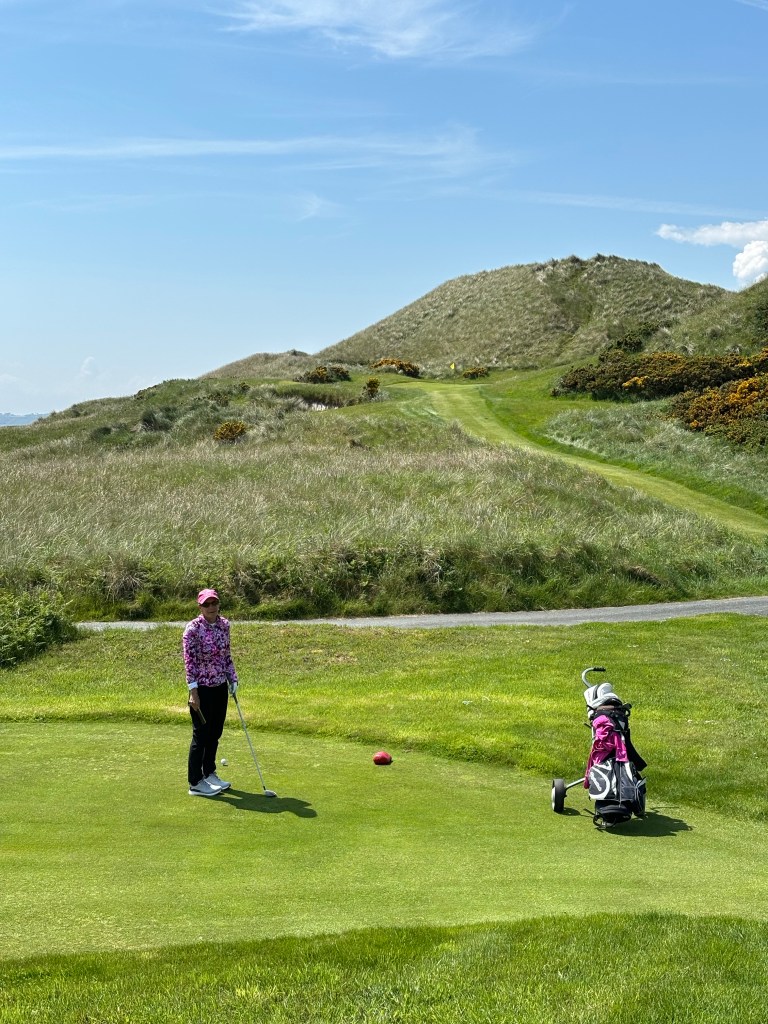
The club does not have nor permit caddies so if you wish to walk, versus take a cart, it’s carry or pull. We chose the latter given it was not just sunny but hot (22C/72F). Our fabulous weather record continues.

Last round meant wearing the Irish Green

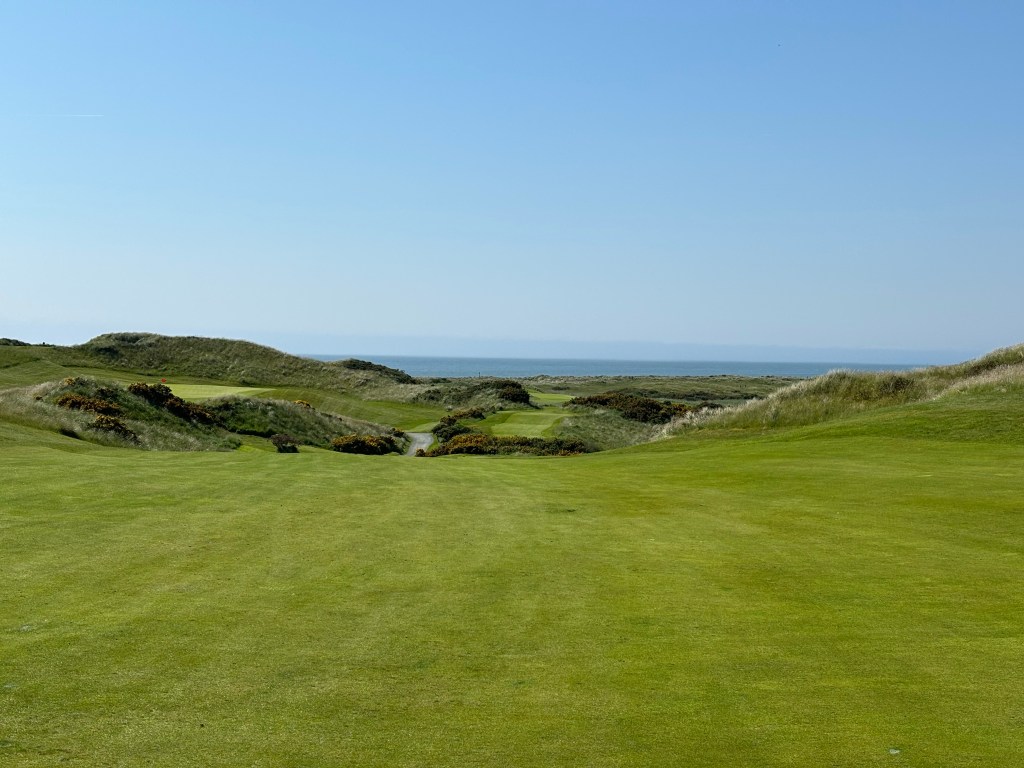
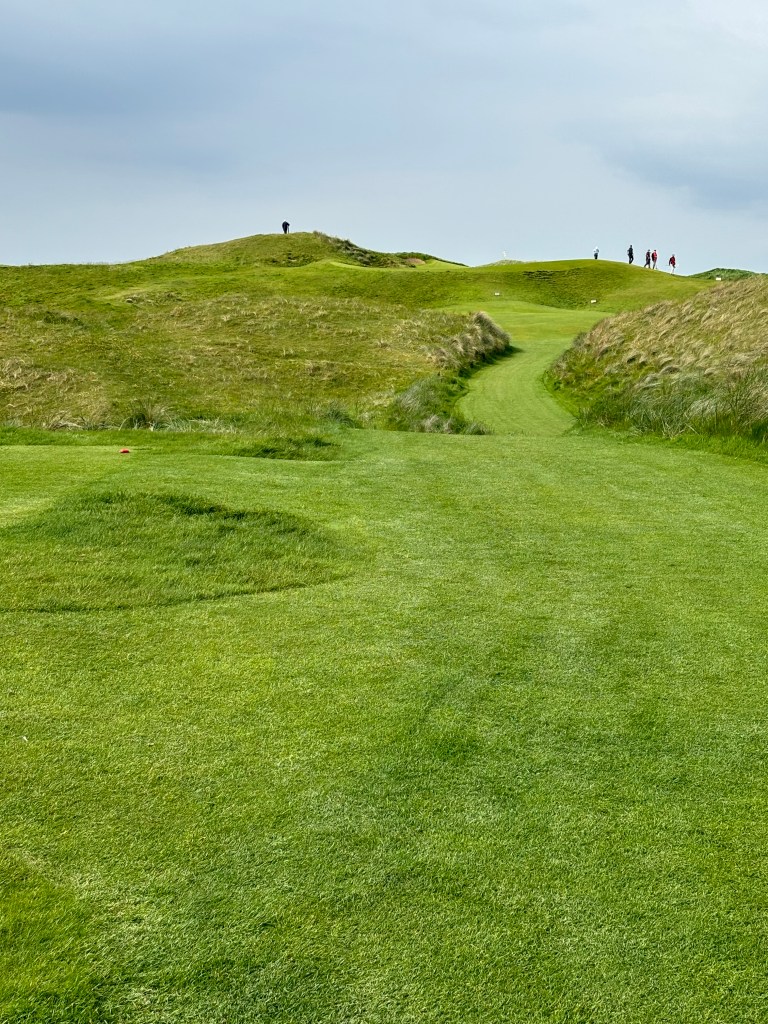
Ruddy’s design philosophy is to make you think on the tee because the view presents a dilemma of what shot length, direction and shape to play. In his words, “much is calculated deception inducing white knuckles on the club.” Objective achieved!

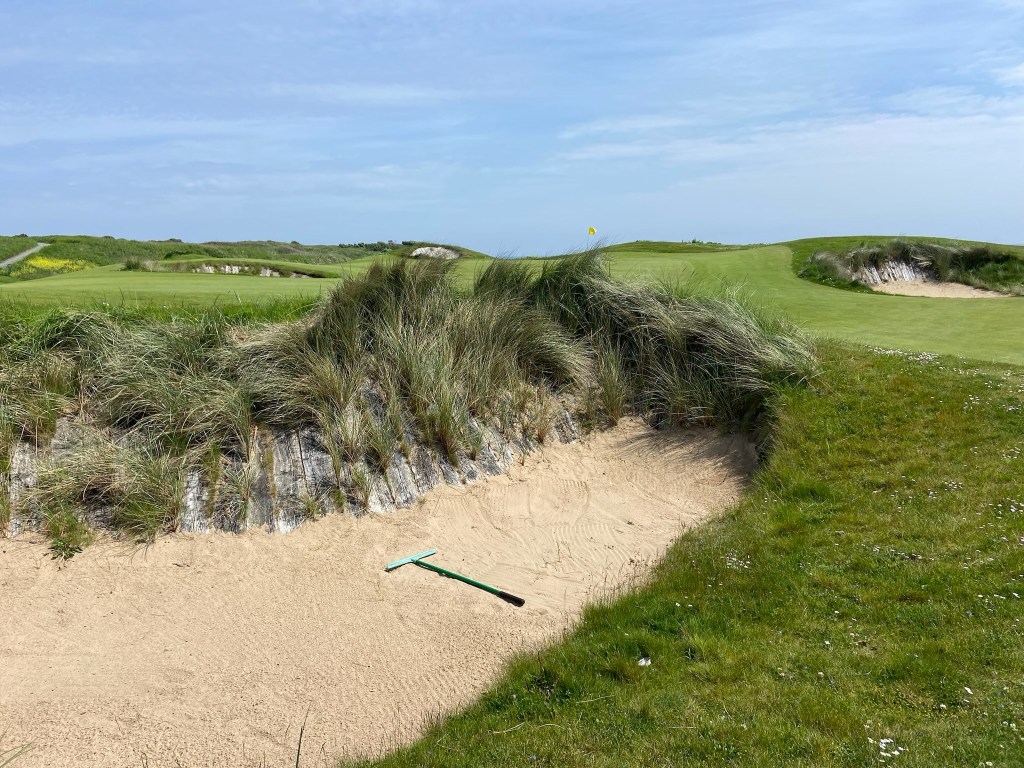
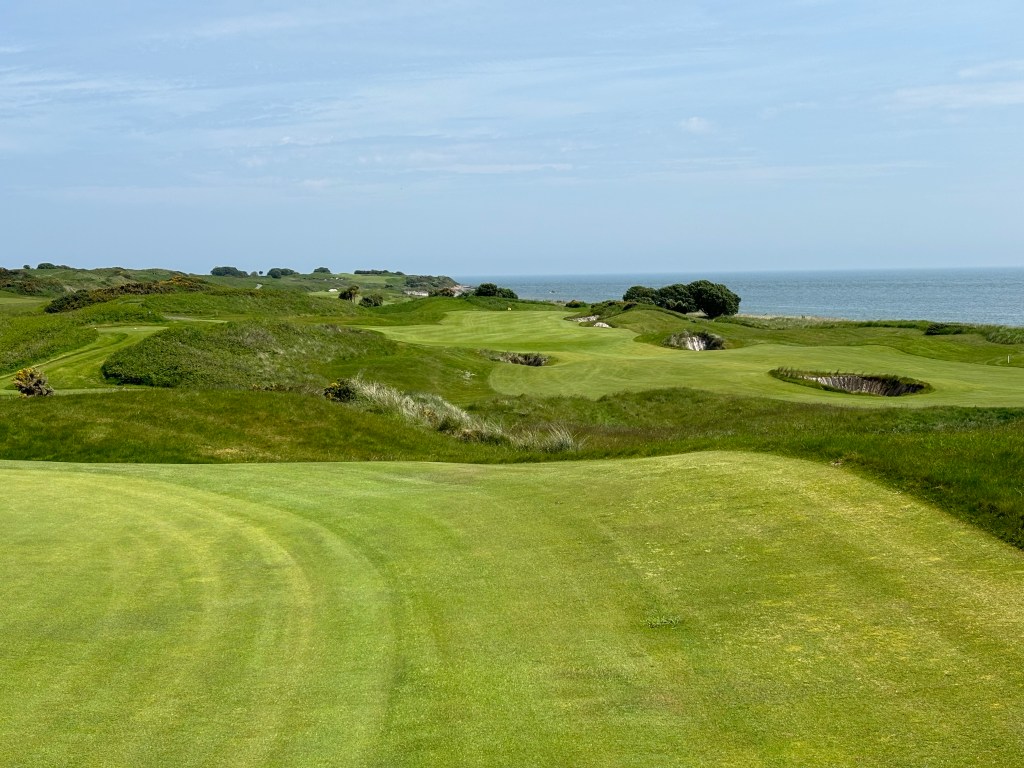
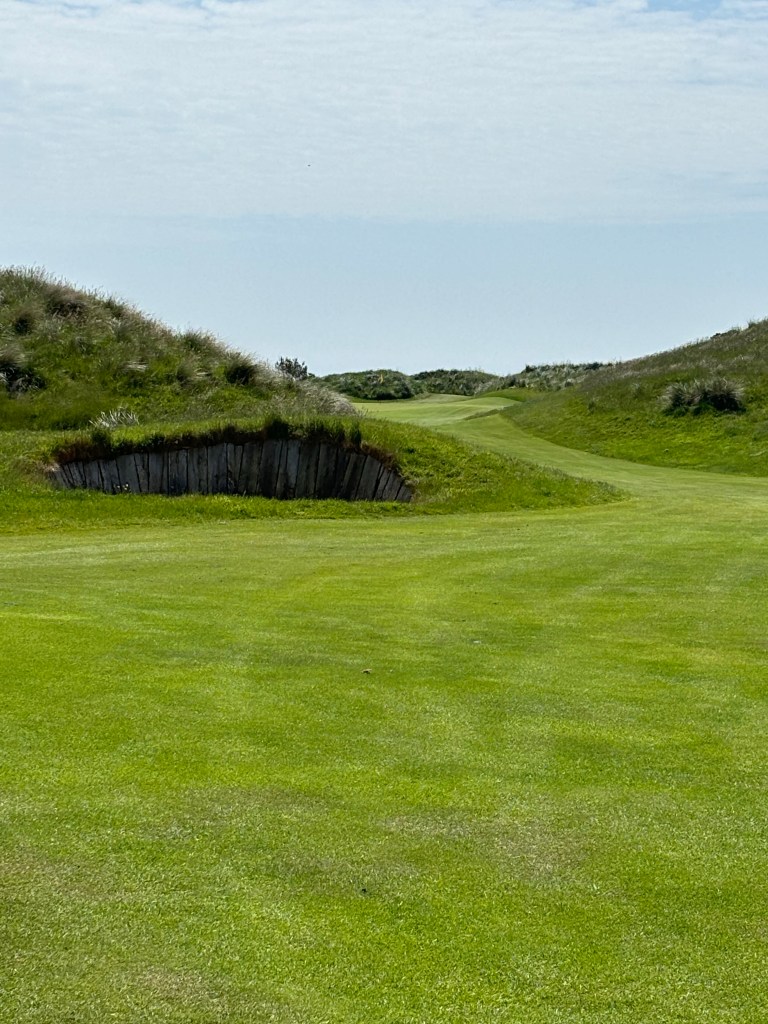
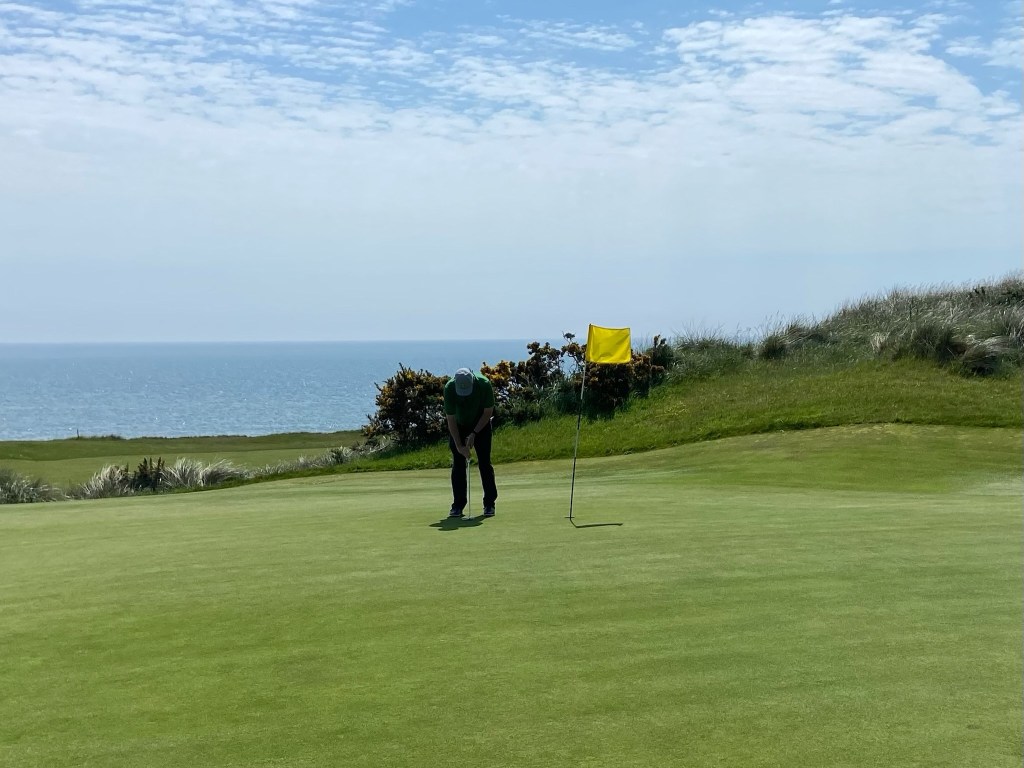
A unique feature are the incredible bunkers. Extra deep to stop the sand blowing away, faced with vertical wooden bulkheads, topped by 2 – 3 foot eyebrows where you could lose a ball.

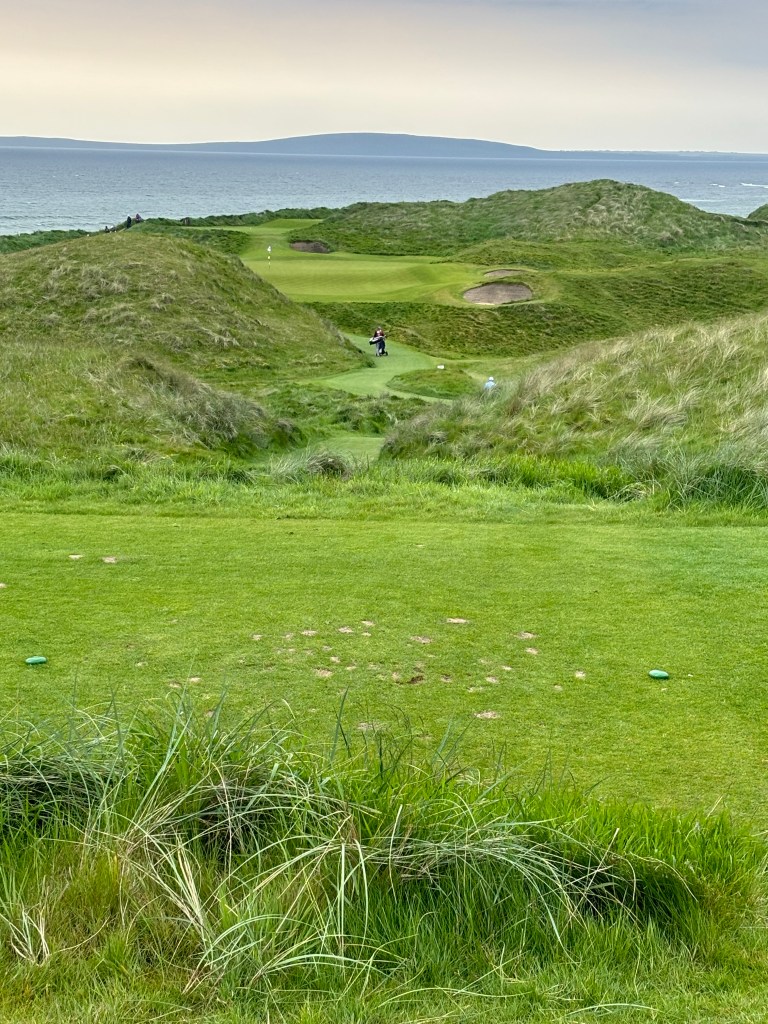
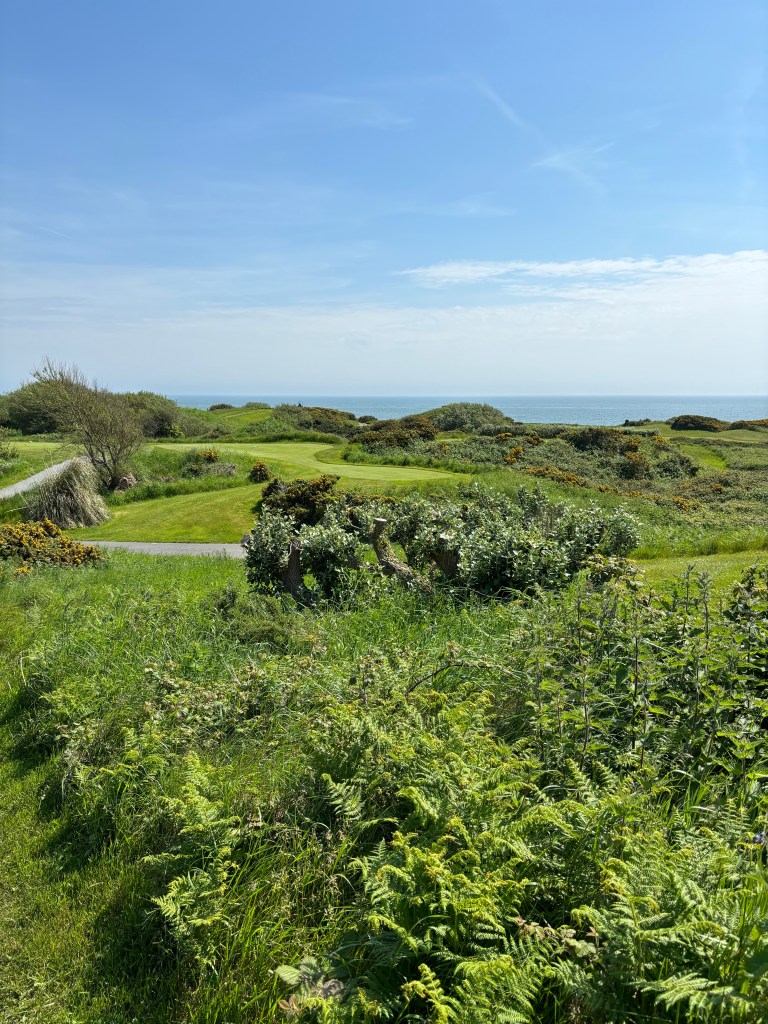
The course runs along the Irish Sea and up and down a series of dunes.

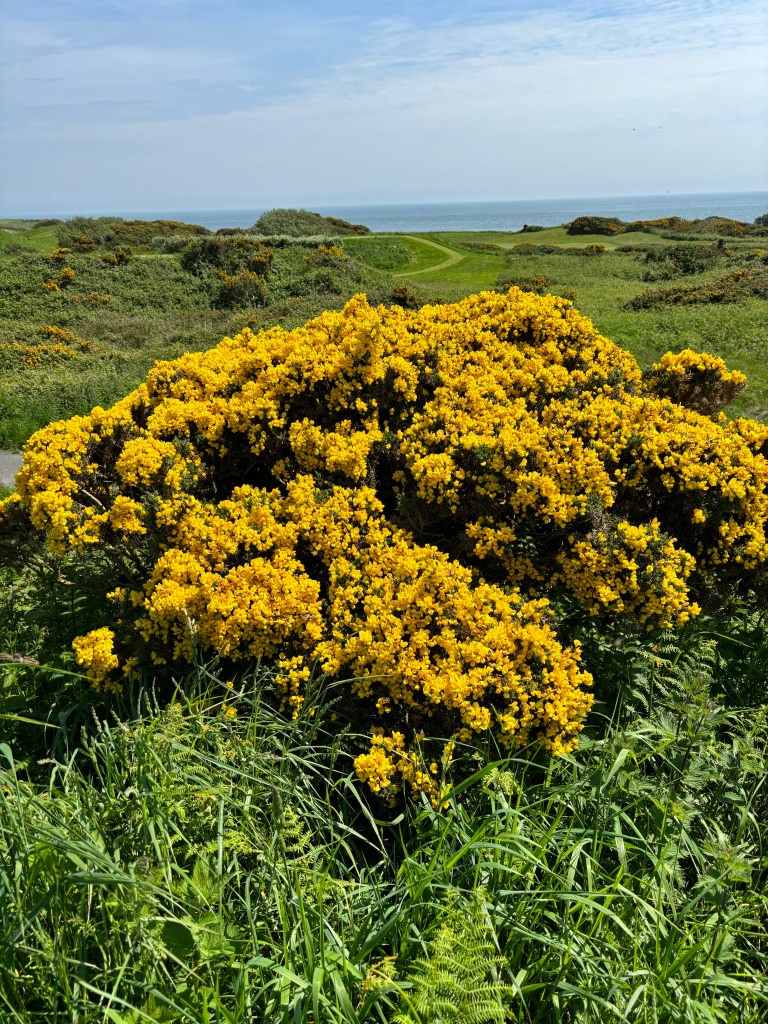
The flowering season of the gorse is coming to an end but one bush in particular was incredible. A beautiful but viciously thorny plant that attracts golf balls.

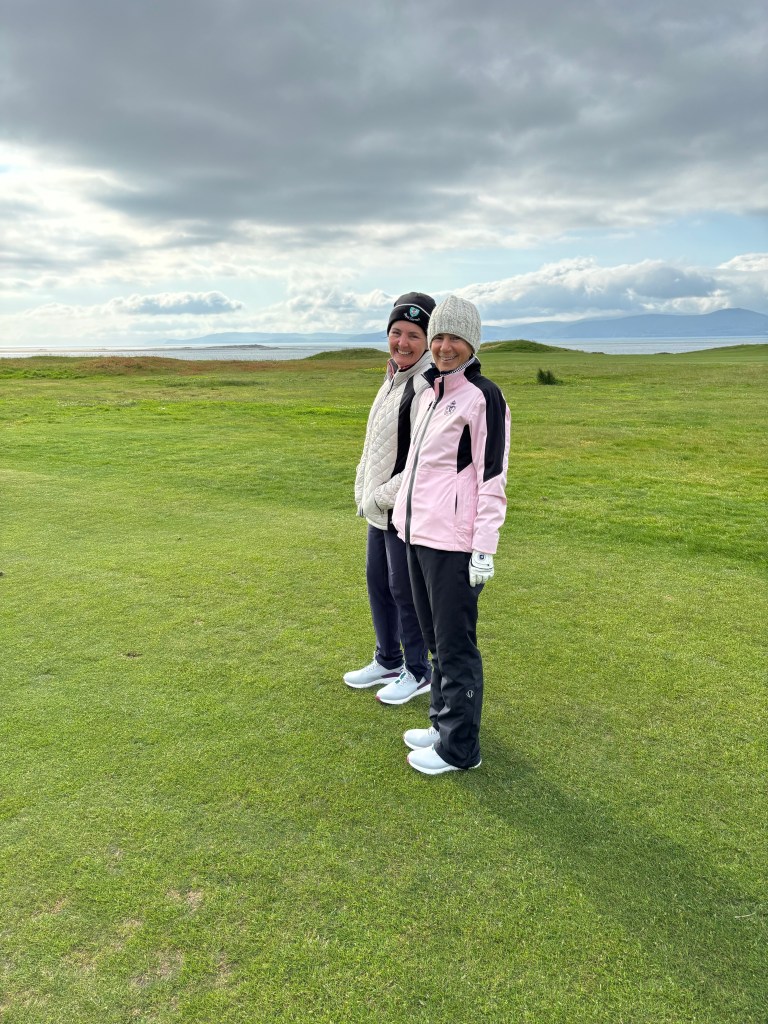
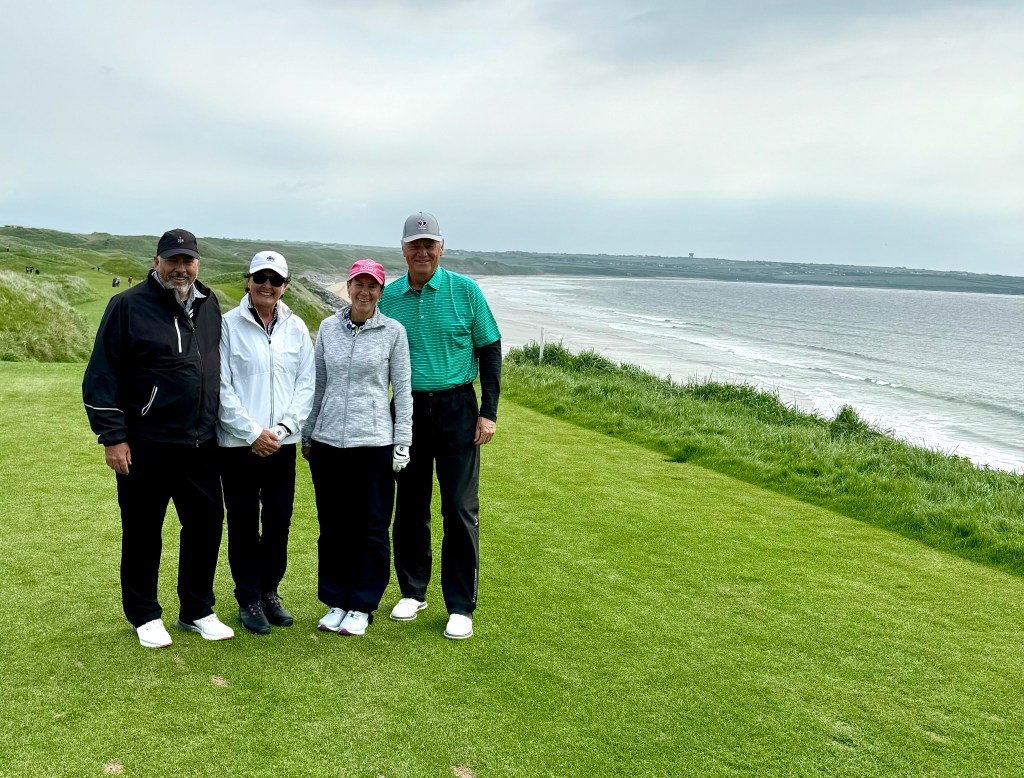
Just a twosome meant a selfie group shot
Just spectacular

Because there’s enough land and, in Ruddy’s words, you can’t have too much golf, the course is actually 20 holes. There is a 7a and a 12a. Both are testing par 3’s that flow into the routing. Unfortunately we couldn’t pick our best 18 hole score at the end. Also, the 15th hole has the world’s longest green at 127 yards. Can you imagine the 3 putts?

And so ends our adventure. Fifteen links courses played in 20 days. Add in the Pit days and our extra long weekend in Dublin at the start and it’s been nearly a month of unique sights and experiences. Thanks to P&G for helping make this a wonderful trip.

And we’re already planning the next one. Australia sand belt courses here we come. Stay tuned – spring 2025.

Kilkenny

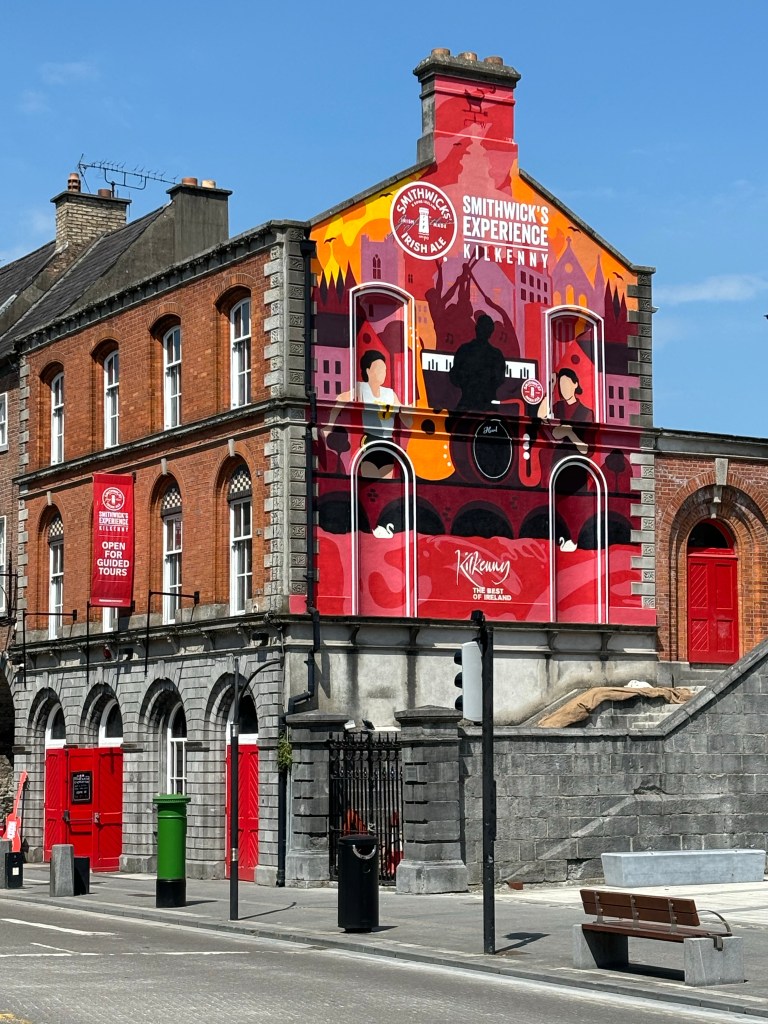
We chose Kilkenny as a Pit Day destination as it is about 60% of the way back to Dublin, is home to a famous castle and the birthplace of Smithwick brewing.

Packing up Killarney was fairly simple – just toss it in the car, we’ll figure out how to squeeze it into a suitcase/golf bag later kind of packing. As P&G have their own car we set off separately for the 2 1/2 hour drive which was carefully mapped out to ensure M and N highways only. Still searching for road shoulders though.

Our drive took us out of County Kerry, through a portion of County Cork and across the edge of Count Tipperary and into County Kilkenny. So for a short time we were not a long way to Tipperary (couldn’t resist).

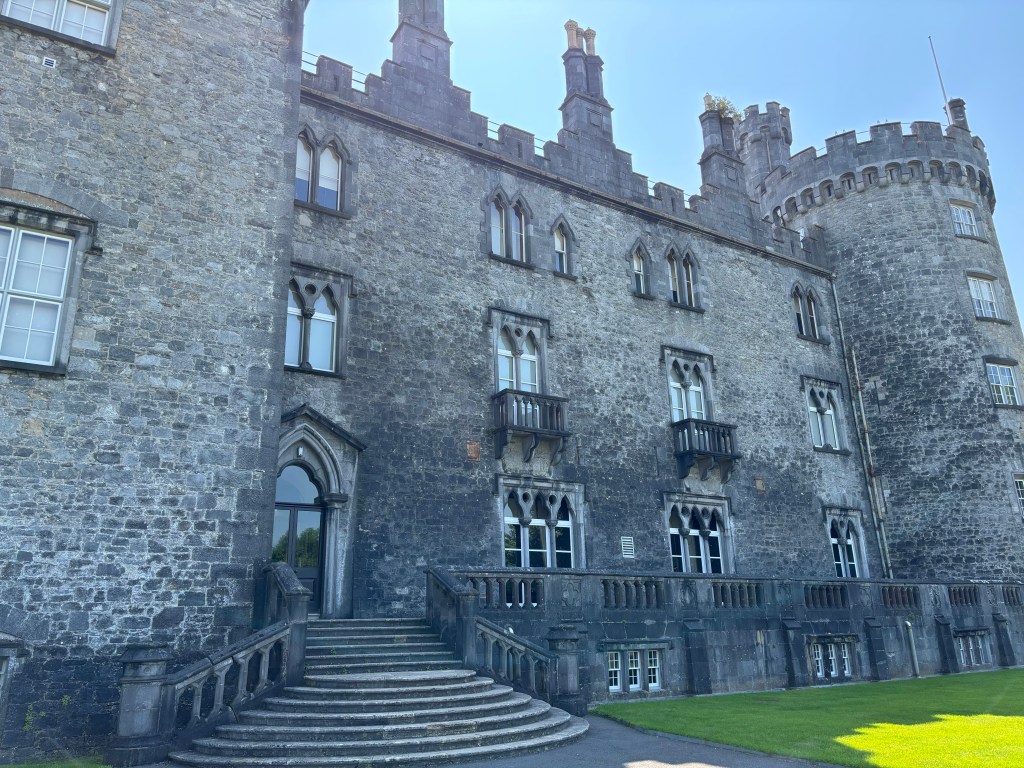
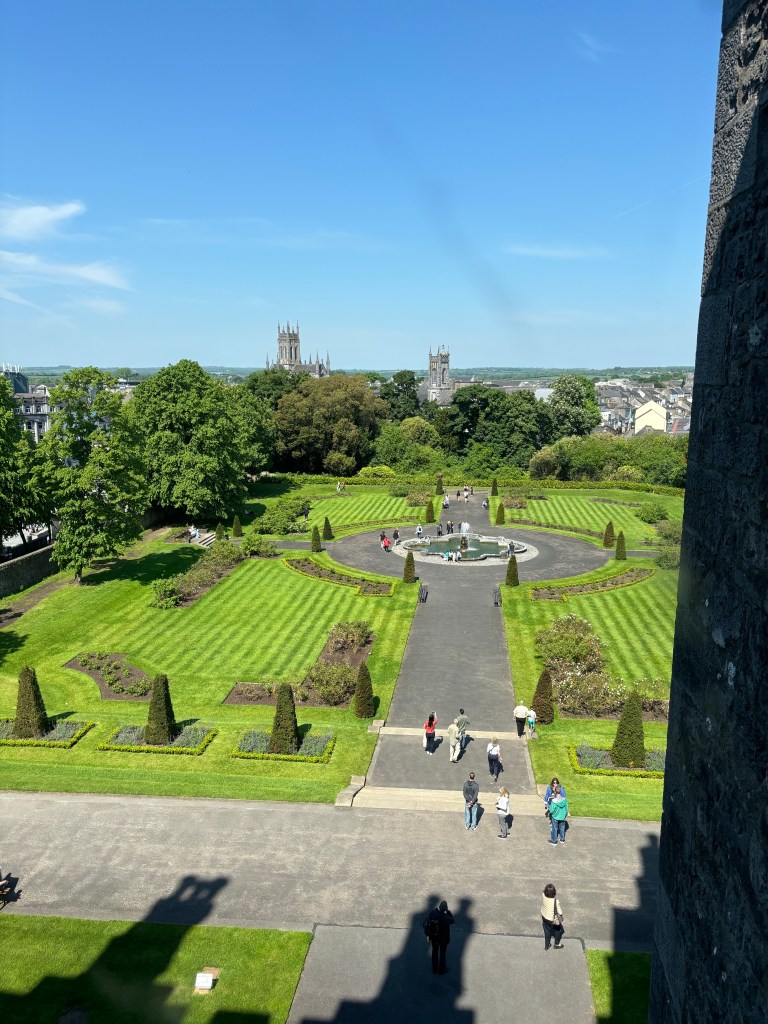
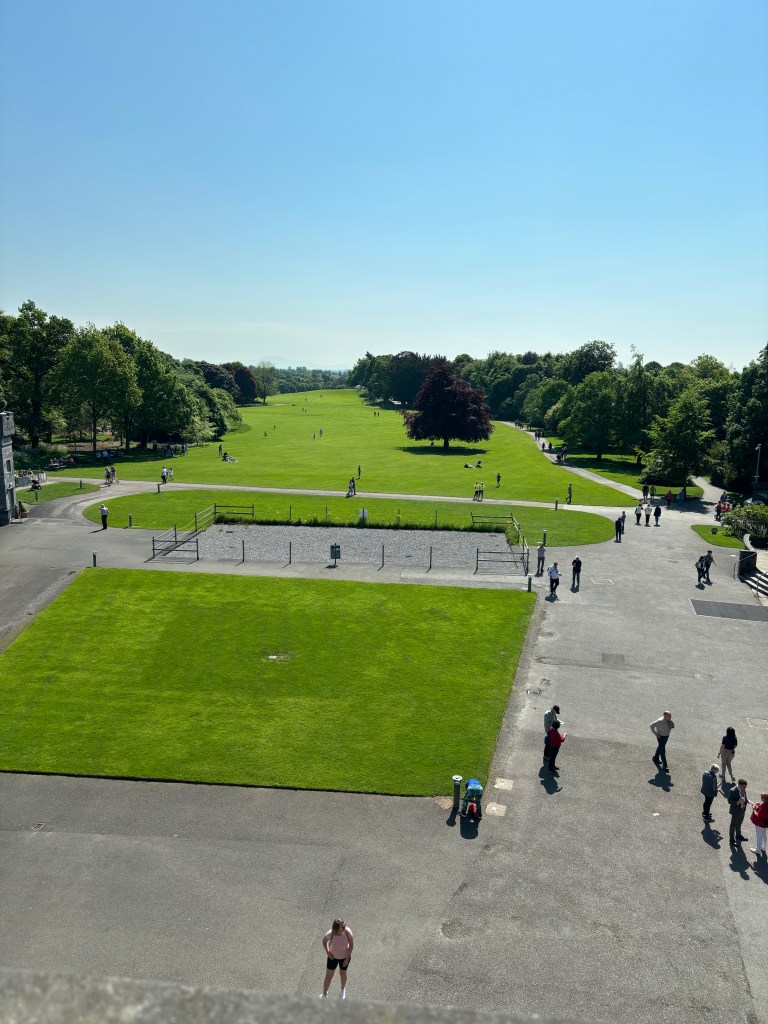
Bright, warm, short sleeves sunshine greeted us in Kilkenny which sits on the River Nore and was a a key center of Norman domination in the 13th century. Kilkenny is a tourist destination and its environs include two castles, two cathedrals, two abbeys and other historic structures. Kilkenny Castle lords over the city, literally.

The castle dates from the 13th century but has undergone many internal renovations and restoration. It was originally four sided but the east wall and the northeast tower were damaged in 1650 during the siege by Oliver Cromwell and were later torn down.

The Butler family, under the hereditary title Duke of Ormond, lived in the castle for more than 700 years. George Butler, 5th Marquess of Ormonde, lived in the castle until 1935 when estate taxes and other costs lead to its abandonment. It sat vacant for more than 30 years and was sold to the city for £50.

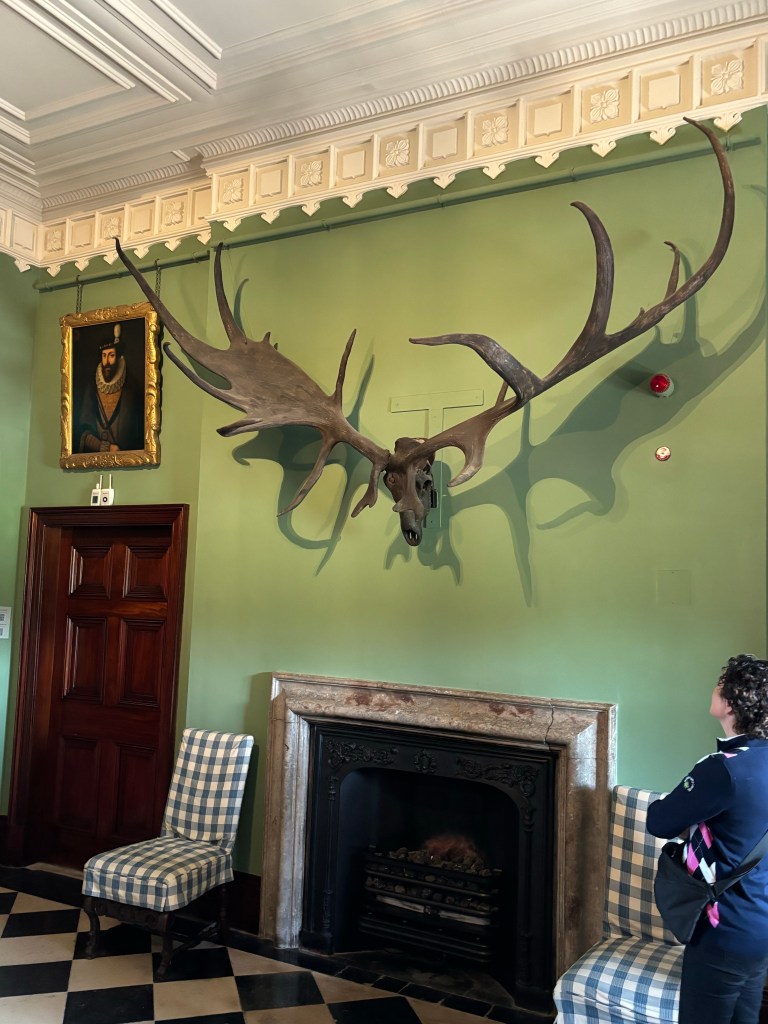
The restored rooms that we toured reflected the period from the mid 1800’s to the early 1900’s.

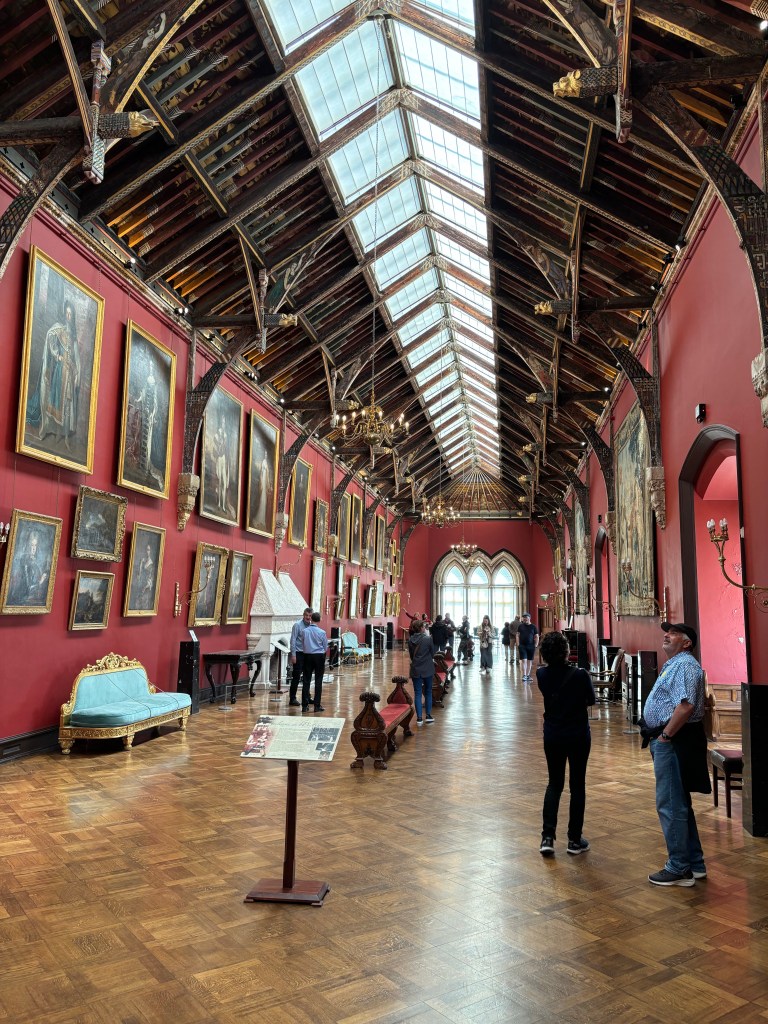
The Portrait Room

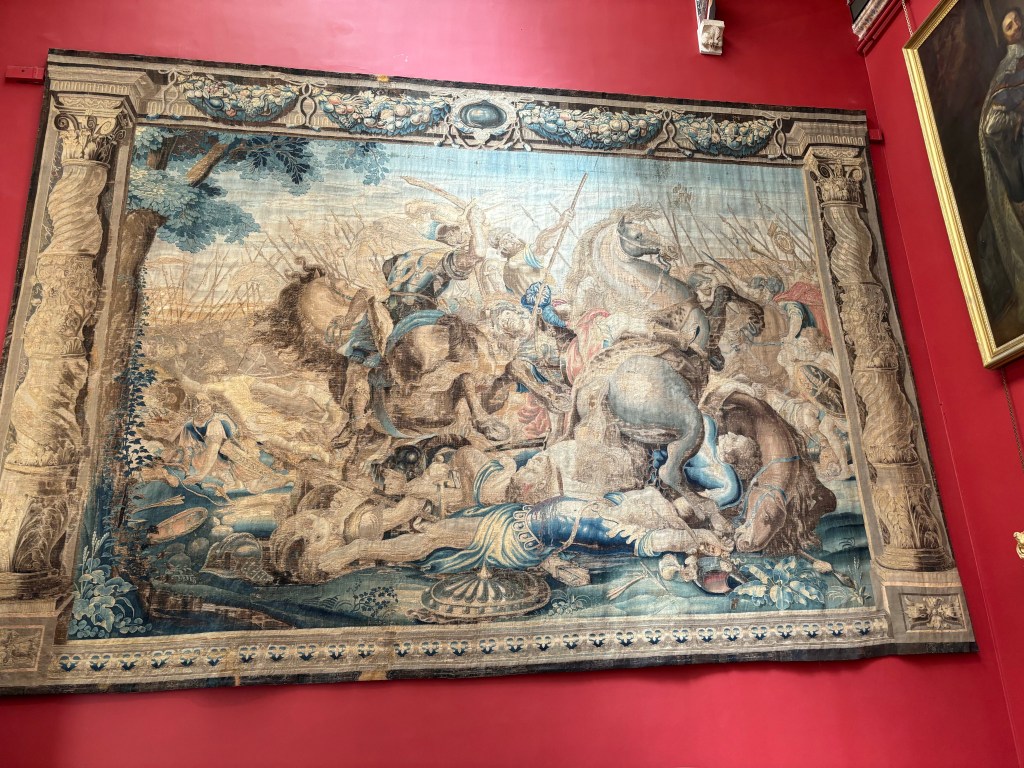
Our guide took us up and down stairs in the different towers, described some of the hundreds of paintings and portraits, and explained how different parts of the castle had been used.

We then walked the medieval mile down the hill past numerous shops, pubs and restaurants on our way to the Smithwick brewery.

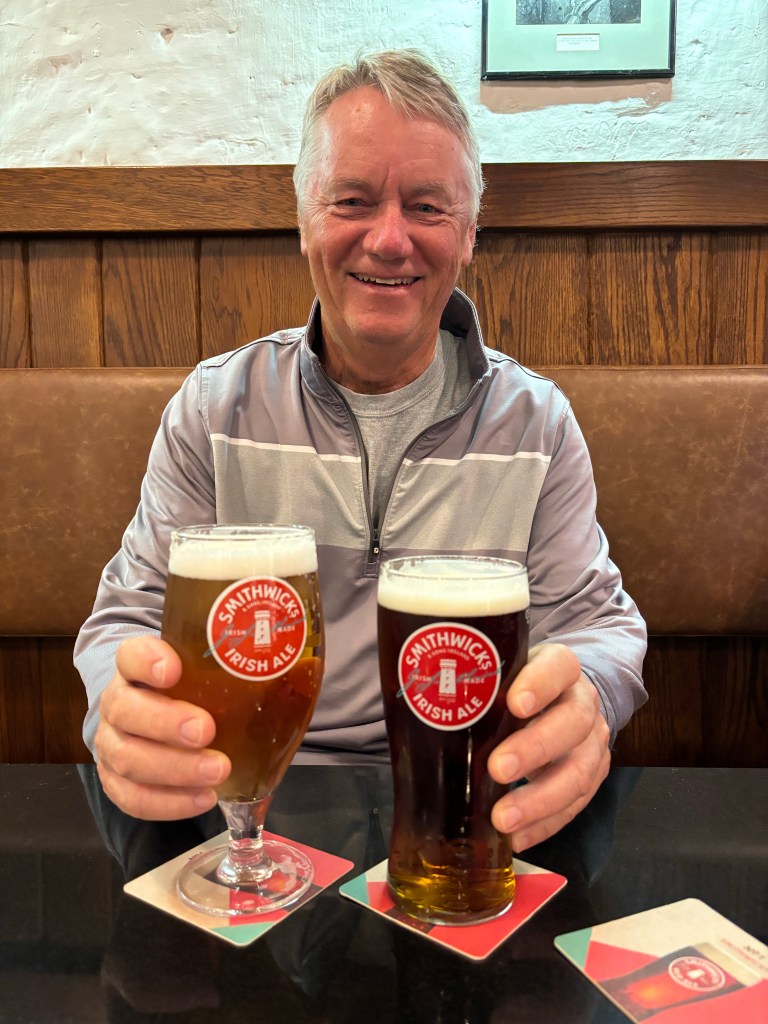
An entertaining guide took us through the brewing process while providing a history lesson of the Smithwick family and the beers they made. Very informative and interesting. The tour ended on a positive note.

Settled in to a very nice hotel, dinner and an early night. P&G will do some more exploring tomorrow before heading back to Dublin. M&M are off to the European Club on the east coast for one last round of golf before we link up again in Dublin. Then the real packing test will be on.

Dooks GC

Our final round as a foursome (M&M have one more before flying home next week) took place at Dooks. Golf has been played at Dooks since 1889 which makes it one of the oldest golf links in Ireland. For nearly 100 years the links remained a quirky, 9 holes monument to those early days as the members resisted all efforts at modernisation. It was extended to eighteen holes in the 1970s under the guidance of Eddie Hackett. The course was further renovated in 2002 by Martin Hawtree.

The famous Dooks logo – a Natterjack Toad

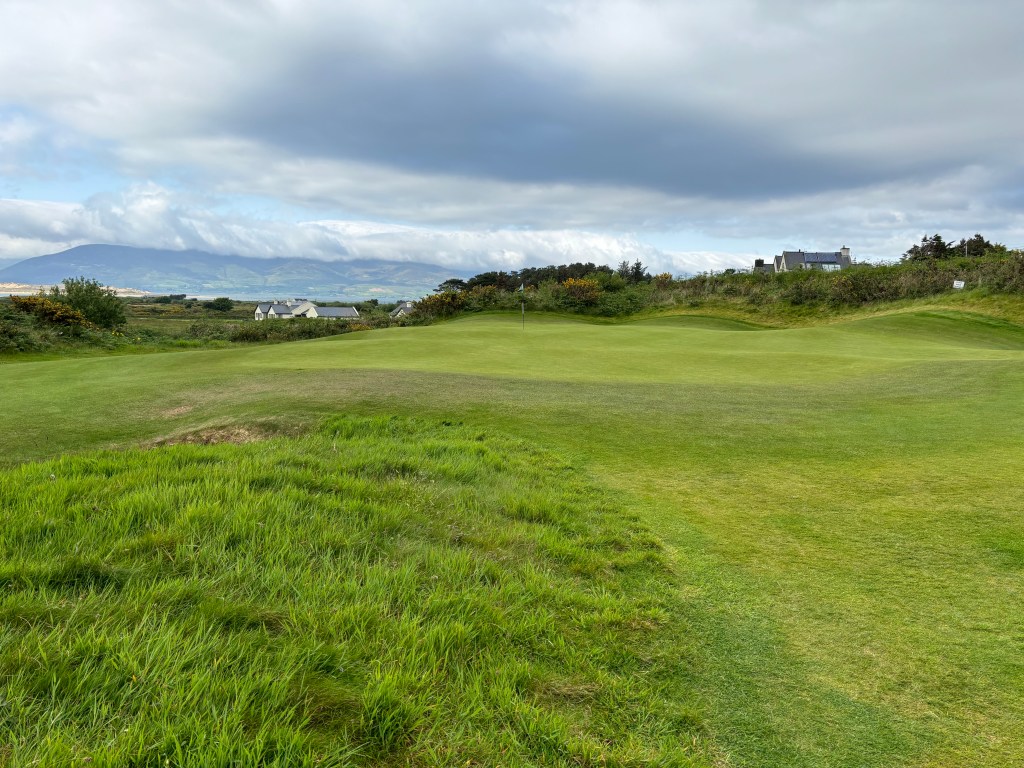
We would concur with the description that Dooks is infinitely easier compared to nearby Tralee and Ballybunion. Its front nine is set on links land with moderately high dunes while the back nine turns into a little more parkland terrain. There are some robust holes however including one 451 yard uphill into the wind par 4.

The sedate atmosphere after the commercialized bustle of Ballybunion was welcome given it was our 14th round in 19 days. The fairways were generous and the first few yards of rough allowed balls to be found AND played.

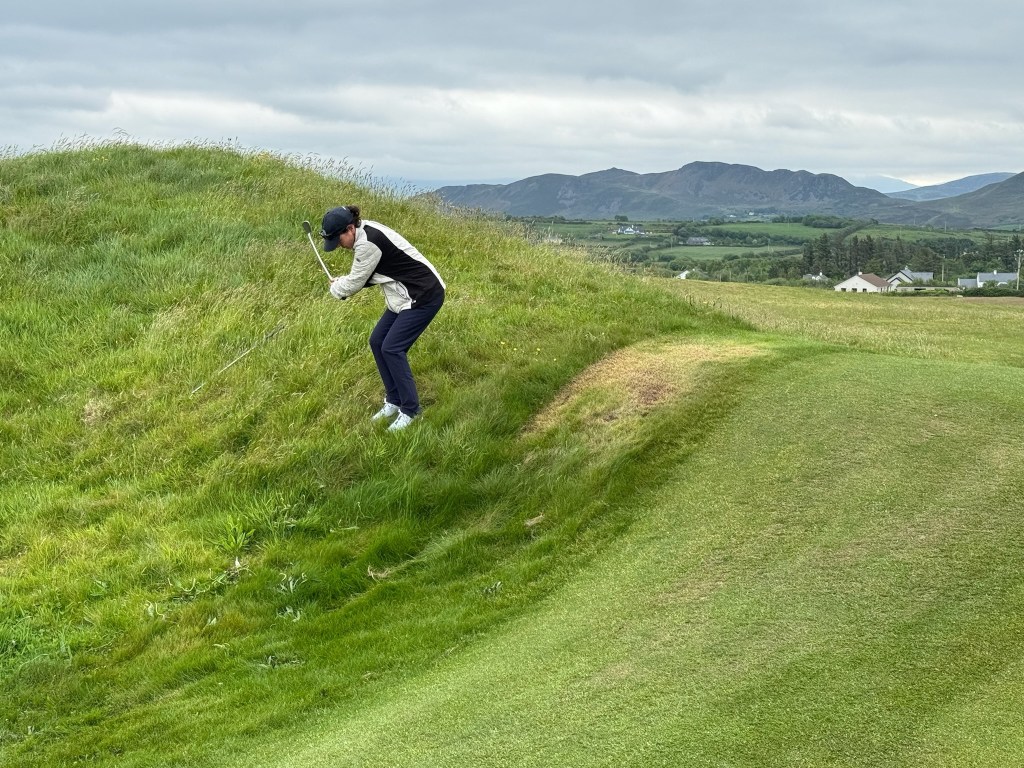
Well perhaps not always.

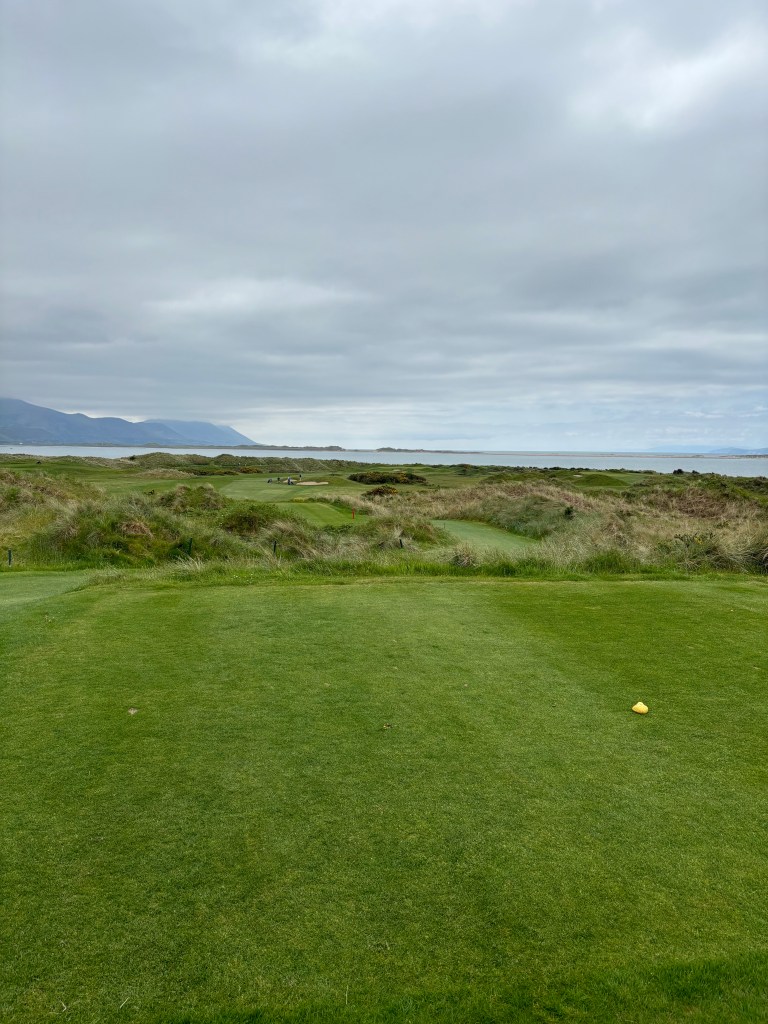
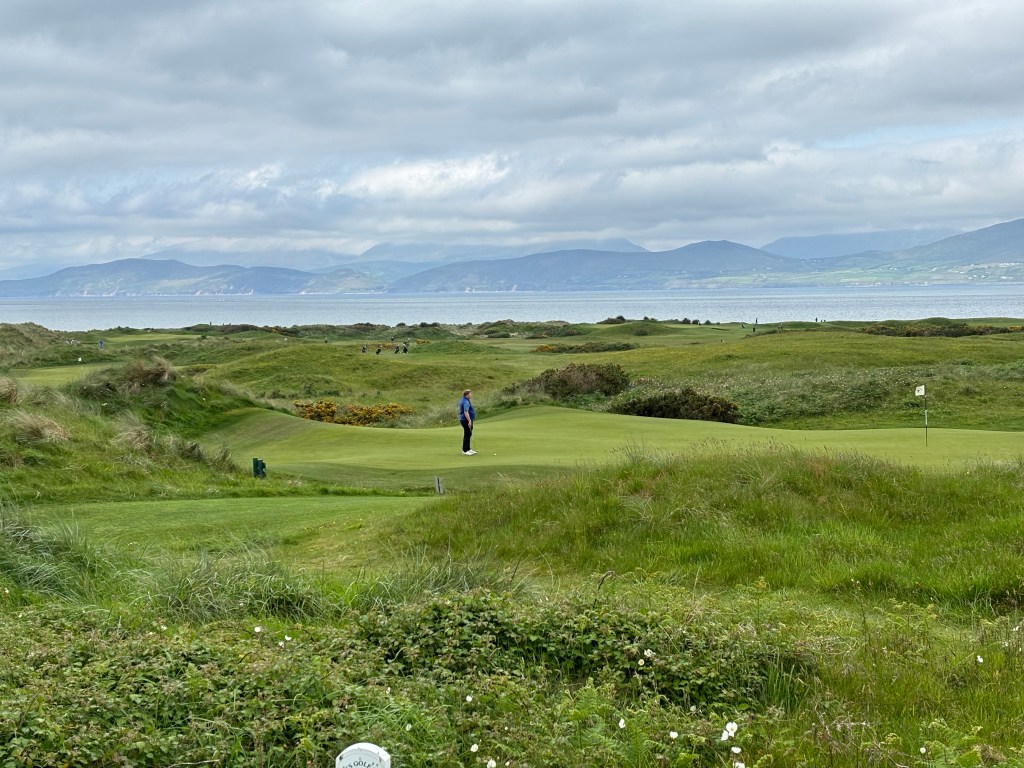
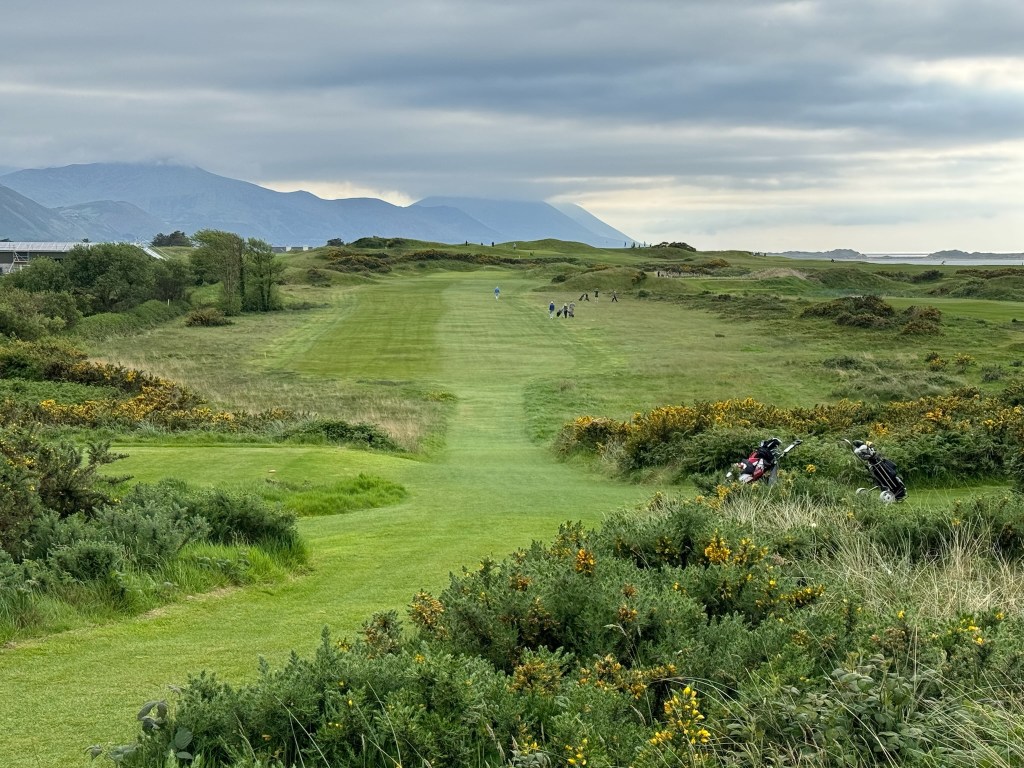
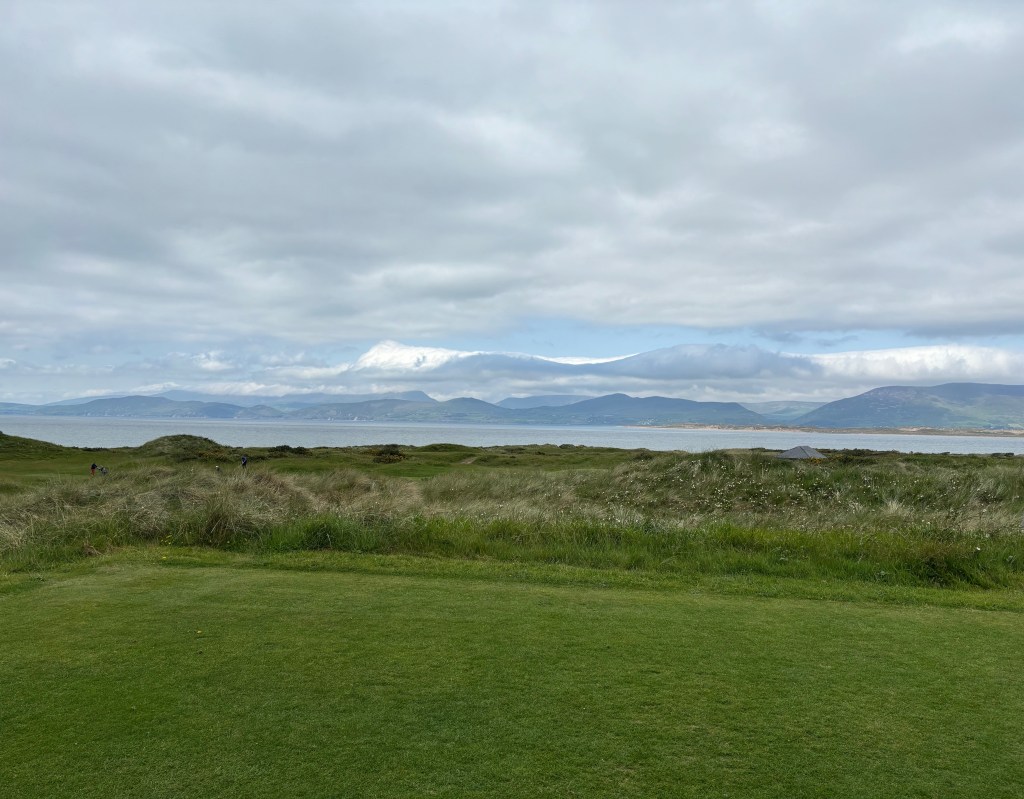
Dingle Bay is in view from practically every point on the golf course

Yet again we had fabulous weather although the breeze off the water meant an extra layer at times. Other than our opening round three weeks ago we have avoided rain on every golf course. Even the locals are impressed.

Our day finished in the early evening as more cloud cover rolled in. Tomorrow we pack up early in Killarney and make the trek east to Kilkenny for our last group Pit Day.

Ballybunion

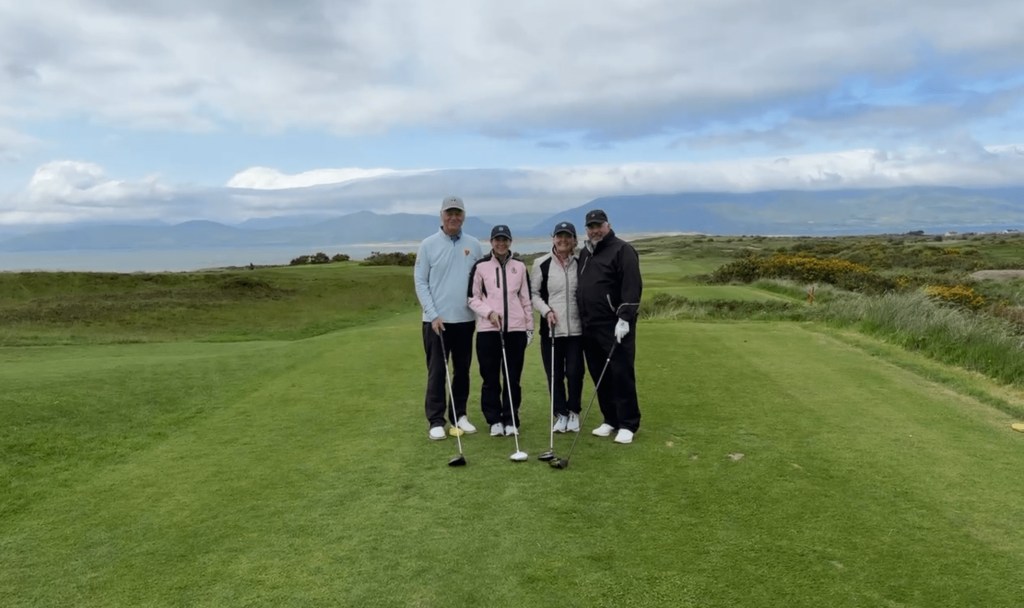
As American sports announcer Keith Jackson said of the Rose Bowl, “welcome to the granddaddy of them all.” Ballybunnion Old Course exudes a majestic feel that simply cannot be compared. A James McKenna design first laid out as 12 holes in 1893, was summed up in an 1897 news story as, “a rabbit warren below the village, where a golfer requires limitless patience and an inexhaustible supply of golf balls.” More than a century later such an observation may still hold true.

Our day included a bit of an early wobble as the crack backseat navigation team lobbied for a route not suggested by GPS. Welcome to 20 minutes of unanticipated “L” roads. Upon arrival we were then informed no caddies or electric trolleys were available due to a full tee sheet. Without other options we set off with old fashioned small wheel pull carts.

At the last minute an older caddy just finishing his morning loop was convinced by the starter to head out again with us. M&M volunteered to push/pull so he managed P&G’s bags. Not ideal but sufficient guidance was provided to all as we went around. Given the hills and wind, needless to say that Brendan was completely knackered at day’s end.

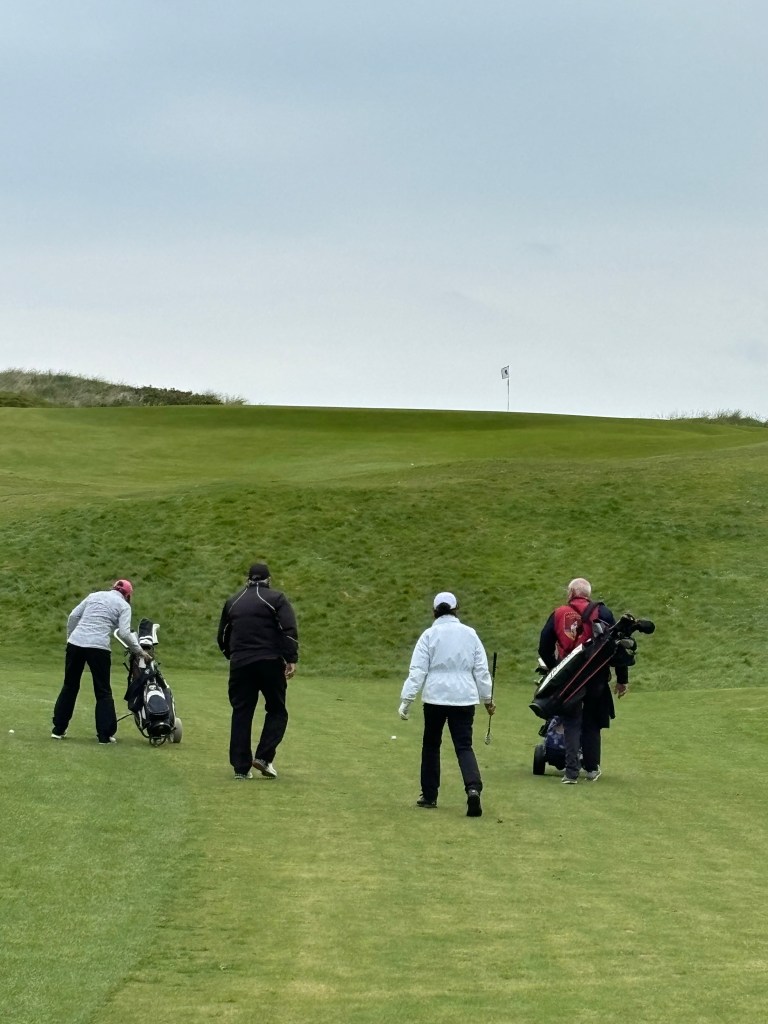
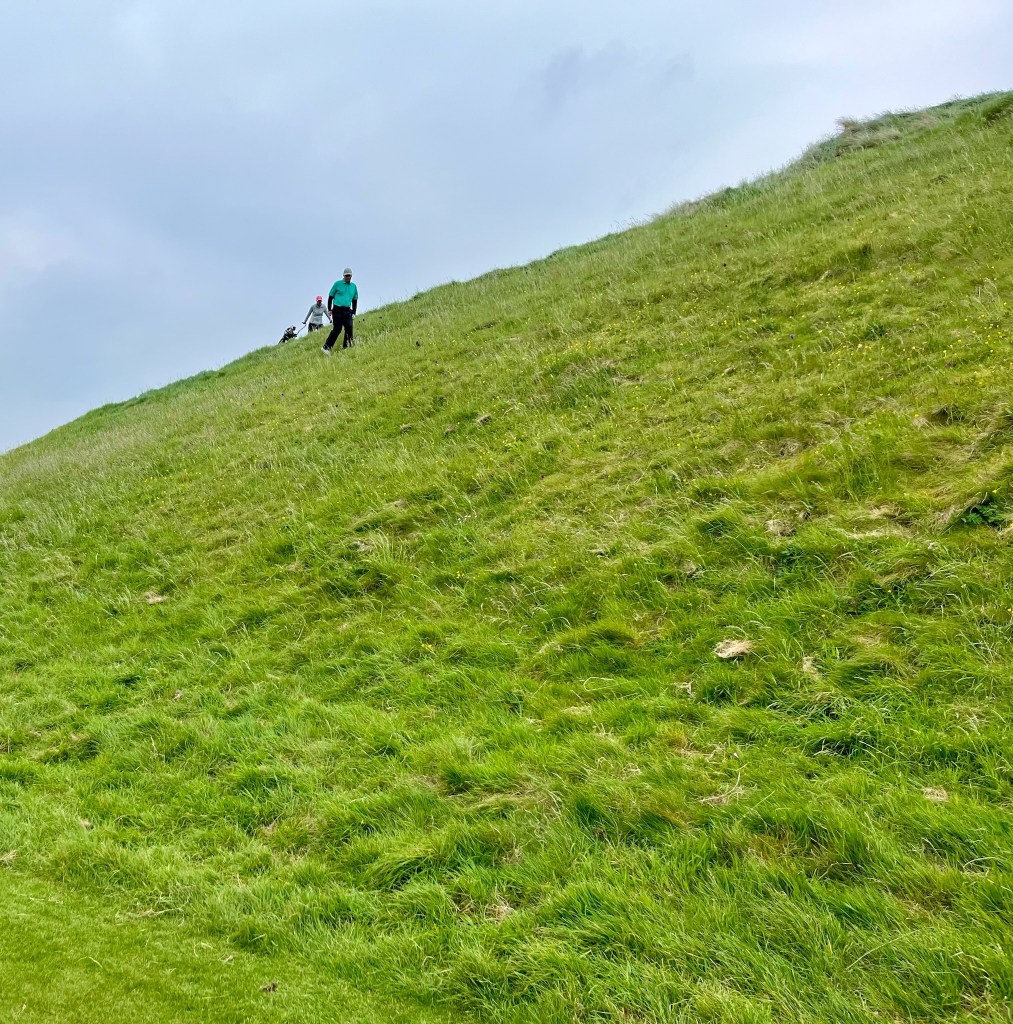
The course starts with a bang as you have to avoid a cemetery with the opening tee shot and then climb your first steep hill on #2.

Five of the first six holes played into a fresh breeze which meant an extra clothing layer and an extra club or two.

The sixth and seventh holes occupy the flat, north end of the property with the latter playing along the ocean’s edge.

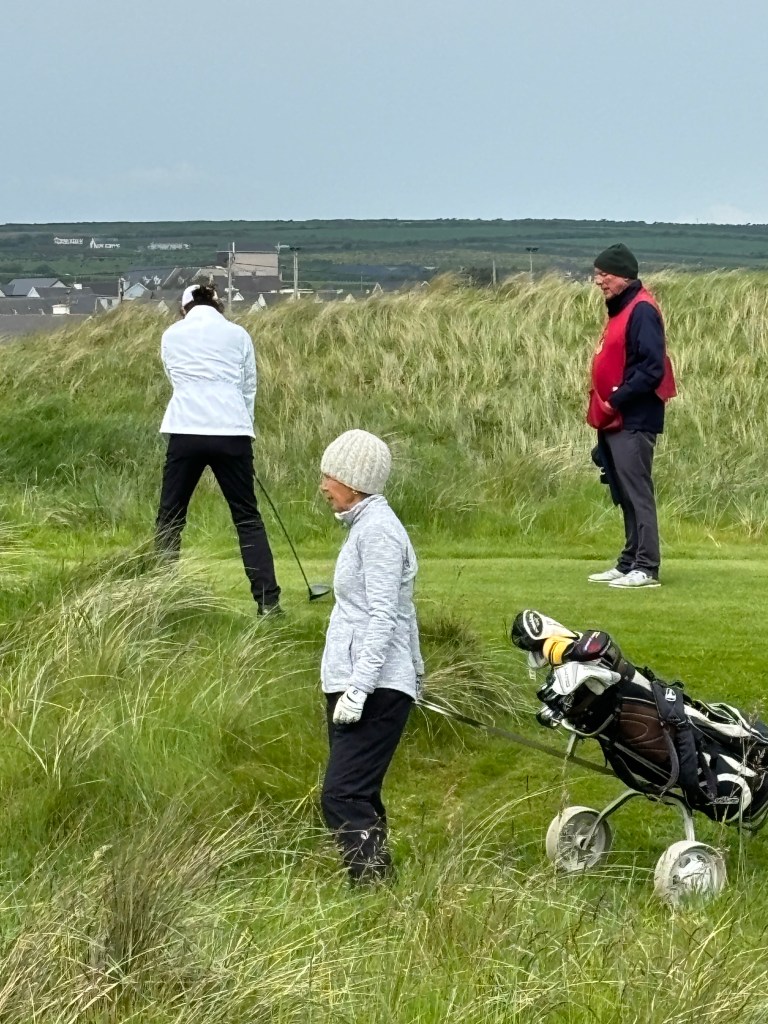
Then it was back into the massive dunes where each hole required fairly precise shots both off the tee and certainly to the green.

Sometimes a search party was called into action.

And so it went. Every hole demanded accuracy otherwise the scores mounted (no pun intended).

Our good fortune weather wise continued and clothing layers came and went.

The wind was such that on two par threes on the back nine, Driver was required. Curiously, one such hole for the ladies played as a par 4 on the scorecard.

Par 3 uphill 215 yards into the wind – Driver!!

And if wind, dunes, knee high grass, hills and fatigue weren’t enough other hazards came into play.

Looking back down #18

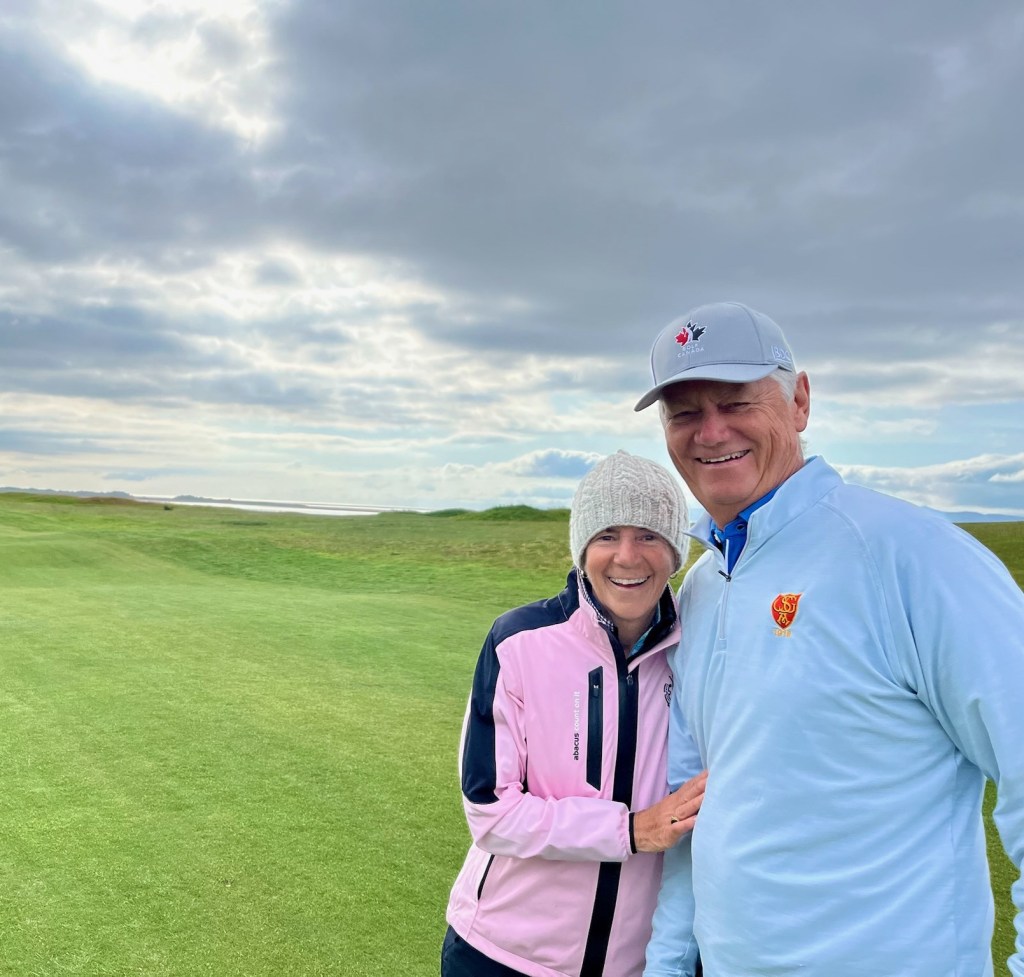
We concluded Ballybunion’s reputation was accurate and well deserved. Not overtly penal yet relentless in avoiding having any weaknesses or soft holes. Definitely a need to play again course to unlock the proper angles and approaches. A thoroughly enjoyable day.

Waterville

Our routine includes reviewing a variety of different weather apps trying to discern what golfing wardrobe will be necessary the following day. Waterville did not look good with rain likely the entire day. We woke up to sunshine in Killarney and hoped for the best.

Waterville is on the western edge of the Ring of Kerry. We had the option of being part of a tourist convey of cars on the ring taking 90+ minutes or going straight through the middle of the peninsula (or over the mountain as the locals say). The latter indicated a time saving of over 30 minutes so off we went despite the uncertainty of what we would face.

Well that was a mistake! It was whatever is below an “L” in the roadway hierarchy.

Fortunately we only had to deal with a few oncoming cars which meant finding a sliver of space to the side. And apparently, sheep have the right of way.

Our fears about the weather hadn’t materialized upon arrival and in fact the sun shone brightly.

The earliest golf at Waterville has been traced back to 1889 where a modest nine-hole layout occupied the flat eastern section of the present championship links. In the early 1970’s the original nine holes were reconfigured and expanded by Eddie Hackett to create today’s front nine with the full 18 opening in 1973. Tom Fazio subsequently redid the course by changing thirteen holes and building two new ones, finishing up in 2006 by making further amendments to two more.

The Hare features in the logo due to a large population of the real thing on the golf course – we didn’t see any

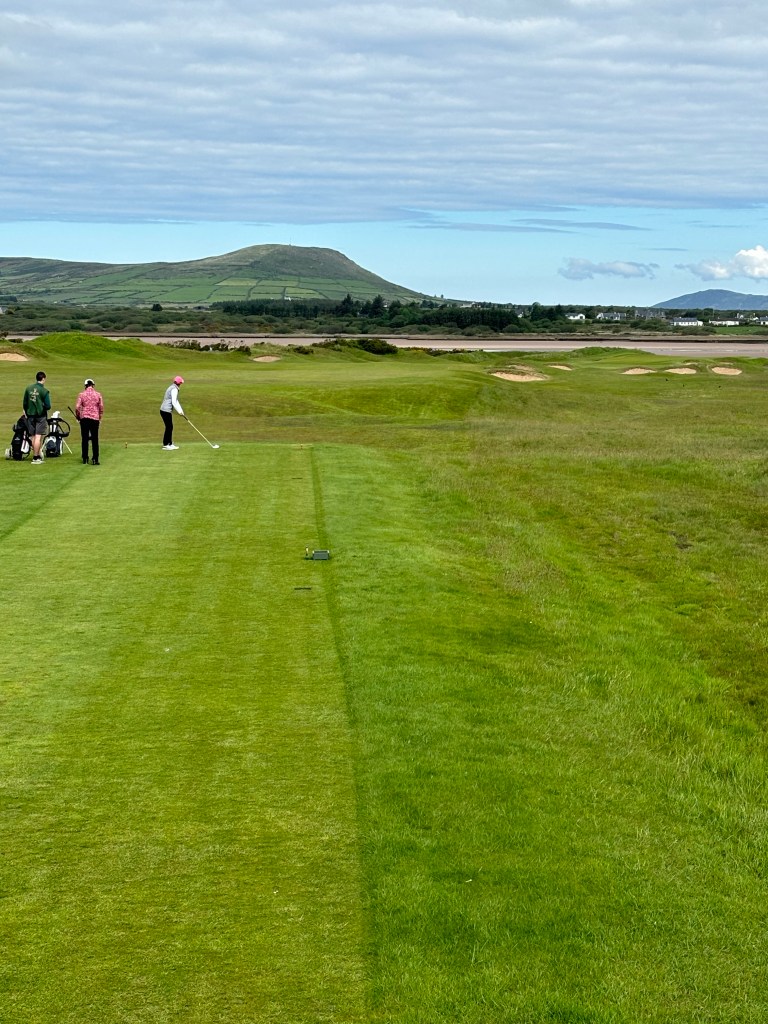
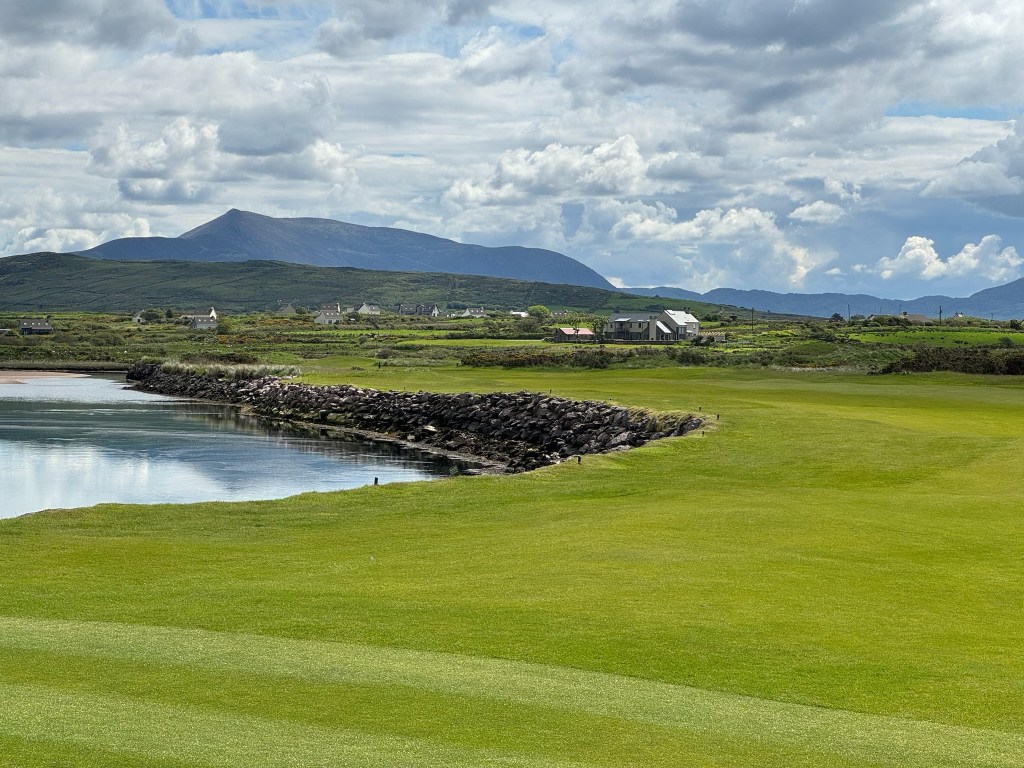
It’s difficult to describe Waterville as we all initially questioned why it has such a stellar reputation. Perhaps it was because it was very subtle and not punishing in the manner of other courses we’ve played. Its unique location on an isthmus bordered by the Atlantic Ocean, the Inny river, the Inny Estuary and native bogland provide an open view and feeling of space. Fazio talks of the unique routing with the front nine mostly flat with no imposing dunes.

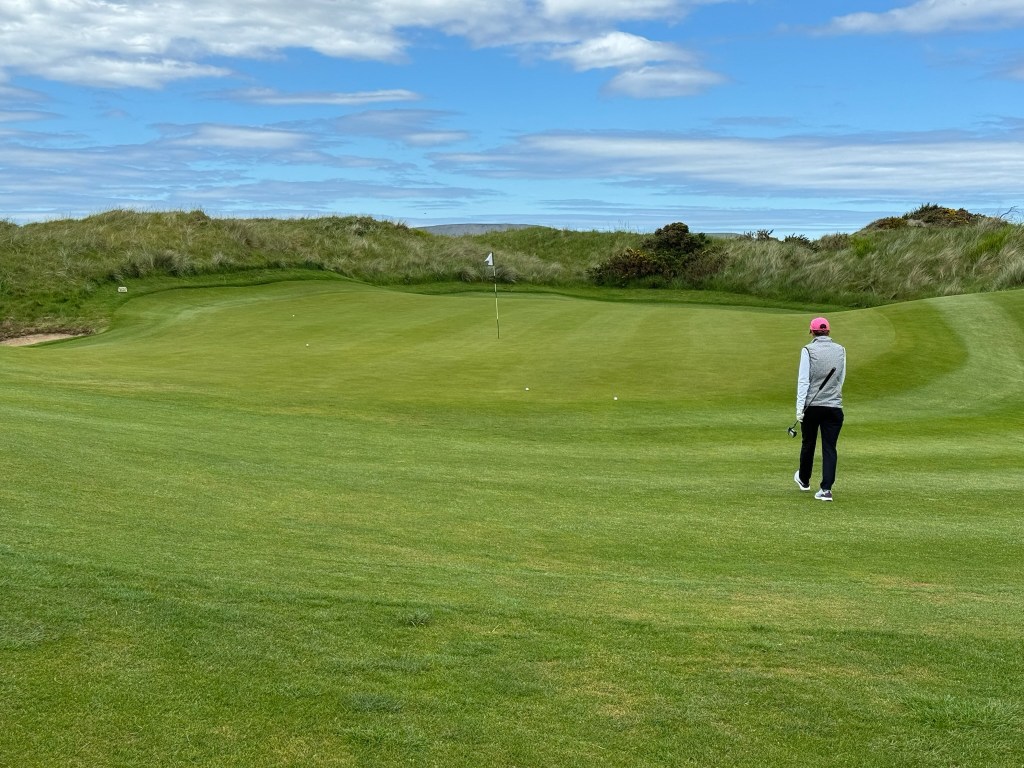
The back nine more than makes up for this with very strong holes having elevation changes, big dunes and many more pot bunkers.

Still it never felt that a small miss would end in disaster. Balls actually rolled away from bunkers and bounces off hillsides found the fairway.

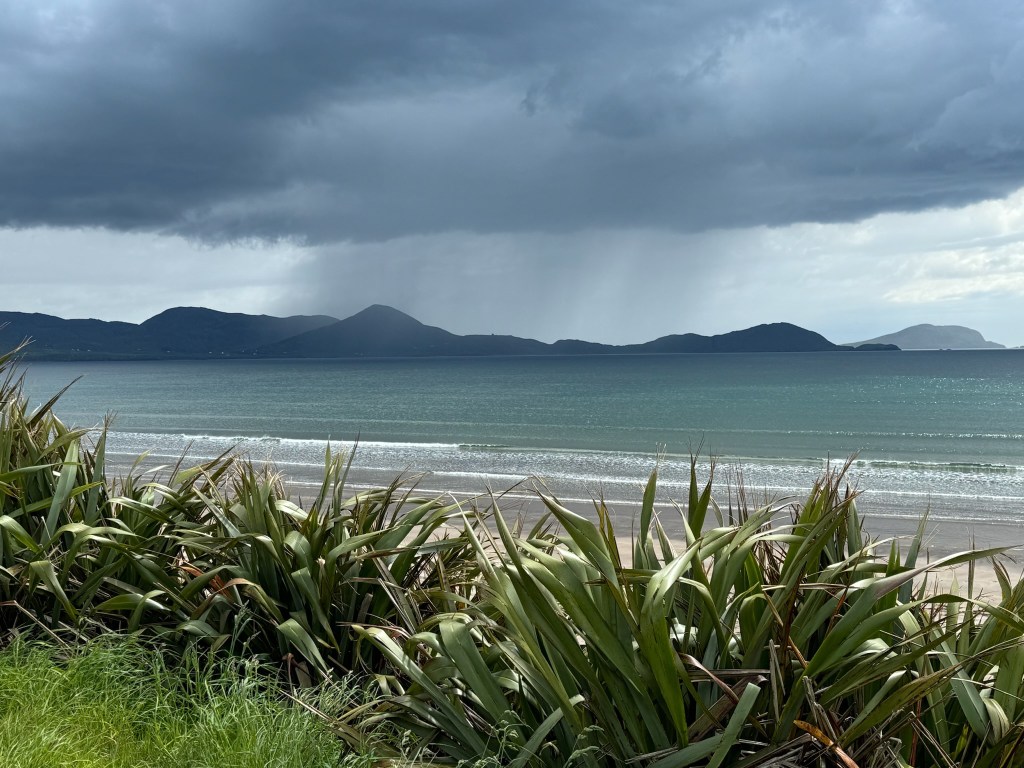
The sun continued to shine although rain storms were on the horizon. We even witnessed a special cloud formation – directly above Peter!

The rain threatened but never arrived

Collectively we agreed Waterville was enjoyable and playable but less dramatic in both design and vistas versus our previous stops.

Oh, and we drove home on the Ring whose roadway felt like a super highway in comparison to the morning drive. Ballybunion Old Course tomorrow. Truly a global icon awaits.