Melbourne Golf – Yarra Yarra

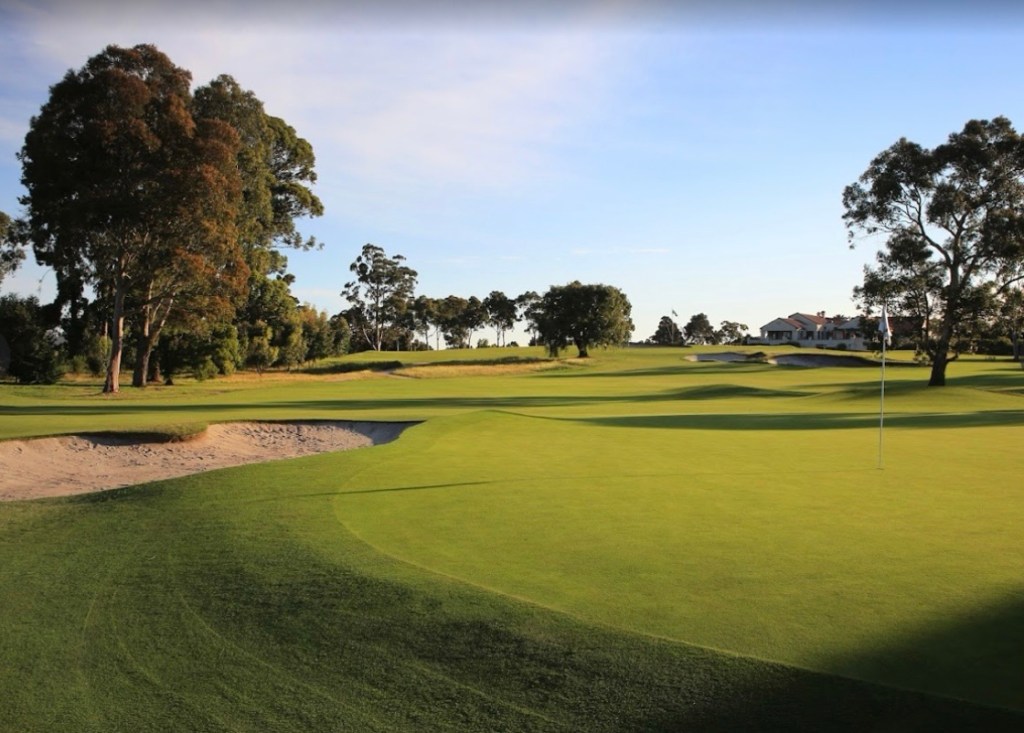
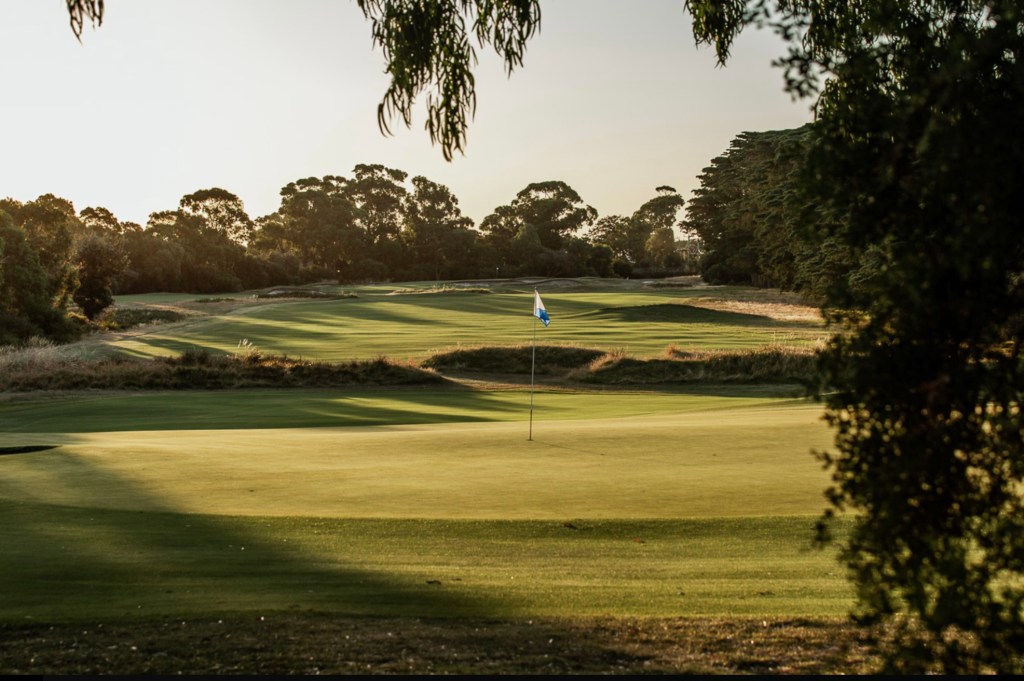
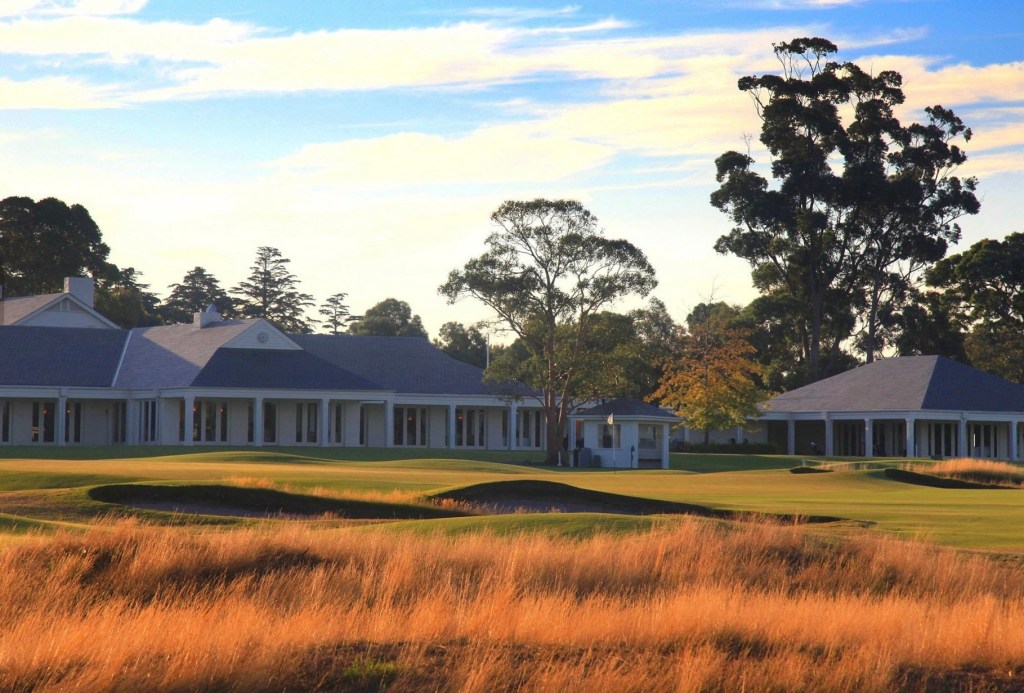
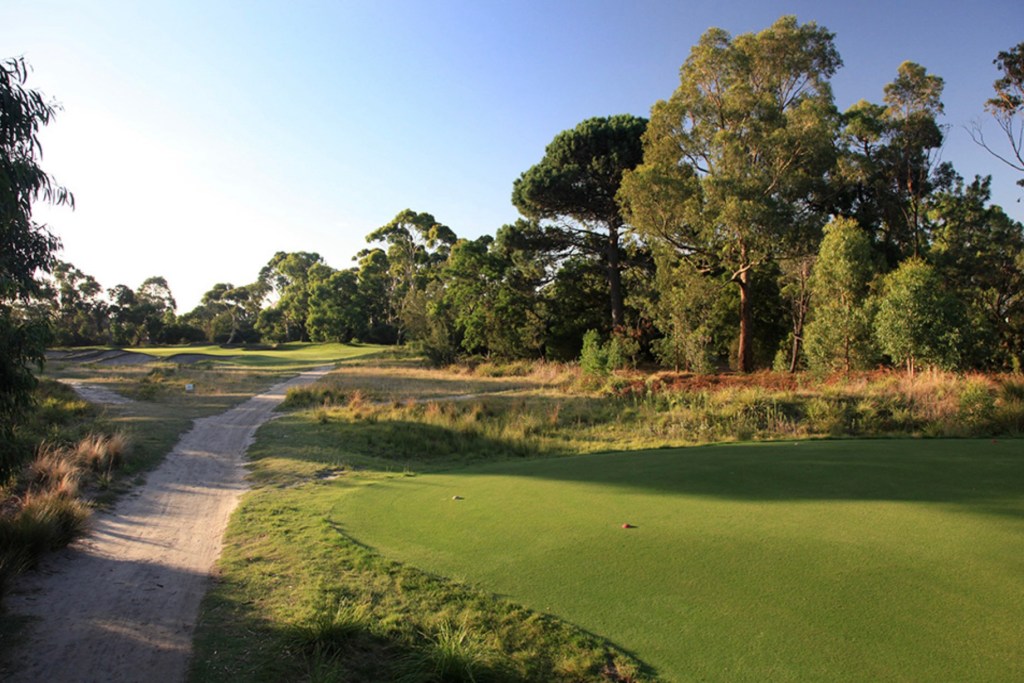
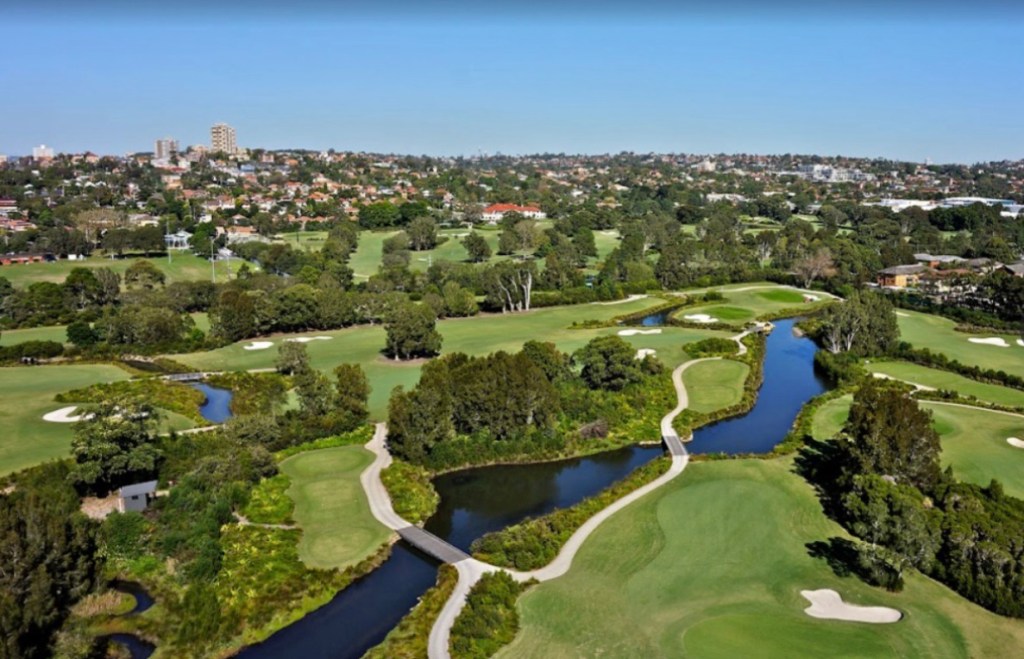
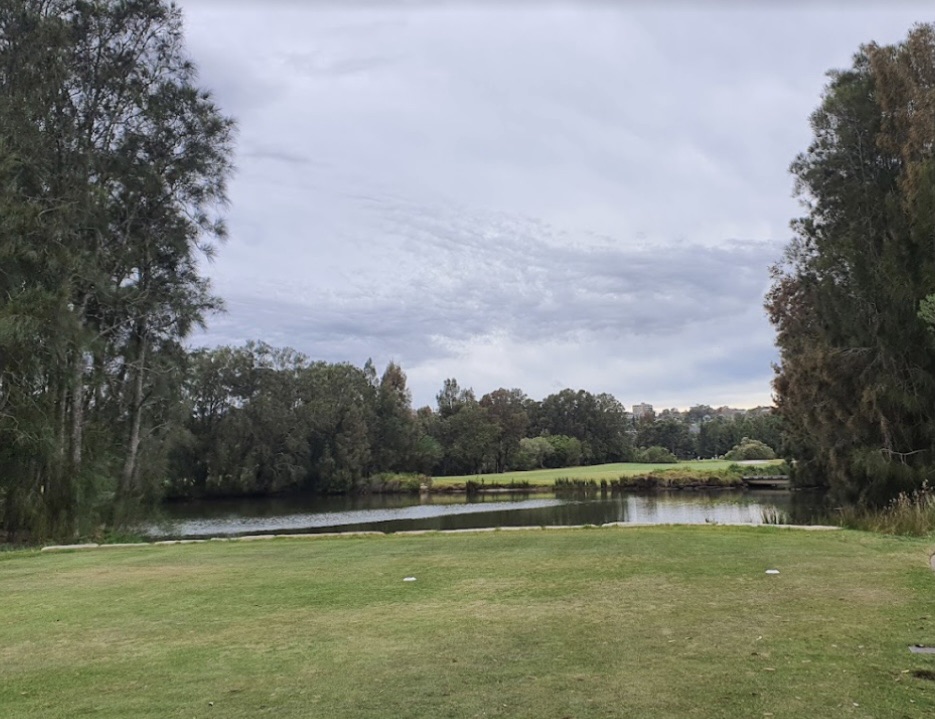
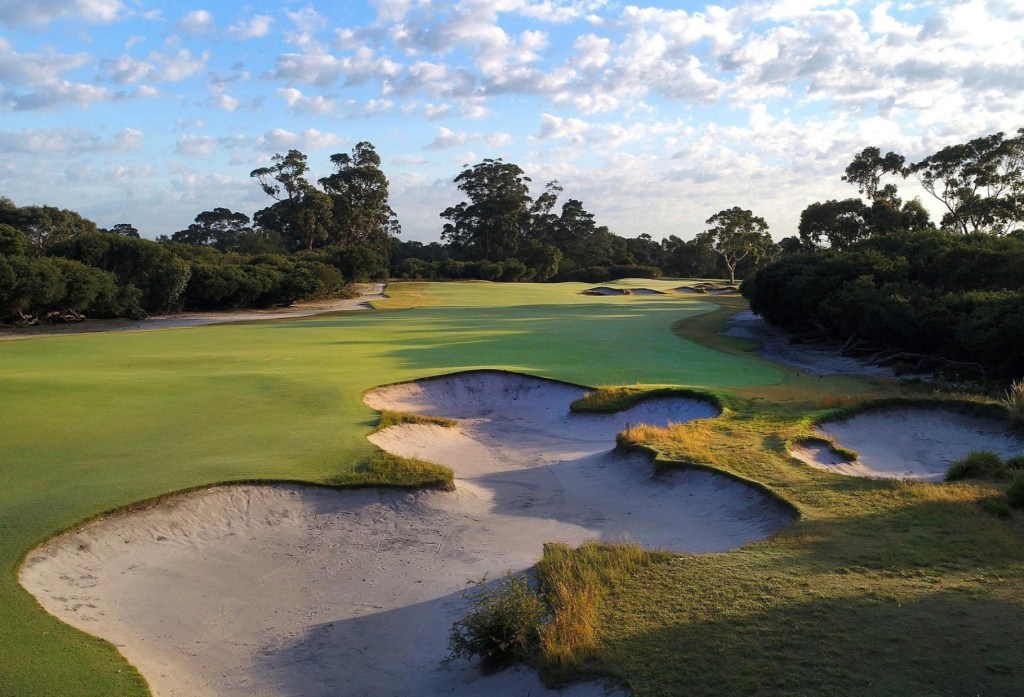
One of the eight clubs that market themselves as true occupants of the Melbourne sand belt is Yarra Yarra, 40 minutes southeast of the city centre.
Founded as a rough, 9 hole course at Eaglemont in 1898, Eaglemont Golf Club, as it was originally known, was also avant garde in that male and female members enjoyed equal rights from the outset.

In 1910 it decided to purchase land near the Rosanna railway station and was renamed the Yarra Yarra Golf Club opening for play in 1911. By the mid 1920’s a move to the sandbelt was pursued and in 1927 land was purchased at East Bentleigh, well south of the Yarra River in the heart of the famous Melbourne Sandbelt.

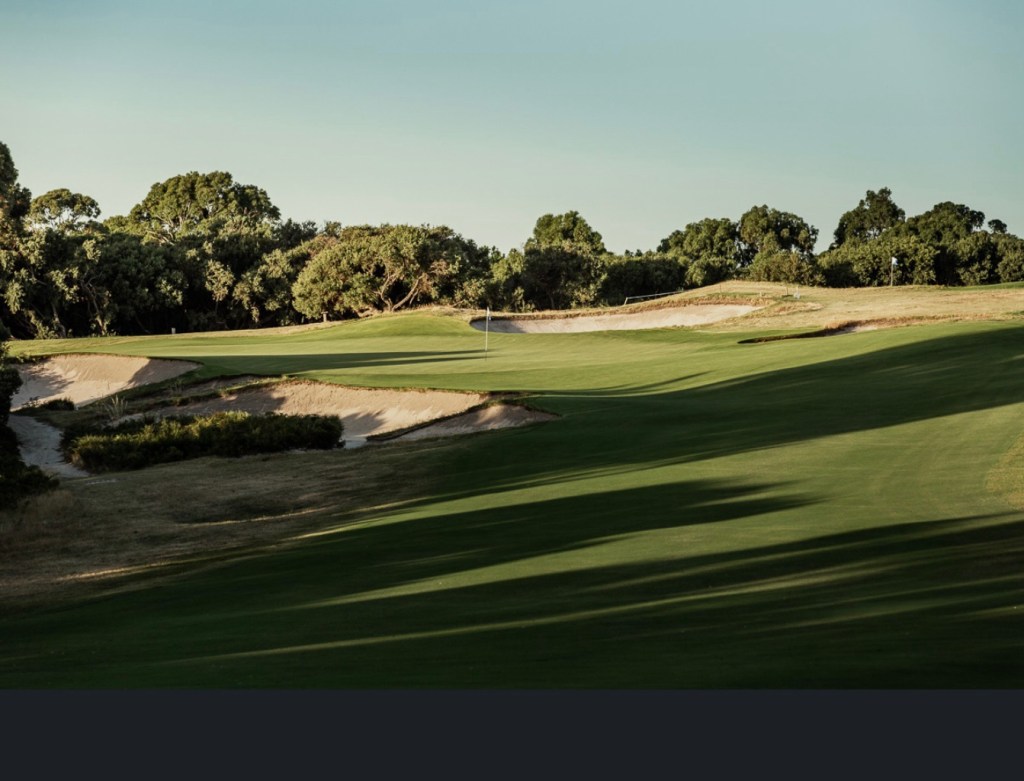
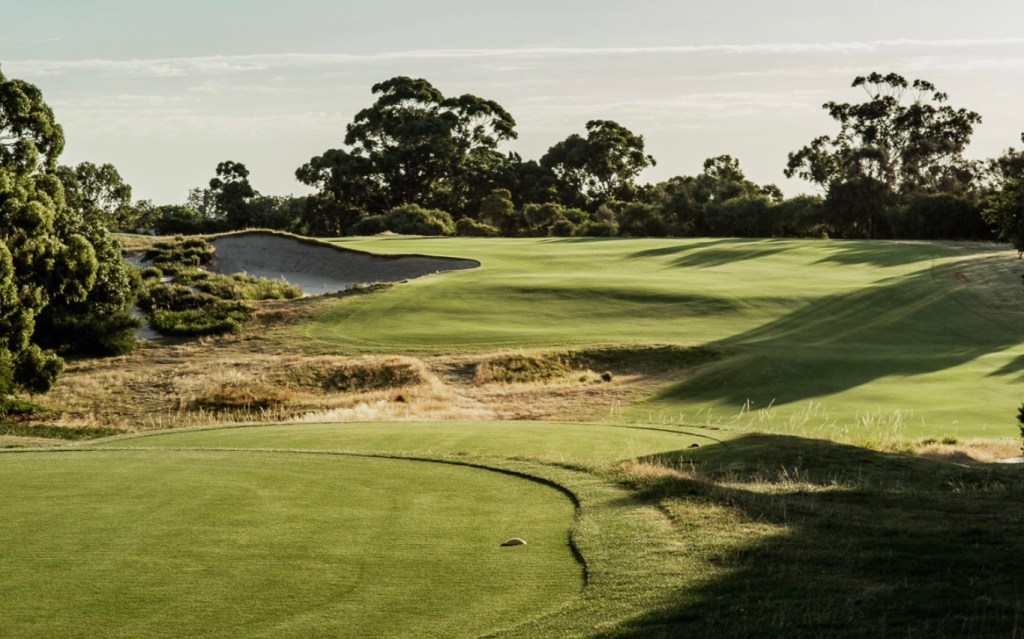
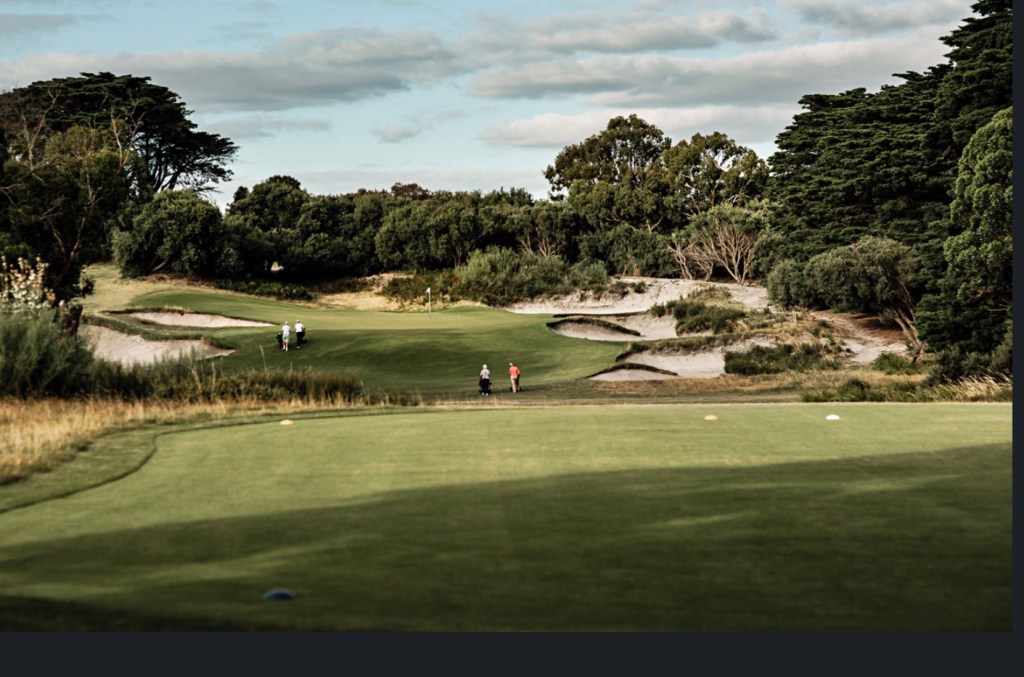
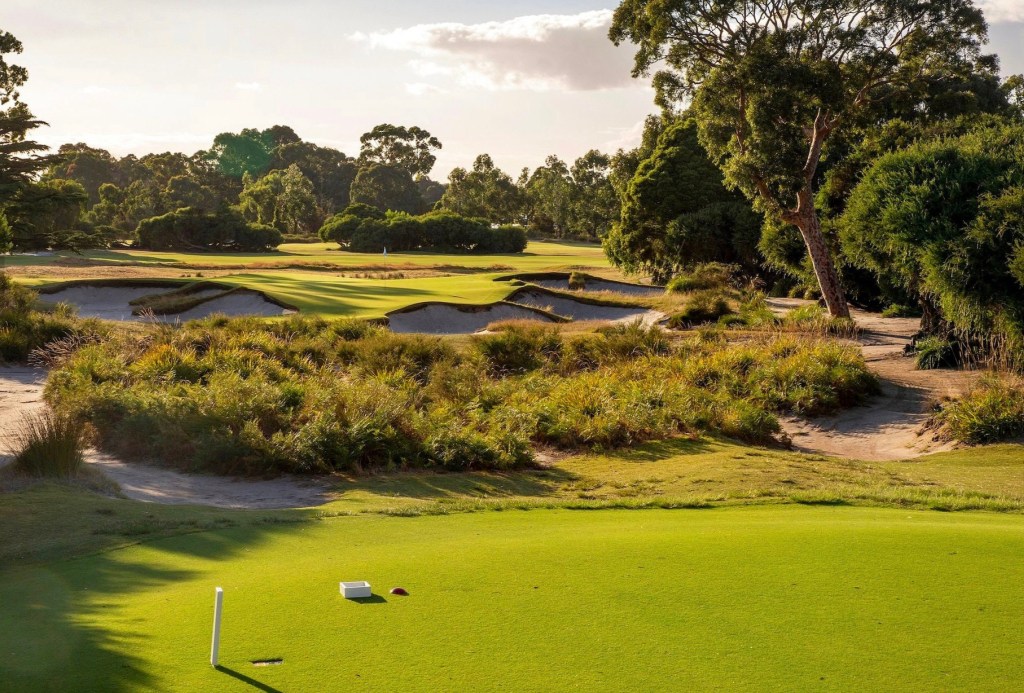
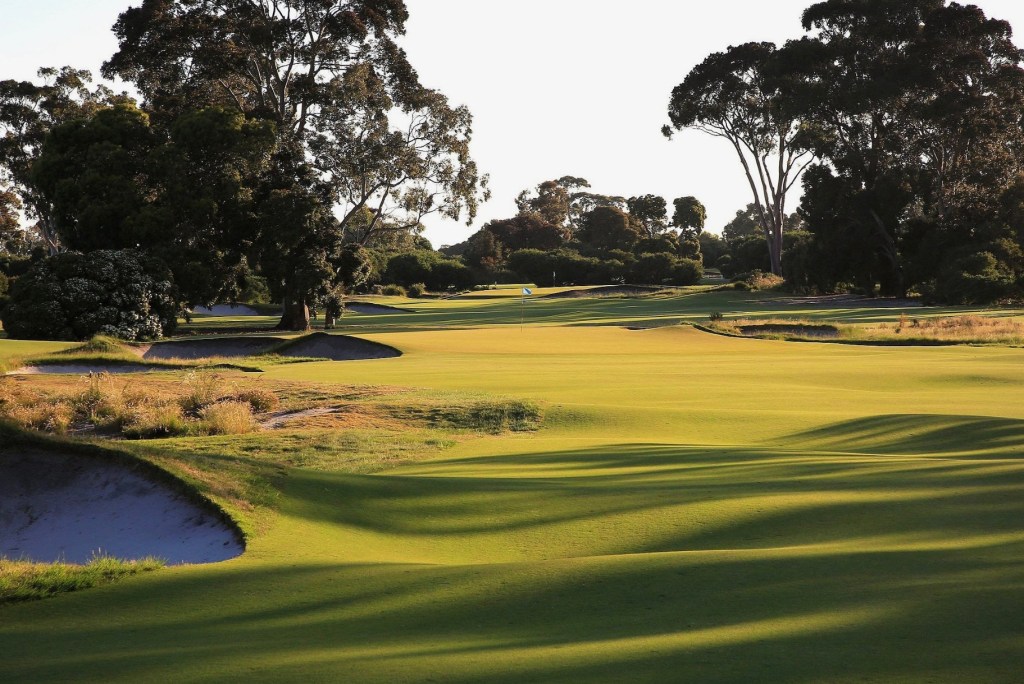
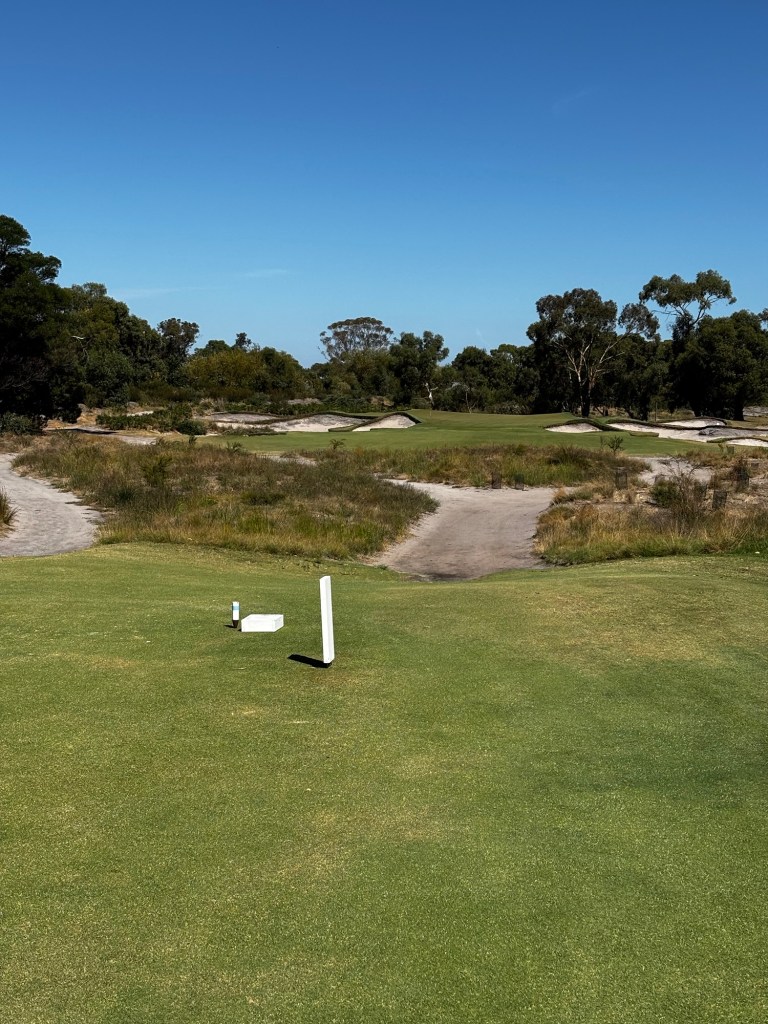
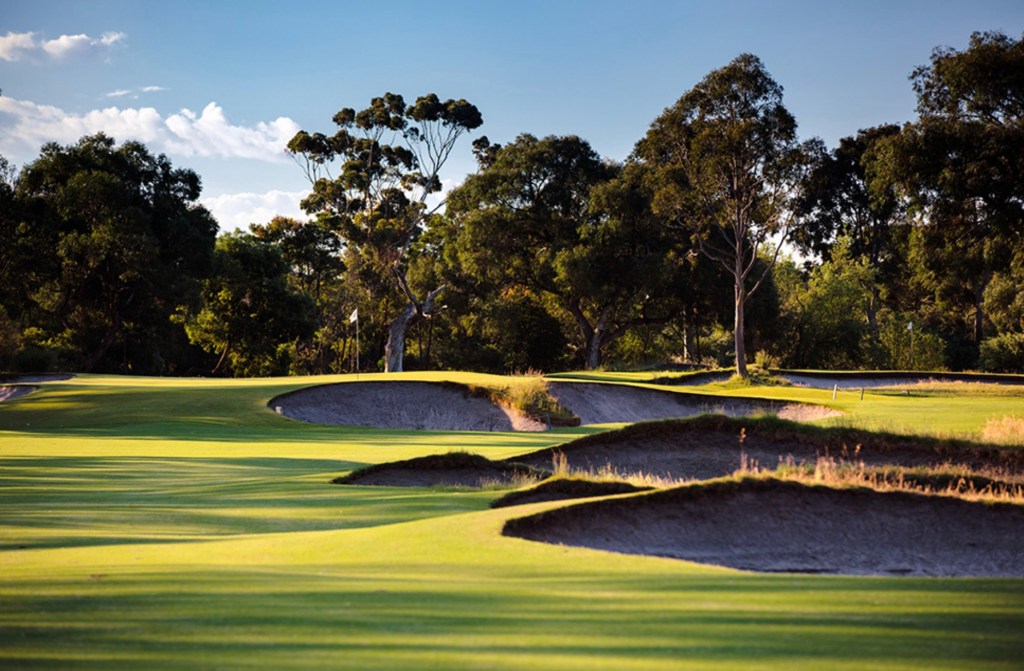
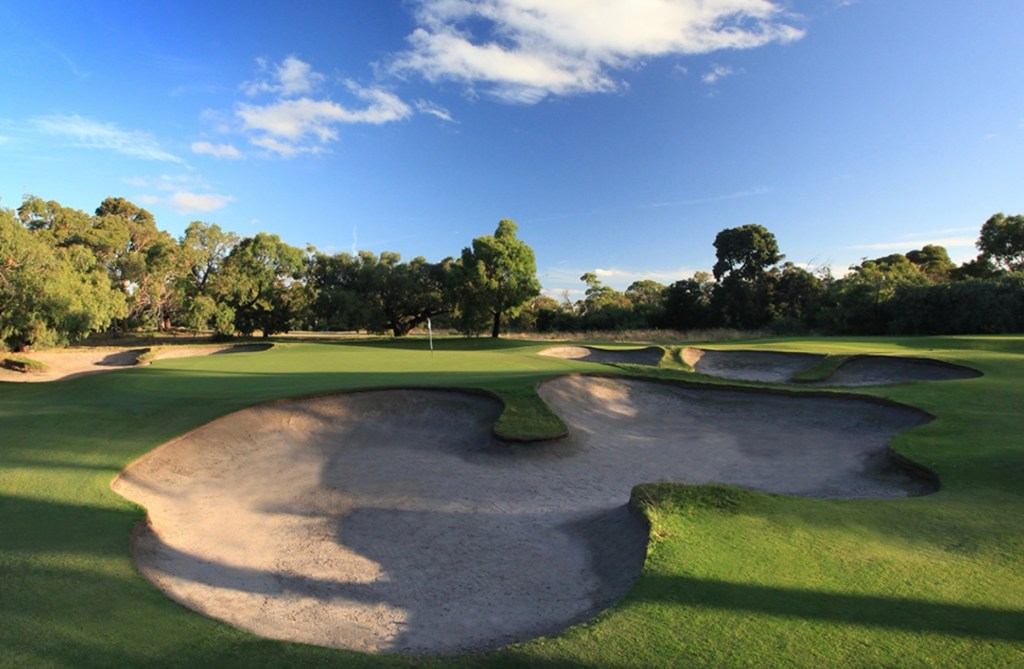
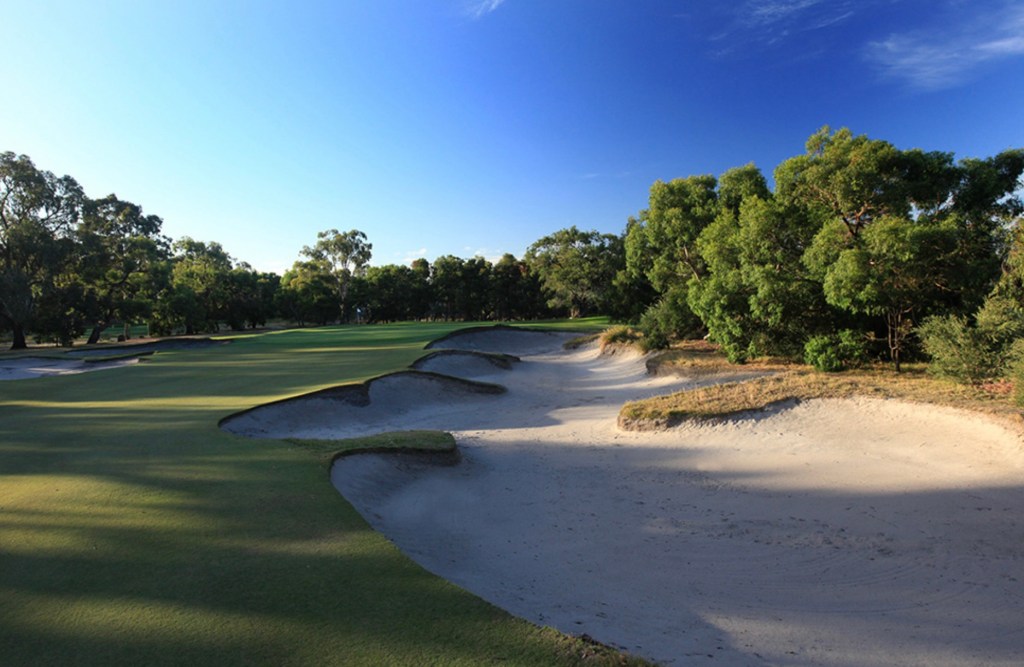
While not overly long, the course still requires strategic shot making to avoid the insidious fairway and greenside bunkers. Many greens have subtle slopes that means a good (?) shot can trickle and trickle and end up in a bunker.

If there’s a lesson to be learned from these sand belt courses it’s that many players carry a sand wedge with the bottom (bounce) of the club ground down to a very small flat surface (4 degrees). Obviously we weren’t carrying such a club. That’s partially the secret to escaping the bunkers given there is usually a minimal (!) amount of sand to help the ball out.
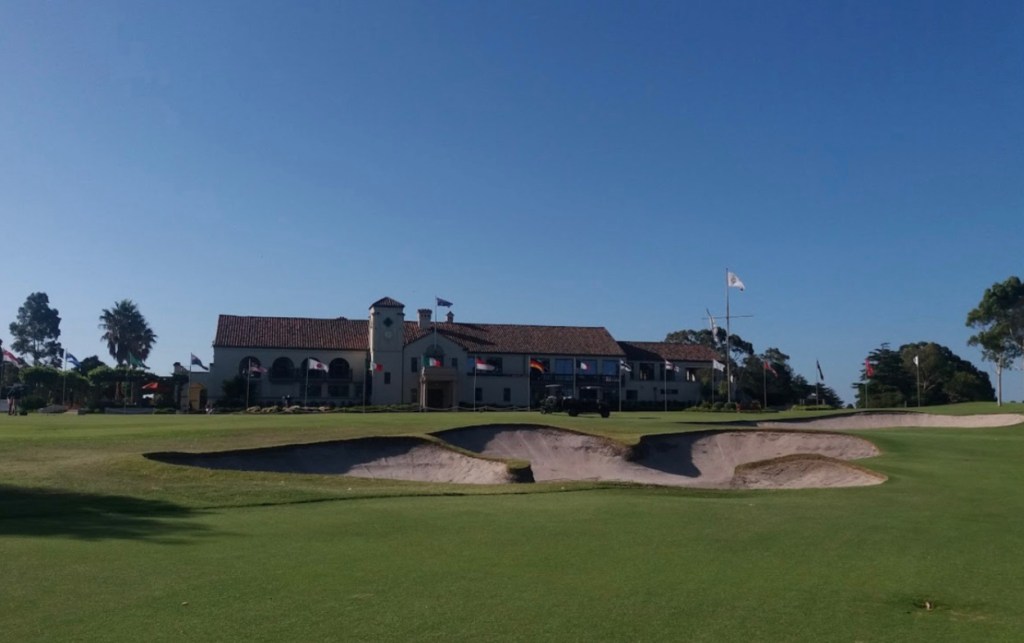
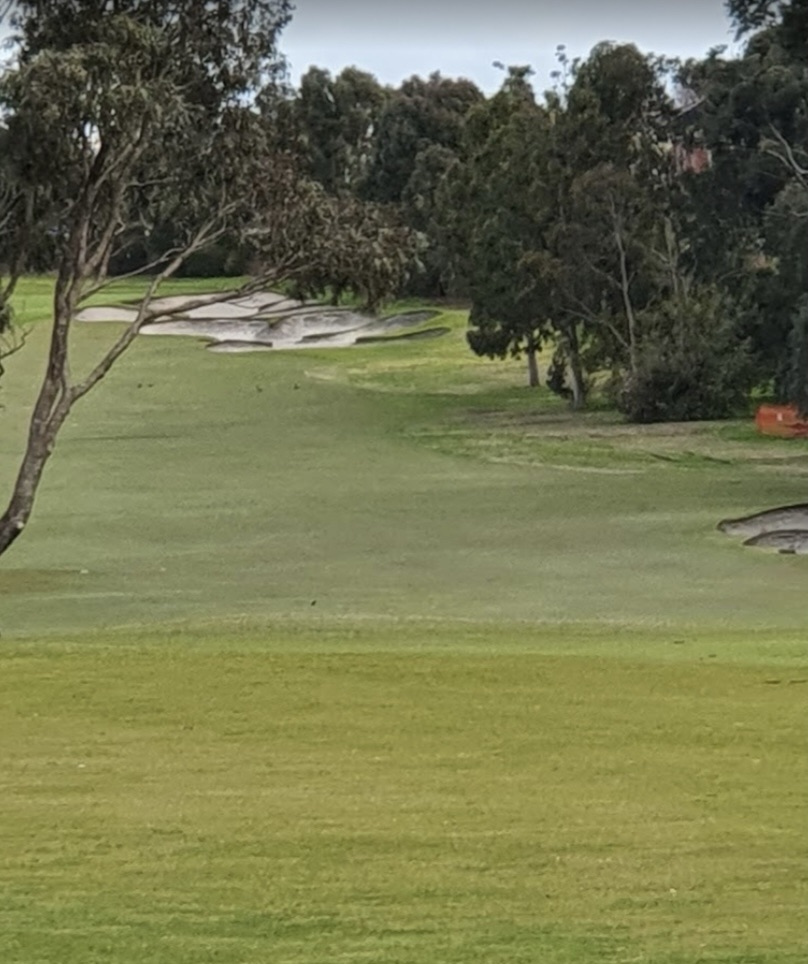
As we didn’t tee off until nearly 3 pm the long shadows added an element of uncertainty to reading the greens. Between regular visits to those bunkers and weak putting it was a long day.

Fortunately our visit culminated with a wonderful farewell dinner as our group tour came to an end. Lots of speeches and thank you’s with promises to reciprocate visits both at home and abroad.
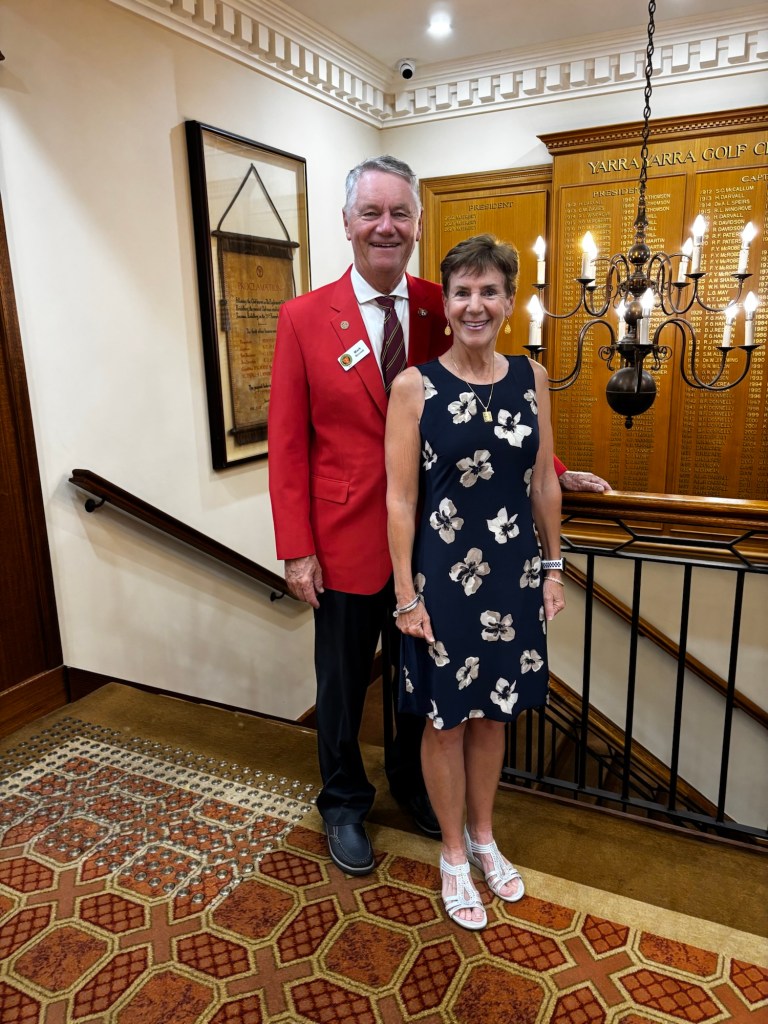
The Canadians are scattering tomorrow, some still with weeks of holidays planned in New Zealand and other places. A few are heading home as early as possible.

Great new friends, both Australian and Canadian, a real mixture of sights and sounds from a true cross section of the country (although really only a small slice), thousands of miles travel from the tropical north to the sandy south, access to iconic golf courses and on and on. It’s been a long three weeks and there’s a 21 hour flight to get home so we’re not quite done yet.

Mo will be back on the road in a few months with plans to hike a sizable portion of the Camino trail in Spain. Hopefully she will blog her adventure. Stay tuned.
Melbourne – Night Time

Tap on the picture to see the full version.

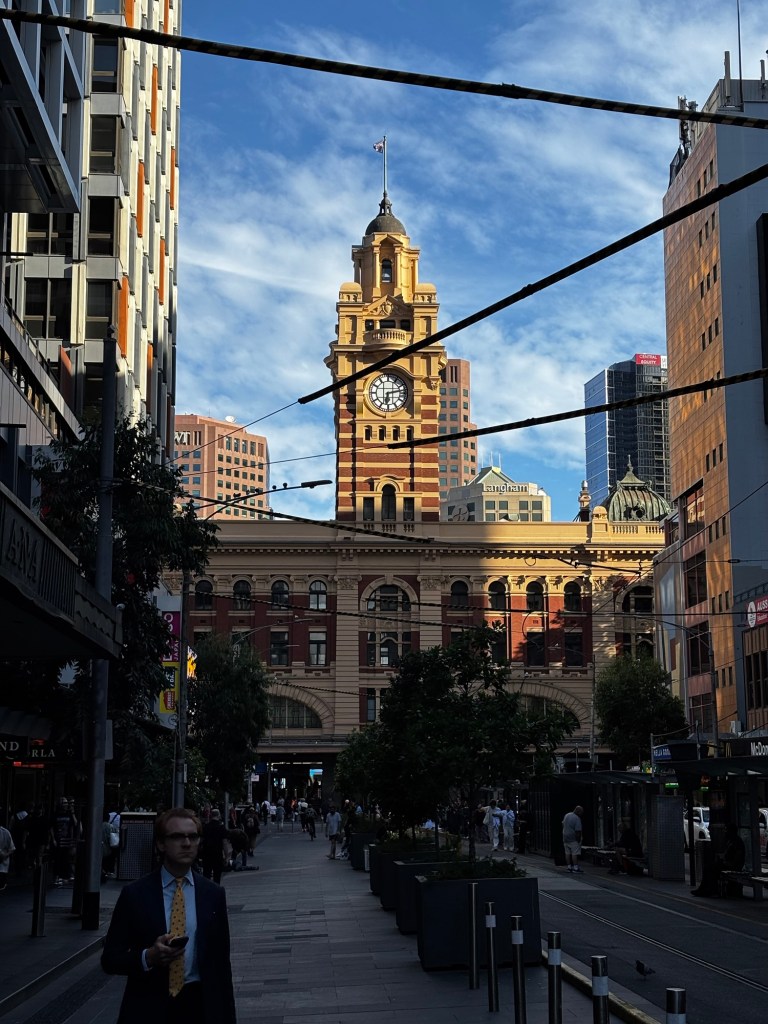
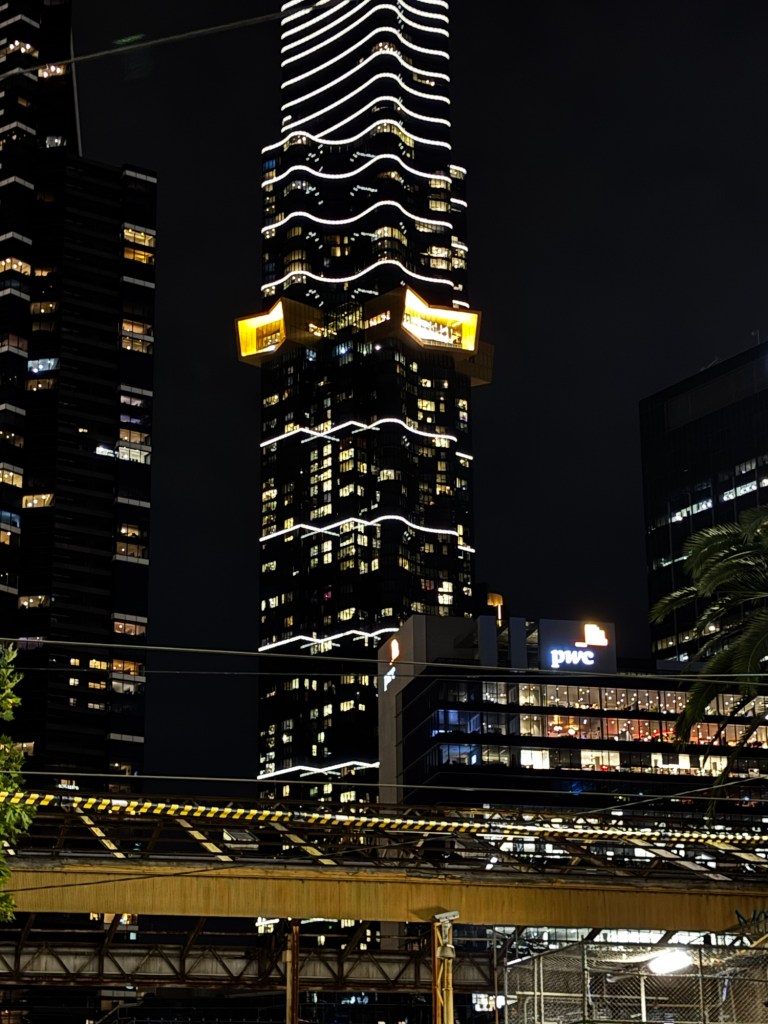
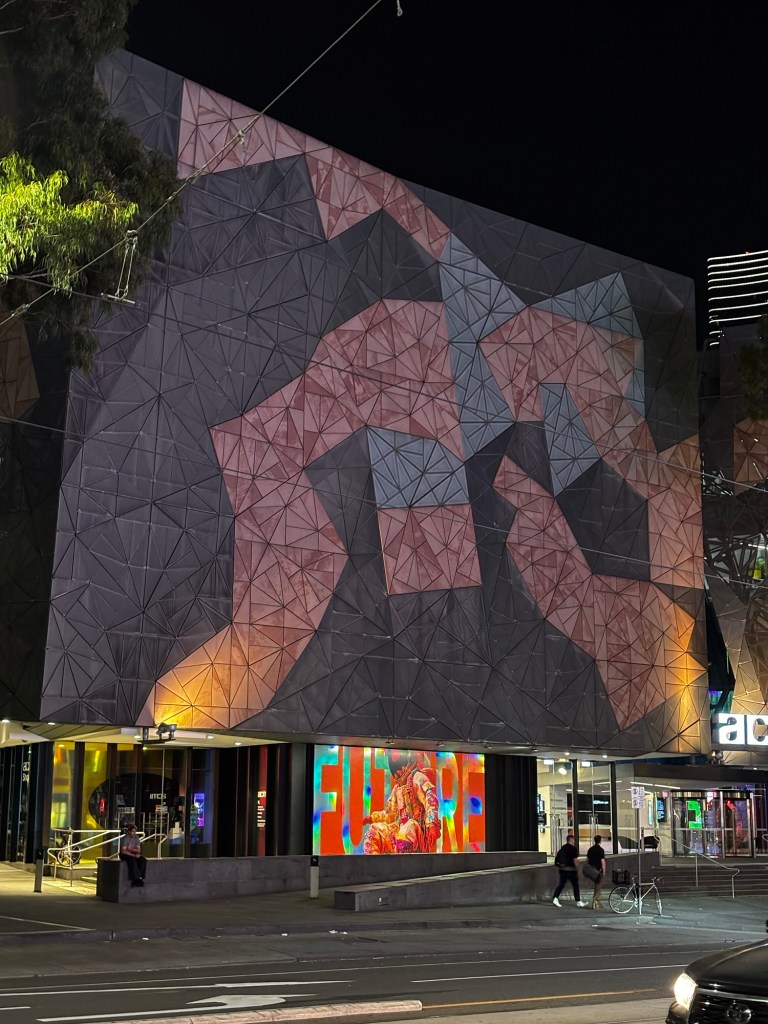
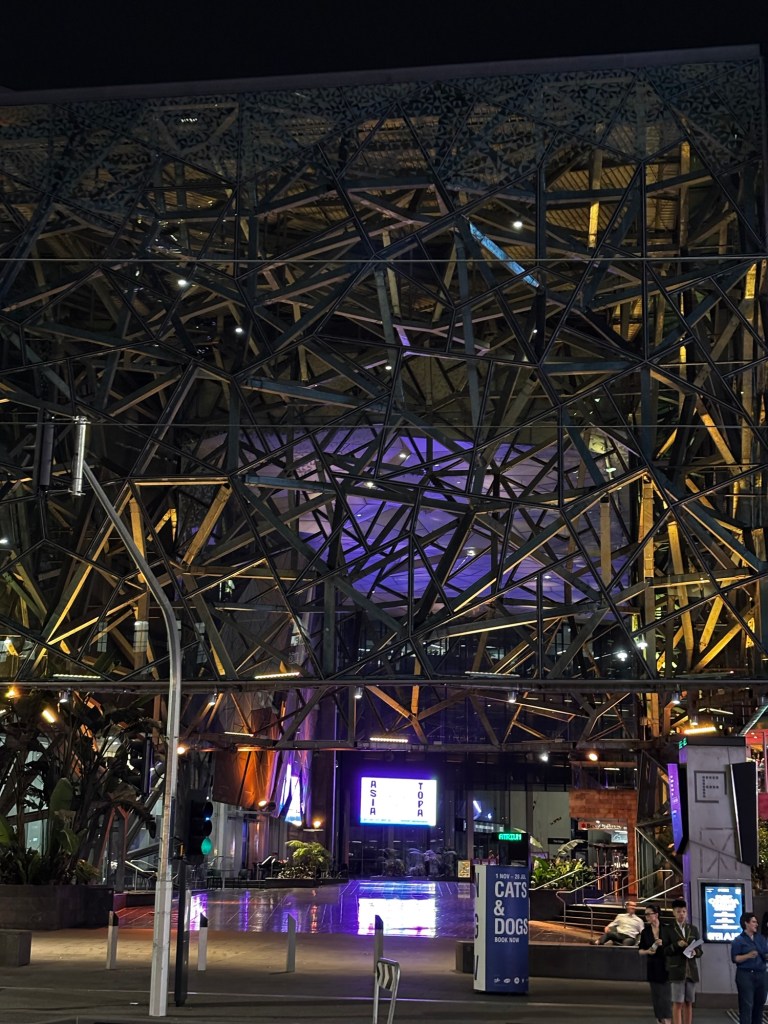
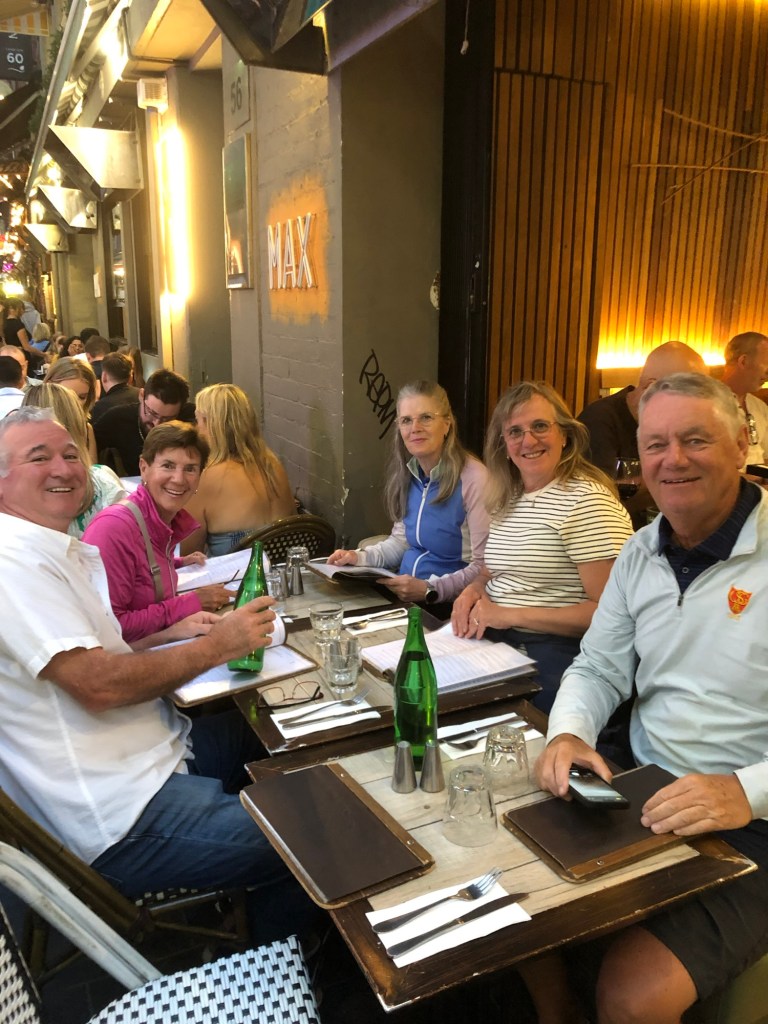
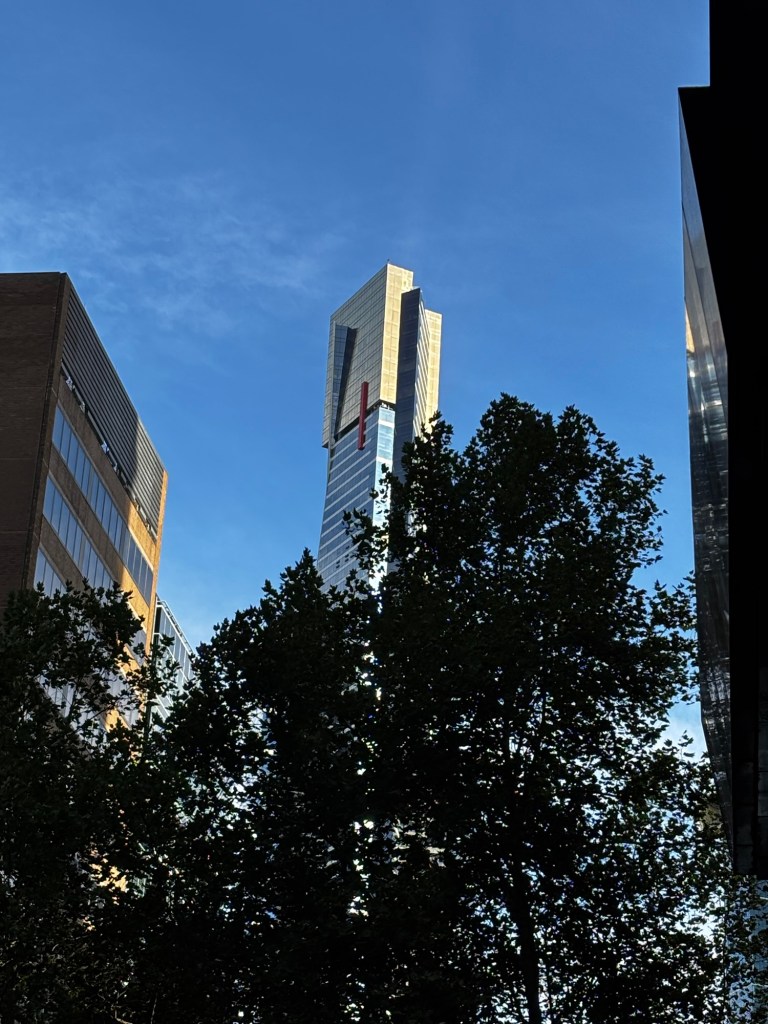
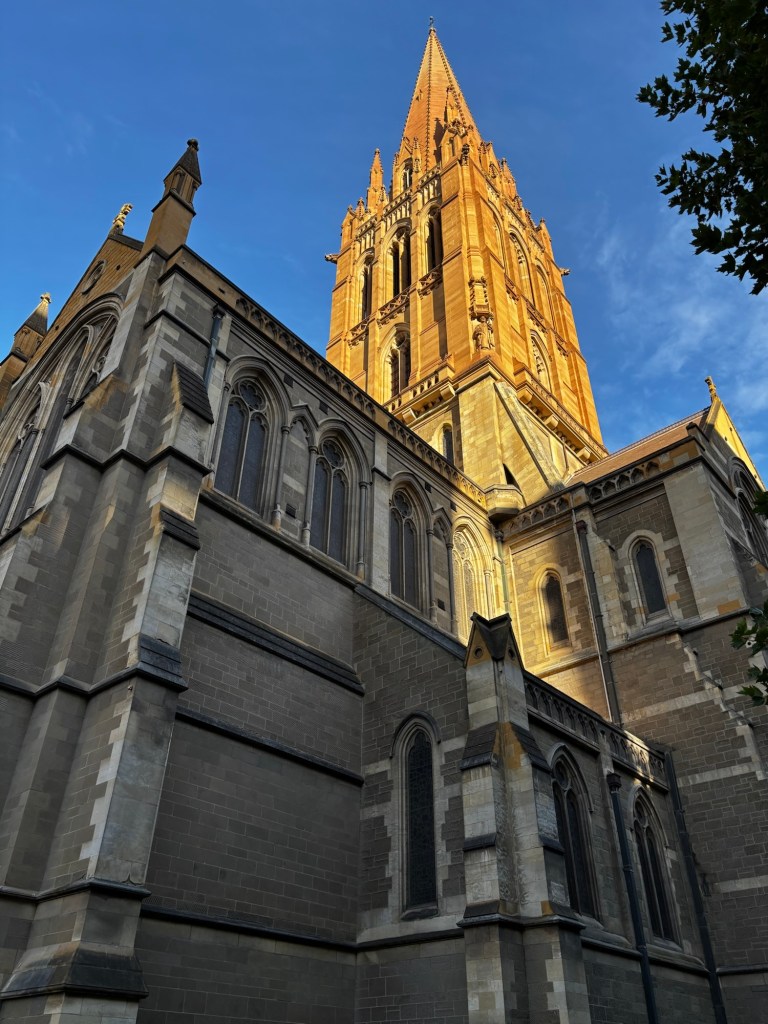
Back from wine tasting and chocolate nibbling we set off to explore a small portion of Melbourne while seeking a Vietnamese French restaurant. The mix of old and new architecture provides a great backdrop.

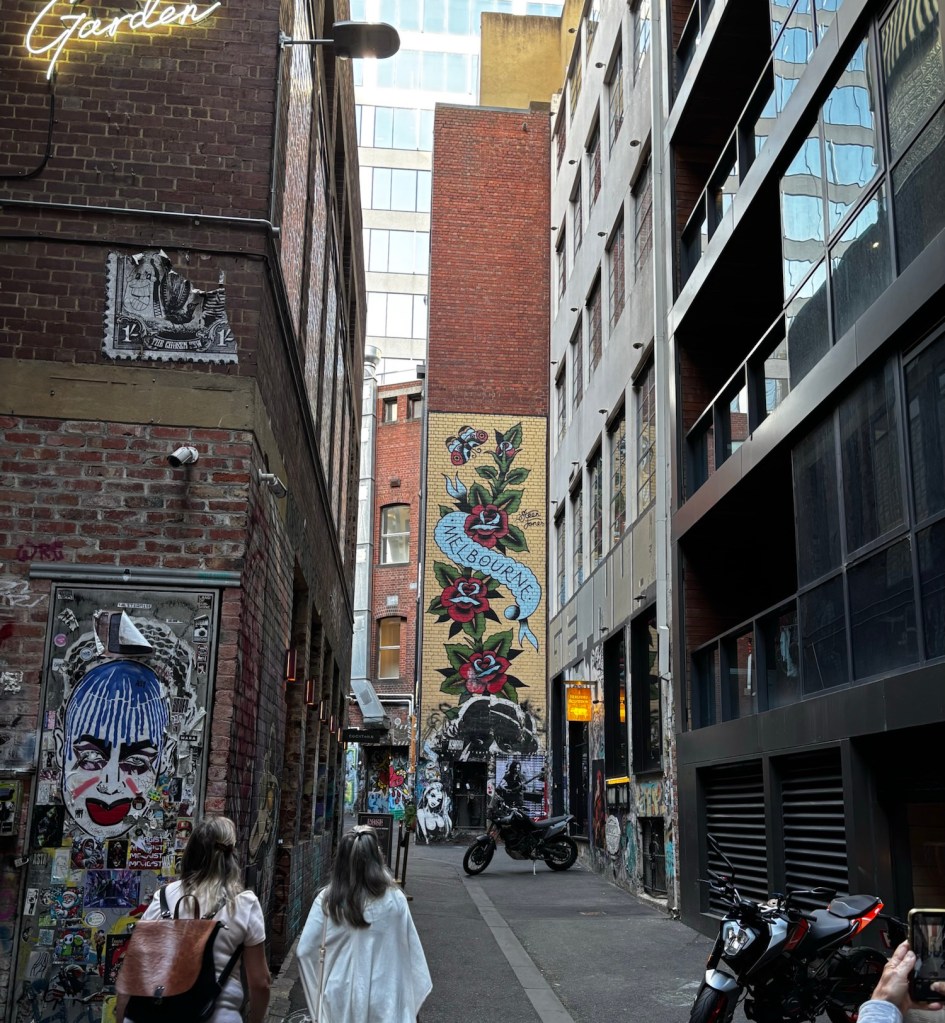
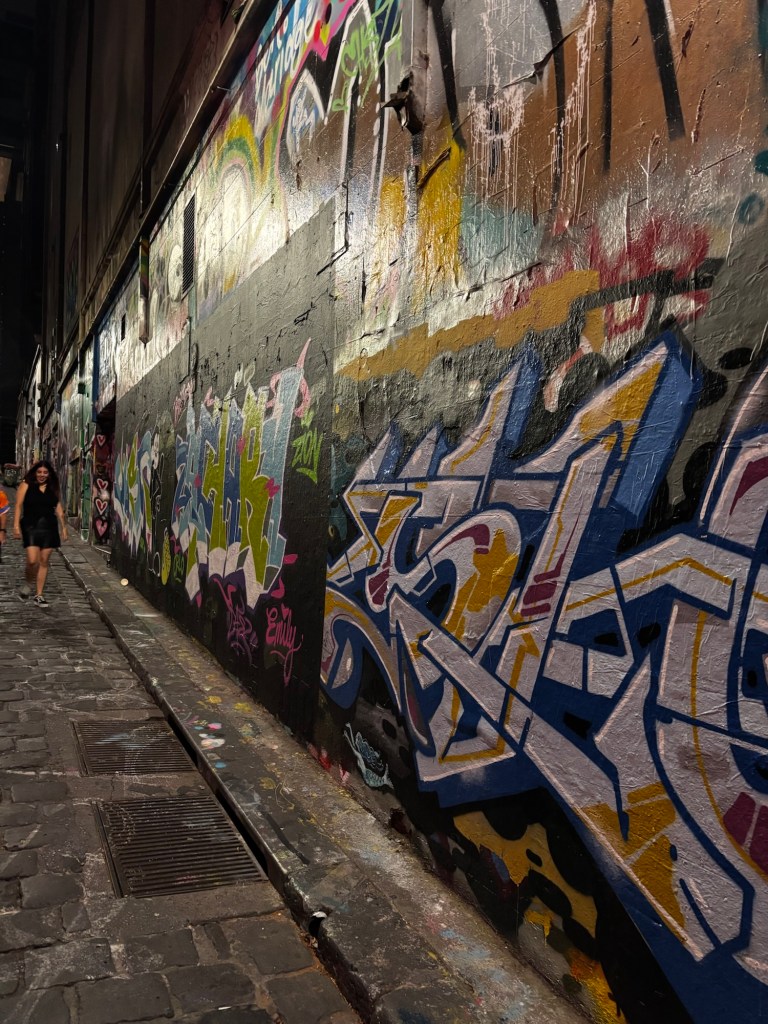
Melbourne is densely populated but utilizes lane ways to accommodate restaurants and bars.

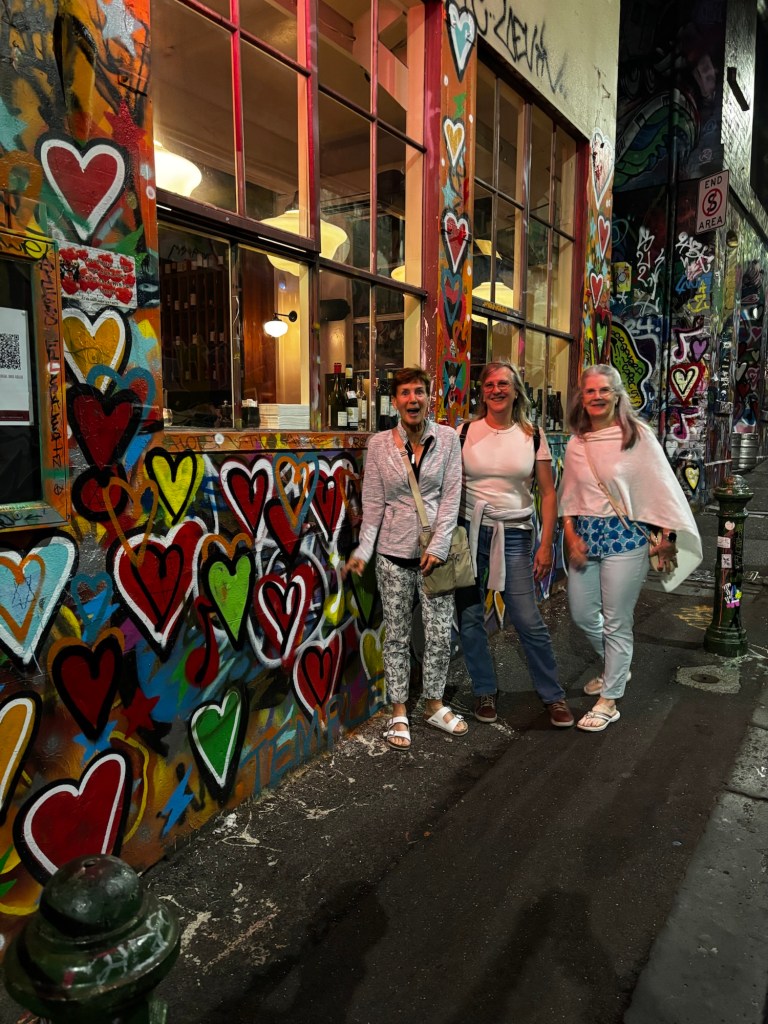
It also seems to attract graffiti artists.

We had an excellent meal once the menu was translated and explained to us. More wonderful architecture to gaze at with the thinking of what Toronto has to offer.

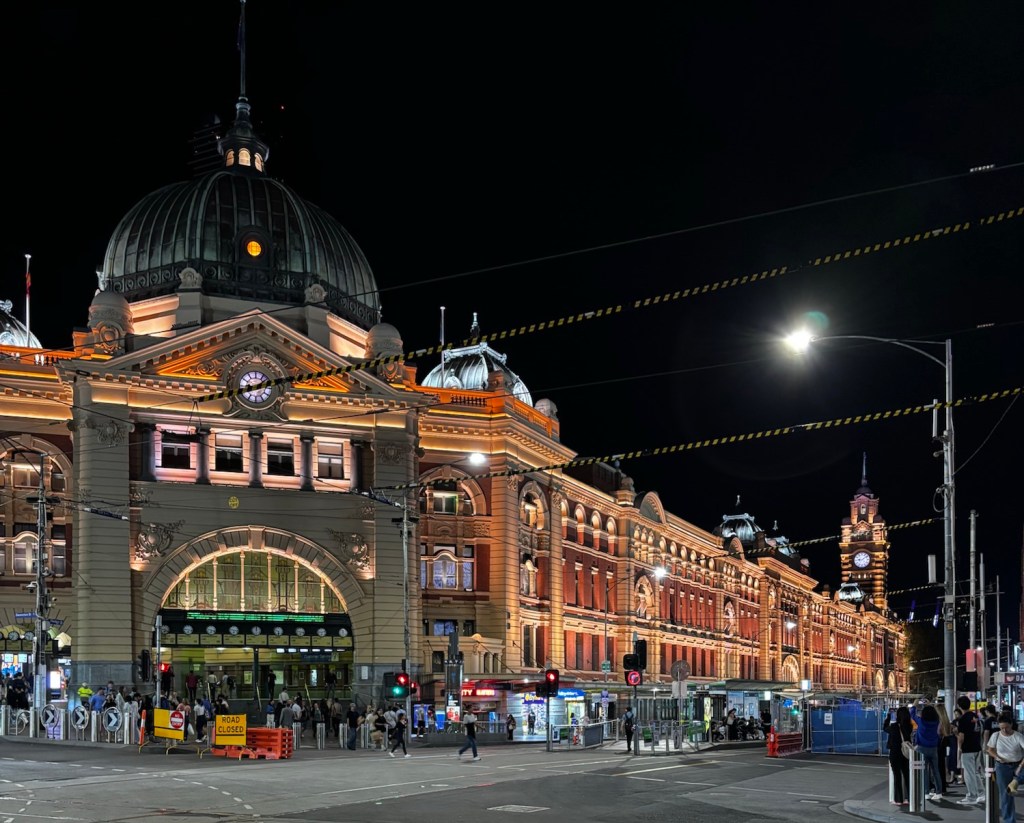
The block long iconic train station at night looked very impressive.

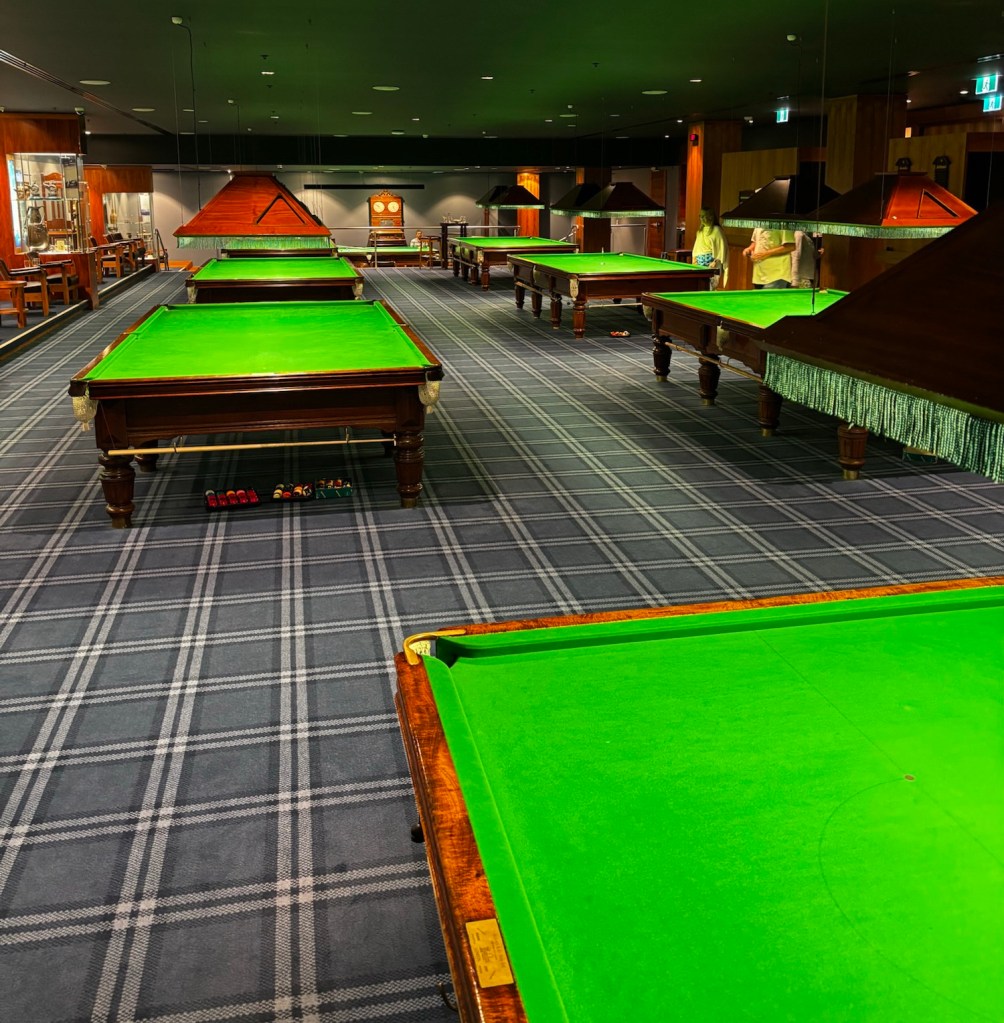
By entering a different level of our hotel we discovered an incredible billiard room. A pity time and energy were lacking.

Tomorrow we wrap up our sandbelt golf odyssey at the Yarra Yarra golf club.

Yarra Valley – Wine Tasting

Tap on the picture to see the full image.

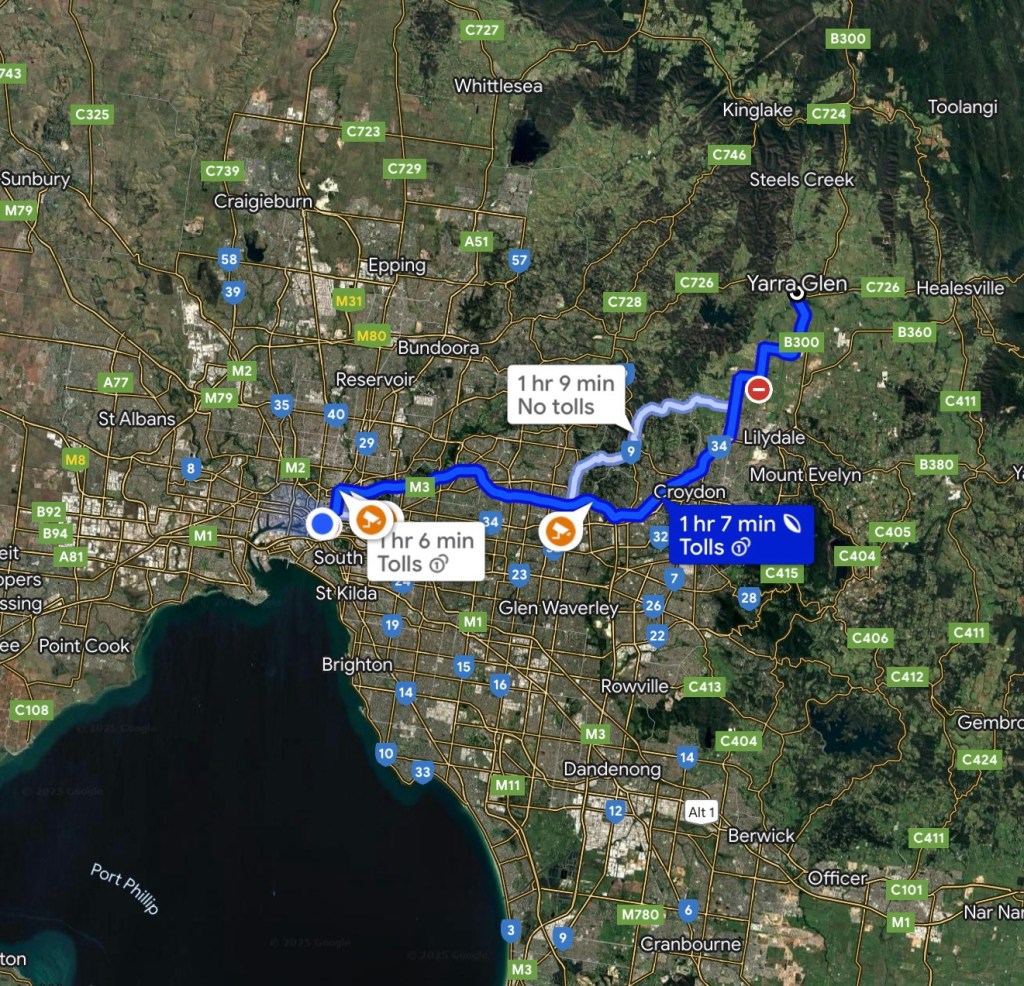
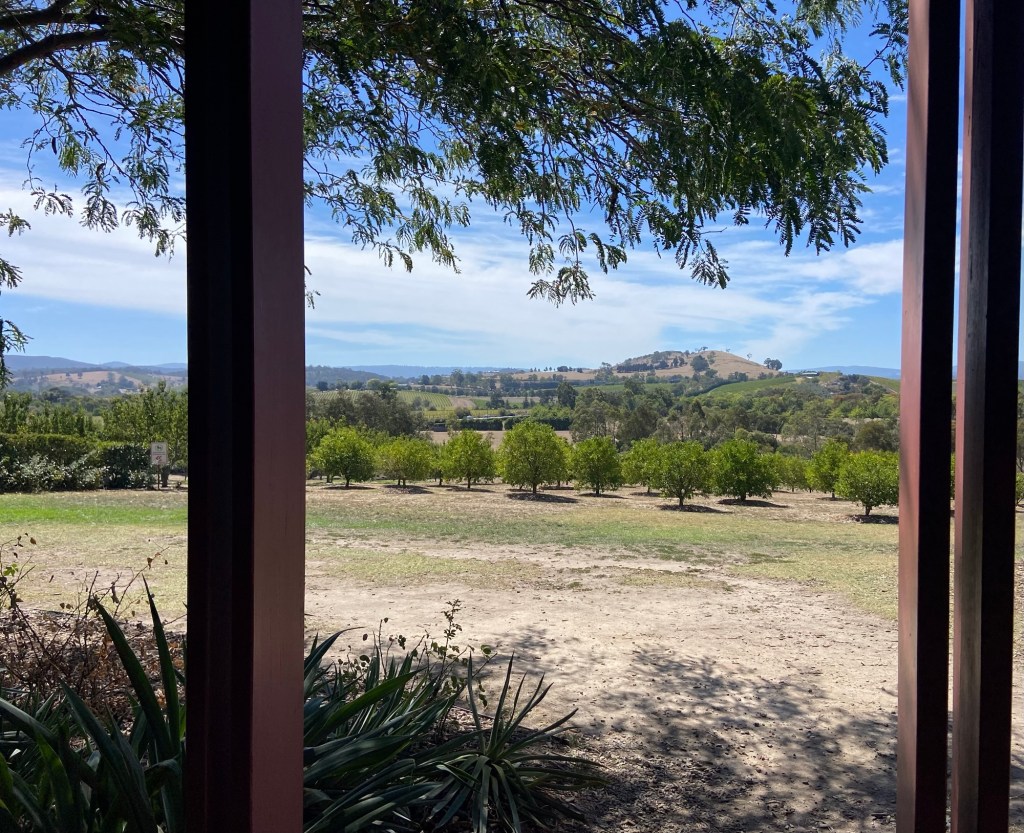
After golfing three days in a row it was time for a break. What better way than to head north of Melbourne into the Yarra Valley, one of the regions major wine districts.

Our guide explained the history of wine making in the valley which stretches back to the 1850’s. It was Australia’s version of the wild west with various parties making outrageous land claims and amassing thousands of acres, mostly to farm sheep and cattle.

Eventually the new government stepped in and sorted things out.

While the Barossa and McLaren valleys in South Australia along with the Hunter Valley in New South Wales may be better known internationally, the Yarra Valley in Victoria is a key part of the country’s wine industry.

There are over 80 wineries in the Yarra, many with a focus on Chardonnays and Pinot Noirs. Rose’s are becoming very popular as well

The valley really isn’t a valley in the truest sense being more of a plain before getting to the hills/mountains.

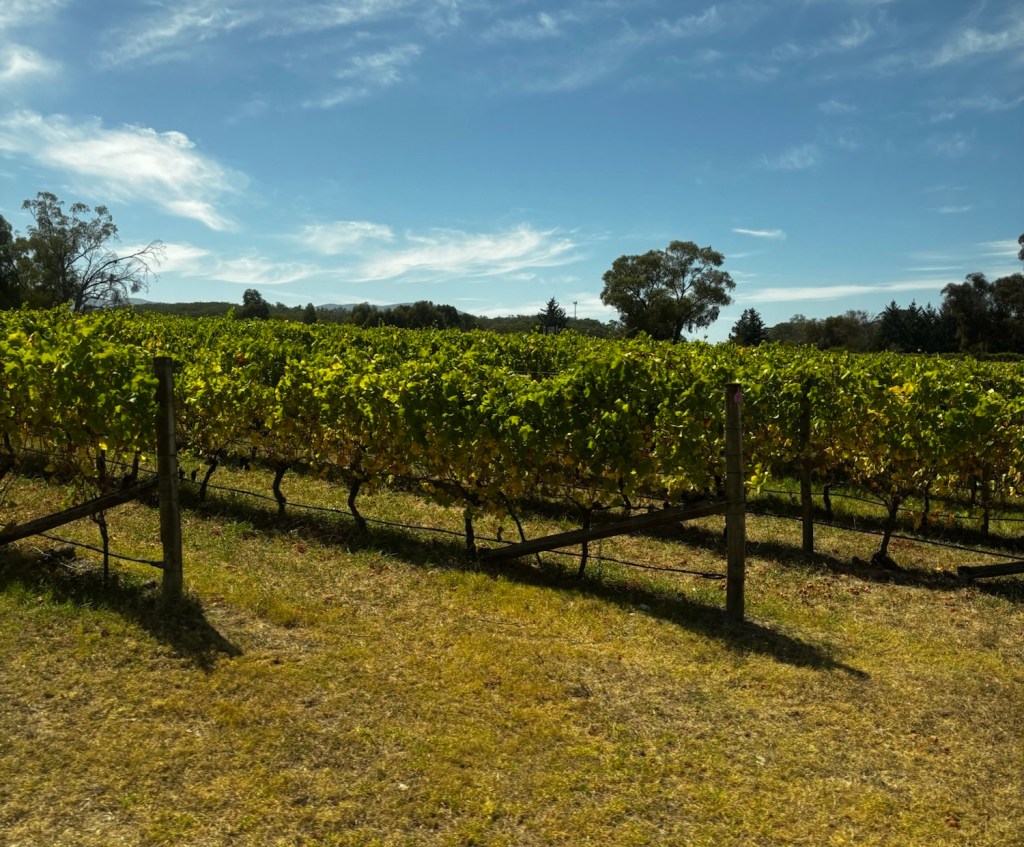
The valley is in the midst of a major summer drought and is a dry crispy brown and yellow.

The vineyards create a green oasis on this landscape.

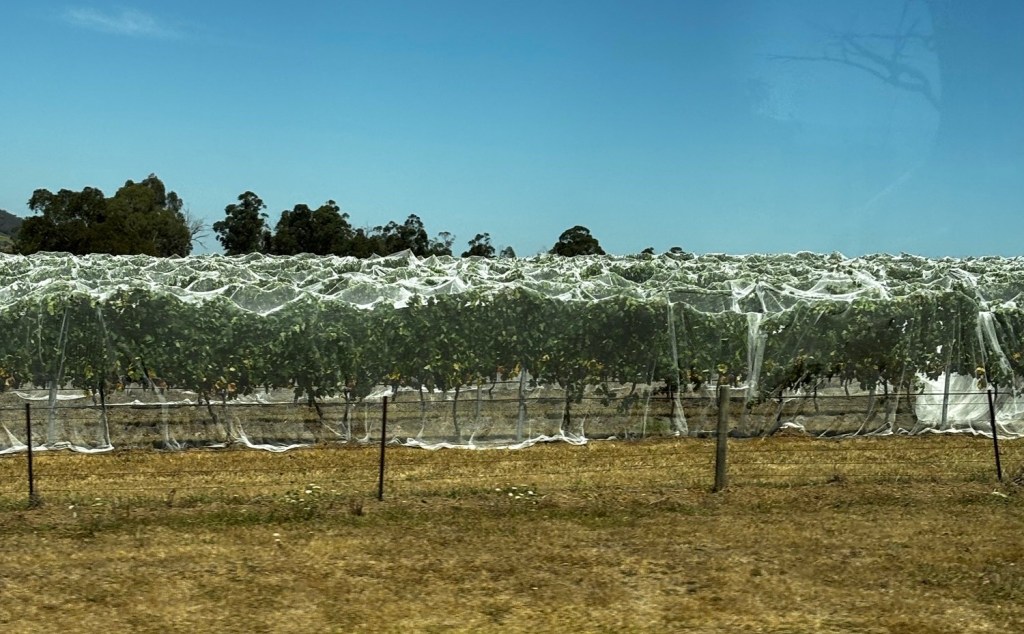
Interestingly, kangaroos are a problem as they love to eat the grapes. Hence many vines are covered in netting.

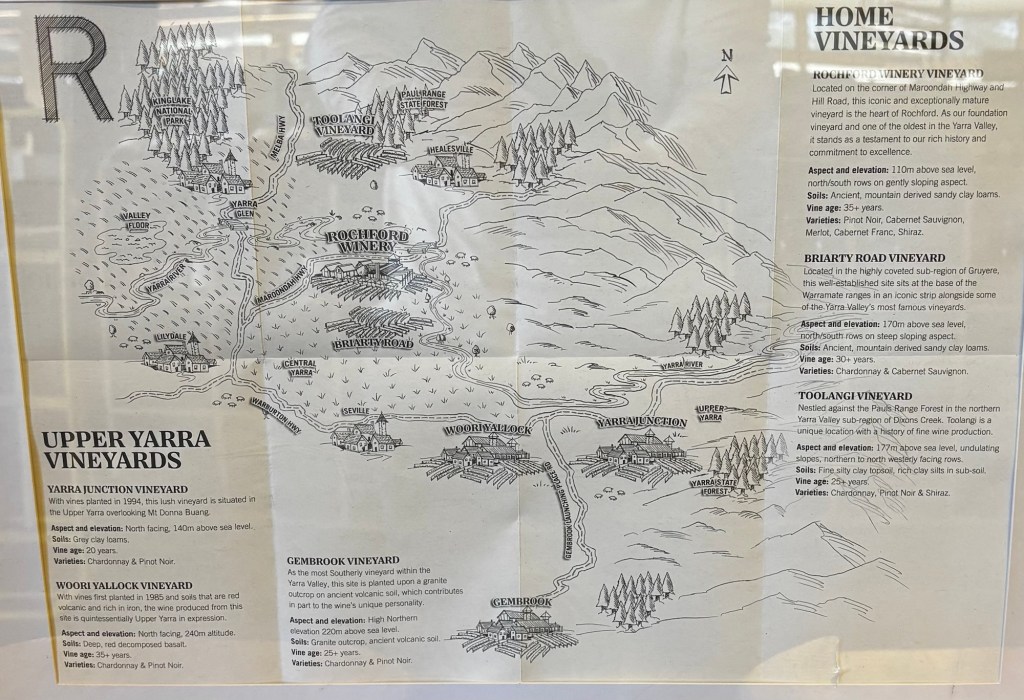
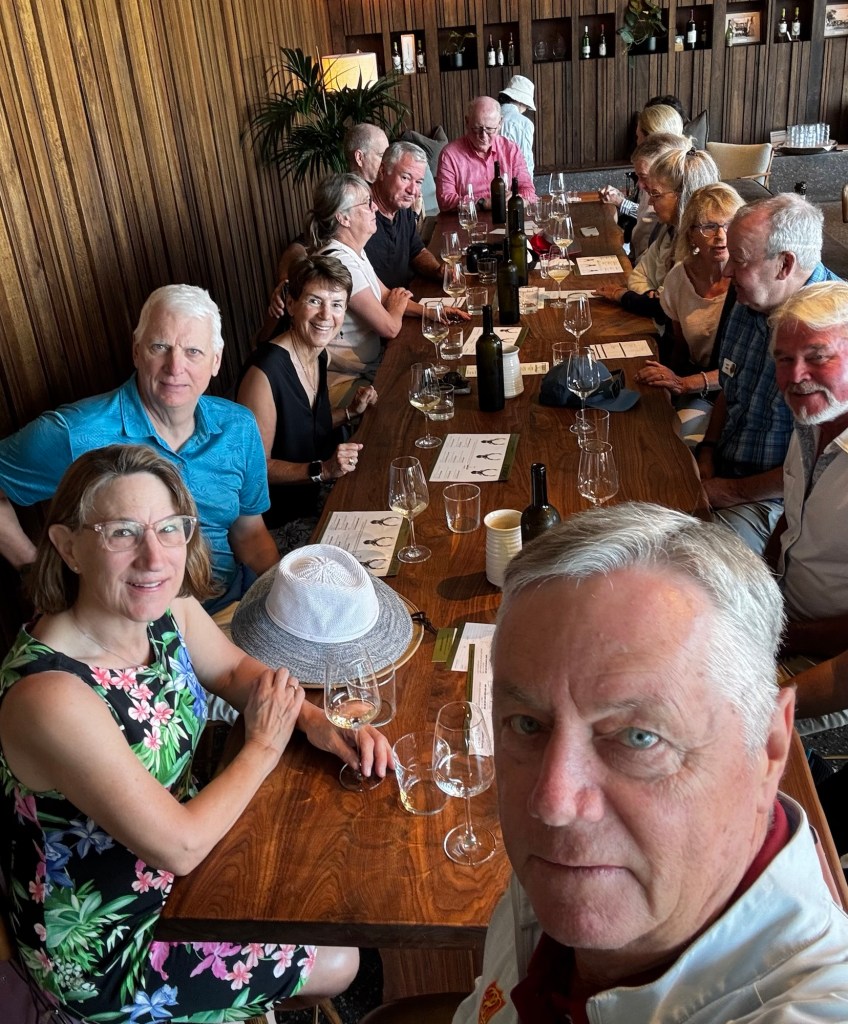
We visited three wineries, each offering their unique flavors. St. Hubert’s, Rochford and Stefani all produce modest quantities so their distribution is limited to Victoria and New South Wales.

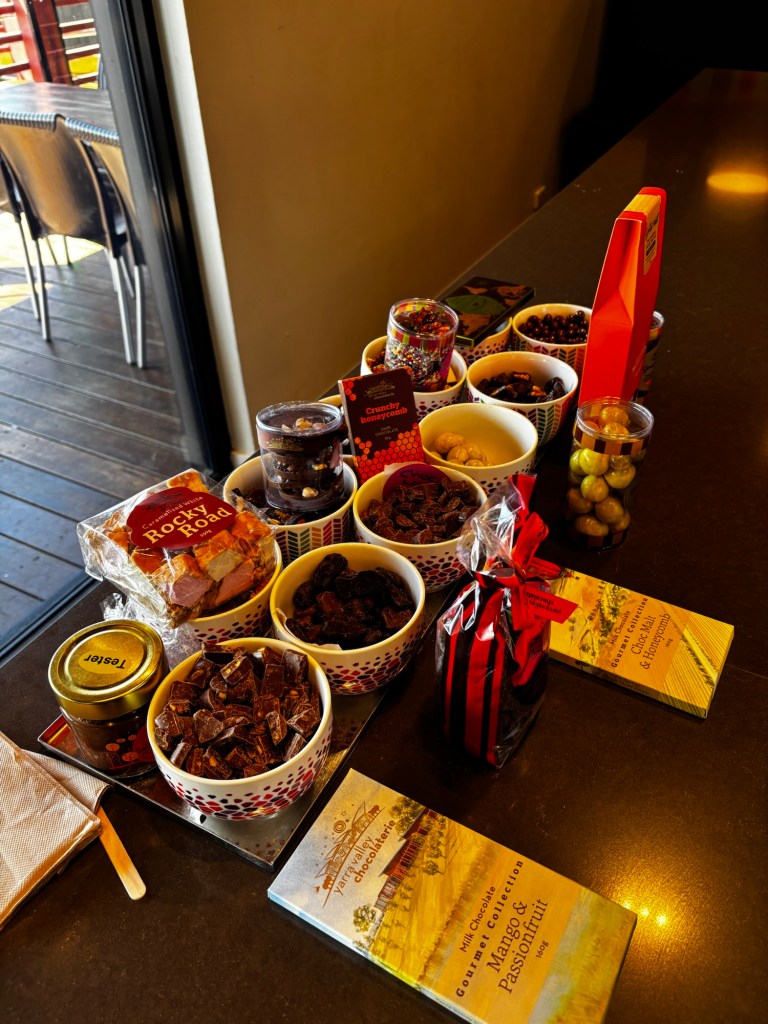
Our day also included a visit to a chocolate factory. We tasted a dozen different flavors and learned about the process of making chocolate. Excellent and delicious.

Late afternoon return to Melbourne and another day done. Our evening exploring a part of Melbourne was eye opening on how to get the most out of commercial space. That’s our next stop.

Melbourne Golf – Royal Melbourne

When first conceived as a golf club in 1891 in Caufield, there was no Royal designation. That happened in 1895 when Queen Victoria proclaimed recognition of the now Royal Melbourne Golf Club.

In 1901 the club moved to Sandringham, near its current location. In 1926 Alistair MacKenzie began designing a course on adjacent fields in Blackrock. This would become the West course. In 1931 Mick Morcom designed the East course.

Consistently ranked as the top course in Australia and amongst the top five globally, RMGC West is difficult to describe. There are many generous fairways but a miss in a fairway bunker is penal.

There are significant uphill and downhill lies adding to the length of some holes.

And, of course, the cavernous green side bunkers!

It was a true test of golf made even more challenging by the wind that sprung up. The good news was that the wind brought a “cold” front that dropped the temperature from the mid 90’s to mid 70’s which was much more comfortable.

As with most golf trips one wishes the opportunity existed to play a course a second time to both enjoy the layout while, hopefully, playing better given that little bit of knowledge. Well at least we do have a standing invitation to return.

Next up is a day of wine tasting in the Yara Valley. Oh, and a tour of a chocolate factory. With all the walking for golf (20,000 steps per day) it means we won’t have to worry about the calories. Ha!

Melbourne Golf – Kingston Heath

Our second round on the sandbelt was at the iconic Kingston Heath course, host of multiple Australian championships, pending host of the 2028 Presidents Cup and currently ranked #11 in the world.

First established in 1909, the club moved to its current location in 1925 and is thus celebrating its centenary. It is truly a classic example of a sandbelt course with dozens of penal bunkers requiring strategic shot selection at every turn.

We faced the added obstacles of a strong wind and a big yardage (6,126 metres (6,700 yards) with many of the par 4’s well over 420 yards.

The fairways are lined with a variety of trees – golden cypress, gum trees, eucalyptus and a gnarly tree called Ti which has trunks growing horizontally. Given the possibility of snakes lurking in the underbrush, errant shots received a cursory look.

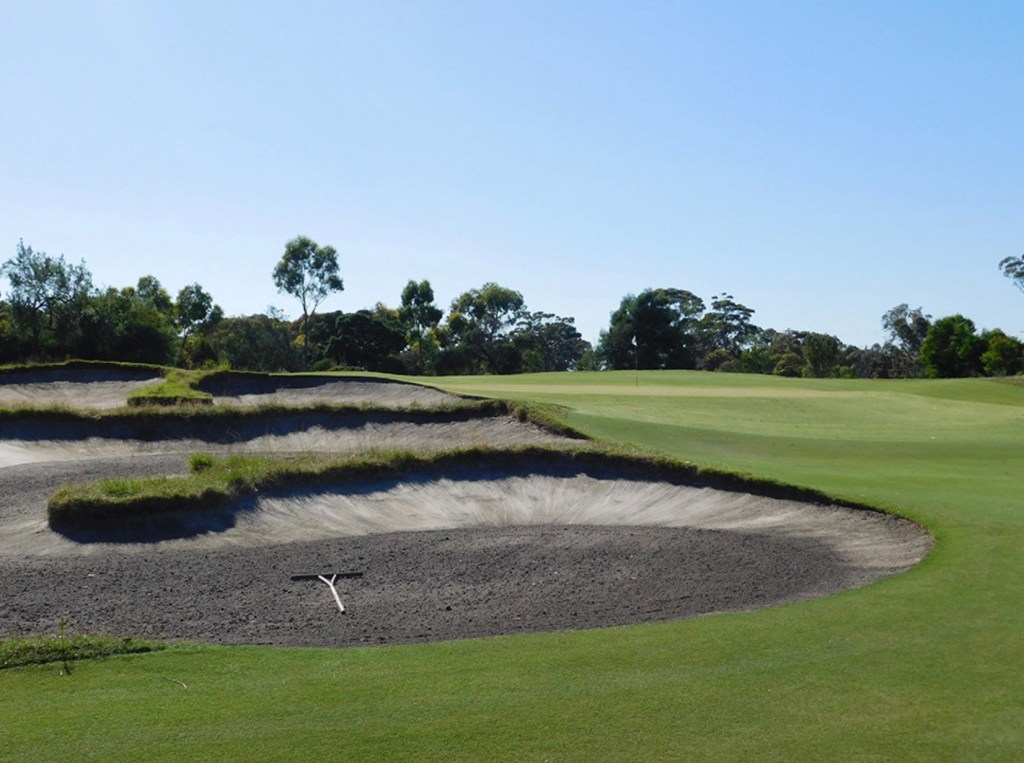
One of the bunkers is so large and deep it’s called Big Bertha (and yes I found it – got out successfully but missed the par putt). It’s front left on the following picture.

The turf was perfect, the greens consistent and the weather outstanding. Along with a wonderful Aussie host who coached us around the course it was a great day.

Post golf a few summoned the energy to head off to a pedestrian only street called Hardware Lane. It’s full of restaurants and bars and according to the locals, full every night. Great food and fun.

Tomorrow the tour continues at Royal Melbourne, the west course, currently ranked #5 in the world.

Phillip Island

Click on the photos to see the full picture.

Nine couples opted for a full, and I do mean full, day traveling to Phillip Island.

Our young driver, Mike, kept us entertained with facts and figures about Melbourne and then the countryside as we made our way to the coast.

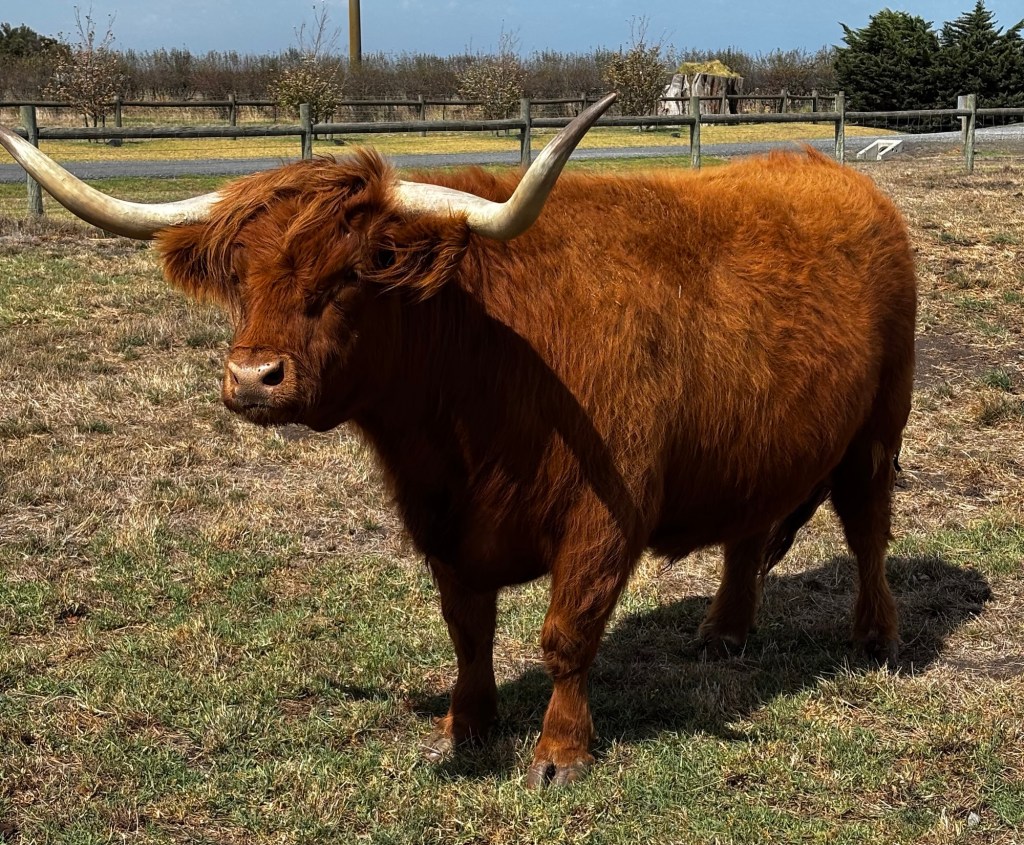
A mid way stop included a dairy farm where this fellow looked quite dangerous but nothing happened when approached for a photo.

We carried on to the island which has an eclectic history of farming and other economic activities but now has become a very popular tourist destination.

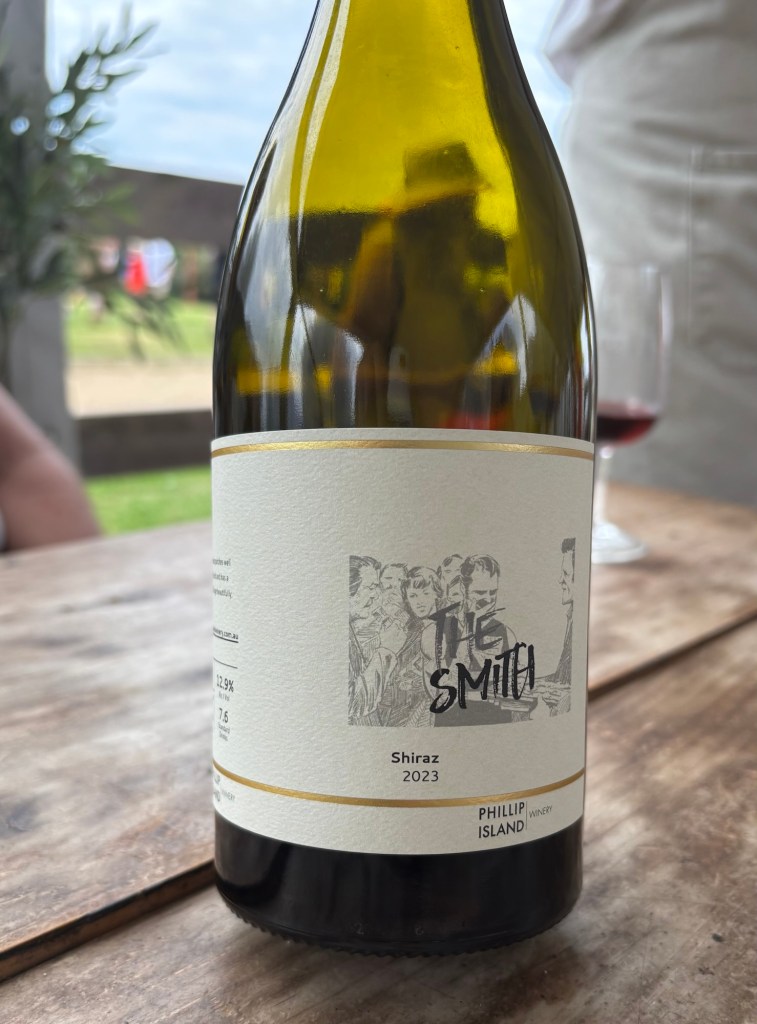
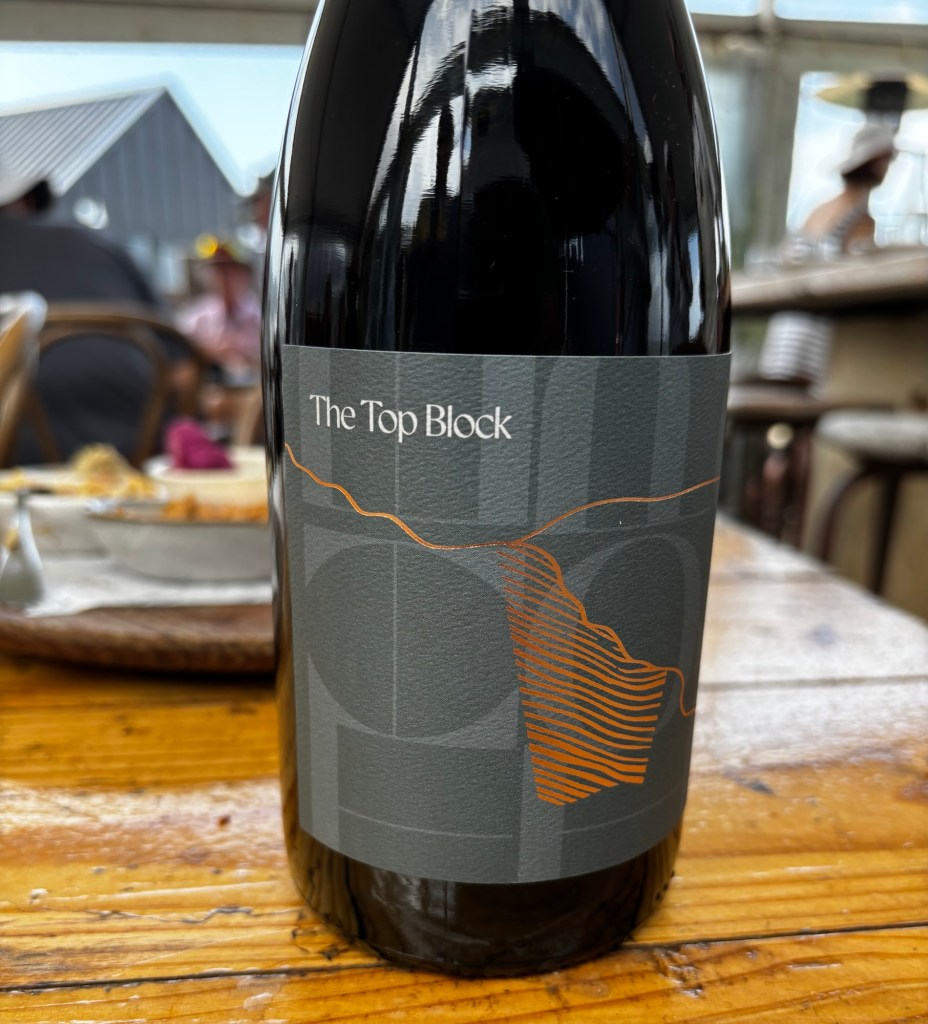
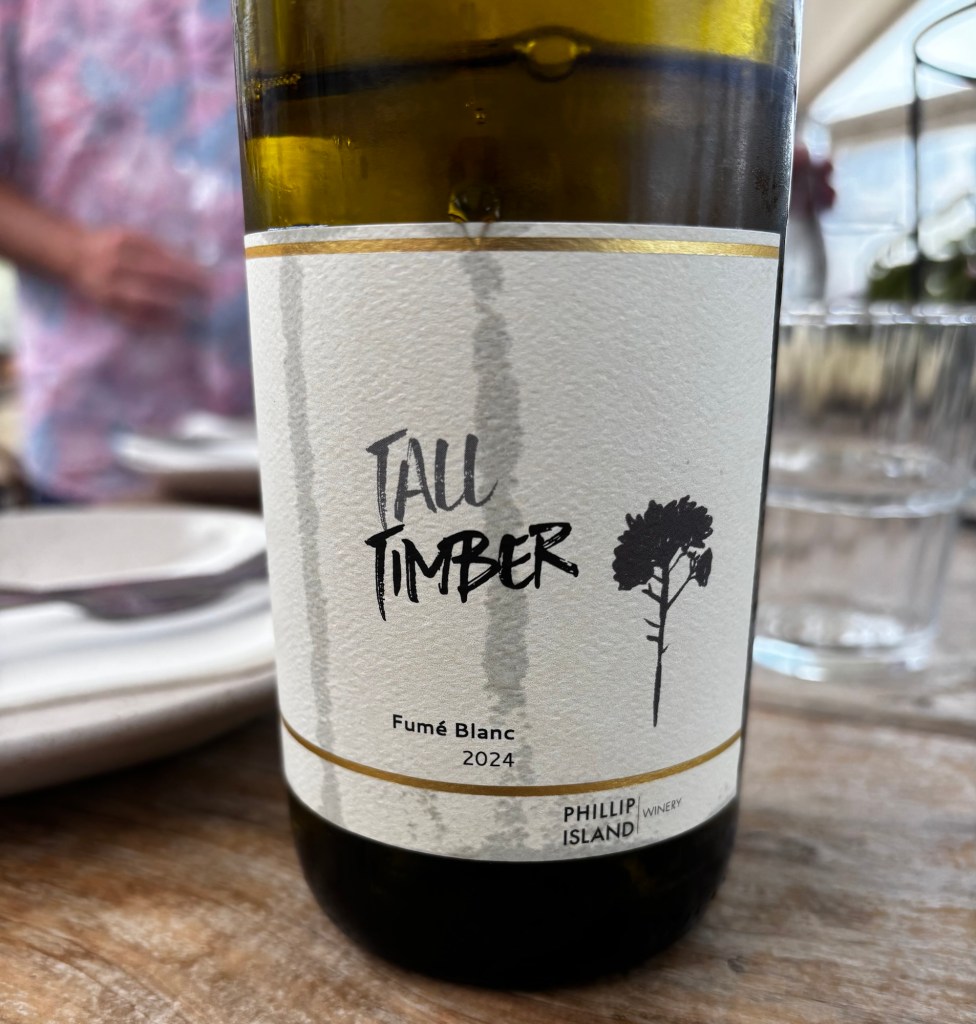
There is a nascent winery industry so our tour included a tasting at the aptly named Phillip Island winery.

None of the offerings were my cup of tea but it interesting to listen to the host describing the process used and the different varietals.

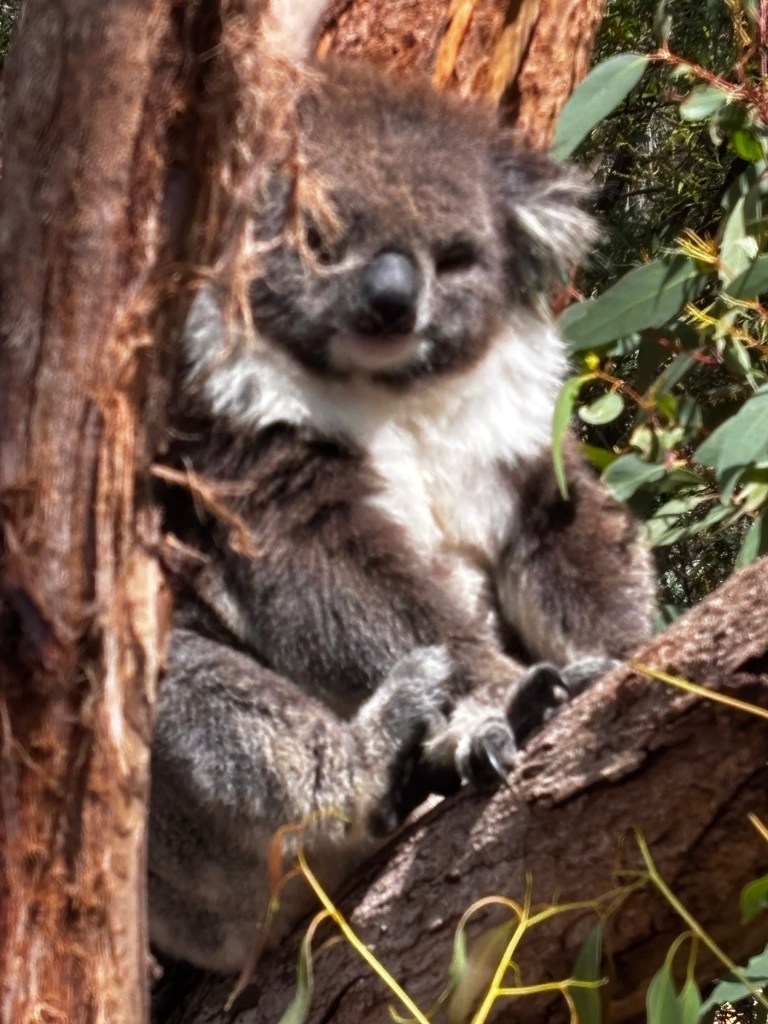
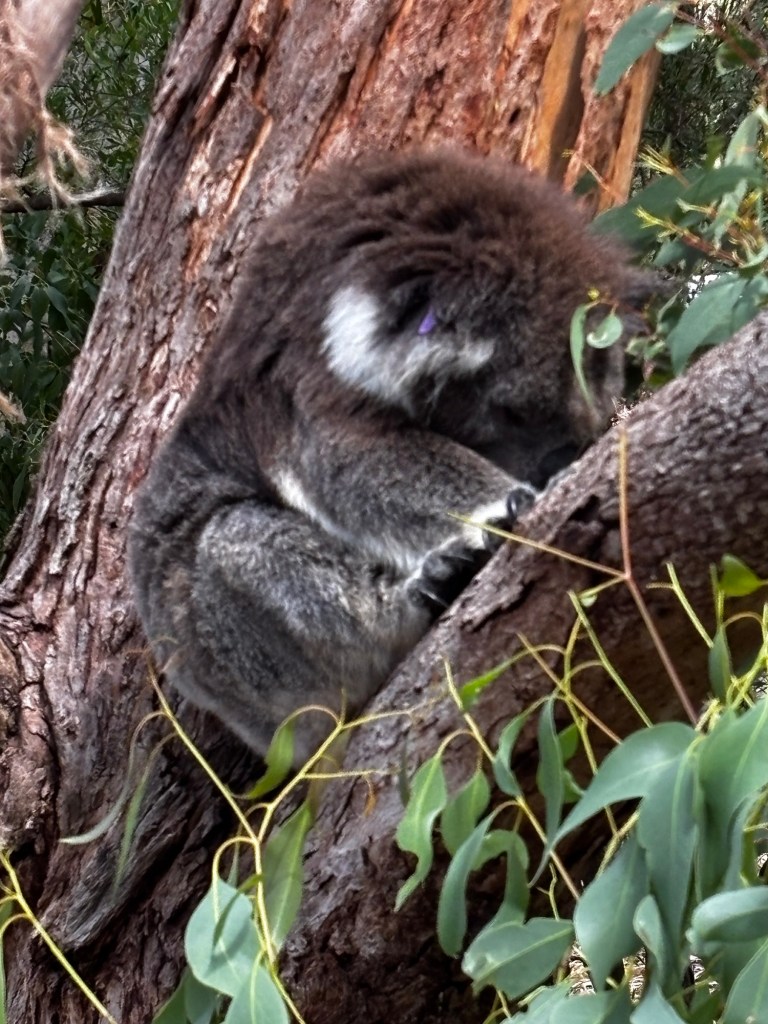
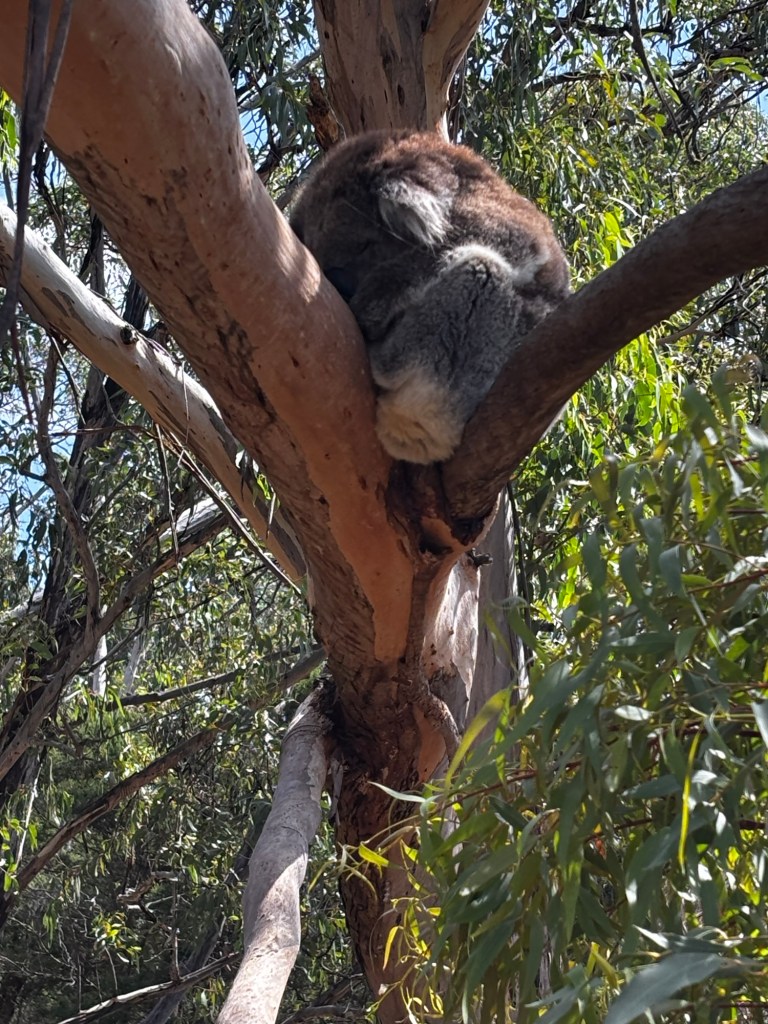
Then it was off to the Koala Reserve where a large plot of land has been designated as a mini game park focused on protecting a small Koala population. An elevated boardwalk provided great views although given the bear’s normal habits (sleeping 20 hours per day), most were tucked into the trees.

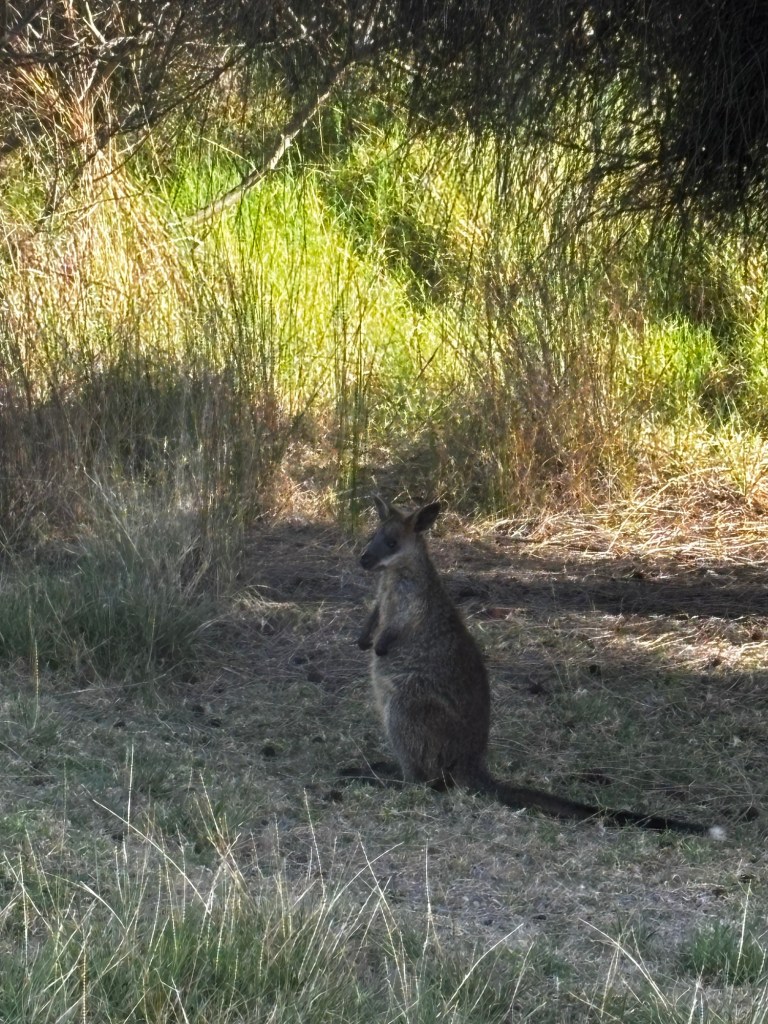
Birds and wallabies were also in abundance.

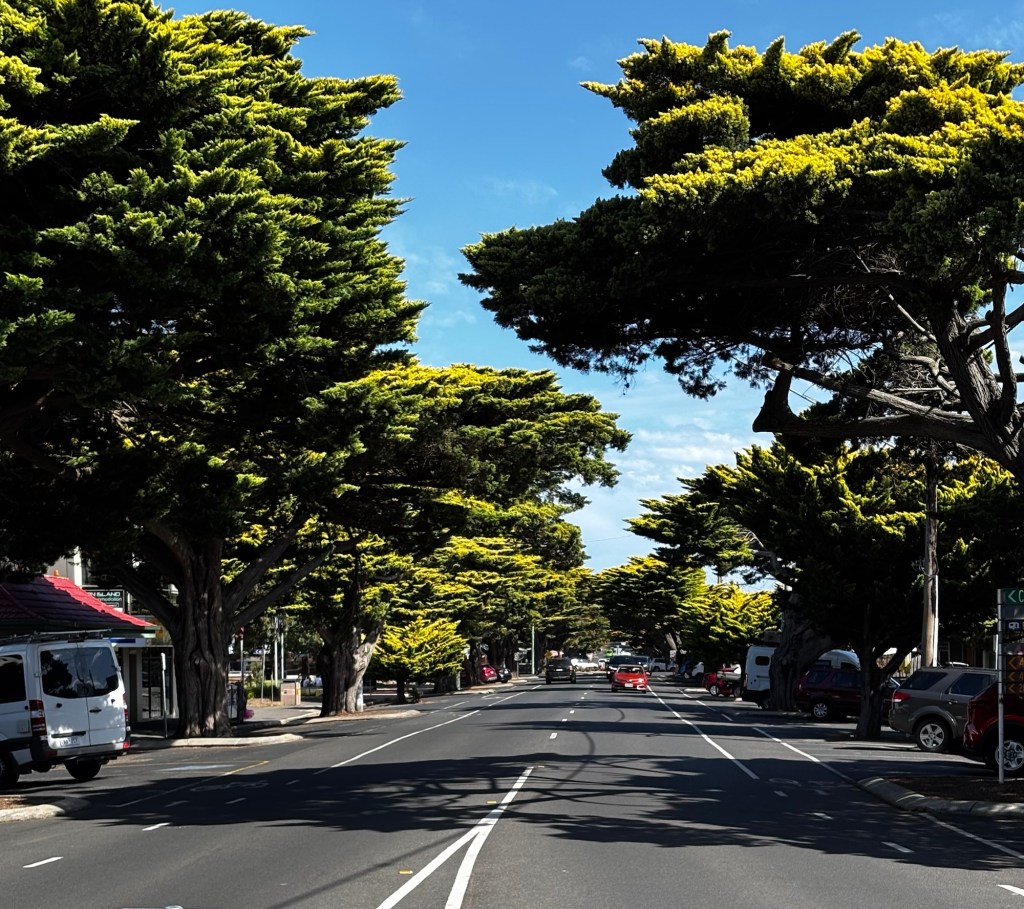
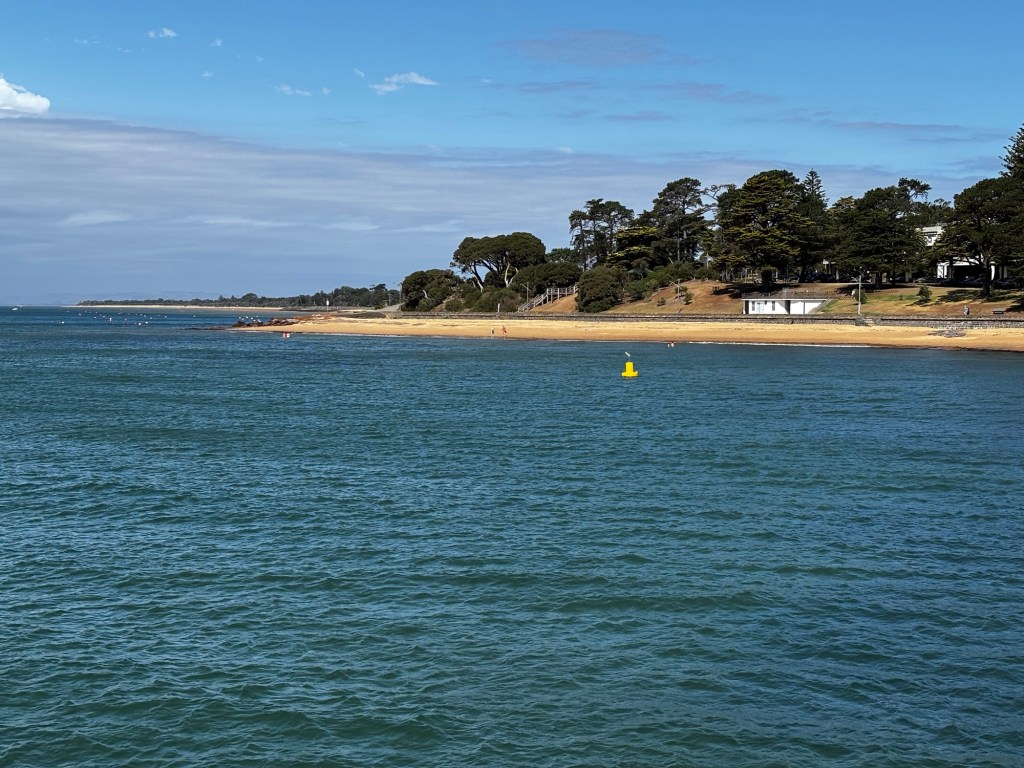
Back into the bus and onto the town of Cowes on the north shore for a wander along the jetty and beach. The town has a heritage designation for the golden cypress trees that line the main avenue. The photos don’t do justice to how vibrant the boughs are.

And how can you not like a town with this type of attitude?

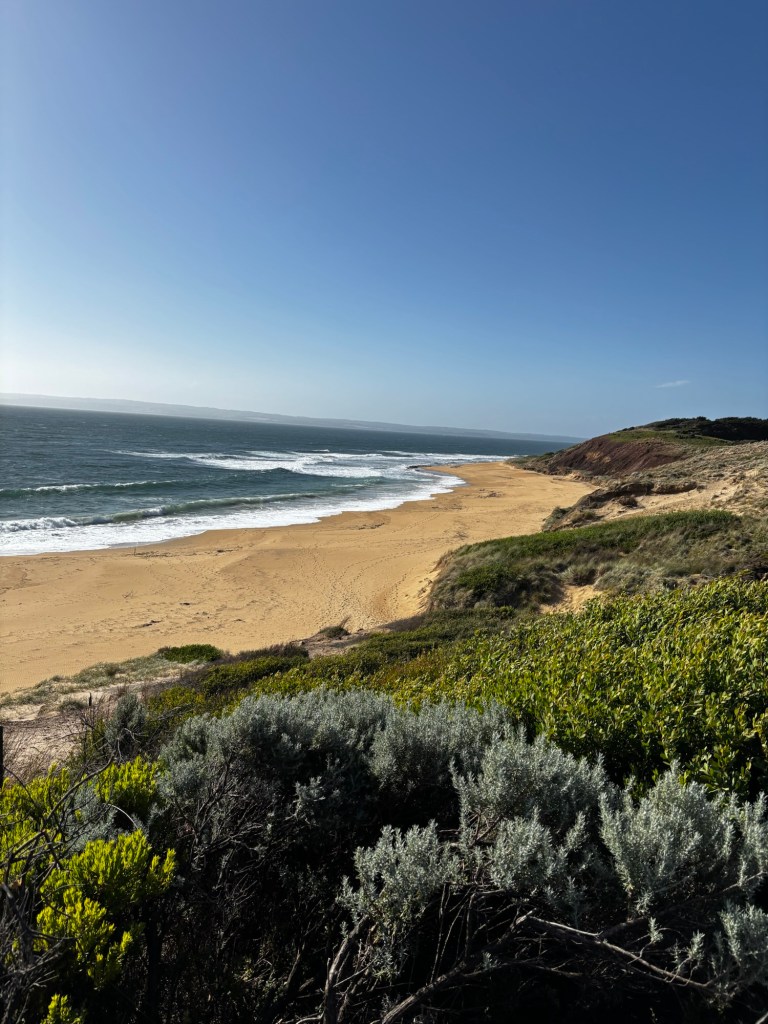
Back on the bus and off to Flynns beach which provided a moment to reflect.

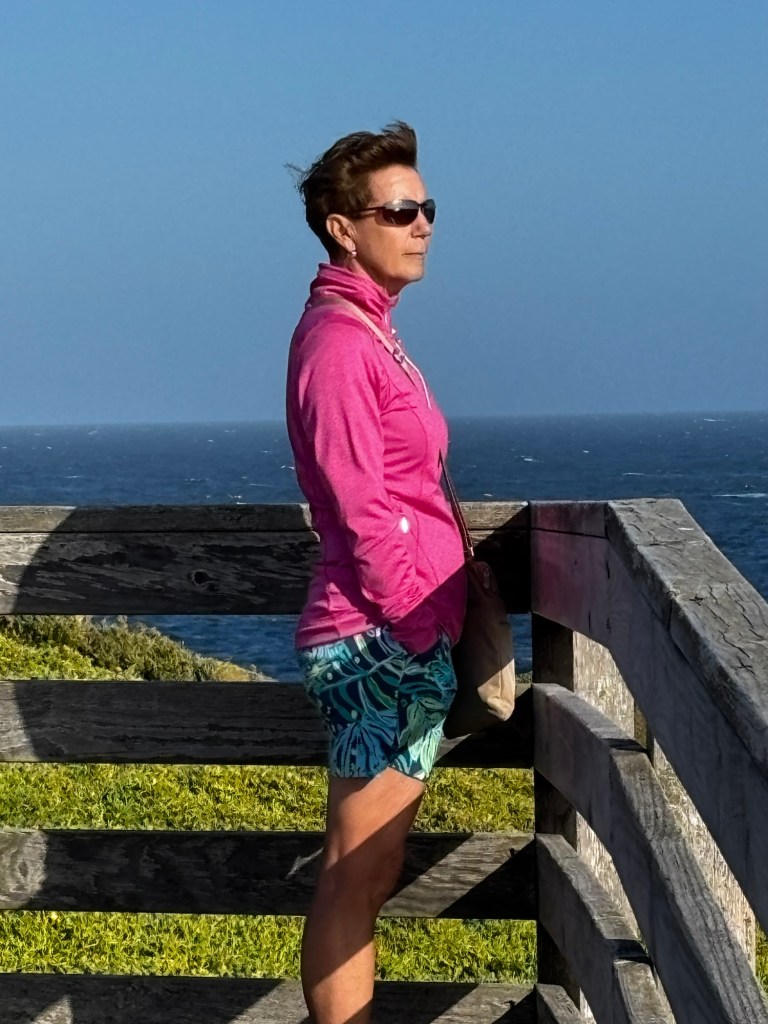
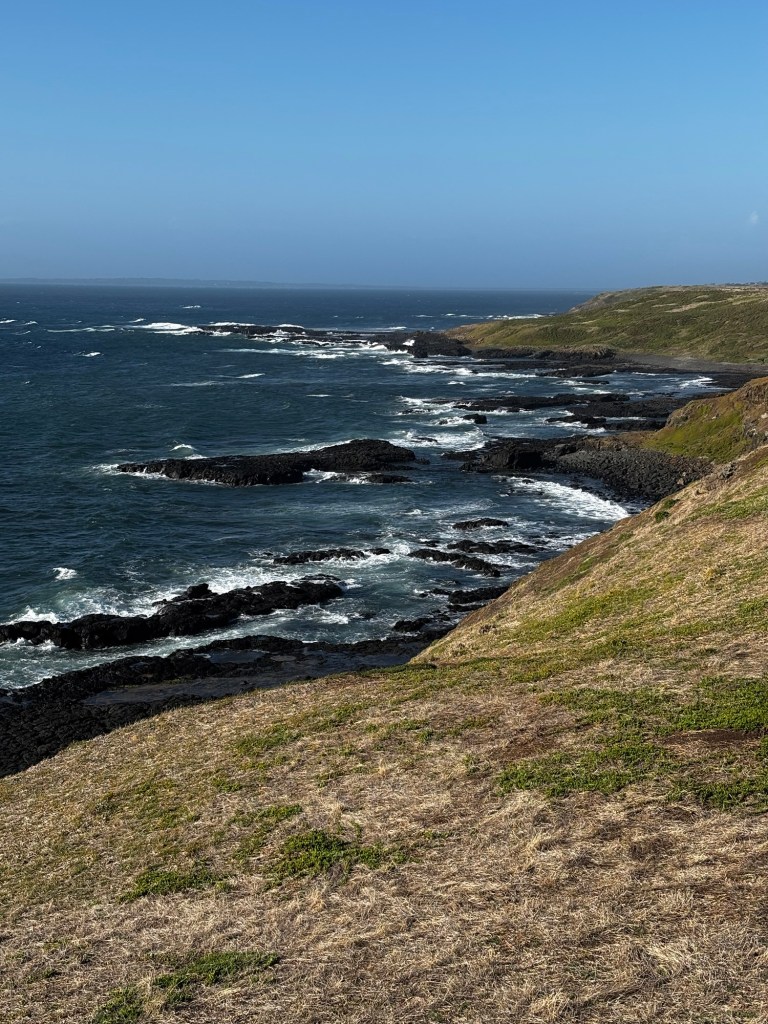
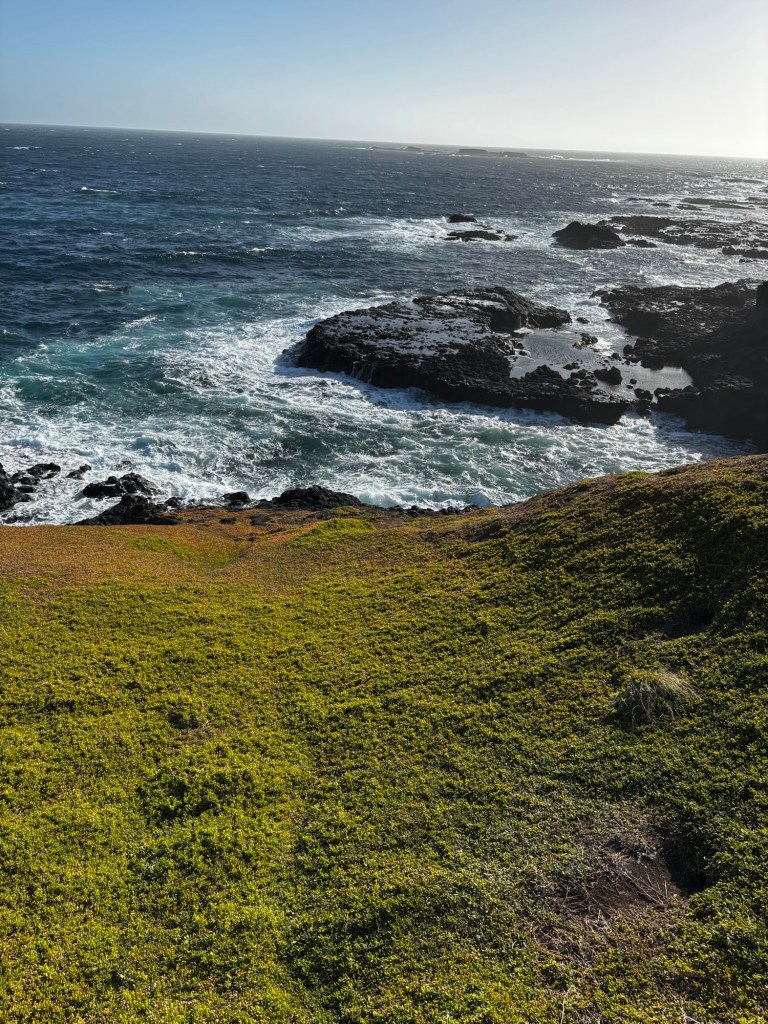
From there we went to the Nobbies, a south coast boardwalk overlooking some awesome coves where the waves crashed ashore. The wind was fierce and one had to hold on to the handrail and hat at the same time.

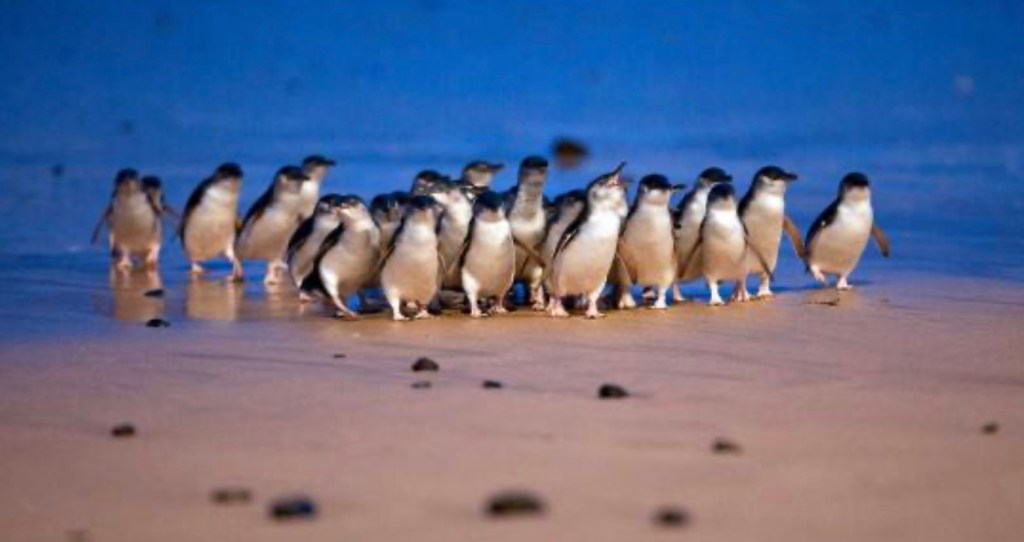
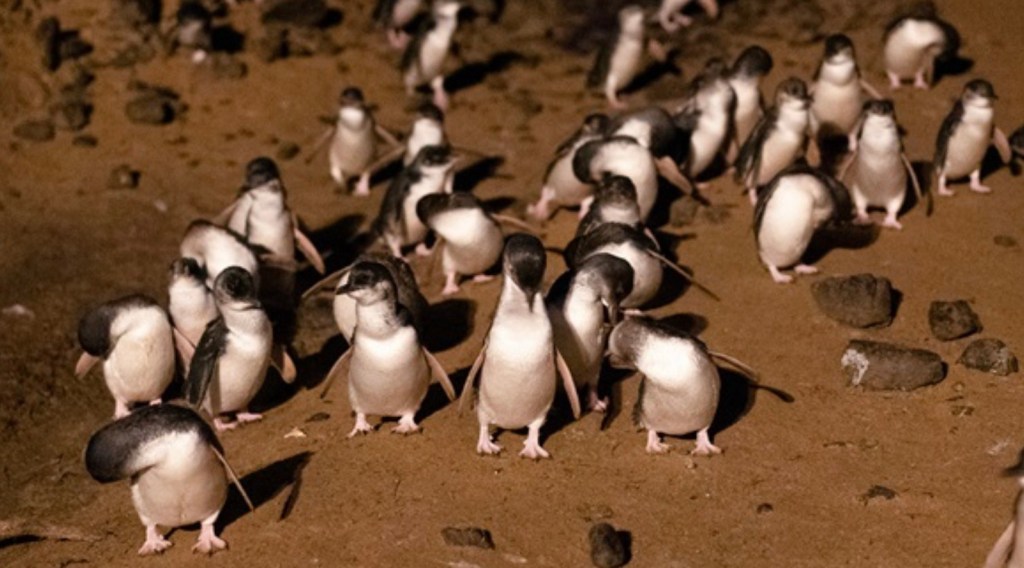
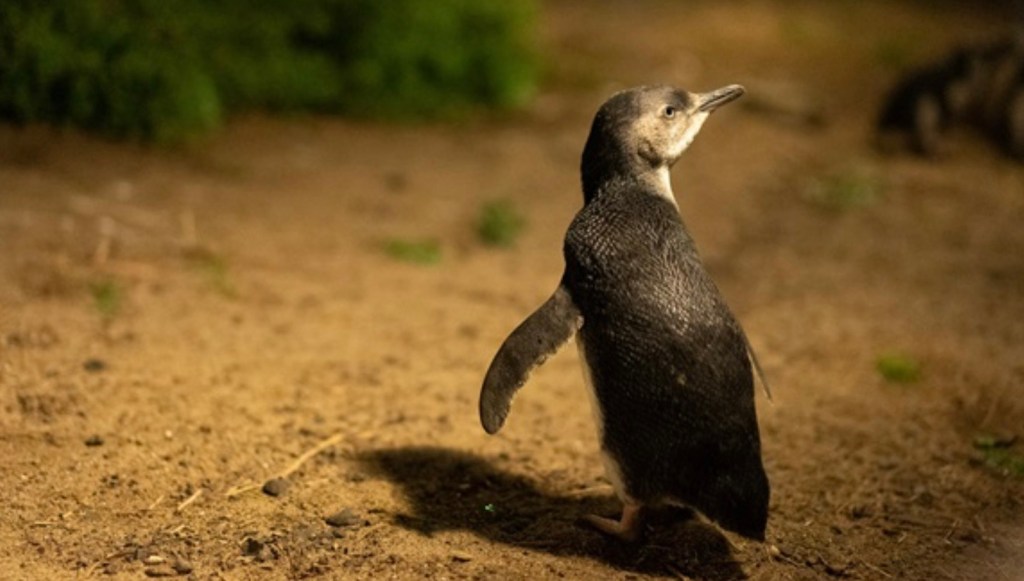
Surviving the wind successfully meant one last trek to the conservation area where bleachers have been built to watch the nightly penguin parade. Hundreds, sometimes thousands, of small penguins gather in the water as “rafts” to fool predators. They come ashore en masse and waddle up the hills to burrows. It was an extraordinary sight.

The parade starts at dusk so photos are not permitted. They do offer downloads of pictures taken by the conservation staff.
It was captivating. We lucked in to a larger than normal volume of penguins clambering across the beach and up the hills. Estimates exceeded 1,000 just past our viewing stand.

Our long day ended with the two hour bus ride back to Melbourne, arriving near midnight. Tomorrow is our first experience of golf on the famous sandbelt of Victoria. Four rounds in the next five days will have us playing top ten in the world layouts. Can’t wait.

Melbourne Golf – Woodlands

On the southern outskirts of Melbourne is a rich vein of sandy loam subsoil upon which are situated eight of the best golf courses in Australia known throughout the world as the famous Melbourne Sandbelt.

Our oddesy of playing on four of the eight courses on the sandbelt began with a visit to the Woodlands GC. Evolving from Mordialloc golf club to the present Woodlands Golf Club, the club began in 1913.

The challenge of the course can be summed up with one word, sand. Deep, grey sand bunkers. Sand rather than rough a few steps off the fairway. Oh, and greens where the ball would trickle off the edges into, you guessed it, deep bunkers.

Notwithstanding the challenges, it was a great day. The sun shone. Our Australian host were tremendous. And there was the occasional good shot.

Everyone is starting to feel the effects of two plus weeks on the road. Many failed to answer the dinner call, opting instead for an early bedtime. Tomorrow we get to play Kingston Heath, #11 ranked in the world.

Melbourne

Herding 30 travelers, each with at least one large suitcase plus 25 sets of golf travel bags meant two coaches were needed to transport us to the Sydney airport. It seemed most of Australia was on the move as the domestic terminal was packed but somehow we managed to get our entire party, luggage and all, to Melbourne.

It’s a 90 minute flight to Melbourne which is in the state of Victoria. Stepping out of the plane was like walking into an oven. Temperatures here this week are expected to rise into the mid to upper 30’sC (mid to upper 90’sF).

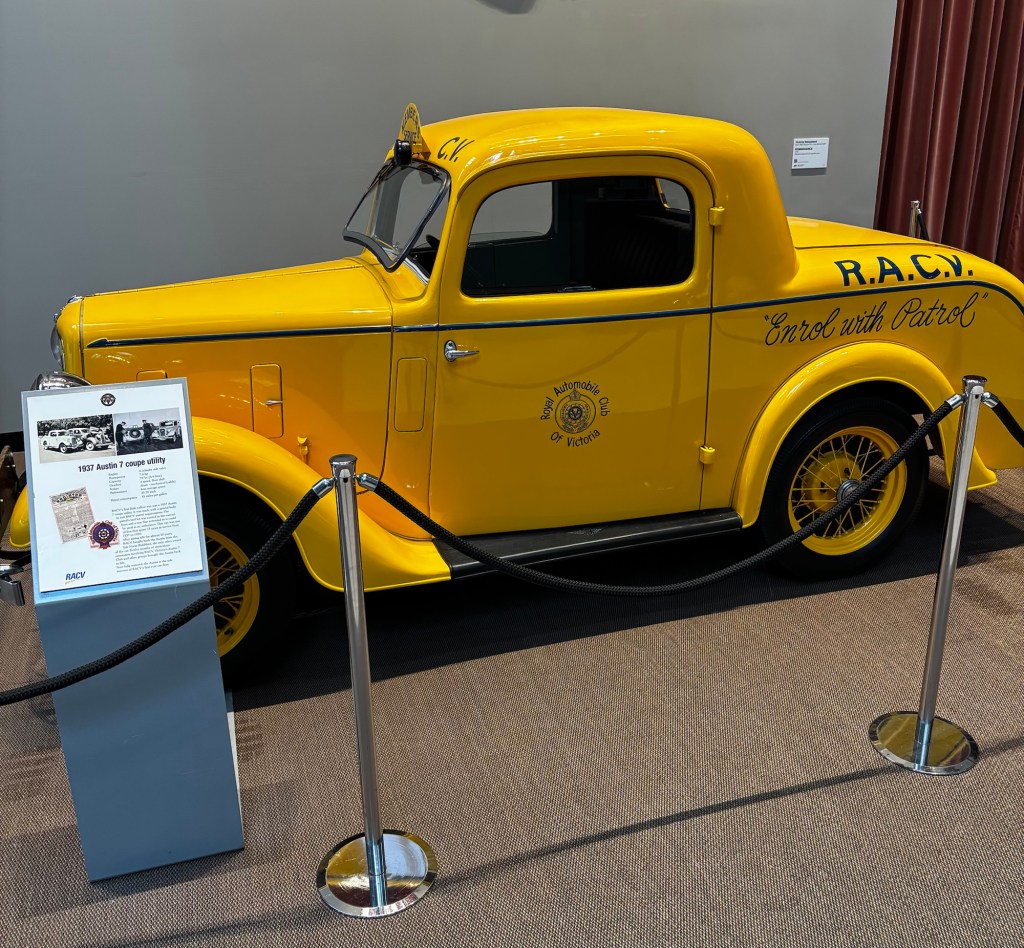
With a population of 5.4 million, it’s a BIG city. We are staying right downtown at a beautiful hotel owned by the Royal Automobile Club Victoria.

There is a 1937 Austin coupe in the lobby highlighting functions of the RACV back in the day.

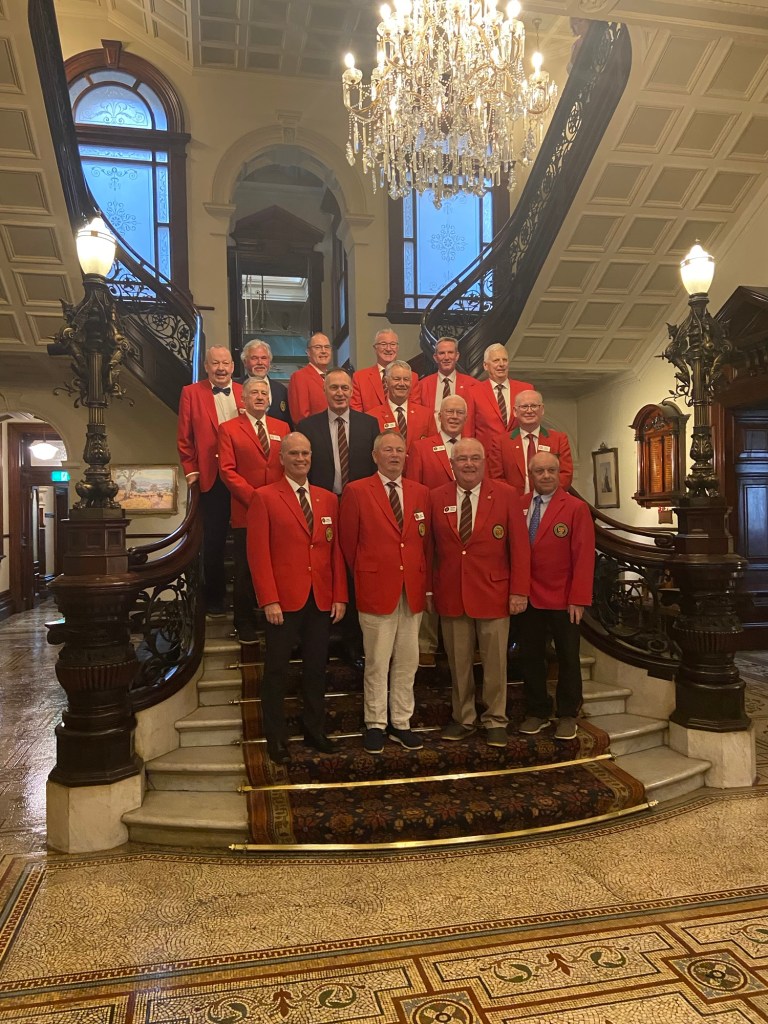
After a brief respite it was into the red jackets for a short walk to The Australian Club which is one of the iconic social clubs in the city.

Housed in an imposing Victorian building, the club has magnificent rooms full of paintings and architectural flourishes. After having the official team portrait done we did take a few pictures before learning photos were not allowed.

Curiously we were served a delicious Cote de Rhone despite being in the land of world class Shiraz (Syrah for you familiar with the French version). Not really a hardship though.

After the reception a small group wandered off and found a steak restaurant serving Wagyu beef. Paired with a fantastic Barossa Valley Shiraz it was fun way to end a great day.

Tomorrow it’s off to Phillip Island, southeast of the city for a wine tour, beach walk and nature walk through the Koala conservation reserve. The highlight comes at sunset when the penguin parade occurs where, hopefully, thousands of penguins make their way up the beach.

Sydney – More Golf

Following a day off for the harbour cruise it was back to the main focus of our trip – golf.

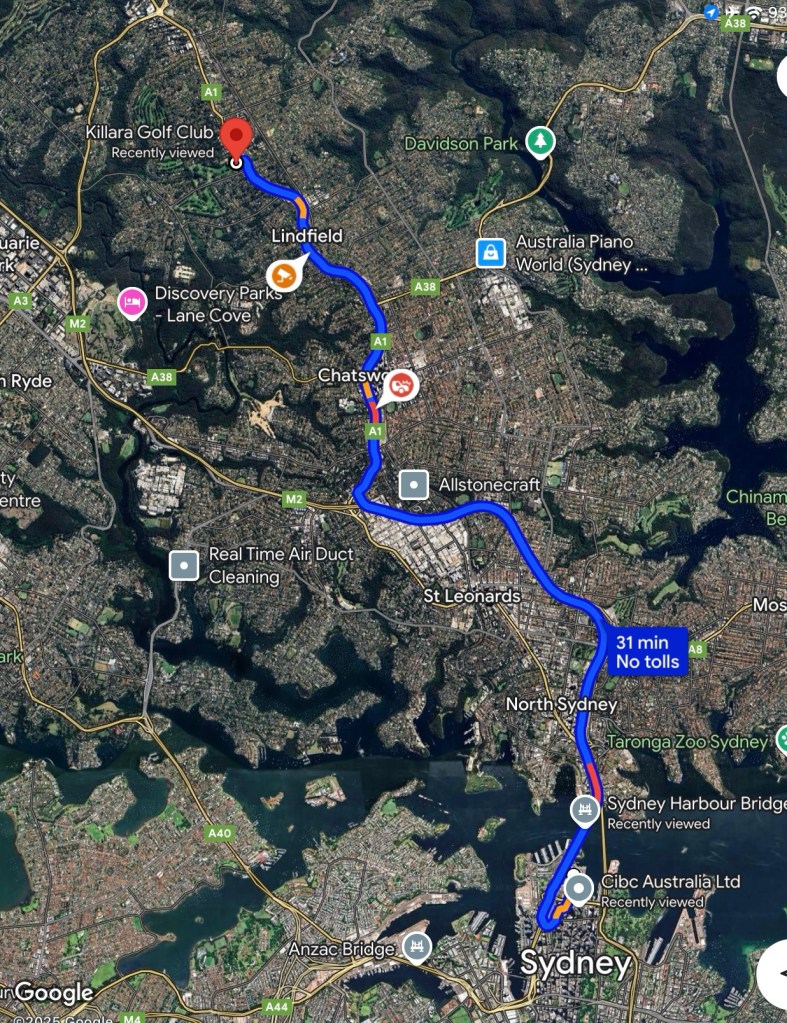
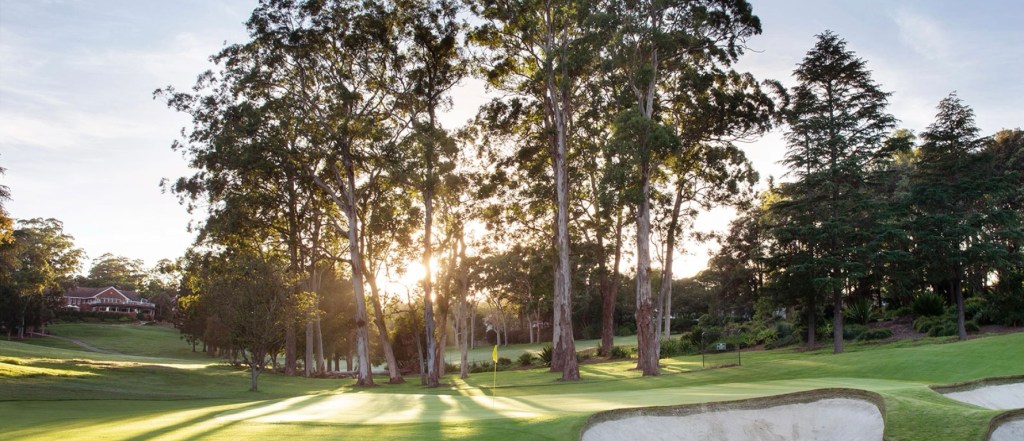
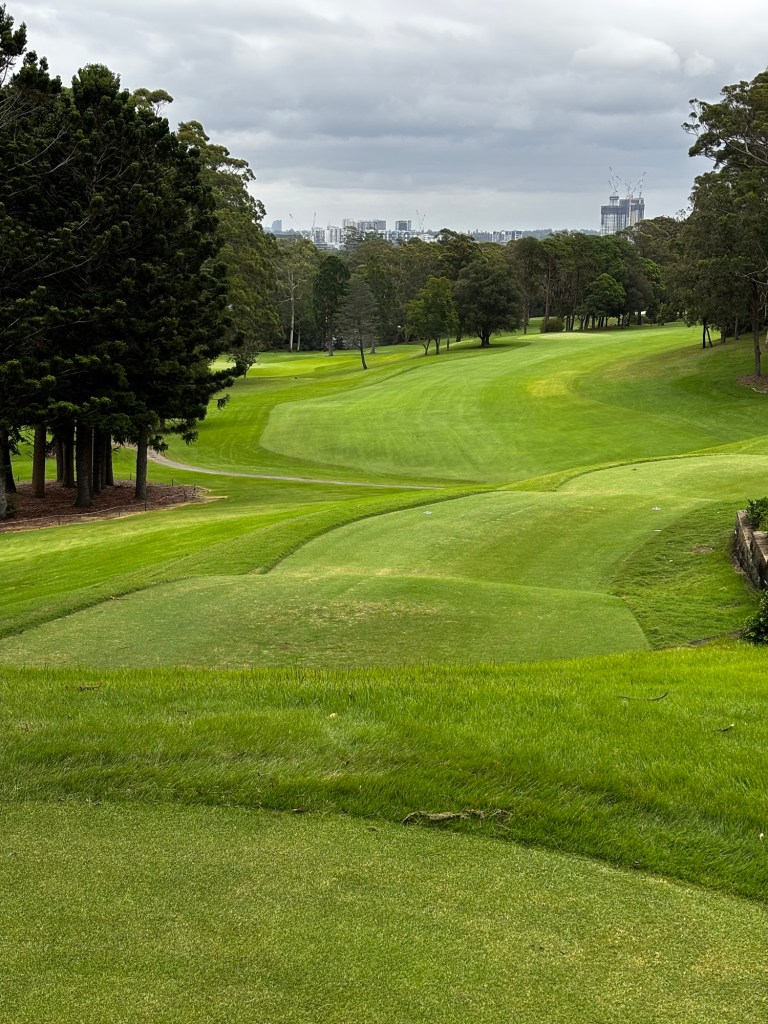
Opened in 1899, Killara golf club is described as being on Sydney’s north shore, 14 km from downtown. It’s in the hills, similar to Pymble GC which we played earlier.

Described as a parkland course the fairways are bordered by giant gum trees. In turn, those trees provided cover for the flocks of cockatoo birds that, while neat to look at, have an incredibly loud screech.

It was a tough walk with the small wheel trolleys but the early leg pain has subsided.

The day ended with a BBQ hosted by the club and another great evening to chat with our new found Aussie friends.

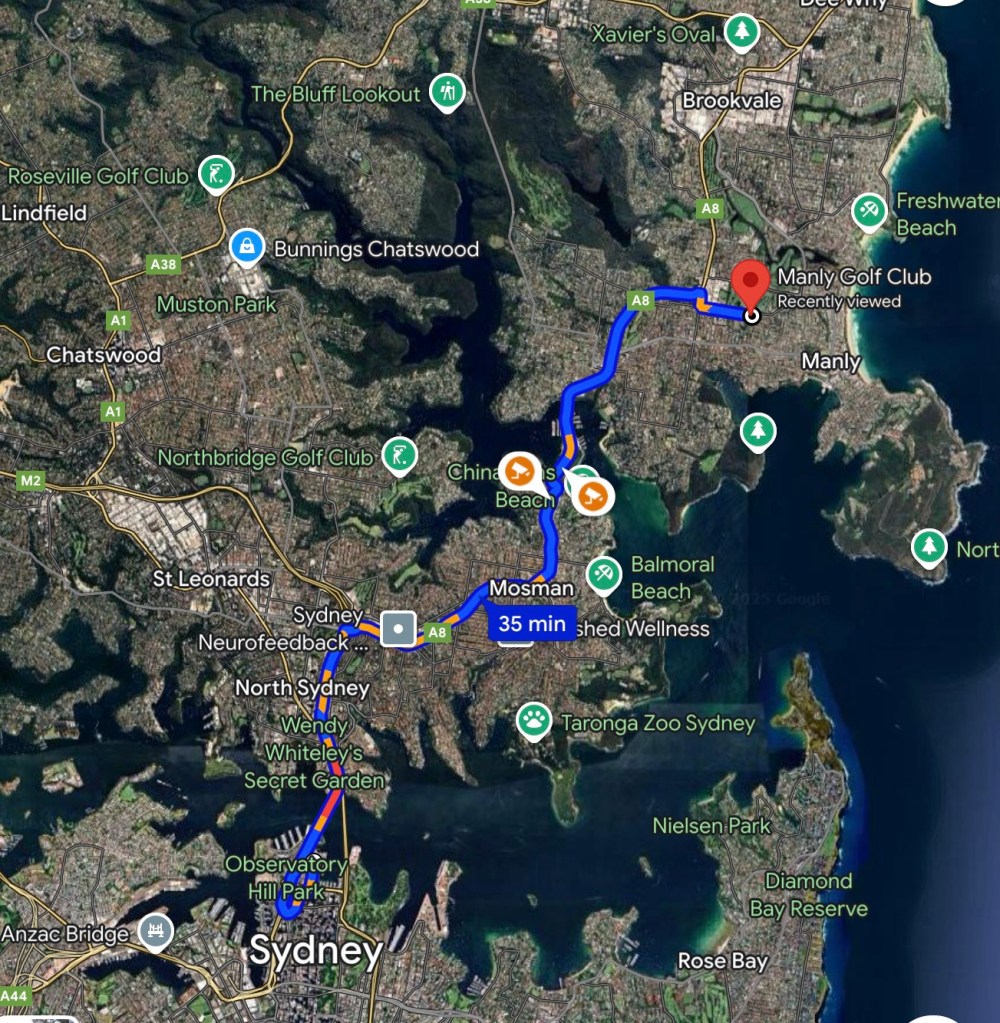
The next day we set off for Manly GC in the north beaches region. Founded in 1903, Manly was one of the four founding clubs of the New South Wales golf association.

Sadly as we arrived, so did the rain. It drizzled, it rained, it poured! We all began our round but over the course of the next few hours, most abandoned and headed indoors. In fact, Mark and his host and one Canadian lady and her host were the only golfers to stick it out and play all 18 holes. We were rewarded for our perseverance (?) with a nice gift from the club.

Those that stopped early found something to pass the time.

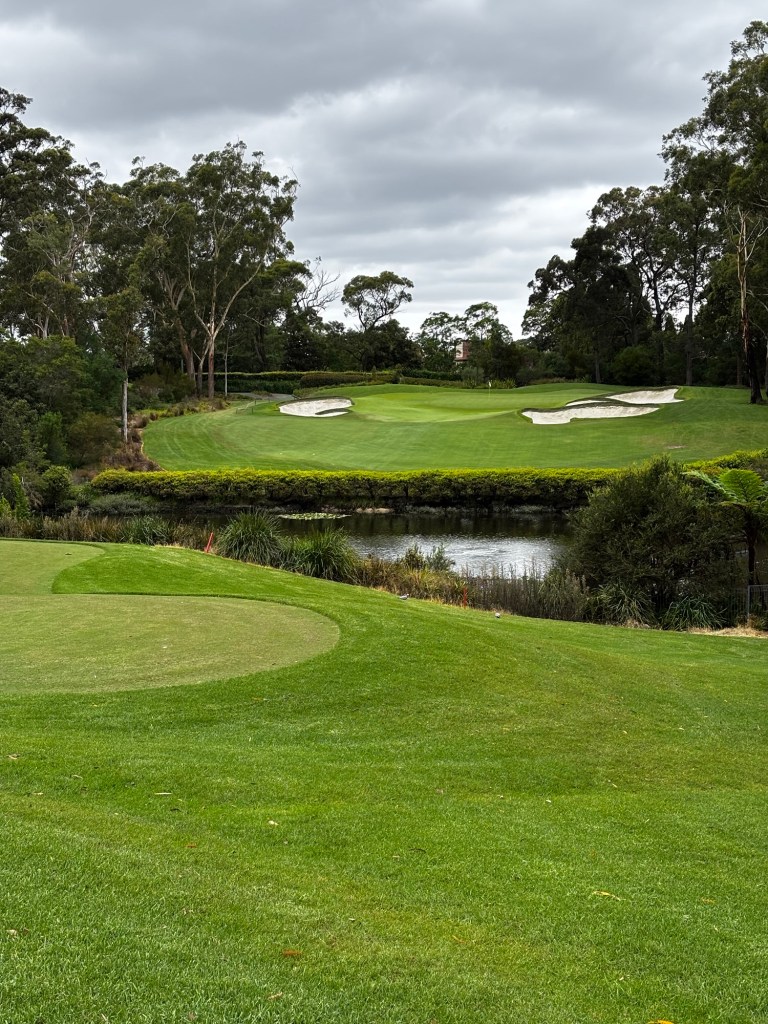
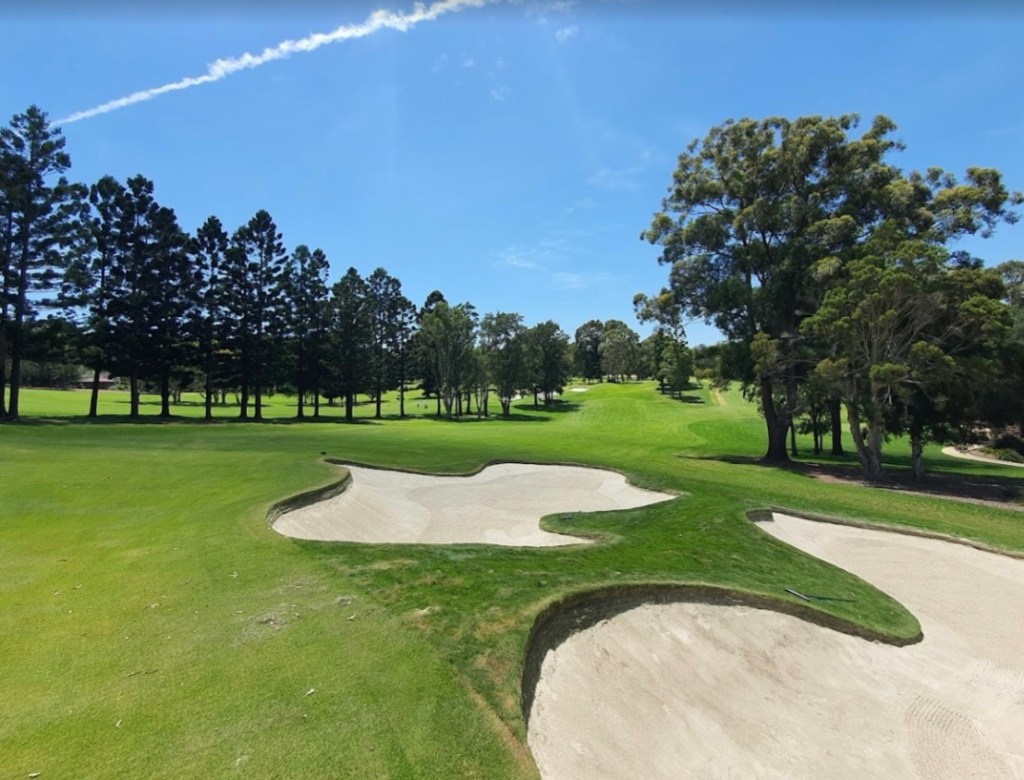
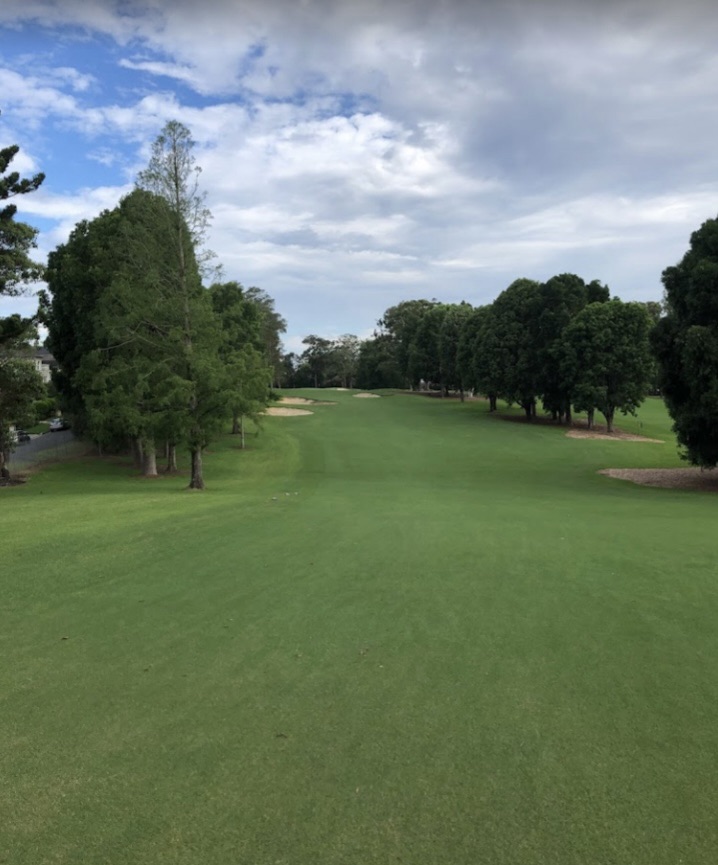
Because of the rain the camera never came out so these pictures have been lifted from different sources.

The course is extremely tight in some areas with heavy forested boundaries, lots of water and penalty areas crossing the fairways. Keeping it in play with wet hands and slippery grips was a challenge.

Fortunately it was a red jacket dinner at the club so everyone had a complete change of clothes. Speeches and an exchange of gifts concluded the evening.

Back at the hotel it was organized chaos as everything had to be hung to dry as we’re packing up and heading to Melbourne tomorrow. The forecast there is dry and extremely hot. Fingers crossed.