The Towers January 16th

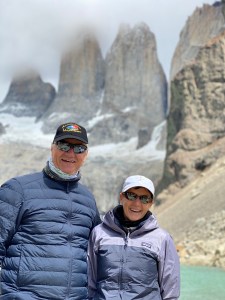
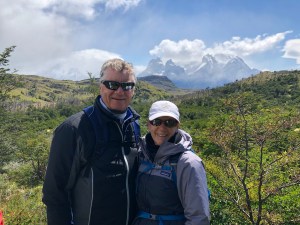
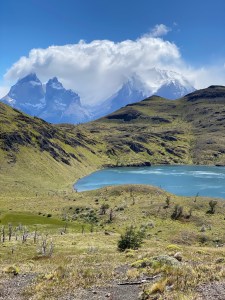
If you Google Torres del Paine, the Chilean national park in the Patagonia region, it will likely show the three spire mountains known as The Towers. Our adventure today is to hike as close as possible to the eastern base of this famous landmark. Our guide has prepared us with a schedule that shows 10 hours of hiking, an elevation change of 4,000 feet (round trip), the body position one has to assume in the case of high wind gusts and the possibility that clouds will shroud the mountains meaning zero visibility after all our efforts to get there. Oh yeah!

Among the many internationally renown trails here in Patagonia are the “W” route (4-5 days) and the Big Circuit (9-10 days). Our hike is from the Eco Camp (yeah no bus ride) by the Central, over to the eastern leg of the “W” and up through Chileno (a hikers way station) to the Towers.

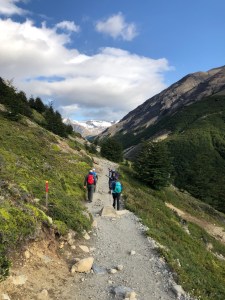
The route started gently for 30 minutes then ascended 1,100 feet over the next hour. Loose shale, dirt path minimal impediments, and a medium angle of only a few degrees – hey this isn’t so bad.

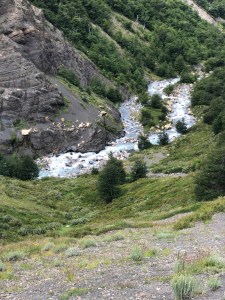
From there it was slightly downhill before we entered a forest. Various sections of the trail were more difficult but overall the group’s mood was very positive. The river below us in the valley thundered along. Combined with the whistling wind in the trees it was quite a symphony.

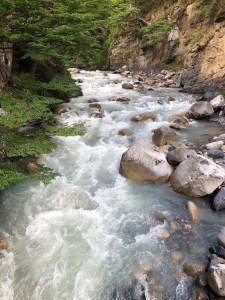
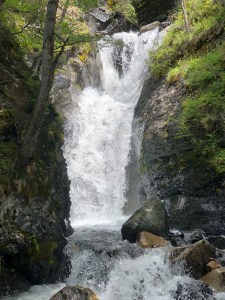
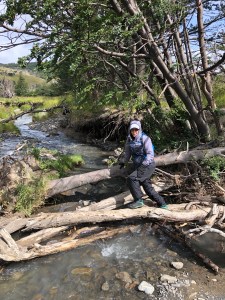
As we climbed, so did the river highlights. Numerous streams meant hopping across rocks, logs and sketchy looking bridges. We crossed the main river a couple of times as well and the waterfalls were spectacular. At the mid point is Windy Pass where the weather can dictate going forward or retreating. Winds over 150 Km/hr have been recorded here. Fortunately it was only a breezy day so on we went.
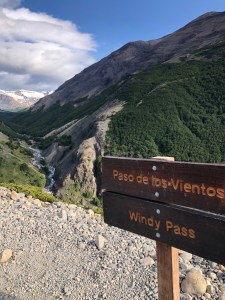
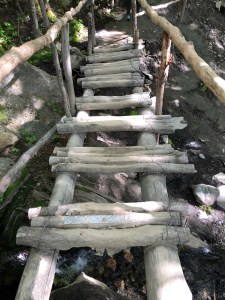
After the 1 1/2 hour forest section the real climbing started. This final segment took us up another 900 vertical feet. First was up a mostly dry river bed filled with boulders with an average incline of about 20-25 degrees. Very slow going is overstating our pace. We emerged onto a rock fall with a twisting route that required total focus. It continued upwards, teasing us as the Towers were hidden behind a ridge. Fortunately the sun was shining, the wind was moderate and the number of other hikers minimal.

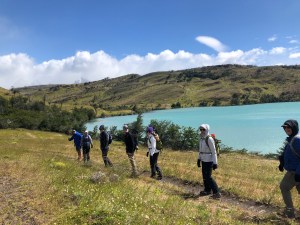
Finally we crested the last ridge and a huge surprise greeted us. There is a turquoise lagoon at the base of the mountains. It is the result of the glacier melting so good news, bad news. Estimates are that in less than 35 years the glacier will be gone and with it, the water source for the lagoon.

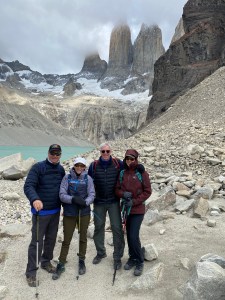
We stayed a short time as the 4-5 hour hike down awaited and the wind was up. Plus the popularity of this trail is such that the number of hikers overwhelms the pathway. Unfortunately we experienced such a problem and had to stand aside as multiple groups made their way up the final section. This dissipated lower down and we tromped on unimpeded.
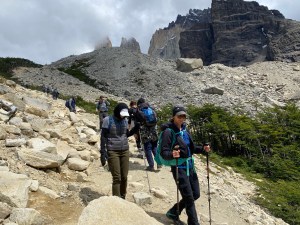
As the miles passed the joints started to complain louder and louder. The pace ebbed and flowed. The cruelest irony was the final stage back to the Eco Camp. It came into view as we reached the valley but was actually 3 kms away and up on a plateau. We made it but only barely. Everyone is stiff and sore to varying degrees but there is a real sense of accomplishment in having conquered such an extreme hike.
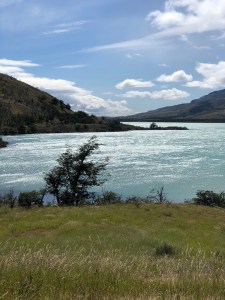
Worth The Wind January 15th

Today’s five hour hike had multiple purposes including acting as a warm up for tomorrow’s big trek as well as seeing a stunning view from high above Toro Lake. In truth it was all about the Patagonia wind.
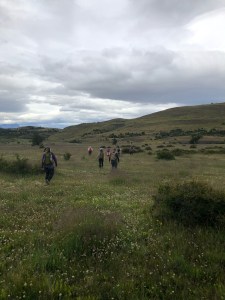
We embarked from the same farm where yesterday’s bike ride took place. Thus the same bone jarring ride to start the day.
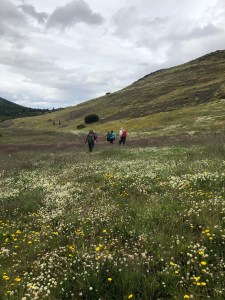
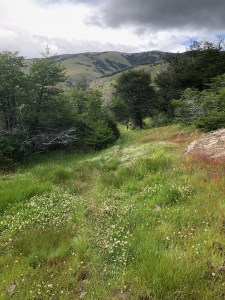
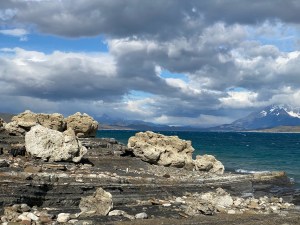
Sarmiennto Lake looked angry and bitterly cold. Overnight the temperature had touched freezing and hadn’t improved much as we drove by. Pushed by the high wind, white capped waves raced toward the southern shore.

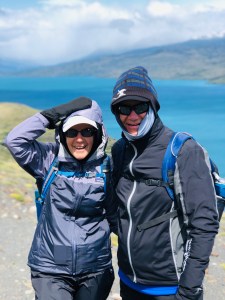
At the farm we “geared up” putting on everything in our backpacks. Five upper body layers including long and short sleeve shirts, heavy pullover, down filled jacket and rain jacket. Rain pants over hiking pants, ski hat, buff (a neck/head scarf) and gloves completed the ensemble. And this is summer in Chile!

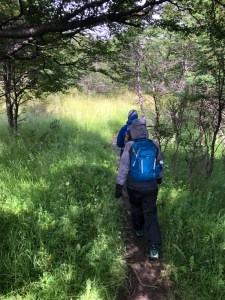
The wind was incessant and made it seem even colder. Our trek was very gentle as we traveled through armpit high grasses and thickets of trees. The latter provided some respite from the wind but not much.

We followed a well worn path crossing multiple small streams on fallen logs. Our walk subtly took us up higher and higher in the hills.

Thus on open ridges standing upright was a challenge. Walking into and across the wind made a normal stride impossible. Fortunately the sun came out and our clothing choices meant relative comfort.

Different sections of the park have suffered fire damage over the years leaving burned out wooded areas. The wind bleached tree skeletons make one think of a cemetery.

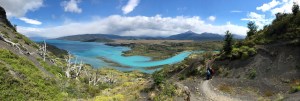
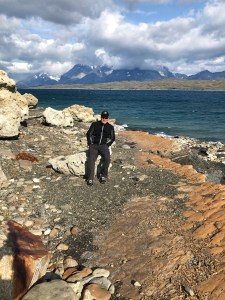
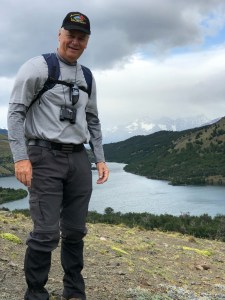
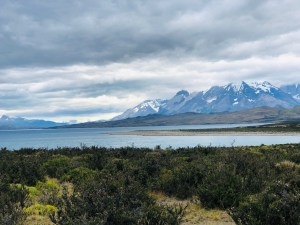
Finally the trail ended high above Toro Lake and the Paine River. Winds of 35 – 50 mph buffeted us as stood in awe of the vista below. The water colours covered the blue green spectrum. The Paine mountains provided a perfect backdrop. Tired legs were forgotten.

Our bus was a speck in the distance but the 45 minute descent went quickly. Back to normal clothing volumes and back on to the gravel hellway. I will not miss these roads when we go home! There were, however, some spectacular shots of the mountains on the way.

Bikes And BBQ January 14th

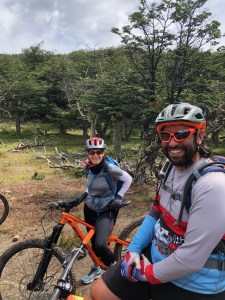
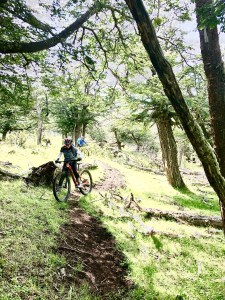
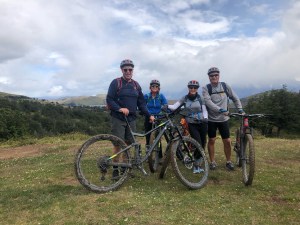
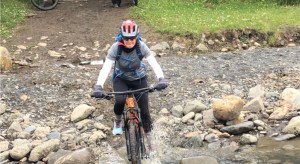
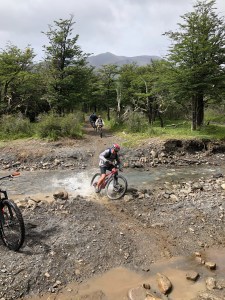
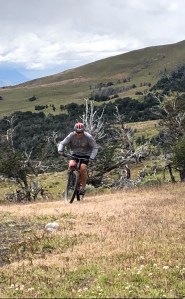
Another 7 am call to breakfast then off to the southern sector of the park in the hillsides above Saermiento Lake. Our objective, survive 2+ hours of mountain biking both on the open, wind blown hills and through the forest. No lunch bags today though.

Last night a fairly substantial rainstorm, heavy enough to wake us, blew through. Road conditions today were, for the most part, pretty good. One section was basic asphalt – luxury! And maybe one becomes immune to the thumping and being tossed around.

Sarmiennto Lake is a closed lake thus it has a very high PH resulting in no plant life or fish. Given the wind was whipping the water into a froth, acidity level would be secondary to plant survival.

Javier our guide also had that spirit and passion of previous guides albeit his focus is mountain biking. His fleet of top end bikes (hydraulic brakes, hydraulic on-the-go seat adjustment for changing during uphill versus downhill sections, shocks front and back, etc) awaited.

With the wind still up and the temperatures down (about 9C, 48F) what to wear was a challenge. We had a second set of clothes for the post ride trip home given fording streams would necessitate a change. The question was how much to risk of the second set on the ride just to stay warm. Segment one was a 30+ minute warmup (ha!) across lightly wooded fields with only small elevation changes. Broken branches and rocks littered the track forcing instant upgrades of our basic bike skills. At the end of the circuit it was like a strippers convention and excess clothes were put in our backpacks.

Stage two introduced climbing (painful quads, searing lungs) and downhill (frightening, challenging). The braking system was so efficient one ran the risk of going over the handlebars if the lever was squeezed too tightly (and what’s a natural reaction when one thinks they’re going to lose control – right). Fortunately no crashes, including crossing the streams, and everyone got to the finish safely.

Stage three was described as tougher and technically challenging. Hence half the group rode back to the farm on the road and four continued back up the mountain. Mark and Doug were in the latter group and I’m here writing this so obviously I survived although my ride to walk ratio on the uphill was 60/40 at best. And someone had to be the group’s caboose on the downhill. Is there a medical term for when heart rate exceeds body weight?

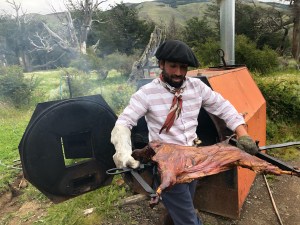
Tired, sore, wet and thrilled we rode to the farm where a full lamb BBQ awaited. Local custom is one digs in hands only. We dug like veterans. Lunch ended and the heavens opened with the rain going sideways. Perfect timing.

Back on the bus most everyone nodded off, the result of an out of the ordinary workout and a great meal with wine. What a day!

Wild Horses – January 13th

A decadently late start today if you can call 7 a.m. late. Our routine is a group breakfast while also creating your own box lunch from a reasonably good buffet of sandwich and salad makings. Then it’s onto the mini bus for travel to a sector of the park where that day’s activity will occur. Even the lunch bag speaks to the eco mindset of the Camp.

Today we went to the north east quadrant which is the least used section. Hence the one hour gravel road experience was less of a Patagonia massage than previous days. We transferred to a high clearance, four wheel drive van for the last segment which unfortunately more than made up for the first road. The cart track we followed bounced us like corks on the ocean. Exhausting – and I wasn’t even driving. Along the way we stopped for photos.

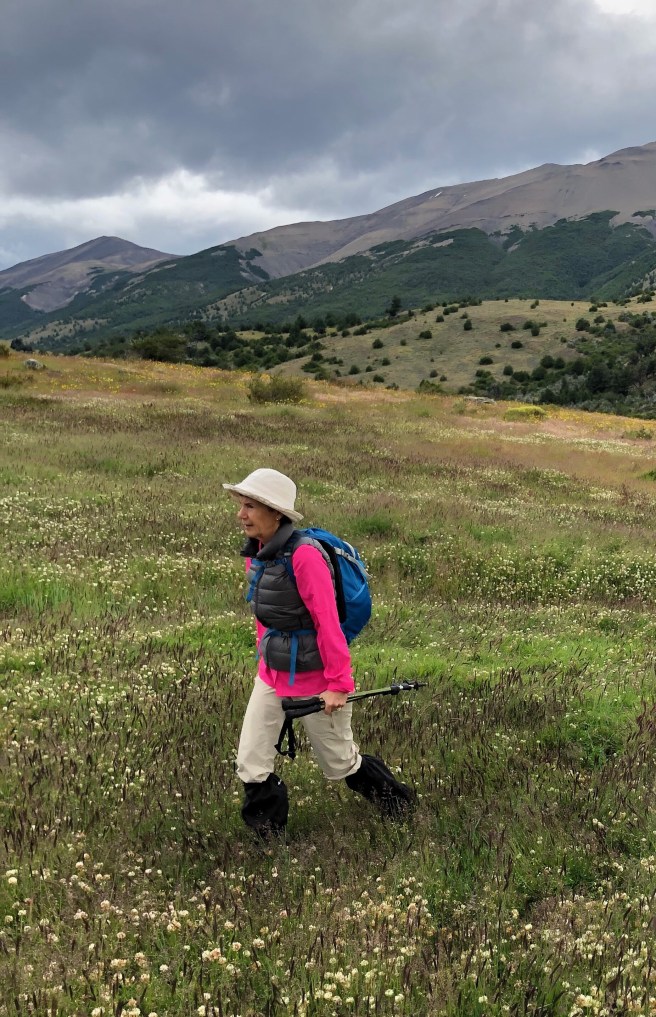
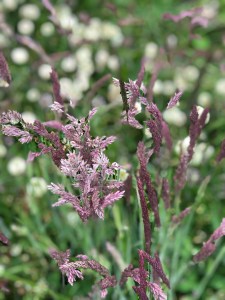
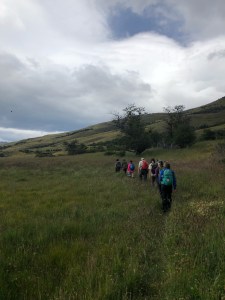
Our guide for the day, Victor, fit the profile of everyone we’ve met thus far – passionate, knowledgeable and one with the land. We set off on a nature walk, cum cross country hike, slash treasure hunt. The nature walk component was through verdant meadows knee high in grasses. The combination of warm and wet weather along with the cancellation of cow grazing contracts has resulted in an explosive growth of plant life. We wore gaiters to stay dry in the deep grass which added to our eclectic appearance.

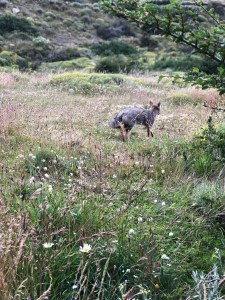
The hike took use through a series of meadows into numerous tree thickets. Along the way we learned about the history of the land. Numerous birds were present and Victor patiently explained different habitats and habits. The Puma is the top of the animal food chain in Chile and there are upwards of 65 in the park. Sightings are exceptionally rare but we saw much evidence of their presence including, sadly, a freshly killed wild foal.

We climbed ever higher and reveled in the silence. Our small group had exclusive use of more than 1,000 acres. The wind blew on the hilltop ridges and we could see lakes, mountains and the Paine peaks. Breathtaking.

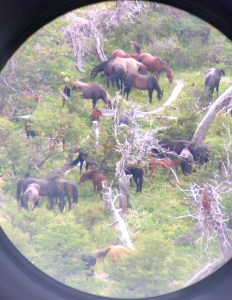
Our ultimate goal was to stumble across the herd of wild horses that roams the area. Most of these trips don’t bear positive results but luck was with us and late in our hike we spotted the herd. We couldn’t get much closer than 500 metres but that was enough as we watched them graze. The slightest threat by our moving down the hill would have had them disappear in an instant. The photo was taken through a telescope.

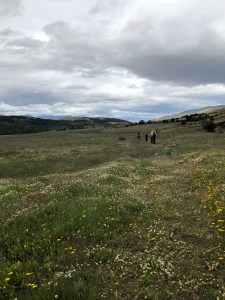
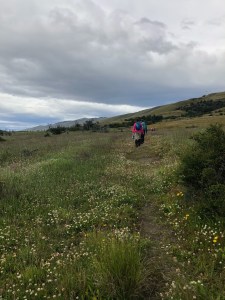
We looped around the back of the Masle hills to get back to our vehicle rendezvous point. The first meadow was large. Approaching a small rise we expected to be done walking. However a second equally large meadow lay before us. Then a third and a fourth. It seemed we walked back twice as far as we had on the outbound leg.

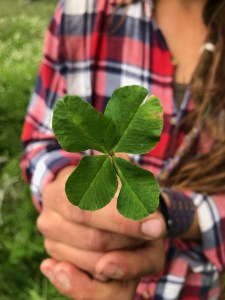
We knew it was an extra special day when we found not only a four leaf clover but a five leaf one as well!

Celebratory beverages awaited our return and everyone happily found a comfortable seat after all the walking. Then it was back onto the bouncing cart track, then the bus. Will the vibration never end?

Tomorrow another section of the park and another adventure. Something about ‘bring your cycling shorts’. Hmmmm.

Icebergs And Kayaks January 12th

Early alarm at 6 am as we had a full day planned. We were ready to go because in spite of it’s unique configuration our yurt (sorry, geo dome) proved to be very comfortable and we both got a great nights sleep even with the window open and the temperature just above zero C (32F).

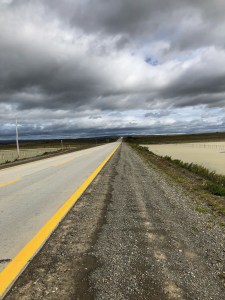
We traversed a large section of the park in our little bus and my teeth are still rattling. Two hours of non stop washboard gravel road later we reached the south shore of Greys Lake. This bumping lurching travel has quickly been labeled the Patagonia massage.

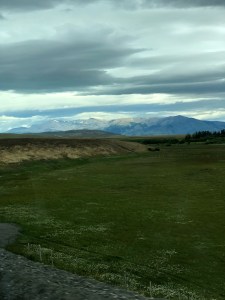
Along the way we climbed and descended some serious elevation changes all while the Paine mountains towered above us. Sadly the clouds never really came off the mountain tops. There are dozens of lakes big and small around every turn so good photo opps.

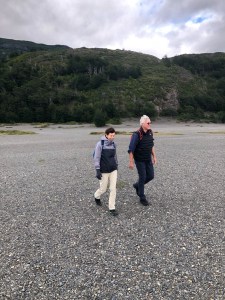
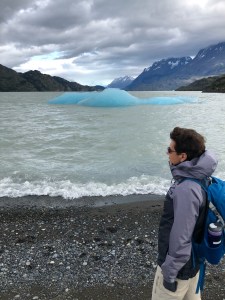
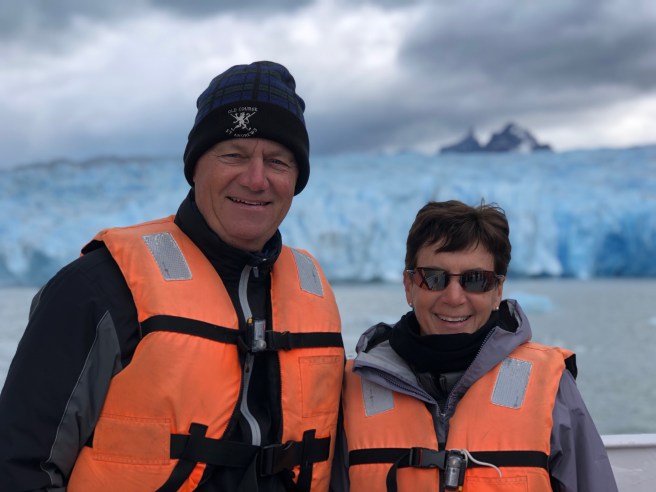
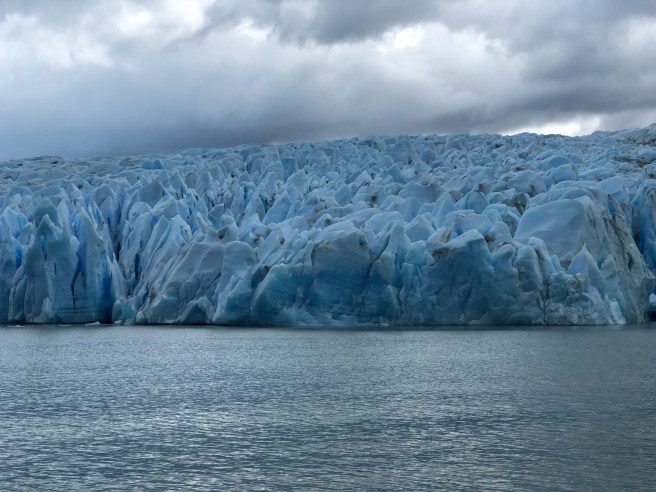
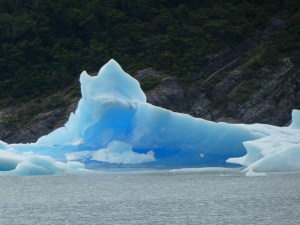
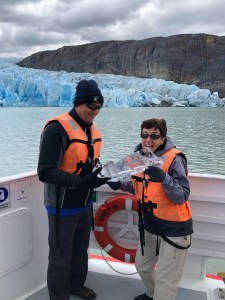
At Greys Lake we walked for 25 minutes across a dried river bed/lake to a boat for a 3 hour tour of the lake, icebergs and glaciers.

It was incredibly windy and cold on the open decks of the boat as the glacier created its own weather pattern. Overall, simply wow.

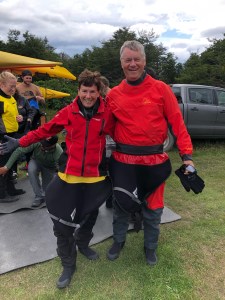
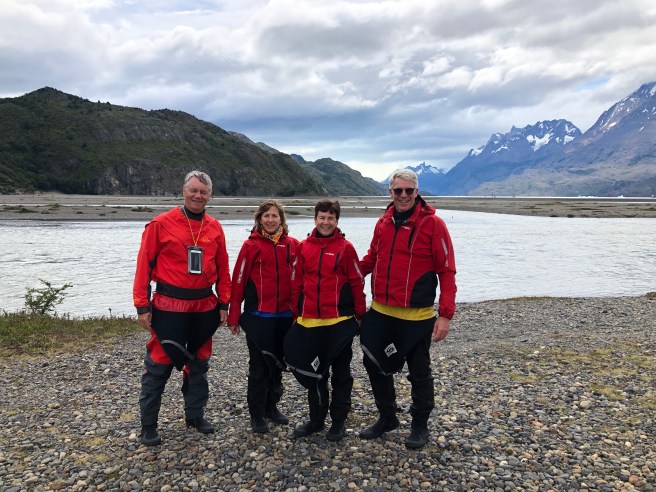
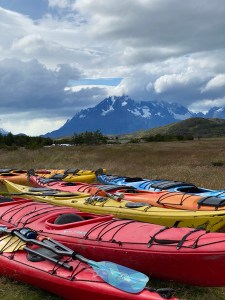
Then it was off to kayak school for both lessons on how to get into a very high end dry suit and paddling a tandem sea kayak using foot peddles for the rudder. The former, comical. The latter, intimidating.

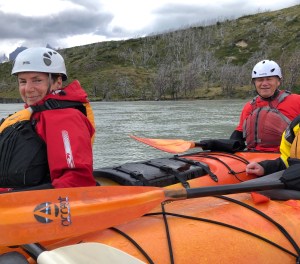
Facing a very strong current, Mo and I pushed off into the howling wind (and immediately ran aground on an unseen sandbar). Our attempts to get up close to some icebergs were thwarted by the strong wind and waves (although Doug and Louise did get across to a couple of small ones). Thus we headed back to the mouth of the Grey River and paddled/floated 15 kms.

Our suits worked brilliantly and no one capsized so it was a great time.

We had unexpectedly warm sunny weather but as climbed back on the bus it started to rain. Pity the hikers and cyclists still out there. Two hours of more teeth rattling gravel road and we got back to camp 13 hours after leaving this morning. Drinks, dinner, rinse and repeat tomorrow albeit with a different adventure somewhere else in the park.

To The Patagonia Park January 11th

We met the other travellers in our group (a couple from Iowa with their two mid twenty-something children) along with the Eco Lodge escort and set off on a 5 1/2 drive to the national park. The Magellan Straits looked icy cold and forbidding. Hard to imagine old wooden ships heading even further south to sail eventually into the Atlantic.

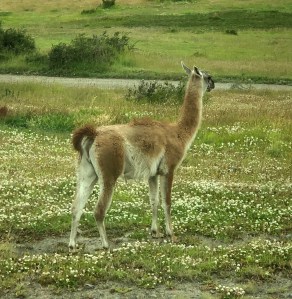
The terrain was flat, windswept and barren with not a tree in sight. This pre-Andean shrubland is home to huge herds of sheep spread over miles of open plains. We saw pink flamingos, condors, the Nandu (a miniature ostrich), as well as Chile’s version of the lama, the Guanaco.

The shrublands gave way to wispy stunted groves of trees bent by the relentless wind. Occasionally there would be a small farm that somehow stayed in business doing who knows what.

Gradually we started to climb into the Patagonia steppes with beautiful hills that stretched for miles and miles. We truly were in the middle of nowhere.

After three hours we arrived at Puerto Natale, a town that is relatively new and has grown to accommodate the ever increasing needs of hikers and travellers to Patagonia. Here we met our guides for the week, Claudio and Arnoldo. After a great lunch it was back on the road for another 2 1/2 hours. The road itself ranged from decent asphalt to washboard gravel. A new highway is being built but it will be years before it is finished.

By now we were close to the Paine mountains and had curved east of the Andes. At one point, the Argentina border was literally 25 yards away. This being summer holidays in Chile the volume of backpackers and campers is quite high. Most impressive though were the cyclists who not only battled the hills but also the wind, all while pedalling bikes weighed down by multiple panions.

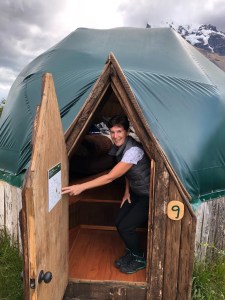
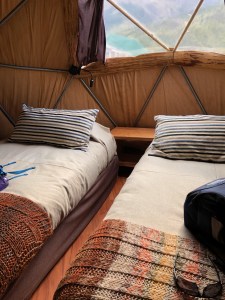
Finally we arrived at the Eco Lodge. This is a self sustaining group of yurts (hobbit huts?) with bigger community domes for dining. Everything about the place is nature first with electricity via water and solar. Bathrooms use unique composting technology and all the materials wherever possible are natural. Our “room” is surprisingly comfortable although the tiny entrance door may yet prove to be an issue. The design is intended to capture the most light, maintain stability in the wind and blend in as much as possible.

Our itinerary is full each day starting tomorrow with an extended boat trip to a major glacier followed by kayaking amongst the ice floes and then down the Grey River.

Early days but the group dynamics are good, the guides friendly and passionate and the food excellent.

Travel Day #2 January 10th

The day started with good news that Doug Pegg was officially on his way having attended to a family health issue that needed his presence in Canada. We will meet up at the airport but after 11+ hours from Toronto he may be a bit drained.

We’re leaving Santiago to fly 3 1/2 hours south to Punta Arenas. From there we will travel overland on Saturday to the Torres del Paine national park where our Patagonia adventure will take place.

Friday morning in Santiago was a quiet slow time trying to figure out how to repack, local currency needs and transport to the airport. Tip – Uber is illegal in Chile but continues to operate. Thus some of the drivers are inexperienced hence the double circle of the airport plus a drive thru of the parking garage before we reached our target destination. Oh well, we got there and did meet Doug off the Air Canada flight.

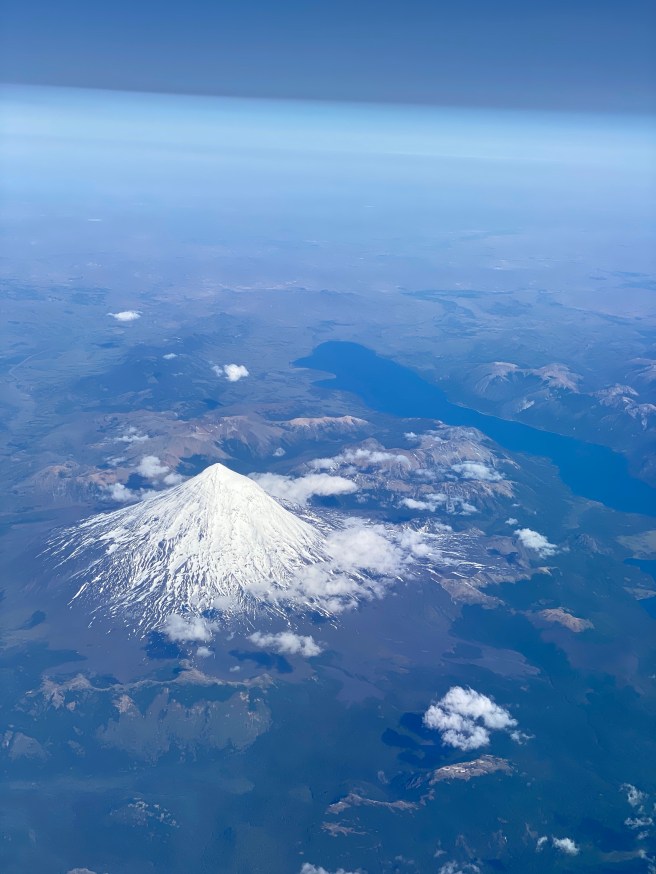
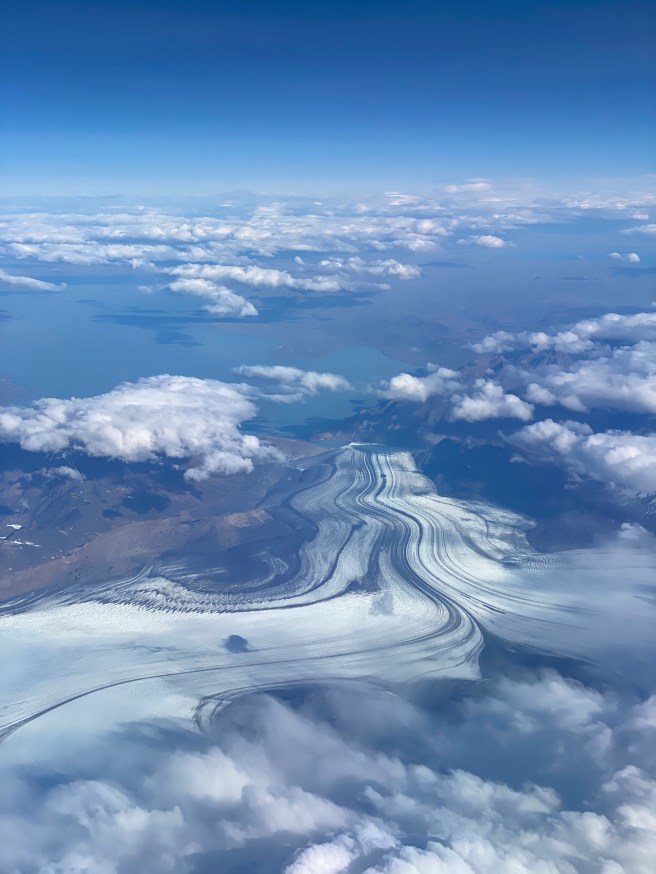
The flight to Puntas Arenas was very basic however we flew over some spectacular countryside including snow capped volcanoes, glaciers and multiple bodies of water.

The difference between Santiago and Punta Arenas couldn’t have been more stark. We left dry, sunny, hot and landed in cold, wet, grey. The landscape here isn’t quite desolate but close.

We are roughly 1,400 Kms (880 mi) from the coast of Antarctica, just north east of Tierra del Fuego. The current population is about 135,000. Historically the area has been a fort controlling shipping around the bottom of South America (until the Panama Canal was built), a penal colony, the centre of a thriving sheep industry (Patagonia wool) and now a tourist hub for expeditions to Antarctica and Patagonia. Chile’s offshore oil industry, albeit modest, is also nearby. Interestingly the area attracted a large number of Croatians over the past 150 years and now 50% of the population are ethnic Croats.

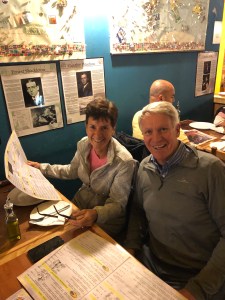
With Doug leading the way we stocked up on beverages for our impending week in the wilds (hopefully 8 bottles of fine Chilean wine will do for our planned daily happy hour). Dinner was in a fun decorated restaurant with maps showing the origin of visitors from around the world.

When we leave here our internet access will be extremely limited (non existent?) so it may be a while before the blog continues. Stay tuned.

To The Ocean January 9th

Up modestly early as our small (14 person) tour bus collected us first before making six additional hotel stops to fill all the seats. We headed out of town (no small feat given many traffic lights have been vandalized by protesters and now a young civilian corps has taken on the role of directing traffic – with a fair degree of success). Our goal is the coastal city of Valparaiso 127 km west of Santiago.

Our guide, Francisca, spoke perfect English which was the language of choice given her eclectic audience (5 Canadians, 3 Taiwanese, 2 Hong Kong, 1 Italy, 1 Russian, 2 Americans). The toll highway utilizes two long tunnels to cross the mountains that form the western boundary of the Central Valley and Francisca provided a myriad of information about Chile, past and present.

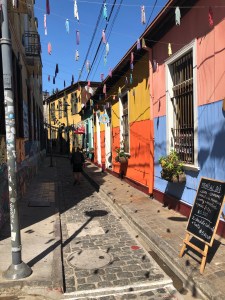
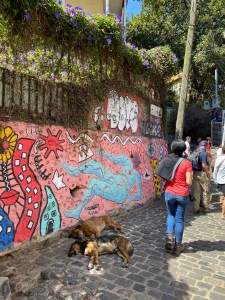
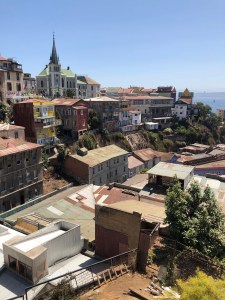
A large section of Valparaiso is protected by a UN Heritage designation meaning old buildings that still reflect the architecture of the 18th and 19th century immigrants from various European countries. The community has attracted an artists following and a favourite means of expression is painting the sides of buildings. Some was exceptional, some merely graffiti.

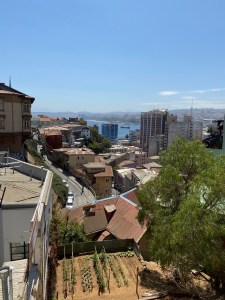
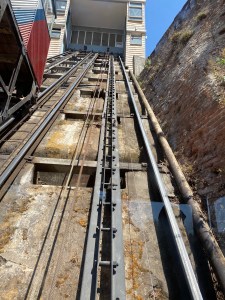
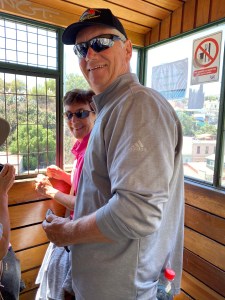
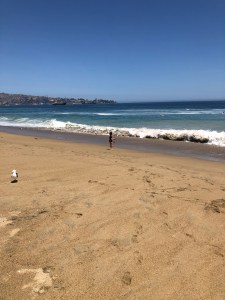
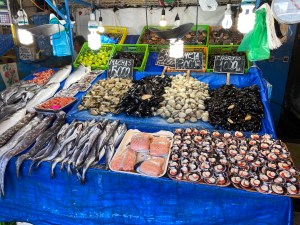
The city is built on 42 hills surrounding the port. We used a short funicular to get partway back down then went for a quick walk on the beach and a tour of the local fish market.

Back onto the bus and on to the town of Vina del Mar which is adjacent to Valparaiso. In the 19th century this was the summer home for wealthy residents of the country and many old mansions and castles exist today. Two tourist stops in town are a must; the floral clock and a Moai statue from Easter Island. This is one of three original statues not on the island (Washington and British museum).
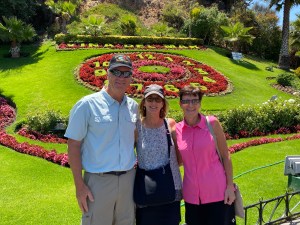
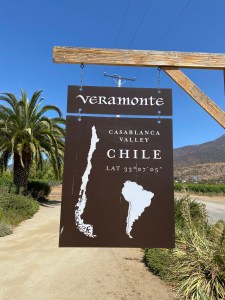
After a late lunch we headed east to the Casablanca Valley where the environment creates perfect growing conditions for grapes used in white wine production. Yes, yet another tasting! The Veramonte winery has a magnificent facility. The wines, not so much.

It was a quiet ride back to Santiago where we arrived, unfortunately, at the height of rush hour. It took ages to return all the passengers to their respective hotels and as we were last, it was early evening when we got ‘home’.

Wine Day January 8th

Apologies for the typos and grammatical errors but we’re just back from a 240 km, 10 hour, four winery tour that was simply spectacular.

Our host, Mick, is a young American who, after a short pro snowboarding career, settled in Chile and has become an excellent trained sommelier specializing in exploring some of the boutique wineries in the Maipo Valley south of Santiago in addition to one or two of the big guys.

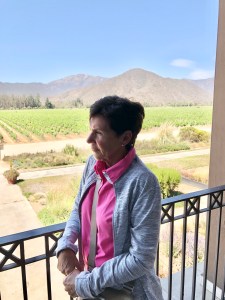
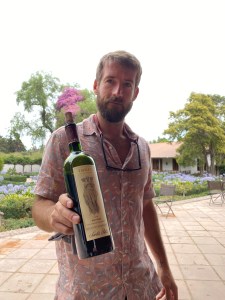
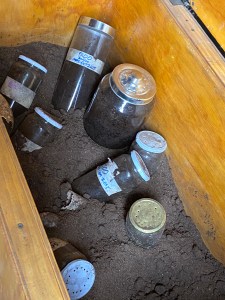
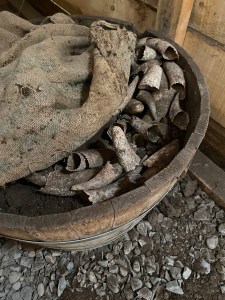
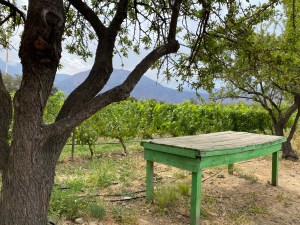
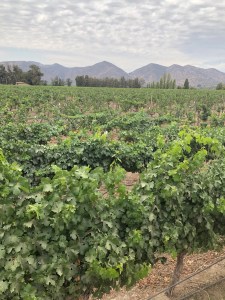
We began at the Antiyal winery, a small family run enterprise that is focused on biodynamic practices. Biodynamic wines are similar to organic wines, except they’ve gone several steps further and created a whole fertile ecosystem around the vineyard. Essentially, biodynamic wines begin from the soil the grapes grow in. Like organic wines, no synthetic intervention is used. The vineyard itself is a biodynamic farm involving self-sustainable uses of manure, flora and fauna. Everything is determined from a strict calendar, from planting to harvesting and takes takes into account lunar cycles as well as the position of the sun and planets. It sounds a bit much but, it works extremely well.

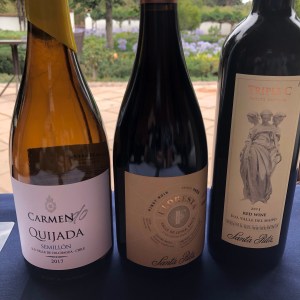
Back in the car and off to the Santa Rita winery which is anything but a boutique affair. It’s one of the largest wine firms in Chile and exports masses of product to North America. Mick continued to walk us through proper tasting techniques and how to discern various features of each wine. His selections from the large set of offerings were excellent across the board.

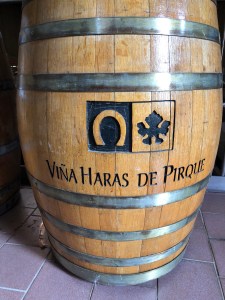
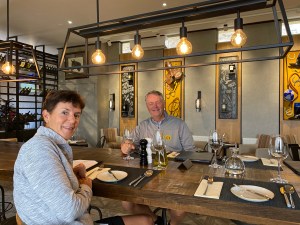
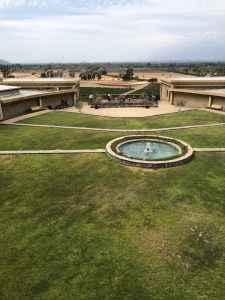
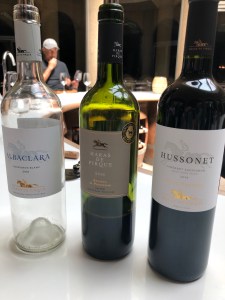
Onward ever onward to Haras de Pirque winery which was built on the site of a very successful thoroughbred horse farm. The owner took up wine making, converted most of the farm to vines and has created an incredible facility producing award winning wines. The on-site restaurant was great and we enjoyed, you guessed it, a glass of wine paired to our menu choices. Fantastic.

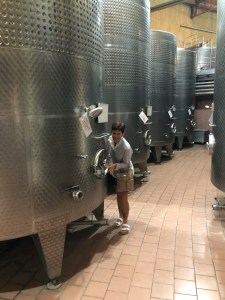
Then it was down into the production facilities to learn their processes.

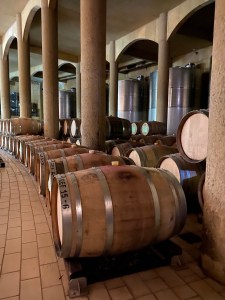
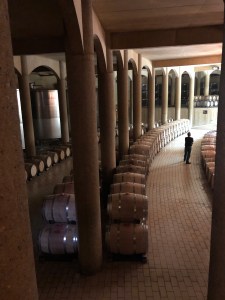
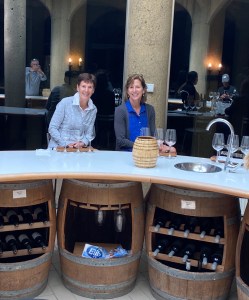
The barrel room was special and the tasting room even more so. The latter was located under a fountain which then formed a skylight.

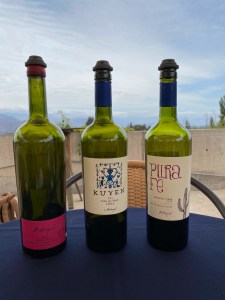
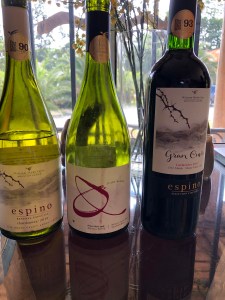
By now we were a bit wobbly given the tasting pours were usually about 5 ozs and we were hesitant to leave a drop untouched. The spittoons remained bone dry. Our last stop was the William Fevre winery shop which was an intimate setting not adjacent to the vine fields. Mick made up a cheese and chocolate platter to show how flavours could change based on food pairings. It was eye opening.

Four wineries, the equivalent of nearly 7 glasses of wine each and a newfound appreciation for Chilean wines and the interesting people in the industry. A great day indeed.

Santiago January 7th

Quite the city. Nearly 7 million inhabitants (40% of the country), a thriving economy (building cranes everywhere), polite motorists (pedestrians actually get the right of way, very few horns beeping and yellow/red lights are respected).

Our day centred on the hop on/off bus to see two major sections of the city. Like many urban centres there are areas of the haves and have nots. There are huge swaths of residential areas where the housing can be described as ramshackle at best. Then there’s the haves with attractive homes and gleaming commercial towers.
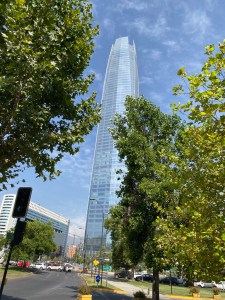
Our tour began in the Las Condes district which is an eclectic mix of very modern towers and attractive neighbourhoods. Interestingly every private residence is encircled by a wall with additional electric wires, spike tops and other defensive measures. Given the tremendous amount of vegetation everywhere, it doesn’t look as ominous as it sounds

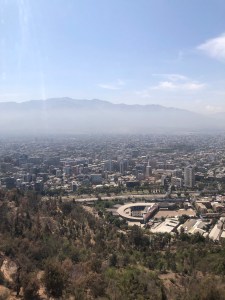
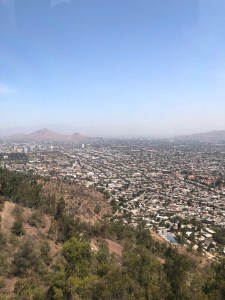
Santiago is built in a wide valley with mountains on both sides. The Parque Metropolitano occupies a hill peninsula that protrudes from the Andes westward into the valley with the city radiating outward in three directions. The mountains, urban sprawl and massive vehicle population means a terrible smog band hovers above the city. Fortunately today the air quality wasn’t bad enough to impact us.

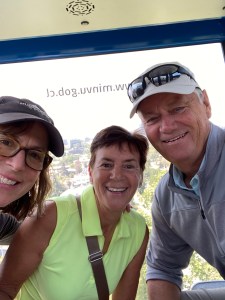
We took a cable car to the top of the Parque which allowed a panoramic view of the entire city.

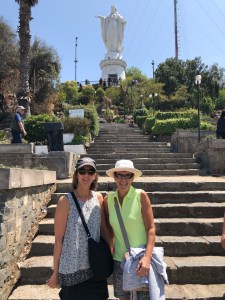
At the top of the mountain is a church and 22m tall statue of Mary. This is probably the most popular tourist spot in the city.

The trip down on the west side is via an old funicular (circa 1925) leading to the El Centro (downtown) district.

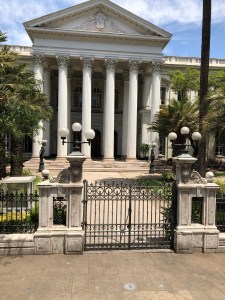
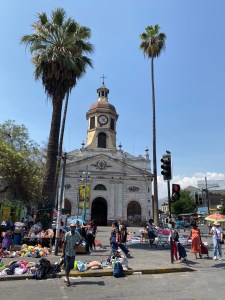
The old town contains the major government buildings, cathedral, markets, main plaza and shopping district. Unlike the open and flowing feeling elsewhere, these streets were jammed with vehicles and people. Our bus took 40 minutes to go nine blocks so we got off and spent the rest of the day on foot. Many of the buildings have graffiti denouncing the government and police. The word Libertad (liberty) was prominent. We presume this was the result of the recent civil unrest and demonstrations two months ago. Other than this spray paint there wasn’t any evidence of discord anywhere.

Then we hiked back to the funicular, up the mountain, back down in the cable car and finished off with a couple of Kms walk to our hotel. Our reward?