Peru – A Tale of Opposites

Our first day in Peru was a tale of opposites. Lima, a chaotic mass of 9M inhabitants, offers the craziness of free for all traffic on roads full of massive potholes. Unfinished buildings abound (apparently that’s a tax advantage) and the sanitation department is obviously underfunded. Once we got on to the highway heading south, the world changed. Total desolation with miles of sandstone brown desert stretching to the horizon. For three days prior to joining the tour group we’re travelling with Doug & Louise Pegg, who have been great friends for decades.
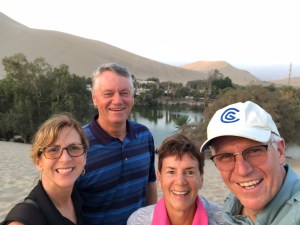
Our trip south to the desert was interrupted twice by police roadblocks. The first got a little testy when a fine for not having the headlights on (on a divided highway in the blazing midday sun!) was threatened. After a bit of pushback (thanks Google translator) we were “released”, wallets intact. The second stop was more amiable and after a quick documents check we continued. The terrain is incredibly rugged yet full of partially completed or proposed developments that appear abandoned. Great beaches stood completely empty. At times I was reminded of the Nile valley as the limited agricultural swath was very narrow and ended sharply at the edge of the desert. It’s a harsh environment with a tiny population, very unlike the capital. We lunched in Paracas which is described as the Oregon coast without the trees, grass or people. Given it is late Autumn here the tourists have left and the calmness versus Lima was dramatic.
 

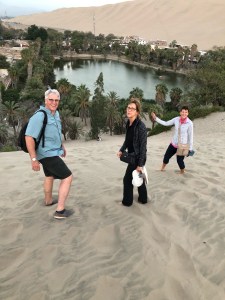
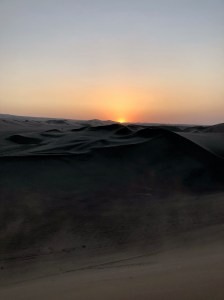
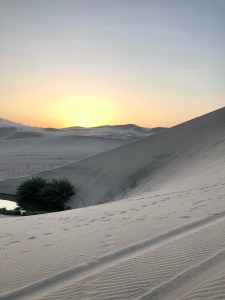
On to Ica and a lovely modern resort before exploring the Huacachina oasis and sand dunes 10 Kms away. The dunes are staggeringly large and stretch for miles. Climbing part way up one ridge line was challenging enough. We’re planning to return tomorrow to go sand boarding and taking a dune buggy ride.  Fortunately we caught the sunset to end our day.
A great day one.

Amazon-Andes-Inca Trail

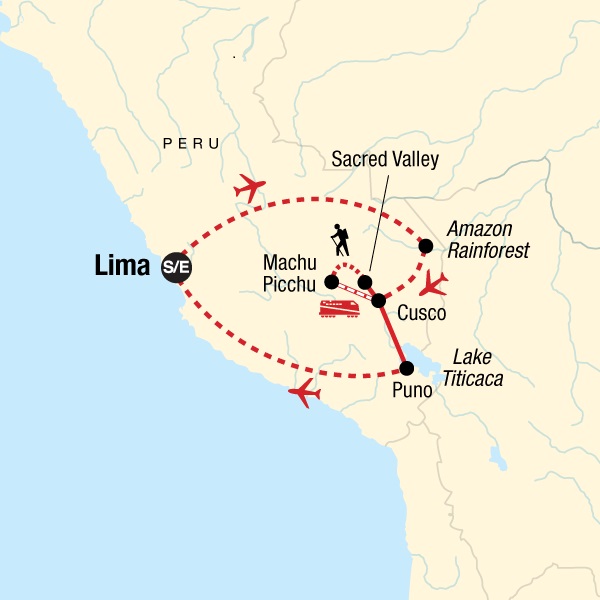
We’re at it again with an adventure trip that will take us from Lima, Peru to the Amazon basin then back into the Andes and Lake Titicaca before ‘enduring’ a four day hike on the Inca Trail culminating in Machu Picchu.  Come along for the ride (and walk, boat, canoe, plane, sandboard and who knows what) as we explore the unique combination of hot, humid rainforests along the majestic Amazon River, the world’s highest freshwater lake and mountain top altitudes approaching 14,000 feet.

Peru Trip Map

Islamic – Coptic Cairo

Ha! This time we beat the early morning call to prayer as the alarm went off at 3:15 a.m. Such craziness was necessary to catch the 5:20 a.m. flight back to Cairo. I guess someone’s logic was we would beat the traffic by arriving so early. Not!

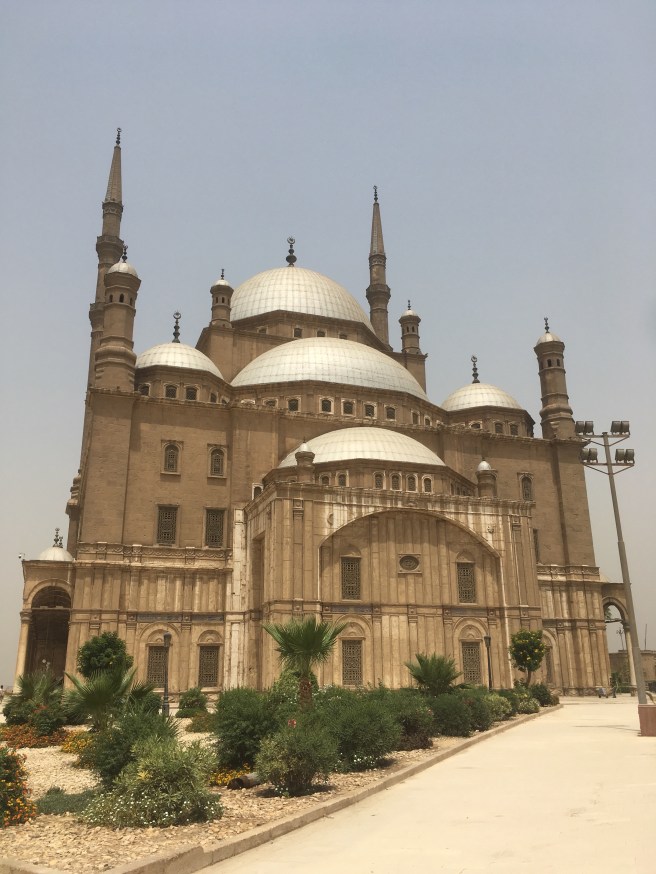
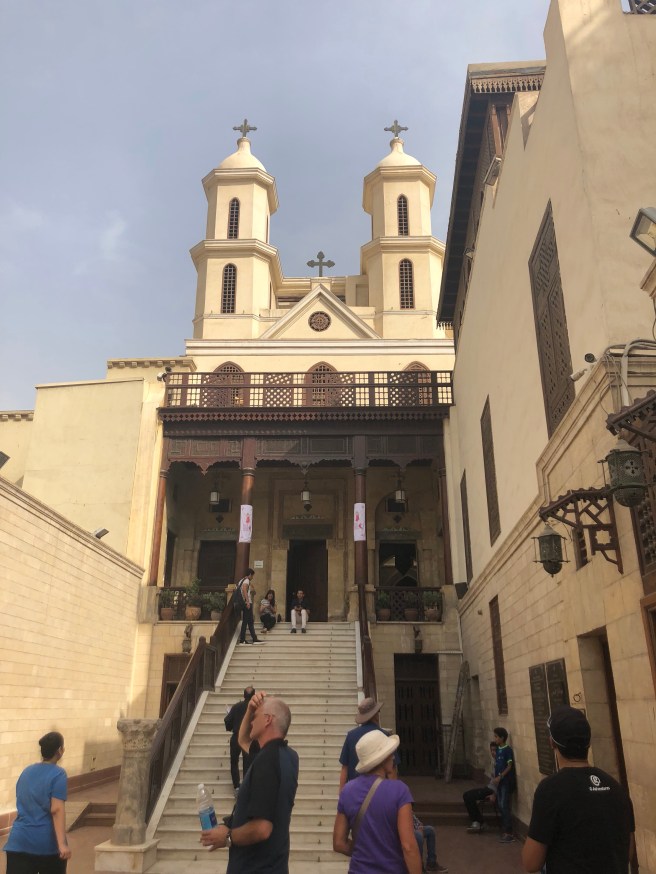
Another history lesson for us all today as we toured a variety of mosques and churches (and a synagogue for good measure – not in use and was originally a church). Coptic Christianity emerged as the dominant faith as the Romans changed their religious ways in the 4th century AD. Coptic simply means Egyptian so a Coptic Christian is a Christian from Egypt. Today, numerous Coptic Christian churches exist around the world to serve the Egyptian diaspora. Numerous historical churches remain in a section of Cairo providing a glimpse into the architecture and decor of that time. The conquest of Egypt by the Muslims in the mid 7th century brought the rapid building of mosques which acted as schools (madras) as well as places to worship. As in Pharaonic times, it was a case of build bigger and taller than ones predecessor. There are now approximately 10,000 mosques in Cairo alone. Fortunately we only toured three.
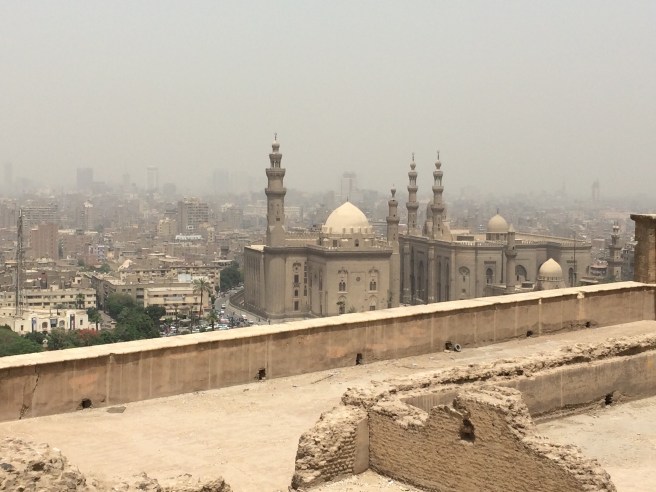
Side by side mosques with the mid morning smog, dust and haze over Cairo.

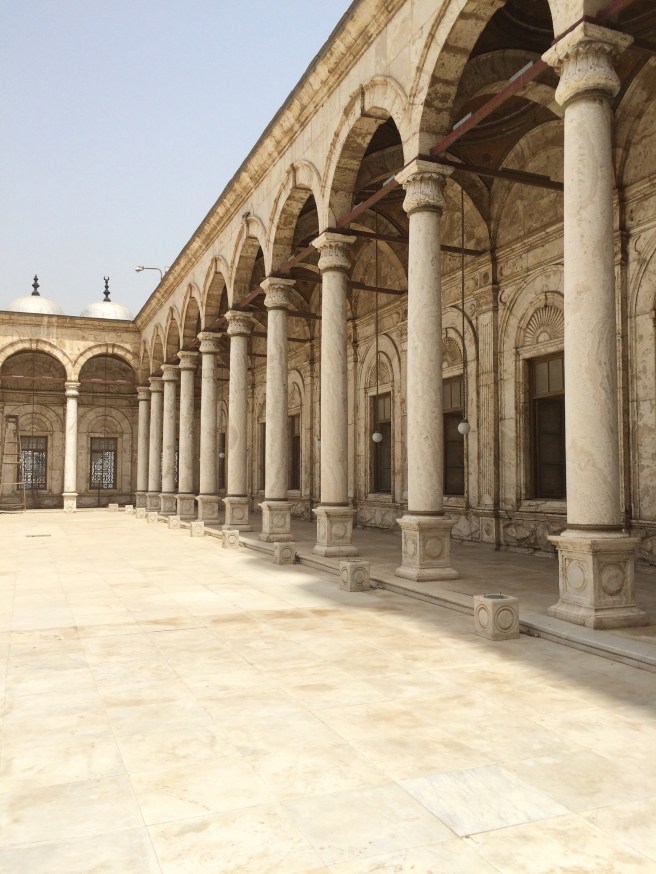
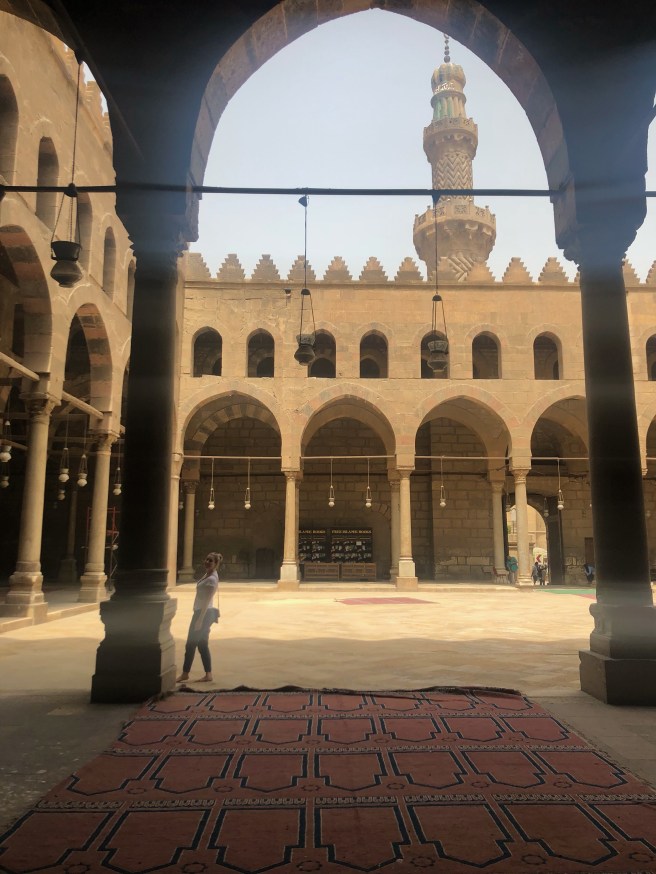
Shoes off, ladies heads covered, we admired huge domed ceilings, stained glass windows, carvings, tombs and wall paint that provided an impressive vista.

The churches by comparison were modest and ‘traditional’ in layout and decor. One was actually built on top of the columns of a Roman temple which can be seen through glass inserts in the floor. Neat.

We squeezed in a 45 minute exploration of the city’s main bazaar but by 4 pm the group’s energy reserves were done. Back into the traffic one last time (save a late night trip to the airport) to grab some rest at the hotel. The Bennett/Blanda/Benneter gang is on a flight out at 1:45 a.m. I mean, who schedules this stuff?

We’ve said so long to the others with some loose plans to cross paths in the future as new travel adventures emerge. For now it’s time to reflect on this trip back in time like no other.
Karnak Temple

A truly decadent 9:30 a.m. start for a 10 minute bus ride start to our day seemed almost boring (we are going to pay for it in tomorrow’s schedule!). Covering 40,000 sq. metres (~10 acres) Karnak Temple is the largest such complex in Egypt. Construction of temples started in the Middle Kingdom (~2100 BC) and continued through to Roman times (~250 AD). Approximately thirty pharaohs contributed to the buildings, enabling it to reach a size, complexity, and diversity not seen elsewhere. A very early case of not only keep up with the Jones but outbuild them and in some instances, build over what came before you.

After the colour and vibrancy of yesterdays tombs it was a return to the dusty (and stupid hot) outdoor environment but still there were special pieces of architecture that one must marvel at remembering when it was built and the equipment, or lack thereof.

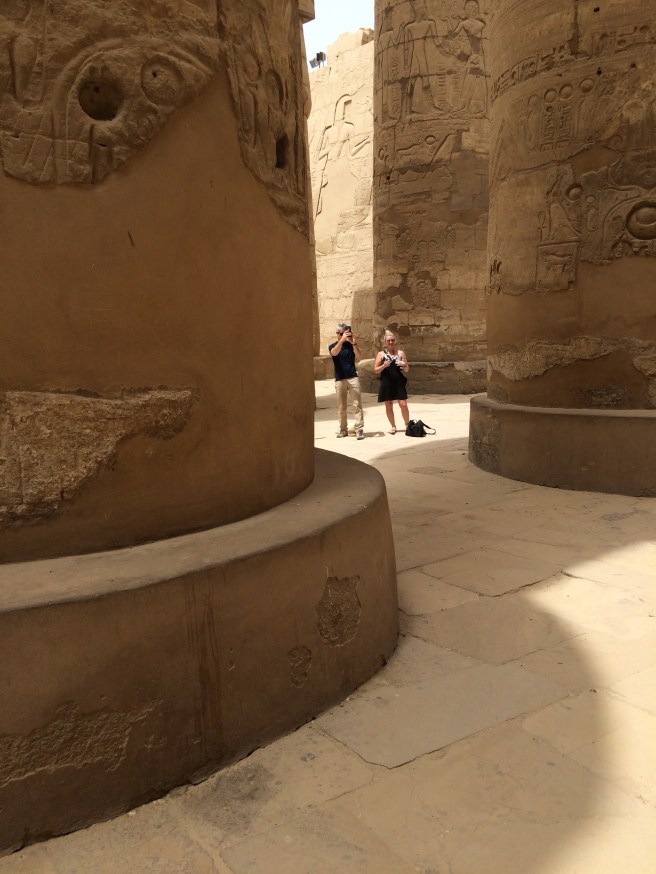
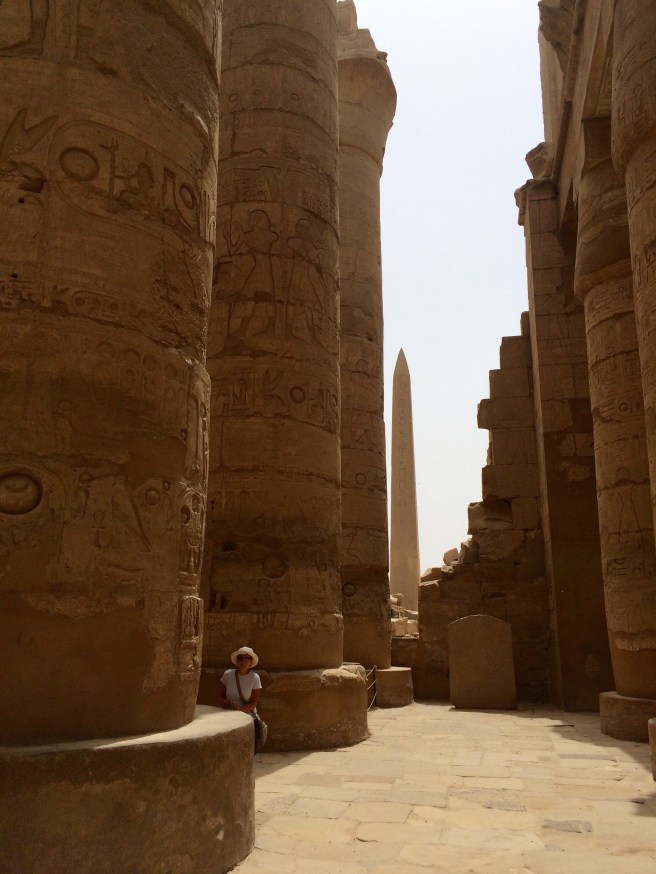
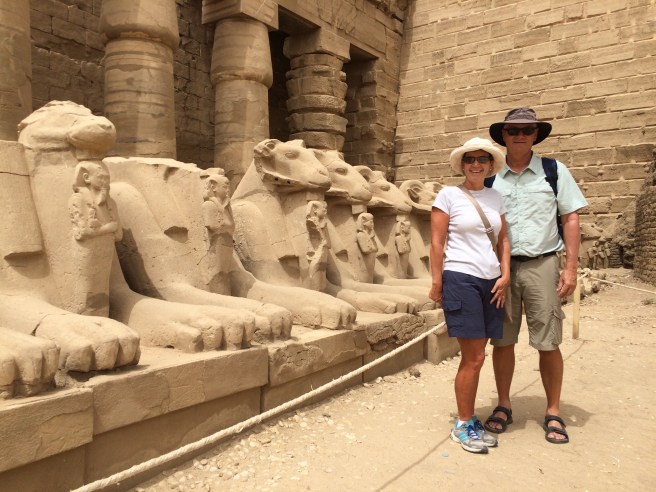
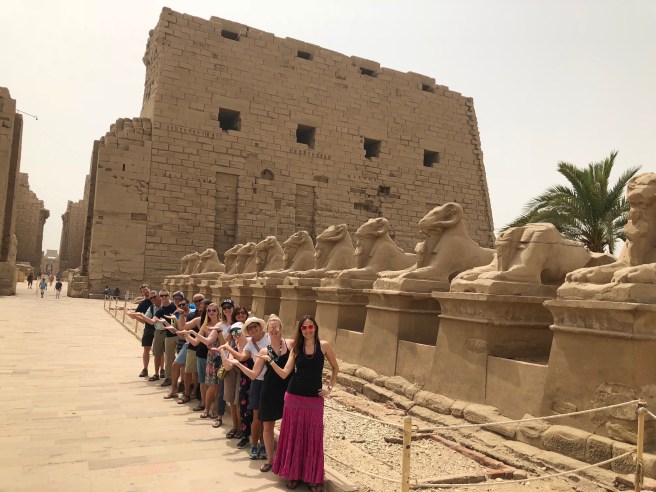
The most interesting sections were the Hypostyle Hall with its 134 columns, the obelisk and avenue of Sphinx, albeit in this case, with a rams head. The columns were massive to say the least.

One last group shot.

A great lunch in Luxor then back to the hotel for pool time because tomorrow is a long, long day back in Cairo before heading home.

Valley Of The Kings

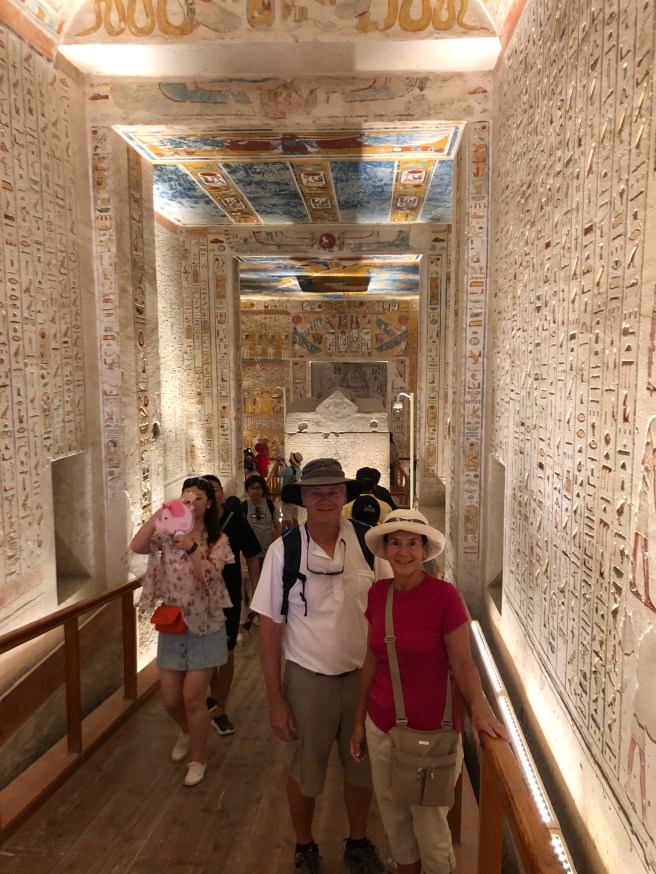
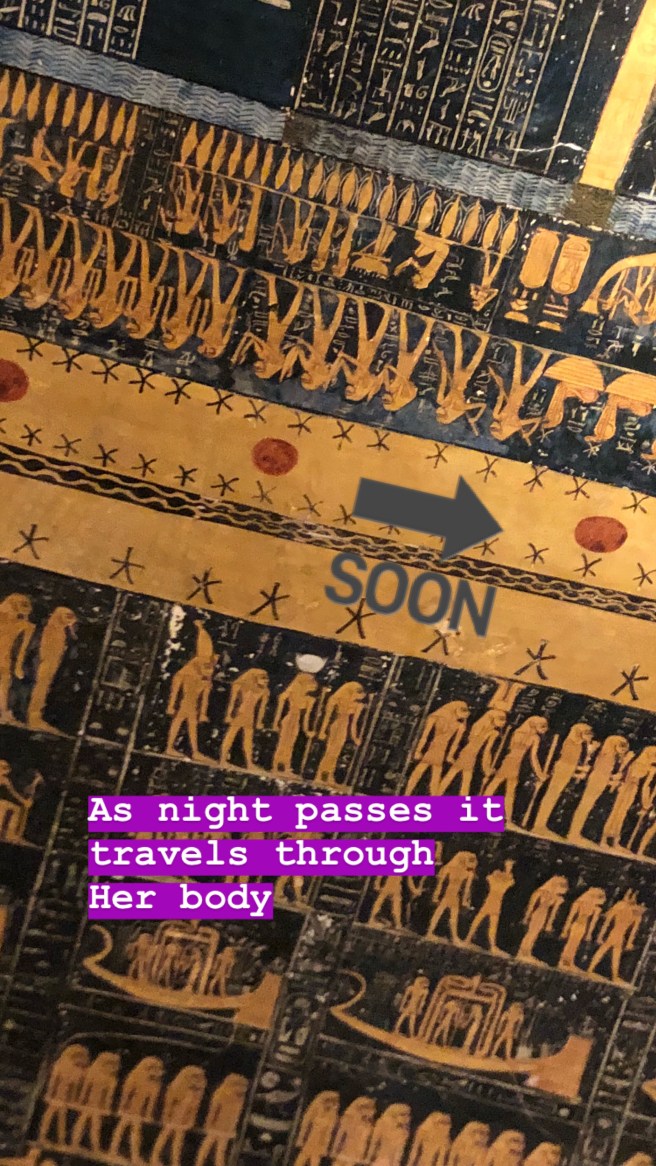
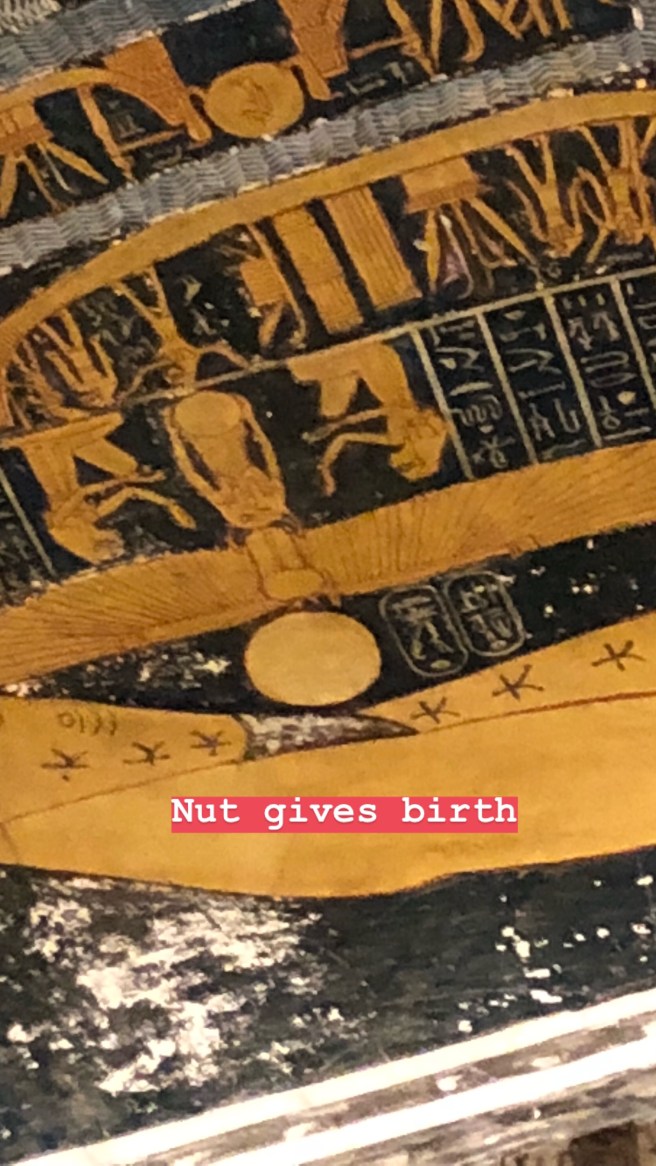
Breathtaking would be an apt description. In a valley a few kilometres west of the Nile, opposite Luxor, is a small mountain range where 63 tombs of ancient Pharaohs have been uncovered (the latest being in 2008). From the New Kingdom era (started about 1600 BC) these tunnels carved into the mountain provide a jarring contradiction to the harsh desolate landscape. Colourful artwork covers the walls and as our hieroglyphics knowledge continues to grow, stories told by the paintings take on a life. Sean took the following video of one of the ceiling vaults.

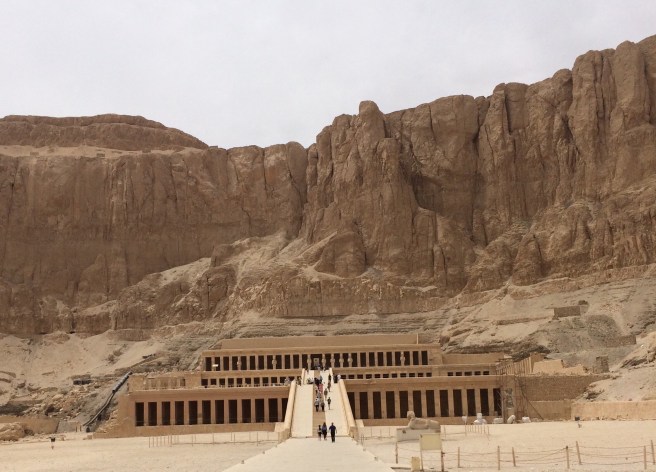
A short drive around the mountains took us to the temple of Hatshepsut. It’s in a valley basin surrounded by steep cliffs which meant hot, still air well in excess of 100F. Energy sapping to say the least. Although only a portion of the original structure has been rebuilt it is still very impressive. Unlike the King’s tombs, this was a temple and as such sits against the cliffs.

We are now at a really large hotel on the outskirts of Luxor that offers lovely gardens down to the edge of the Nile. Fortunately we checked in just before the sandstorm hit. (See previous weather post). Most people are running on fumes so an extra few hours of nothing will be welcome.

Egyptian Weather

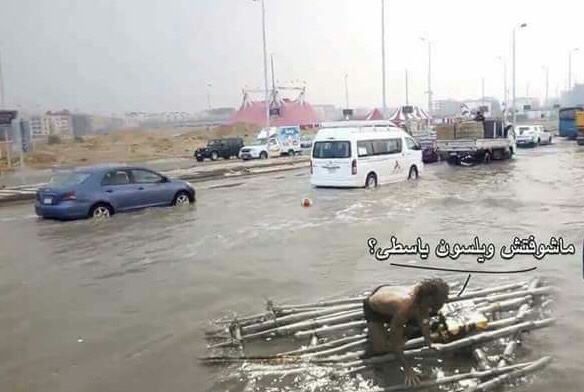
We’ve now had it all. Egypt gets a little rain along the Mediterranean coast and virtually none as you move south. Cairo, for example, averages zero inches a year! Last week in Cairo the heavens opened and it rained in the desert. Not just rain, a torrential downpour. Because there are no storm sewers the water has nowhere to go. Our hotel had water rushing through parts of the roof. It was a mess for a few hours the next day until the heat evaporated everything. This was the view near our hotel.

Then we experienced a true desert sandstorm in Luxor. Like a thunderstorm you could see it coming and the wind picked up to tree whipping proportions. It lasted about an hour and actually, was quite concerning given its ferocity. Fortunately we were safe in our hotel.

Allie stepped outside briefly to video the storm as it swept up the driveway of the hotel.

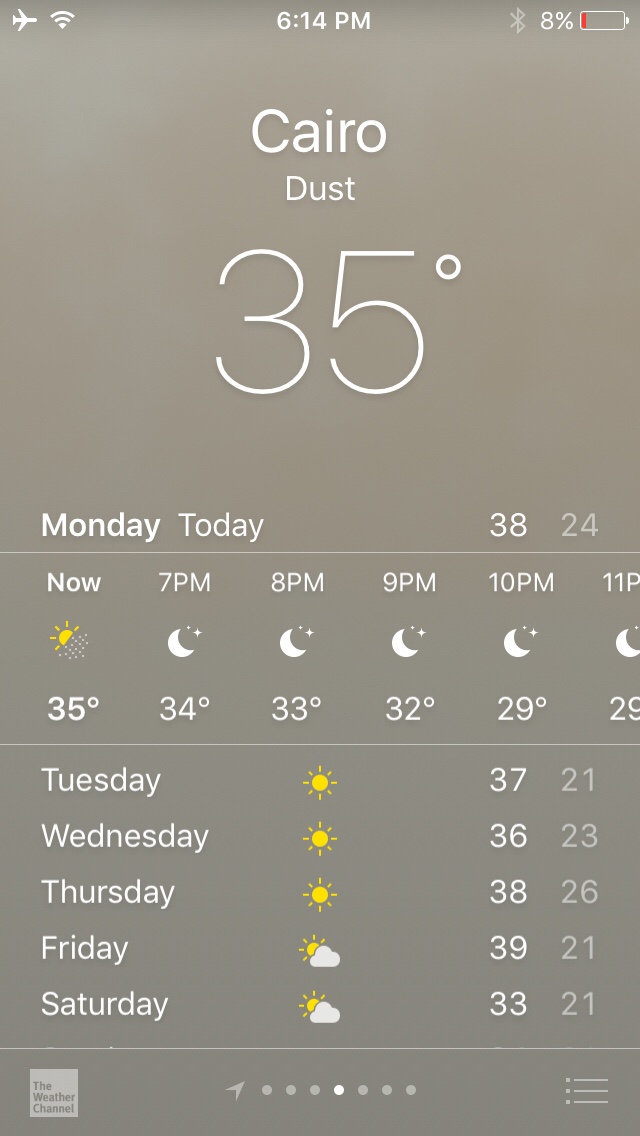
Although we are in Luxor, 650 Km south of Cairo, here is the weather summary for Cairo. Note it calls for ‘dust’ as the hot winds sweep through. Unique. (35C = 95F).

Edfu – Luxor

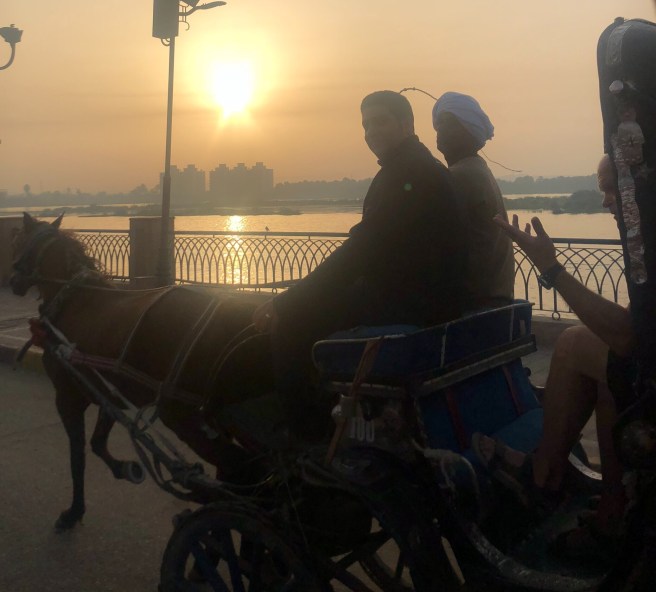
A more reasonable start to the day – HA – as we congregated at 5:45 a.m. for a carriage ride through the town of Edfu to a massive Greco Roman temple honouring Horus, god of the sky. The use of a caleche was an age old tradition here that the tour companies sought to change a number of years ago. The reaction by the locals was so threatening that now all the cruise boats must use the carriages. It’s like the mass start to a running race. A total of about 150 carriages loaded up with 3 tourists each careen through town at various speeds depending on the willingness of the passengers and, presumably, the horse. The bench up beside the driver is particularly perilous but everyone was delivered safely to the temple and subsequently back to the boat.

Thereafter we set sail for Luxor and spent a very lazy afternoon alternating between the heat (99F, 37C) of the upper deck and the cool AC in our cabin. Mo & Mark somehow were assigned the one suite with balcony on the ship and thus it’s a natural gathering spot for family drinks and chats.

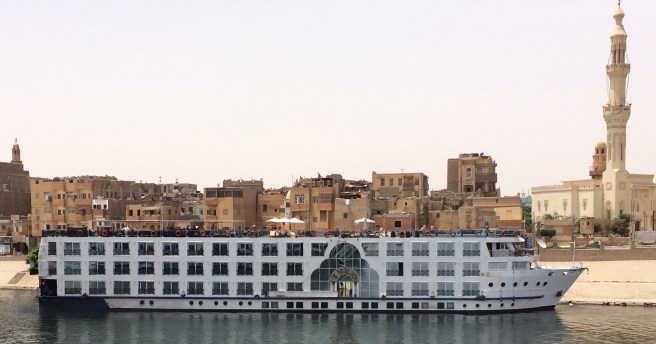
The river is busy with these cruise boats however the downturn in tourism means dozens are tied up and sit idle. This is an example of the boat we’re on.

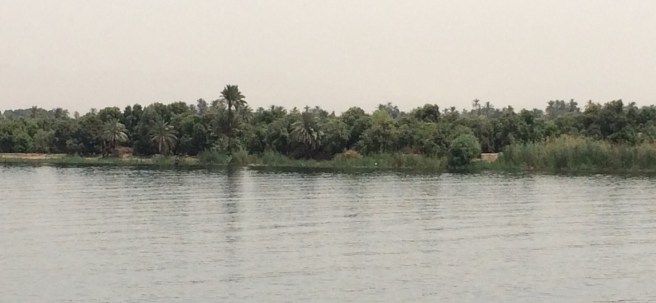
The Nile truly is the lifeblood of the country. Lush vegetation for 500 m then rock and sand stretching forever. Very little evidence of of people along the way although since this is prime farmland there must be small villages we couldn’t see.

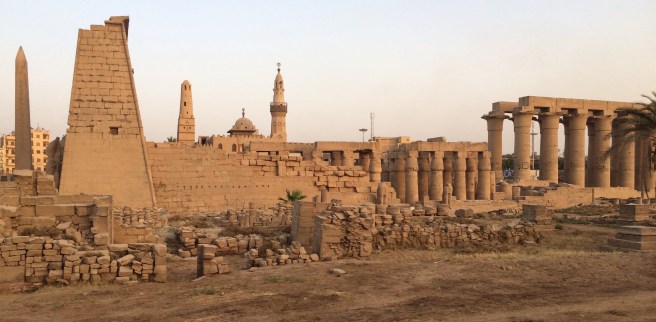
Upon arrival in Luxor our group walked to town and were hit by a cacophony of sound. A large open air festival, unmufflered motor bikes, the blaring call to prayer, car horns, and shouting vendors created an unbelievable wall of sound. The Luxor temple dominates the town centre and we saw it in the light and dark, full moon included.

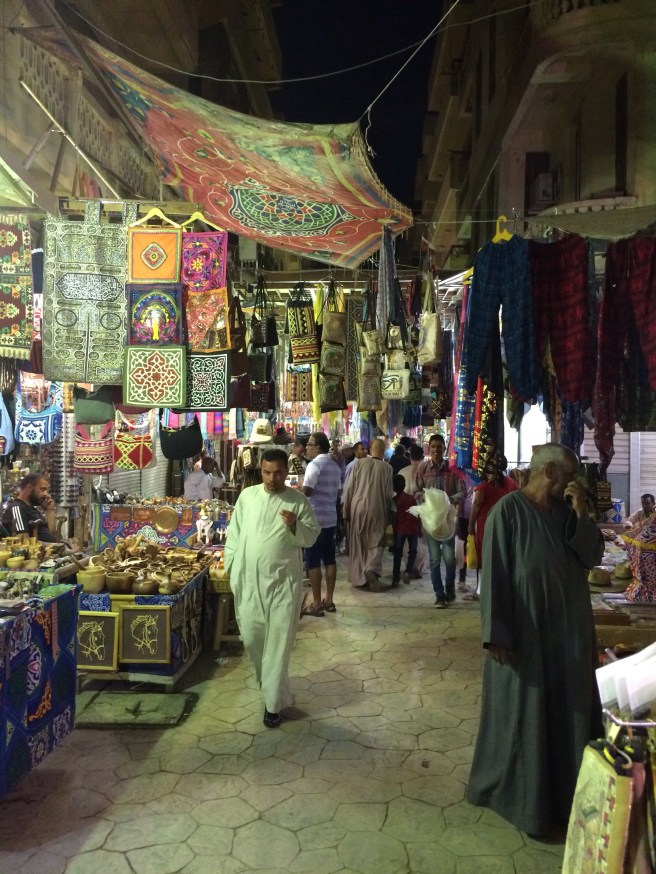
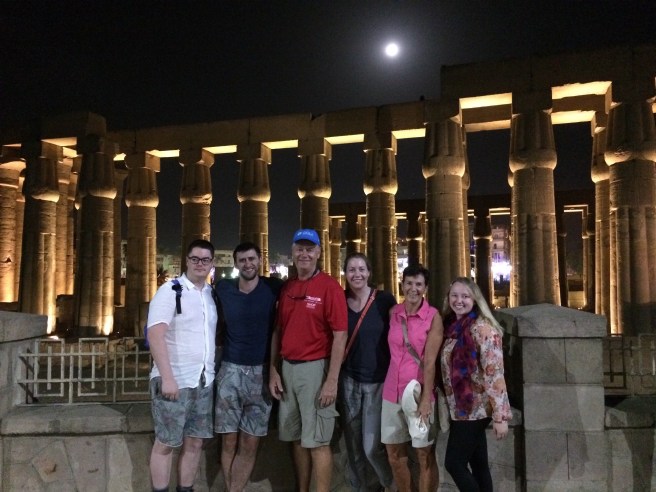
The mandatory wander through the souk searching for the perfect ‘must have’ and a final family picture for the day completed our outing (and yes the matching shorts was somewhat planned).

Hieroglyphics 101

Hello there!

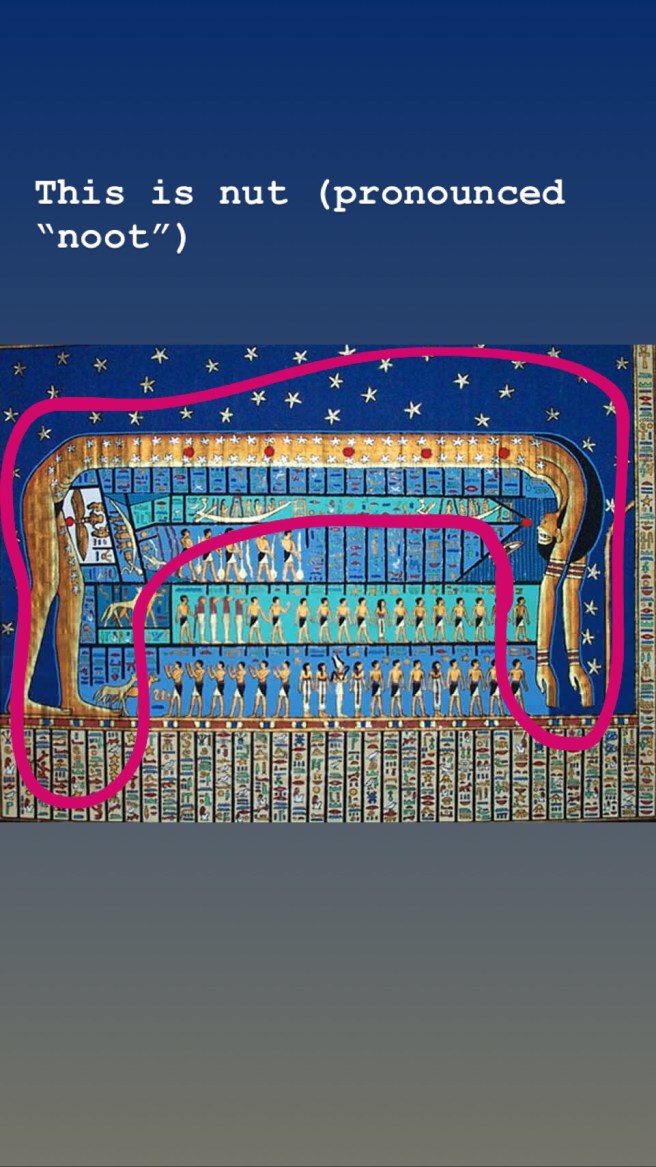
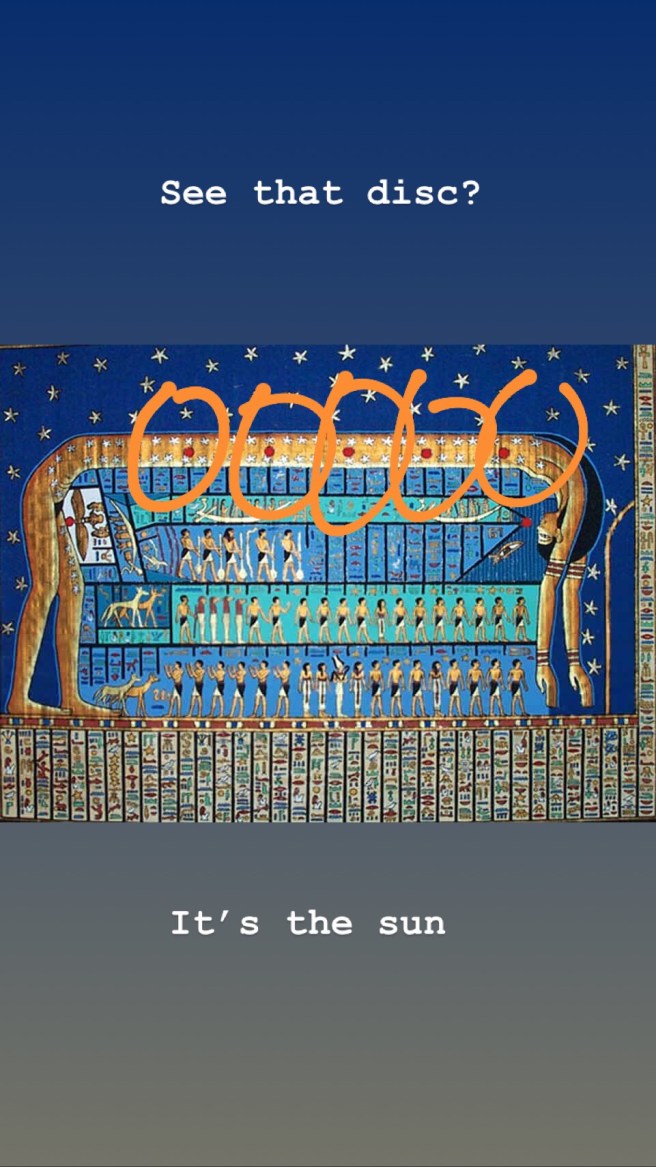
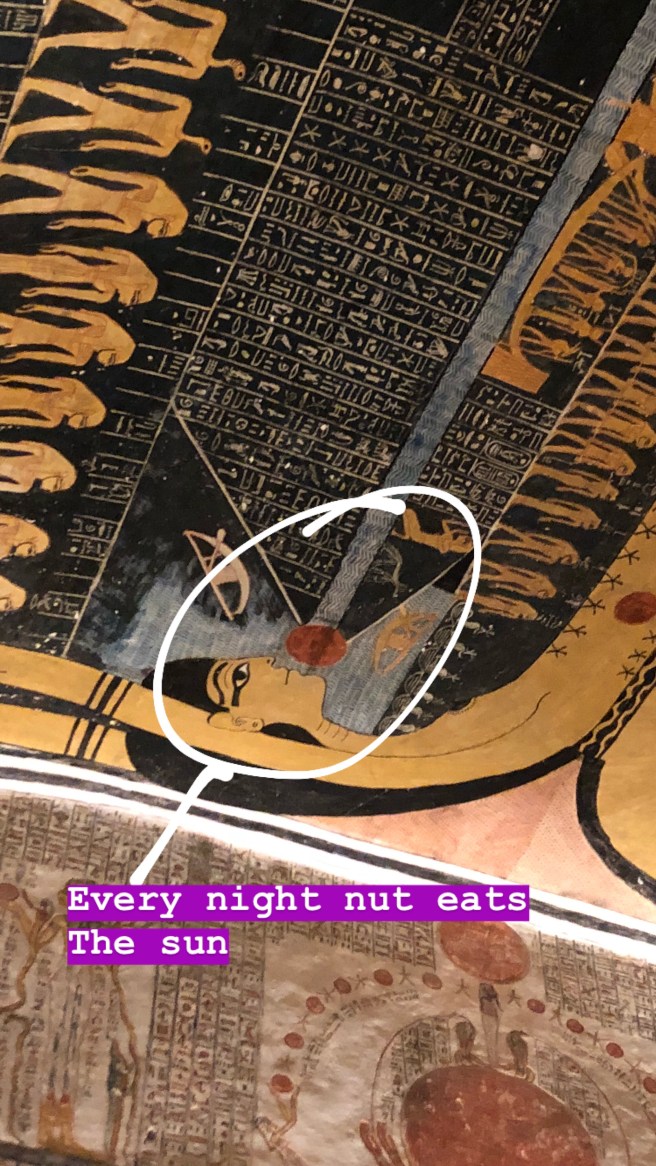
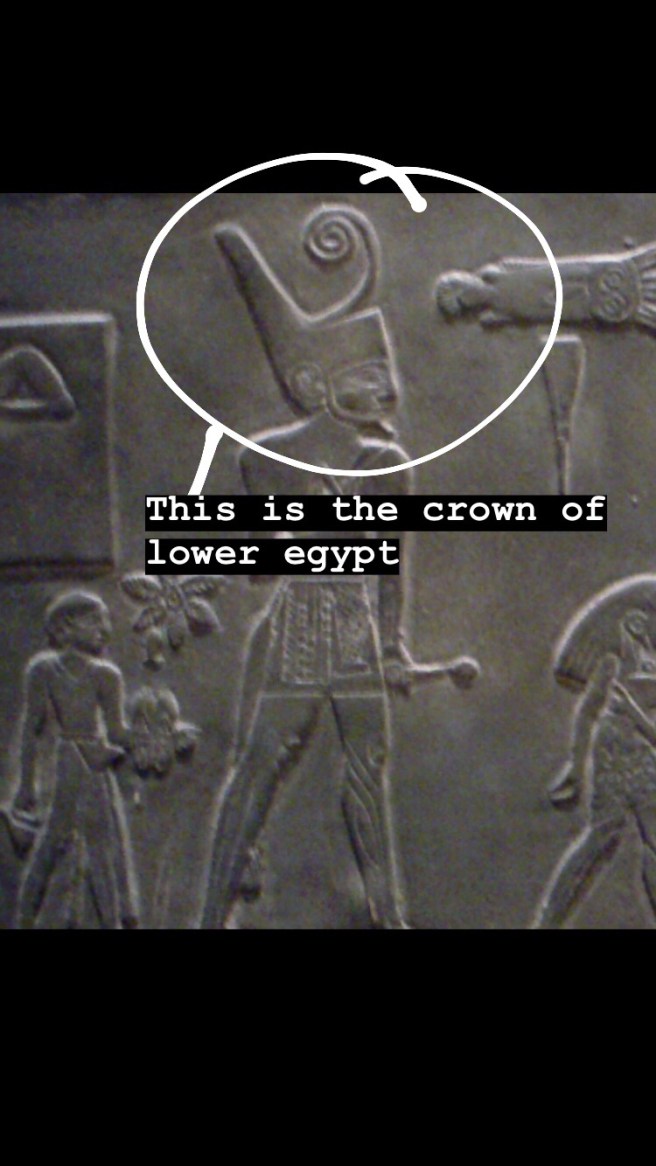
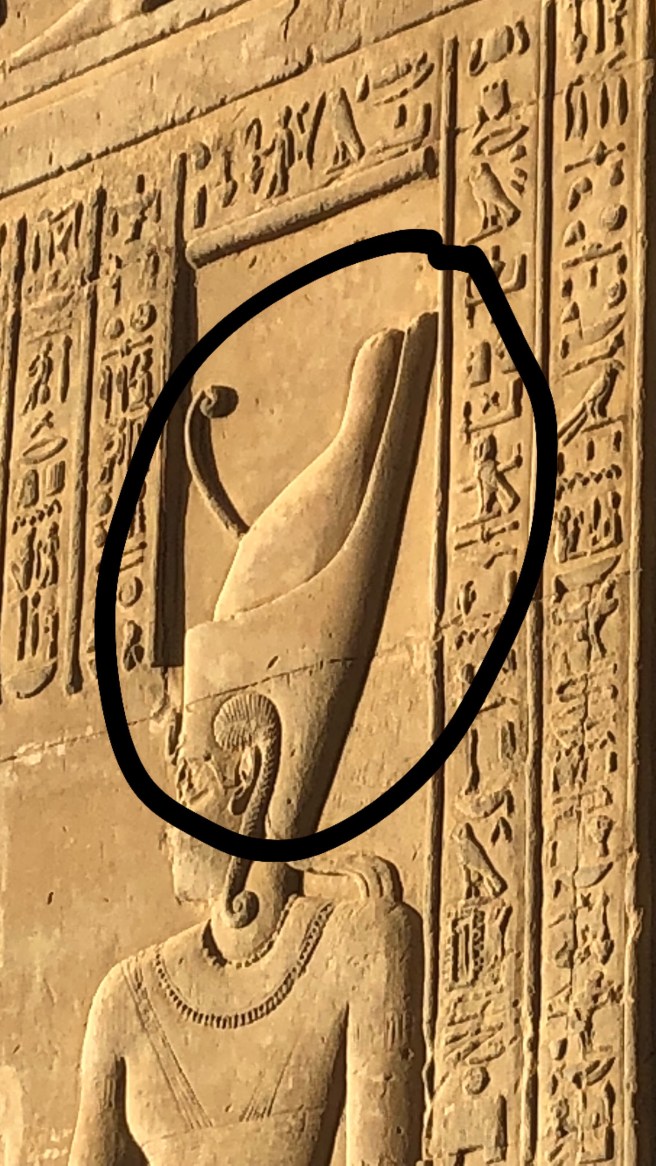
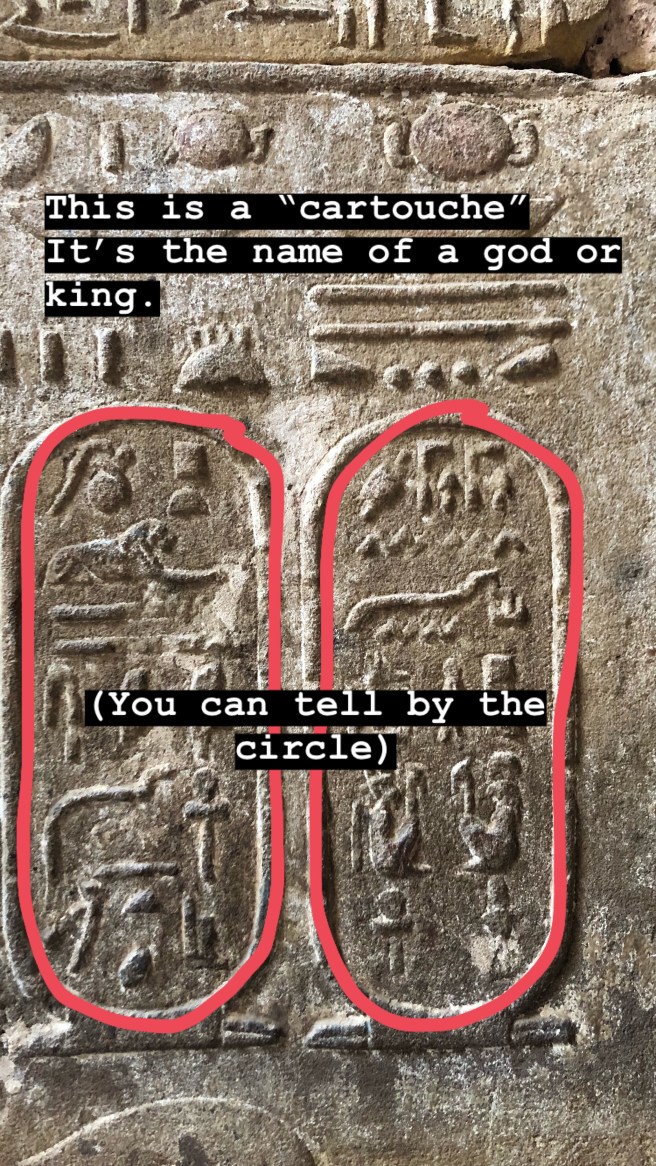
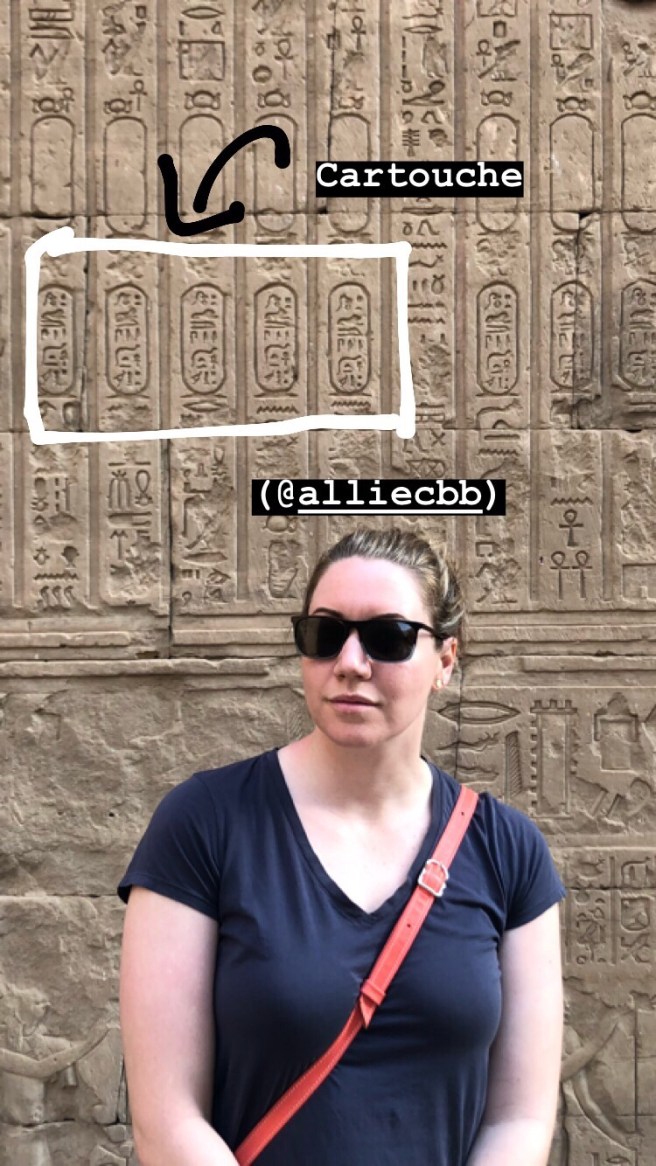
It’s Sean, head archaeologist of Bennetts On Tour since 2018. I’ve been tirelessly studying the ancient practice of Egyptian hieroglyphics for nearly a week. And I’d like to share some of my early findings with you. Ready?

I hope you’ve enjoyed our lesson today!

Aswan – Nile Cruise – Kom Ombo

An eclectic day combining an engineering marvel, a Greco Roman temple, a granite quarry, our first leg of cruising north on the Nile and the Kom Ombo temple to end the day. Sean and Allie opted out of the group tour itinerary in the morning and made arrangements for a boat hire to cruise, swim and visit islands of the Nile while we did our side trips.

The Aswan High dam (#1 in pic below) is massive, being nearly a kilometre across at the top. Unlike North American dams it combines rock and concrete on a much lower grade angle so doesn’t have the smooth finished look one might expect. Given its role in controlling flooding and producing electricity it has a significant security detail at either end and at the visitors centre. Lake Nasser behind the dam stretches forever to the south and is eerily empty of any boating activity. The High dam effectively replaced the lower dam (#6) in 1970 however the latter is still integral to control water levels downstream.

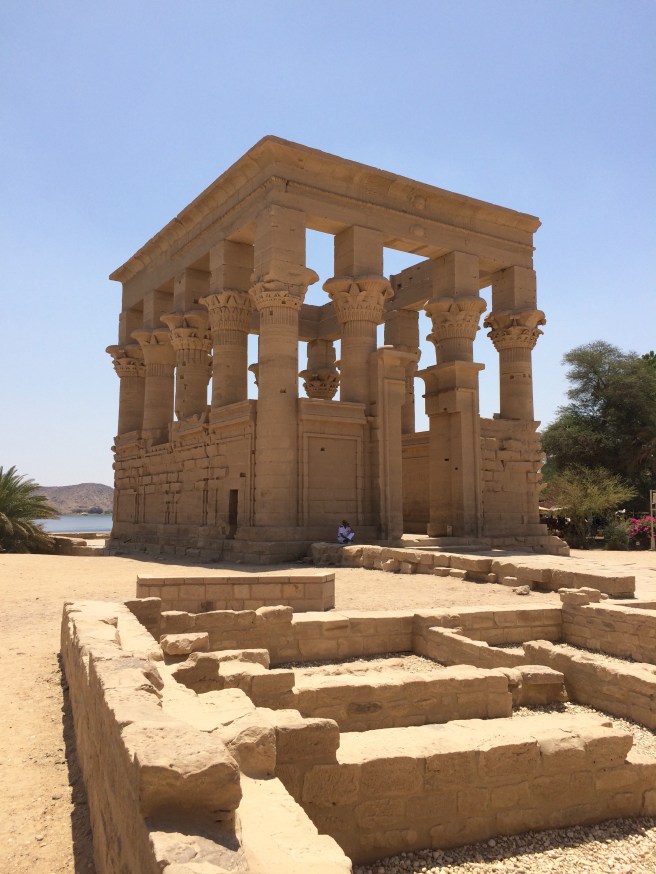
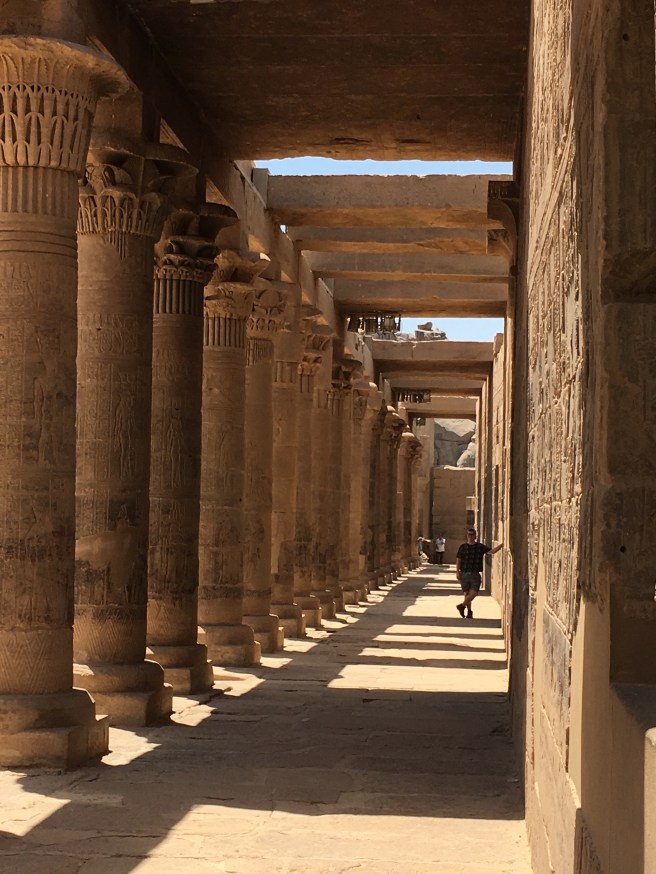
The Greeks and Romans took turns occupying Egypt between 332 BC (Greece starting with Alexander the Great to 30 BC with Cleopatra) and the Romans thereafter until the Muslims conquest in 645 AD. To gain recognition by the native populace they took on Egyptian traditions and participated in Egyptian religious life. Hence the presence of Greco Roman temples depicting Egyptian gods and hieroglyphics. The lake between the two dams included Philae island that housed an important Greco Roman temple which was rescued from the dam induced rising waters and moved to a higher point of land on a different island (#5). We took a small motor boat to the island and had a good wander.

A short side trip to a granite quarry and an appreciation of the sheer size of various blocks and an unfinished obelisk all cut by hand using rudimentary tools finished our morning. Back to the Princess Sarah where we set sail northward.

After three hours of cruising and tea on the upper deck, our boat, and seemingly half a dozen others, all docked at Kom Ombo. The temple is unique as it is a Greco Roman creation that venerates two Egyptian gods (all others focus on one or a family). One of the gods was a crocodile (don’t ask, long story) and there was a museum of mummified crocodiles. Another wow.

We’re cruising until well into the night and will be docking at Edfu where we start again at the crack of dawn tomorrow.