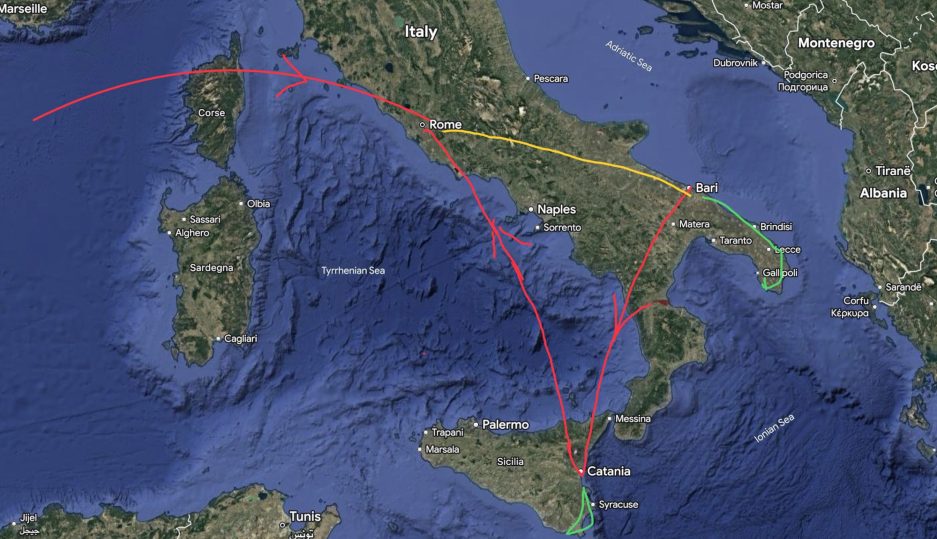
We left Abate Masseria and headed south east towards the coast on our way to Lecce. Our intermediate goal was a dairy farm famous for its cheese products.
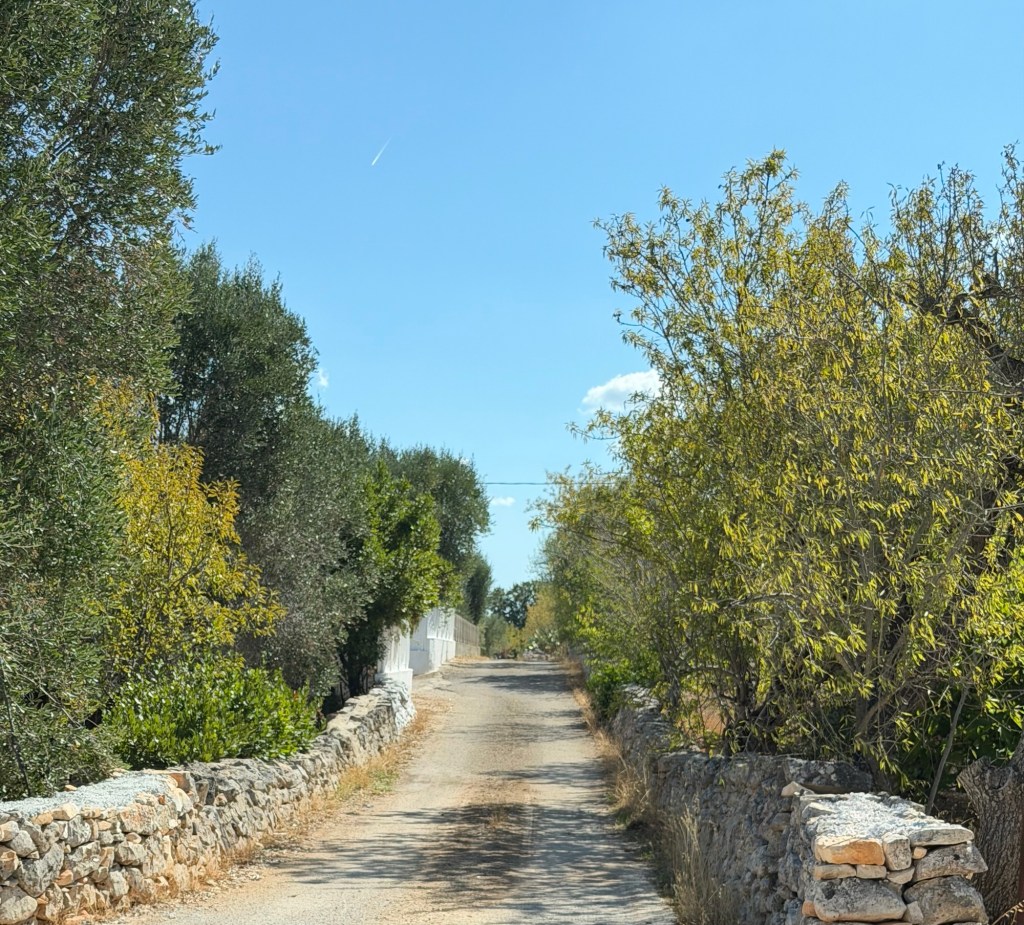
Getting there required navigating narrow country roads with the inevitable stone walls.
(If viewing on a phone or tablet click on photo to see full picture).
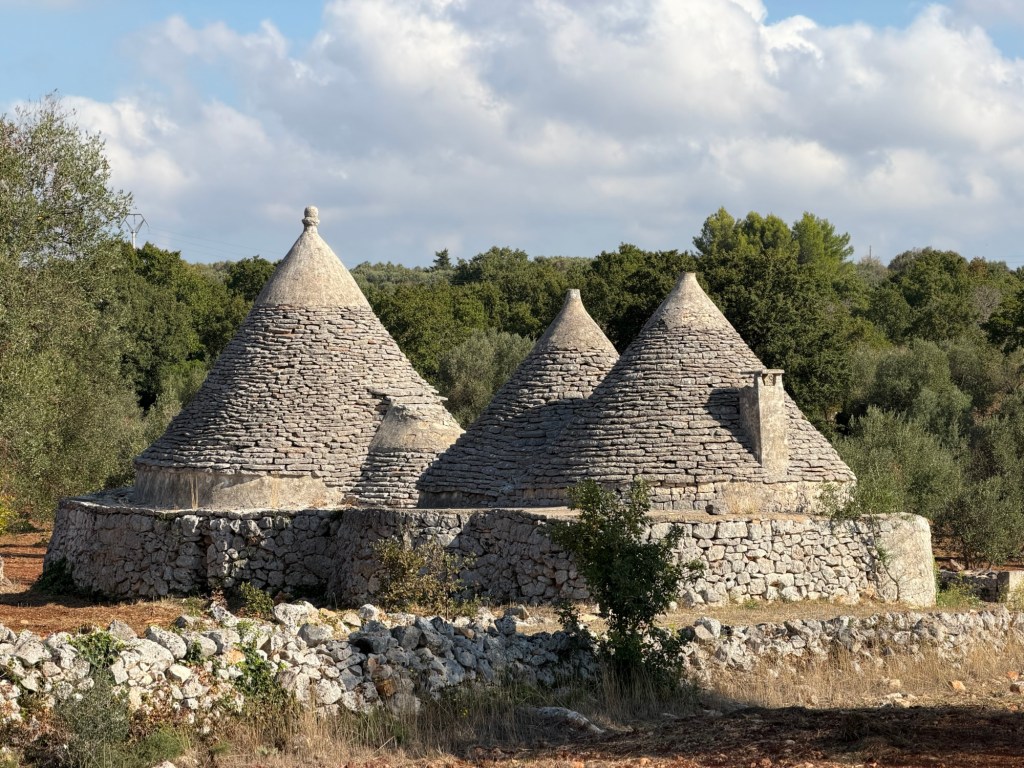
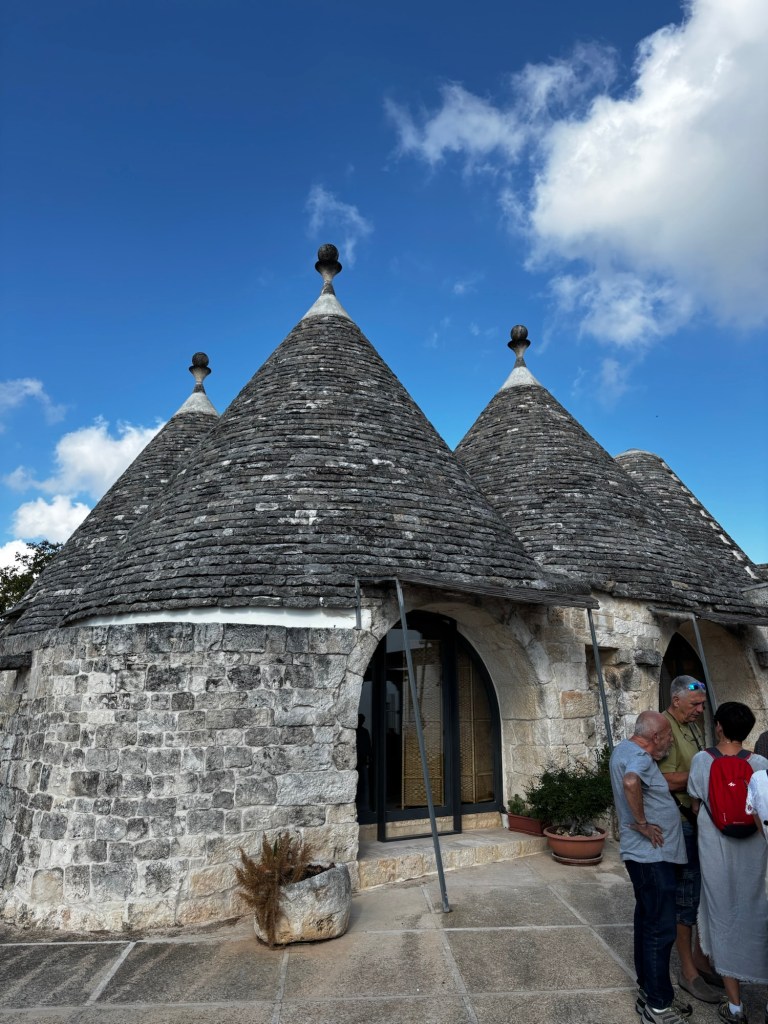
Along the way we saw hundreds of tulli that appeared to be recently constructed and fully fledged homes. Curious given the building options available.
Masseria Seppunisi (turns out Masseria means a traditional fortified farmhouse estate native to southern Italy) is a dairy farm-cheese factory near Ostuni. In order to experience (and taste) the cheese making process we first had to understand dairy farming.
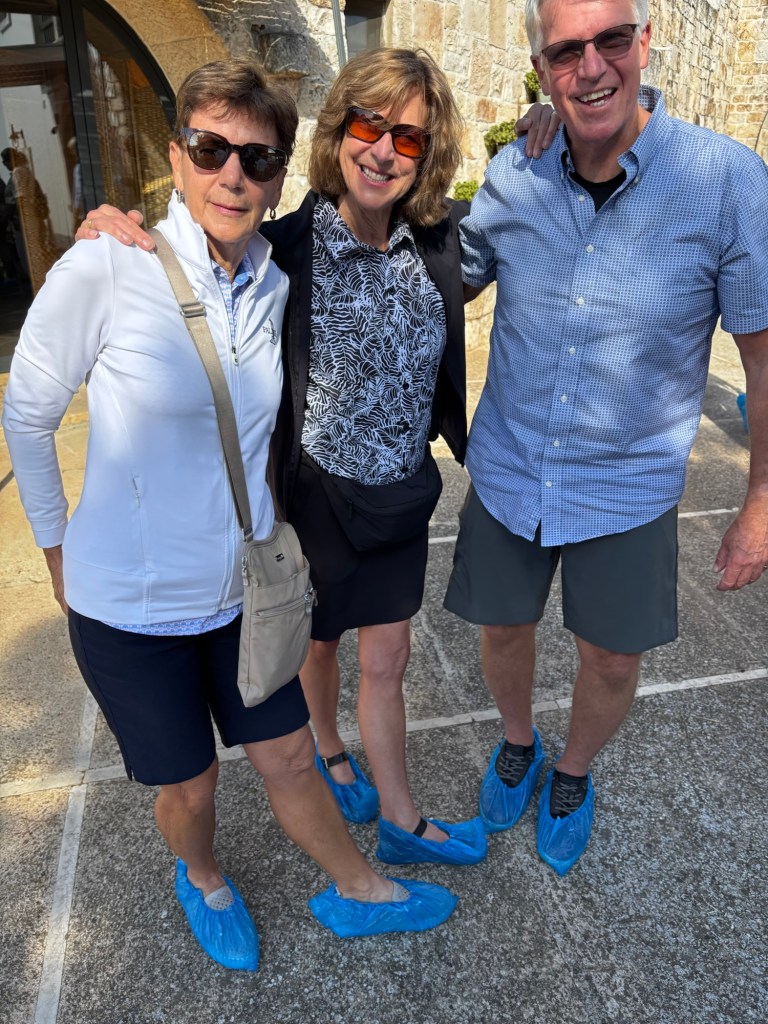
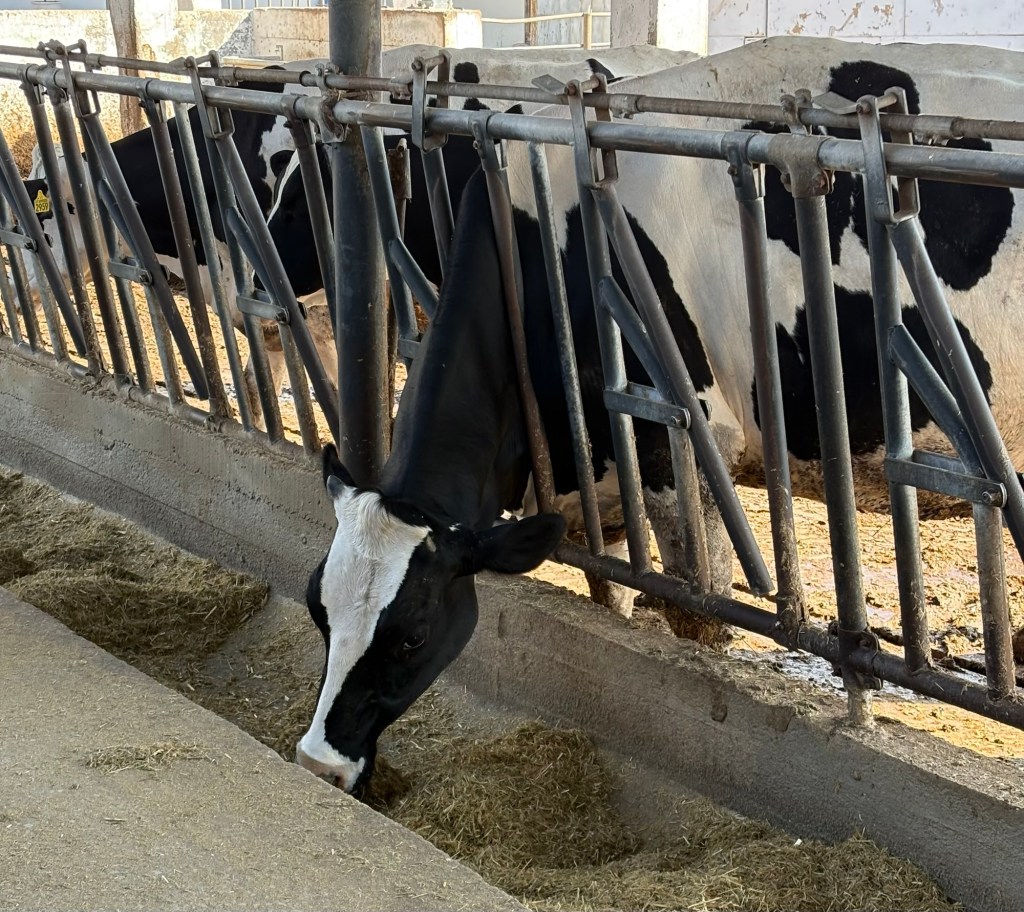
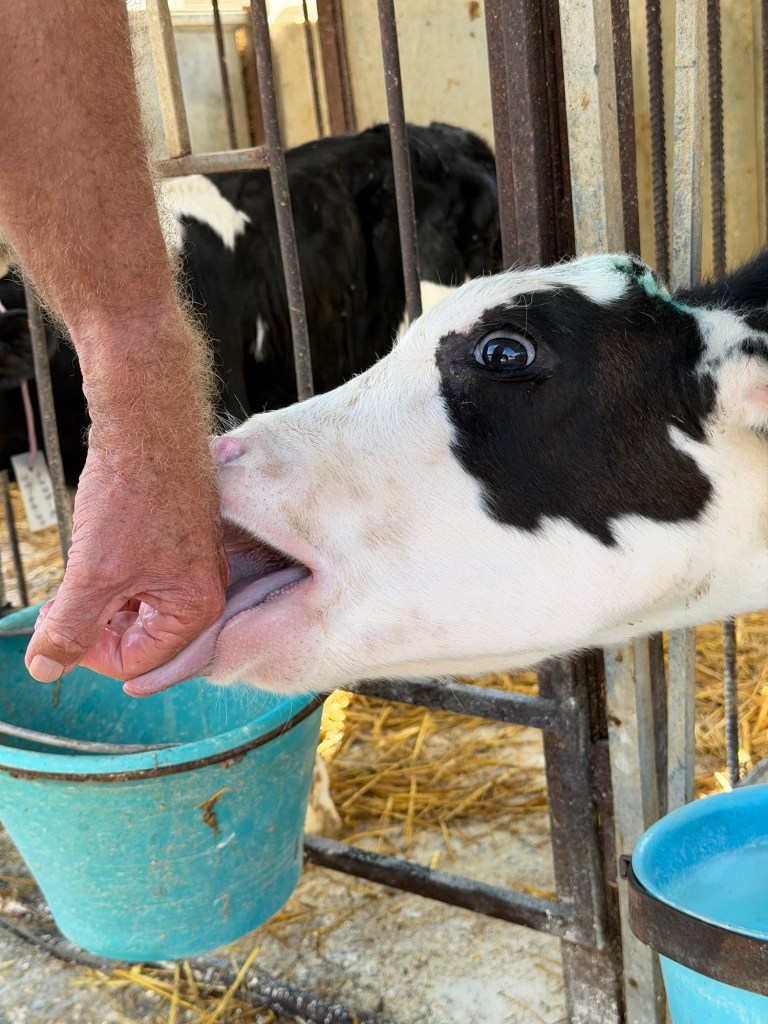
Home to a herd of 300 Holsteins, we were introduced to the basics of dairy farming. The first and most important step was putting on booties before starting the tour.
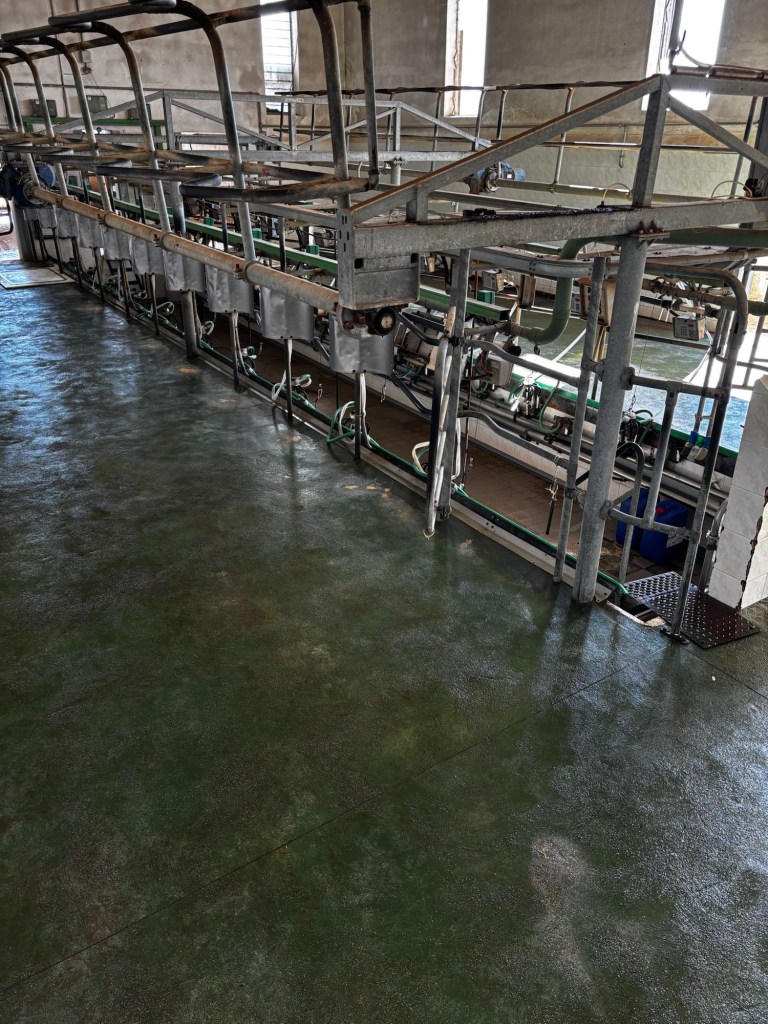
Our host, Fabio, explained the entire life cycle of the cows, the breeding process, milking, milk output and the subsequent movement of milk to the adjacent cheese factory. Knowing none of the above, it was a very interesting lesson of a critical component of farming that we take for granted. Also, having Doug at hand was extremely valuable as he grew up on a dairy farm and filled in any gaps.
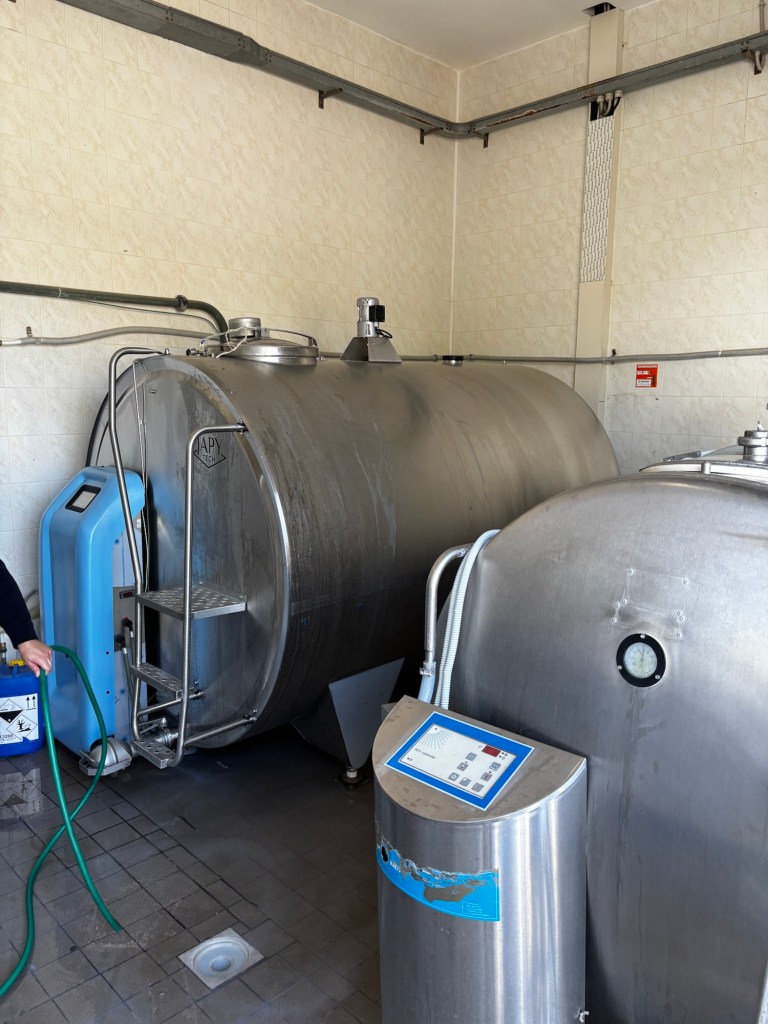
Despite only 1/3 of milk production going to cheese making with the balance being sold to other farms and retailers, cheese is where Seppunisi makes its mark.
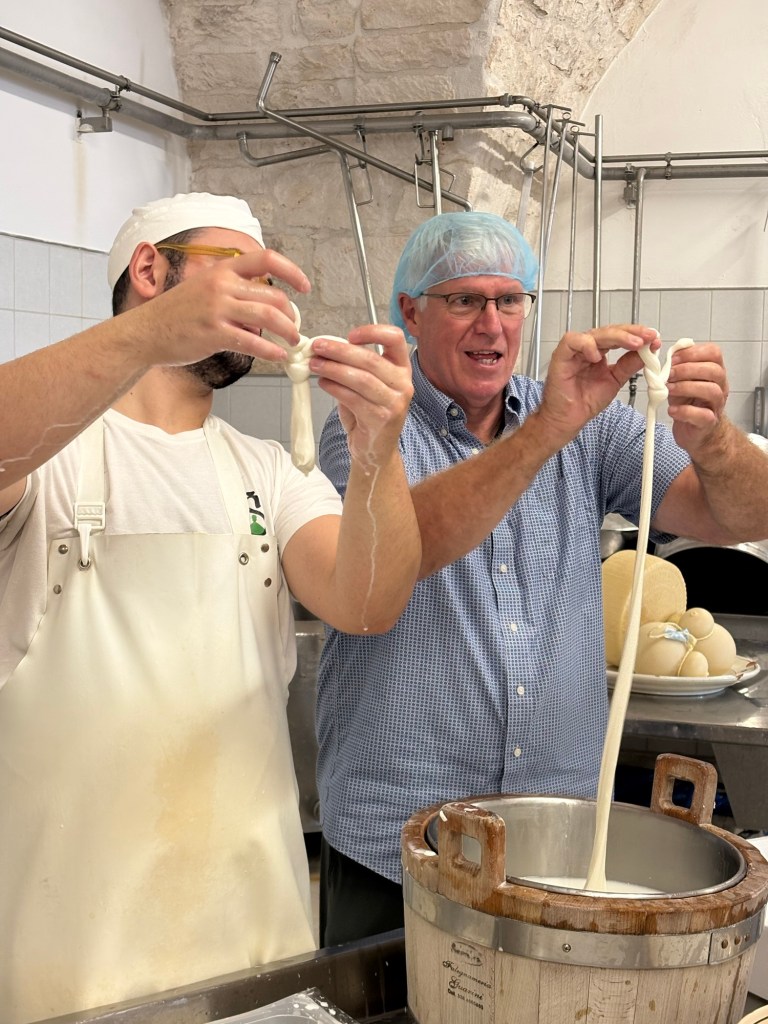
The owner, Guiseppe, demonstrated the simple yet elegant process of mixing curds with hot water and salt to create mozzarella.
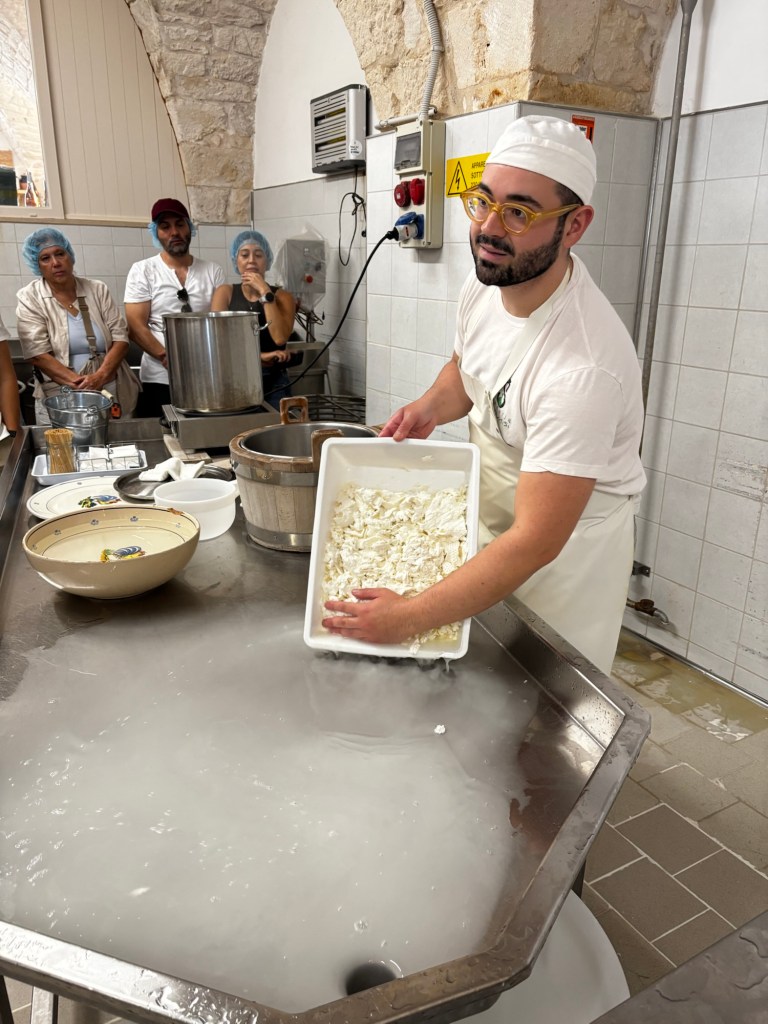
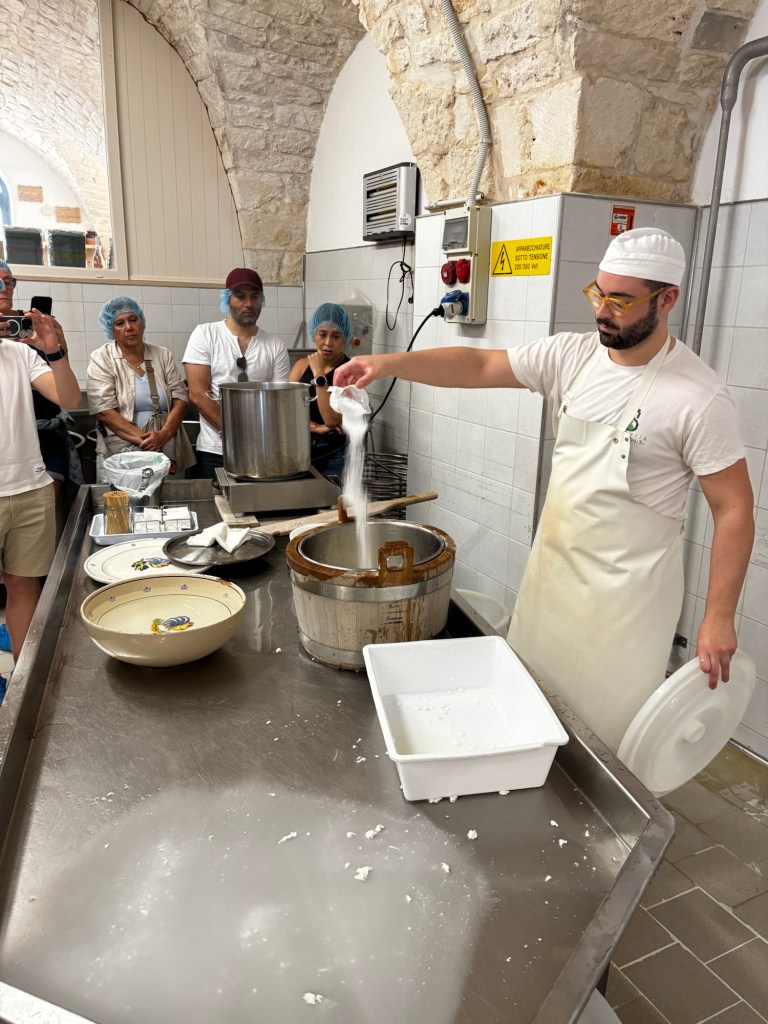
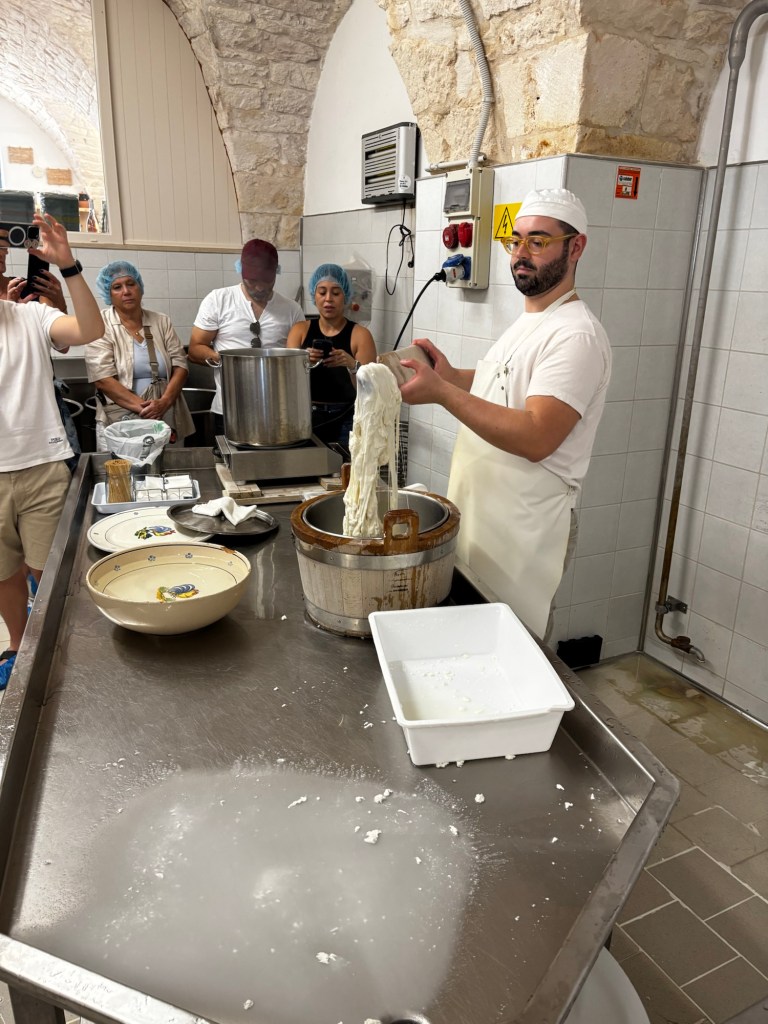
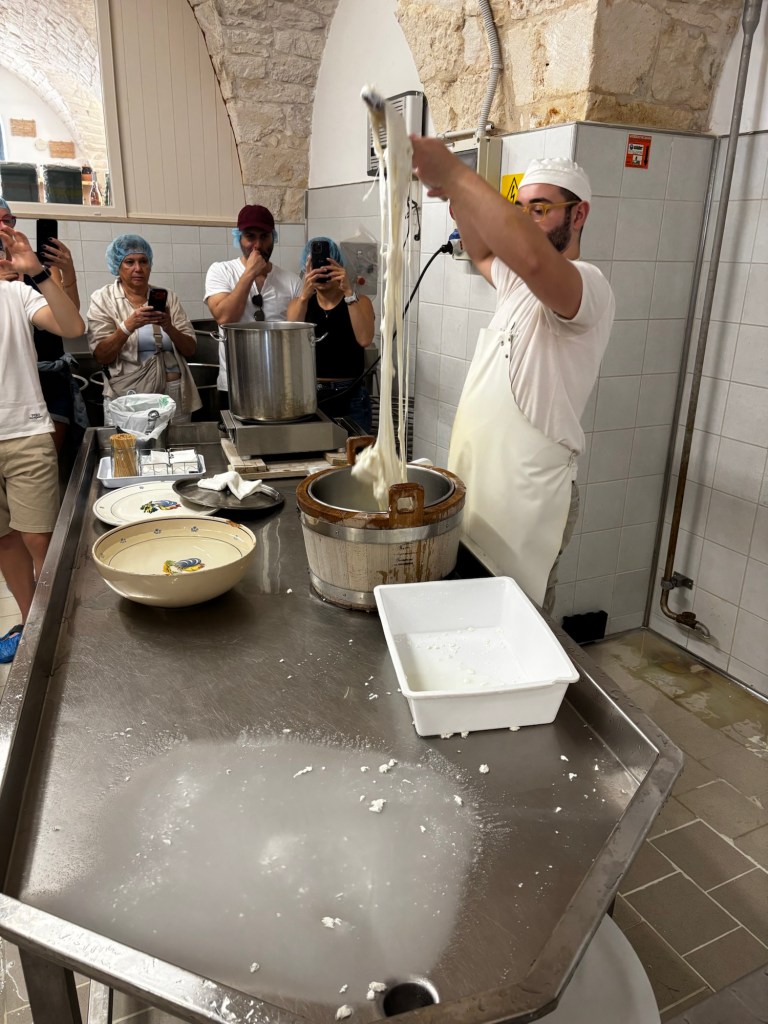
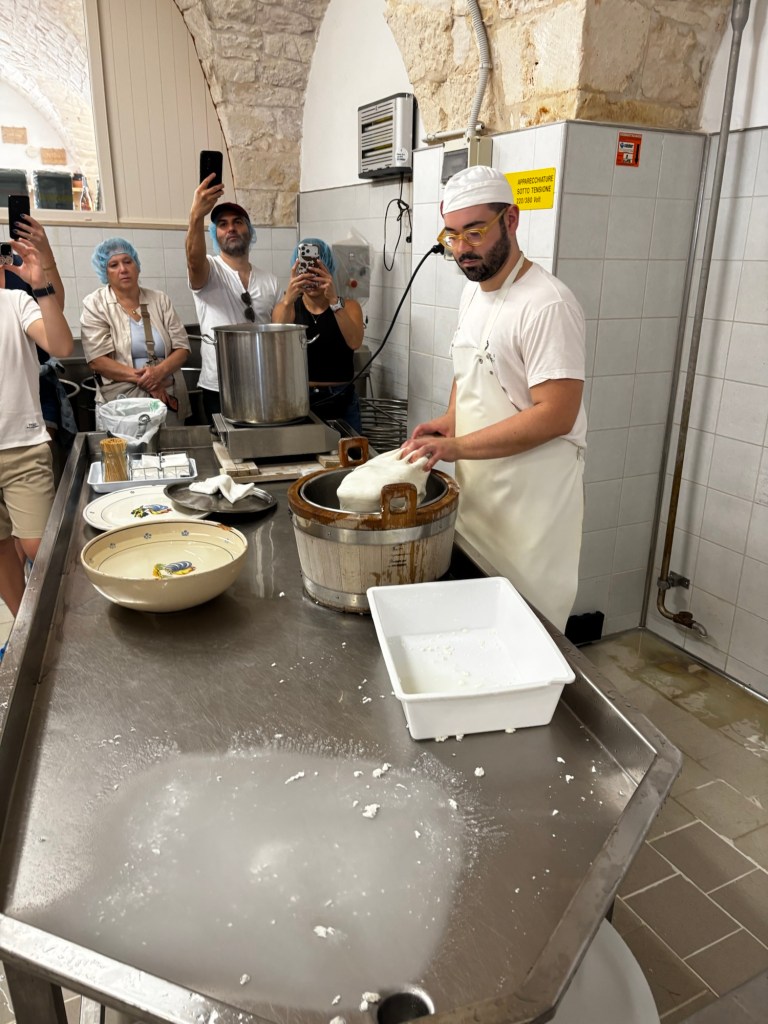
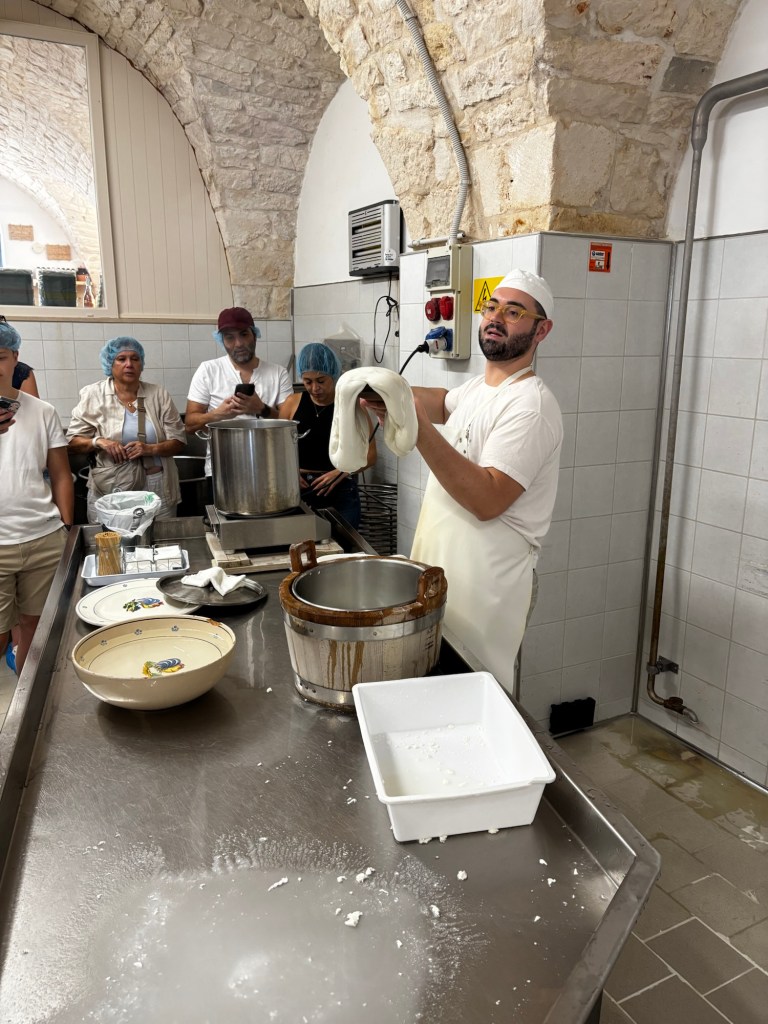
He then pinched off small pieces in different shapes including Burrata (a mozzarella ball with Stracciatella – shredded moist mozzarella – inside).
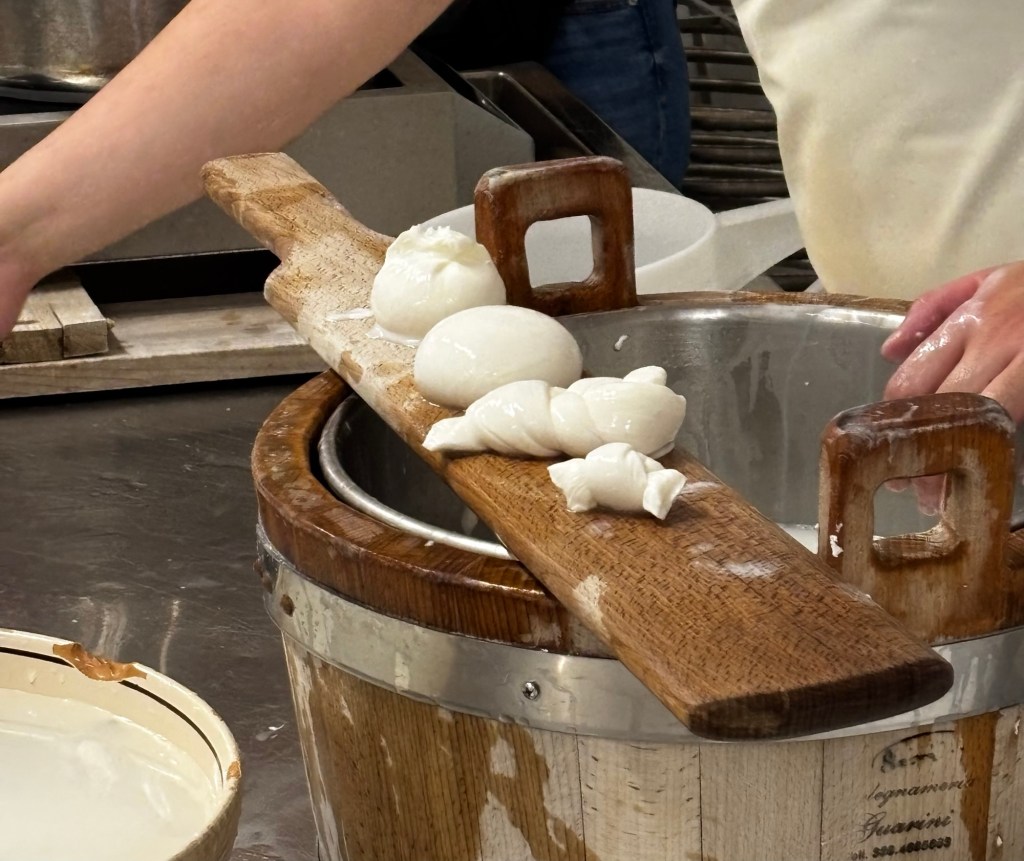
Then the most important part – tasting.
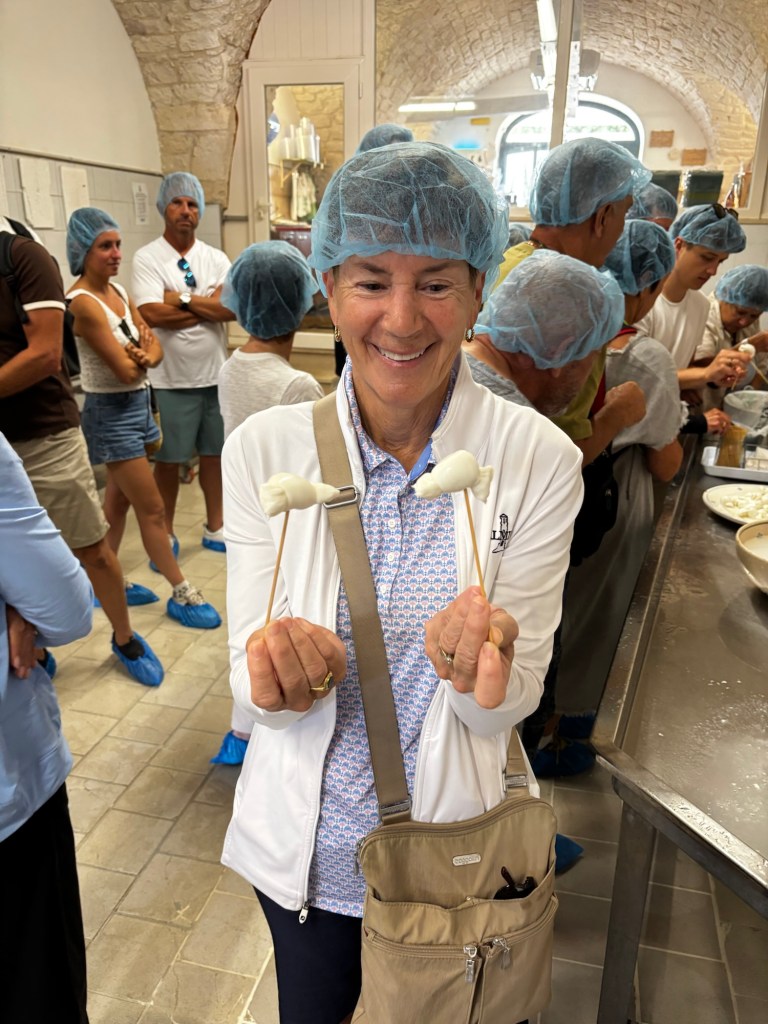
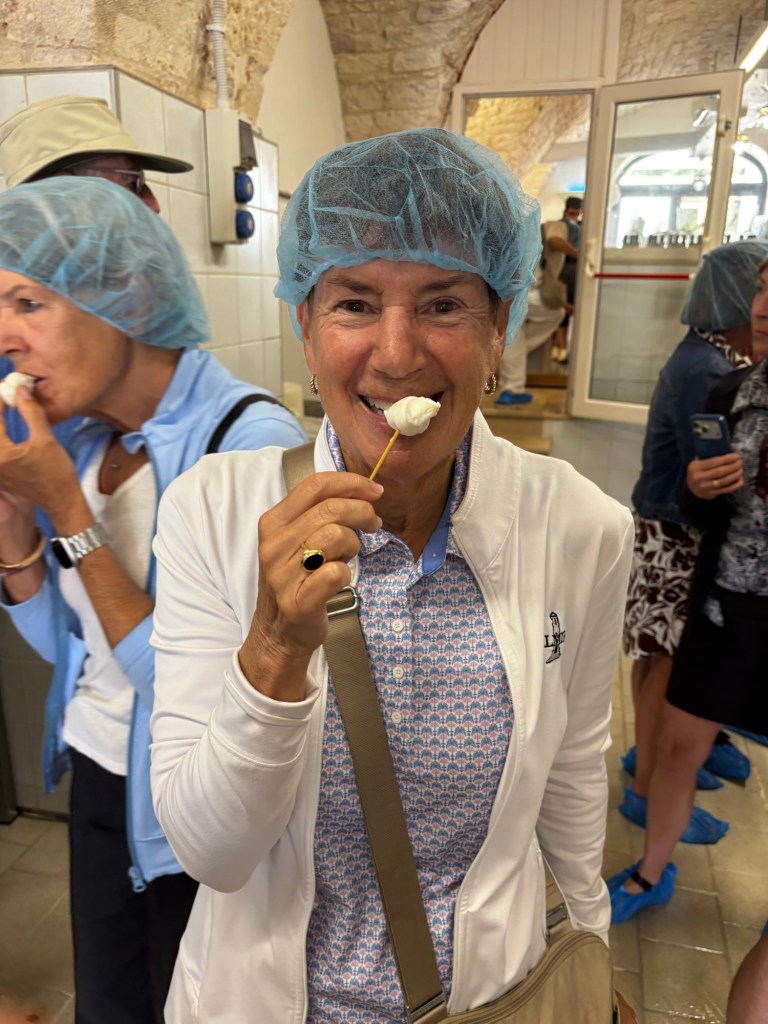
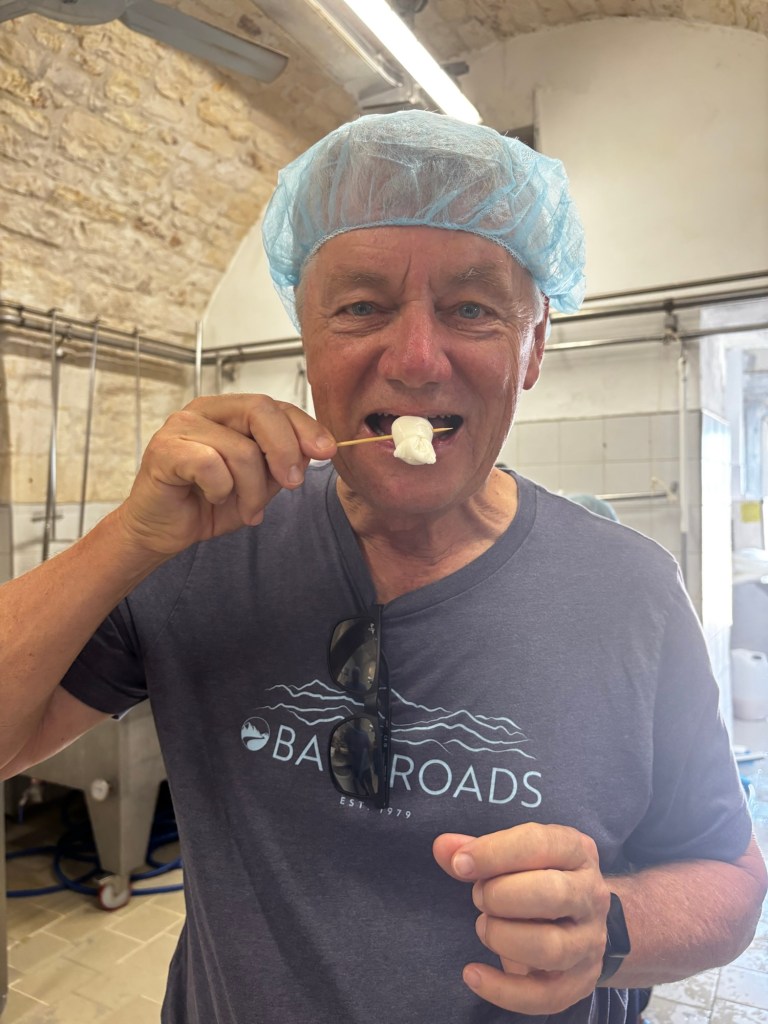
We were invited to give it a try and the results weren’t bad.
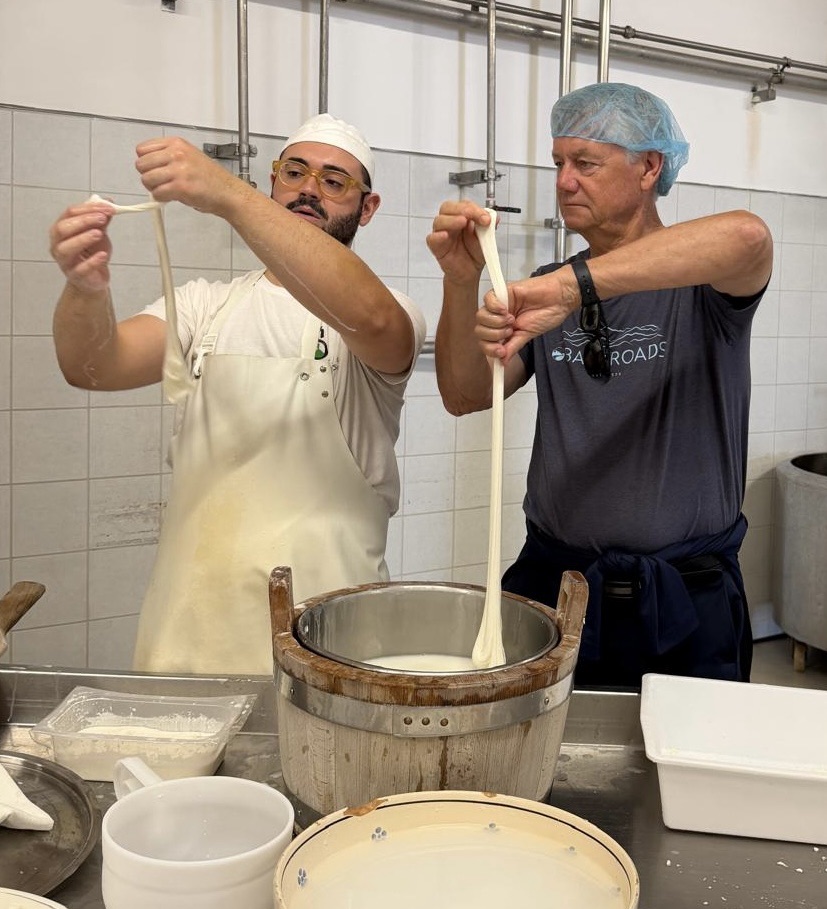
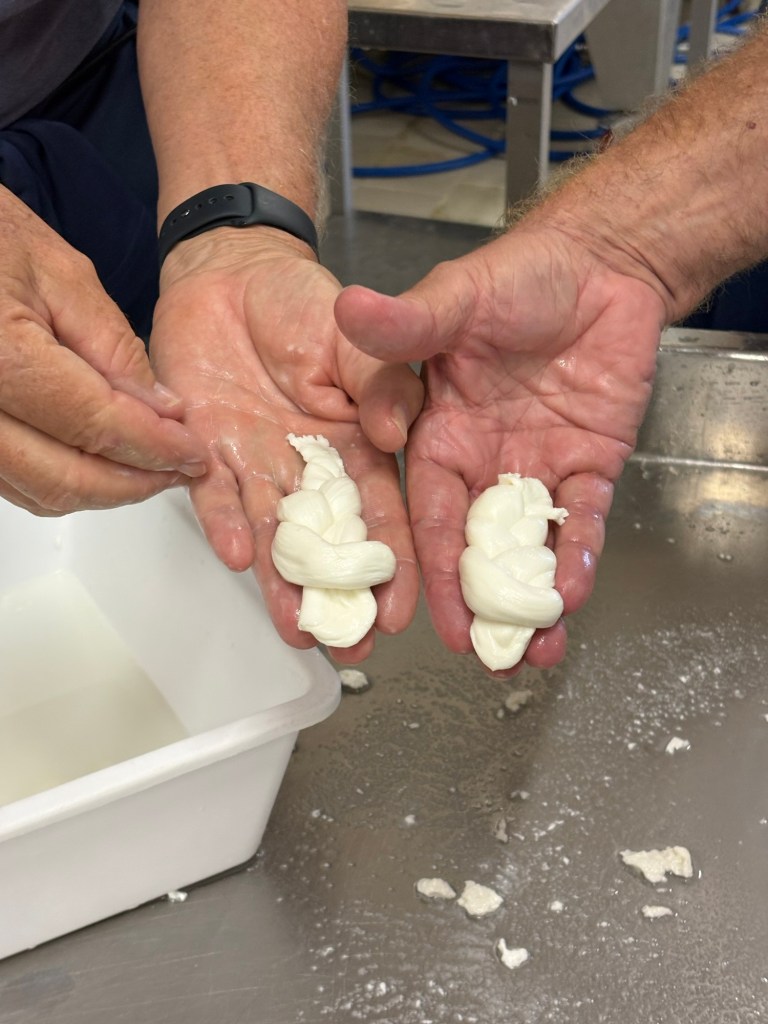
The real pros work a slightly different volume.
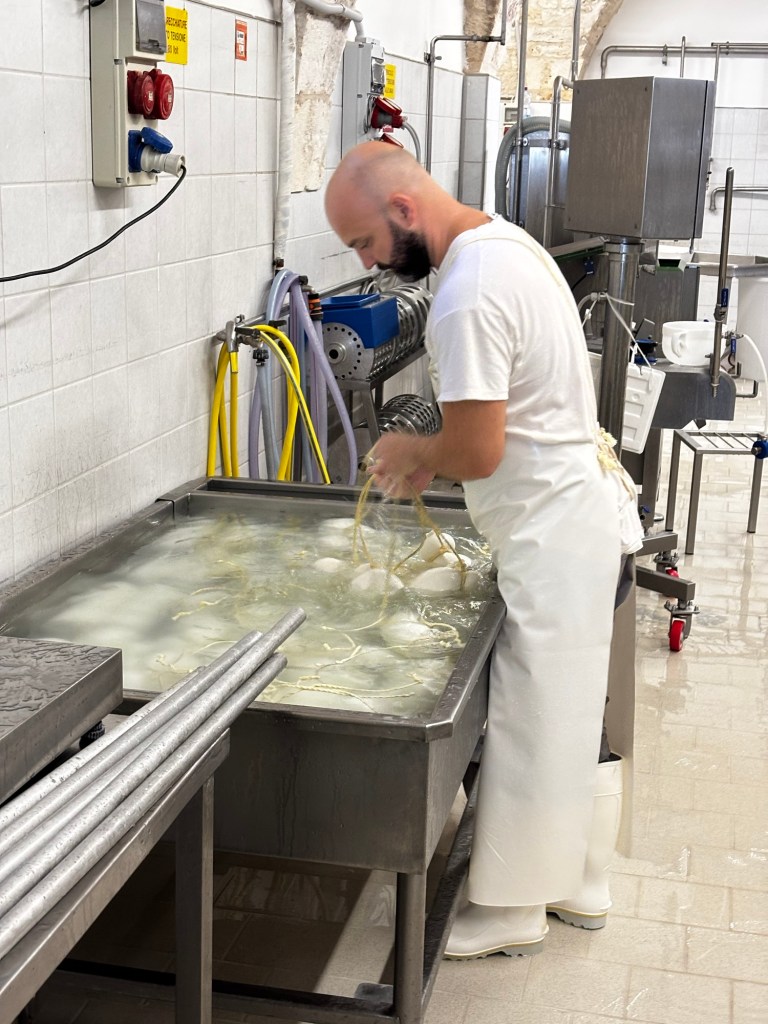
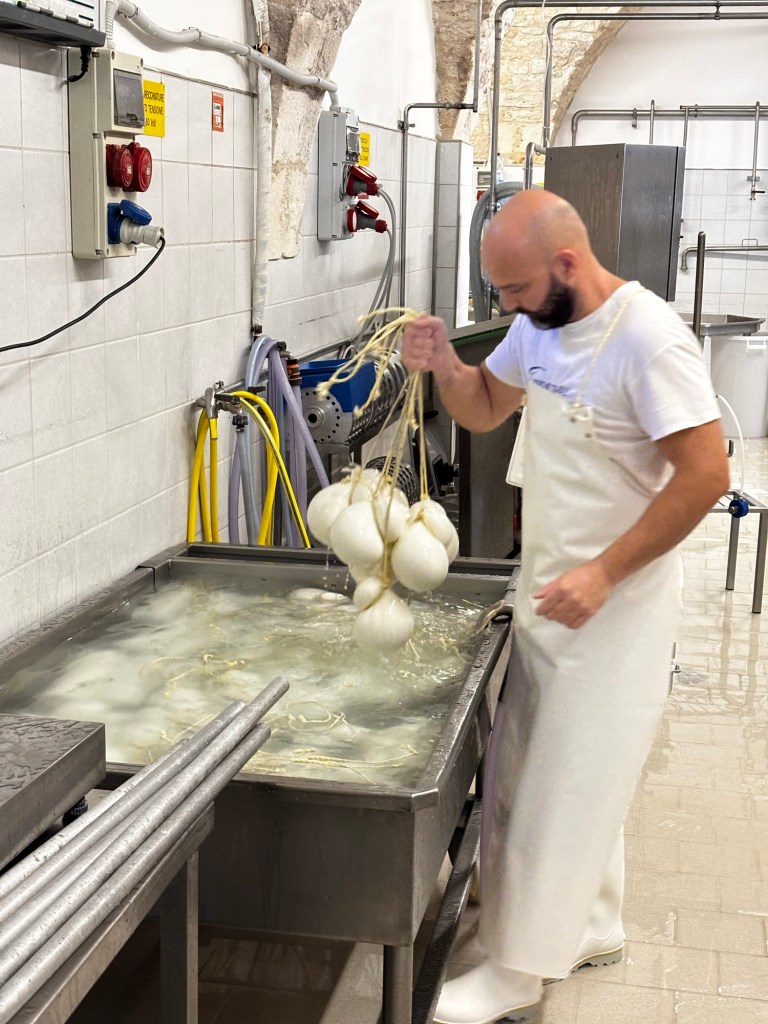
Which results in an aging room full of options.
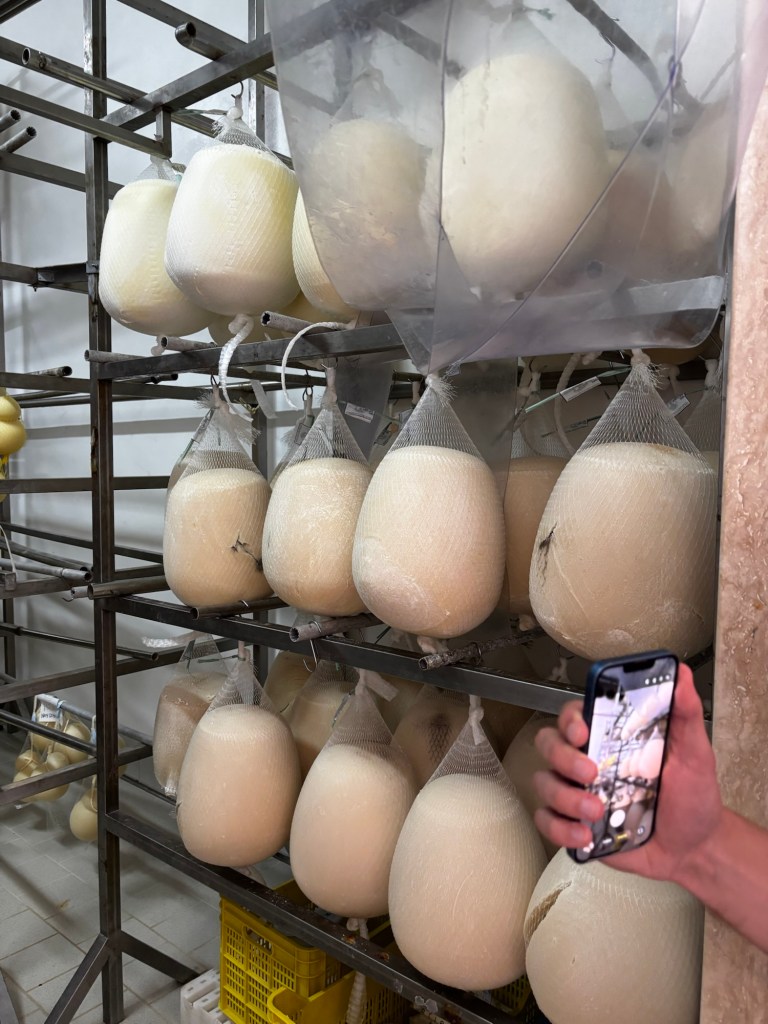
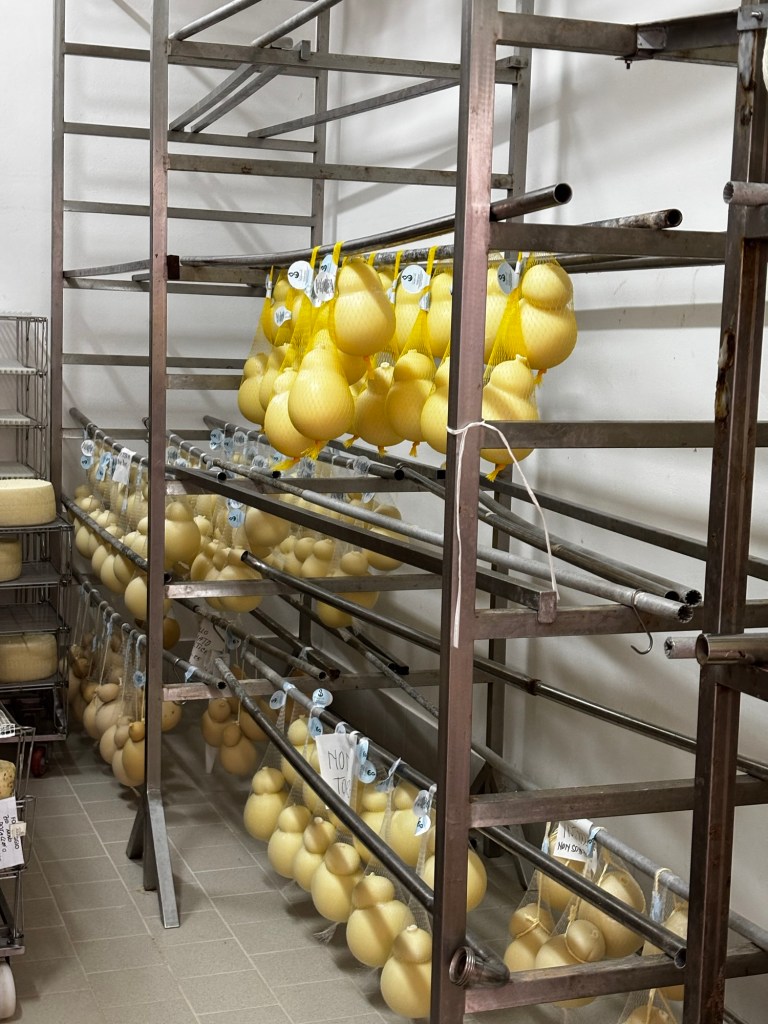
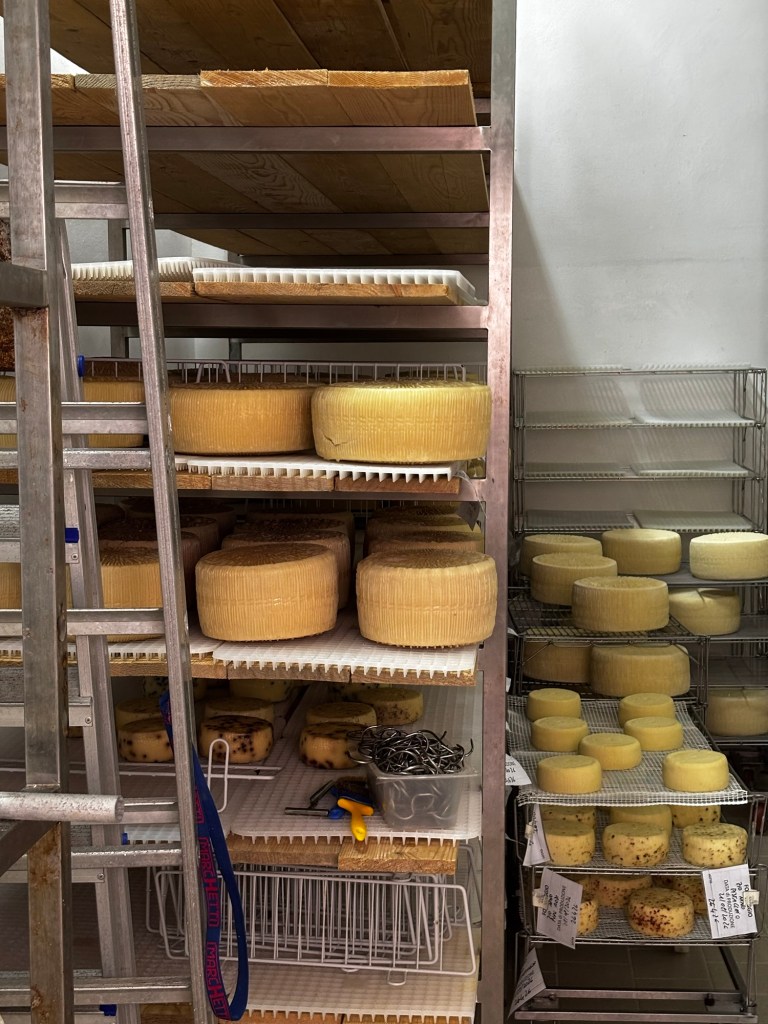
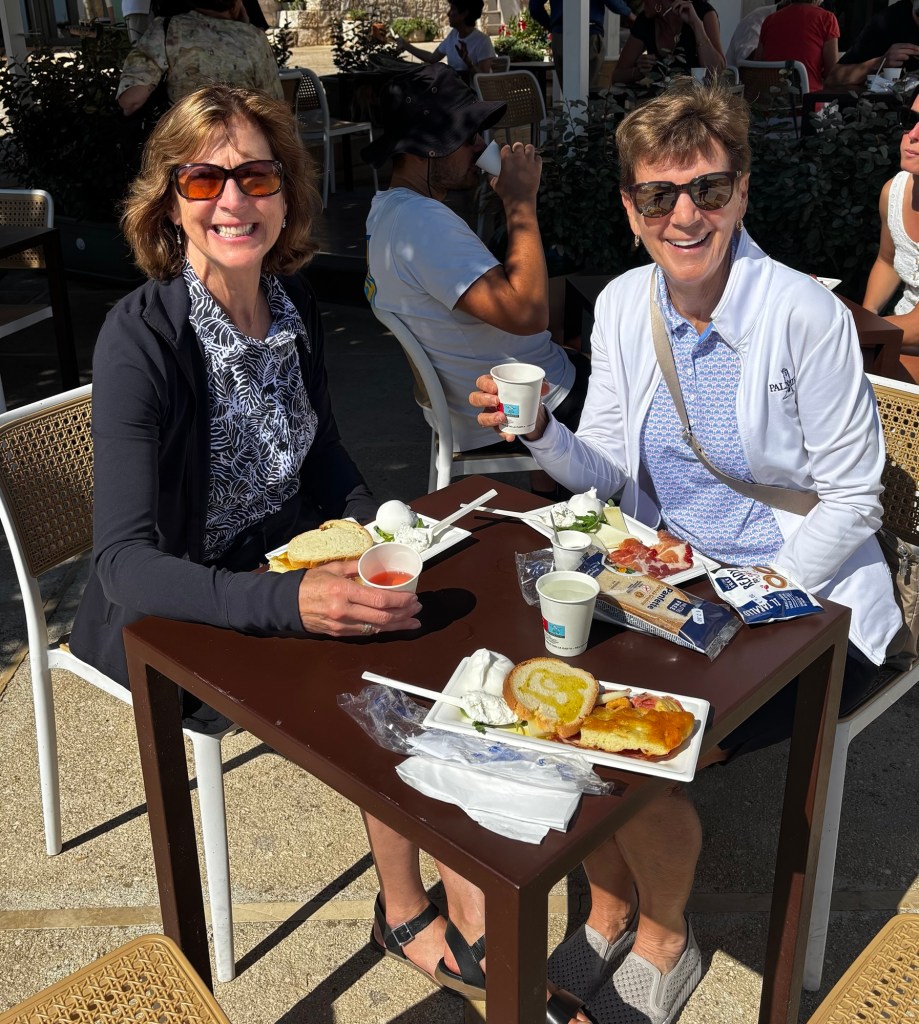
Then it was lunchtime, highlighted, of course by cheese made that morning.
Back into the car and off to Lecce, our home for the next two days.
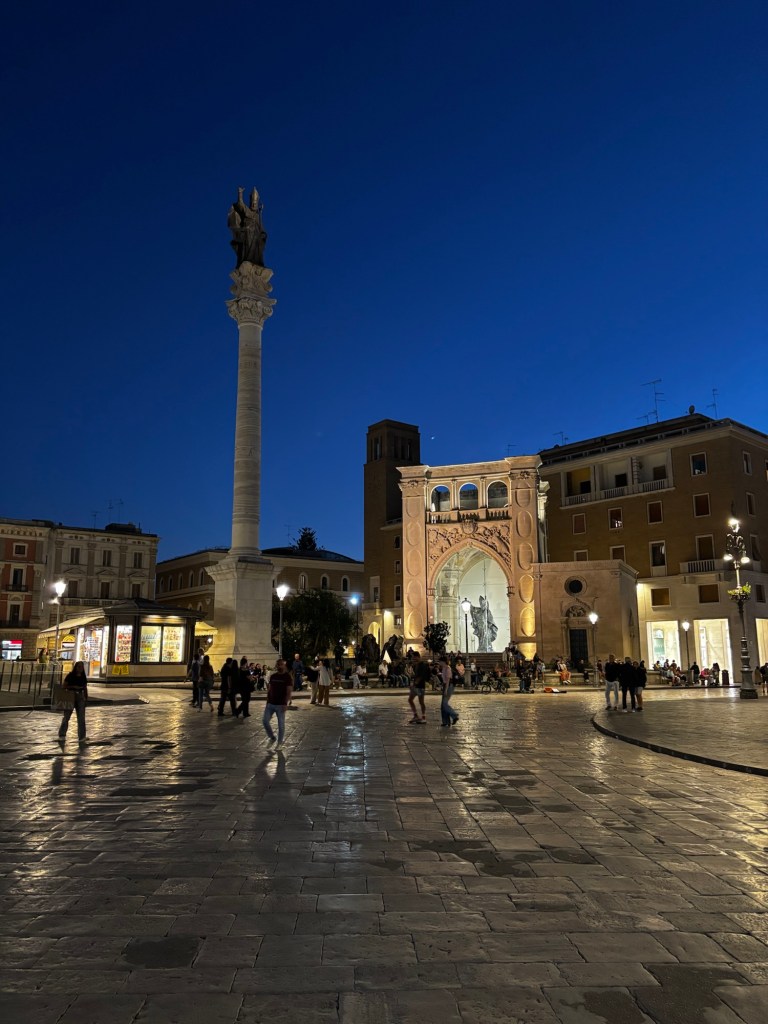
Lecce is near the tip of the heel of the Italian boot, 11 kms from the Adriatic Sea.
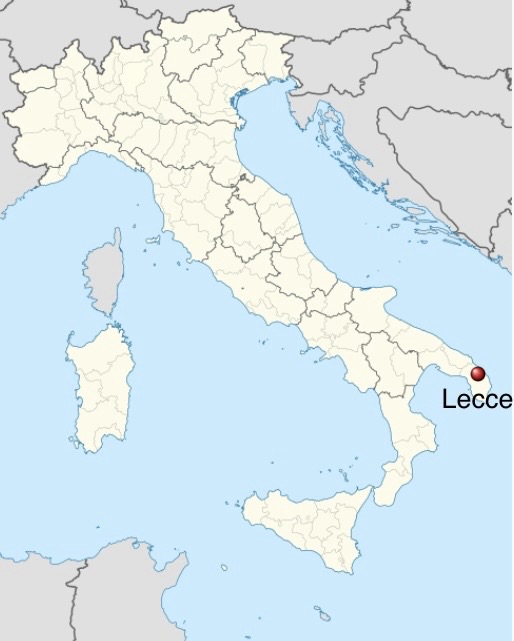
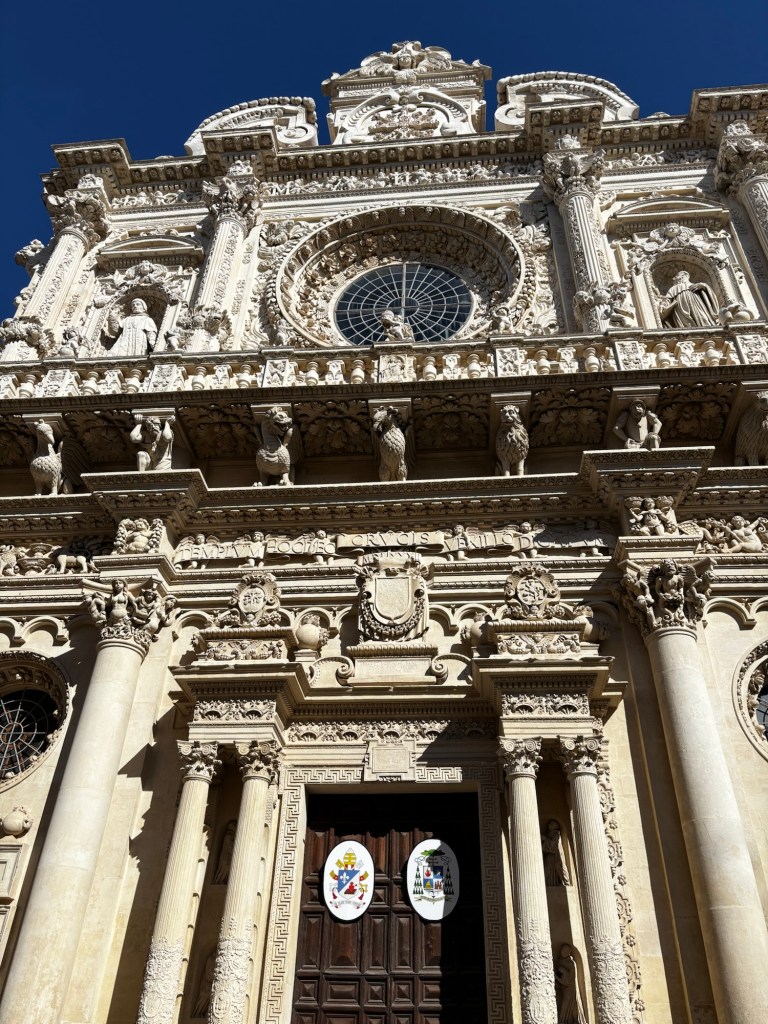
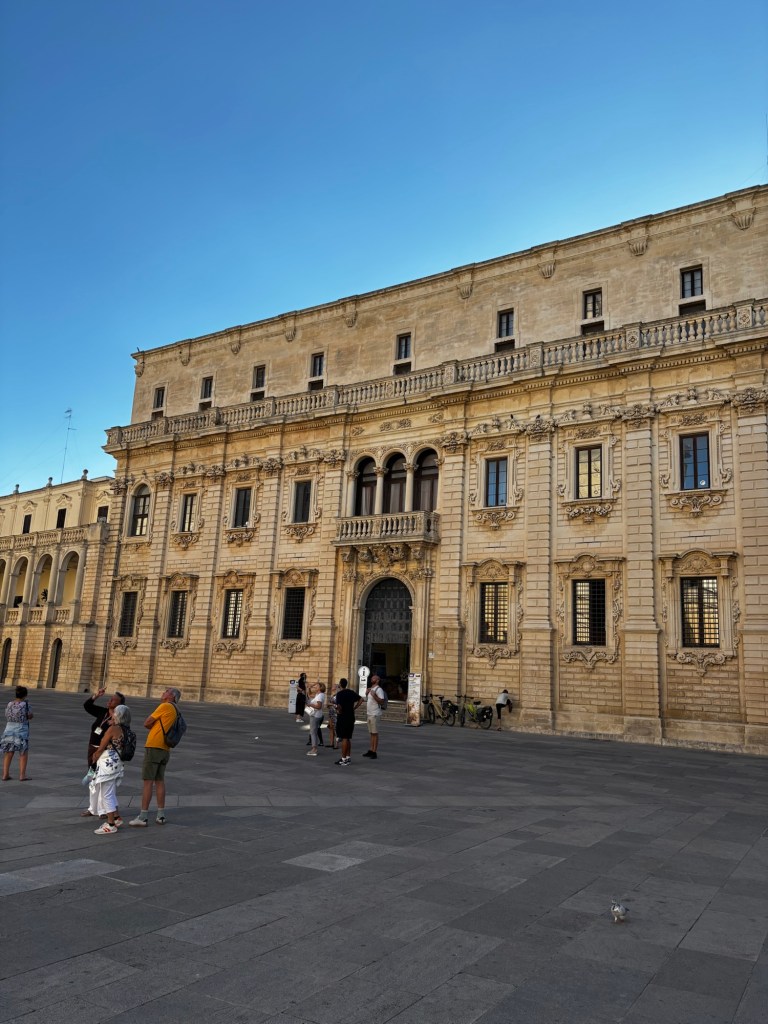
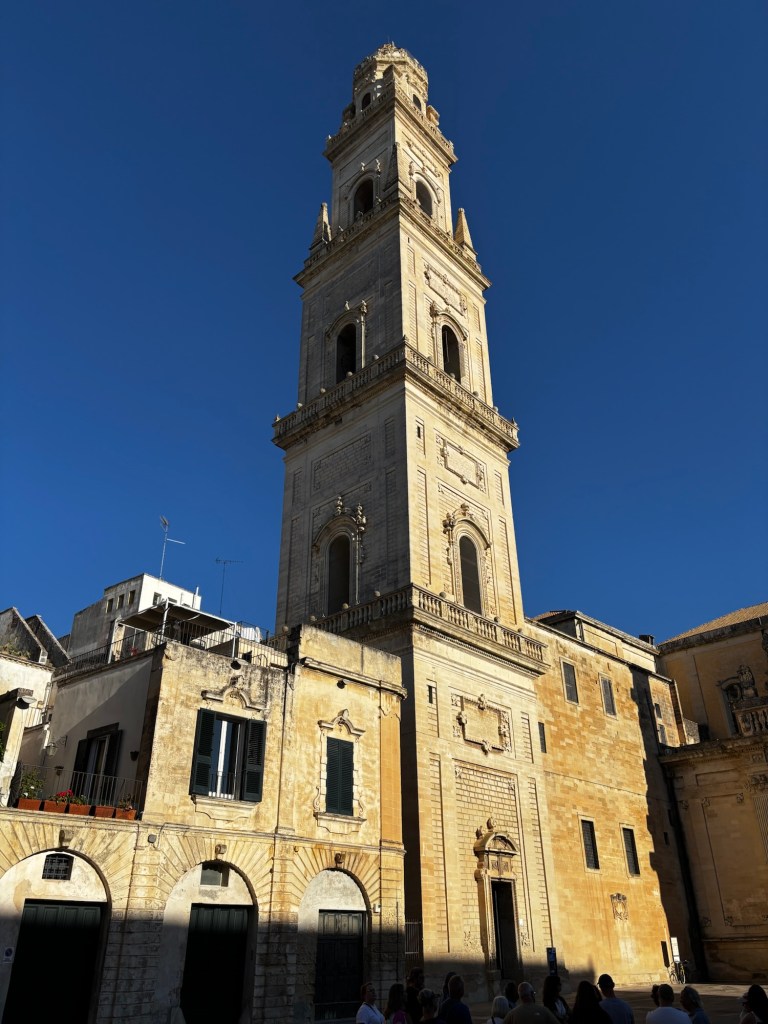
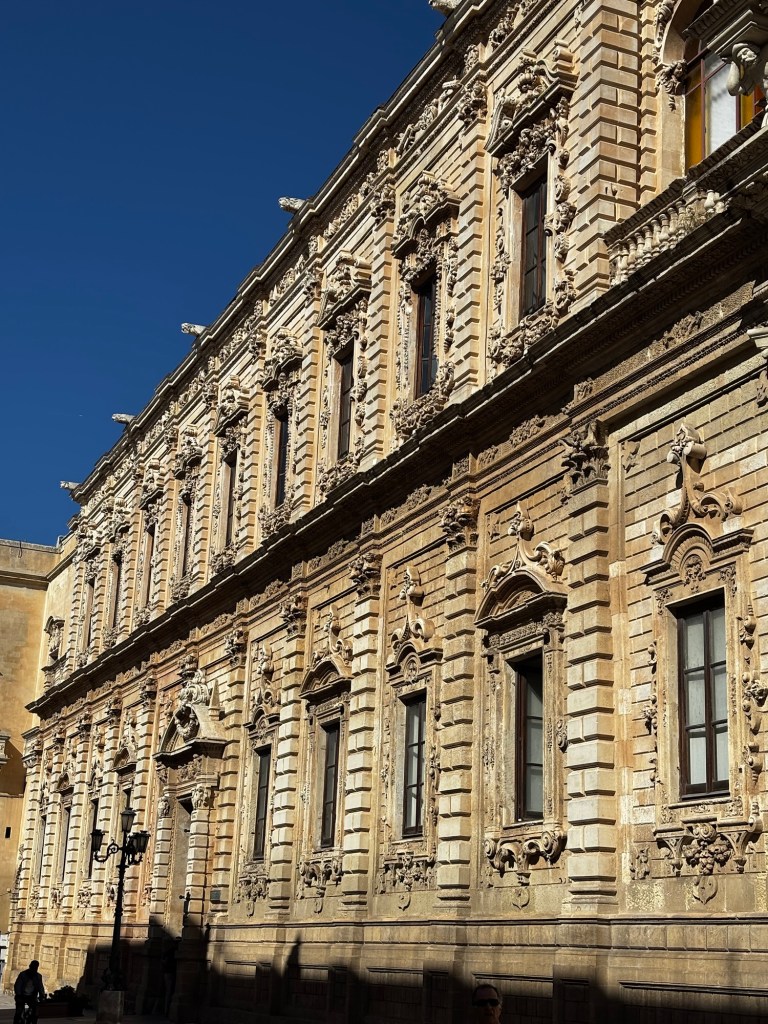
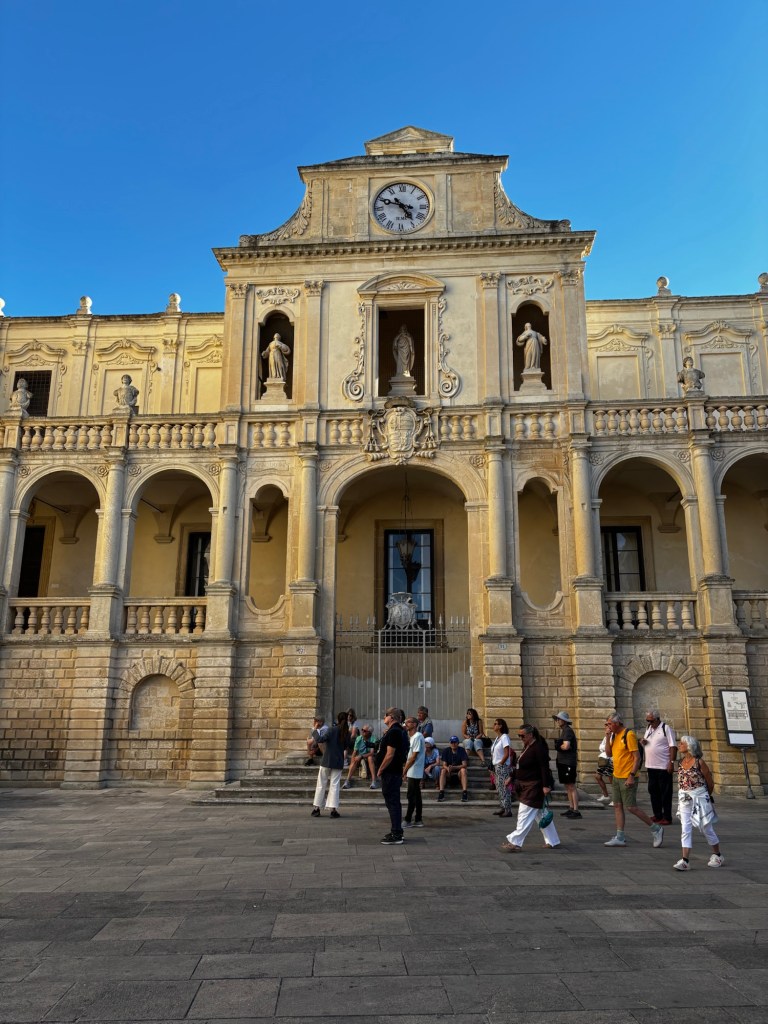
Because of its Baroque architecture Lecce is nicknamed “The Florence of the South”. Lecce stone”, a particular kind of limestone is one of the main exports of the city. It is very soft and workable, thus suitable for sculptures. Lecce is also an important agricultural centre, chiefly for its olive oil and wine production.
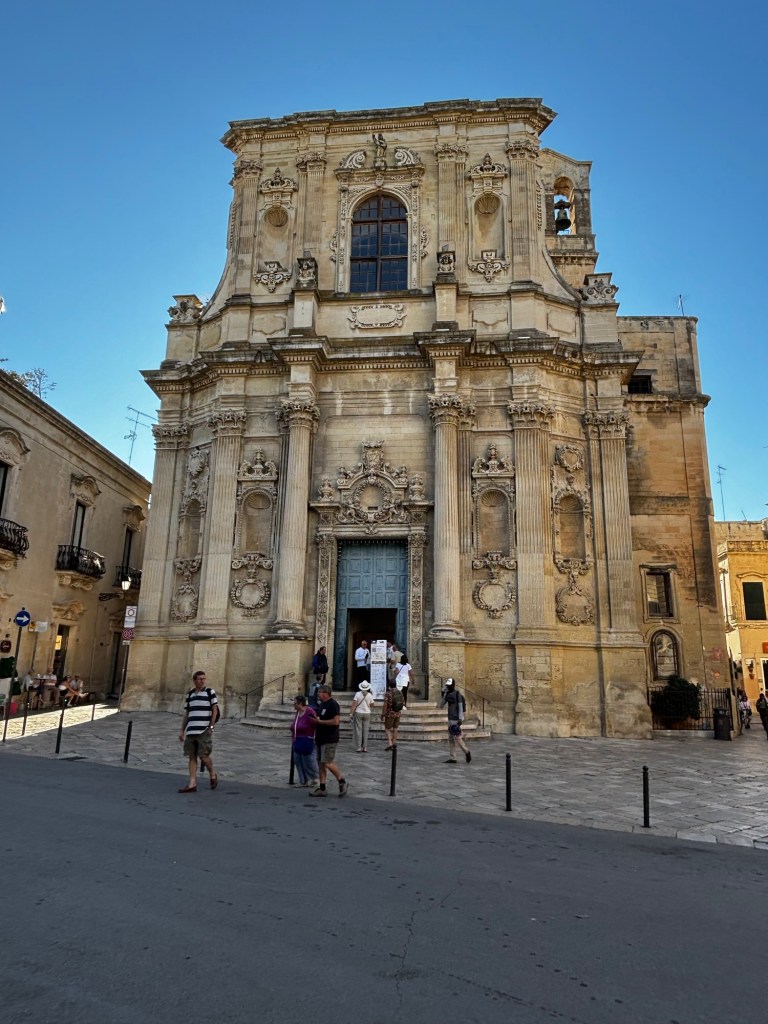
It is also known as the city of churches as there are about 20 significant baroque churches within a few minutes’ walk of Piazza Sant’Oronzo. The most significant is the Basilica of the Holy Cross. The baroque style of decorative carvings is on full display.
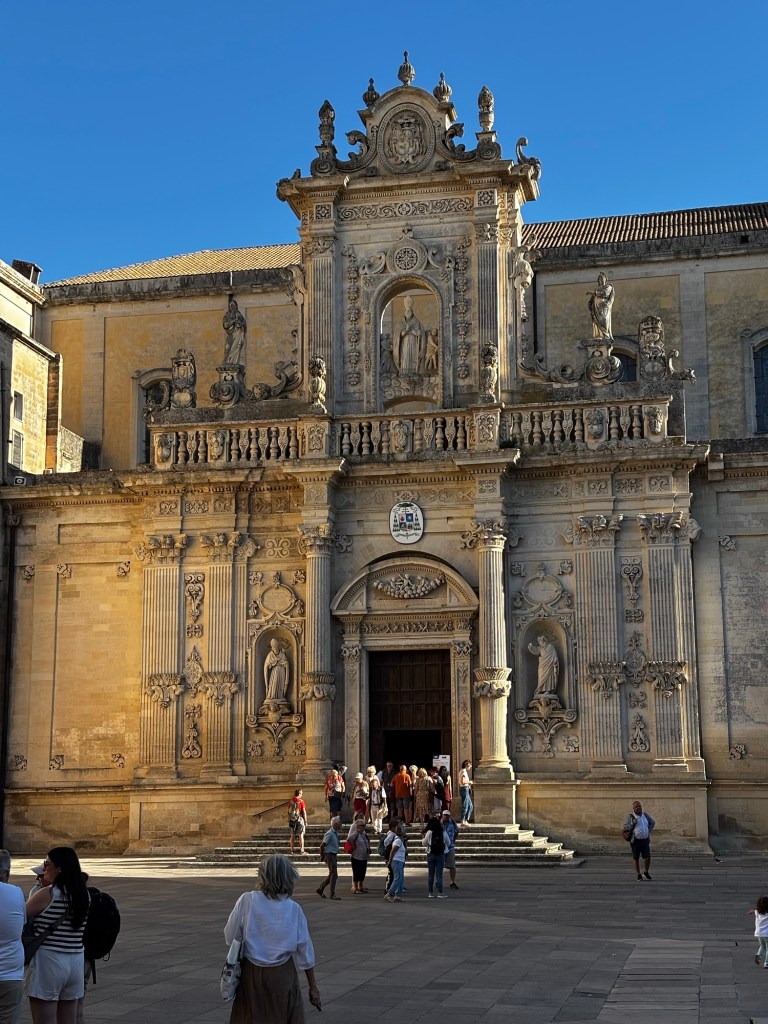
We joined a walking tour and it seemed history and another “wow” was around every corner.
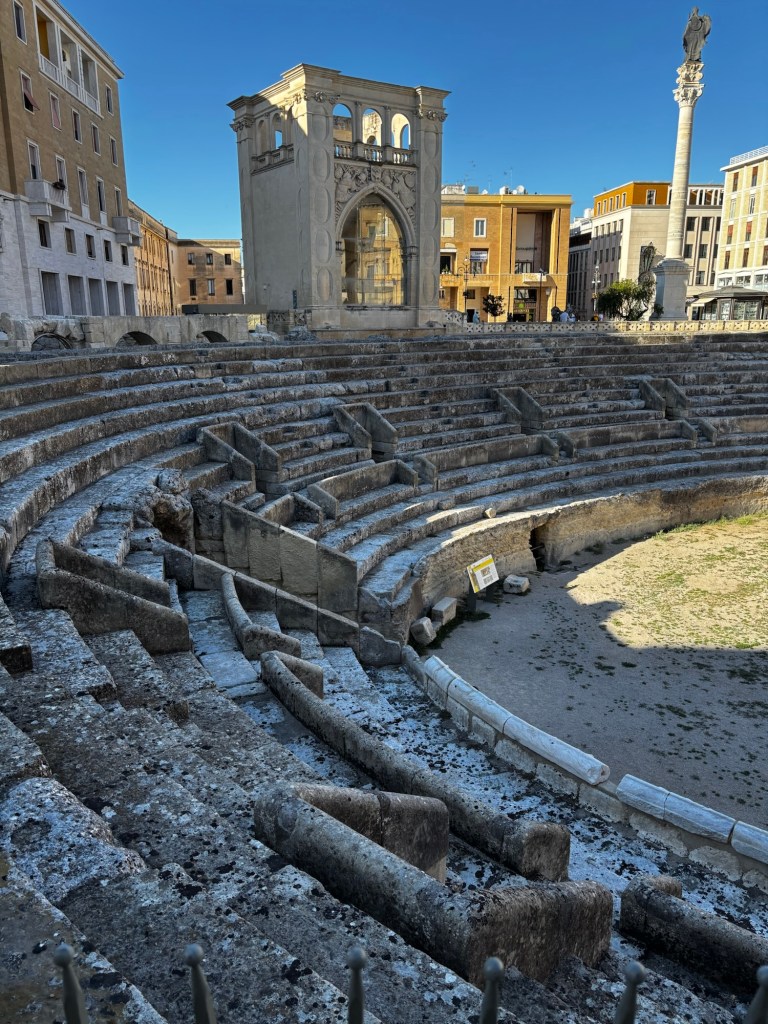
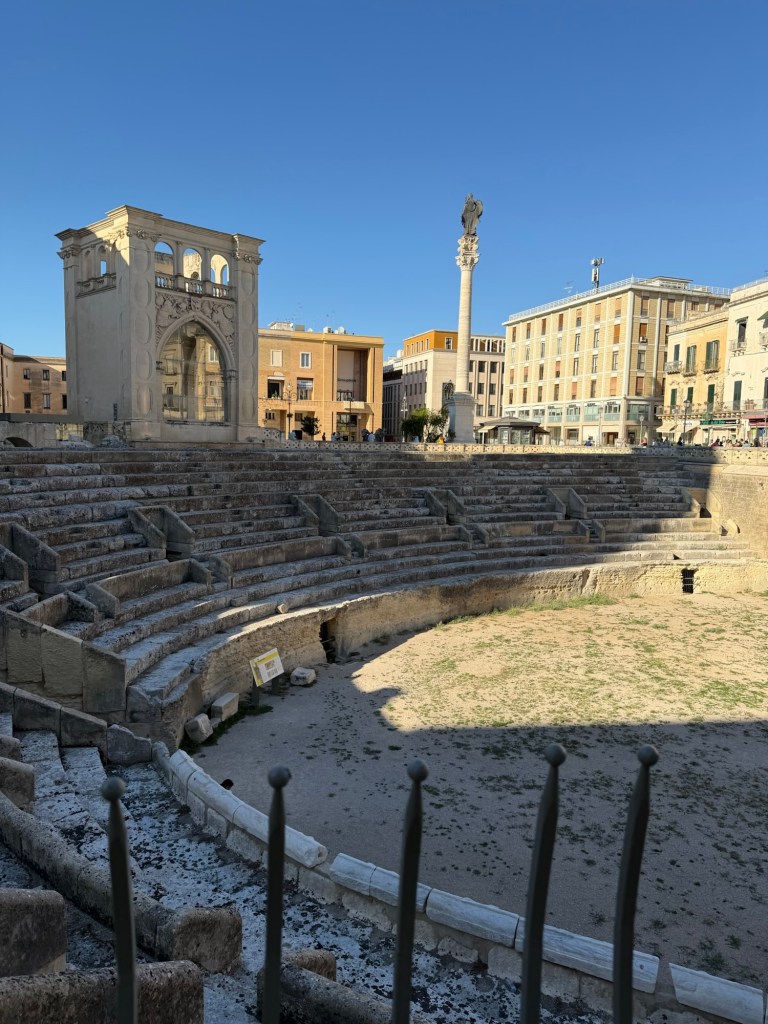
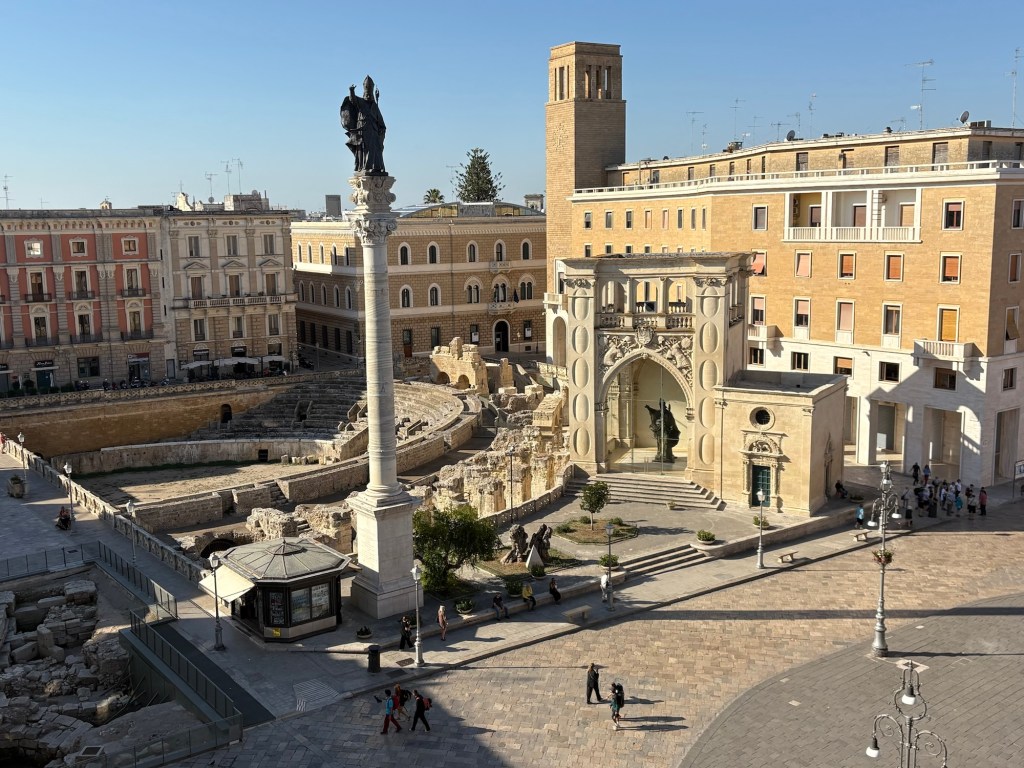
A chance discovery during a routine maintenance project uncovered a Roman amphitheater in the heart of the old town.
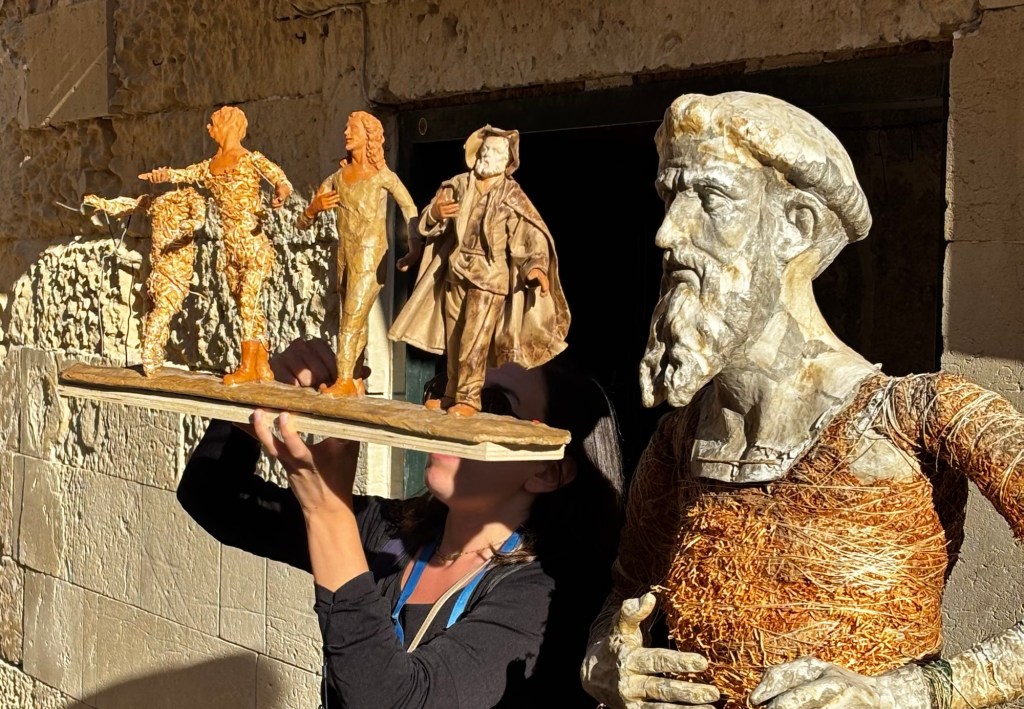
We had the (almost lost) art of paper mache explained and displayed – almost unbelievable that the sculptures are made of paper given the intricate detail.
Back to our B&B to finish our wine supply (including additional inventory) before a dinner on the square.
Tomorrow exploring Otronto including a hike along the coast.


