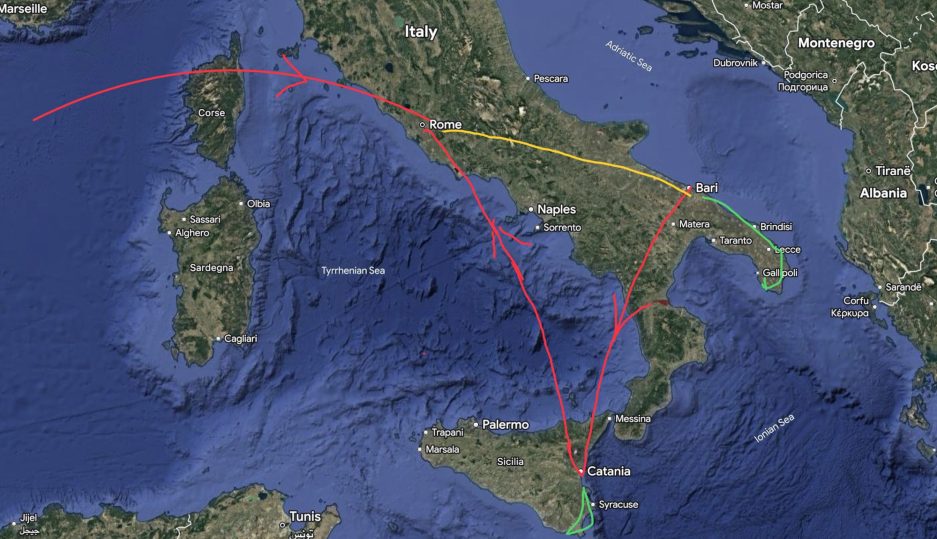
Matera is a city in the provincial region of Basilicata one hour west of Martina Franca. Its tourist notoriety is due the Sassi area, a complex of cave dwellings carved into the mountainside that were inhabited until the early 1950s.
The central high ground housing the city’s cathedral and administrative buildings, came to be known as Civita, and the settlement districts scaling down and burrowing into the sheer rock faces as the Sassi (from Latin saxum meaning a hill, rock).
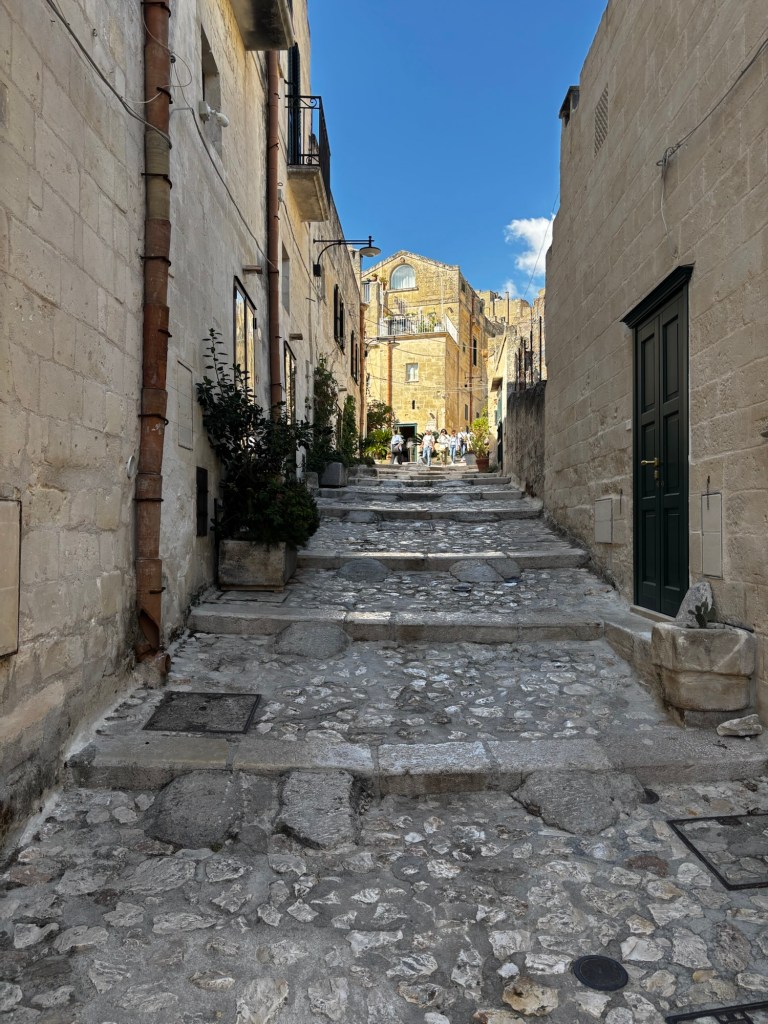
The Sassi are houses dug into the rock itself, which is locally called “tufo”. It’s difficult to convey the density of the town as the streets in some parts often run on top of other houses.
(If viewing on a phone tap a photo to see the full image).
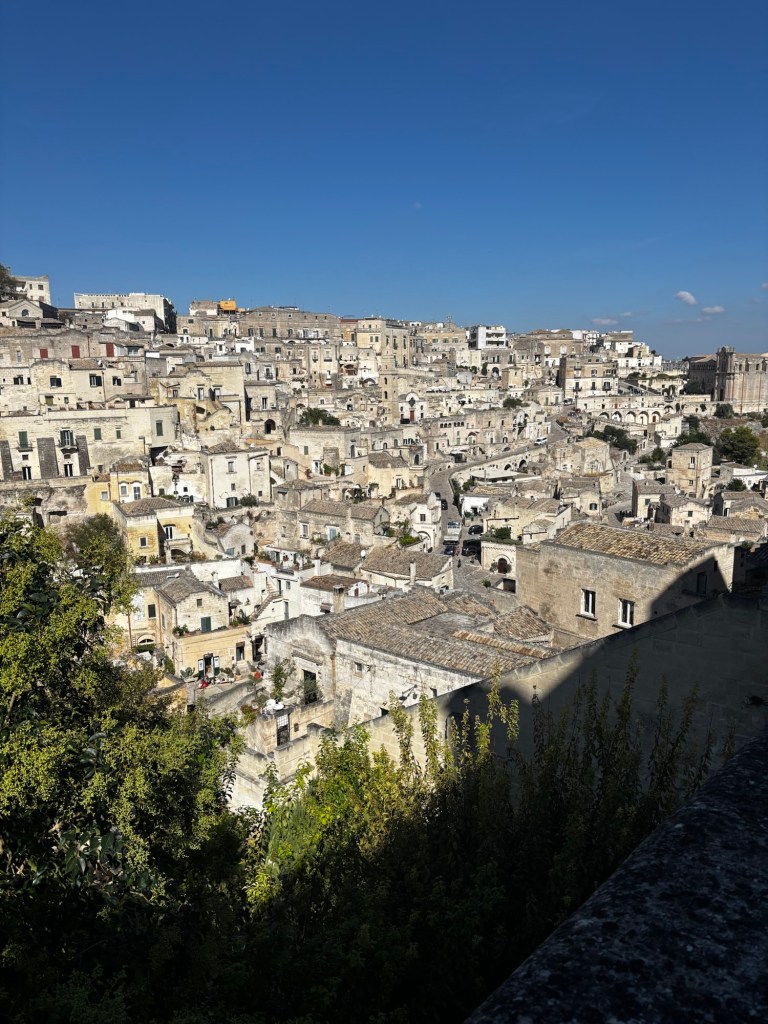
In fact, one guidebook warned of the very real possibility of getting lost in the warren of narrow lanes notwithstanding access to GPS and paper maps.
We met our tour guide and start walking down from the Civita towards the northern slope Sasso Barisano (facing Bari). Our guide described the evolution of the community from ancient times to the present.
The Civita and the two Sassi, relatively isolated from each other, survived until the sixteenth century, when the centre of public life moved outside the walls to the Piazza Sedile in the open plain (the Piano). By the end of the eighteenth century, the geographic elevation became more than just a physical boundary and separated the peasants of the Sassi and the elite to the point where the two communities no longer interacted socially.
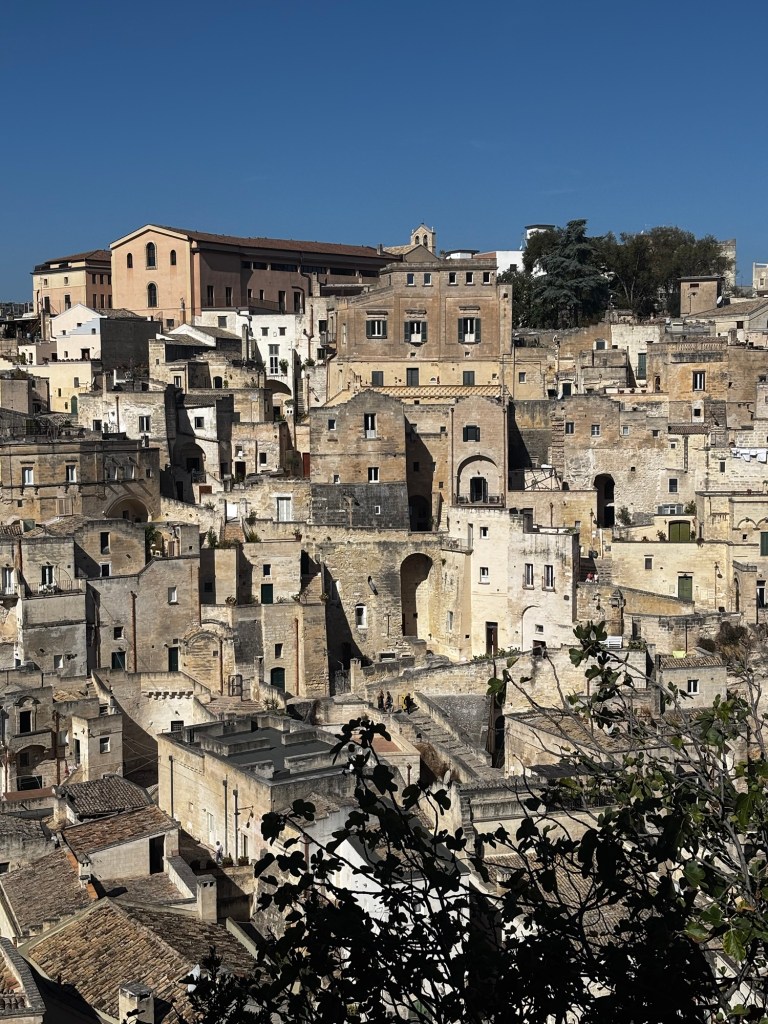
The Sassi consist of approximately twelve levels descending about 380 metres connected by a network of paths, stairways, and courtyards. While we walked down somewhat our path was more around the edges of the Sassi.
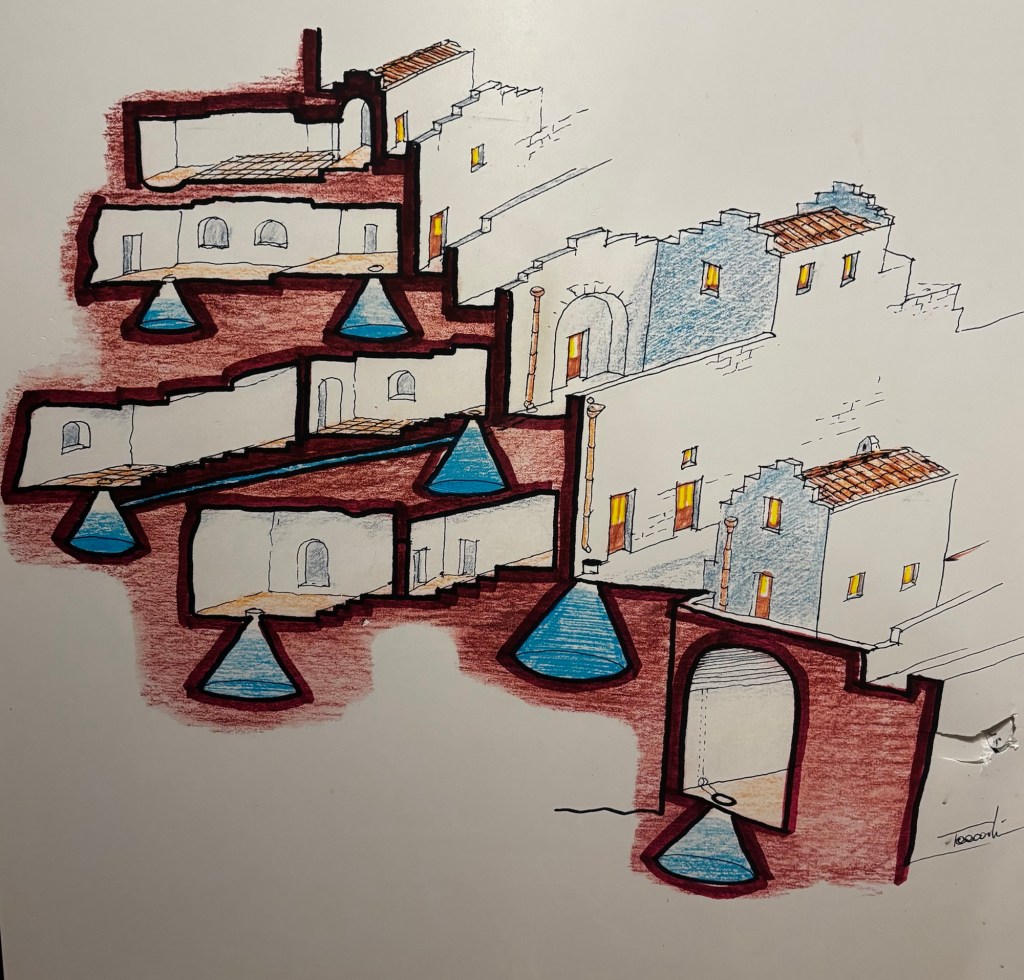
We learned about the novel method of rainwater collection in cisterns that fed others lower down the slope.
It’s difficult to describe the abject poverty that existed in the Sassi. Families shared tiny living quarters with farm animals. Poor sanitation meant high levels of disease and infant mortality.

Yet it was only at the turn of the twentieth century that the Sassi were declared unfit for habitation with government mandating that all inhabitants move to new housing in the Piano. It took until 1952 to start the process which was completed by 1970s.
Perversely, in 1986 the law was amended to permit restoration and reoccupation of the Sassi, for the benefit of the wealthy. In 1993 the Sassi were recognized as a UNESCO World Heritage site. Today property values are soaring amid high demand.
We finished our walk looking over the canyon that provided a natural defense for the city before heading back up through the southern Sassi Caveoso.
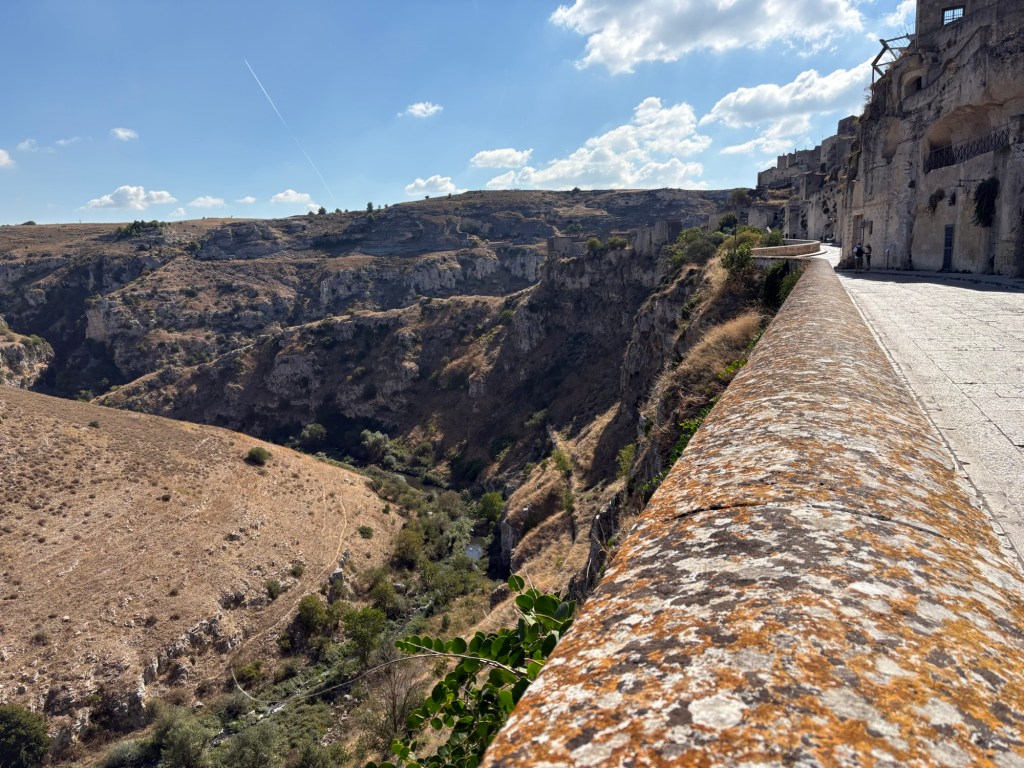
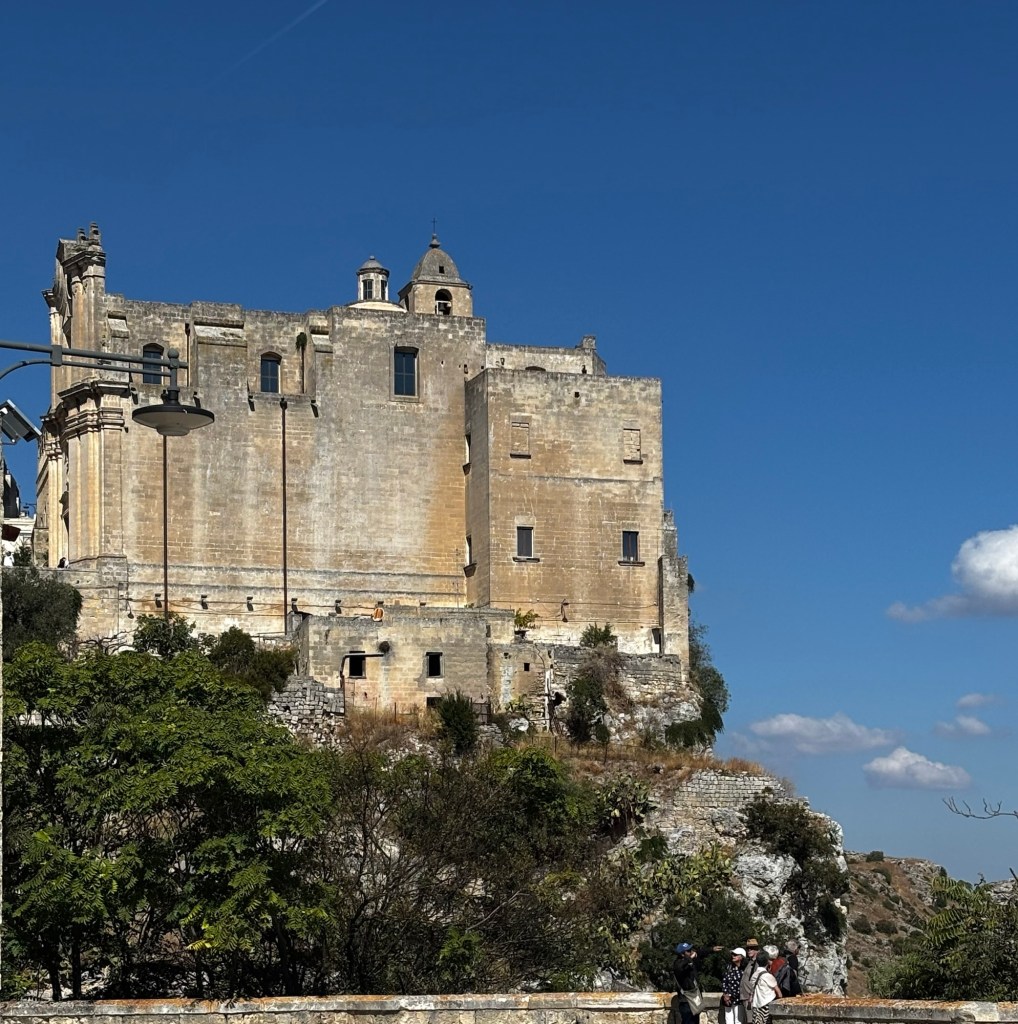
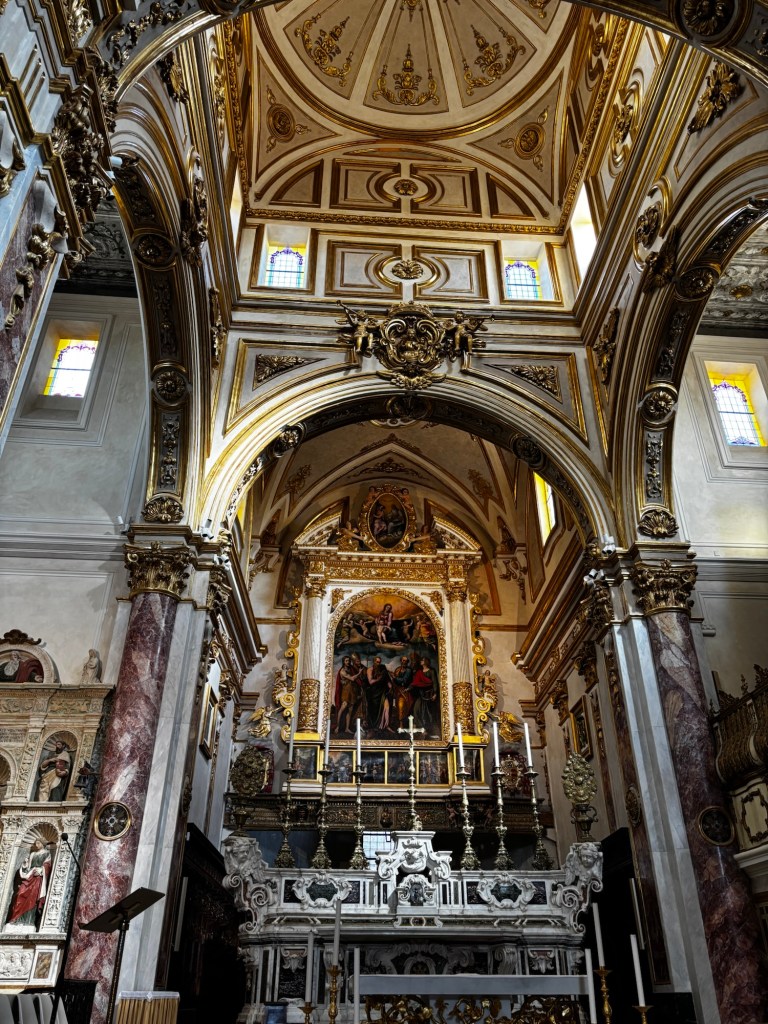
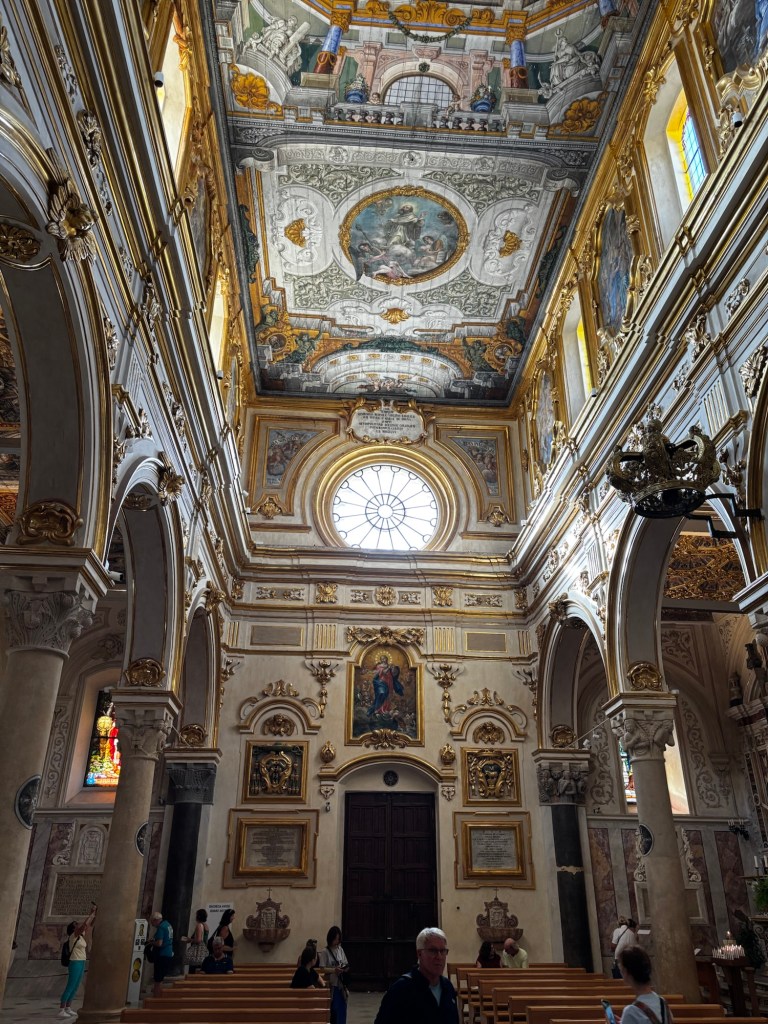
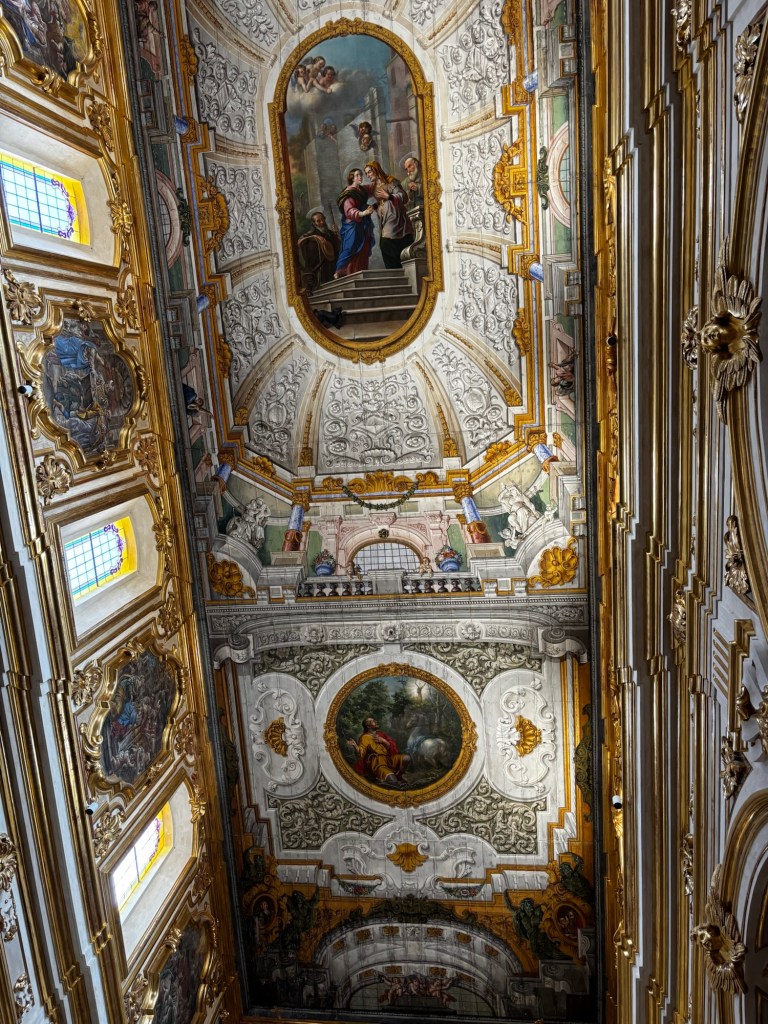
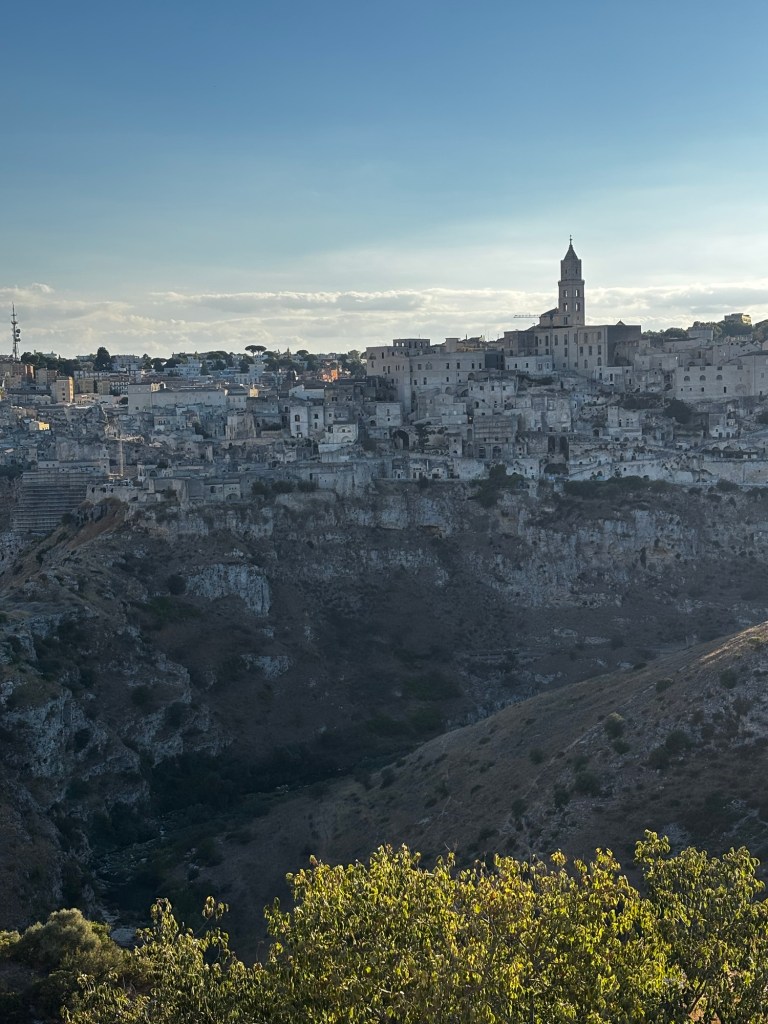
After the official tour we went on our own wander and disregarding all advice, plunged straight down into the heart of the Sassi. Our goal was the cathedral on the far side of town (the tower in the distance).
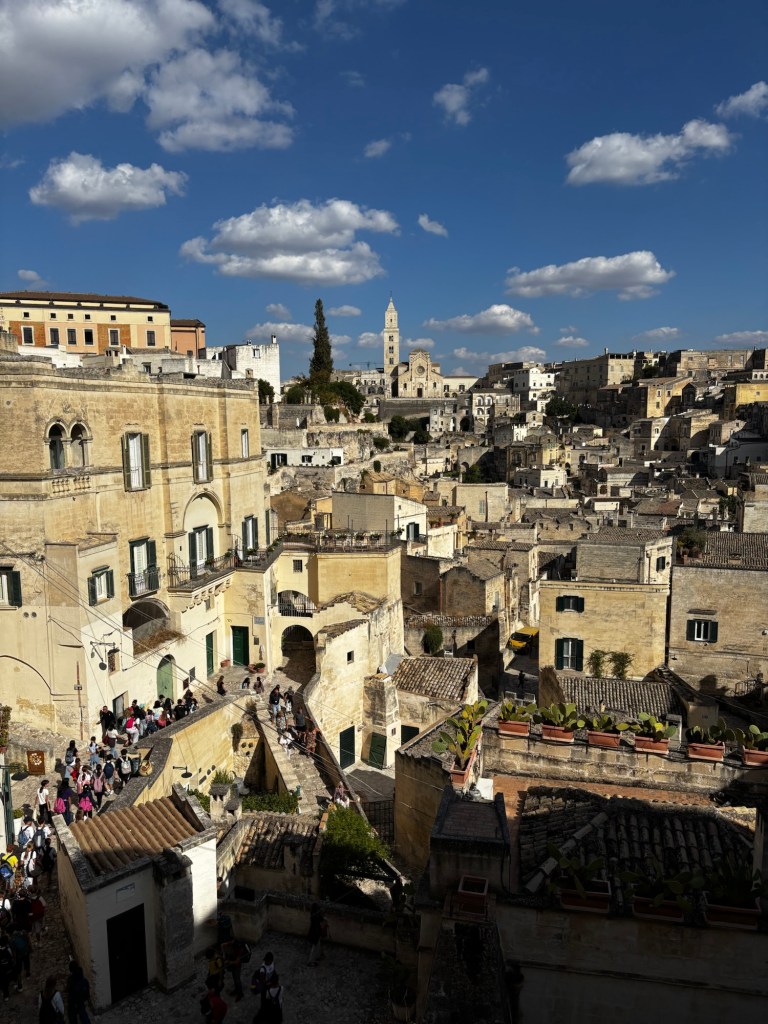
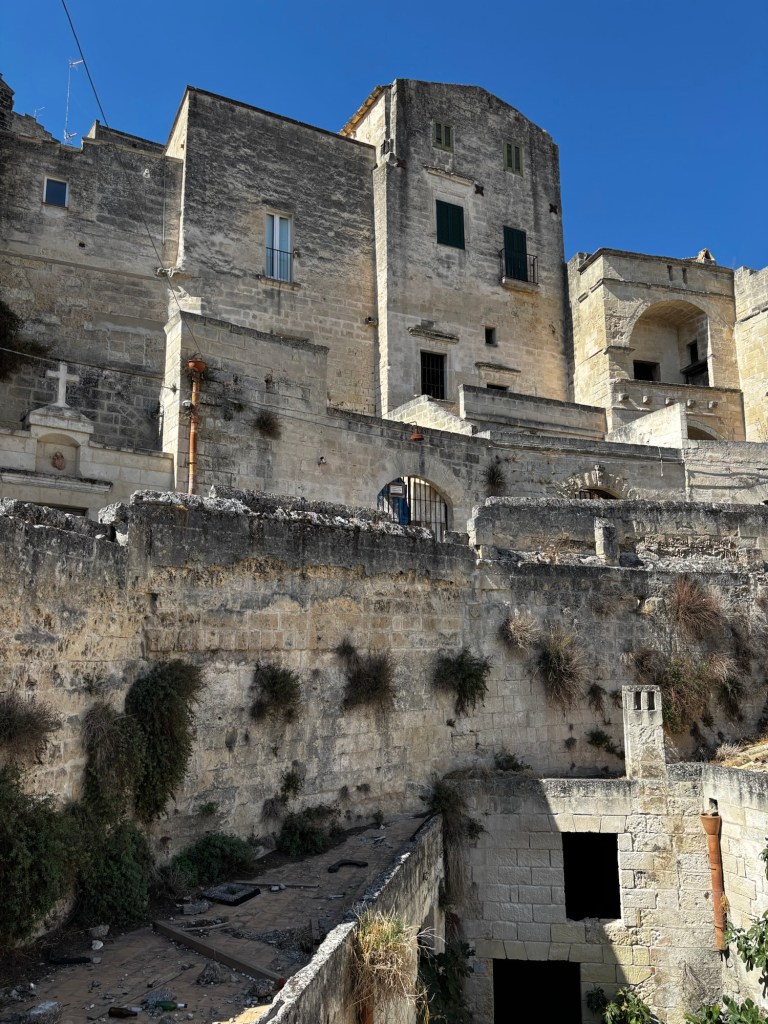
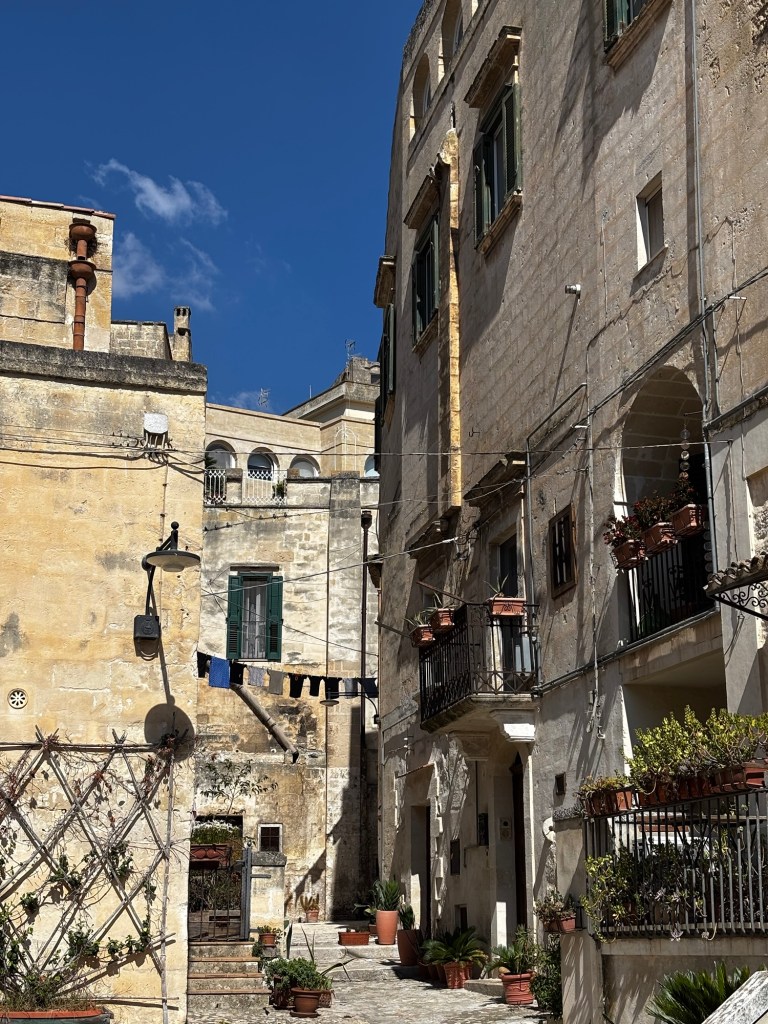
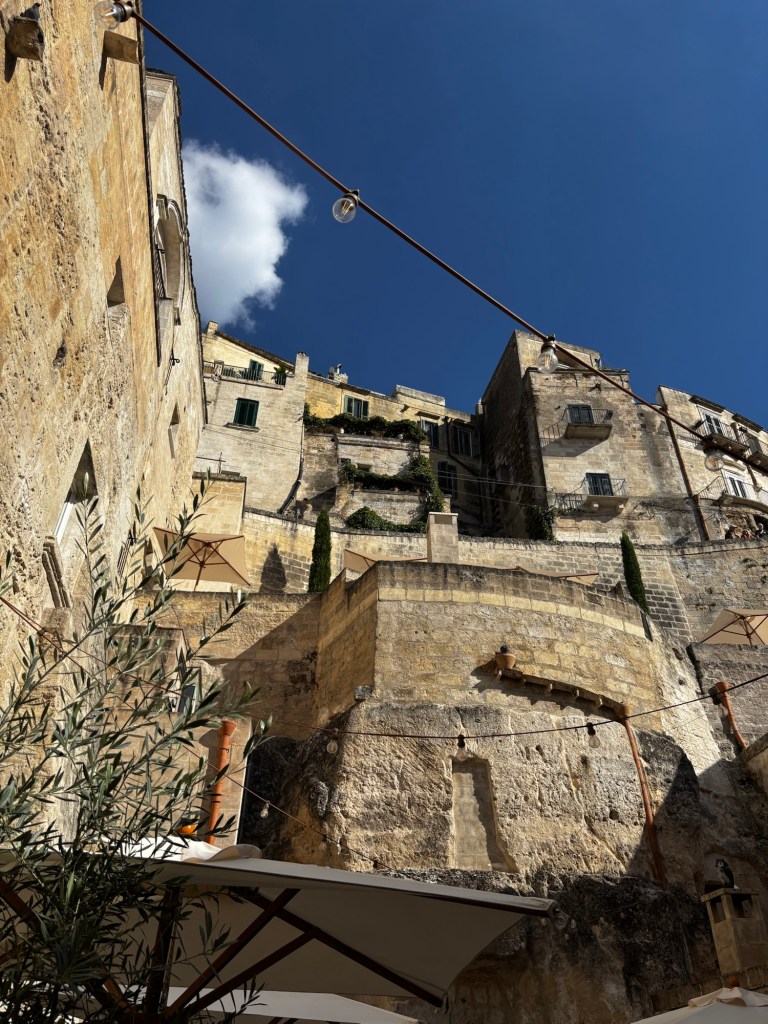
Through the intrepid guiding by Mo and Louise we made it. And it was worth the hike. The cathedral was incredibly ornate but had a wonderfully decorated ceiling.
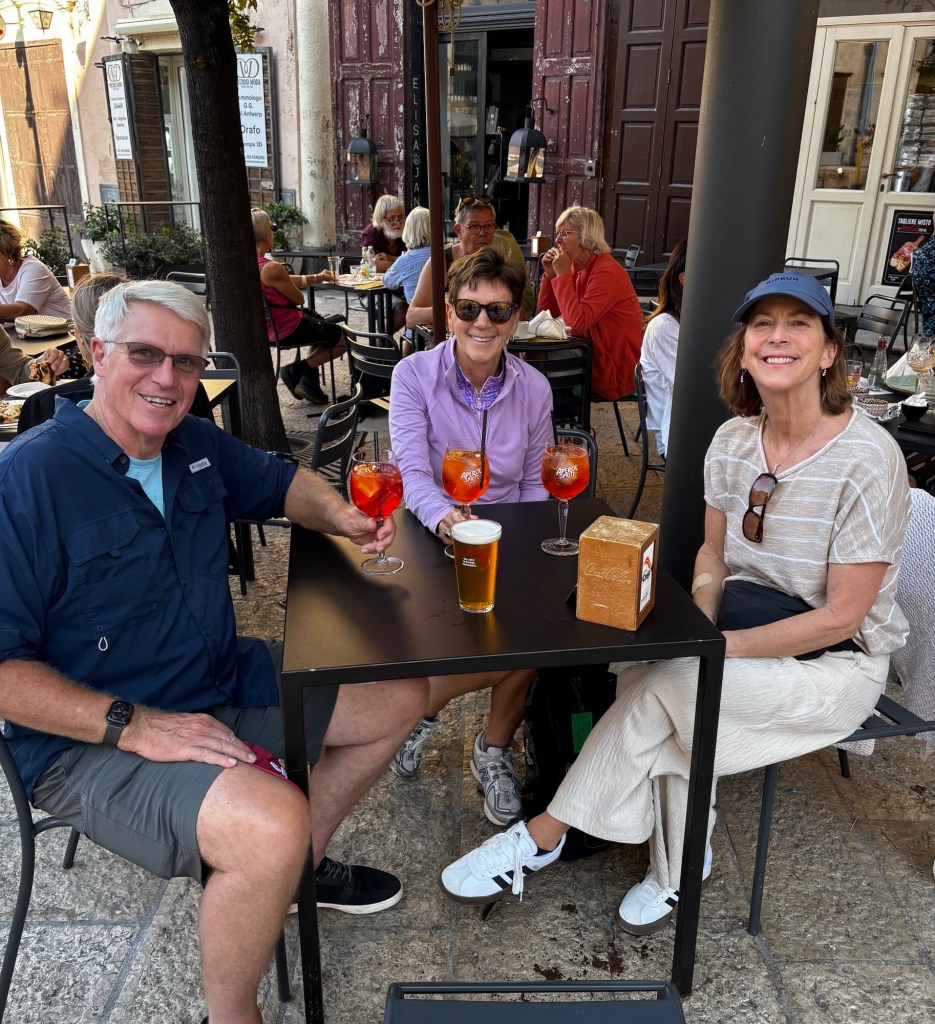
All the hiking up, down and around meant rehydration was essential.
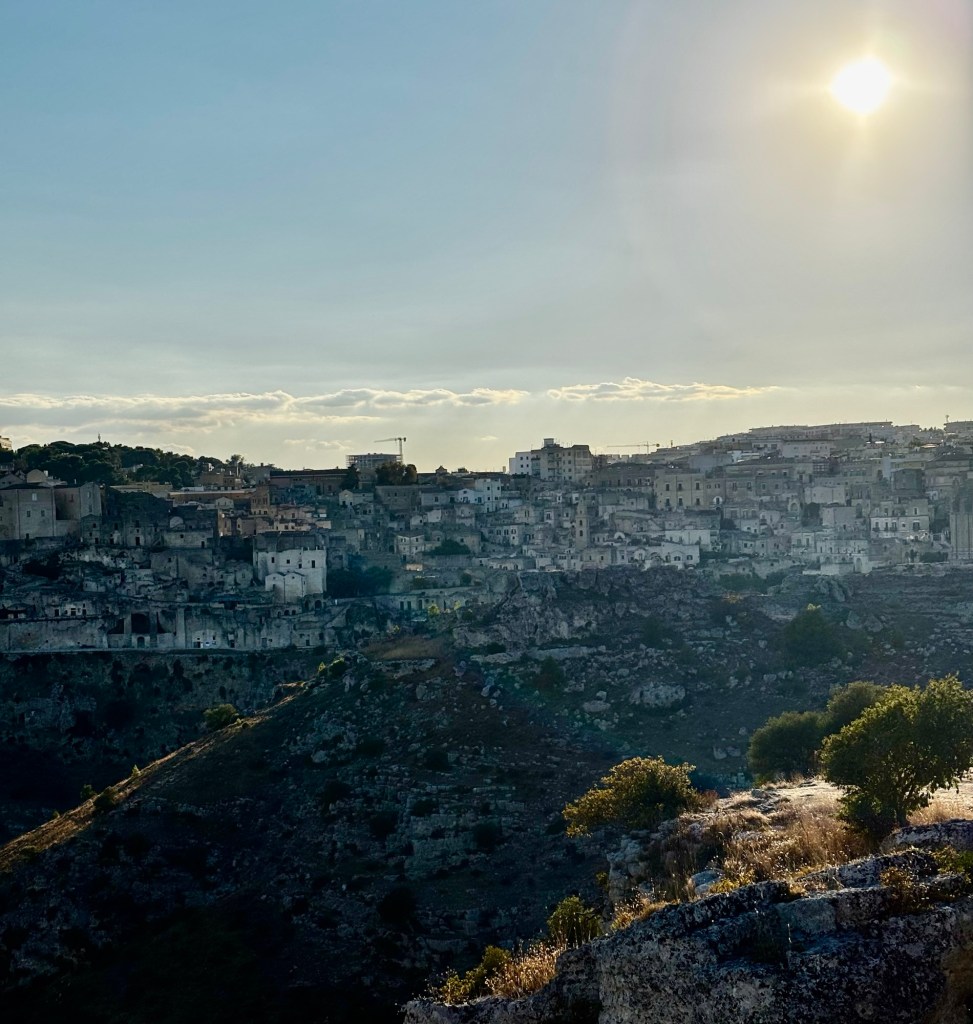
To end our day we drove out of Matera to the other side of the canyon to look back at the city. Although the sun was facing us and creating shadows it was still an impressive view.
Back to Abate Masseria for one more night then it’s off to Lecce with a special stop along the way.


