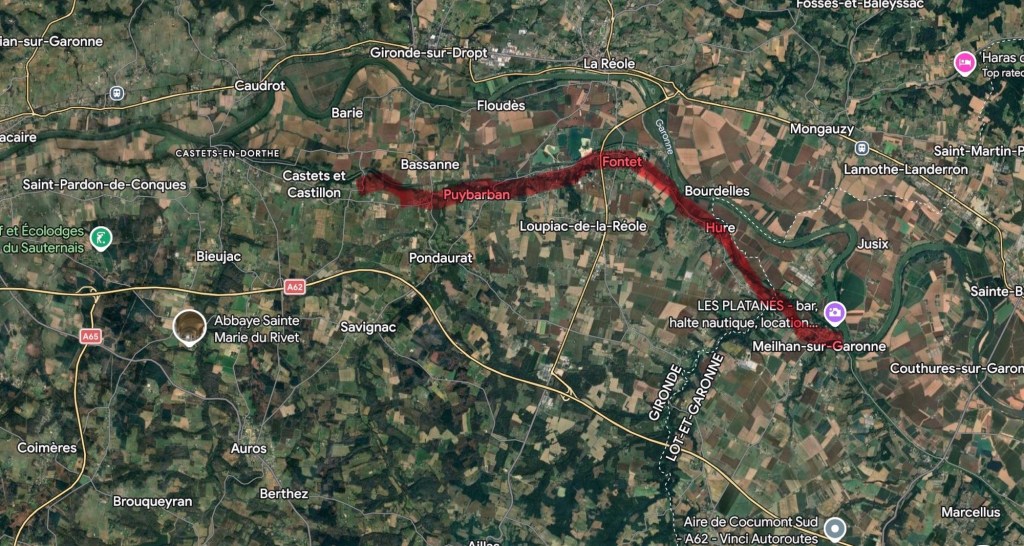
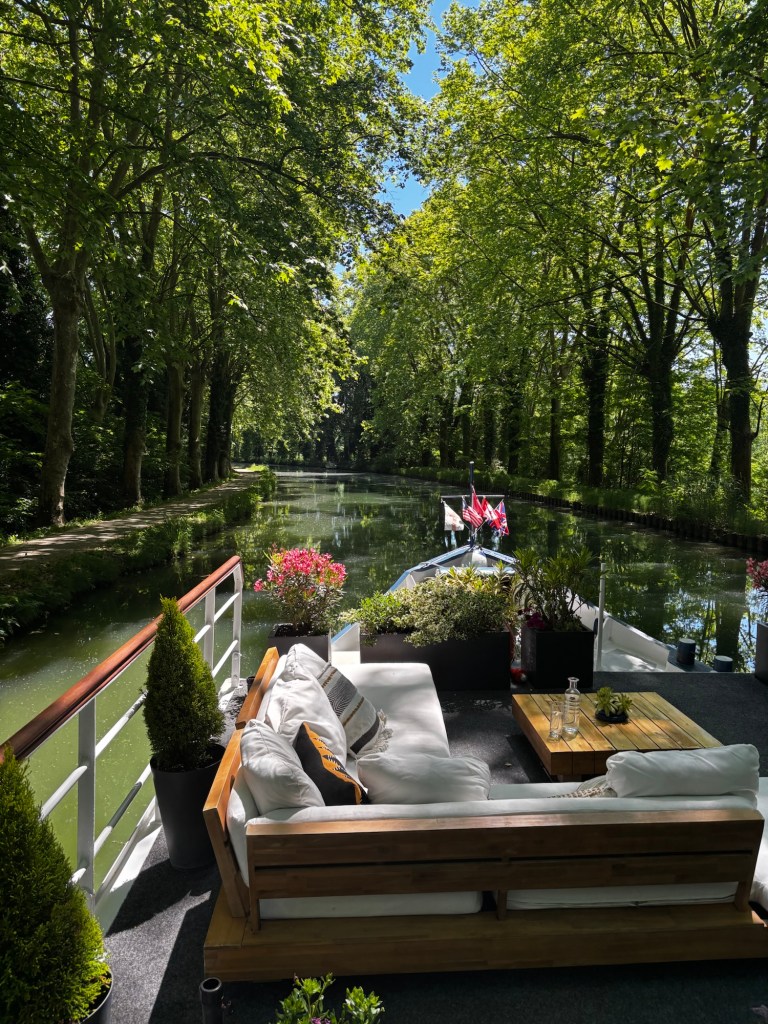
We set off from our overnight mooring at Castets et Castillon and began cruising eastbound (up river) along the canal. Estimated travel time was four hours to travel about 20 kms.
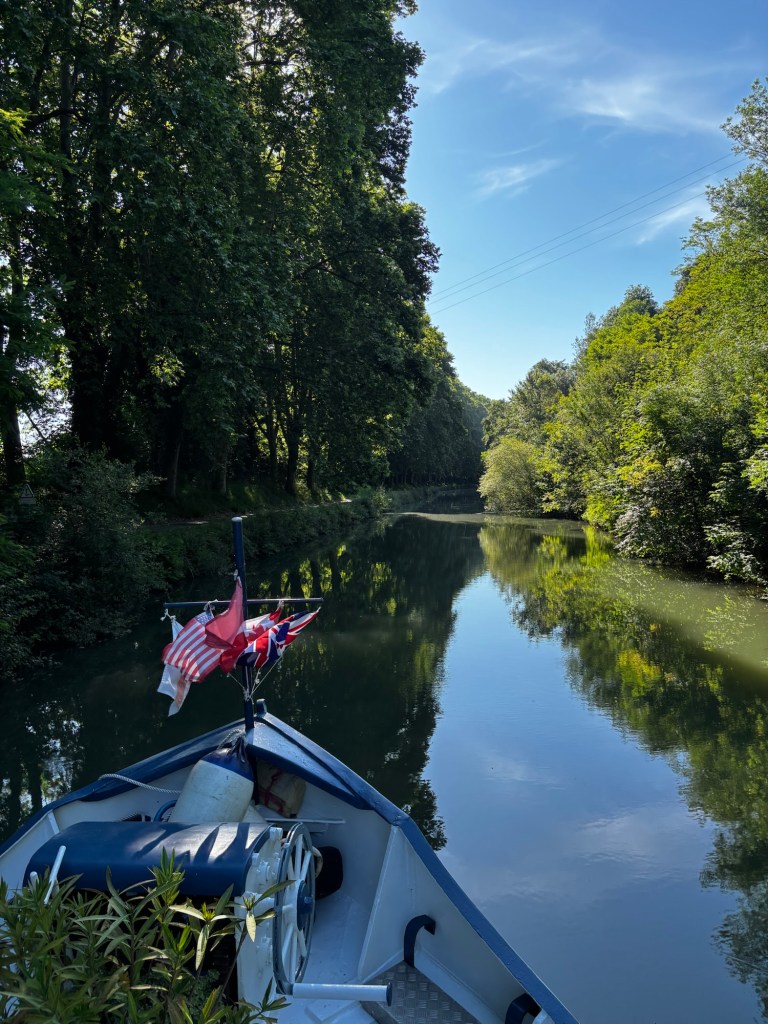
The speed of the barge is very sedate and there are multiple stops to traverse locks along the way.
Mo and Mark chose, at one point, to walk on the old tow path beside the canal and easily outpaced the barge. That afforded the opportunity to take pictures from one of the many bridges as the boat approached.
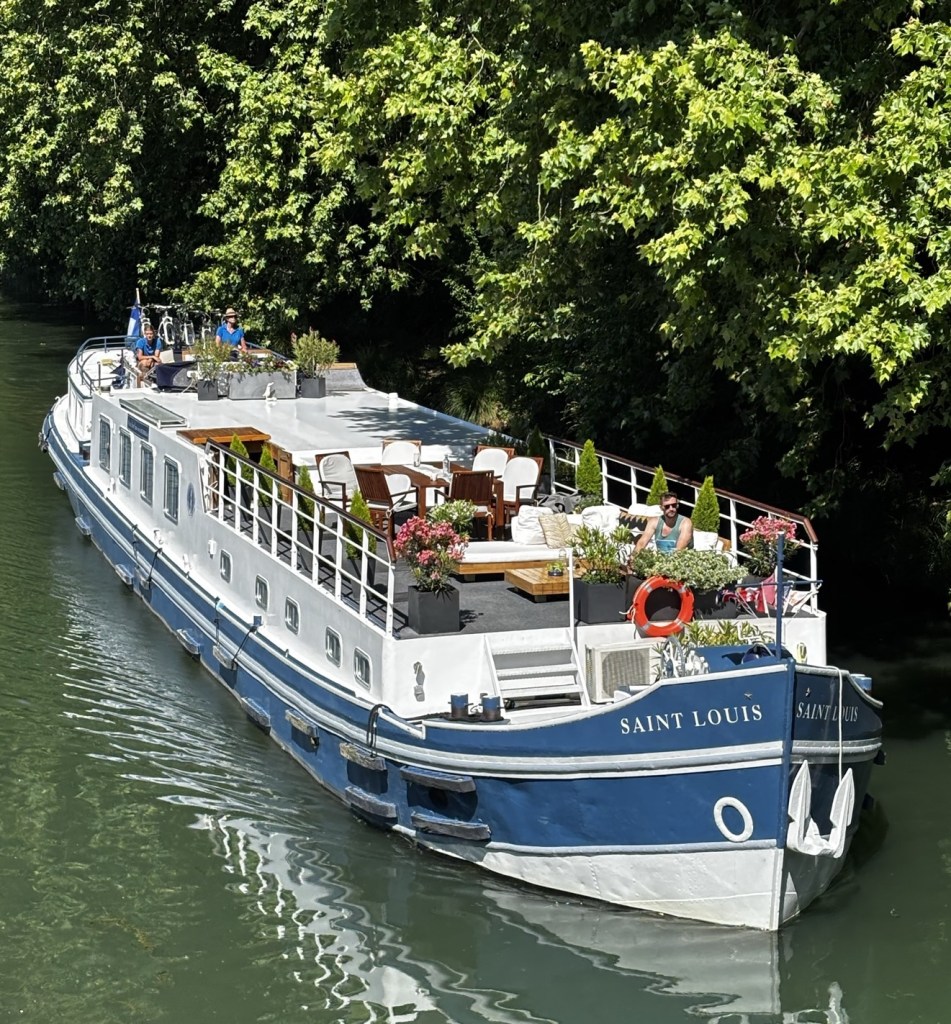
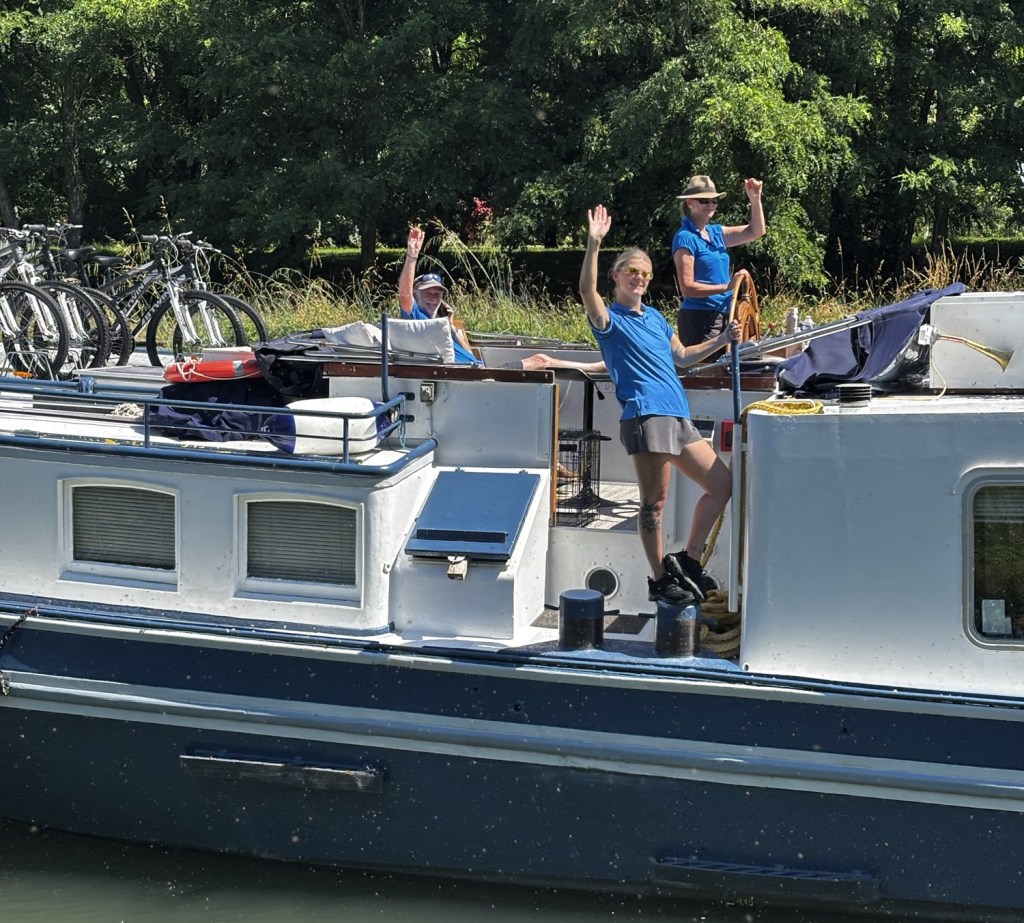
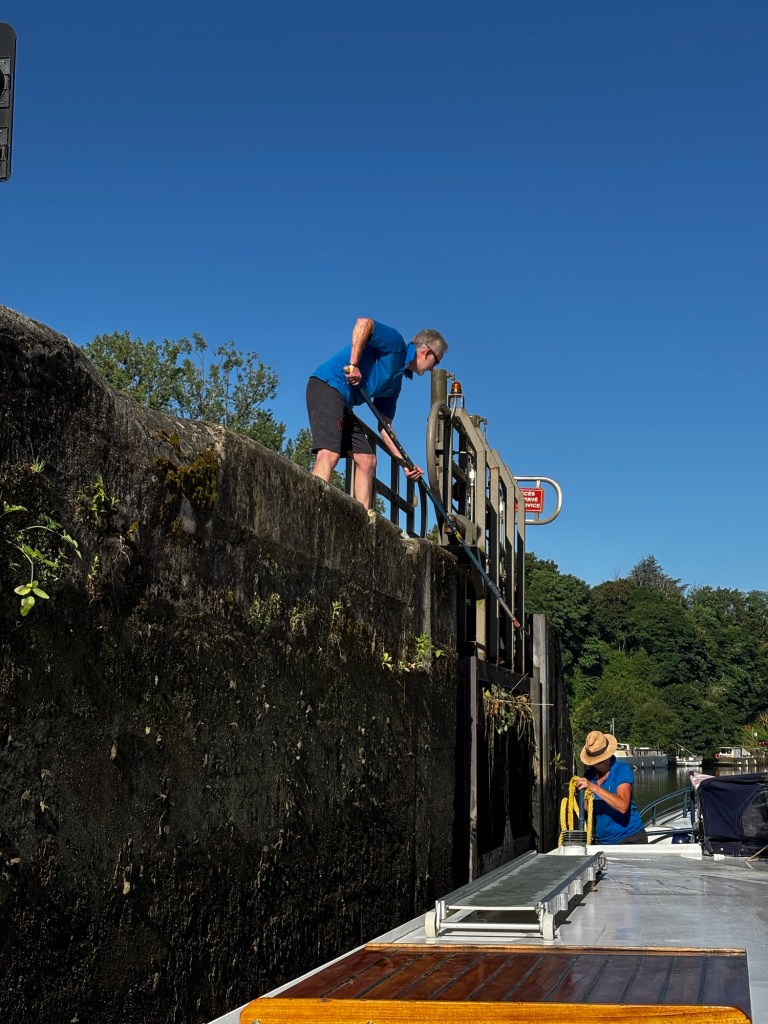
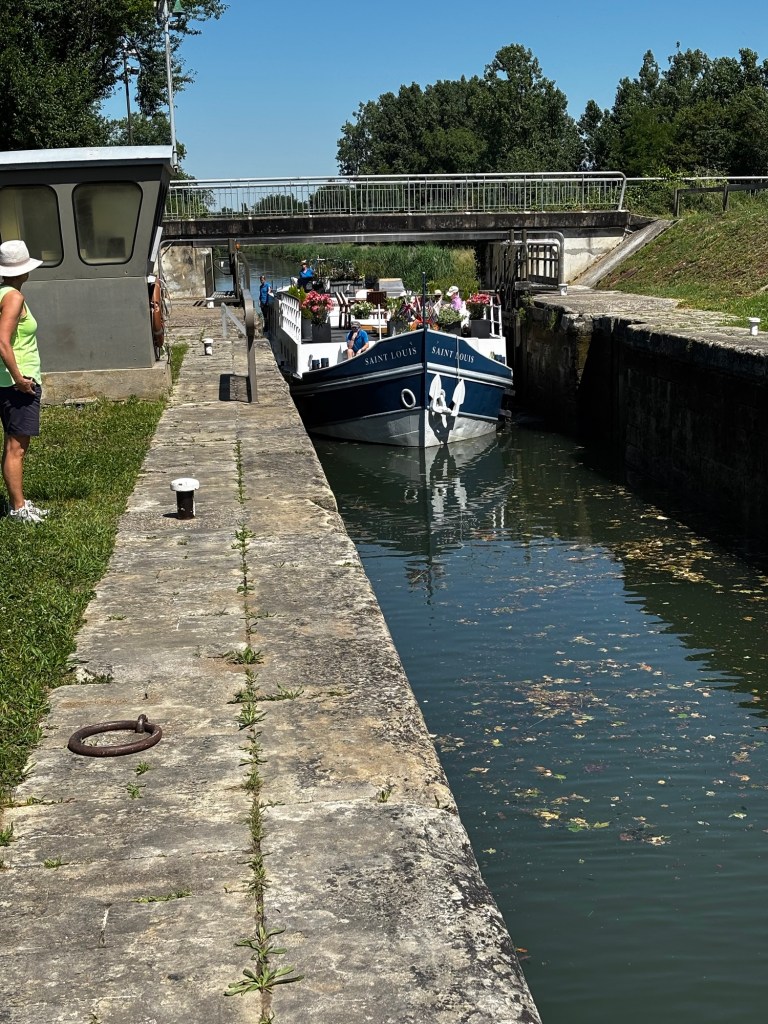
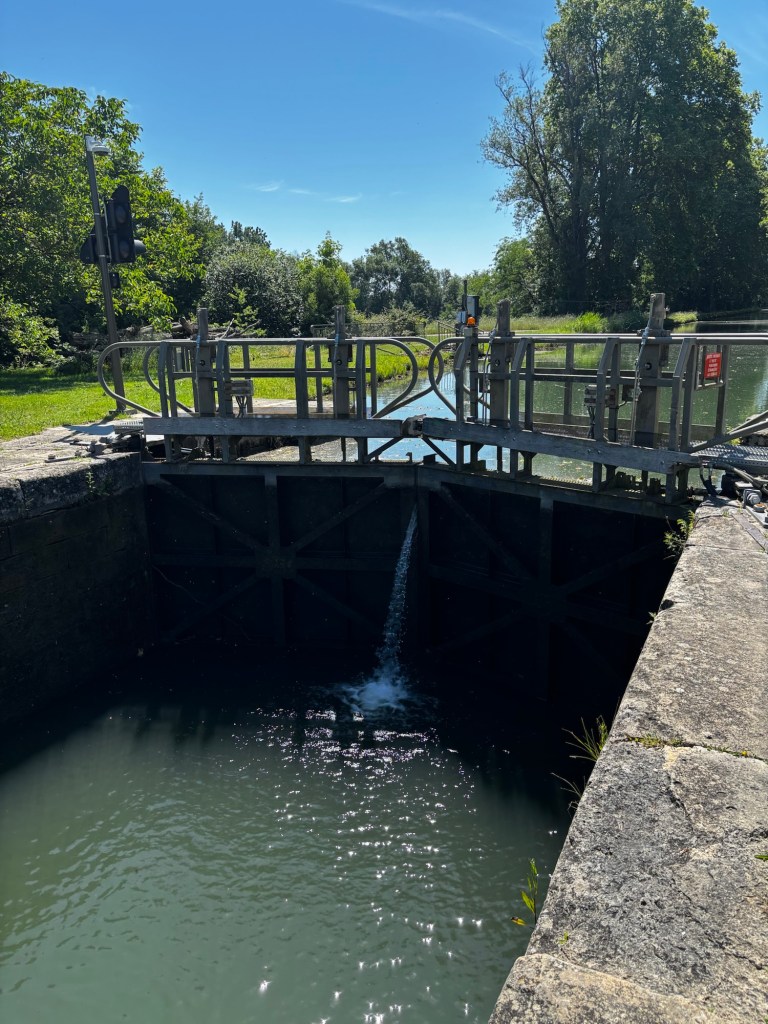
A fairytale setting.
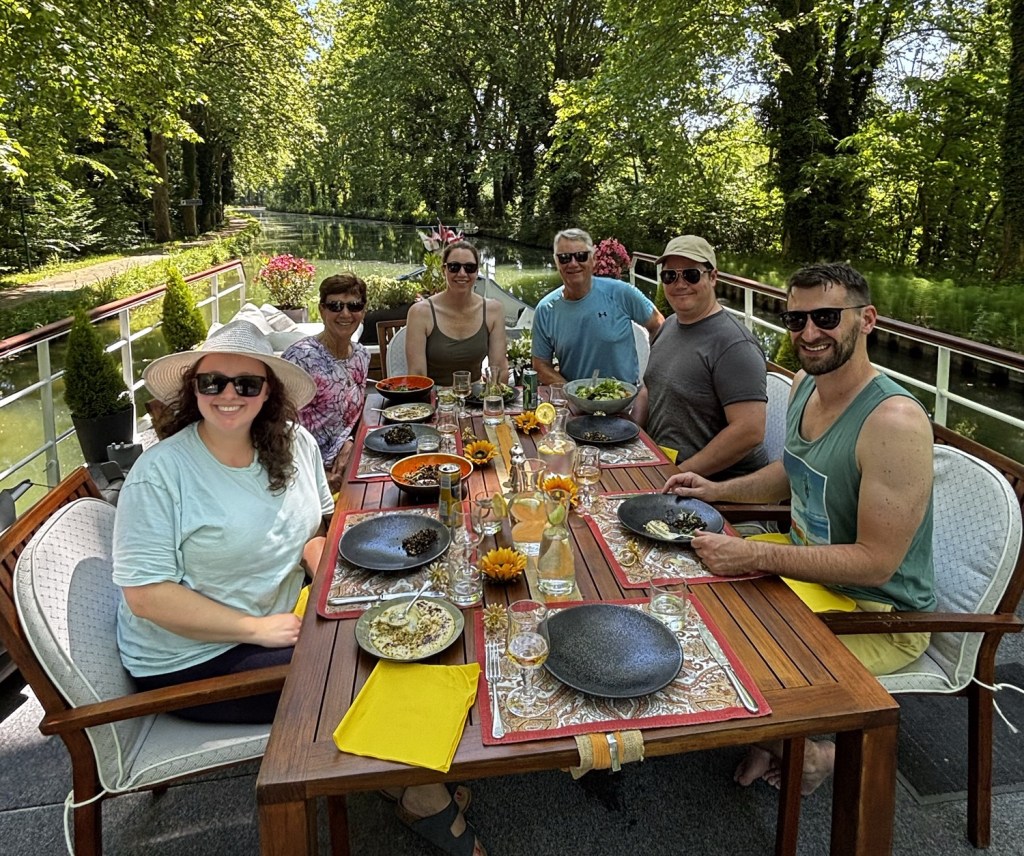
Lunch on the upper deck once the barge docked in Meilhan sur Garonne proved to be another feast. Chef Rich has produced amazing food at each meal.
Into the van after lunch for a 40 minute drive back towards Bordeaux but this time staying south of the city and west of the Garonne River. Our target was the Sauternes region, makers of white wine using the Semillon, Sauvignon Blanc and Muscadelle grapes.
Sauternes are unique as the grapes are deliberately allowed to be affected by Botrytis cinerea, also known as noble rot. The impact is that much of the water evaporates from the grape leaving a sweet, concentrated residue.
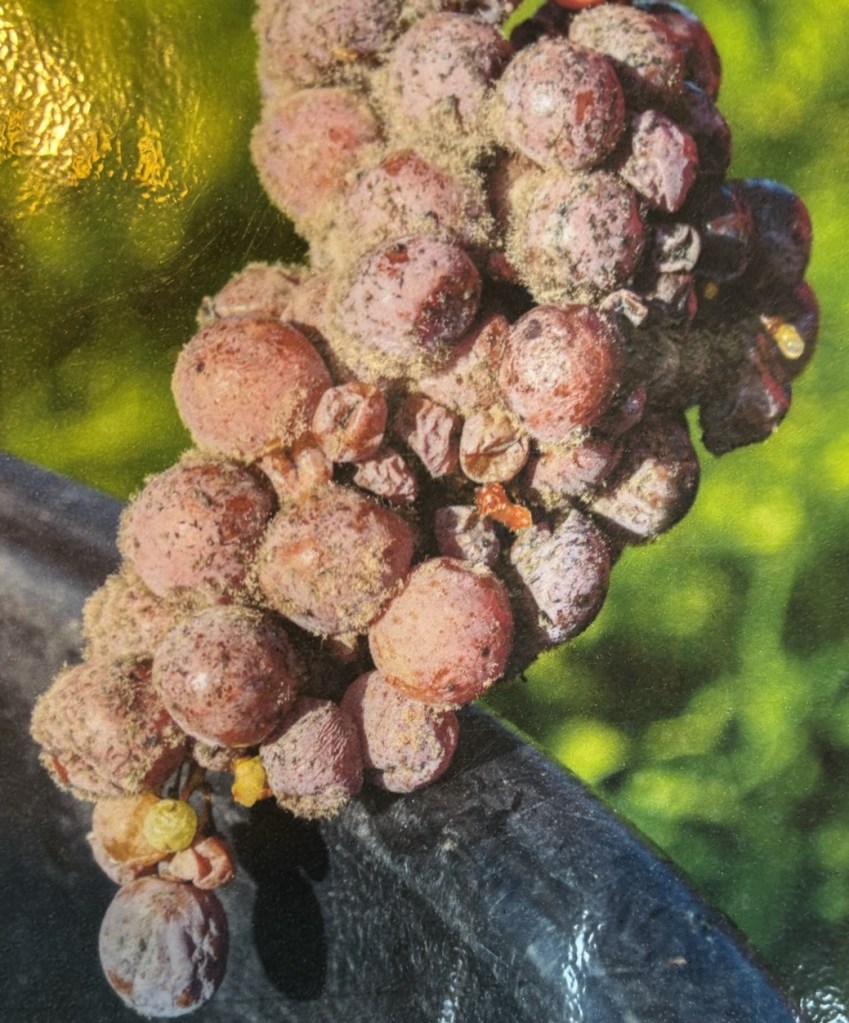
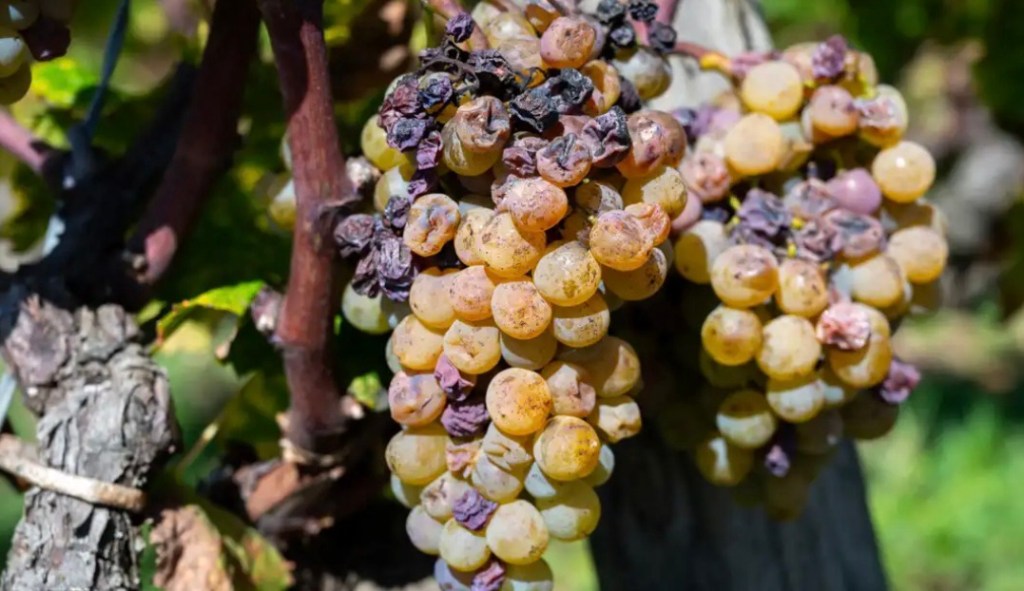
Picking must be done by hand and each cluster is visited at least four times during harvesting as grapes are chosen individually. Obviously the result is very high labour costs.
The Sauternes region classification system is similar to the left bank appellation process of 1855 but while red wines from the Medoc and Graves were placed into five levels, the sweet white Sauternes and Barsac wines were classed into only three. A single vineyard, Chateau d’Yquem, was awarded Premier Cru Supérieur status. Premier Cru (11 wineries) and Deuxièmes Crus (14 wineries) complete the list – which hasn’t changed in 171 years. Chateau d’Yquem’s exalted status means its least expensive vintages start at about $575 CDN and go into the stratosphere.
We requested to see this legendary winery so our driver pulled into the Chateau d’Yquem estate where we wandered the grounds for a few minutes.
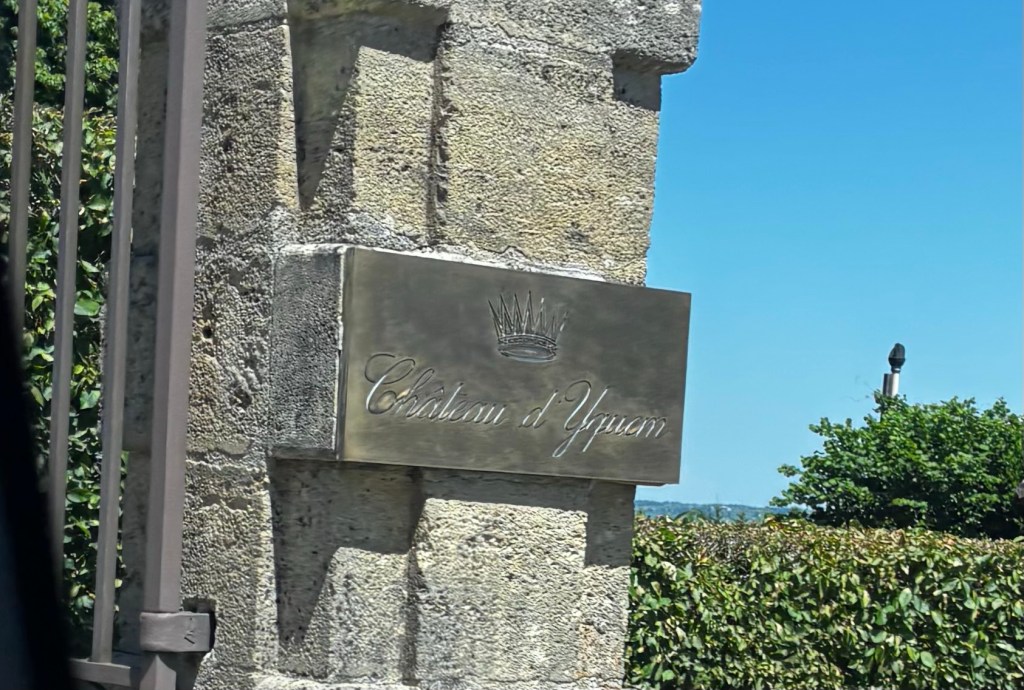
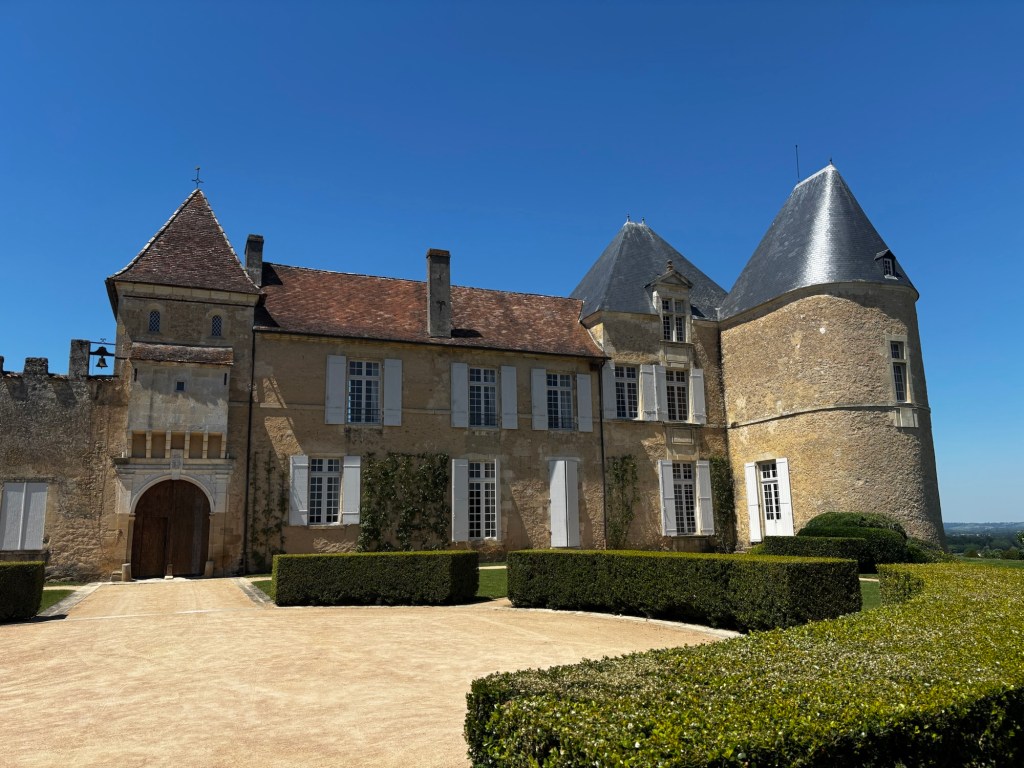
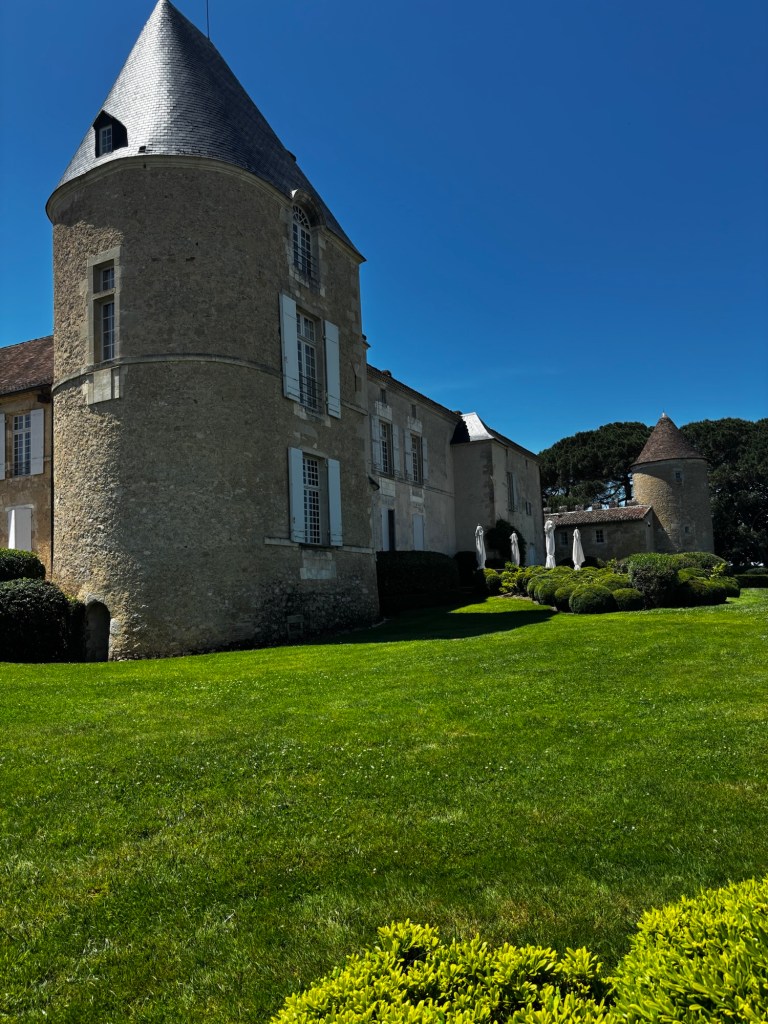
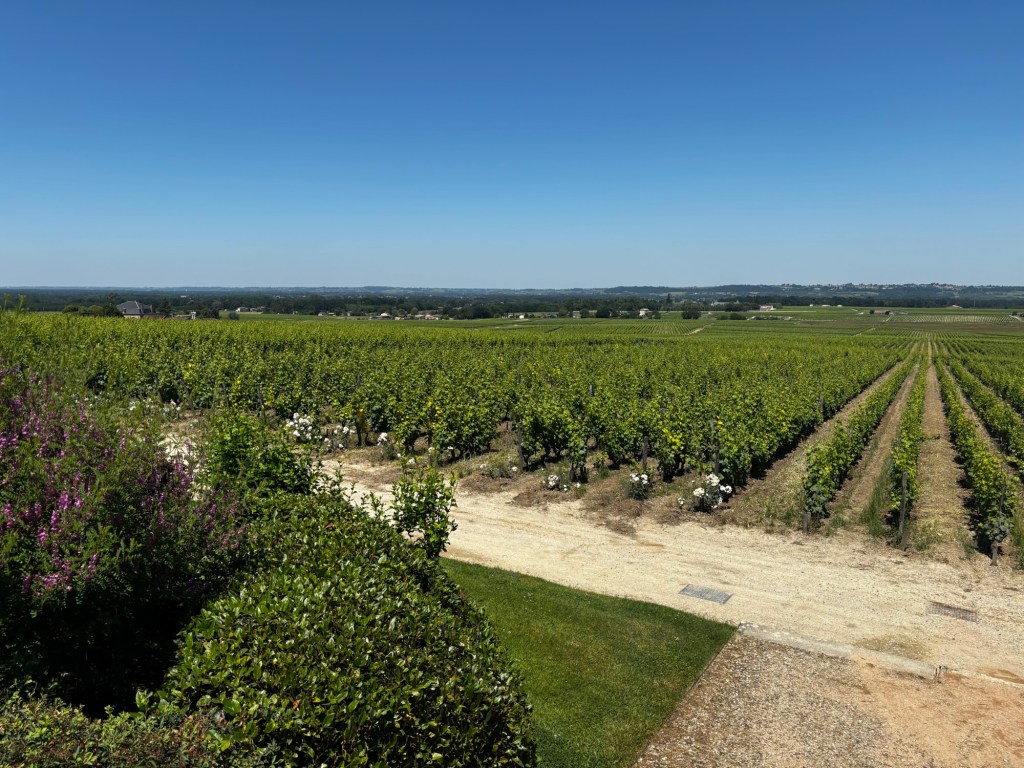
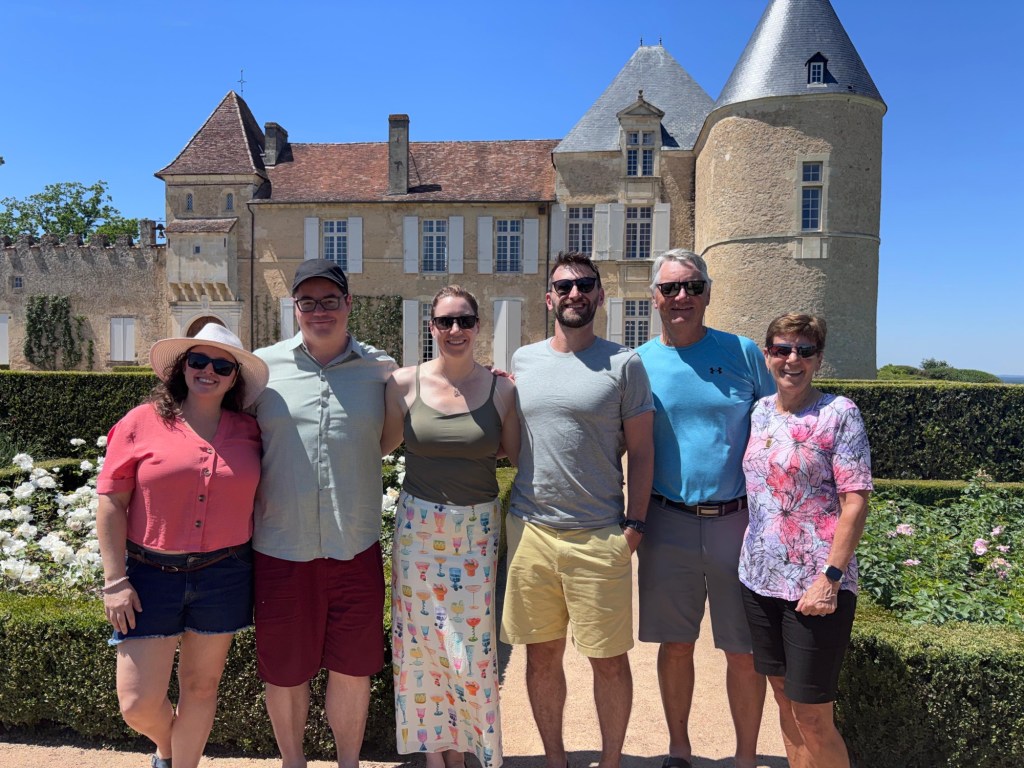
Across the road is Chateau d’Arche where we headed for our tour and tasting.
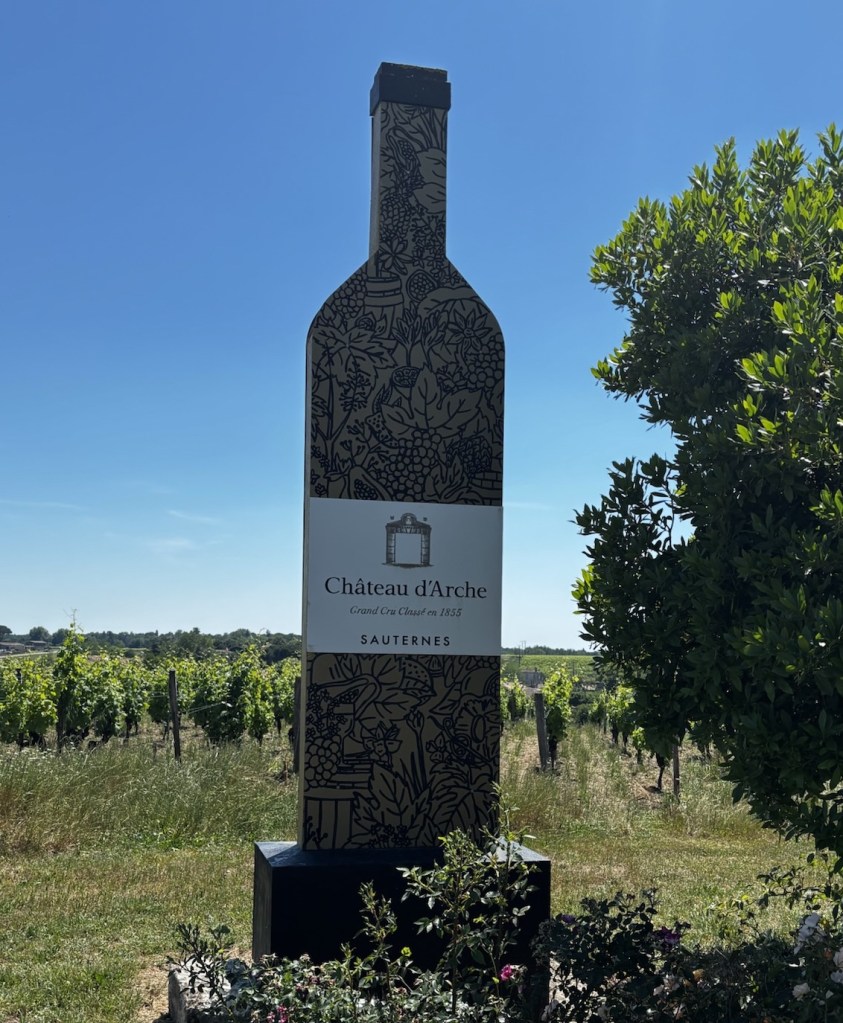
One of three estates within the Sauternes region that was rated second growth in the Classification of 1855 (the other 11 are in neighboring Barsac), Château d’Arche wine production goes back to 1733. A young hostess explained the history of the region and winery and took us through the facilities describing the intricacies of how Sauternes are made.
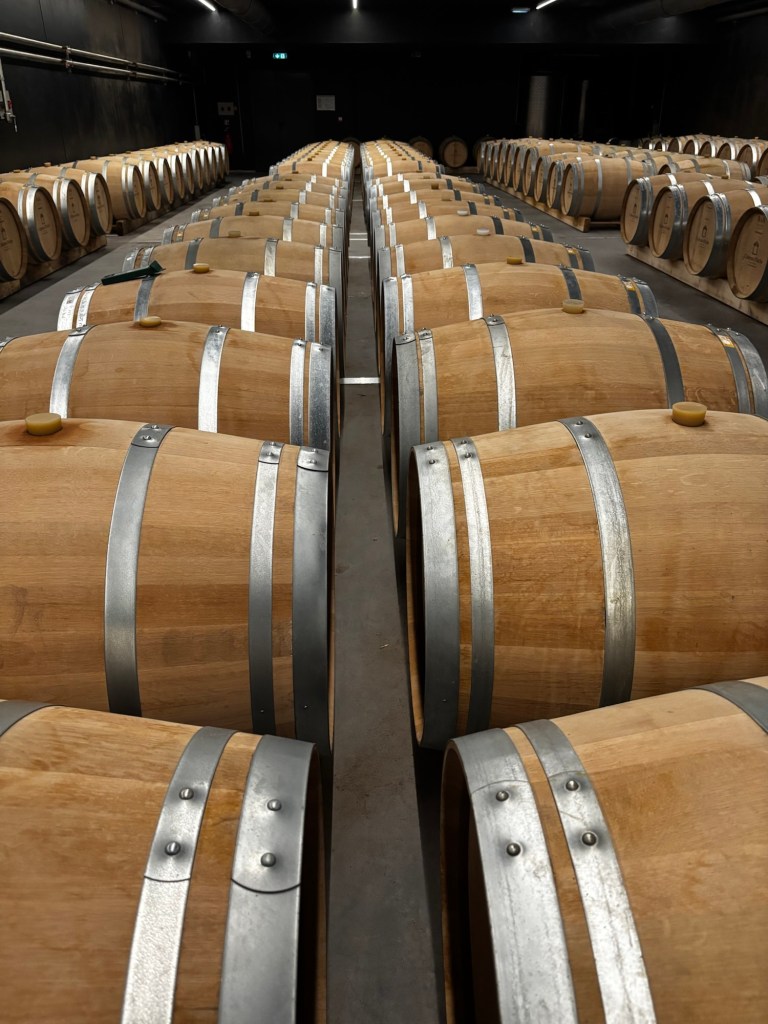
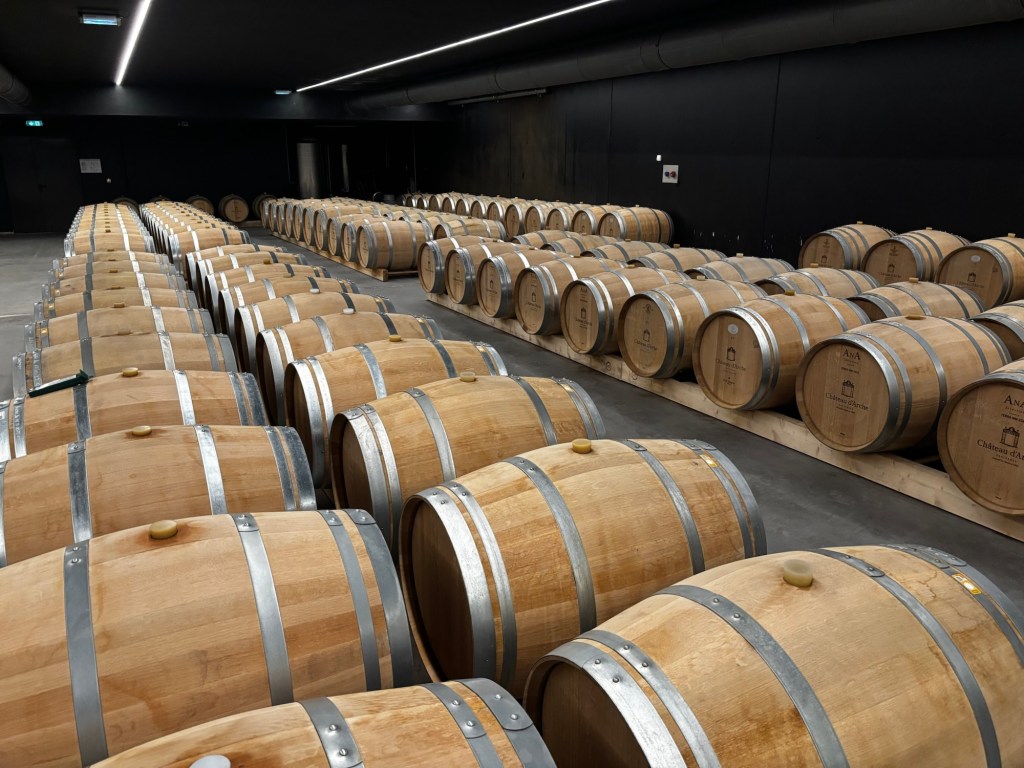
The tasting covered various vintages that also differed by sugar content. Each glass was accompanied by a small snack whose saltiness or flavour dramatically impacted the wine’s taste.
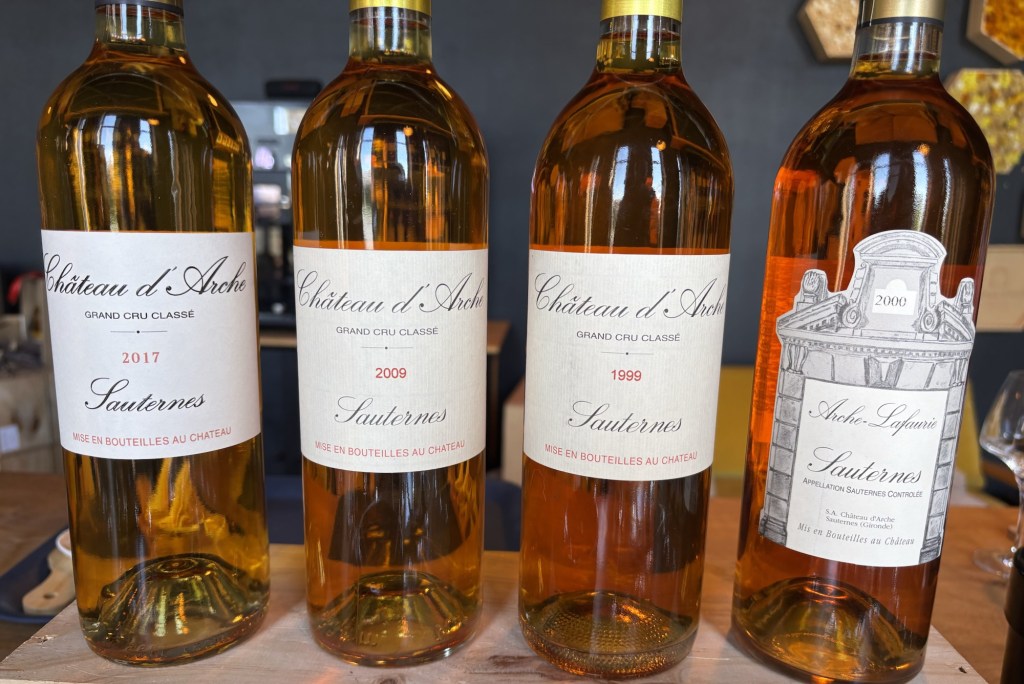
Sauternes are definitely unique and, paired properly with cheese or desserts at the end of a meal, have a place in the wine world.
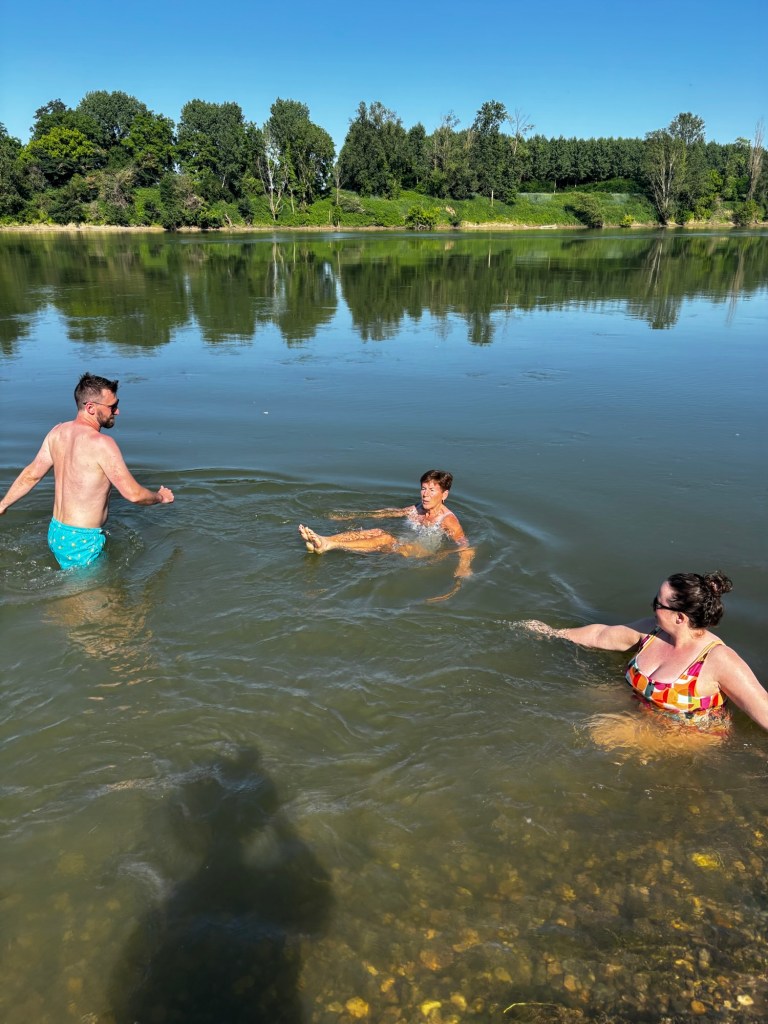
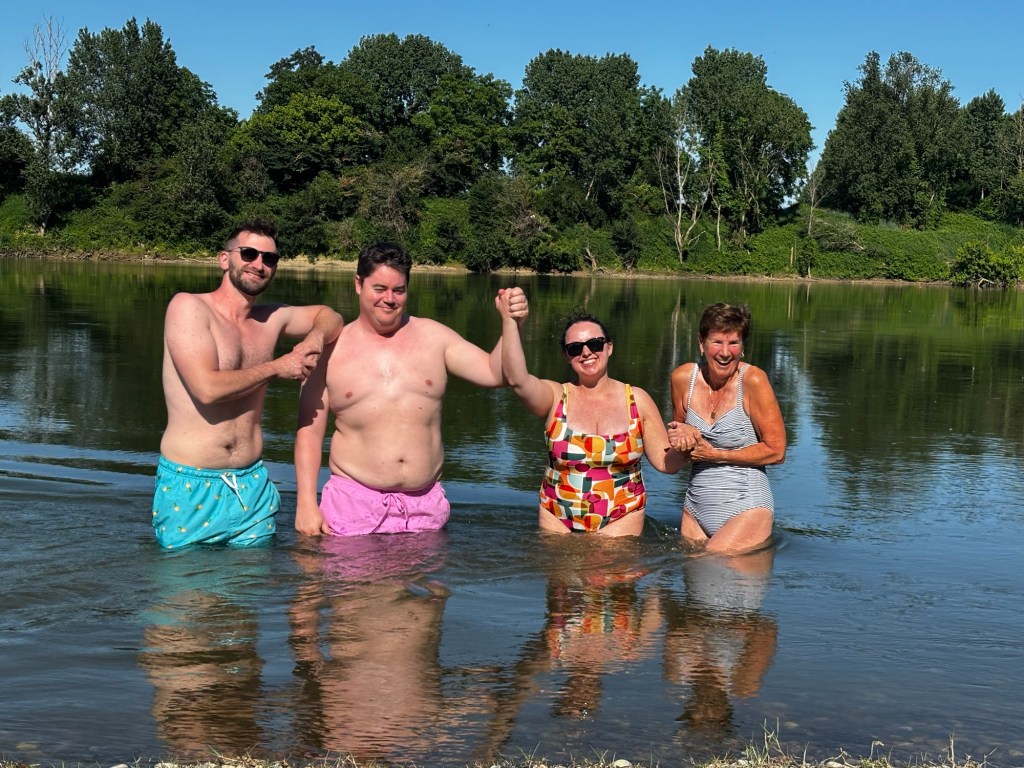
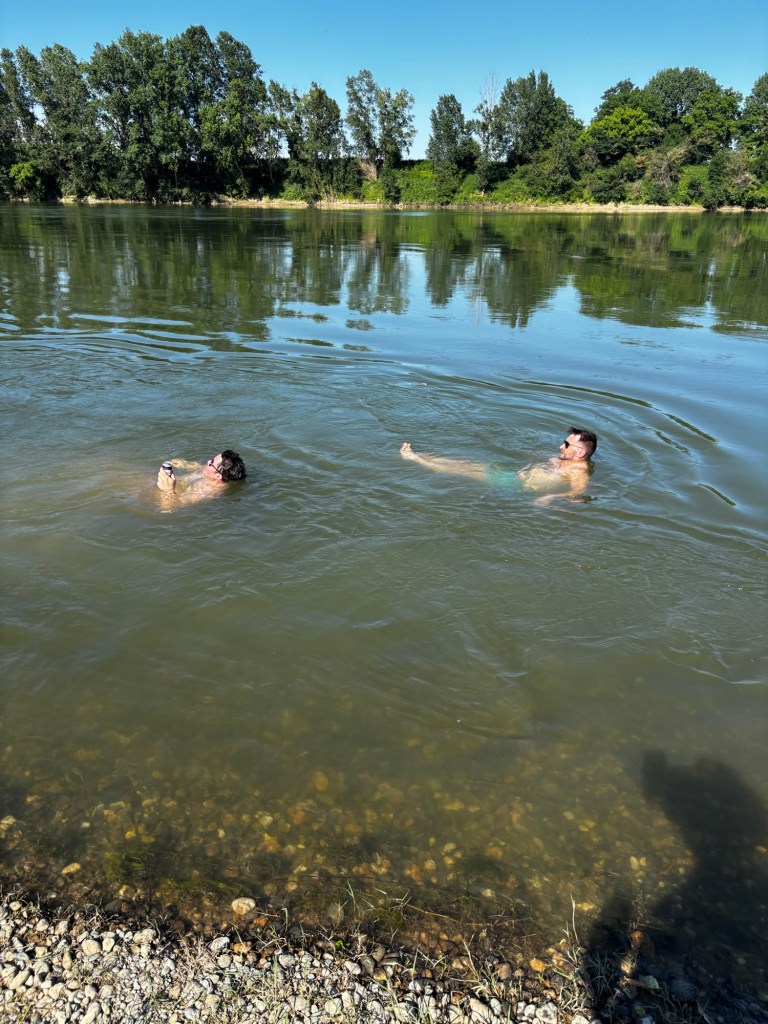
Back to the barge and a 100 metre walk from the canal to the Garonne river for a quick dip to offset the hot weather. Due to an extremely powerful current, proper swimming wasn’t possible.
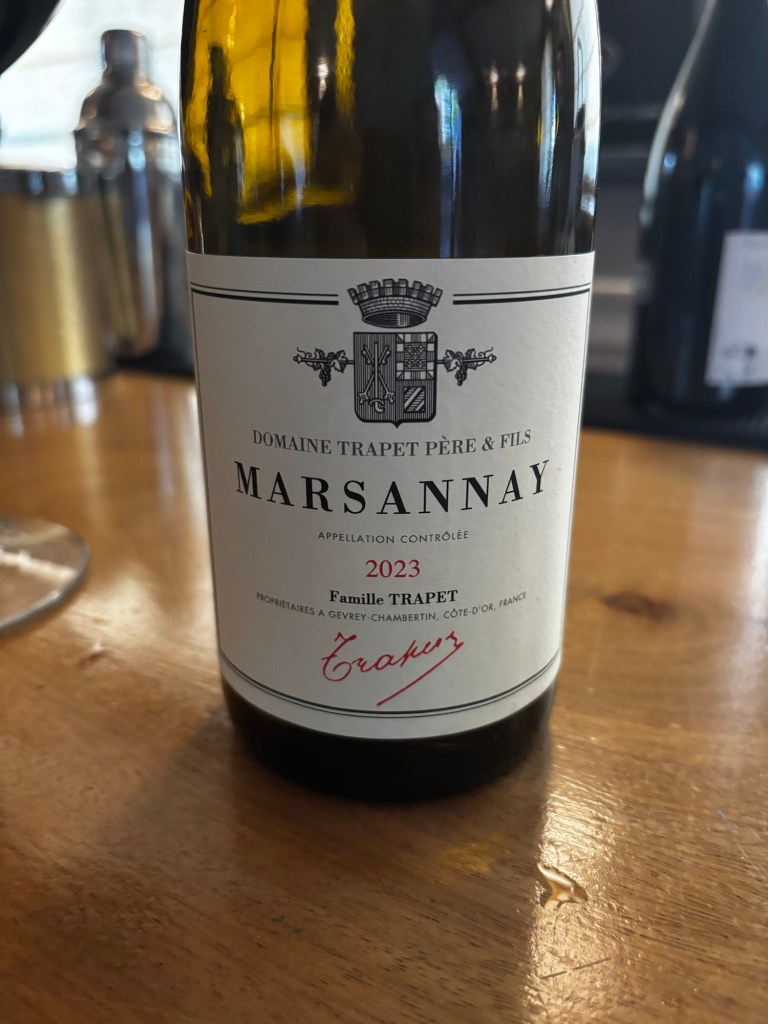
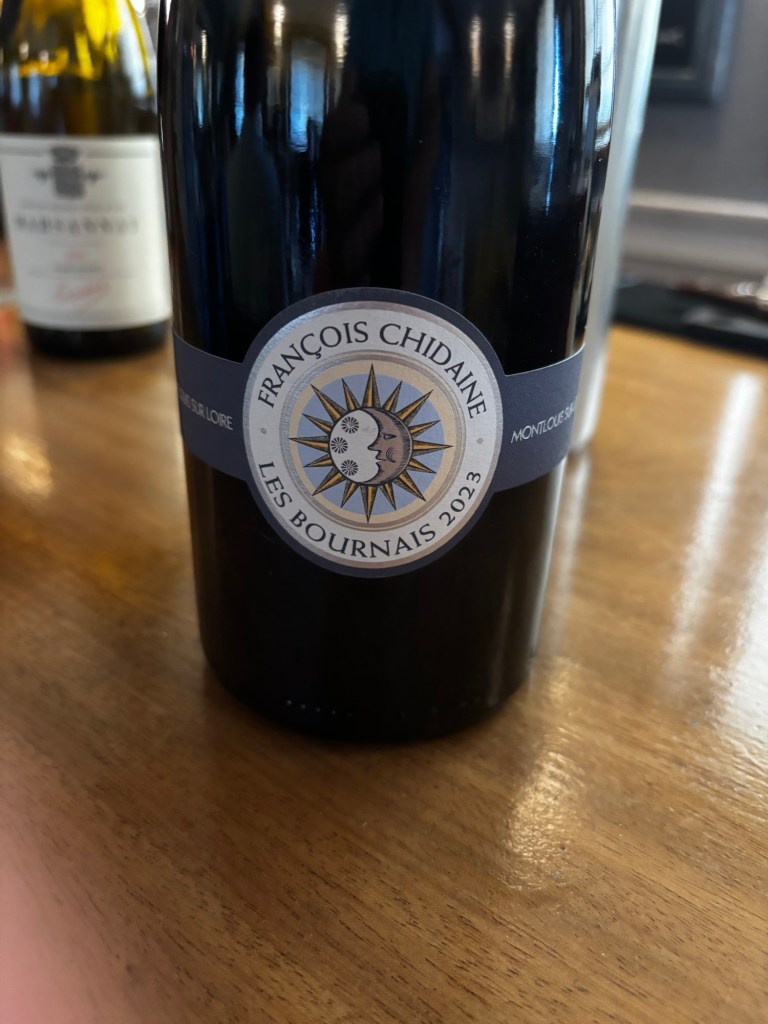
More glorious wine with dinner at the end of another great day.
Tomorrow is a visit to a local village where we will be hosted by a cheese monger to learn about the multitude of fantastic cheeses.


