Pot Holes, Speed Bumps and The Incas

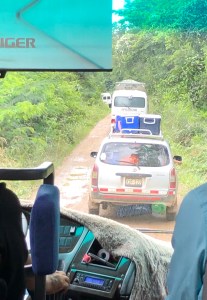
Day 7 – Sunday. After sailing through the first week of our trip Mark was slammed by a bug (I thought Montazuma was Mexican, not Peruvian). A variety of different drugs seemed to mitigate the damage so with a full day of sights ahead of us it was onto the bus and off to Pisac, one of the many Inca ruins nearby. Trouble was the Peruvian roads are pockmarked with countless potholes meaning the bus driver slalomed down narrow mountain roads notwithstanding oncoming traffic. A further challenge is in the seeming absence of any police so they use speed bumps every few hundred yards to slow down traffic. And these are serious bumps. Stop, bump, go, slalom, repeat.
A quick history lesson:  despite their relatively small number the Inca tribe, following a battle with the neighboring Chancas in 1438 was able to conquer all of what is now Peru, parts of Chile and Ecuador and a section of Bolivia under the dynamic leadership of their ruler, Pachacutec. In turn their rule came was challenged by the Spanish invasion commencing in 1532 and after forty years of major battles and running skirmishes the last of the Inca armies was defeated and their place consigned to history. They left behind many ruins, the most famous being Machu Pichu (although most books designate other locations as more important cities based where the emperor lived and/or did battle.
Pisac, at the head of the sacred valley, features all types of architecture – agriculture using dozens of terraces on the mountainside, military, residential and religious including a cemetery built into the cliffs.
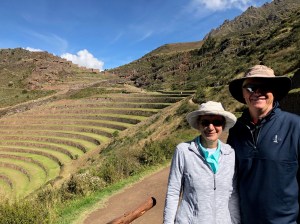
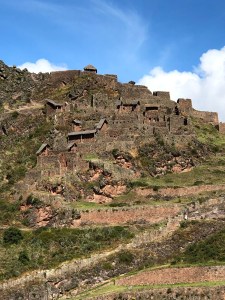
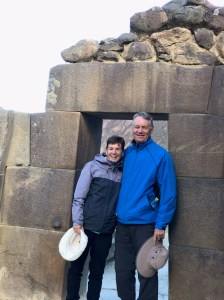
We wandered through the site and learned about ceremonies and some historical facts. Like the ancient Egyptians the Incas had the ability to move large stones great distances and construct walls with amazing precision.

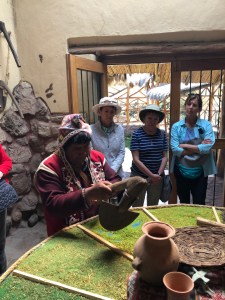
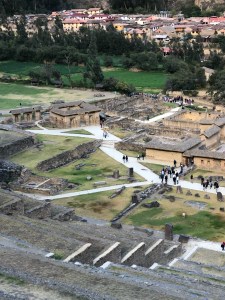
Then it was off to the Potato Institute high in the hills.  Another heart stopping ride as the narrow road had no guardrails and it was hundreds of feet straight down. We learned more about potatoes than imaginable including that the tuber originated in Peru and this farm had 1,360 different varieties (too bad Ireland only imported one variety).  Today seeds are stored in Cusco and the world seed institute in Norway in case of disease. All the work is done by hand given the serious slope of the fields (and the remoteness of the farm). The head farmer demonstrated the seasonal work and techniques using a model  It was an impressive display of ingenuity and perseverance.Back down to the river valley and along to Ollaytantambo which is a village of very bumpy cobbled streets too narrow for two way traffic. The main square gave the feel of a vibrant ski town given all the trekkers and street vendors surrounded by very large hills (we’re not quite in the Andes yet). This is the site of one of the more famous Inca – Spanish battles in 1537 where the former recorded a victory although it was a temporary setback for the invaders. Another Inca site was explored, explained and marvelled at give the construction skills and hoisting of massive rocks up mountains.
Back up the sacred valley to Urabamba for our last night in a real bed with a proper bathroom. Tomorrow the hike begins!

Jungle To City

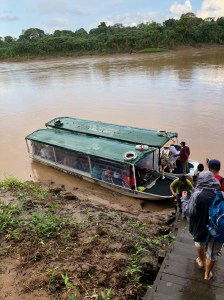
Day  6 – Sunday. Into the boat one last time and we headed downriver back towards civilization.

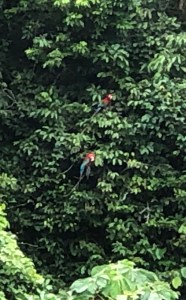
Our 48 hours in the jungle and rainforest had been incredibly informative and interesting. On our last boat trip we stopped to watch a flock of macaws.  The vibrancy of colour was amazing.

Once back at the landing point we joined a bus convey back to Peublo Maldonado on that dusty track which wasn’t so dusty after the rains.

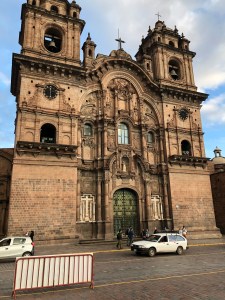
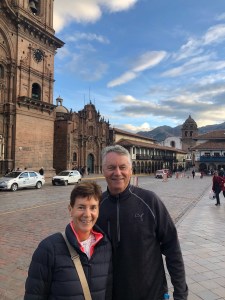
Back by air to Cusco and a chance to do a little exploring before the next phase. The streets in the centre of town are all cobblestone and the main square is very impressive. The history of Cusco stretches back thousands of years and is a major figure in the history of the Inca culture.

We attended an Inca Trail briefing and met the young lady who will guide us for four days and nights. Her experience gives me faith we will succeed.  We had a great dinner overlooking the square and wandered back to our hotel.

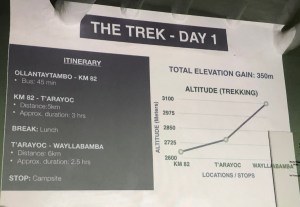
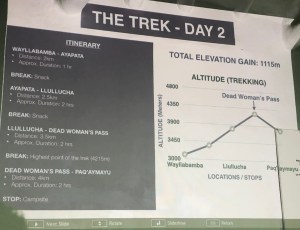
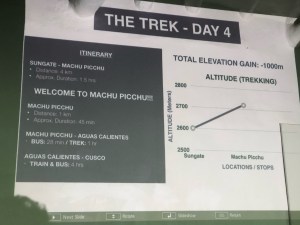
Here are the four slides showing our daily plans. We start at 8,727 feet and climb to 13,828 feet before descending into Machu Pichu four days later. Tomorrow will be an introduction to the sacred valley and two Inca village sites.

We’re off the grid for the next five days. Hopefully all of us enjoy this adventure. More to come.

The Rainforest

Day 5 – Saturday.  The damn alarm went off at 5:45 a.m. as we had to be away early to beat the heat. Ha. A short boat ride landed us in a portion of the rainforest where trails had been carved through the foliage.

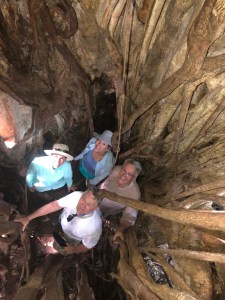
Our local guides were incredibly knowledgeable and enthusiastic and for the next two hours we examined unique tree, animal and plant species. Trees unimaginably tall and broad to the point we could stand in amongst the root system, inside the tree!
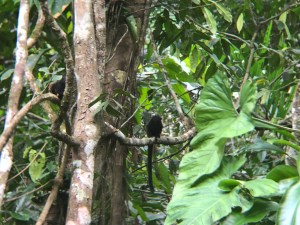
Butterflies of every colour resting on our bodies as they looked to drink the sodium in our sweat. Monkeys, birds, insects, rubber, cacao (chocolate) and ironwood trees (the preferred source or parquet flooring), you name it, it was there under a towering canopy of green that limited sunlight and therefore bush on the forest floor (hence rainforest, not jungle).

Oh, and another tarantula encounter, with this one being even bigger – about the size of a large cell phone). It flinched, I leapt. Fascinating.

Back to the camp just in time to beat a massive rainstorm that created instant rivers everywhere. All the buildings only use palm leaves as roofing materials so fingers were crossed that we stayed dry. In the Amazon there are two seasons; rainy and really rainy. We’re just in the former so I’d hate to experience the latter.

There are a few working farms in the hundreds of square miles surrounding the camp and Mo and Louise were two of six in the group who braved the weather in the afternoon to visit one nearby to learn what an eclectic and widespread number of crops it produces.  The farm works closely with the lodge and makes the latter self sustaining for fruits and vegetables.

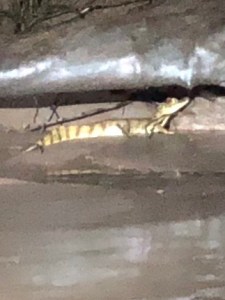
The rain didn’t let up until after dinner when our guide announced we were going on the river to search for Caimans which is a member of the alligator family. They are nocturnal and using a search light, our guide was able to pick out their reflective eyes as they floated near the shore. Fortunately the ones we saw where the smallest of the six varieties (4-5’ long) and not the black caiman which can grow to over 16’.

Back to the lodge for our final night as more rain was on the way.

Buses, Planes And Boats

Day 4 – Friday. A full day of travel awaited. Traffic, traffic and more traffic. Imagine trying to get to the airport in a city of 9M people, at rush hour using side streets because no highway exists. Oh, did I mention we were in a fairly large coach bus? Slow and occasionally unnerving given the game of traffic chicken is the norm.
Our flight actually involved a stop in Cusco before heading on to Puerto Maldonado, but not before the departure area was cleared while a bomb sniffing dog was brought in to examine a knapsack that had no apparent owner.  That meant everything was delayed and an hour spent on the tarmac waiting for takeoff given the queue.
Flying into the highlands showed the dramatic landscape changes from dry brown desert to sharply shaped mountains with hundreds of deep river valleys to finally the plateau of Cusco (800K population).

Farms abound with the wide plateau being more green than brown. Given the narrowness of the valley the airport is in the middle of the city and the landing approach was a bit unnerving with the final turn seemingly scraping the hilltops.


A quick turnaround at Cusco then back in the air to Puerto Maldonado which is very close to the Bolivian border. Rather than hills providing the plane landing talking point, this time it was the proximity of the rainforest.  A narrow strip of asphalt in a sea of green. On to a bus and off we went on a road, er no, a dusty track that bounced us around for nearly an hour before arriving at the Tambopata River which is a significant tributary of the Amazon River.

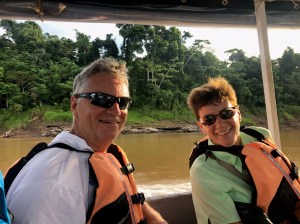
At that point the heavens opened and we had 10 minutes of monsoon type rain which pounded on the corrugated roof of the shelter we huddled under. Fortunately it stopped as quickly as it started and we set of in a motorized “canoe” for the 2 1/2 hour trek upriver.

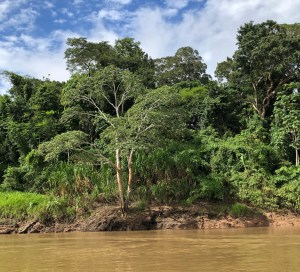
The rainforest and jungle (open areas or formerly rainforest where falling trees created open spaces that is then overgrown by dense brush) looked impenetrable on each bank.


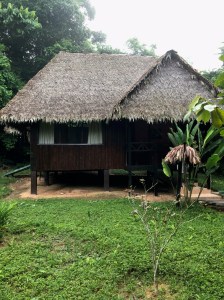
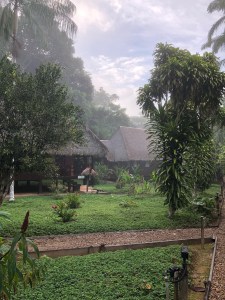
The camp (Tambopata Ecolodge) is comprised of 18 sleeping bungalows (total accommodation max 75), dining room and an under construction bar/meeting area. The main building is solar-powered for only a few hours a day with candles used for light elsewhere.  The food is hot and there are bathrooms with showers in each bedroom. It’s surprisingly comfortable.

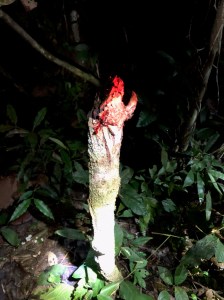
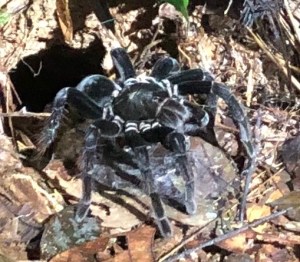
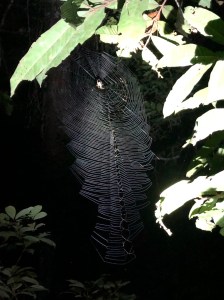
We were immediately introduced to the uniqueness of our surroundings by going on a night walk looking for insects and other nocturnal creatures – seriously. It was a success although seeing a tarantula up close was a bit off putting as was another spider described as being 20 times more poisonous than a black widow. I figured we were safe in numbers and with the various flashlights wouldn’t get lost. Mission accomplished.

Despite the oppressive heat and off the charts humidity, by late evening we were so tired it didn’t matter and thus slept relatively soundly even without the mosquito netting.

Back To Lima

Day 3 – Thursday. Our trip north was uneventful save the now familiar police stop. This one was different as it wasn’t a roadblock but a “pull over you’re speeding” attempt to secure payment. Somehow our hand gestures and calm disputing worked and we avoided the fine. PS – we weren’t actually speeding.
My initial impression of Lima did it a complete disservice. The Miraflores area is a modern, clean and vibrant section of the city. Still virtually every business and any private car parking in front of the homes is protected by steel gates and razor wire in many instances.
The Lima weather is also noteworthy. Other than late December, January and February it is rare to have a sunny day. A haze and mist clings to the city although rain is virtually unheard of (less than 3” per year).  Temperatures, both hot and cool, are bearable but it must get a little depressing.

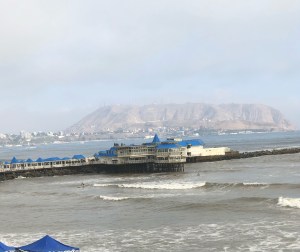
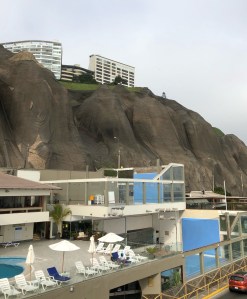
From high up on some serious cliffs Miraflores overlooks the ocean and is a world away from the airport area we experienced earlier. Here’s the reverse view

The hotel is very comfortable well staffed. Despite never having been I would equate its interior design to Havana 50 year’s ago. Unique decorations and use of old household items as bases for lamps were particularly appealing.
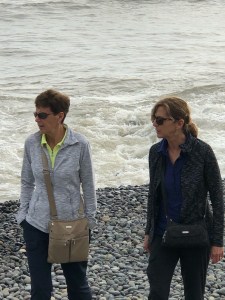
After a walk along the beachfront boardwalk,

having descended 305 steps (which of course meant we had to climb back up later – late training for Inca Trail?), we met our travel group and guide. Five Newfoudlanders, 3 Brits, 2 Americans and 6 of us from Ontario. Early reviews are quite positive although there are 3 Doug’s and 2 Louise’s.
Tomorrow is an early start as we fly to Puerto Maldonado which is our jumping off point for the Amazon segment. Although the camp (a further 2+ hours down river) offers many comforts there is no electricity so we will be off the grid until late on Sunday. Having had the warning do’s and don’t’s explained I should say hopefully we’ll be back Sunday.

Day 2 – Lows And Highs

Shades of a year ago (Cairo’s call to prayer sirens) our sleep was undone by the local populace celebrating May 1st Workers Day by exploding canon fireworks at 6:15 a.m. so it was up and at’m.  A very pleasant breakfast outdoors by the pool of the Las Dunas resort fortified us for a crazy day to follow.

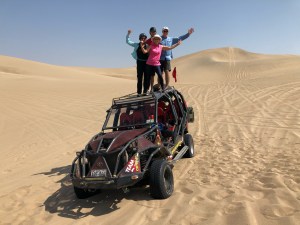
The “low” was our personal proximity to the sand dunes as we threw caution to the wind and set off in a dune buggy driven a man who had obviously been an aerobatic pilot in a previous life. His mission was, apparently, to scare the crap out of his passengers by racing up, over, across and down giant dunes hundreds of feet high. Mission nearly accomplished.  We survived!

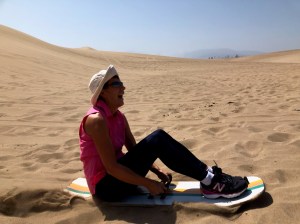
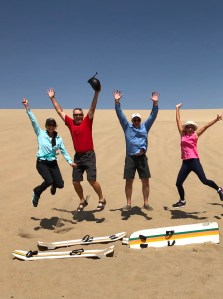
Then, if that wasn’t enough we slid down the dunes on special boards designed to ensure sand found its way into virtually every nook and cranny of our bodies. Mo especially, based on the screams, enjoyed herself.


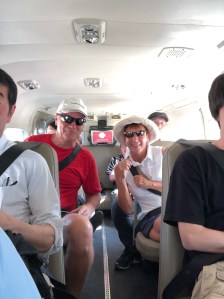
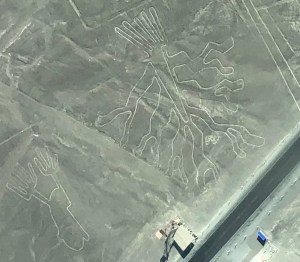
Now most people would call it a day but nooooo, it was off to the local aerodrome to fly (the High) over the Nazca Lines. The origin of these ancient figures (circa 400 AD) in the desert has been debated for nearly a hundred years without a resolution. Our flight in a small 12 person Cessna took us south over the Ica valley.


Ica holds the distinction of having virtually no rainfall (~2mm/yr) yet boasts a thriving agricultural industry using a giant aquifer that is fed by the glacial melt occurring in the Andes mountains to the east. As with many other global areas, water consumption is exceeding replenishment but for now it’s a glaring example of man pushing back the desert to cultivate crops.

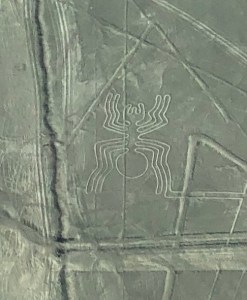
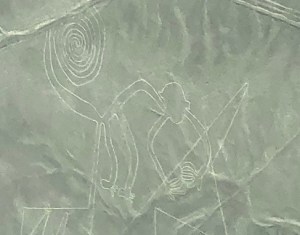
Seen from the air the Nazca lines form different figures and symbols. On the ground, however, they are not distinguishable given they are actually rocks removed from the surface, not rocks added. Sooooo, how were they created, especially since one depicts an astronaut? These are but a small sample.

In order to provide the best viewing and picture taking angles our pilot did a number of hard banks including one that touched 60 degrees. Just what our stomachs needed following our morning adventures. Then it was back to Ica with one last chance to marvel at Mother Natures ability to produce a stunning vista.

Back to Lima tomorrow (6 hour drive) where we will meet the other members of our G Adventure tour.  Whew.

Peru – A Tale of Opposites

Our first day in Peru was a tale of opposites. Lima, a chaotic mass of 9M inhabitants, offers the craziness of free for all traffic on roads full of massive potholes. Unfinished buildings abound (apparently that’s a tax advantage) and the sanitation department is obviously underfunded. Once we got on to the highway heading south, the world changed. Total desolation with miles of sandstone brown desert stretching to the horizon. For three days prior to joining the tour group we’re travelling with Doug & Louise Pegg, who have been great friends for decades.

Our trip south to the desert was interrupted twice by police roadblocks. The first got a little testy when a fine for not having the headlights on (on a divided highway in the blazing midday sun!) was threatened. After a bit of pushback (thanks Google translator) we were “released”, wallets intact. The second stop was more amiable and after a quick documents check we continued. The terrain is incredibly rugged yet full of partially completed or proposed developments that appear abandoned. Great beaches stood completely empty. At times I was reminded of the Nile valley as the limited agricultural swath was very narrow and ended sharply at the edge of the desert. It’s a harsh environment with a tiny population, very unlike the capital. We lunched in Paracas which is described as the Oregon coast without the trees, grass or people. Given it is late Autumn here the tourists have left and the calmness versus Lima was dramatic.


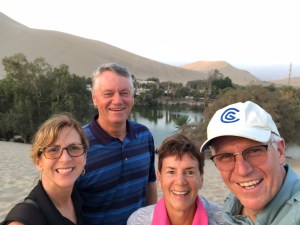
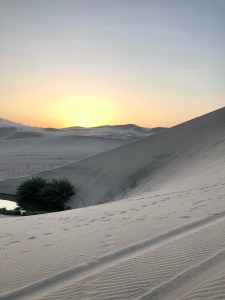
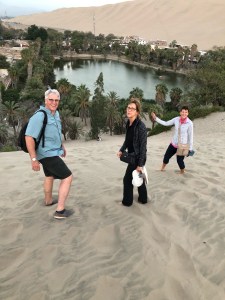
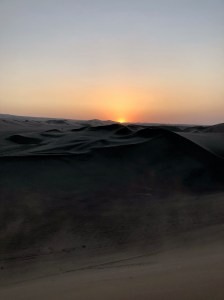
On to Ica and a lovely modern resort before exploring the Huacachina oasis and sand dunes 10 Kms away. The dunes are staggeringly large and stretch for miles. Climbing part way up one ridge line was challenging enough. We’re planning to return tomorrow to go sand boarding and taking a dune buggy ride.  Fortunately we caught the sunset to end our day.

A great day one.

Amazon-Andes-Inca Trail

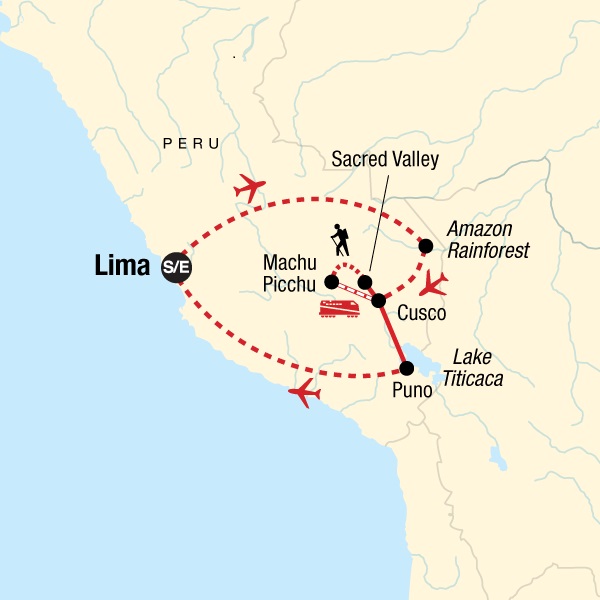
We’re at it again with an adventure trip that will take us from Lima, Peru to the Amazon basin then back into the Andes and Lake Titicaca before ‘enduring’ a four day hike on the Inca Trail culminating in Machu Picchu.  Come along for the ride (and walk, boat, canoe, plane, sandboard and who knows what) as we explore the unique combination of hot, humid rainforests along the majestic Amazon River, the world’s highest freshwater lake and mountain top altitudes approaching 14,000 feet.

Peru Trip Map

Islamic – Coptic Cairo

Ha! This time we beat the early morning call to prayer as the alarm went off at 3:15 a.m. Such craziness was necessary to catch the 5:20 a.m. flight back to Cairo. I guess someone’s logic was we would beat the traffic by arriving so early. Not!

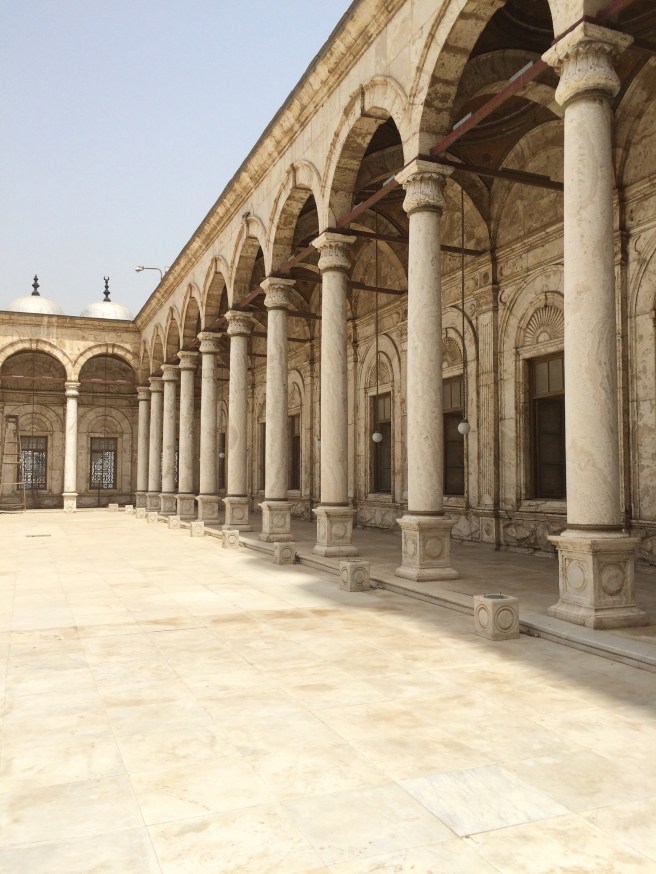
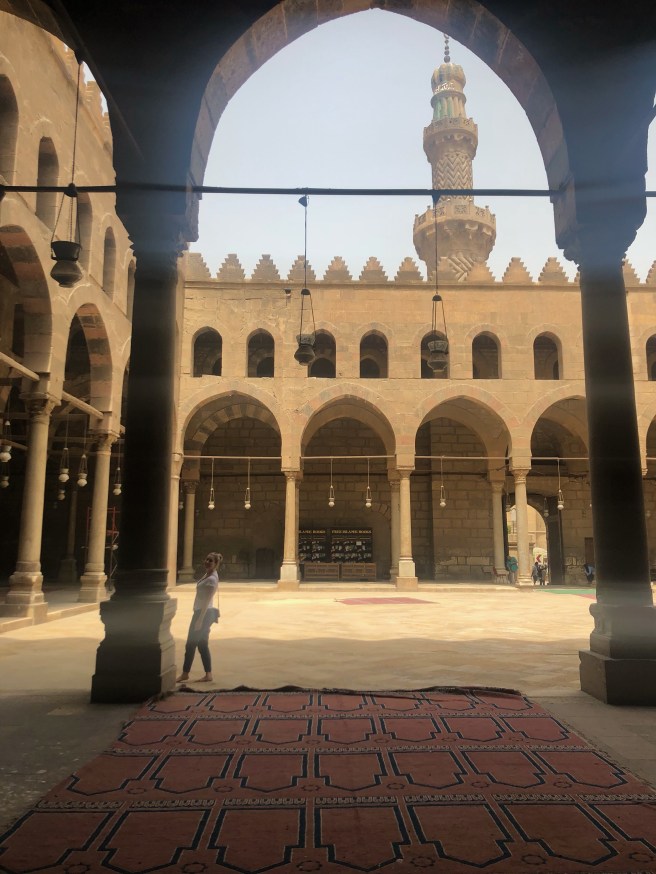
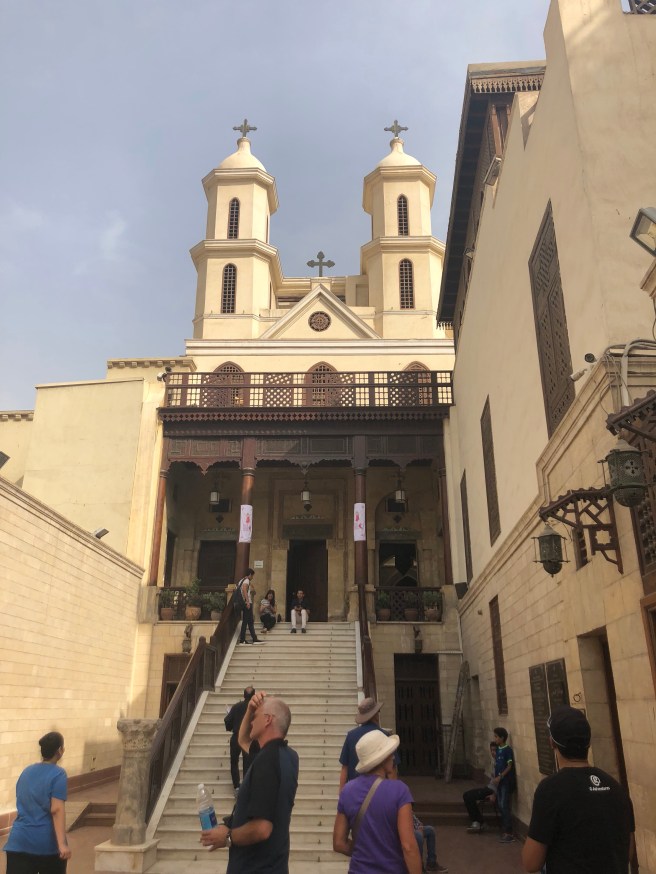
Another history lesson for us all today as we toured a variety of mosques and churches (and a synagogue for good measure – not in use and was originally a church). Coptic Christianity emerged as the dominant faith as the Romans changed their religious ways in the 4th century AD. Coptic simply means Egyptian so a Coptic Christian is a Christian from Egypt. Today, numerous Coptic Christian churches exist around the world to serve the Egyptian diaspora. Numerous historical churches remain in a section of Cairo providing a glimpse into the architecture and decor of that time. The conquest of Egypt by the Muslims in the mid 7th century brought the rapid building of mosques which acted as schools (madras) as well as places to worship. As in Pharaonic times, it was a case of build bigger and taller than ones predecessor. There are now approximately 10,000 mosques in Cairo alone. Fortunately we only toured three.

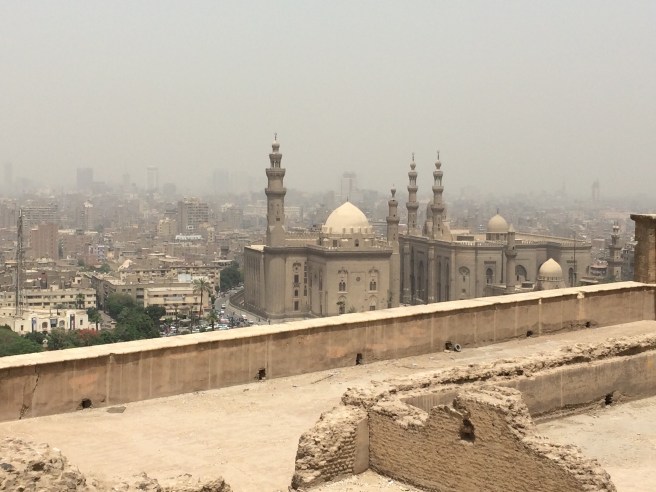
Side by side mosques with the mid morning smog, dust and haze over Cairo.

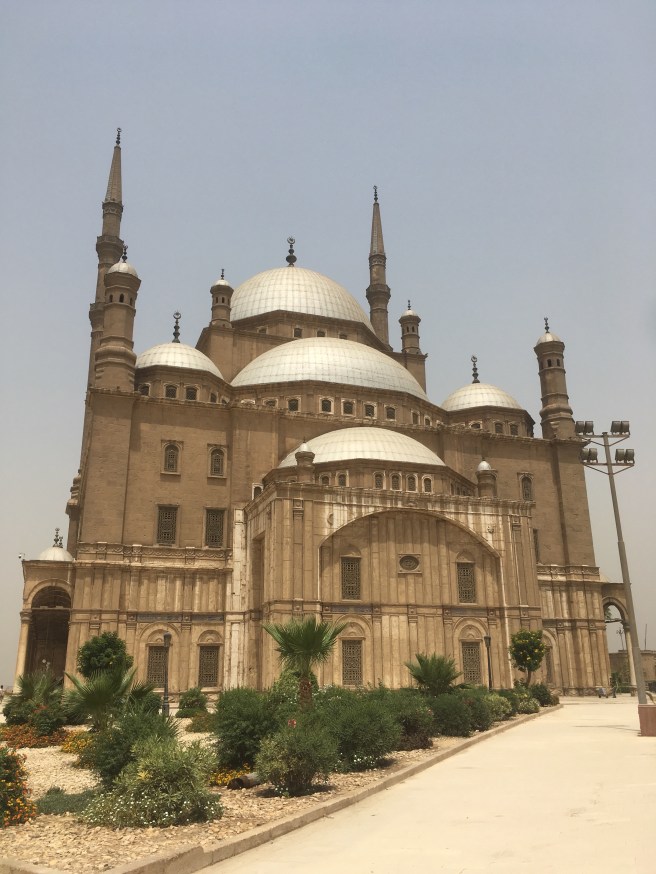
Shoes off, ladies heads covered, we admired huge domed ceilings, stained glass windows, carvings, tombs and wall paint that provided an impressive vista.

The churches by comparison were modest and ‘traditional’ in layout and decor. One was actually built on top of the columns of a Roman temple which can be seen through glass inserts in the floor. Neat.

We squeezed in a 45 minute exploration of the city’s main bazaar but by 4 pm the group’s energy reserves were done. Back into the traffic one last time (save a late night trip to the airport) to grab some rest at the hotel. The Bennett/Blanda/Benneter gang is on a flight out at 1:45 a.m. I mean, who schedules this stuff?

We’ve said so long to the others with some loose plans to cross paths in the future as new travel adventures emerge. For now it’s time to reflect on this trip back in time like no other.

Karnak Temple

A truly decadent 9:30 a.m. start for a 10 minute bus ride start to our day seemed almost boring (we are going to pay for it in tomorrow’s schedule!). Covering 40,000 sq. metres (~10 acres) Karnak Temple is the largest such complex in Egypt. Construction of temples started in the Middle Kingdom (~2100 BC) and continued through to Roman times (~250 AD). Approximately thirty pharaohs contributed to the buildings, enabling it to reach a size, complexity, and diversity not seen elsewhere. A very early case of not only keep up with the Jones but outbuild them and in some instances, build over what came before you.

After the colour and vibrancy of yesterdays tombs it was a return to the dusty (and stupid hot) outdoor environment but still there were special pieces of architecture that one must marvel at remembering when it was built and the equipment, or lack thereof.

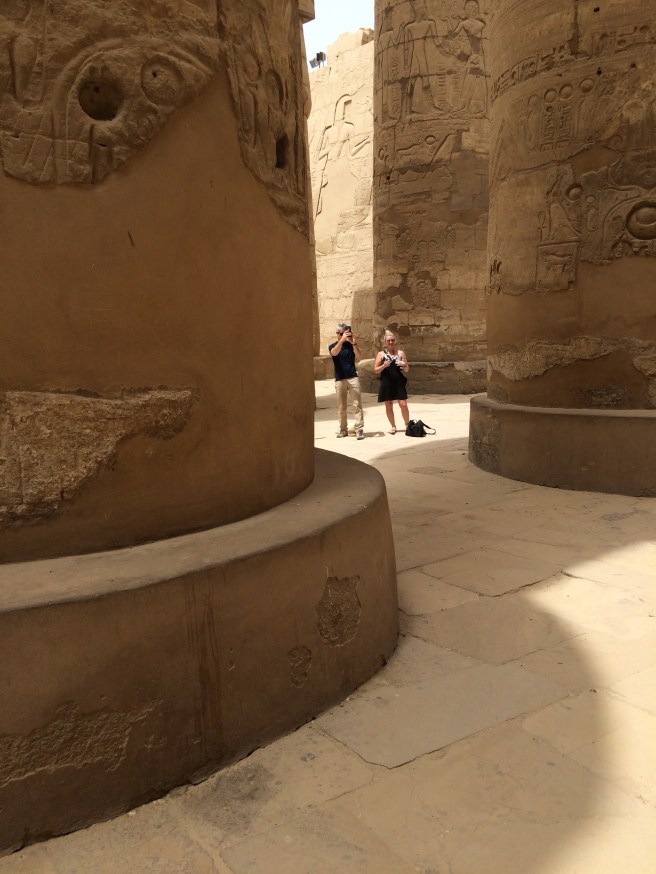
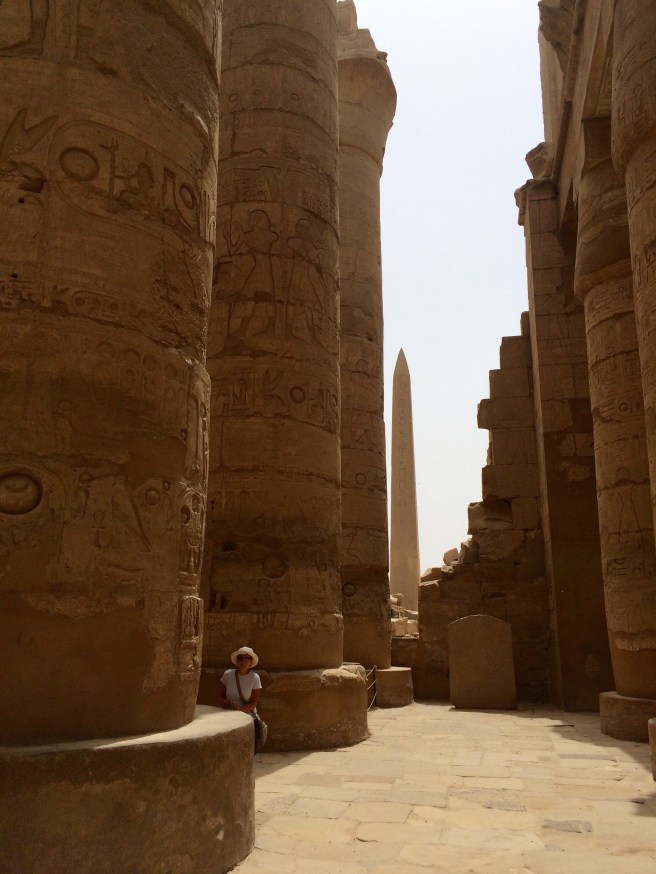
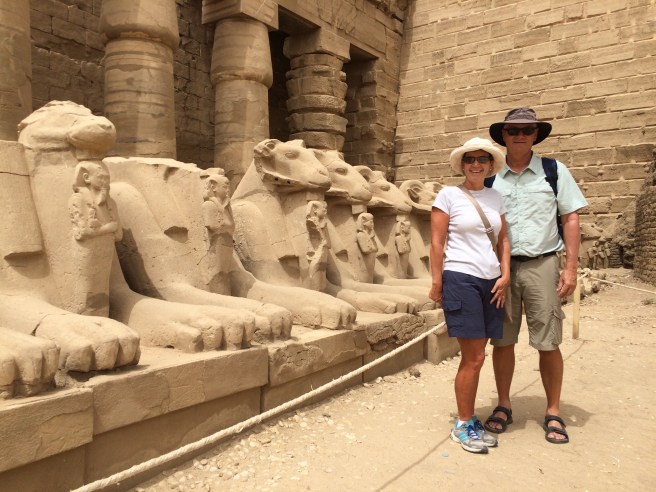
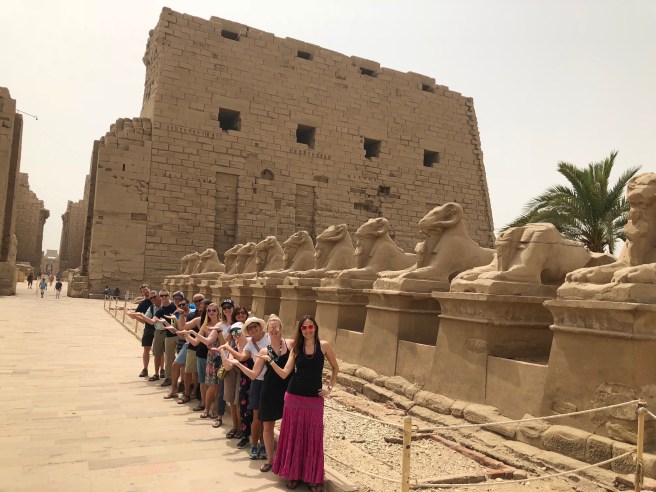
The most interesting sections were the Hypostyle Hall with its 134 columns, the obelisk and avenue of Sphinx, albeit in this case, with a rams head. The columns were massive to say the least.

One last group shot.

A great lunch in Luxor then back to the hotel for pool time because tomorrow is a long, long day back in Cairo before heading home.