Abu Simbel

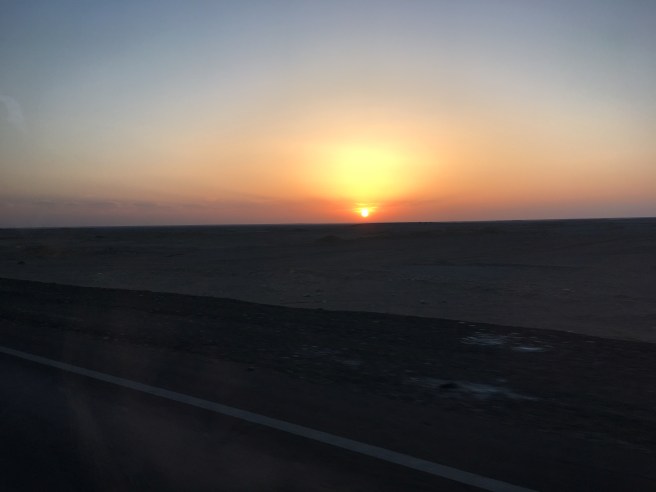
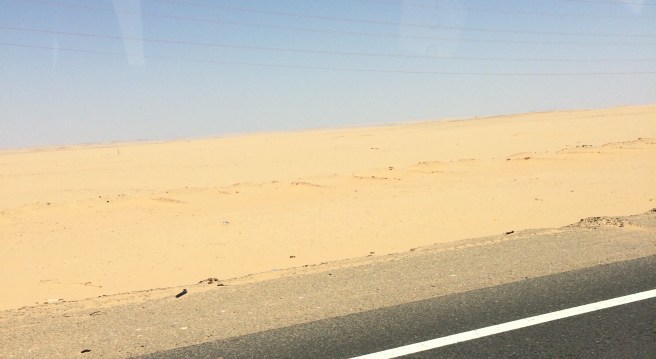
Uggggh. The alarm went off at 3:45 a.m. in order that the bus was loaded and in the convey line for the 280 km drive to Abu Simbel by 5. We head due south from Aswan across what one thinks of as ‘the desert’. Nothing but sand as far as the eye could see in all directions. Simply a ribbon of black asphalt stretching to the horizon. At least our early start allowed us to enjoy a brilliant sunrise.
The concept of a bus convey is for security reasons given Abu Simbel is near the Sudan border and an incident from a few years ago targeting a tour bus has not been forgotten. The convey’s value was lost in the first 25 kms as soon there were no other vehicles in sight.
Abu Simbel is the site of the famous Ramses II temple and the adjacent temple of Hathor, honouring his favourite wife Nefertari (not Nefretiti who was married to another of the Ramses’ clan). What makes these sites extra special is the fact they were dismantled in the 1960’s and moved to accommodate the creation of Lake Nasser which resulted from the construction of the High Dam at Aswan. Had they not been relocated the temples would be 200 m under water. The on-site museum showed a series of story boards describing the challenges of the reconstruction which included building two new ‘mountains’ into which the temples were placed. Amazing stuff.

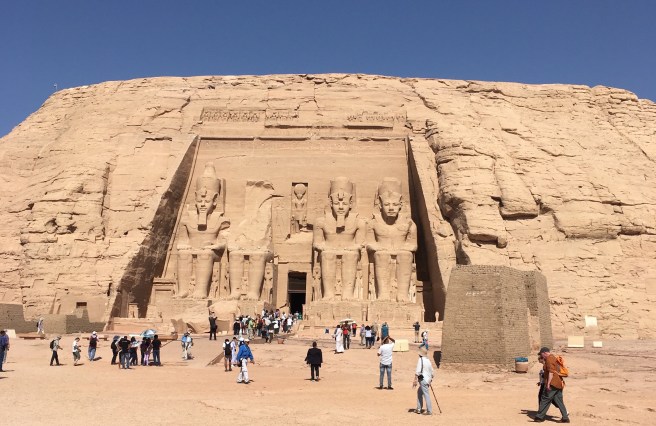
The interiors of each temple are festooned with now recognizable stories of different gods and the offerings made to them. While certainly not conversant in hieroglyphics, after five days of “lessons” we are able to string together different symbols in the carvings to make some semblance of a story.

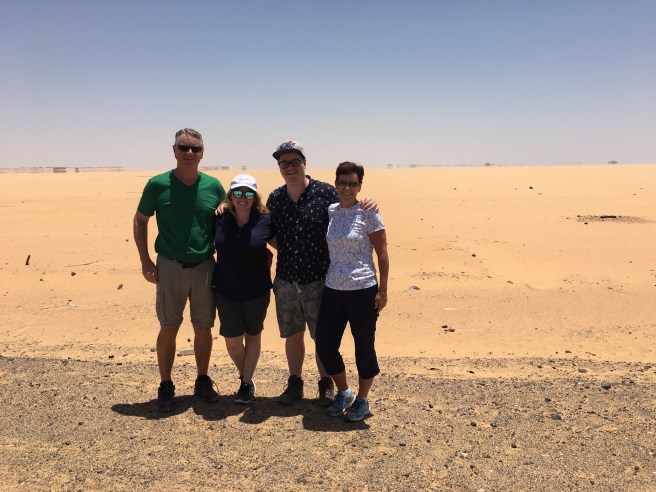
After a relatively short visit it was back on the bus and back into the desert for three hours to return to Aswan before the true heat of the day arrived. HA! Part way home we stopped at the one facility out there and saw mirages swirling across the sand. Unimaginable to think of crossing the desert in anything other than an air conditioned vehicle.
Now ensconced on our cruise boat for the next three days we can finally unpack and enjoy the tranquility of the Nile itself (although rumour has it there’s a belly dancing exhibition tonight with likely participation from the audience – hmmmm).
Aswan

A very early wake up at 5a.m. to catch the 90 minute flight to Aswan. We are now in Upper Egypt which is a bit confusing because on a map it should be lower Egypt given we are near the southern border. Of course the Nile dictates everything and we are nearer the headwaters than Cairo/Alexandria, hence, Upper. Trivia – the Nile flows through nine countries with Egypt being the final one.

Modern Aswan is notable because of two dams on the Nile. The first, British built in 1902, proved insufficient for controlling the annual river flooding. The High dam, built by the Russians (1960 – 70), has proven successful with the unintended side effect that the mineral rich sediment usually washed north is no longer available to the detriment of the agriculture industry.

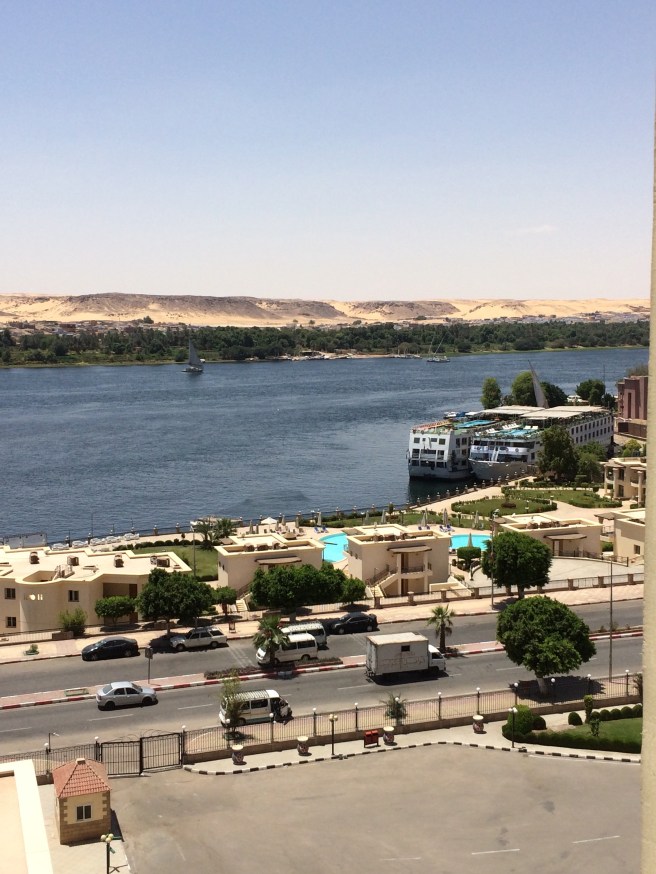
We are ensconced in a very nice hotel overlooking the Nile.

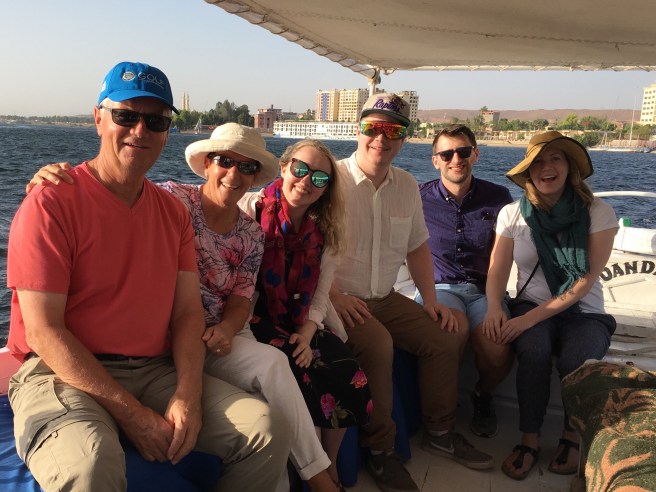
After a few hours lounging by the pool we climbed aboard a felucca for a sail around Elephantine Island. Very idyllic, even more so given the chaos of Cairo earlier in the day.

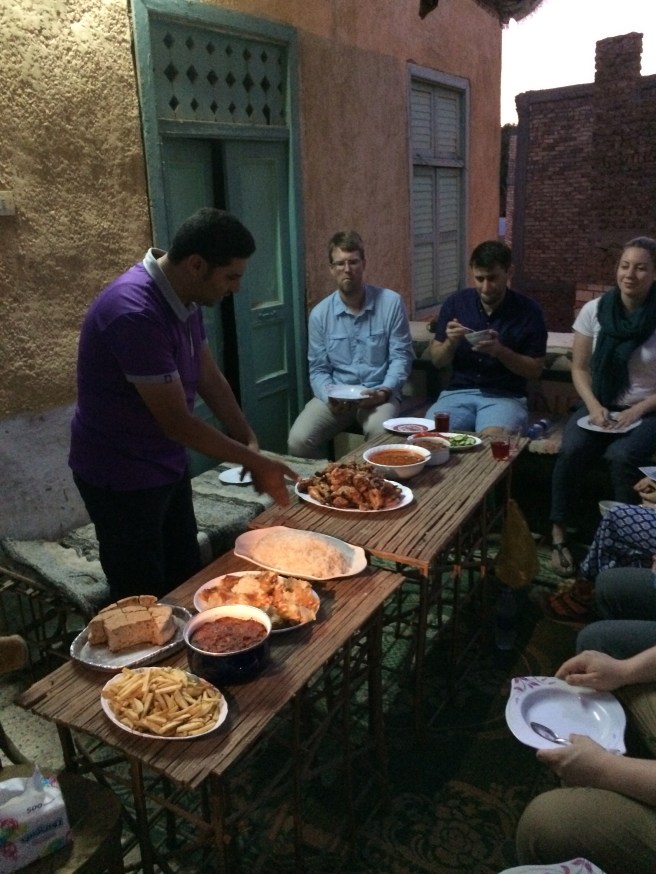
Coming ashore on the island we were guided through incredibly narrow, twisting paths that are effectively, the streets in that neighbourhood. We were hosted in a local home and had a group dinner in the open air on one of the houses many roof tops.

Back by motor boat in the dark to our hotel and an early night given our planned 4 a.m. start to Abu Simbel near the Sudan boarder tomorrow. Back to Egyptian antiquities and Ramses II.

Security

The very idea of visiting Egypt meant weighing what one thought about individual safety while in the country. Since the killing of 58 foreigners in 1997 at Hatshepsut Temple in the Valley of Kings at Luxor, the Egyptian tourism industry has been challenged. It’s cause was not helped when the 2011 revolution that eventually lead to the removal of Hosni Mubarak as president resulted in hundreds of Egyptian deaths. Given the critical role tourism plays in generating revenues the government takes security very seriously. There are police everywhere and for every one you see in uniform, there are others in plainclothes nearby. Formal and informal checkpoints are numerous and every building of consequence, including the hotels we are using, has restricted access and metal detectors. The tour company must file a detailed schedule with the tourism police and adhere to it.

This oversight was brought front and centre when a plainclothes officer came onto our small bus for the ride to Alexandria. Then when we were running late to visit the library a police car with full lights flashing and siren wailing took up escort duty. The officer hovered nearby every time we alighted from the bus and never seemed to lose his focus. He rode with us back to Cairo and only left the group when we were delivered to the hotel at the end of the day. This attentiveness, however, seems to end when the group disperses. Individuals or couples are left to their own safety management which as in most places starts with using common sense on where and when to go.

Having said all that and despite the very visible safeguards that exist for “us”, there isn’t a feeling of fear or uncertainty. The locals are extremely friendly and inevitably say ‘Canada Dry’ when they learn where we hail from. We’ve wandered at night without escorts and never felt threatened. In the end, we’re all safe and sound.

it will be interesting to see how/if things change in the south where the population is much smaller and the tourist sites are in non urban areas.

Cairo Museum

Back in the van/bus for a ‘quick’ 3.5 hours drive from Alexandria to Cairo to the national museum. What greeted us was a binary experience. The world’s greatest collection of Egyptian artifacts were presented in a manner and in a facility that completely diminished the pre visit excitement. The museum was constructed in 1904 by the French and doesn’t appear to have had any updates with only limited investment since. Magnificent items, centuries old, were strewn here and there without descriptions. Small cards produced on a typewriter decades ago were attached on limited displays. Very low lightning levels and many, many of ‘the same’ added to the frustration.

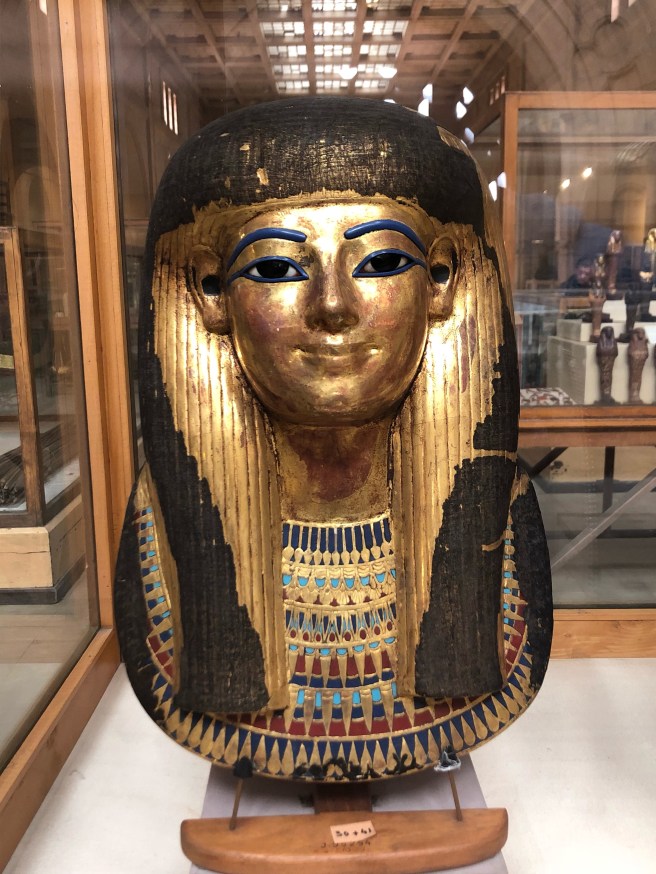
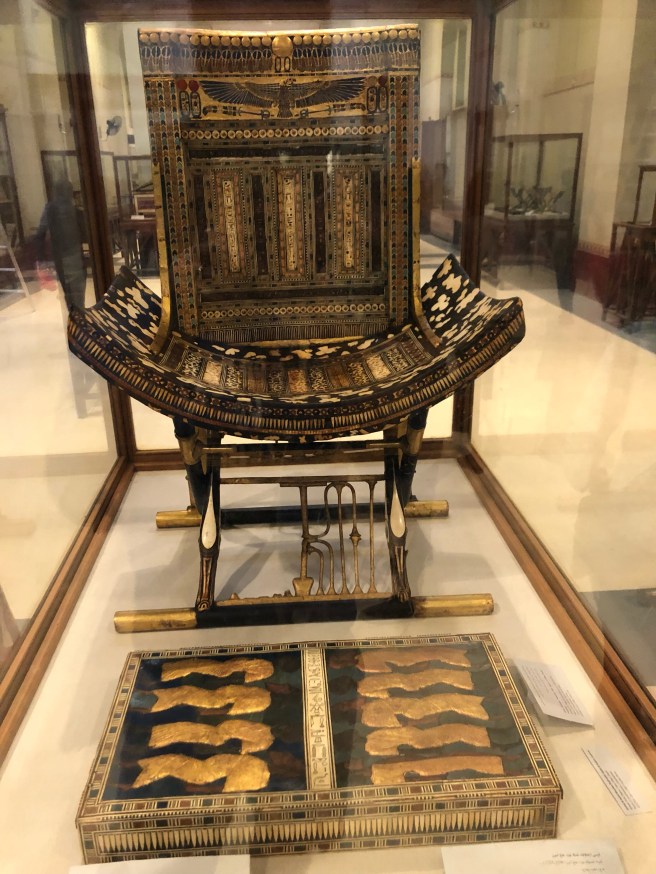
Notwithstanding these gripes there were some truly memorable items on show, highlighted of course, by the extensive collection recovered from King Tutankhamen’s tomb by Howard Carter in 1923. More than 5,000 different pieces were retrieved and a huge portion are on display. Unfortunately photos of the key items such as the coffins and gold burial mask are banned.

Other wings were devoted to the Old, Middle and New Kingdoms’ pharaohs with sarcophagus’, tomb art, statues and the like. Numerous alabaster pieces, golden jewellery, carvings and more filled the place. A bit overwhelming in fact, trying to keep the kings, dynasty’s and Capital locations in order. Mummies are obviously part of this history and a special room had a number on display but again, no information about the how and why of the process.

In fairness to the museum and those in charge, a massive new building is being constructed in Giza on the west side of the Nile albeit it is two years behind schedule. One hopes when it opens the modern application of different technologies and display methods will allow future visitors to truly absorb and appreciate the unmatched history before them.

A fairly quick lunch of Koshary, a pasta, rice, bean (and other stuff, I think) mixture that provided bulk without much flavour then back to the hotel by the pyramids for an an extended session of free time. Tomorrow brings a 5 a.m. start as we fly south to Aswan and the upper Nile.

Our Group

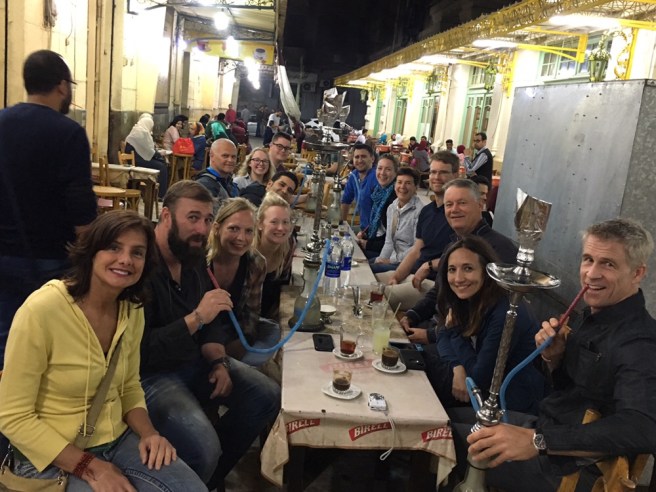
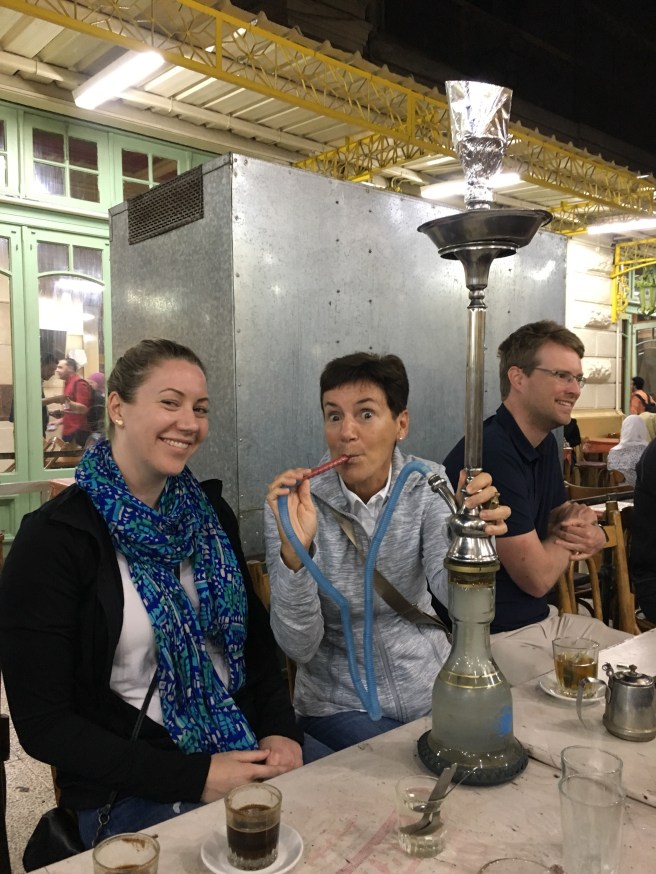
We have landed in a group of very experienced tour takers. Of the 14 of us, there are five Americans, eight Canadians and one Norwegian (who was adopted by some of the Americans on another G Adventure trip). All quite young, full of energy and travel stories. They have extended our desire to go to many more places! Tonight we went to a Cafe to try shisha. Lots of laughter.

Alexandria

The first of the calls to prayer siren went off at 3:30 a.m. Really?! Our day, in turn, started with a tour of the catacombs of Kom ash-Shuqqafa from the 2nd century AD. It was an interesting reminder of the ceremonies surrounding the celebrations associated with a death and subsequent visiting by the family to the resting place.

Then it was off to Pompey’s Pillar which included descending in the dusty, dark underground of what had been the second largest library in Alexandria. Here we encountered our first contact with large groups of visitors from China. (Tourism in Egypt has been decimated in recent years – from 12M annually to just over 1M – due to real and perceived threats of violence. China is the source now of the majority of those visitors). The pillar itself is front by two ‘small’ Sphinx which, of course, presented the perfect family photo op.

The ancient library of Alexandria is long gone but it’s modern replacement is quite stunning. We were guided through parts of the facility and wowed by its technology applications for examining ancient artifacts. Numerous museums also exist within the facility that added to our knowledge of the city’s history, some famous artists and the peace accord with Israel that eventually cost the Egyptian president Anwar Sadat his life.

Lunch along the ocean at a bustling fish market meant point and choose from the display cases of fresh fish and seafood from, likely, right off the dock downstairs. Most went for piles of shrimp including Mo who obviously enjoyed every bite.

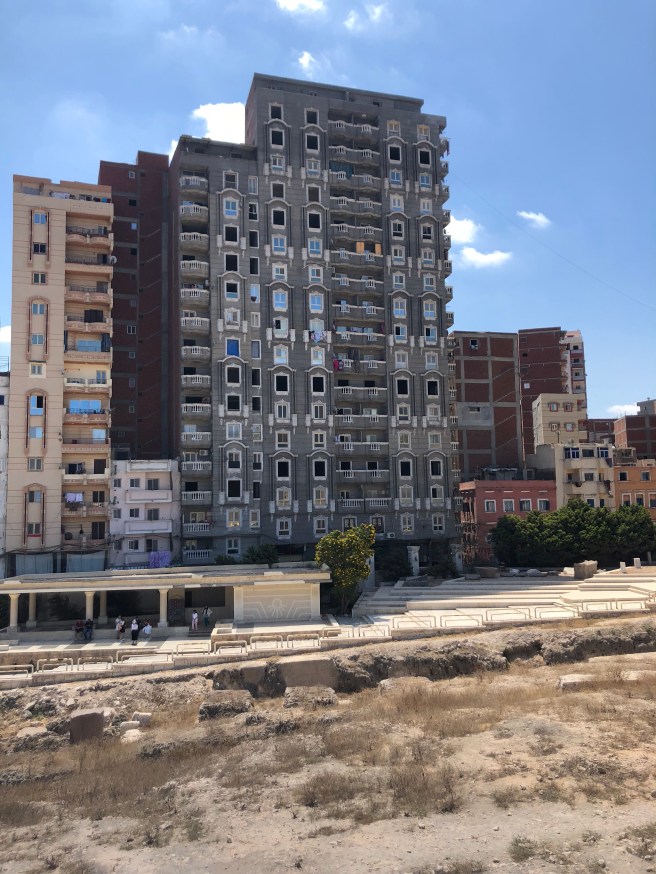
Sharie el Corniche, the main seaside boulevard along the harbour is fronted by what were undoubtedly upscale, desirable buildings pre revolution (ie before 1952). While still architectural attractive that area now is shabby and somewhat rundown. Property development and occupancy include a process not found in North America. A base building is constructed and as units are sold the occupants must complete the buildout including installation of windows, doors, all interior fitouts etc. This means any given building looks half finished as unoccupied units remain open to the elements. It makes for a bizarre look to say the least.

The day’s tour took us along the waterfront to the site of the Pharos lighthouse, one of the seven wonders of the ancient world. Now occupied by a massive fort one can only imagine what existed centuries ago.

Back to Cairo tomorrow which means an early start and a long bus ride.

Pyramids & Camels

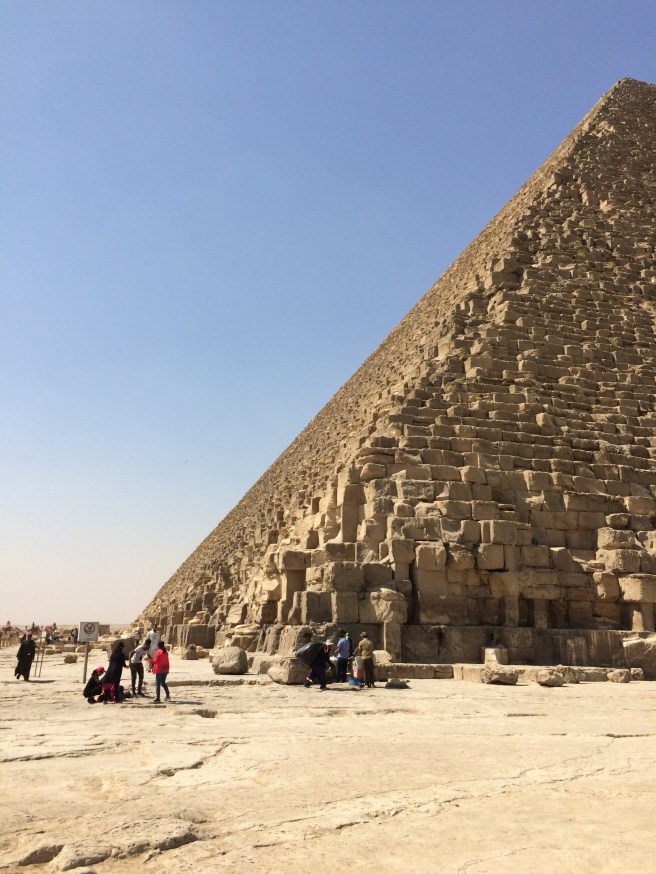
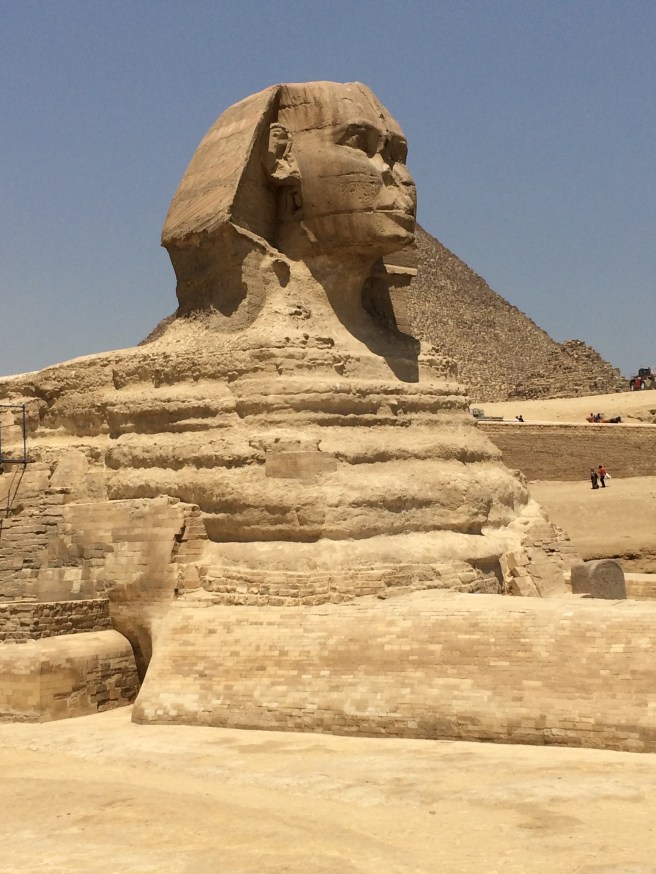
A quick bus ride this morning took us to the base of the Khufu or Great Pyramid. Simply amazing. Whether you believe anything about it’s mystical origin or not, the sheer size and complexity of the stonework is awe inspiring. The Giza plateau contains 3 massive pyramids for kings as well as other smaller versions.  King Khafre also constructed the nearby Sphinx.  Although impressive it is actually smaller than pictures portray.

026B6499-A200-4645-A633-1B6BD78880BCEC382748-97BA-4A29-BF1A-303E3D6C4566

DDCE28E1-786F-4060-A5D6-61CE0A2E0350.jpeg

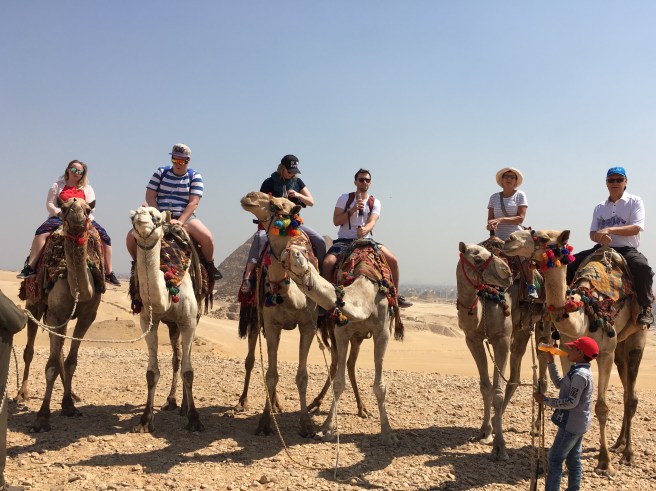
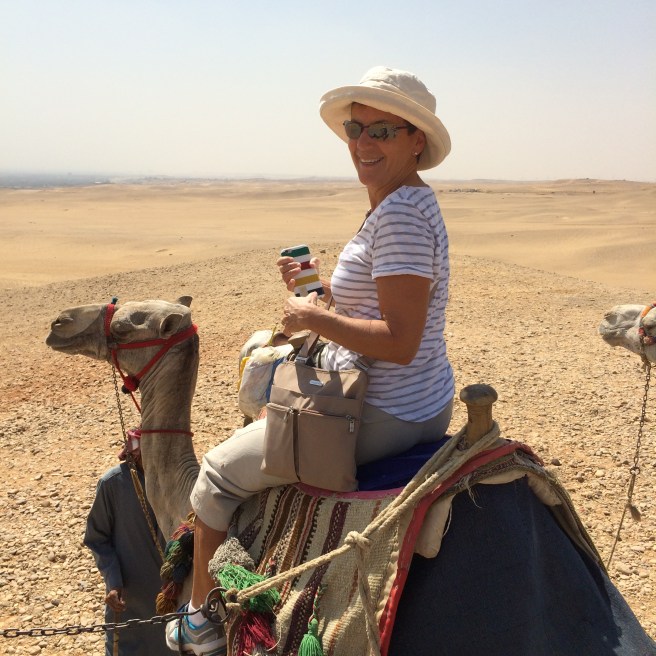
We followed up by riding camels a short distance into the dessert to create some fun photos.

F8248130-1F2A-450D-ADE3-E6BE697617A5.jpeg0B09A126-085A-49B8-B643-B8AA38916B2ABack on the bus to a papyrus making gallery. Very interesting and another history lesson to boot. Our long (3.5 hr) drive north to Alexandria included a stop at a Coptic Christian monestery where one of the monks took us through its 1600 year history.  Finally into Alexandria on the Mediterranean. Much cleaner than Cairo, brightly lit shopping areas and still the crazy drivers. Dinner on the street wrapped up another full day.
CF890E00-863C-474B-8F45-93ED707C8B30.jpeg

Made It!

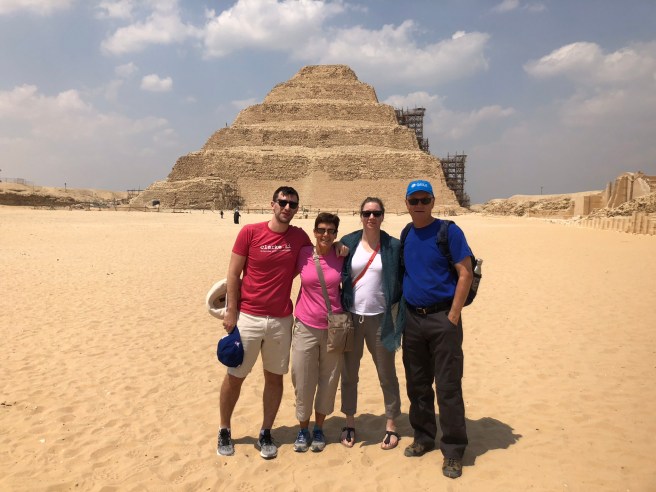
10 1/2 hours in the air turned out to be not so bad after all notwithstanding a few wailing babies and a surprising amount of modest turbulence.  Cairo airport is in the desert and I do mean truly in the desert. To the east is…..nothing. To the west, 40 million residents of the city. Our G Adventures local rep shepparded us through getting a visa and customs. Finally on the road through the city to our hotel, which, it turns out, literally looks out at the Giza Plain and the world famous pyramids.  First impression of Cairo is fairly harsh. Massive amounts of seemingly derelict buildings, garbage piled along the streets, wild dogs roaming about, and tons of rubble apparently abandoned. Everything one might have read or heard about Cairo traffic is true. Total, absolute chaos which somehow works. No lanes, no lights, no stop signs, no give.  The fact virtually every vehicle bears the scars of one or more other transport is reflective of the driving style. Oh, and the wandering pedestrians are simply slower moving targets. A desperately needed 3 1/2 hours of sleep later we met our guide, Michael, who will be with us for the entire trip.  As we four (Mo, Mark, Allie & Sean) were the only tour members here early we chose an optional trip to Saraqqah and Memphis, both about 40 minutes south of the city. The former is the site of Egypt’s earliest pyramid and the latter the original capital (3100 BC) of the Old Kingdom. A great small sample of what lies ahead including I mpressive story telling wall carvings, a lesson in reading a cartouche (look it up),  marveling at the statue carvings and our first appreciation that you can’t drink enough bottled water given the heat and dust. Back to the hotel late afternoon where we met the rest of the group for an itinerary review after which we all trooped to a local restaurant. Long day to say the least.
5A2C0FAC-D9DC-4BDF-A750-3AE1BFF600AD

Trip Overview

We’re off to one of the world’s largest sand traps.

Van, bus, camel, plane, cruise boat, donkey, felucca and foot are the various of modes of transportation awaiting us in the next 12 days.  (Unfortunately the hot air balloon trip over the Valley of Kings near Luxor was cancelled).  Looking forward to a completely novel holiday versus trips past and we’ll post some updates and photos as time, energy and the internet permit.

Egypt Travel Map