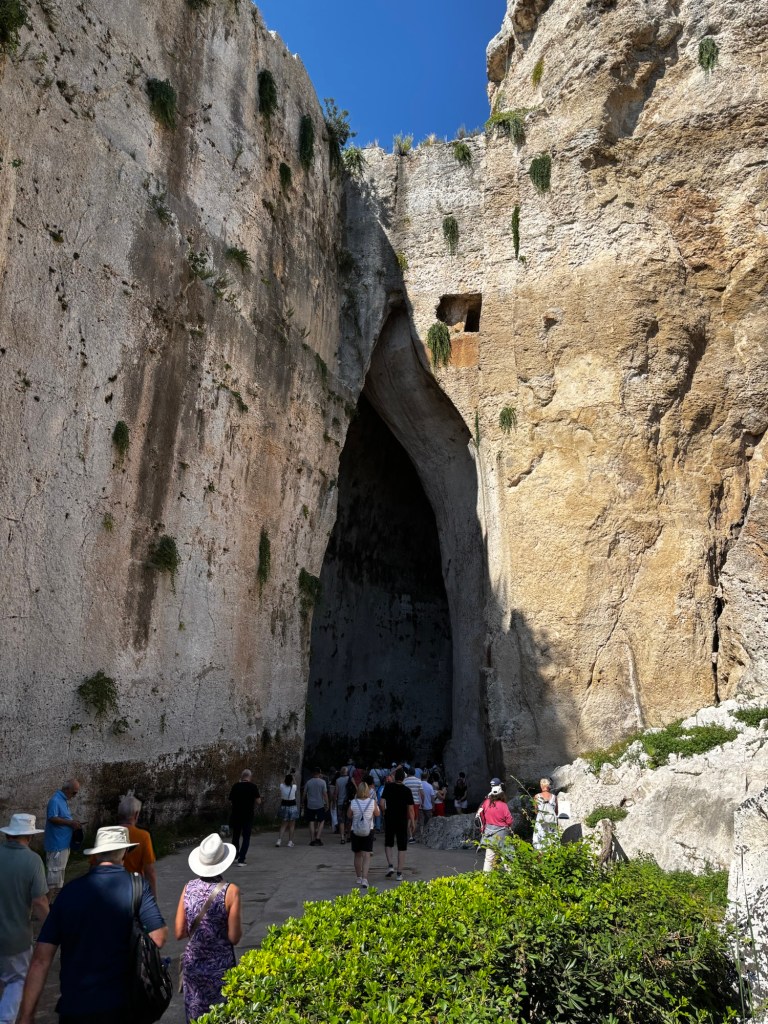
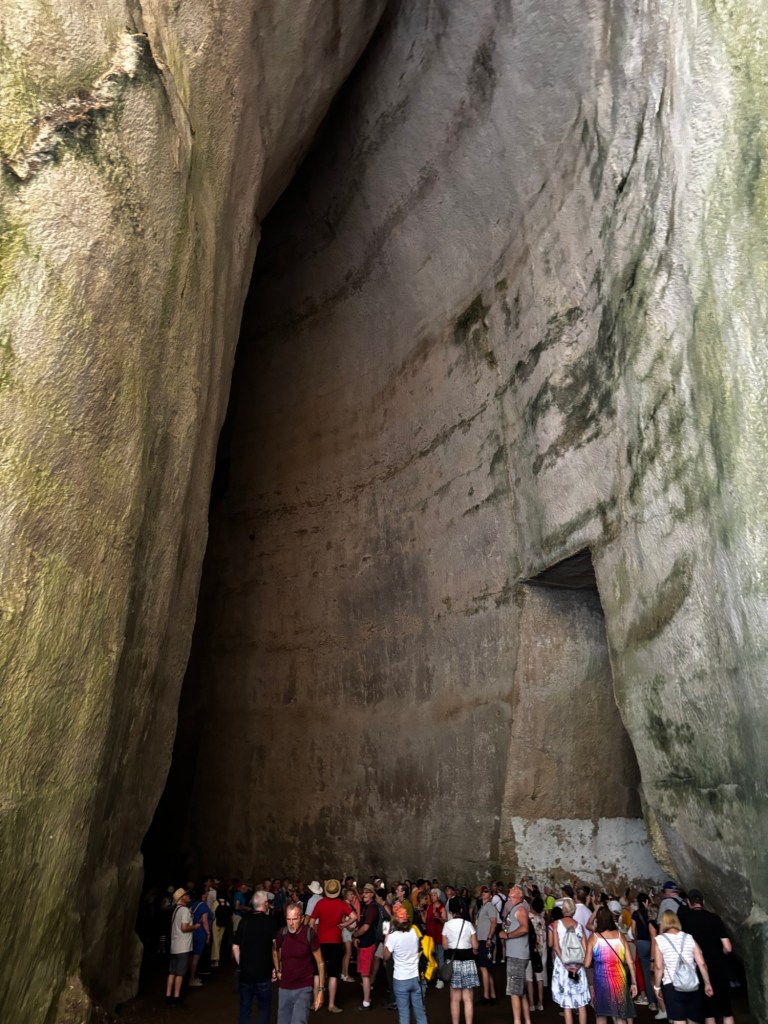
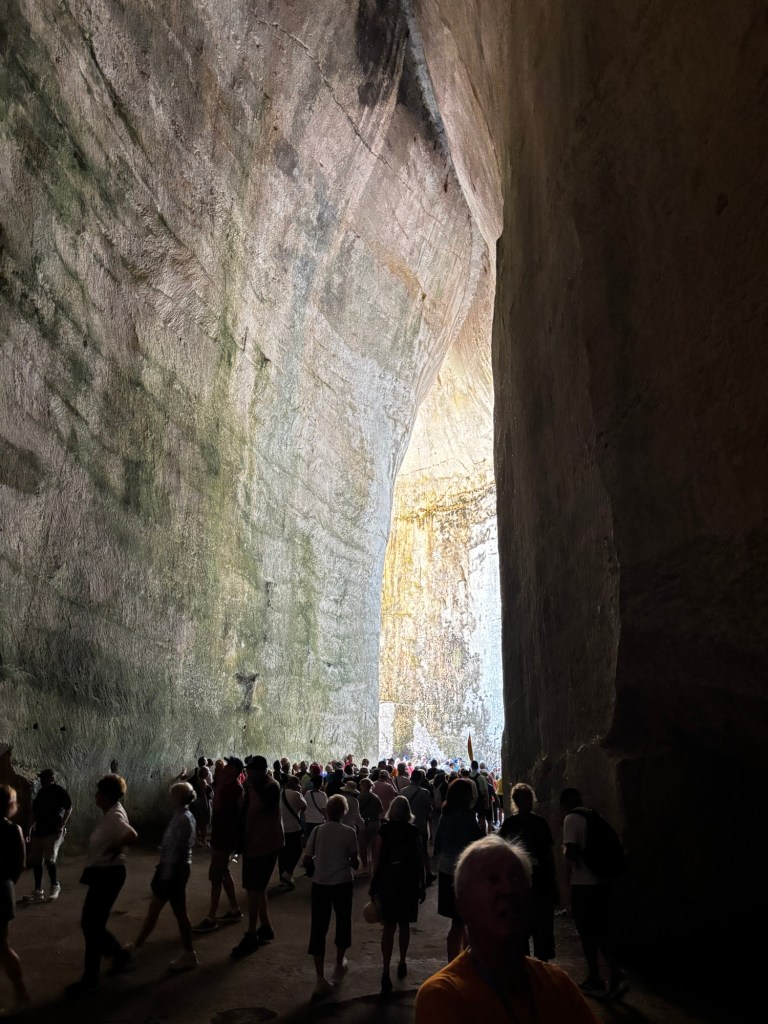
Before leaving the Syracuse area we stopped at the Neapolis Archaeological Park , site of ancient Roman and Greek ruins. A UNESCO world heritage site it contains a Greek theater, Roman amphitheater, ancient stone quarries, the symbolic ear of Dionysus and altar of Hieron.
The Roman amphitheater, site of gladiator battles, has monumental dimensions, measuring around 140 metres (460 ft) in length and 119 metres (390 ft) in width with a capacity of 15,000 spectators. Its design resembles a modern day sports stadium replete with different access points, seating levels, VIP sections, a second deck (long since dismantled) and so on.
(If viewing on a phone or tablet tap on a photo to see the full image).
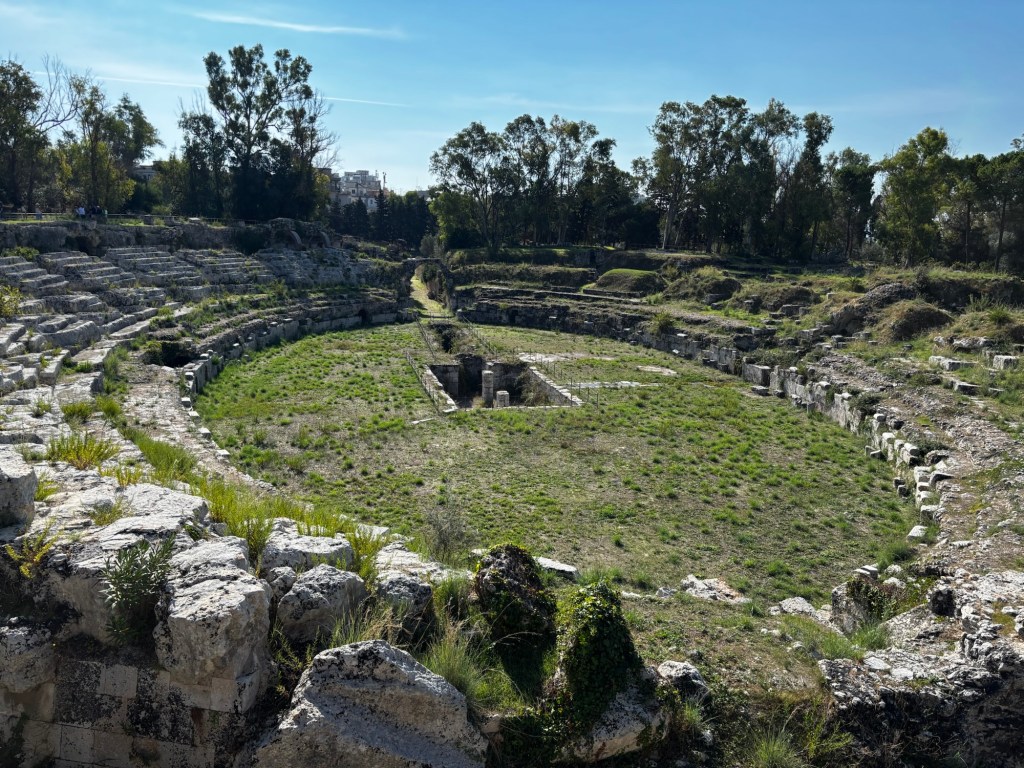
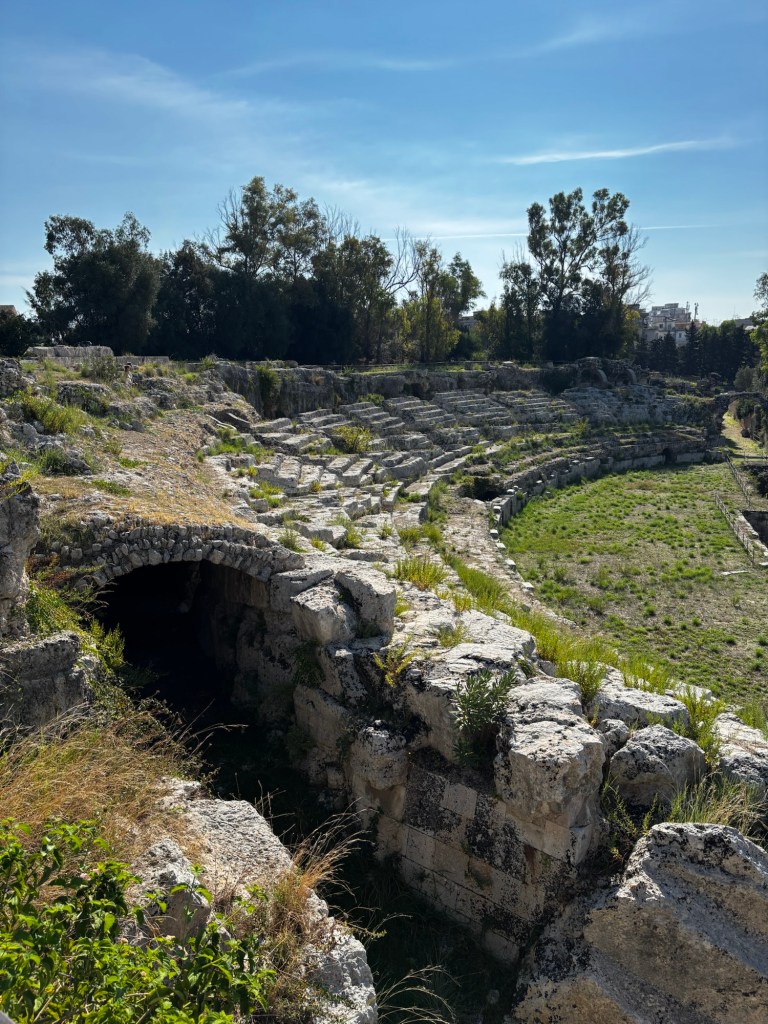
Believed to have been built in the 1st century BC the Amphitheater remained active until 399 AD when Emperor Theodosius ordered the closure of gladiator schools and by 404 AD, gladiator games were permanently abolished. Much later under Charles V in the early 1500’s, stones from the amphitheater were used to provide fortification materials in Ortigia.
The other side of the park was evidence of the Greek occupation of the area including a full size theatre.
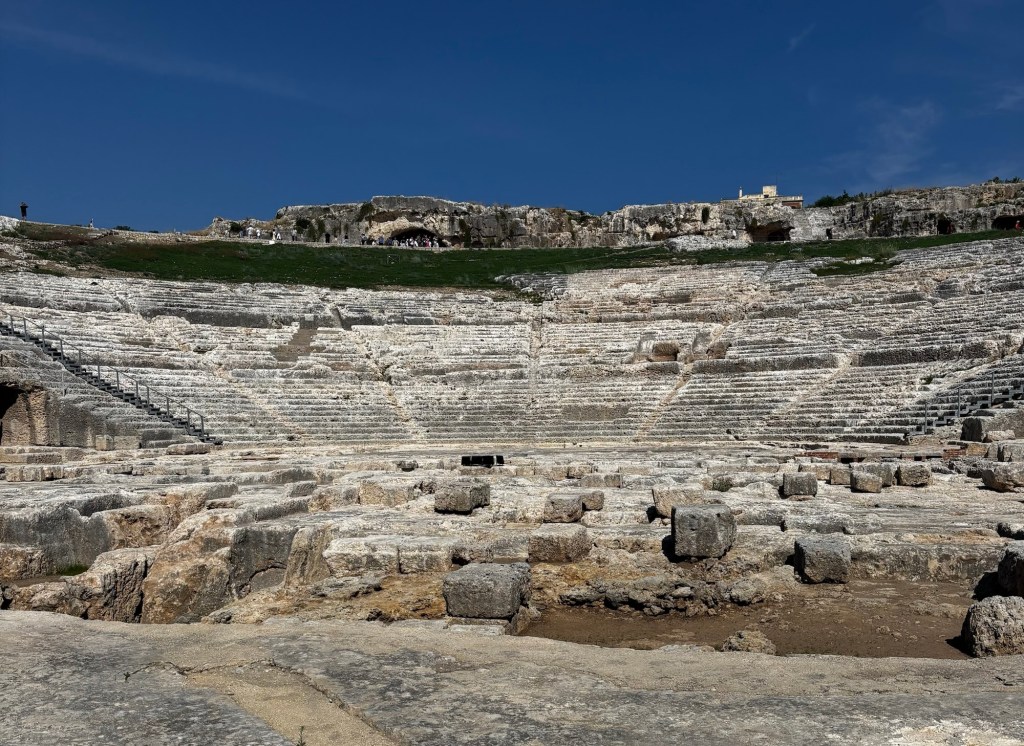
The original structure was created in the 5th century BC but a major reconstruction by Hieron II in the 3rd century BC replaced it.
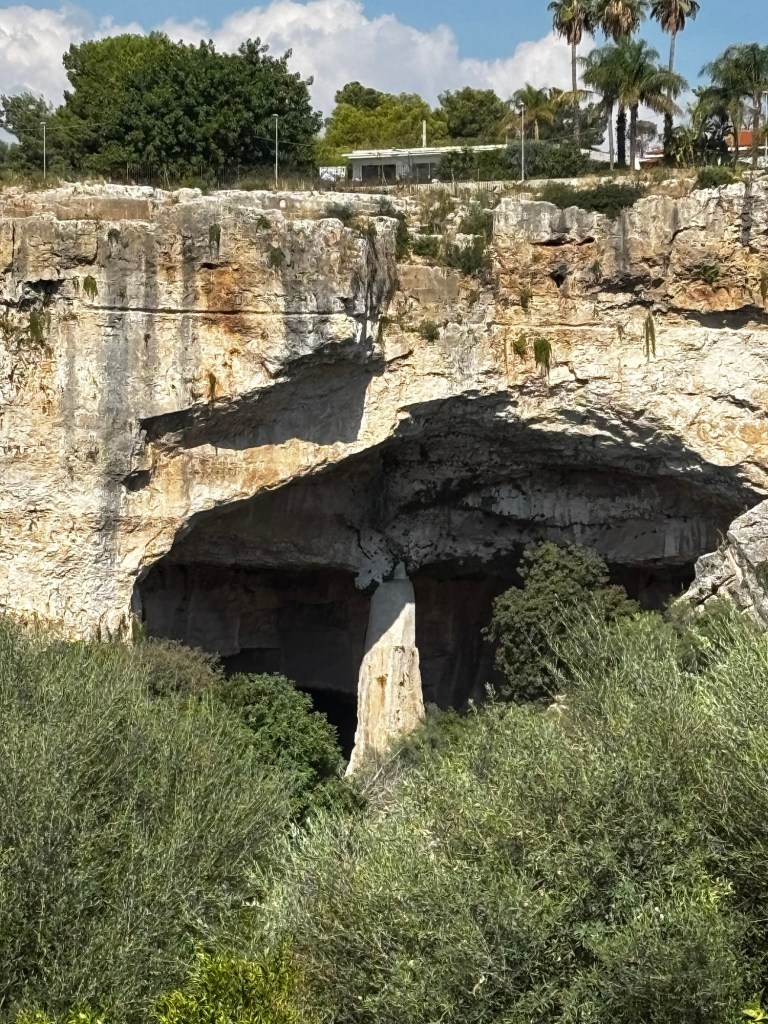
Nearby are the quarries used to create these stadiums/theatres including a major cave said to have been dug by prisoners of Dionysus.
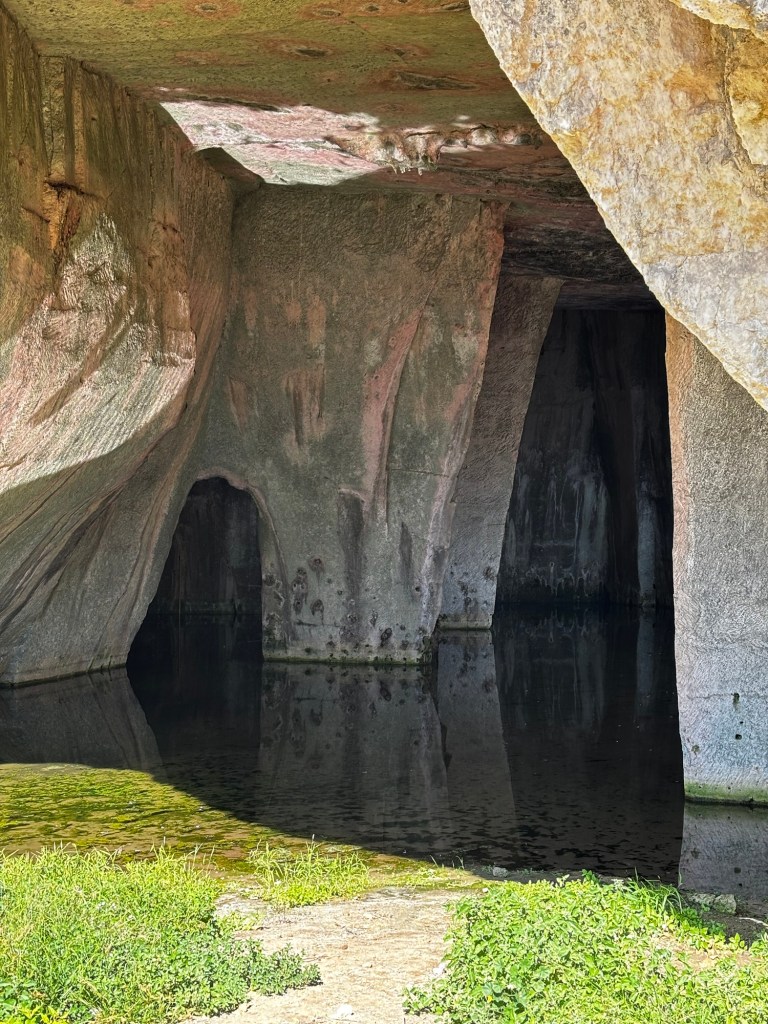
Additional remnants from both Roman and Greek influences were scattered about the park but it was time to leave and head south west.
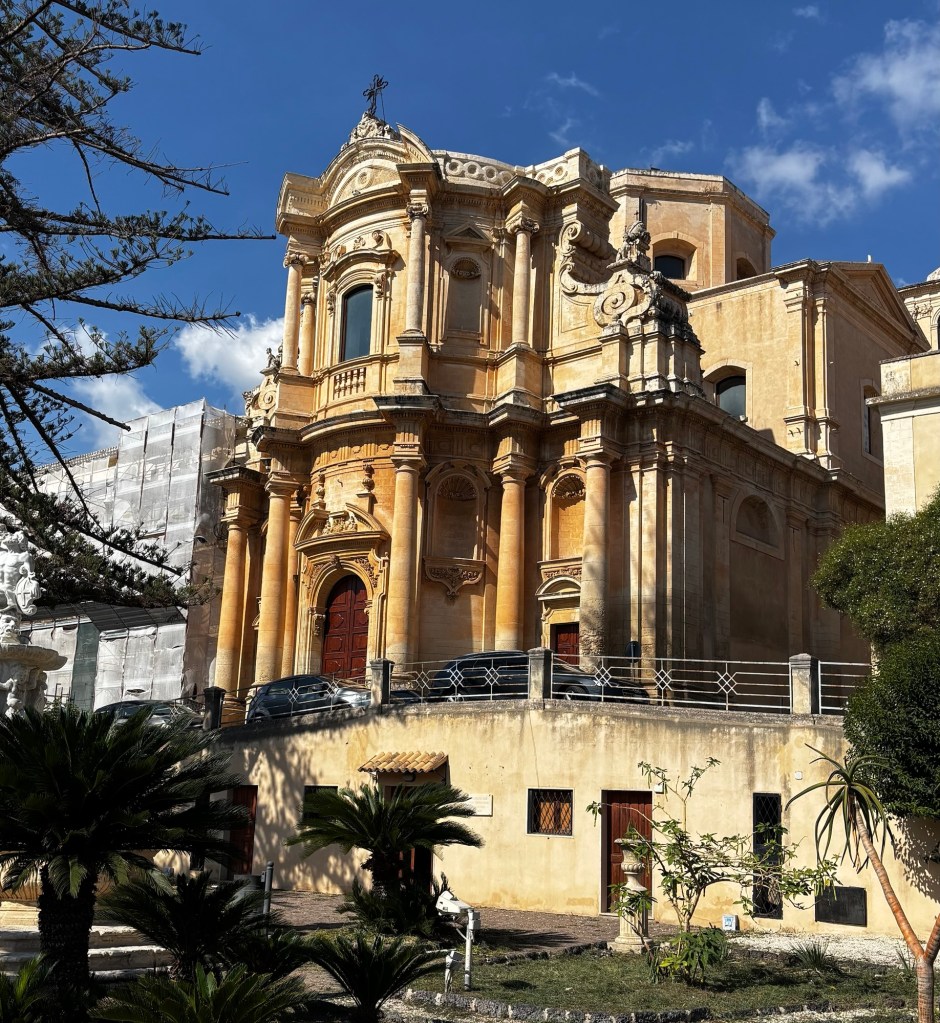
First stop, Noto which is known for its baroque architecture, including the reconstructed 18th-century Noto Cathedral. First, an understanding of baroque. In the late 1500’s the church started to move away from Renaissance architecture that was restrained and balanced. Its goal, amongst other objectives, was to inspire collective awe and reverence in the congregation.
Renaissance architecture aimed for harmony and proportion. Baroque focused on being highly decorative and theatrical.
In 1693 Noto was completely destroyed by a massive earthquake that leveled the entire city. This provided the opportunity to create a completely new city focused on baroque architecture using soft, orange sandstone.
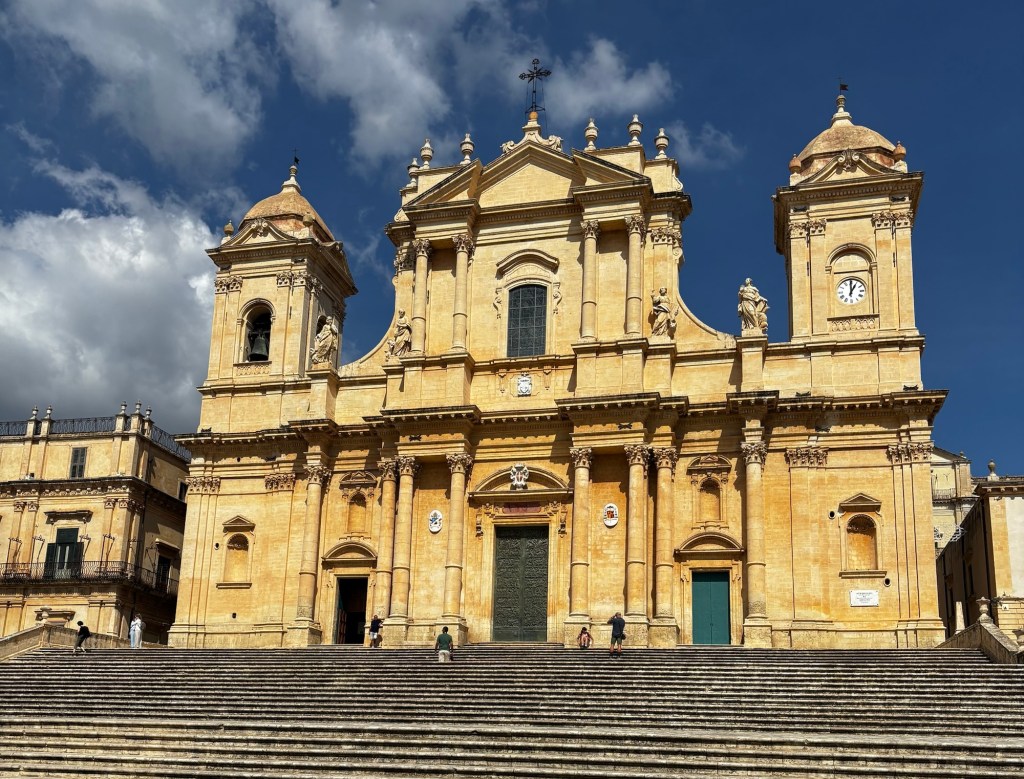
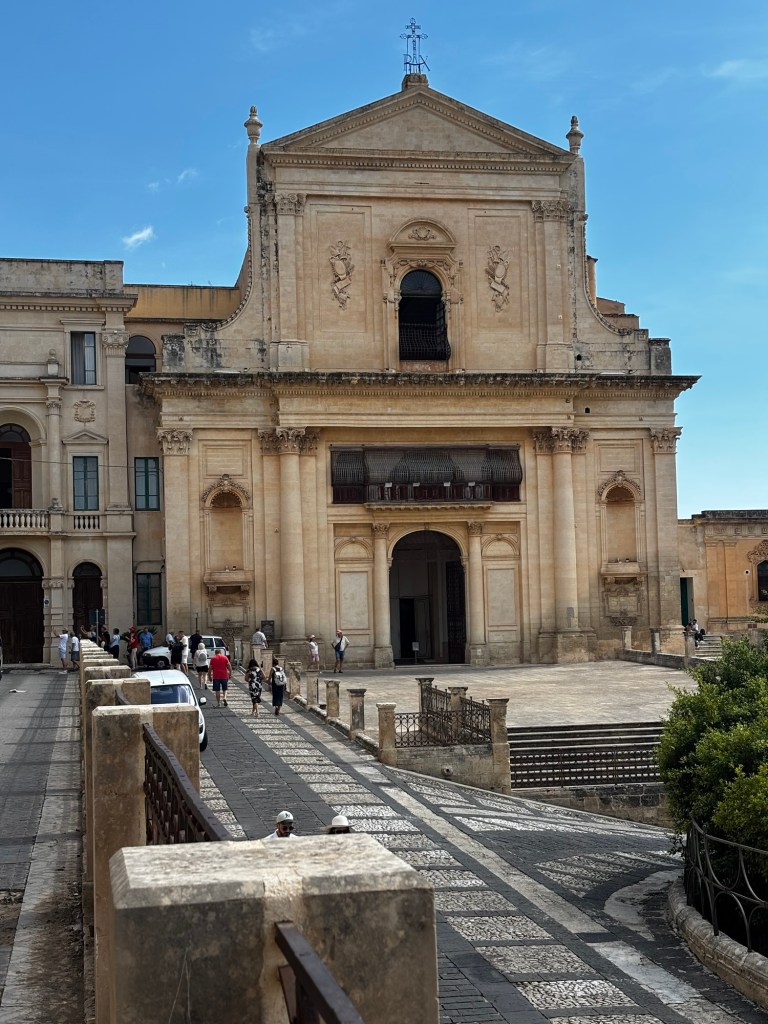
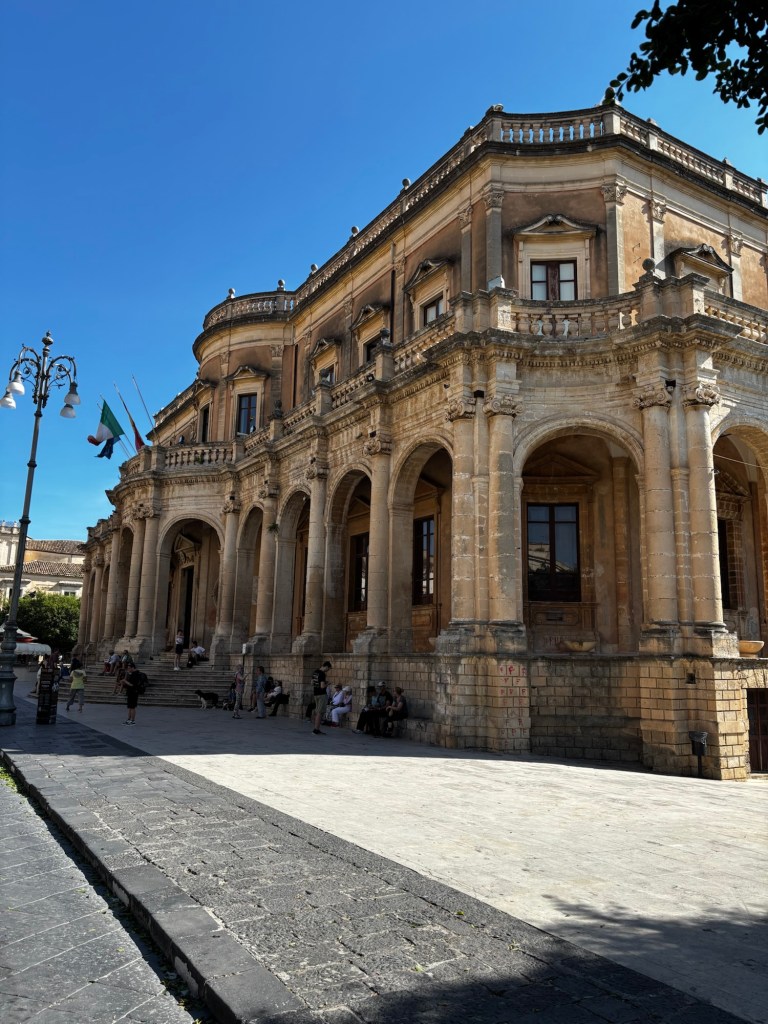
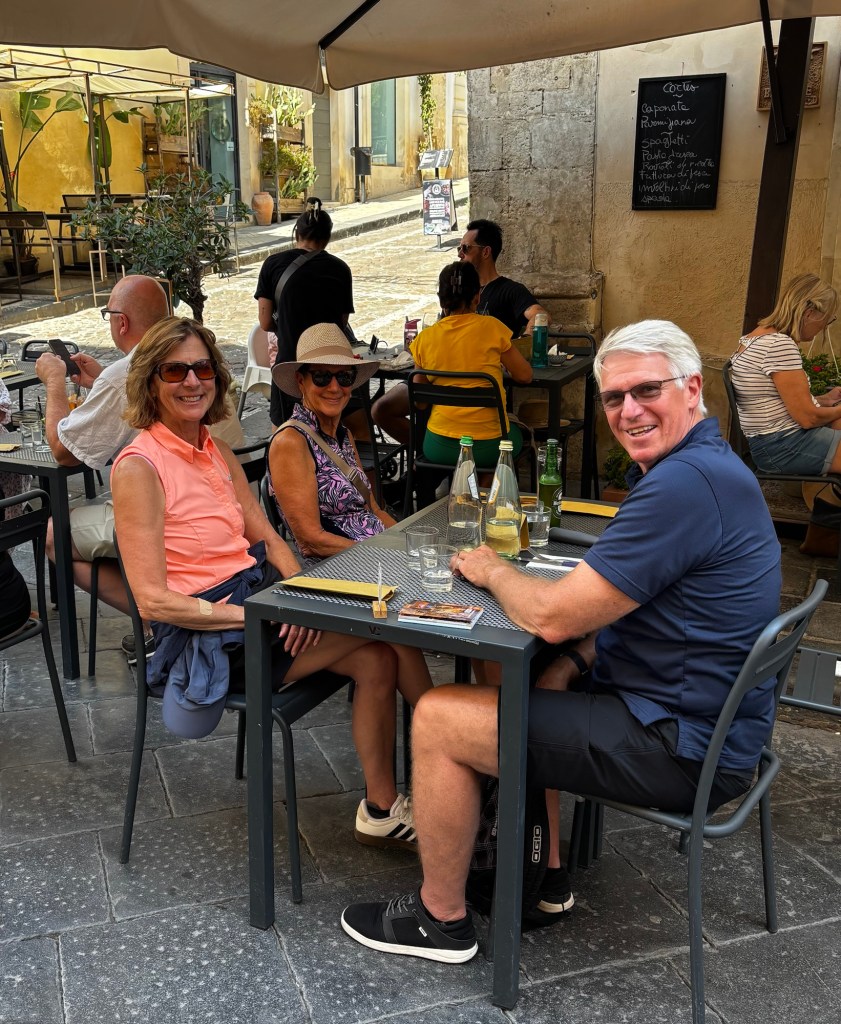
Wandering is tiring work so a refueling stop was necessary.
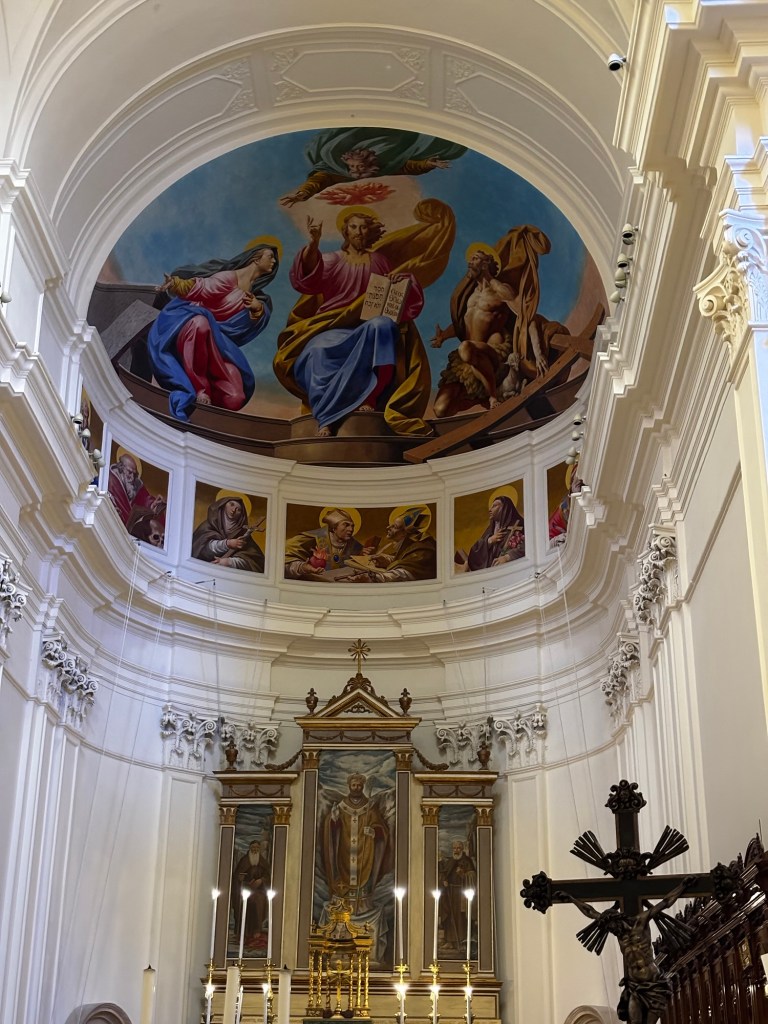
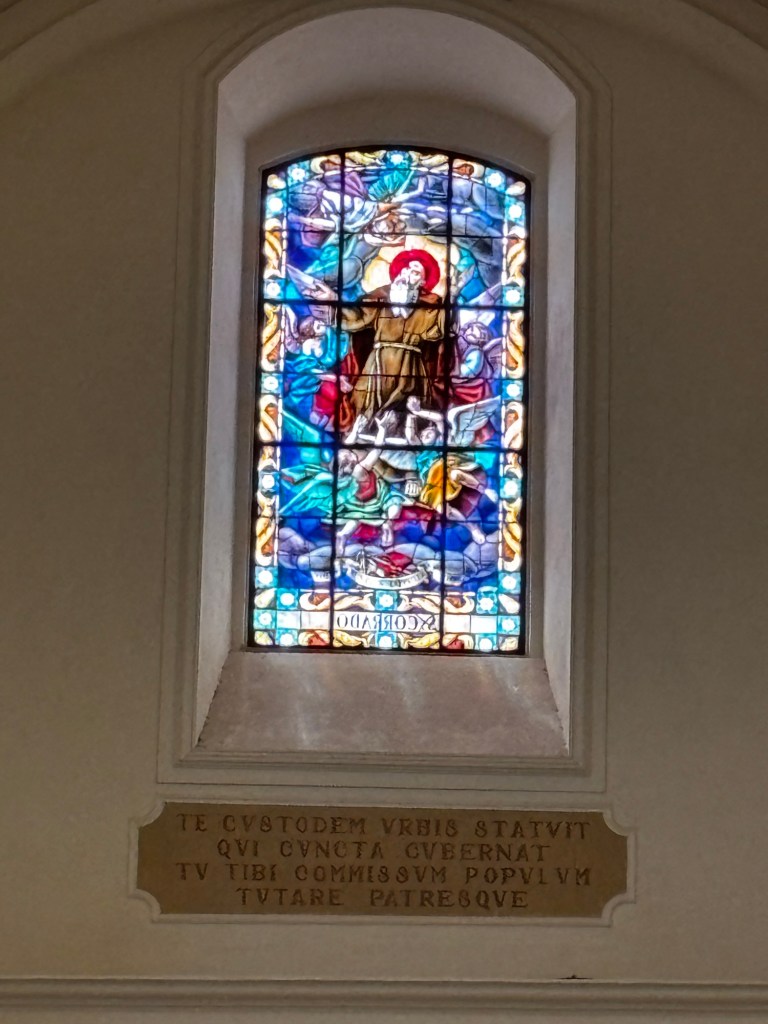
The main cathedral did have some exquisite colours in both a ceiling mural and stained glass window.
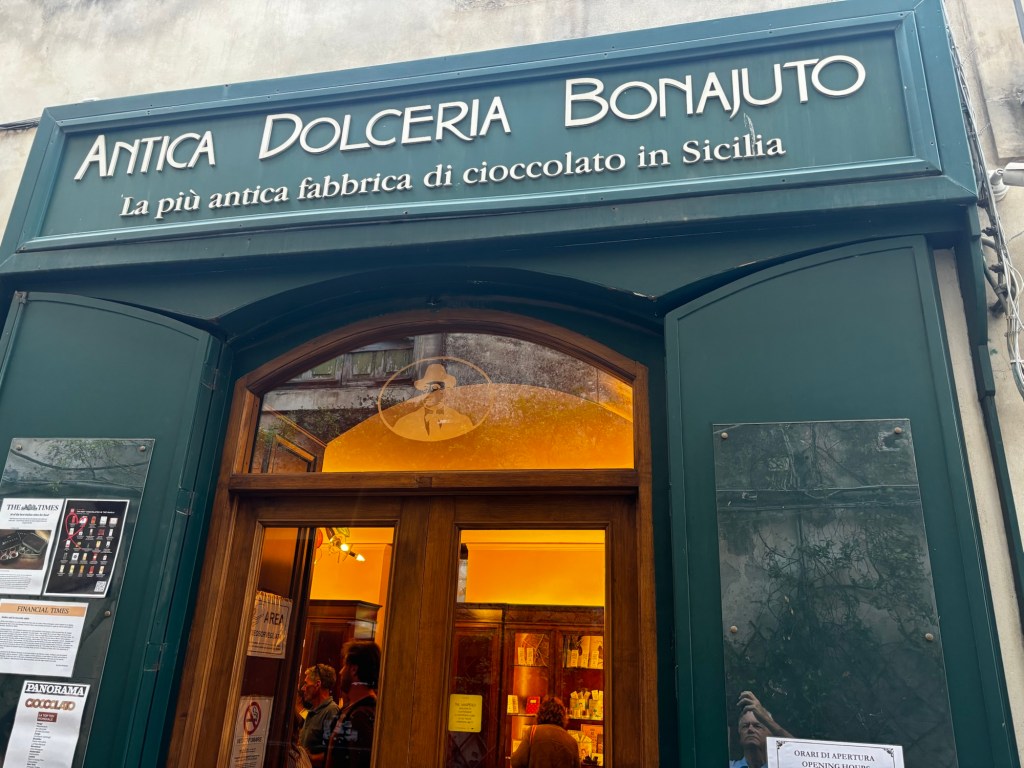
Back in the car for a relatively quick stop in Modica which promotes itself for having the finest chocolate in all of Sicily. This area of the country is built on the edge of gorges and deep in river valleys. It required a winding roadway to get to the bottom where the chocolate shop was. A missed turn meant navigating a street so narrow we feared for the side mirrors and door handles of the car. Think Jason Bourne movies only at one thirtieth of his speed.
The poster can tell the story better than I can.
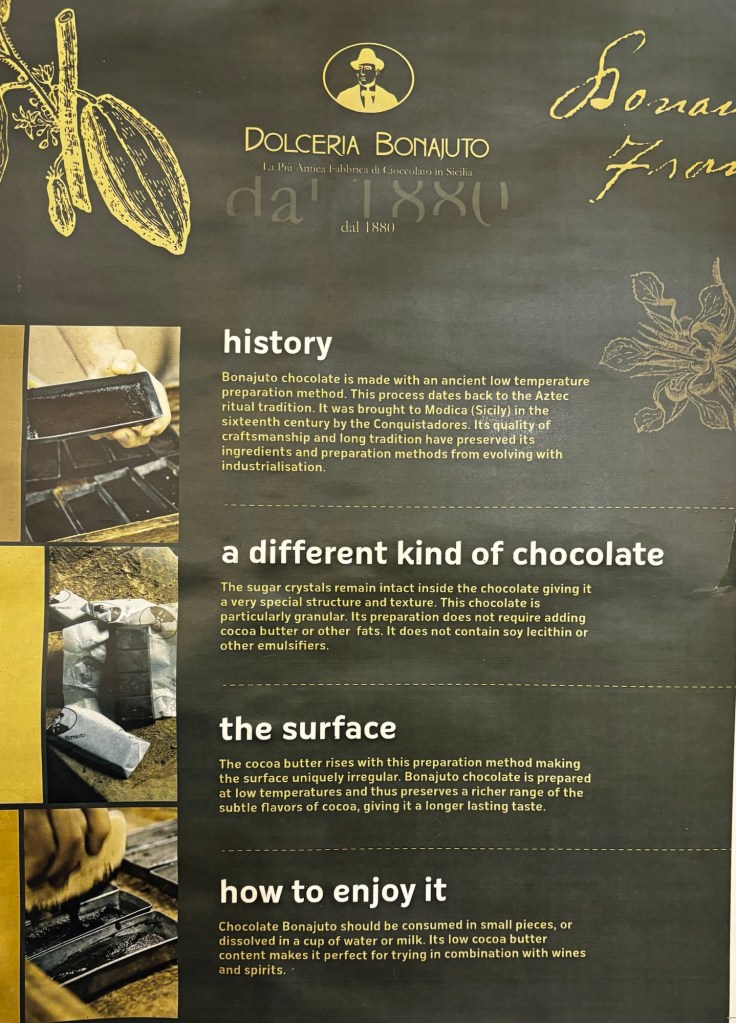
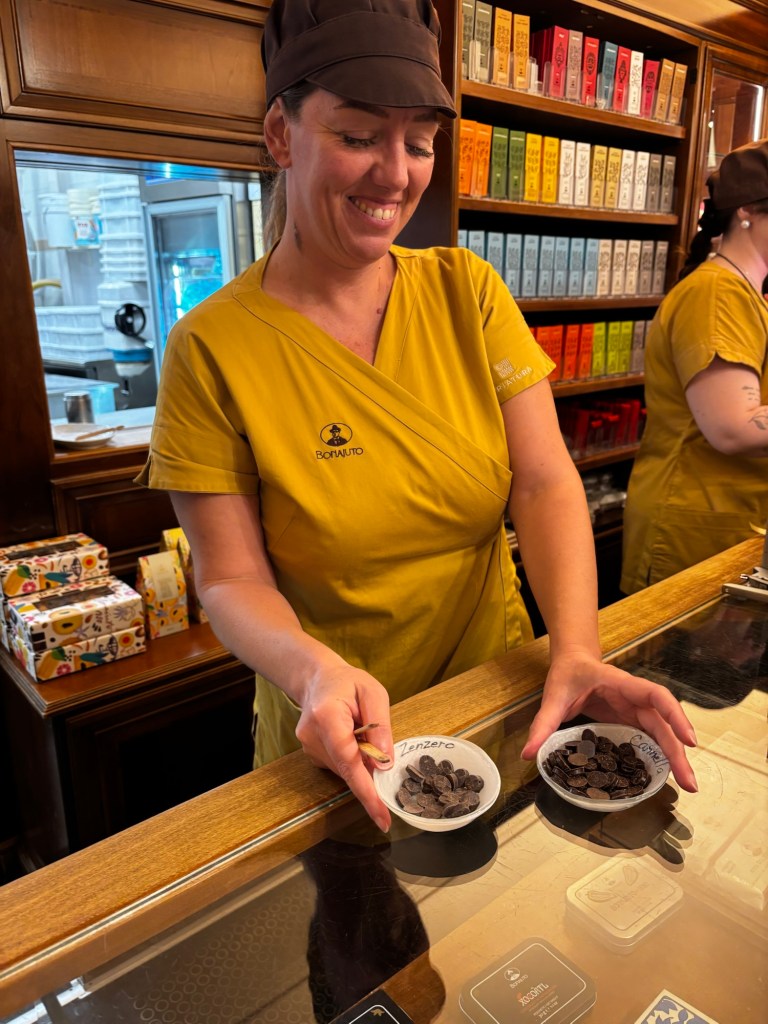
After sampling a few options we stocked up.
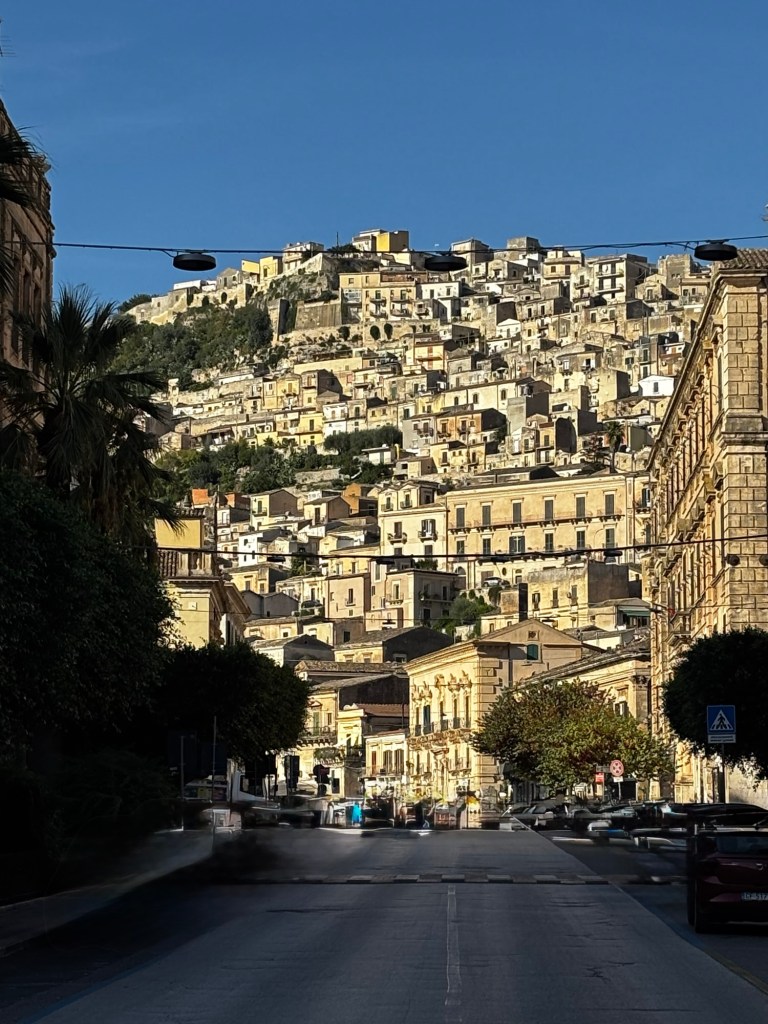
On to our last travel leg of the day but not before stopping for a few pictures of the wall of houses built above the town.
And, of course, the cathedral.
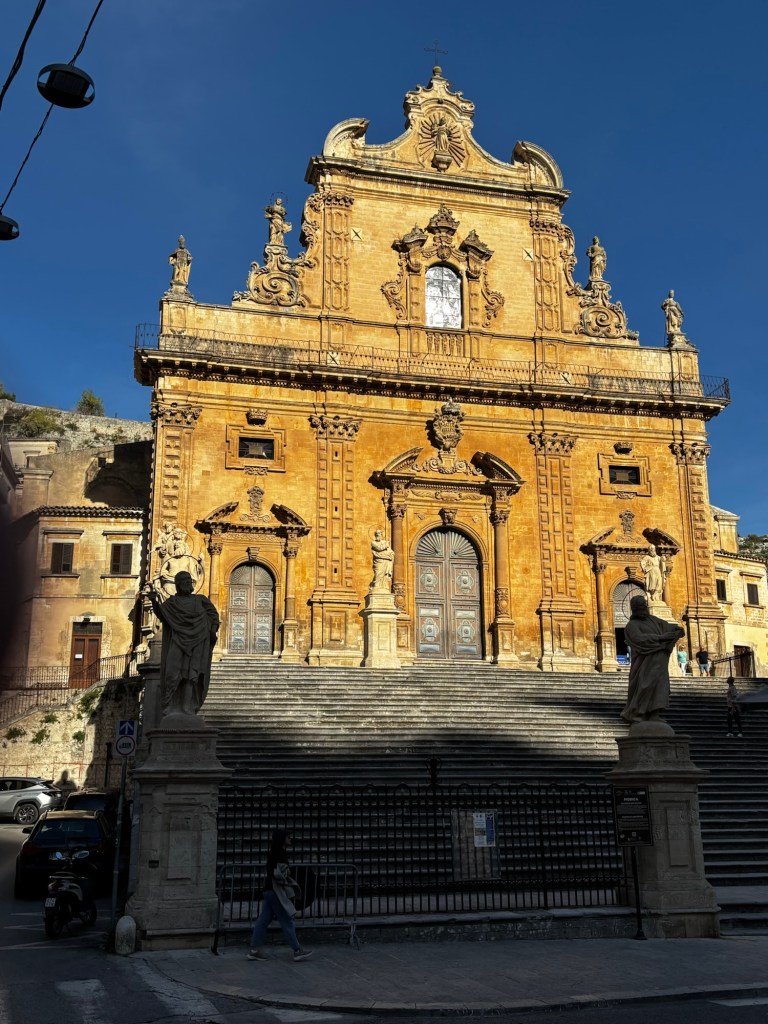
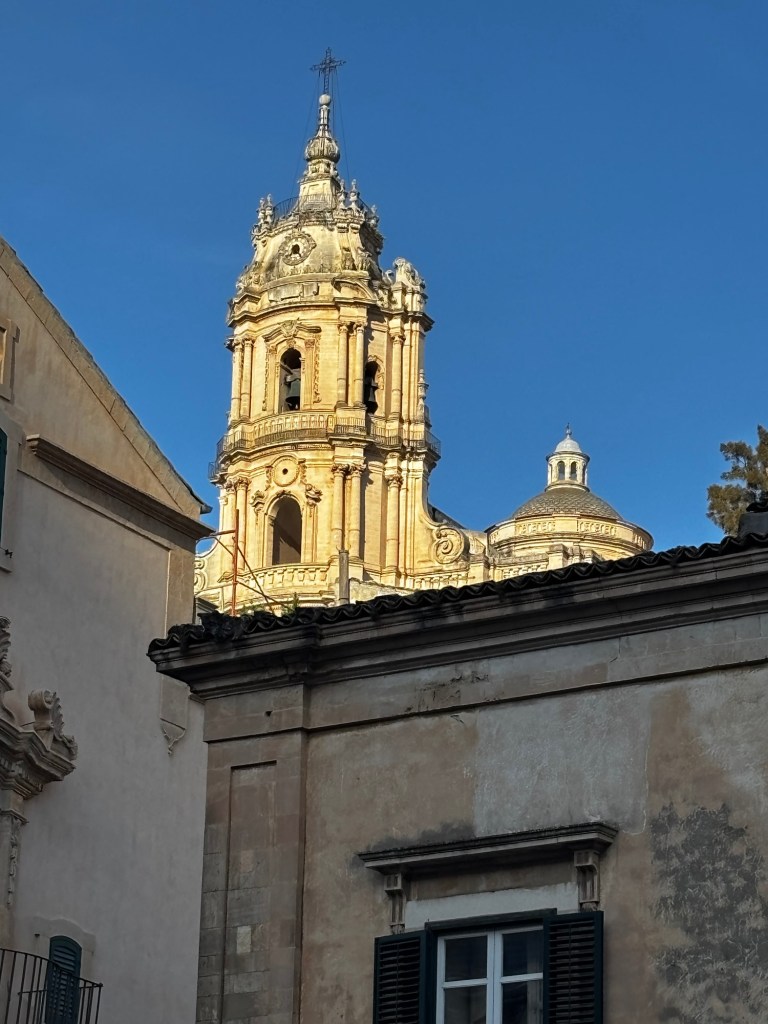
Off to Ragusa further to the northwest. The two sides of the town are split by an enormous gorge. We are staying in the old town which is humorous because the new town is likely few centuries old.
As the sun set on yet another great day we walked through the main square.
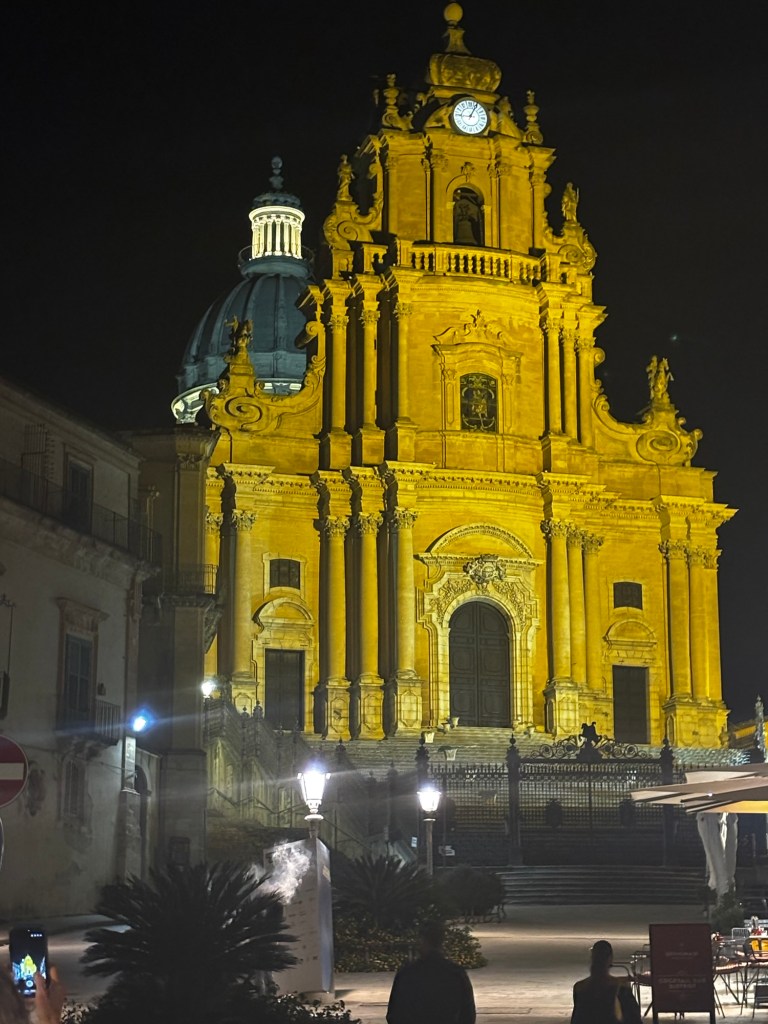
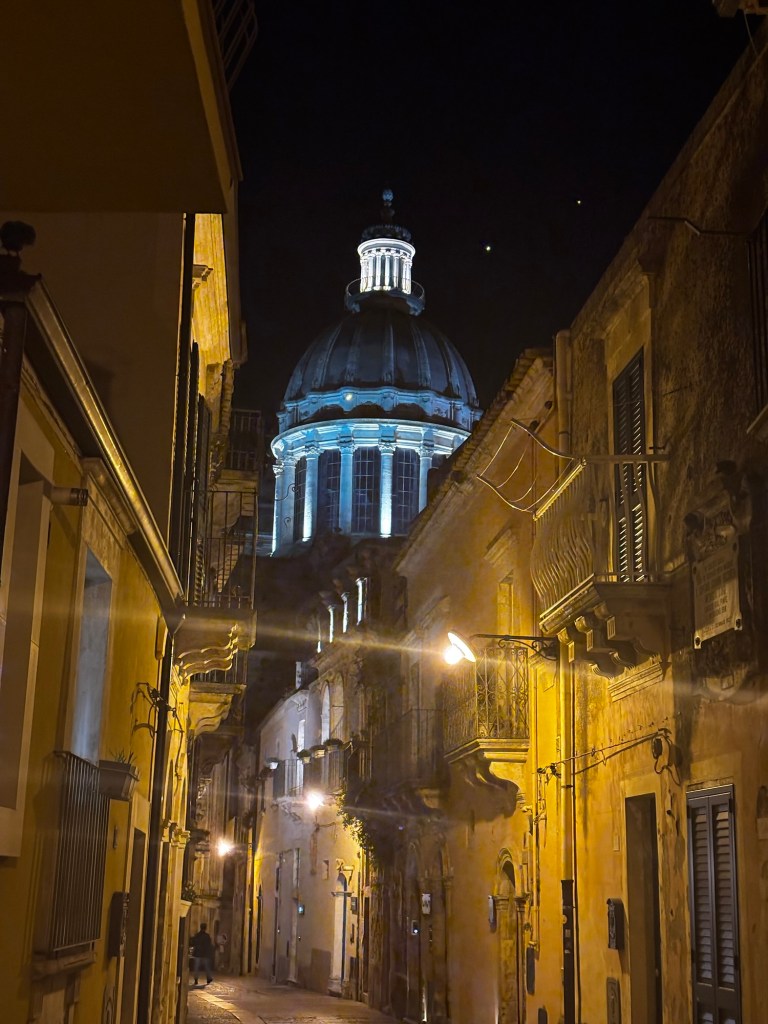
We will see these and more tomorrow as we approach the end of our Italy/Sicily journey.


