The coast of Normandy has a place in history that hopefully will never be repeated. It provides an awe inspiring memorial for those whose allegiance was to the victorious allied forces that came ashore on June 6, 1944 – D Day.
The numbers are simply staggering. Between the Canadian, British and American forces, approximately 139,000 soldiers landed on one of five beaches. On day one of the invasion nearly 5,000 allied lives were lost while thousands more were wounded.
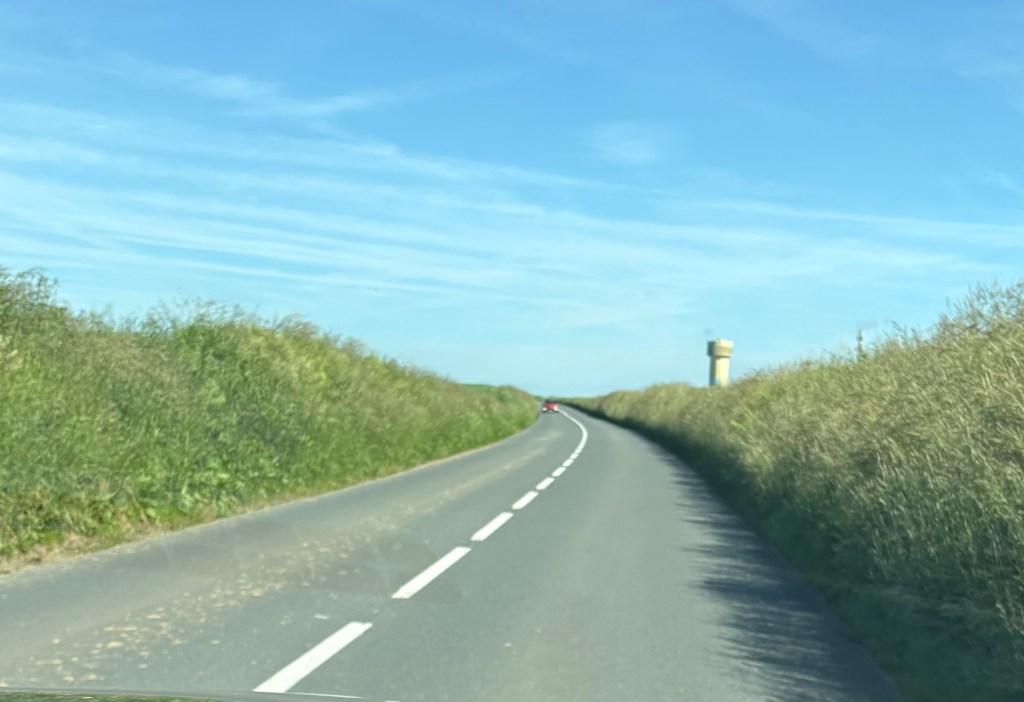
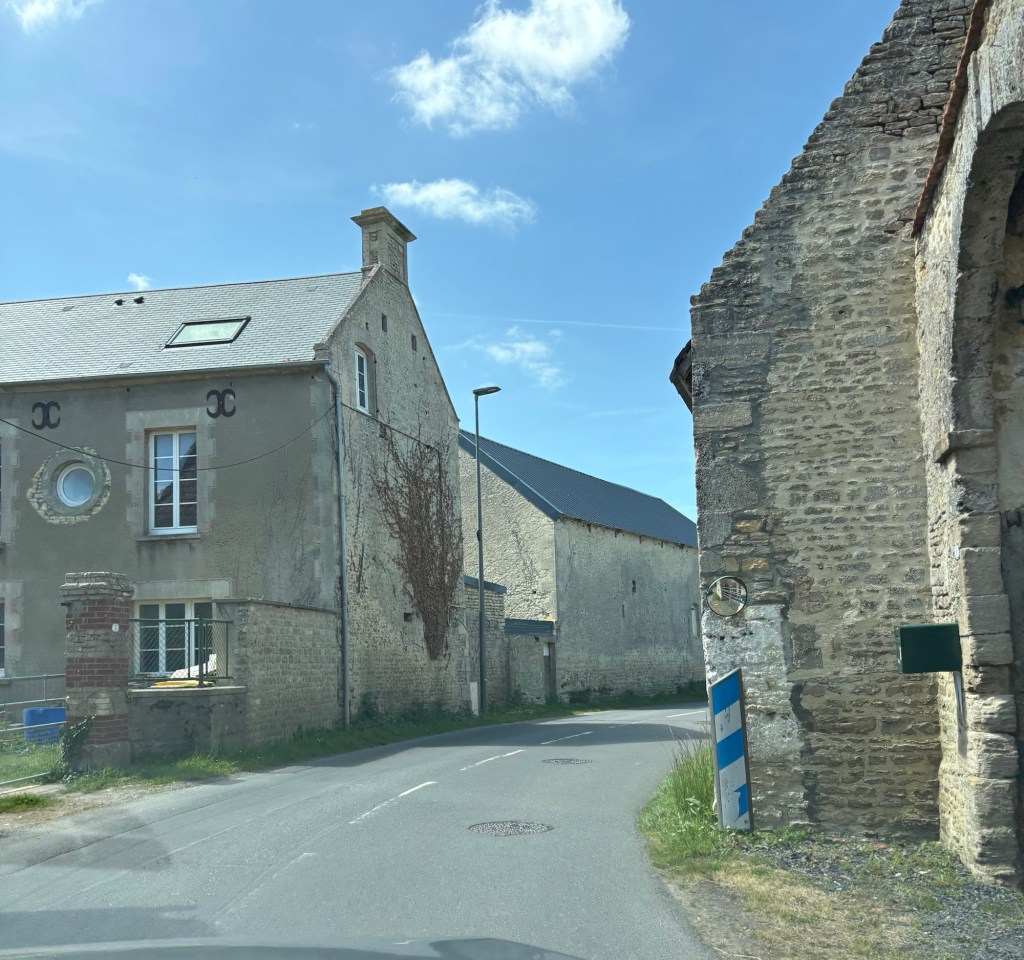
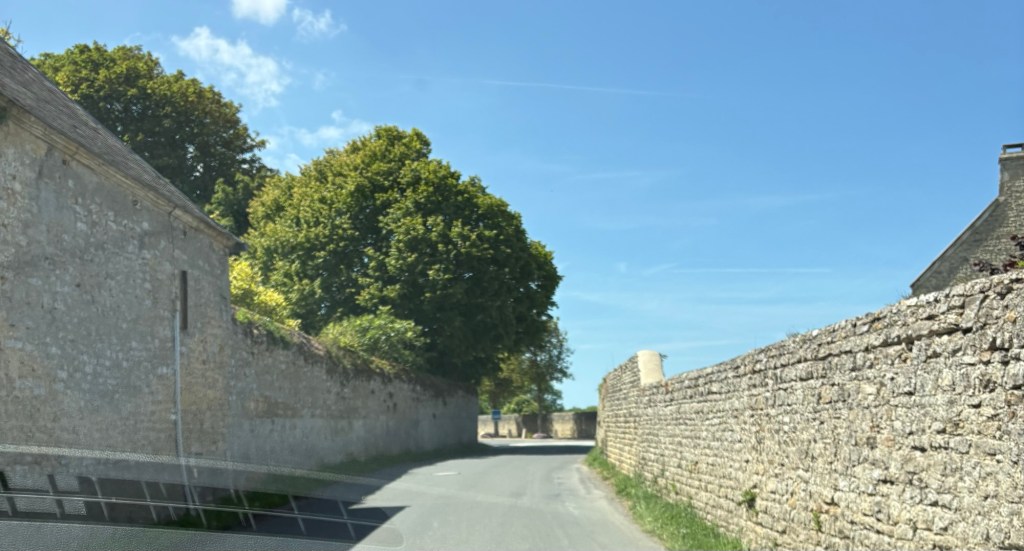
Our first stop was the Canadian Military Cemetery located in a small woodlot named Beny-sur-Mer which is near Juno Beach which, in turn, is in the community of Courseulles-sur-Mer. But first we had to navigate narrow, hedge lined country lanes with the inevitable stone wall shoulders to get there. Shades of driving in Ireland!
The Canadian cemetery was immaculately maintained with beautiful flowers and bushes beside each gravesite. You could walk amongst the 2,049 headstones and read names, ages, hometowns etc. A major impression was how most were overwhelming young.
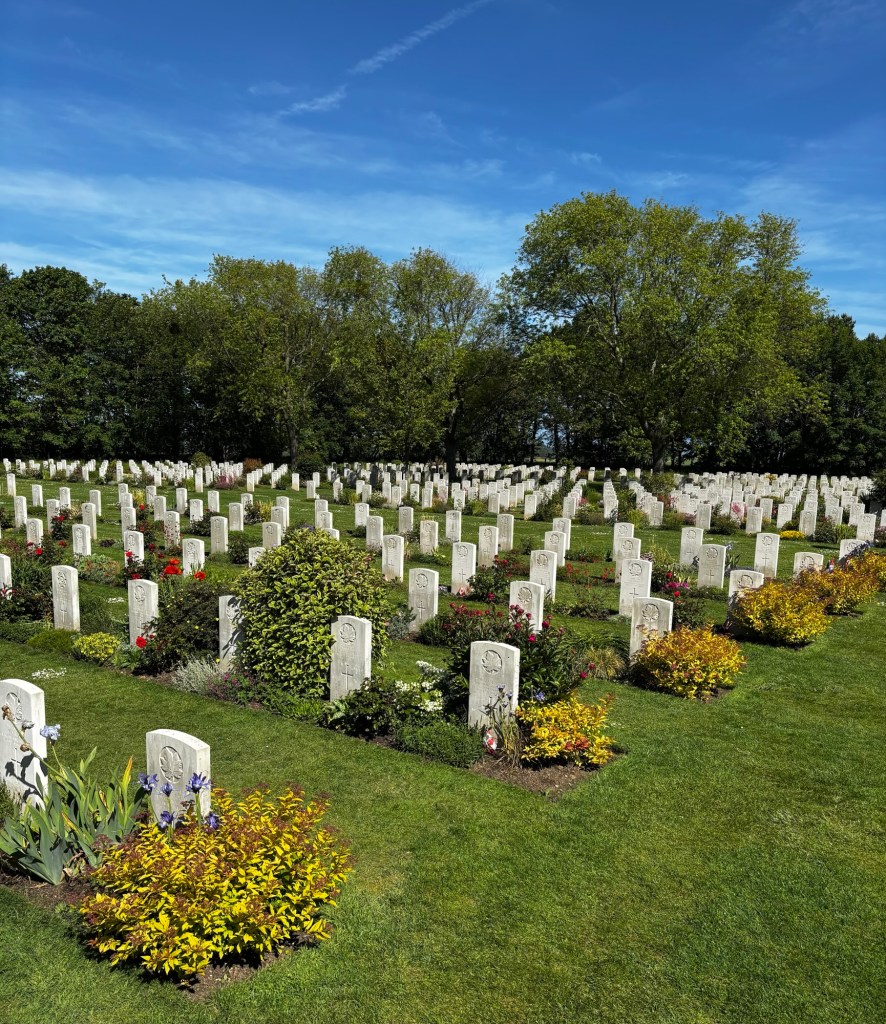
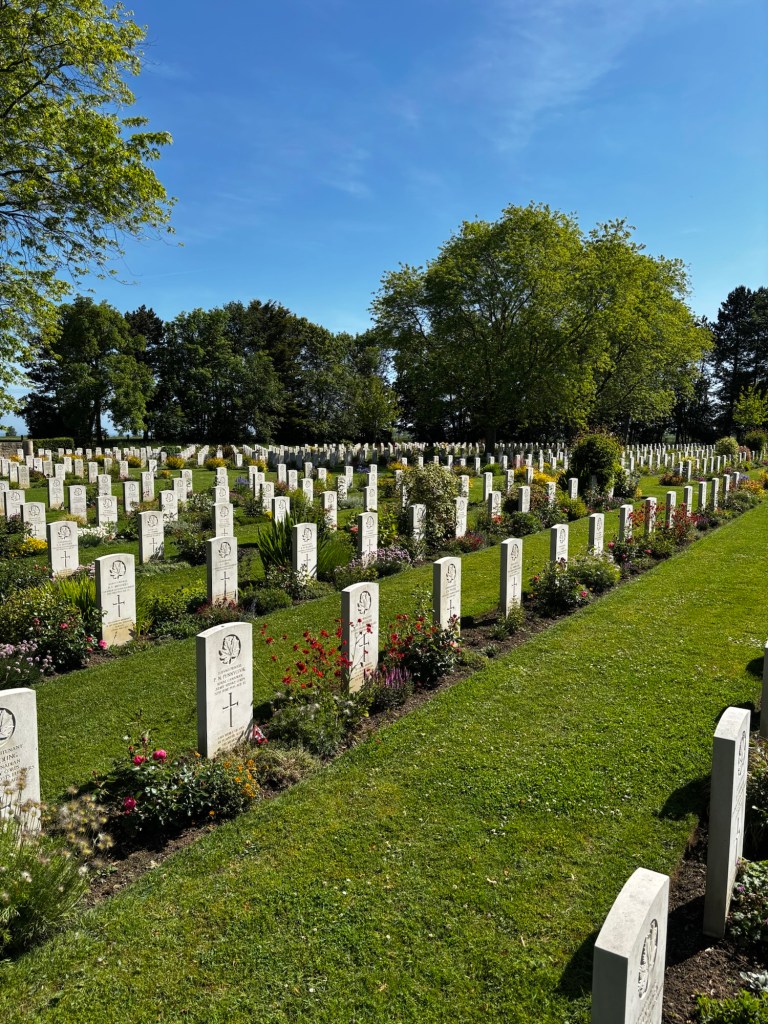
Fortunately (or perhaps sadly) we were two of very few people on the grounds. The quiet was deafening on a sunny, windless day in total contrast to 82 years ago.
The museum on Juno beach was our next stop. Fronted by an arresting sculpture the museum told the story of the Canadians landing in vivid detail using storyboards, videos and artifacts. Extremely educational.
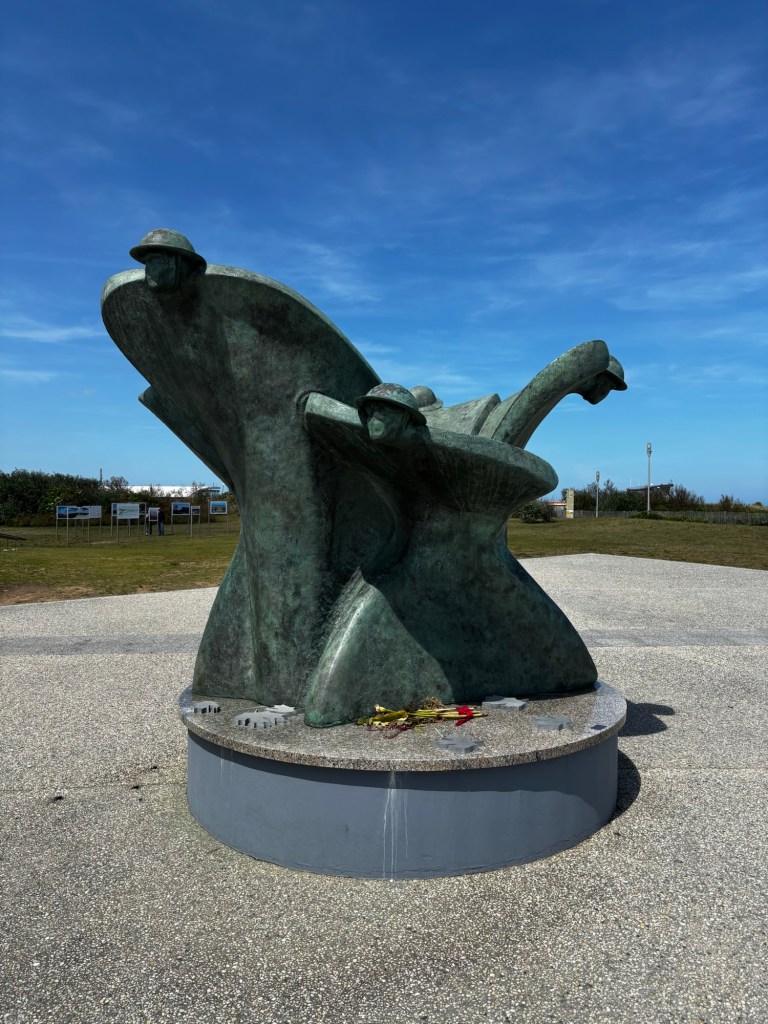
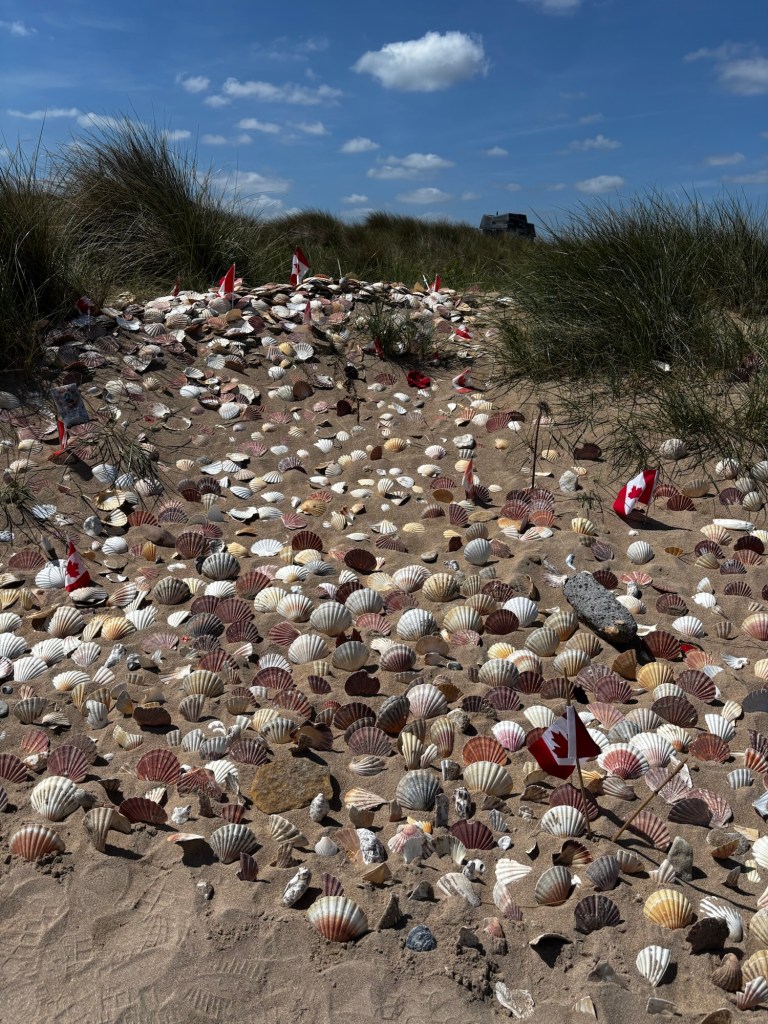
We walked along the beach itself trying to envision the utter chaos that occurred on those sands. Simply impossible.
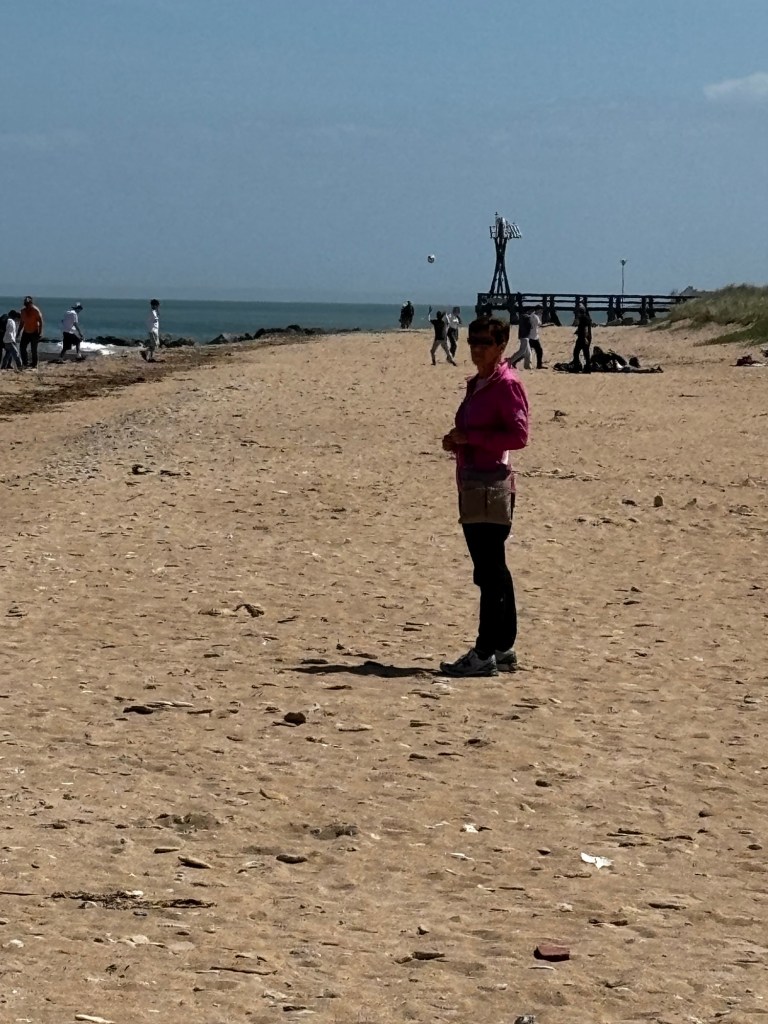
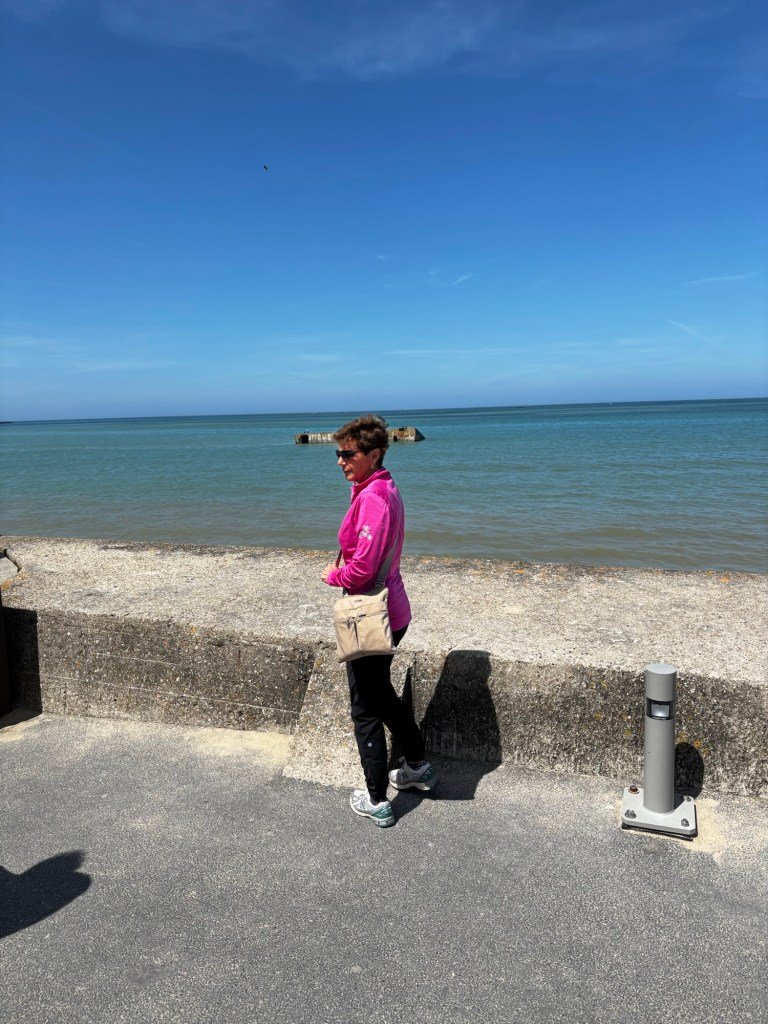
Back in the car for a drive along the coast to Arromanches next to Gold Beach, site of one of the two beaches where British forces landed. The waters offshore contain the remains of old ships sunk deliberately in 1944 to create a breakwater and concrete caissons used to build a floating pier used to offload heavy equipment. It proved critical to the allied cause.
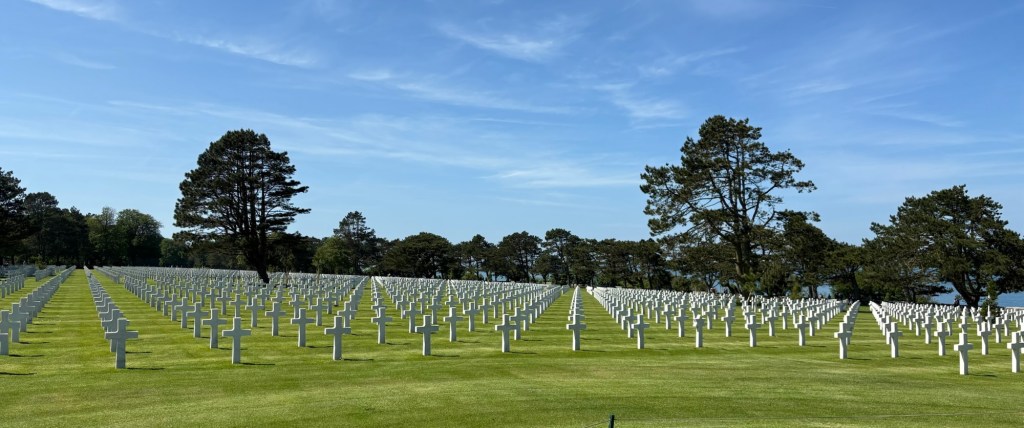
Next stop was further west at the American cemetery at Omaha Beach. The site is an extremely popular tourist stop and even in mid May, somewhat crowded.
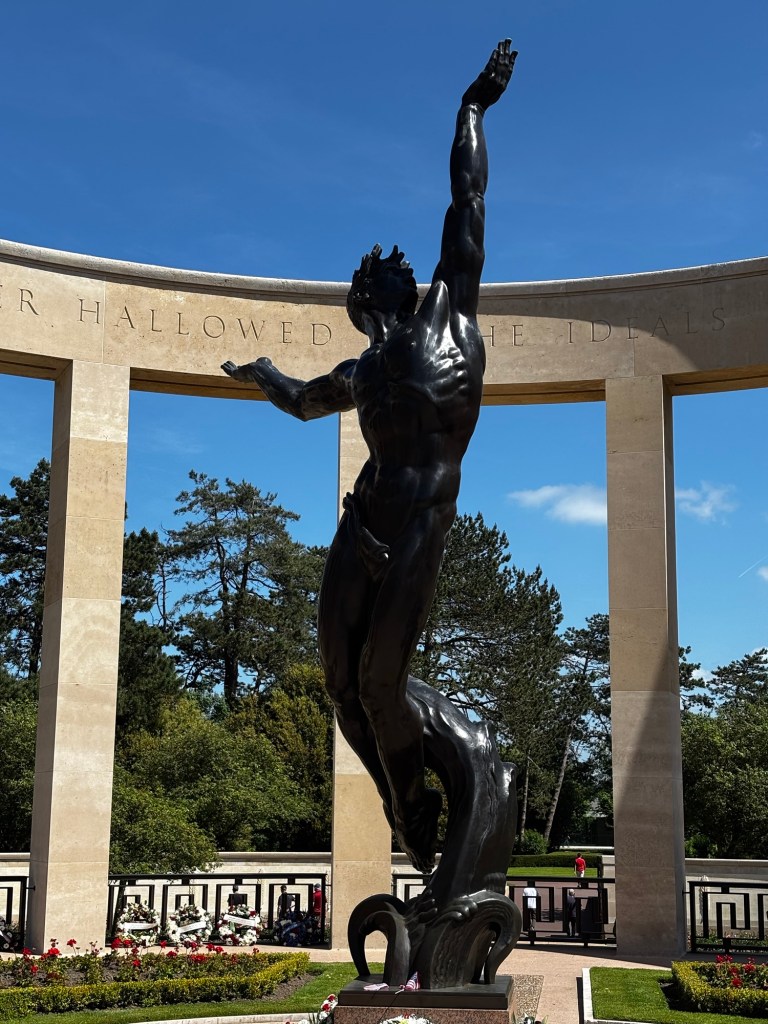
A large bronze sculpture called the spirit of American youth rising from the waves stands at the edge of the cemetery.
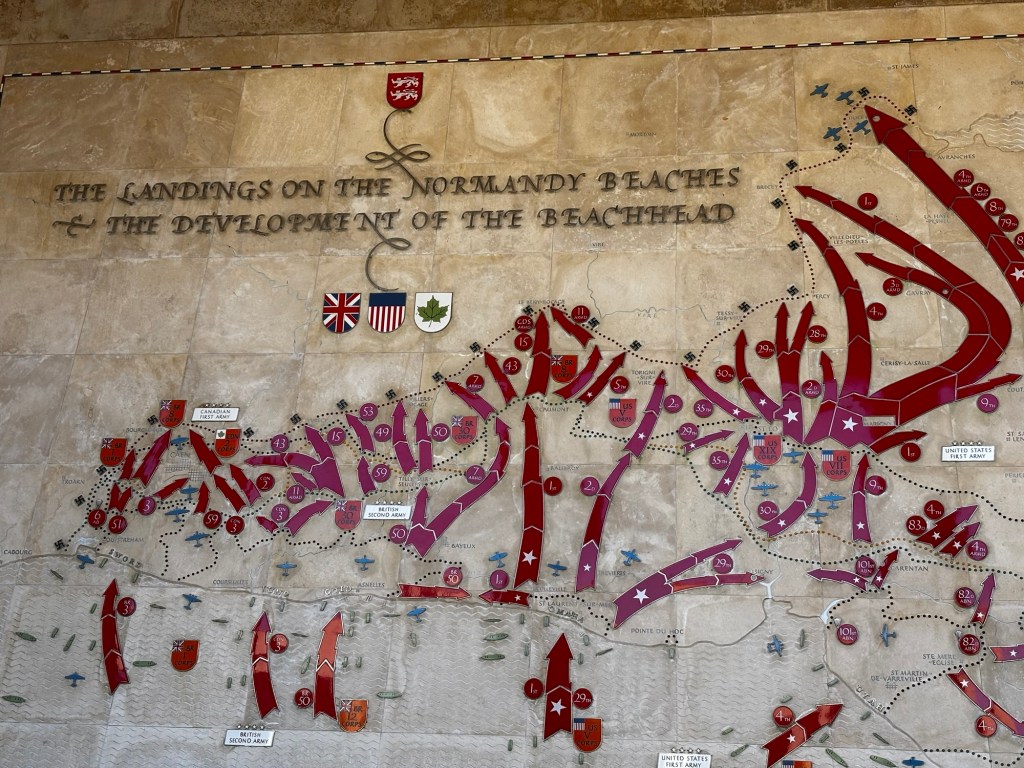
There are also huge wall murals showing the different concentrations of troops spread across the coast as well as post landing thrusts further south.
The cemetery contains 9,389 graves, each marked by a white marble cross. The grounds are pristine and the marble shone brightly. The headstones stretch as far as one can see. Walking amongst them is not permitted but there are central pathways.
The inability to get close to and read the headstones meant the atmosphere was completely different from the Canadian cemetery albeit not in a negative sense. Just different.
The information centre provided a detailed breakdown of the timing each component of the operation was to follow and the massive logistical challenges encountered. It’s not hard to comprehend the why, where and when. It’s almost impossible to understand the how.
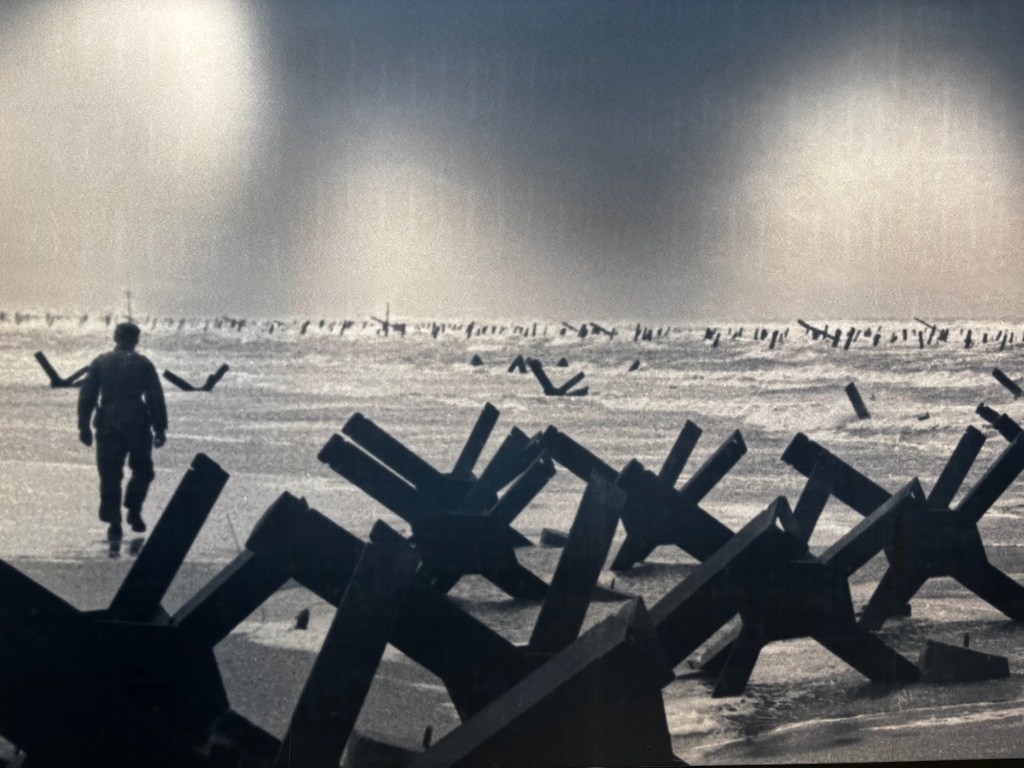
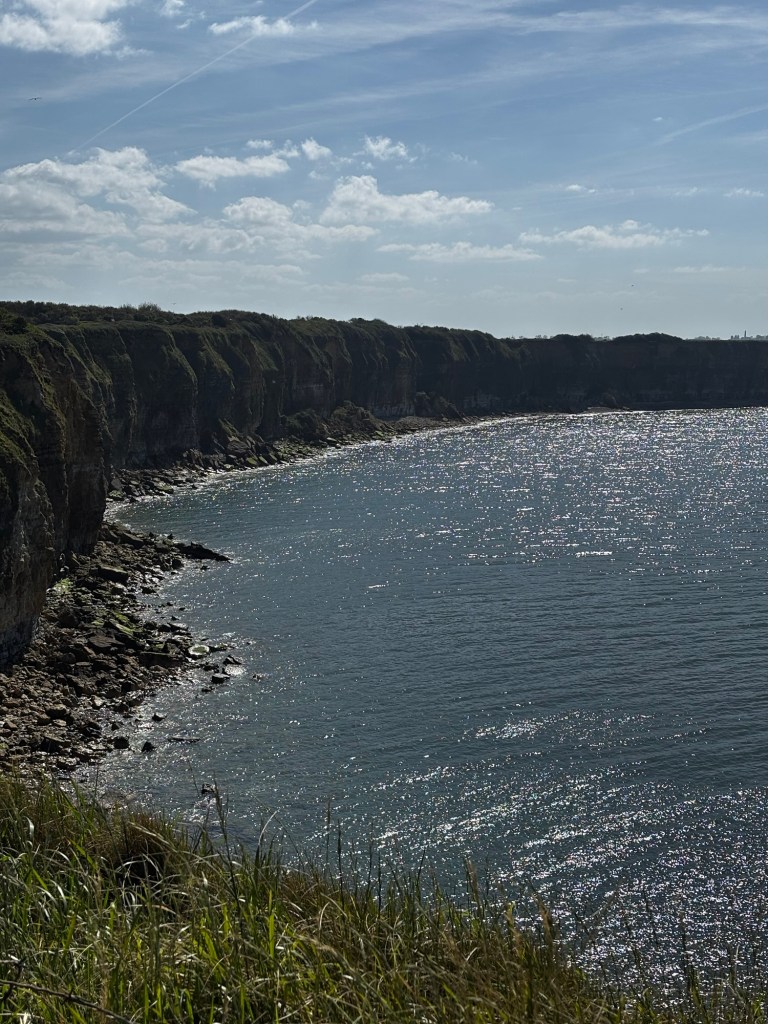
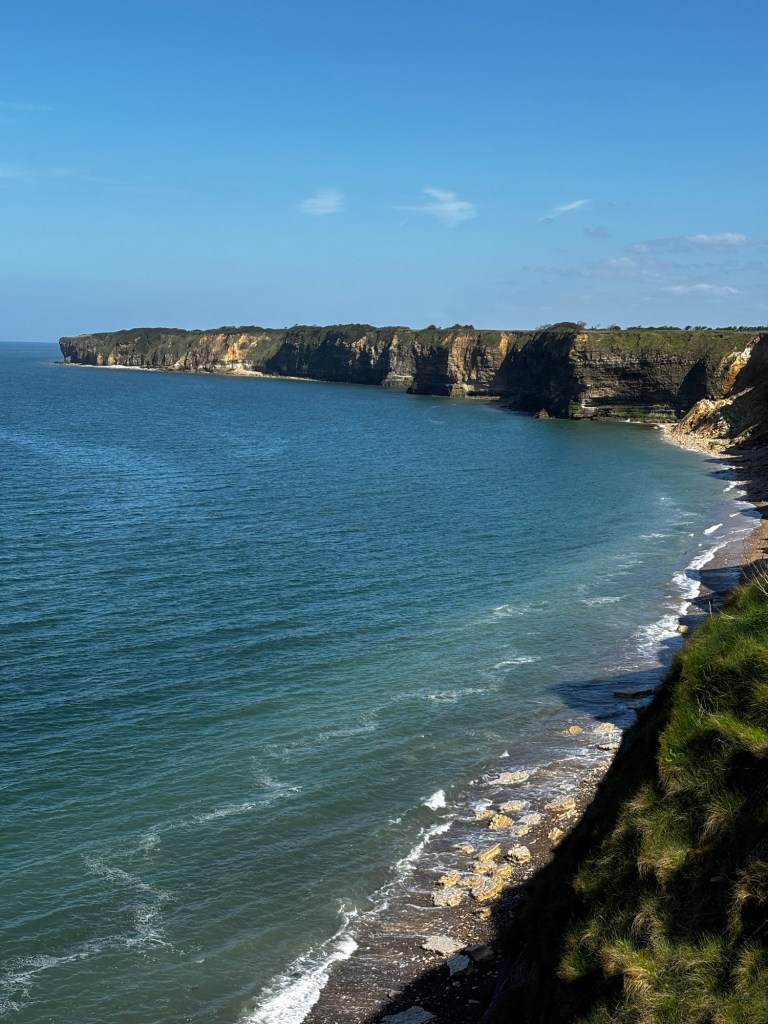
Our journey continued further west to La Pointe du Hoc which has been maintained, somewhat, as a site with massive German gun placements and hundreds of large craters, the result of aerial bombardment. Again one wonders just how the allies managed to achieve their goals when you see the terrain and array of defenses.
Looking west towards Utah Beach and east, back towards Omaha beach are magnificent cliffs that US Rangers somehow scaled. Unbelievable.
Our day ended with a late dinner in Bayeux and time to try and absorb what we had witnessed throughout the day. It’s one thing to read about D Day or see a film. Standing on the actual site deepens the appreciation of what transpired and the costs therein.
Tomorrow the Abbey at Mont Saint Michel (if the tide is out when we arrive) then we turn south for the long drive to Bordeaux and part two of our adventure.


