Barcelona To Madrid

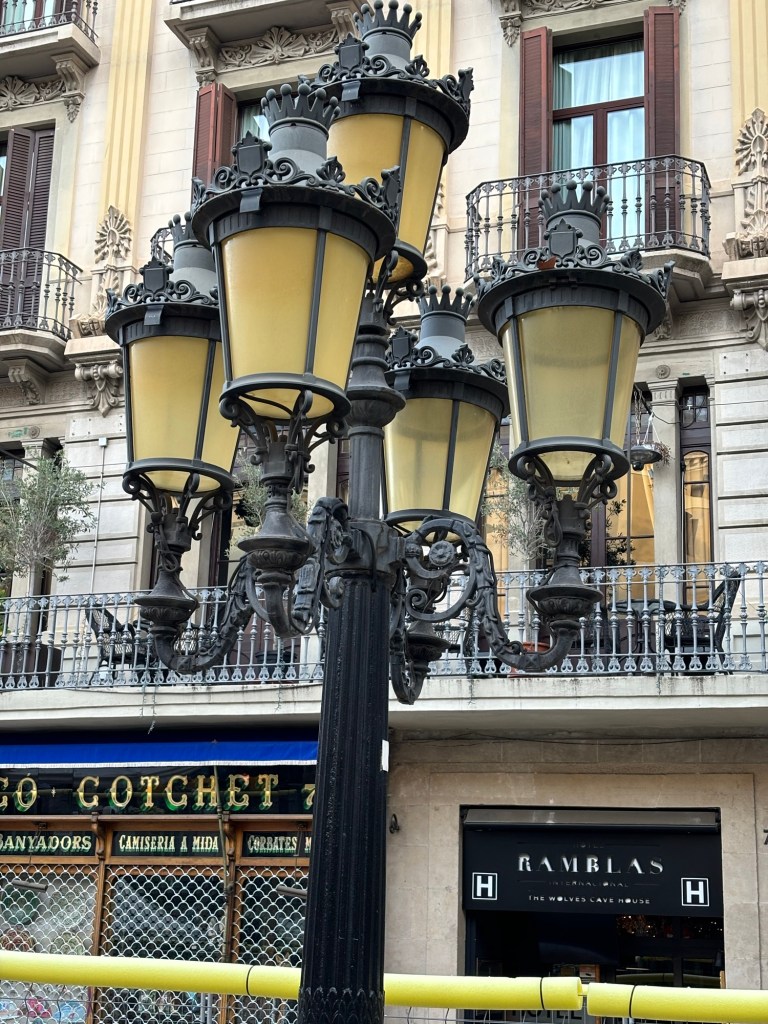
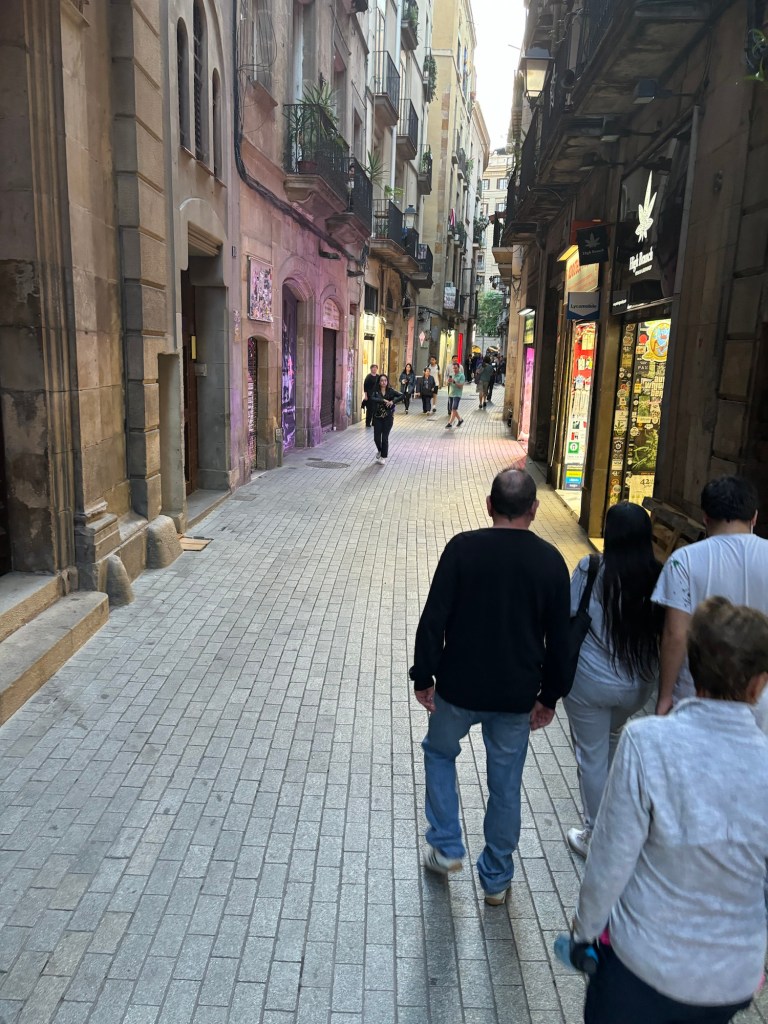
Up and out early to mosey along the mostly deserted streets of the central city. Coffee at a sidewalk cafe then back into explore mode. Given the numerous alleys, curved narrow streets, broad boulevards, pedestrian walkways and ubiquitous wrought iron balconies it makes one realize how sterile and square edged our “tourist areas” are at home.
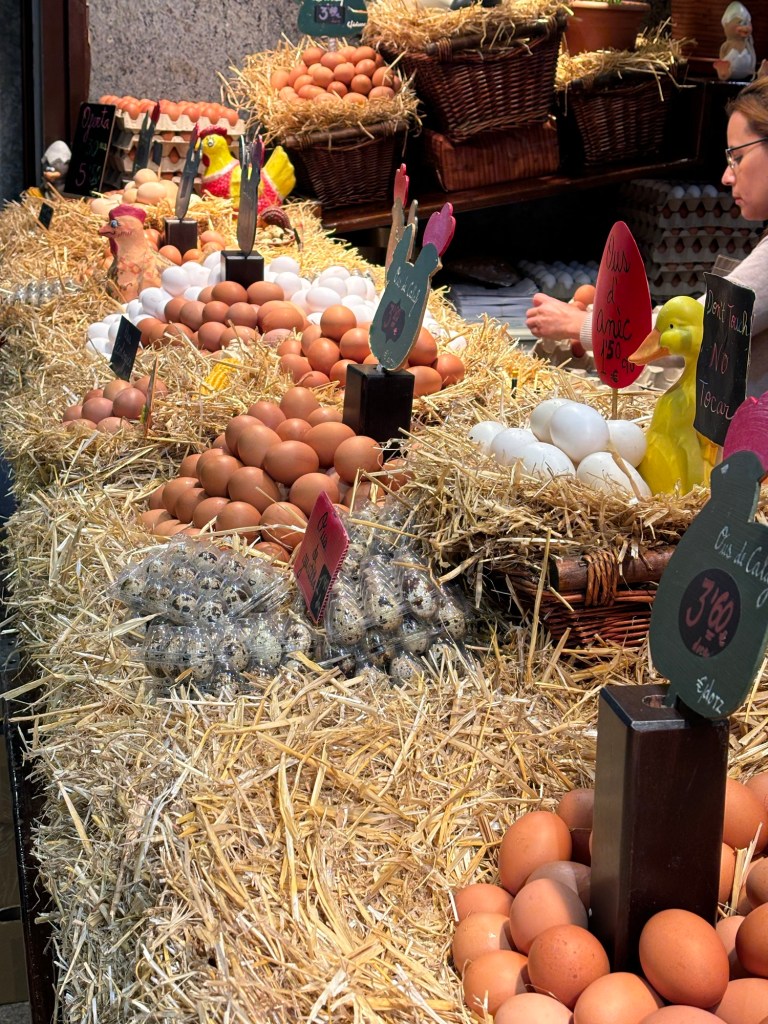
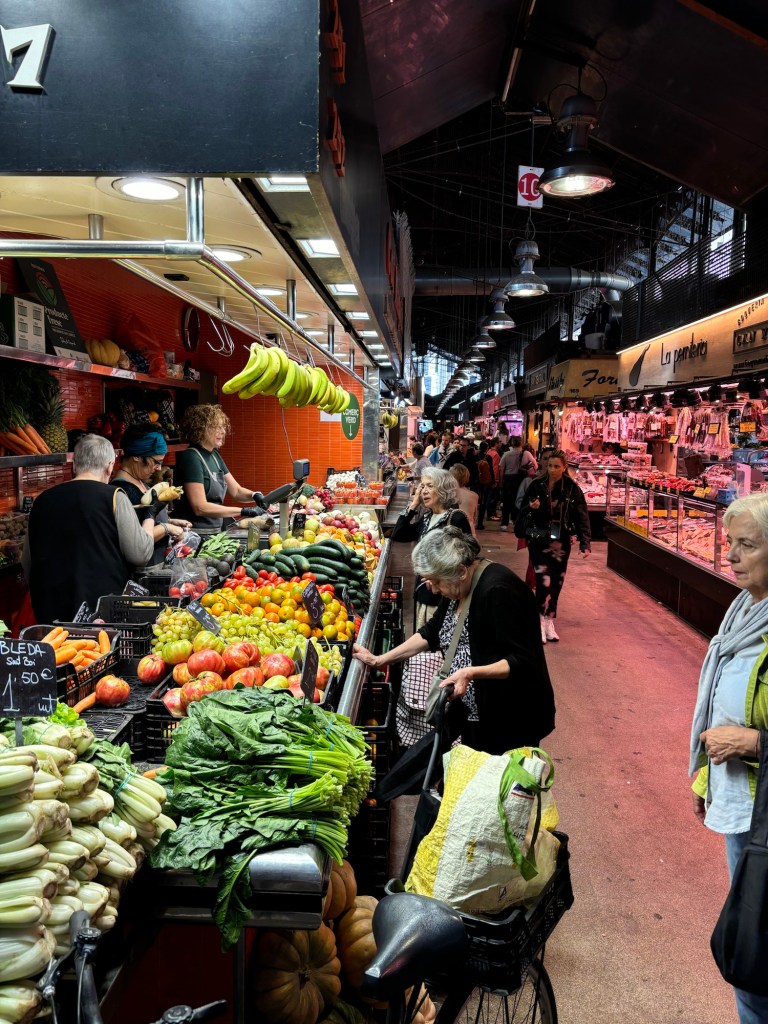
The Mercat de La Boqueria is the famous market in central Madrid. Like its brethren in Barcelona it is a cornucopia of sights, sounds and smells.
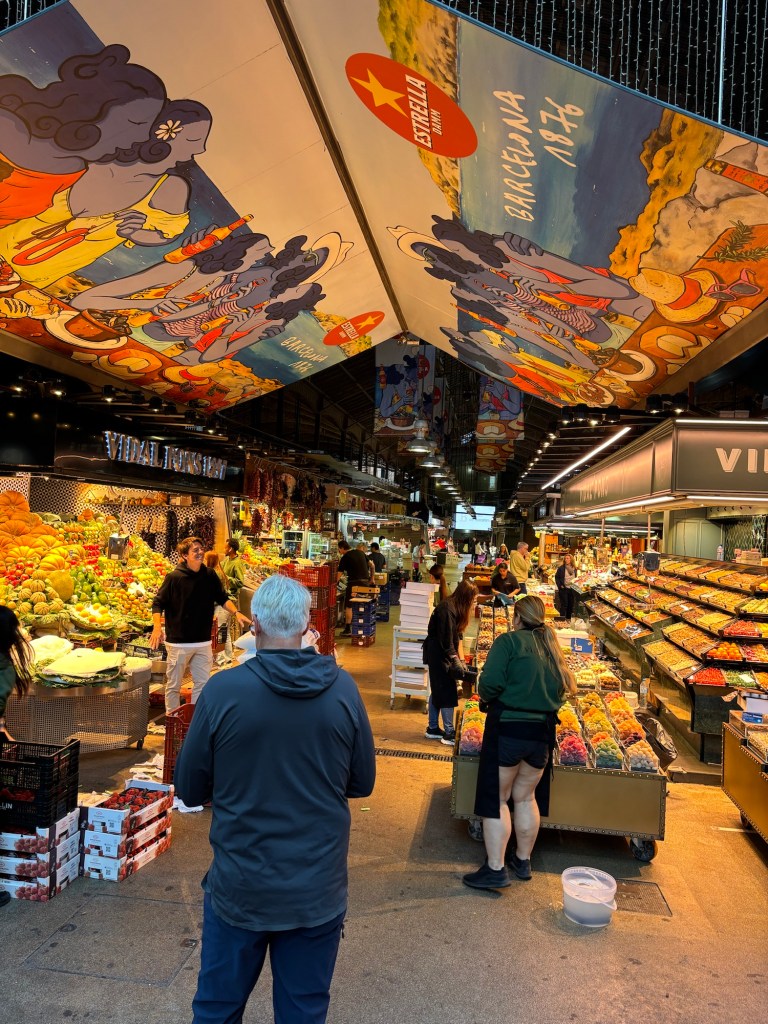
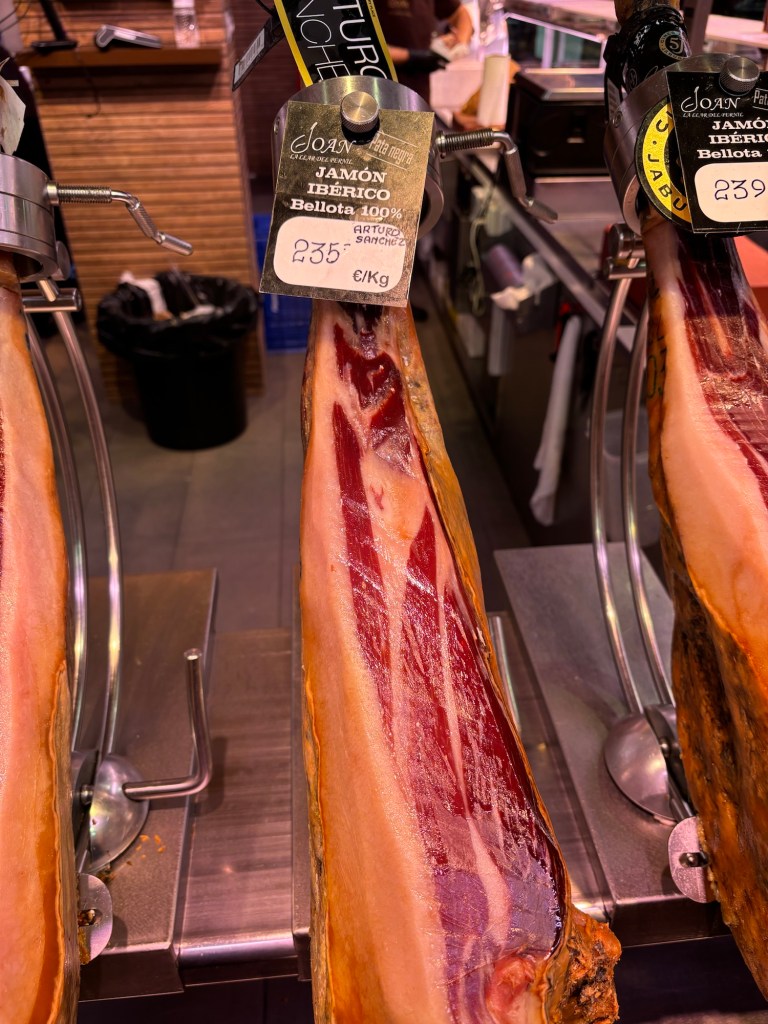
A specialty of the region is Jamón Ibérico de Bellota, the most expensive ham in the world with prices ranging over €500 per kilo. Slightly lesser expensive options were on display here. We passed.
After the market we retrieved our luggage and decided to walk to the train station, 45 minutes away, so we could see more sights along the way.

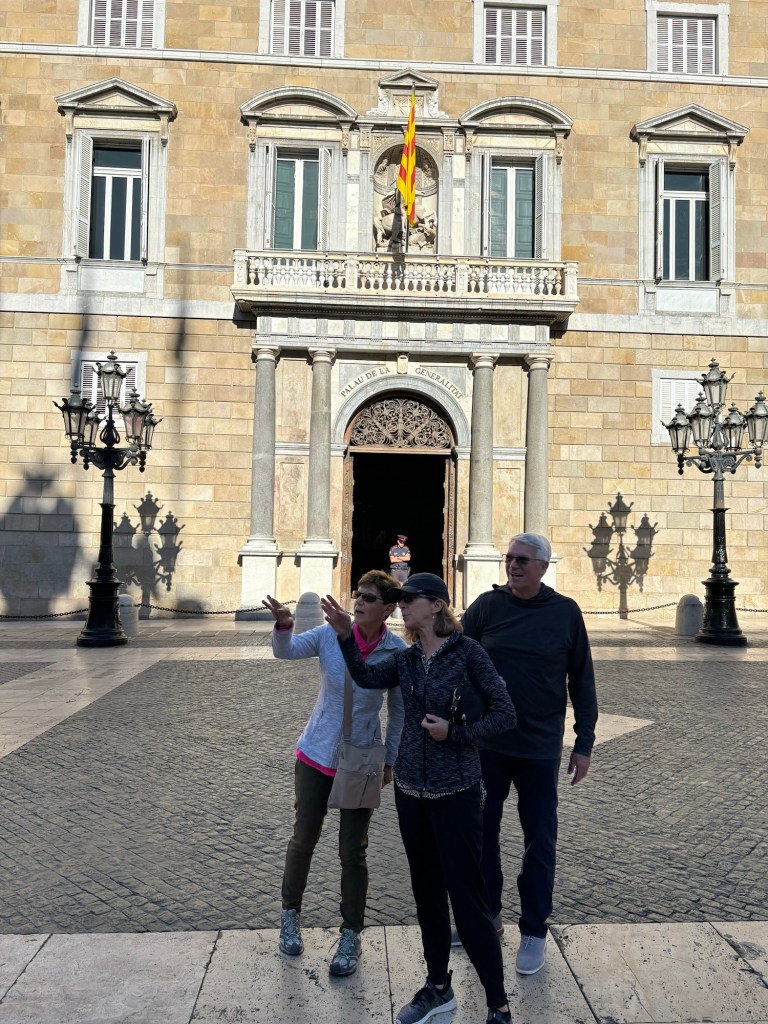
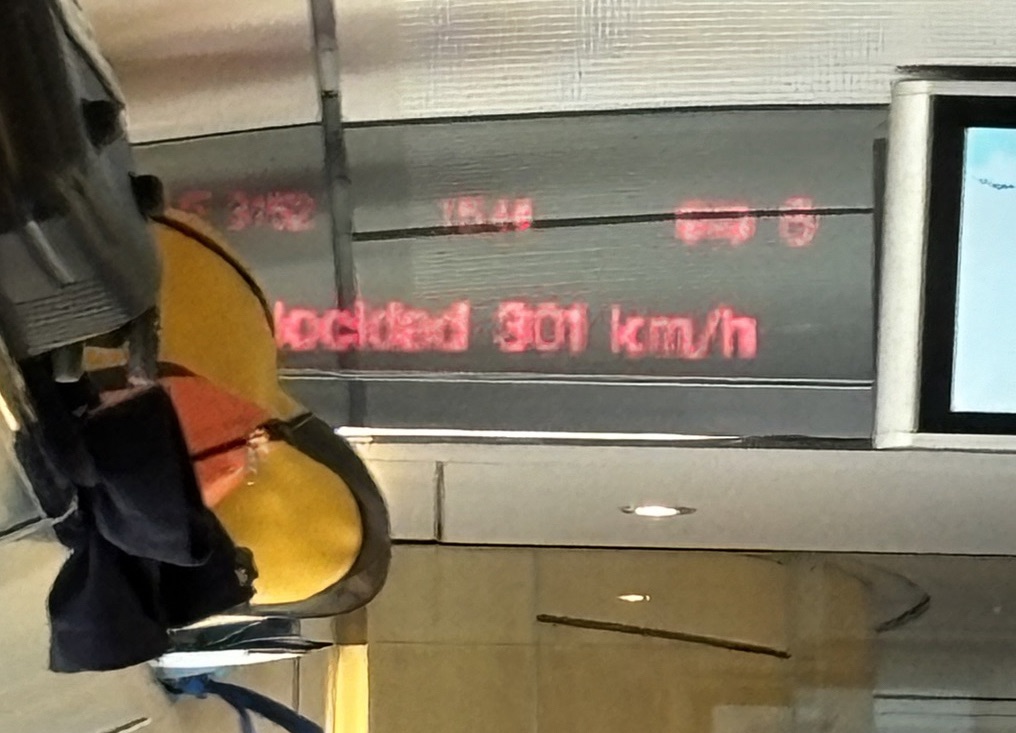
Then it was onto the high speed train to Madrid. And I do mean high speed!
Our orientation to Madrid was of two extremes. The taxi system was efficient to a fault with hundreds of people accommodated in minutes. Then, however, we got stuck in Madrid traffic, in a tunnel, for over 1/2 hour. Eventually we abandoned the taxi and walked the last mile.

The light was fading quickly as we walked down from the hotel to Opera Square and the Royal Palace (Palacio Real de Madrid).

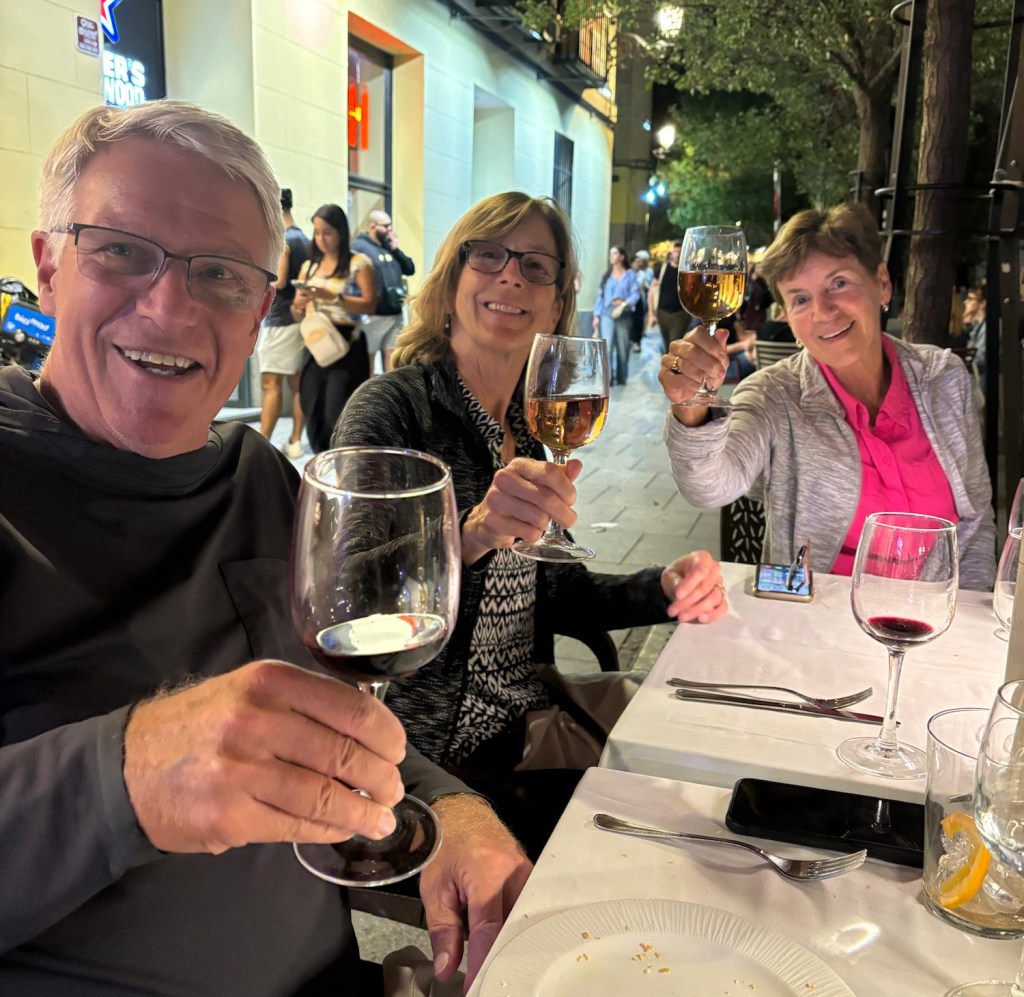
Another great dinner in a sidewalk cafe and a post meal stroll ended the day.
Tomorrow, the bicycles! Yikes.

Barcelona

Editors note. In the thumbnail format some pictures may appear cut off. Tap on the photo for the full image.

A final group lunch then onto the bus for the two hour ride to Barcelona. Back into the urban sprawl and major traffic congestion. Our tour group said its goodbyes at the central train station and we set off for our hotel, suitcase wheels clattering across the cobblestones.

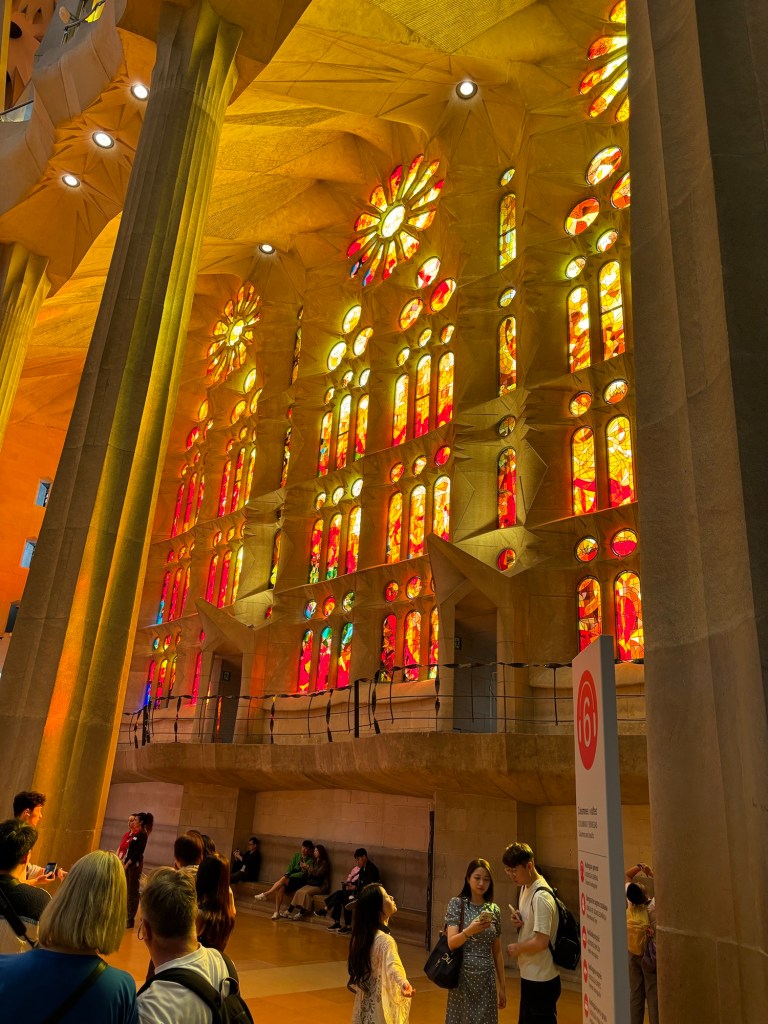
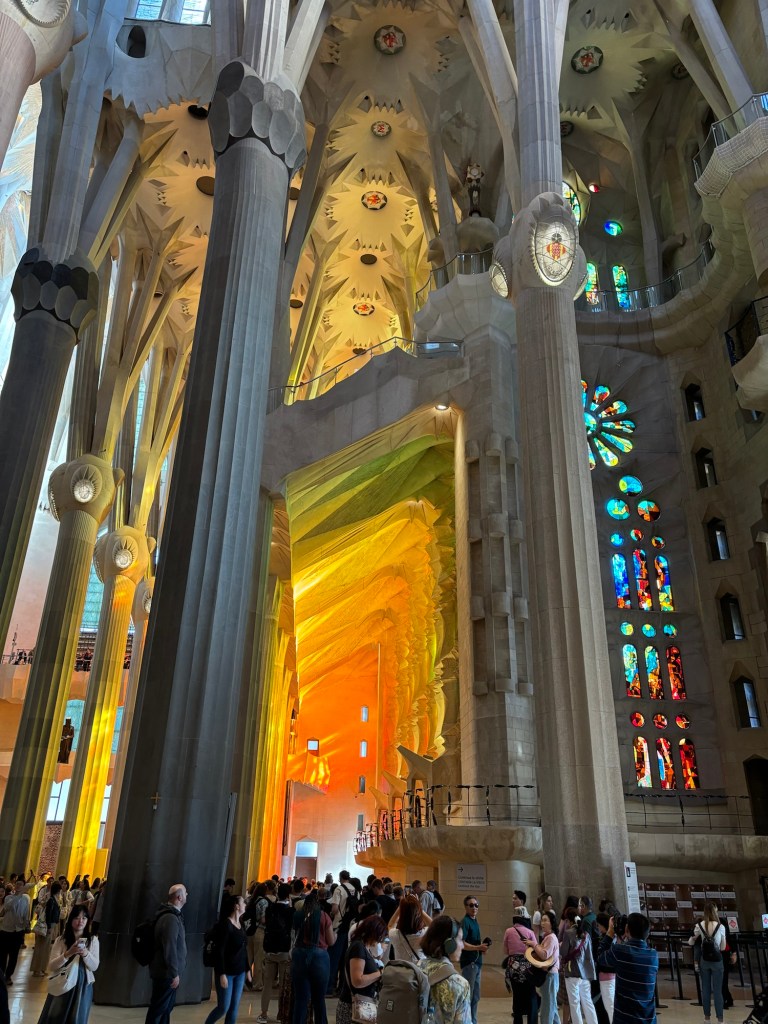
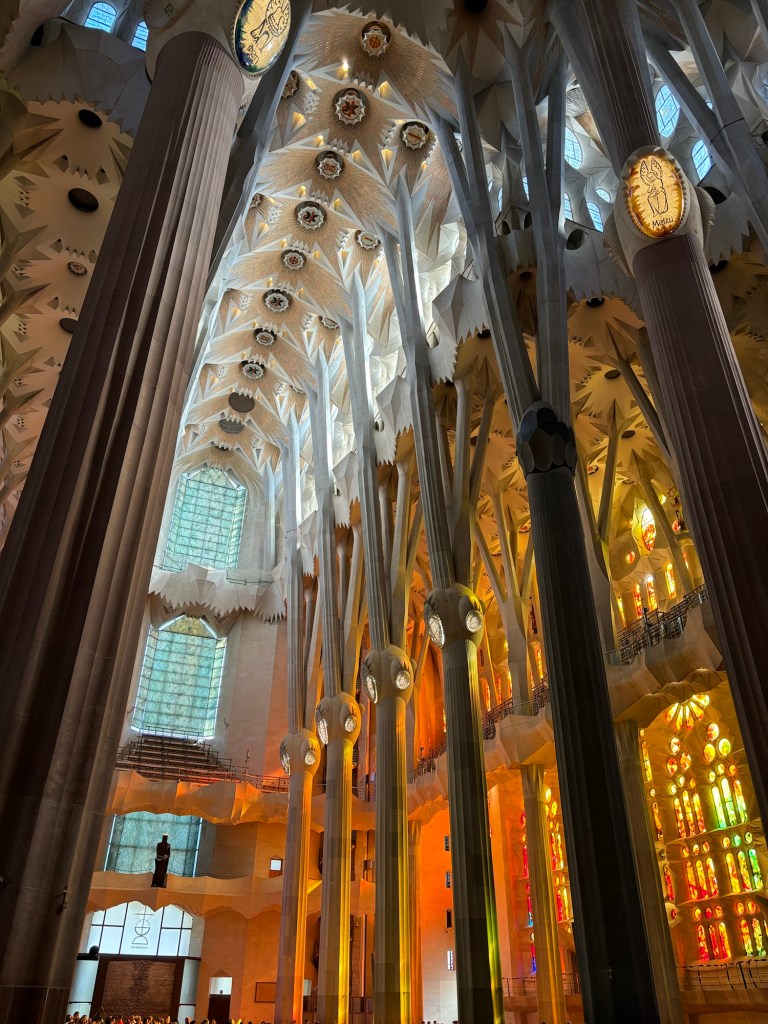
Dumping our suitcases and backpacks we flagged a taxi to Sagrada Familia, perhaps one of the most iconic structures in Europe and maybe, beyond.

One cannot aptly describe this basilica and even pictures don’t do it justice. Please look it up on Wikipedia to understand the history and current plans for its ongoing construction.

The architectural details and design defy description. We had an audio tour downloaded which was excellent and had each element of the project explained. The stories carved in stone on the exterior were amazing.

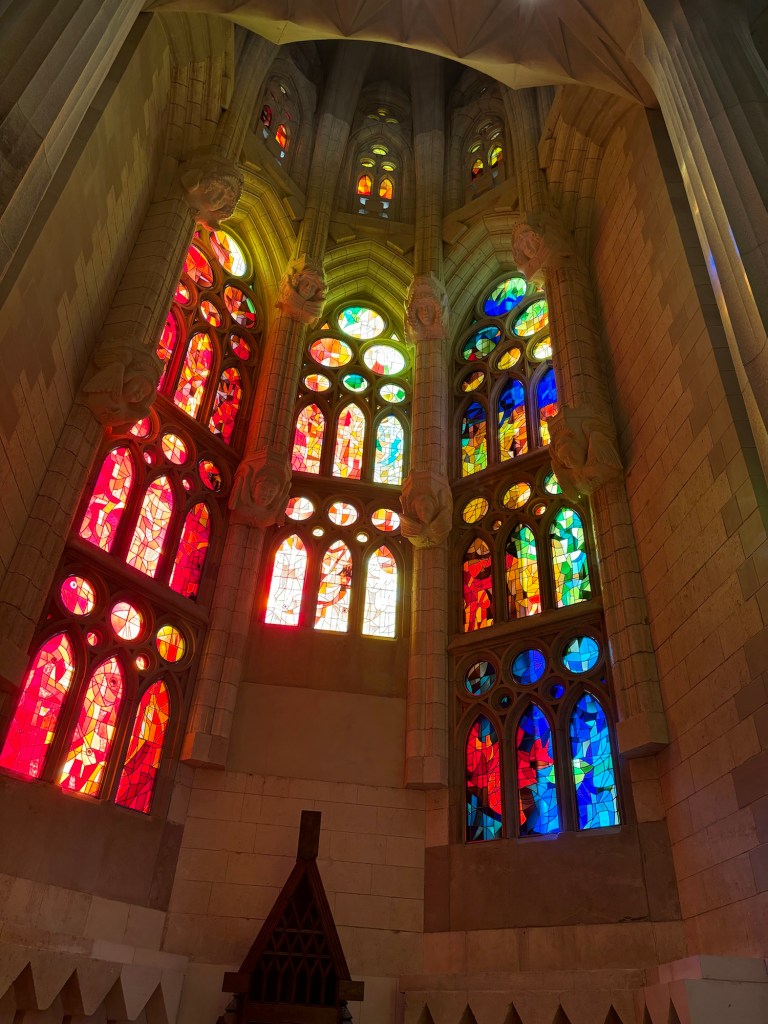
Once inside the stain glass windows glowed and shimmered in the bright sunlight. There were dozens and dozens of windows of different shapes and sizes, each more breathtaking than the last.

Each window told a story as well as being integral to allowing light to flow onto different interior components.

The columns, flying buttresses, ceilings and balconies were all unique in their appearance and style. It was sensory overload but jaw dropping.

It is difficult to imagine how the building trades of a century ago managed to create portions of such a monument with the tools and technology of the day.

We finished by walking through the museum to appreciate how creative the architect, Gaudi, had been more than 100 years ago with his drawings and plaster molds.

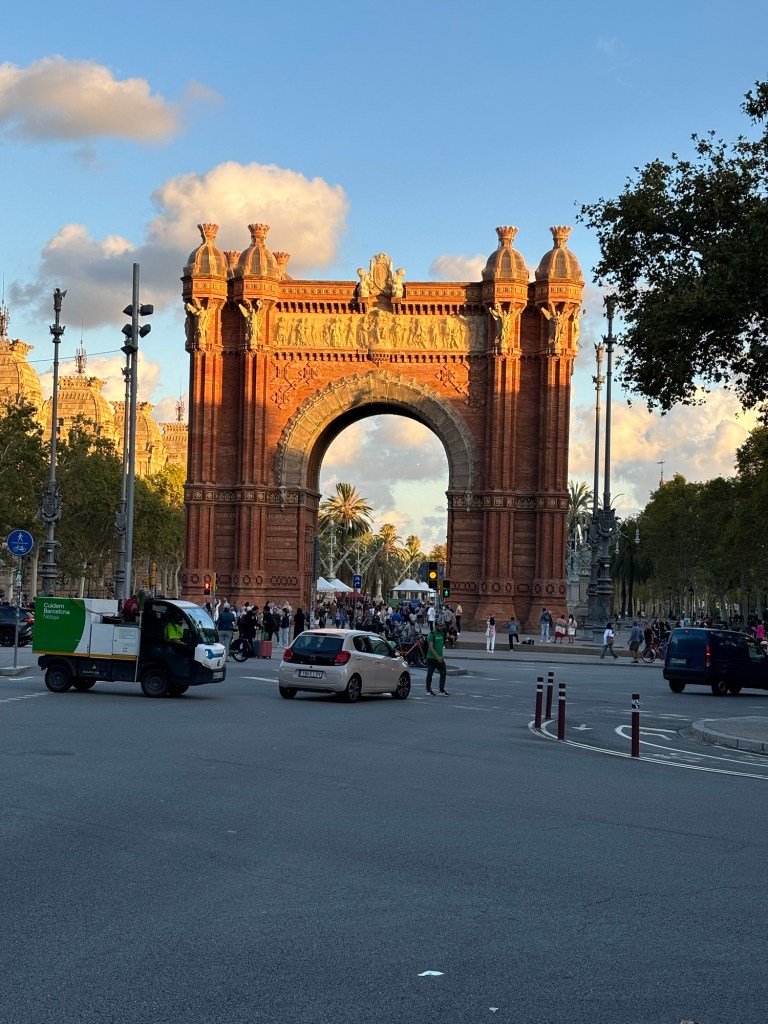
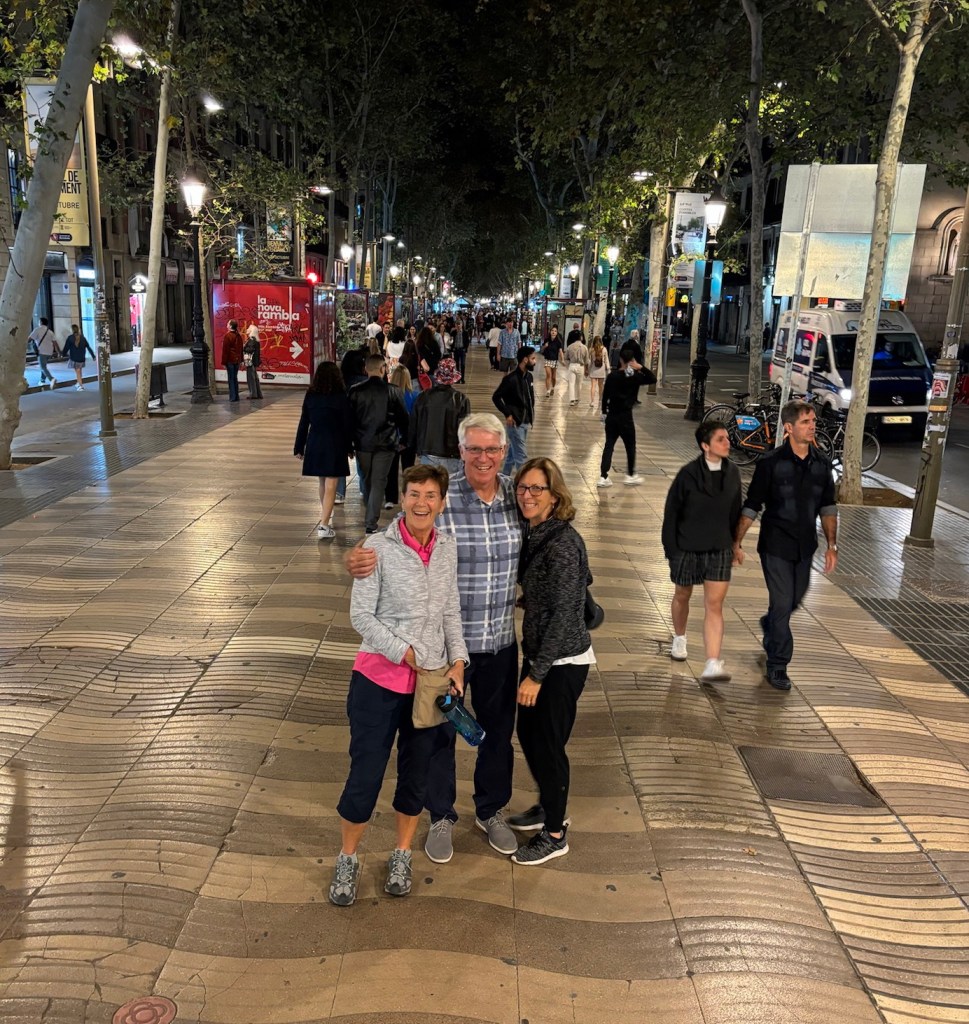
There was enough daylight left for a mini wander through the touristy centre and do touristy things.

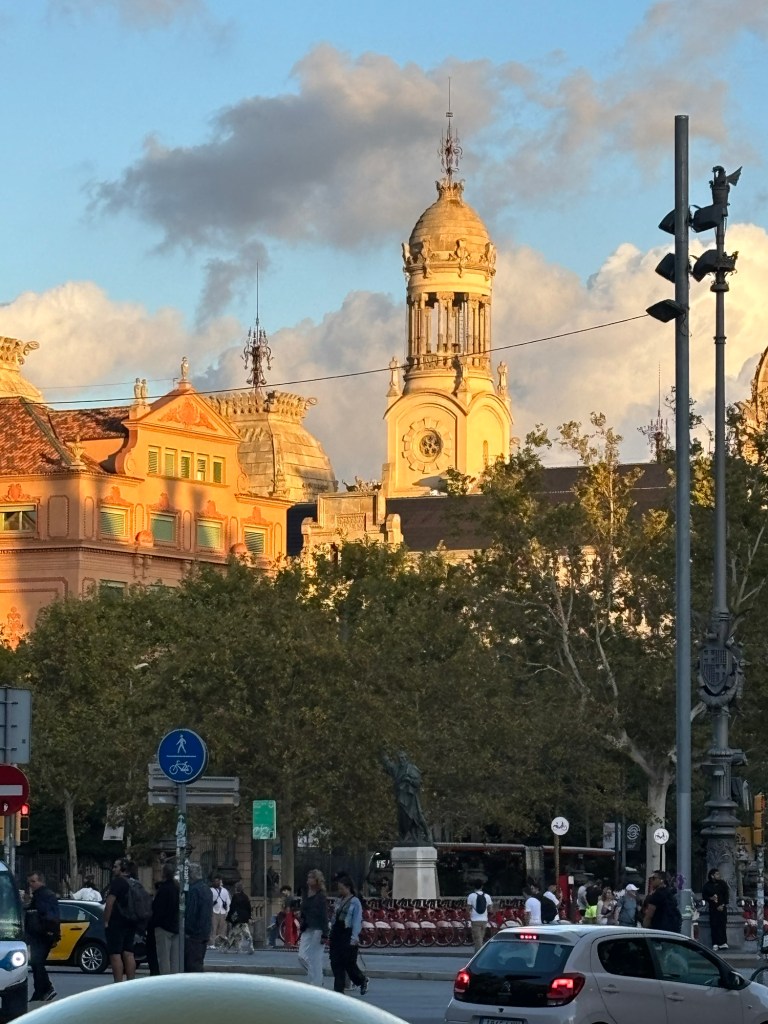
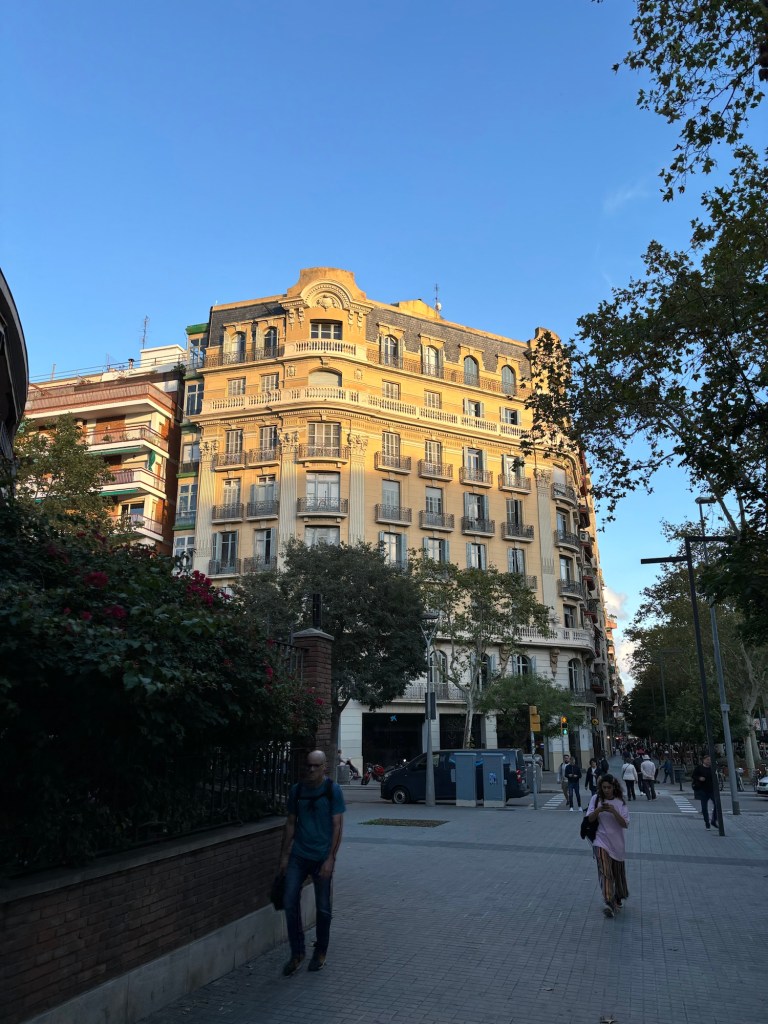
Everywhere one turns, history and unique architecture abounds.

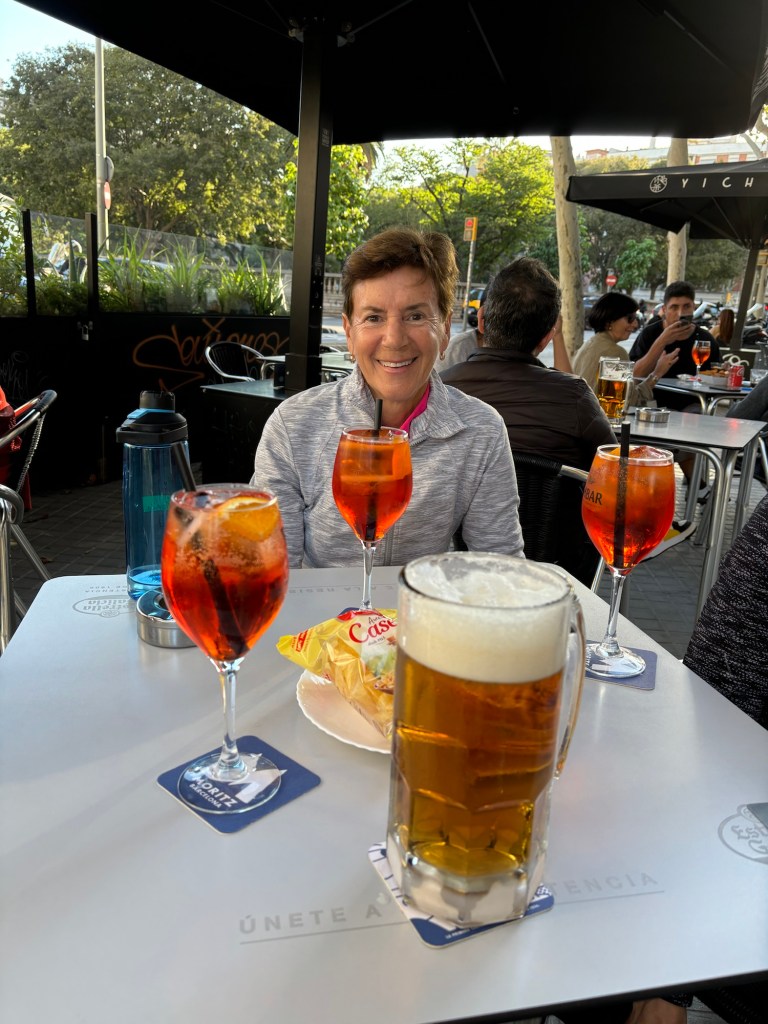
More walking. More admiring. More people watching. Dinner in an outdoor cafe. Grateful to have a comfortable hotel room. Tomorrow is more Barcelona exploration before catching the train to Madrid where we will meet our next tour.

Calella de Palafrugell – Costa Brava

Editors note. Some pictures may appear cut off in the thumbnail format. Click on the photo to see it properly.

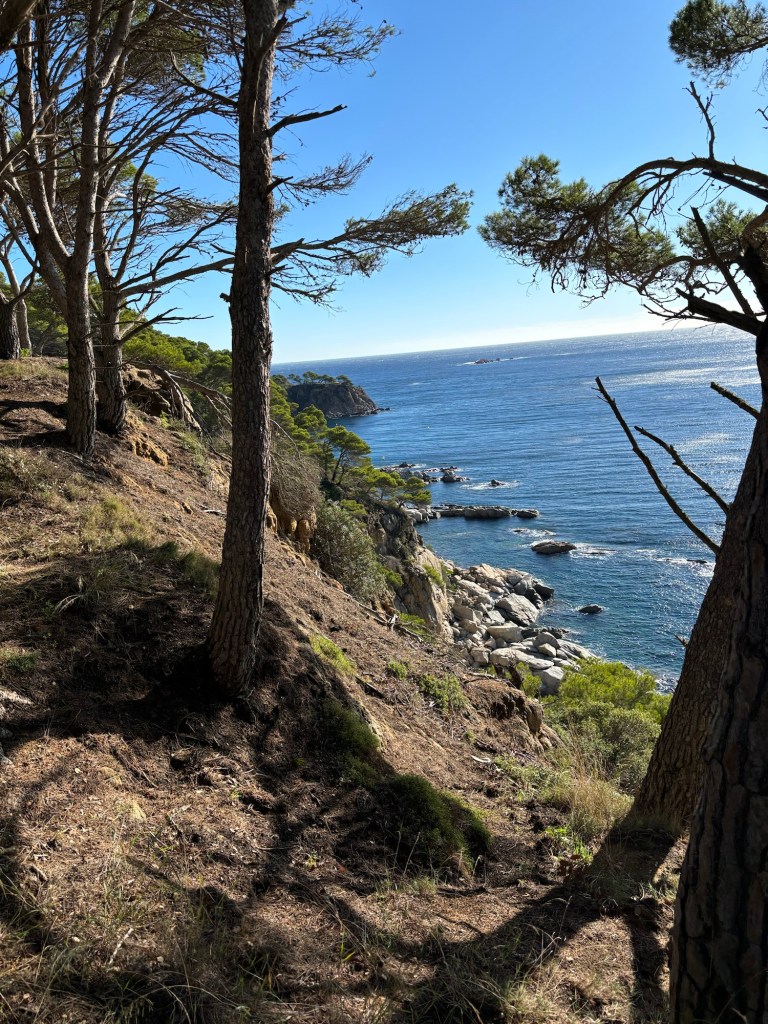
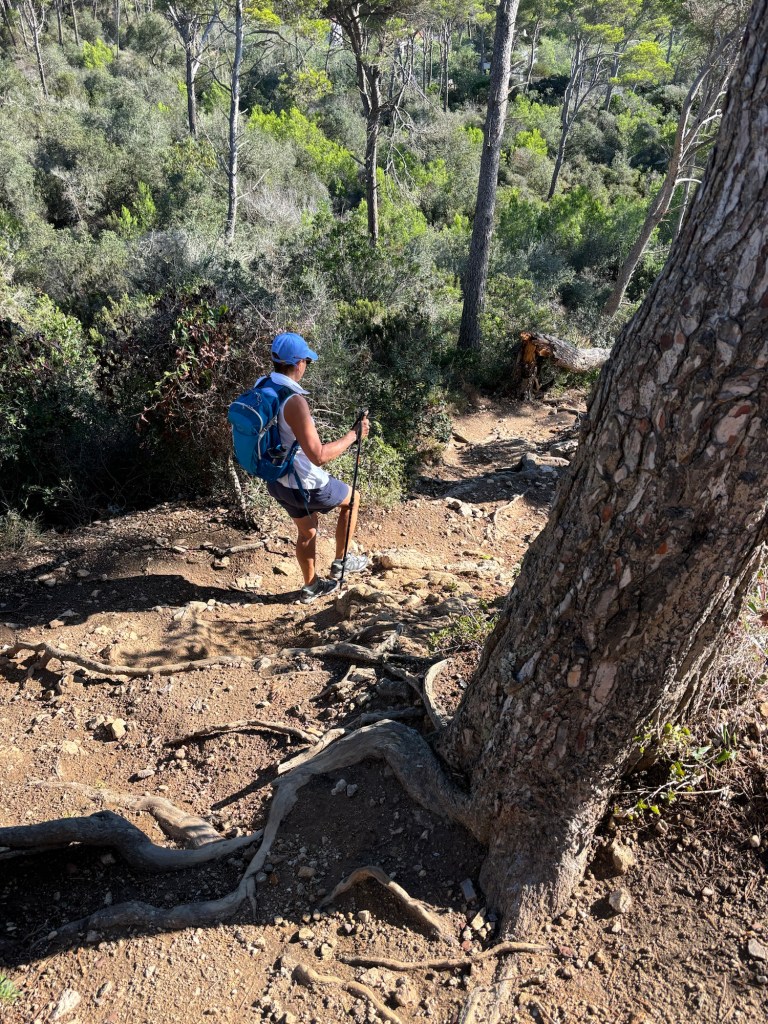
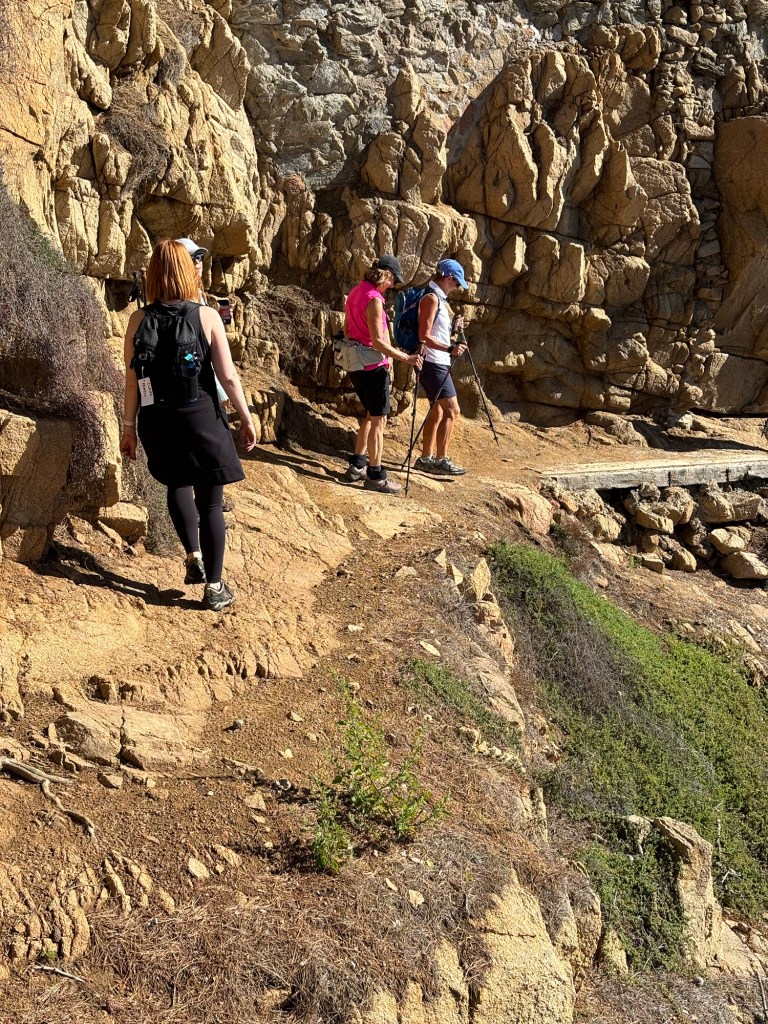
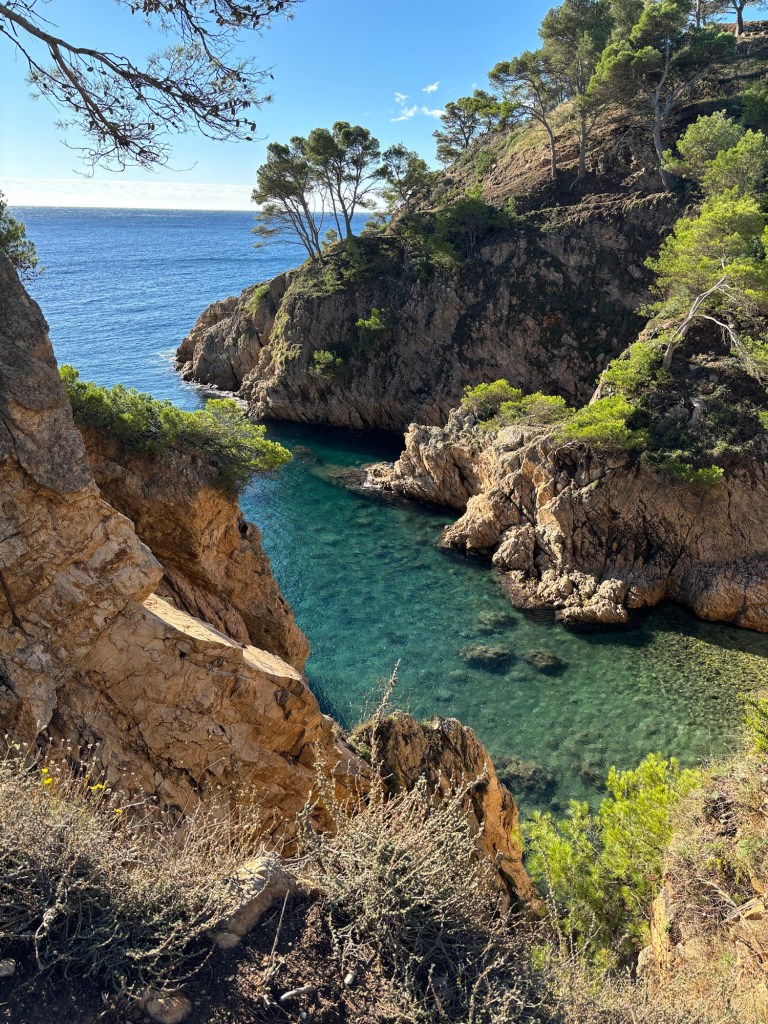
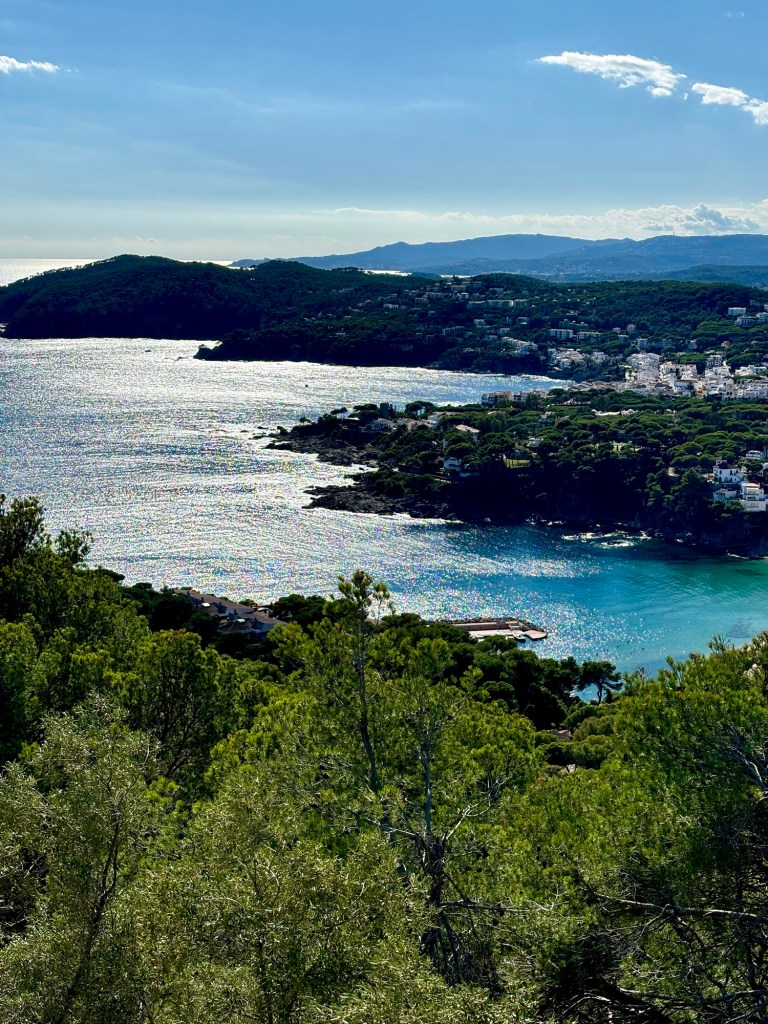
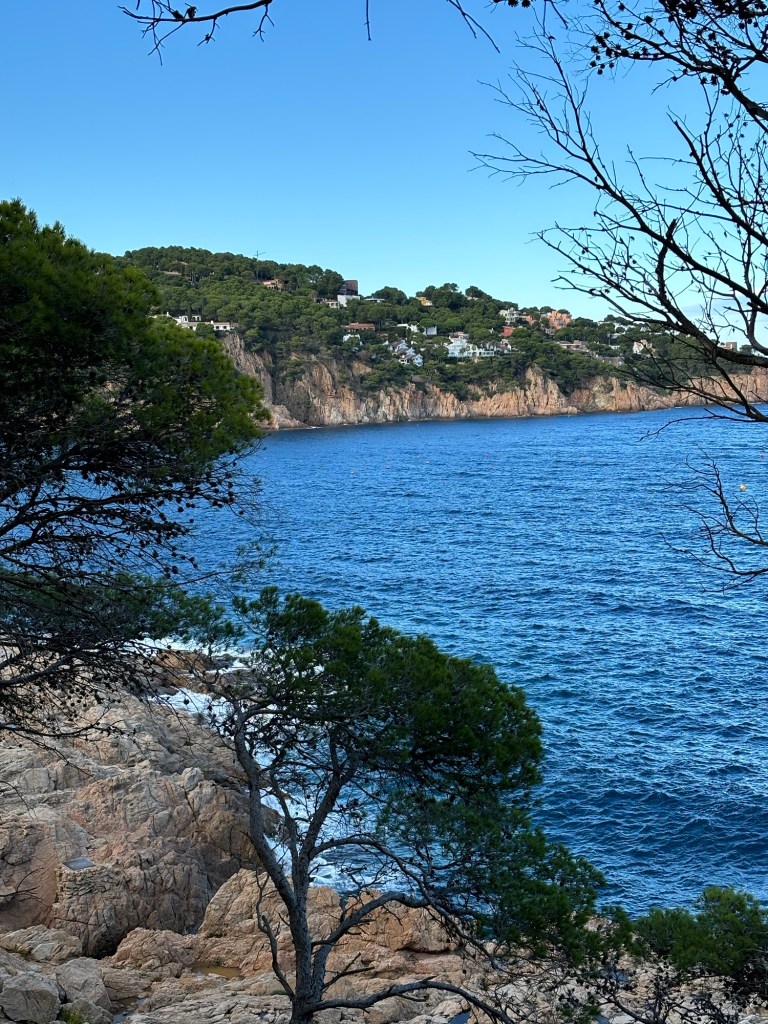
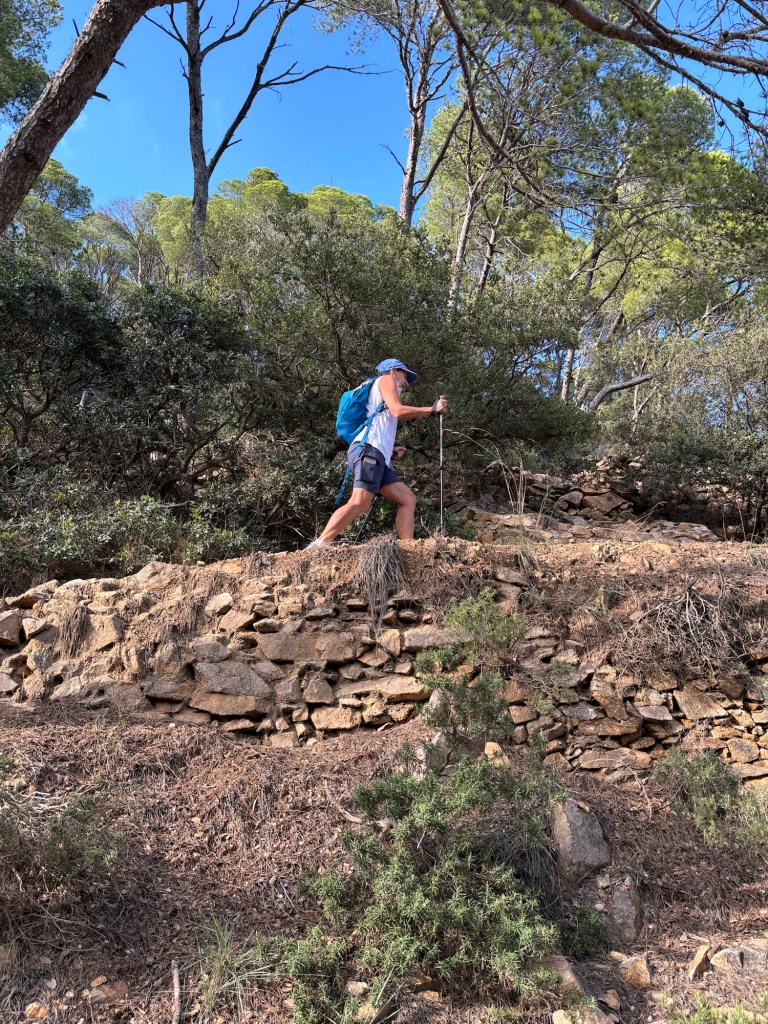
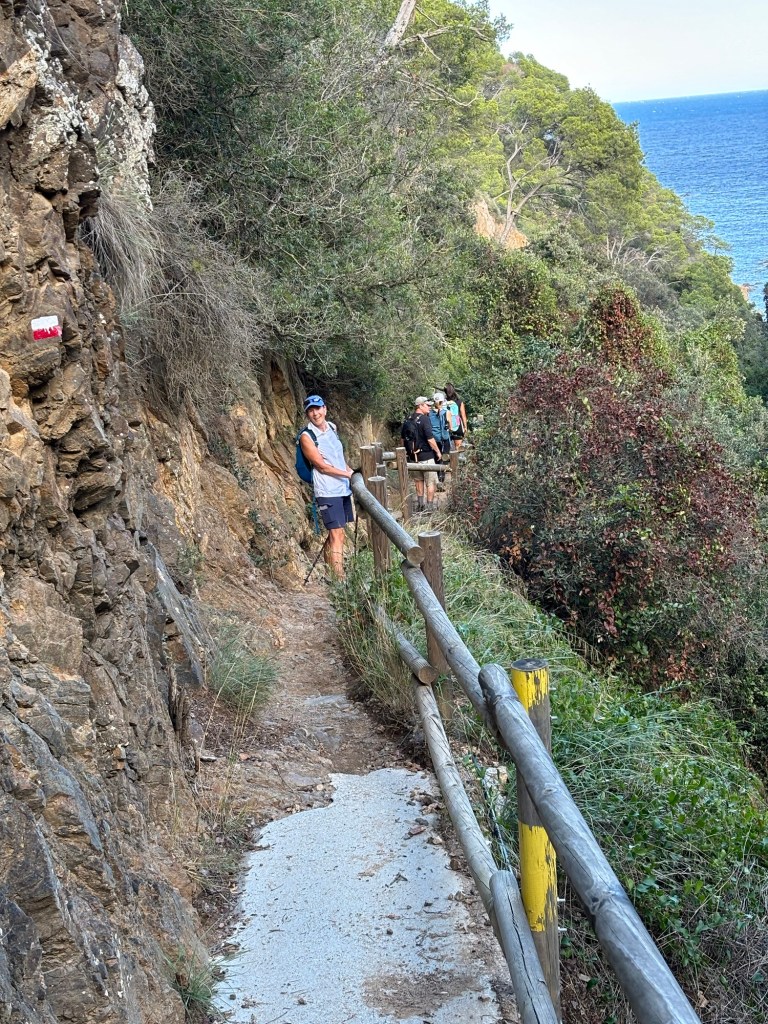
We took the vans south from our hotel to near Cala s’Alguer and were warned today’s hike would be quite technical, ending in Tamariu. That proved to be an accurate description given the numerous trail types we traversed.

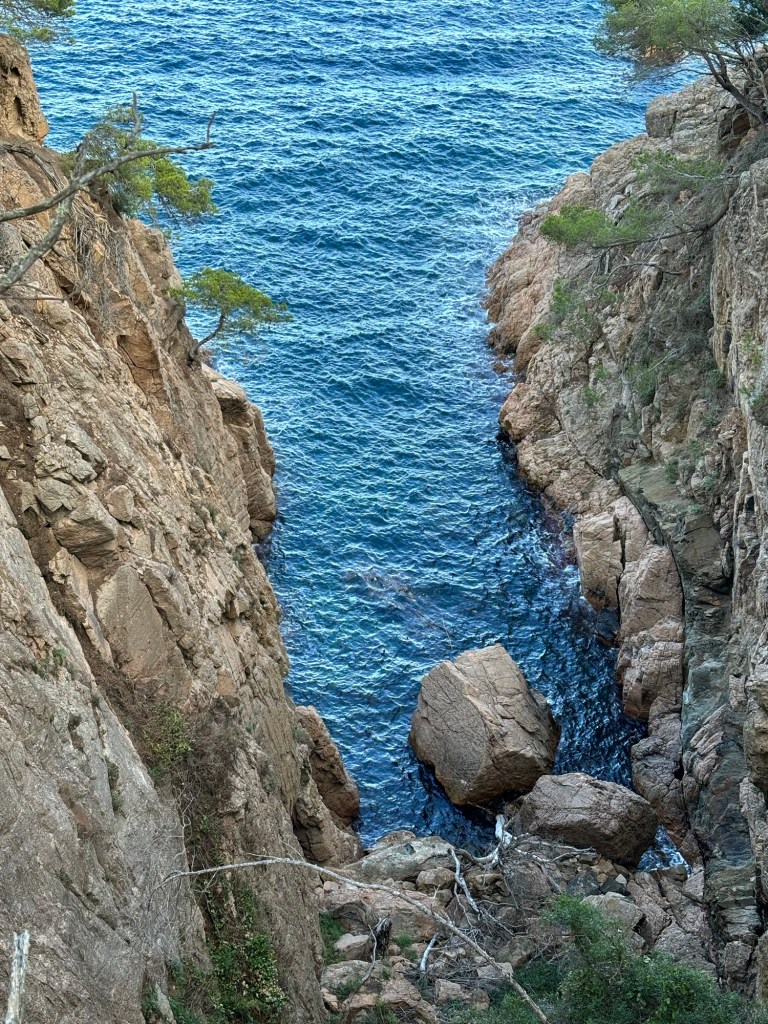
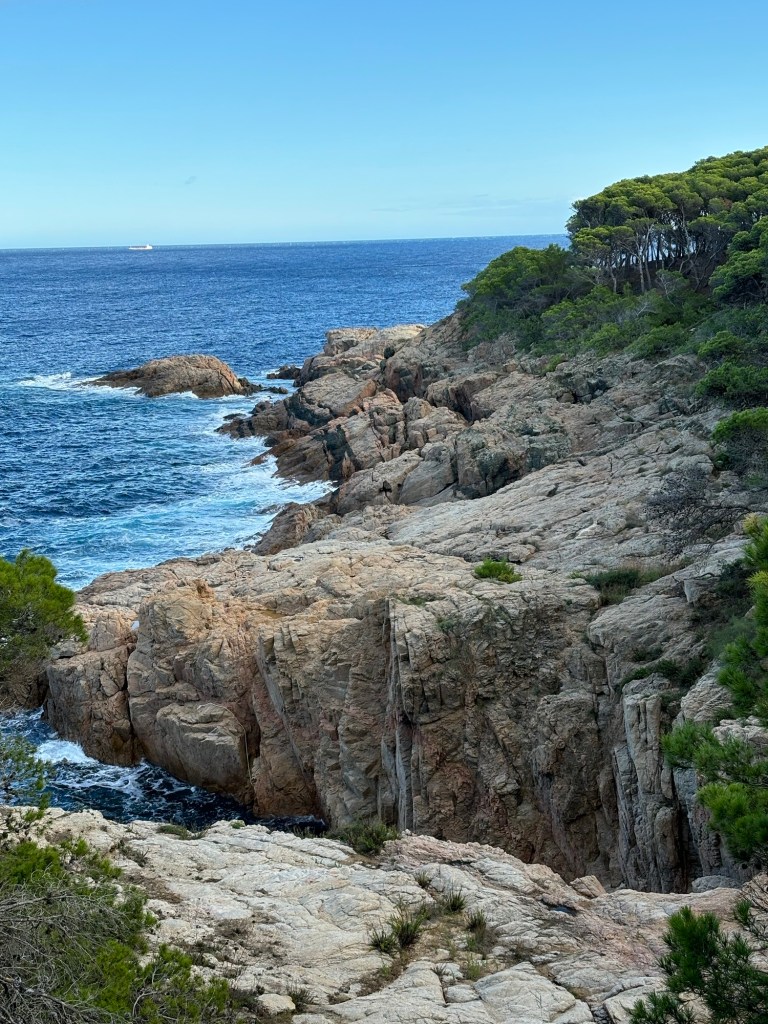
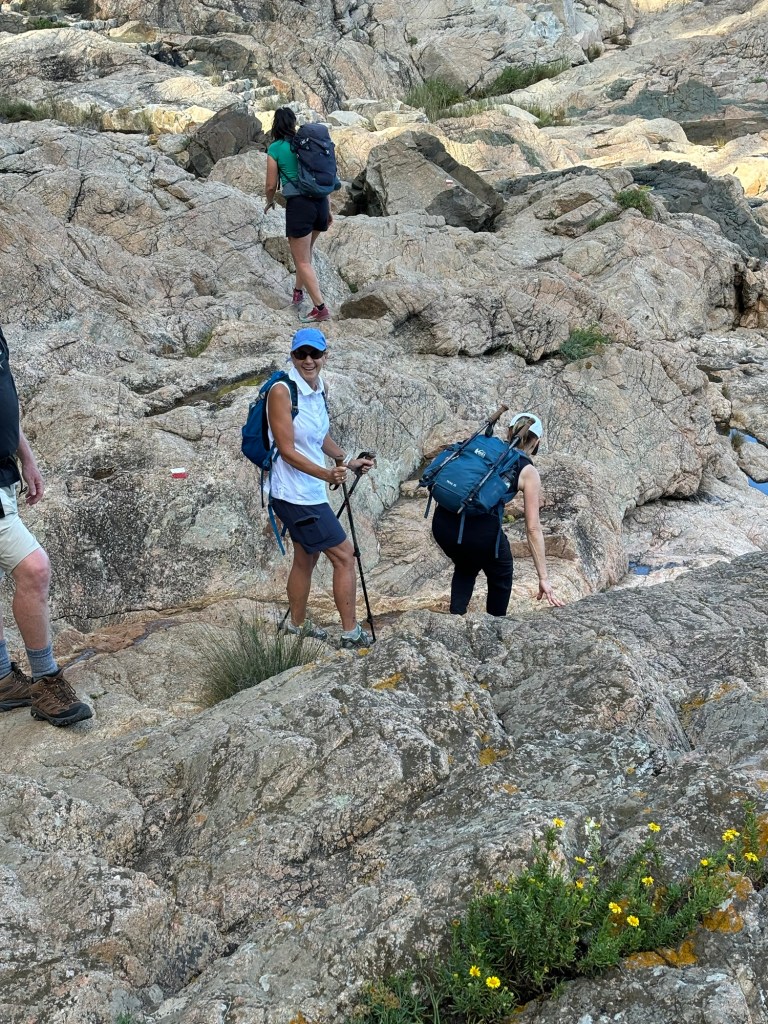
The walk started on the top of cliffs, wended it’s way through woodlands, up and down rocky slopes, across a beach including wading through the surf then back up to the cliff tops and back down and so on.

Simply a spectacular morning walk that had a few challenging moments mixed in. PS – walking on rocks when traversing different coves along the beach in bare feet is quite painful at times.

After a massive lunch that took two hours – this plate of mussels was just the appetizer …….

oh, and half a bottle of wine……each…..five of us joined our two guides for the second half of the hike. The remainder went back to the hotel via foot or shuttle for a siesta.

Early on it felt like a huge error in judgment given the very steep climb to the local lighthouse. But what a view!

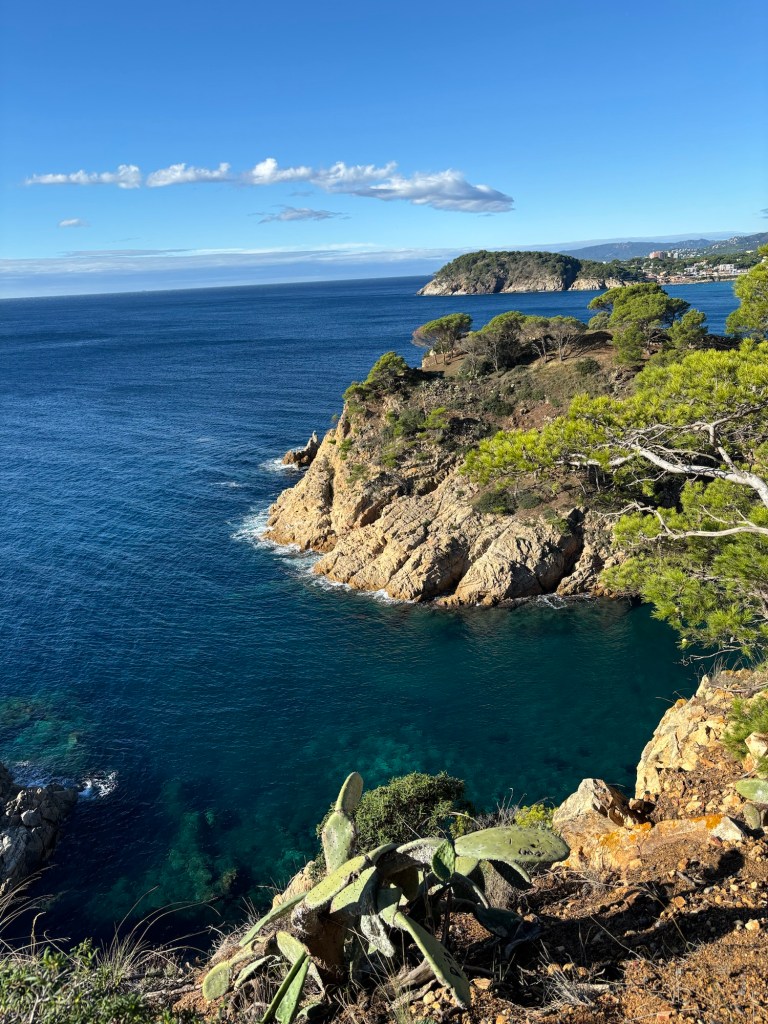
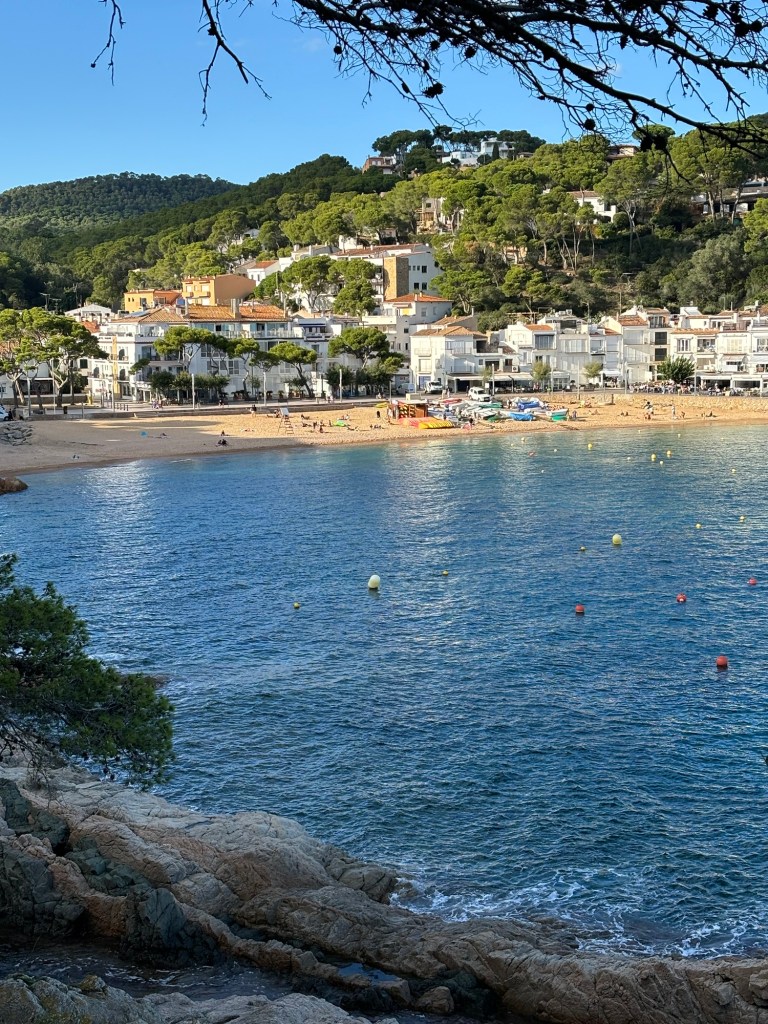
For perspective, we began our morning on the far side of the leftmost peninsula and followed the coastline to this lookout (and we’re only half way to Tamariu).

From there it was a series of twists and turns, up and down.

And the wondrous views never stopped despite our mostly staring at our shoe tops given the rocky trails.

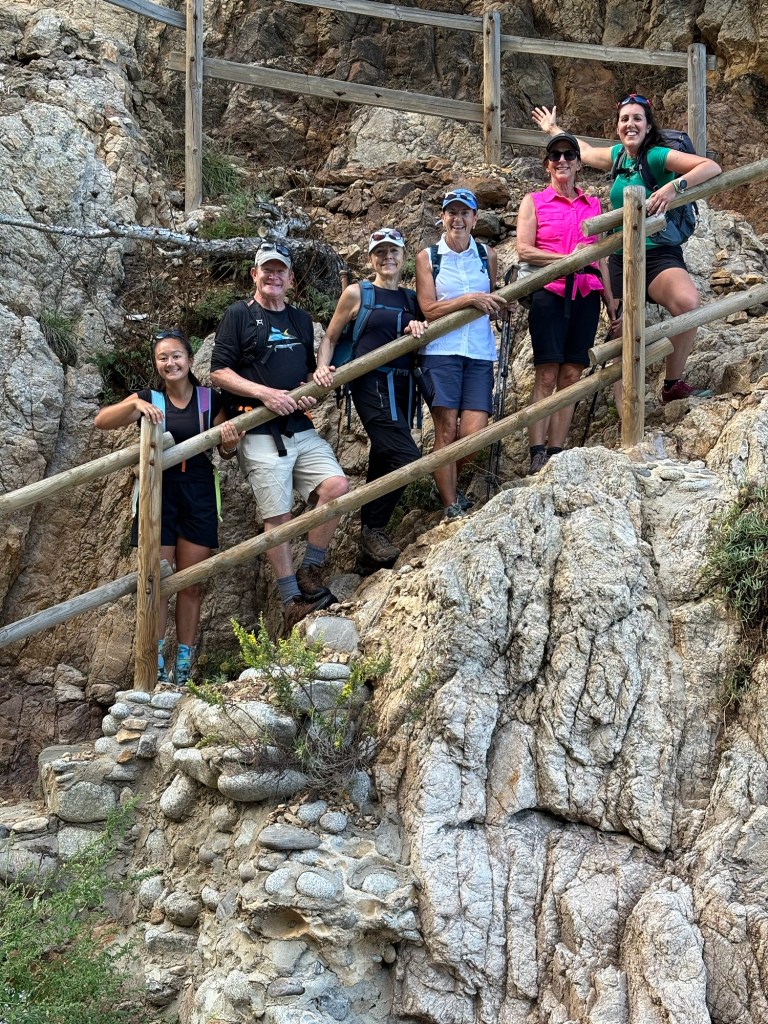
The “A” team (excluding the photographer!) bookended by our fabulous guides Kylie Woo and Estelle Finot.

Finally we reached Tamariu where cold beverages and our shuttle awaited.

Although not a huge distance (~18 Kms as a crow flies) the elevation changes made for a taxing day.

A final group dinner with mountains of food and drink topped off the evening. Notwithstanding the calories burned by hiking each day it’s a wonder we haven’t gained a ton of weight given the number and size of the meals (and the local wines 😁).

Tomorrow we pack up and head to Barcelona where everyone goes their separate ways – except some of us who will take on the hills/mountains of northern Spain on bicycles for a week. Stay tuned.

Saint Remy de Provence to Calella de Palafrugell, Spain

A rest and travel day given our relocation to the Costa Brava in north eastern Spain.

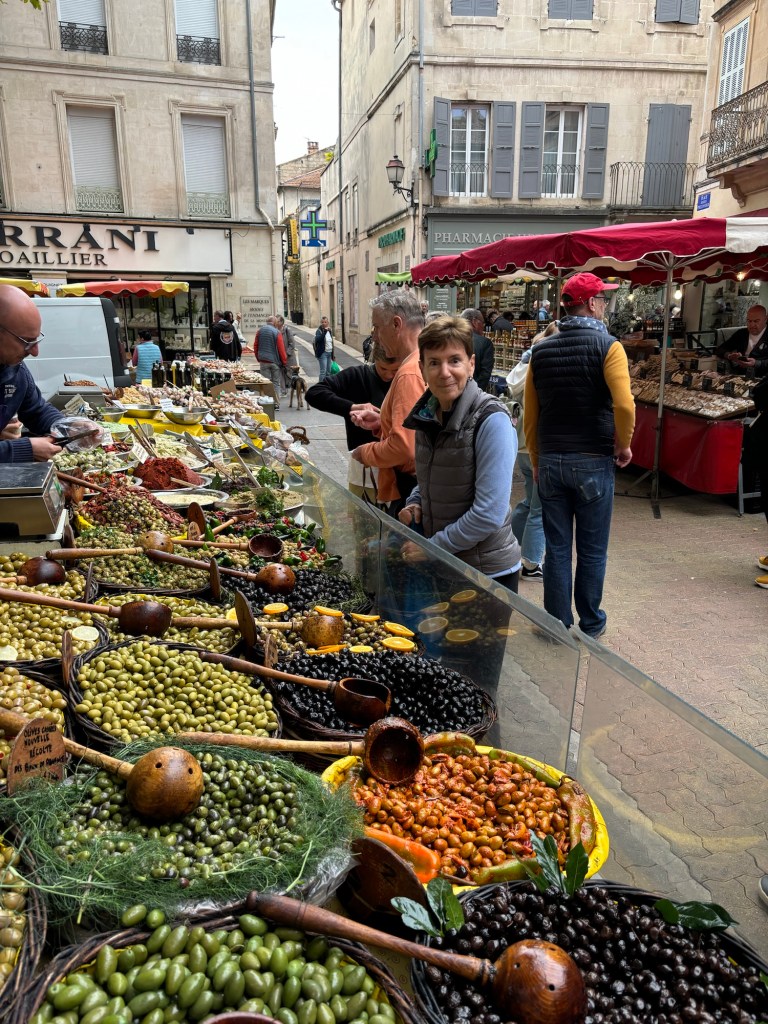
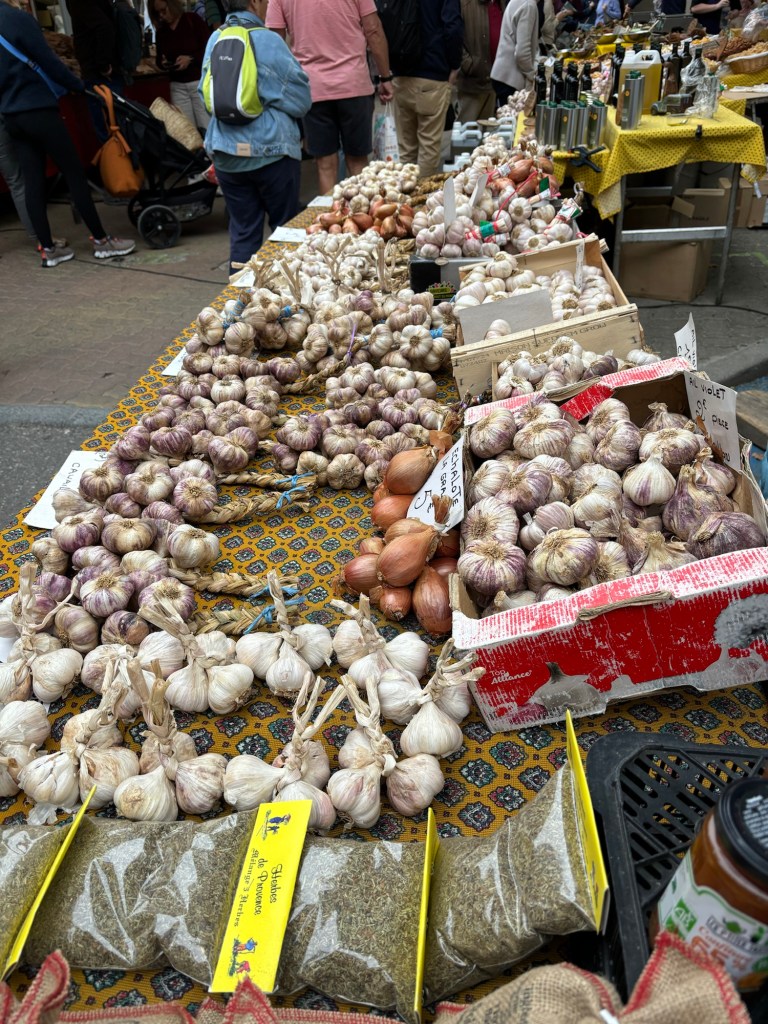
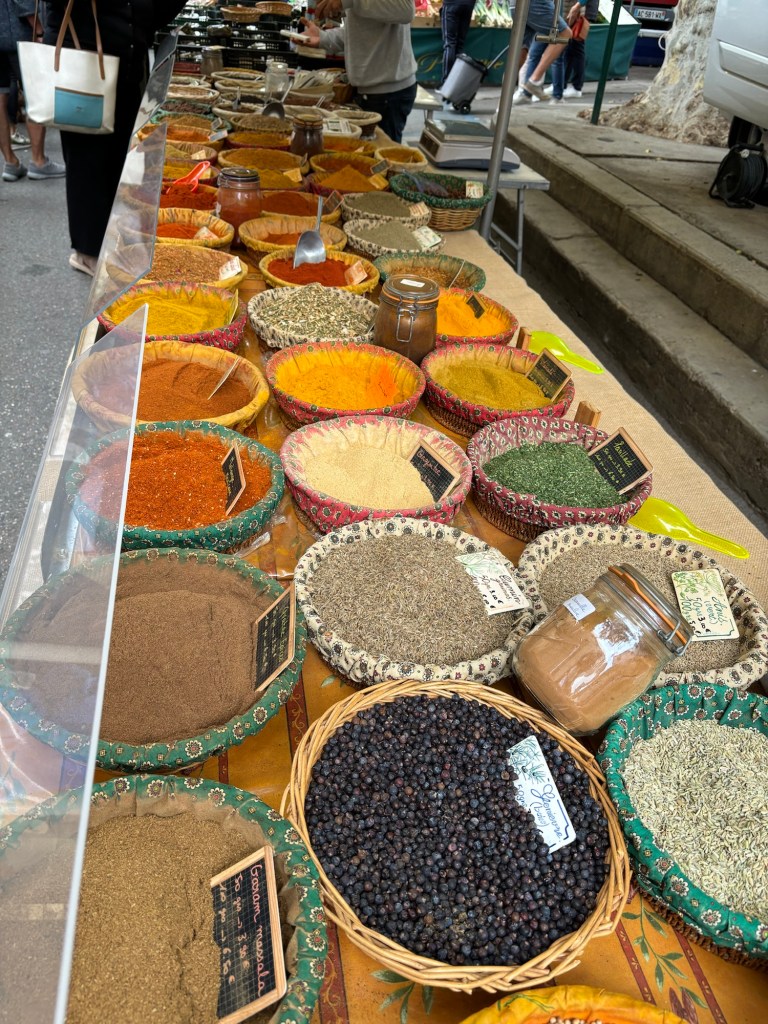
But first we spent the morning wandering through the weekly market that occupies central Saint Remy. Vendors of everything set up stalls to attract tourists and locals alike. It was a madhouse of colours, people and aromas. While the pictures here focus on the food section of the market there were dozens of stalls offering clothing and “you name it”. Hundreds of sellers occupied various streets, alleys and a town square.

Our only purchase was a small bag of olives!

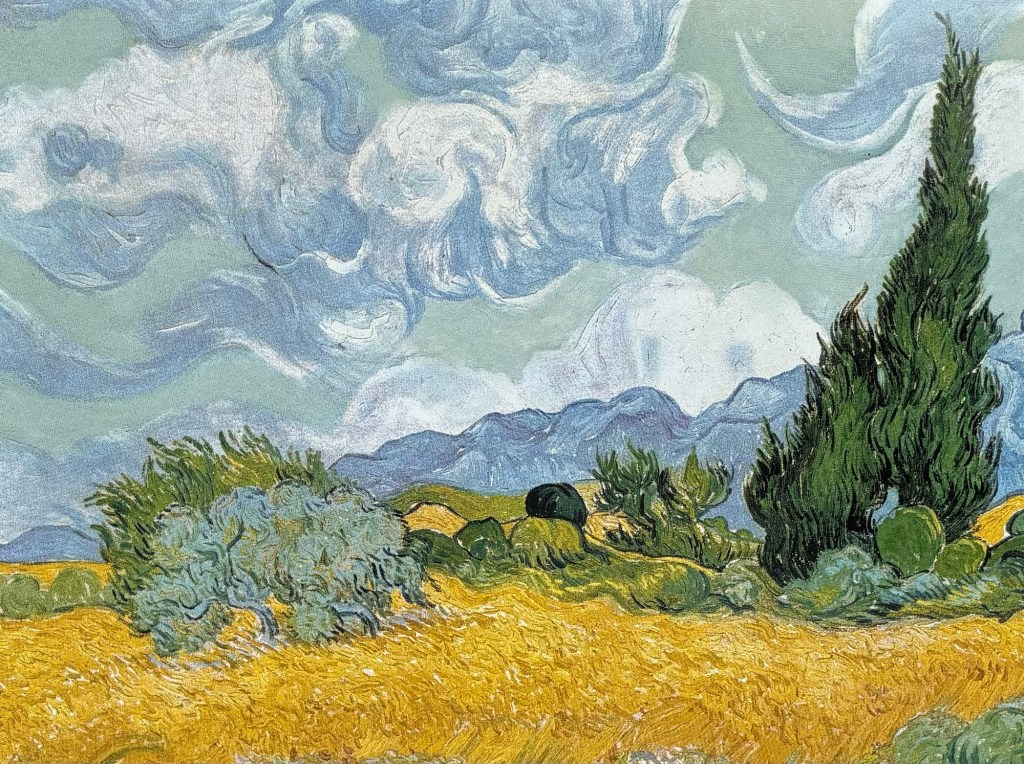
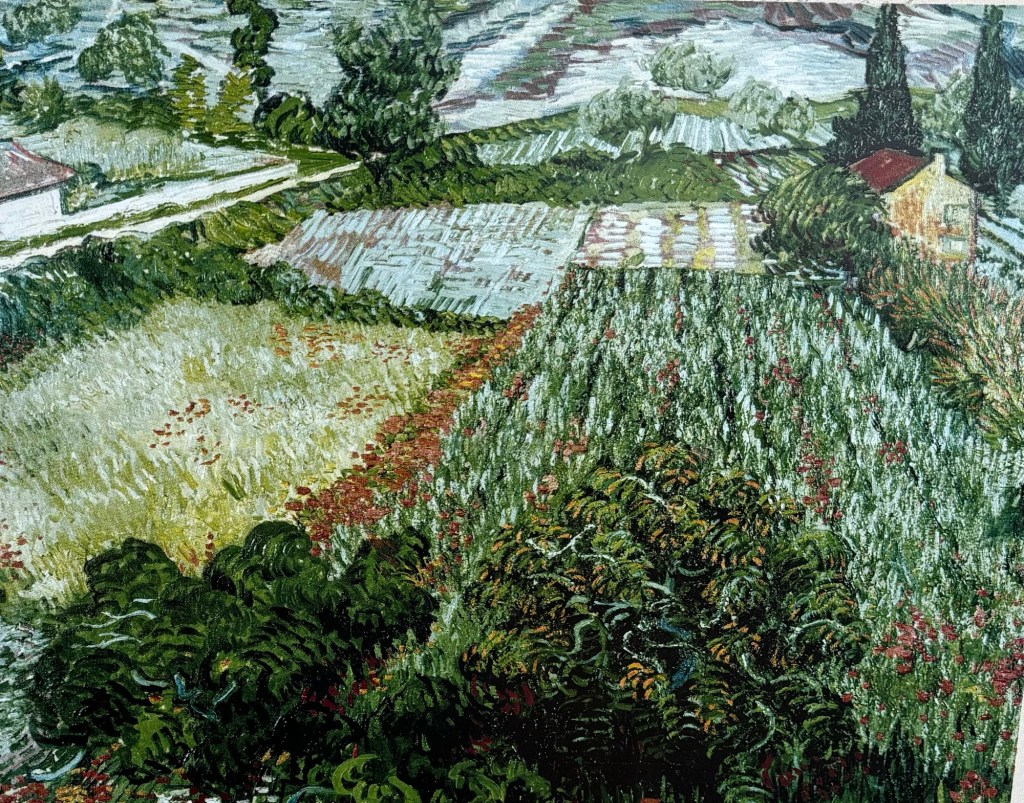
We walked from the market along Van Gogh way given the painter spent time in 1889 in Saint Remy in a mental institution. He painted many of his better known works during that time and the paintings including letters to his brother are displayed along the way.

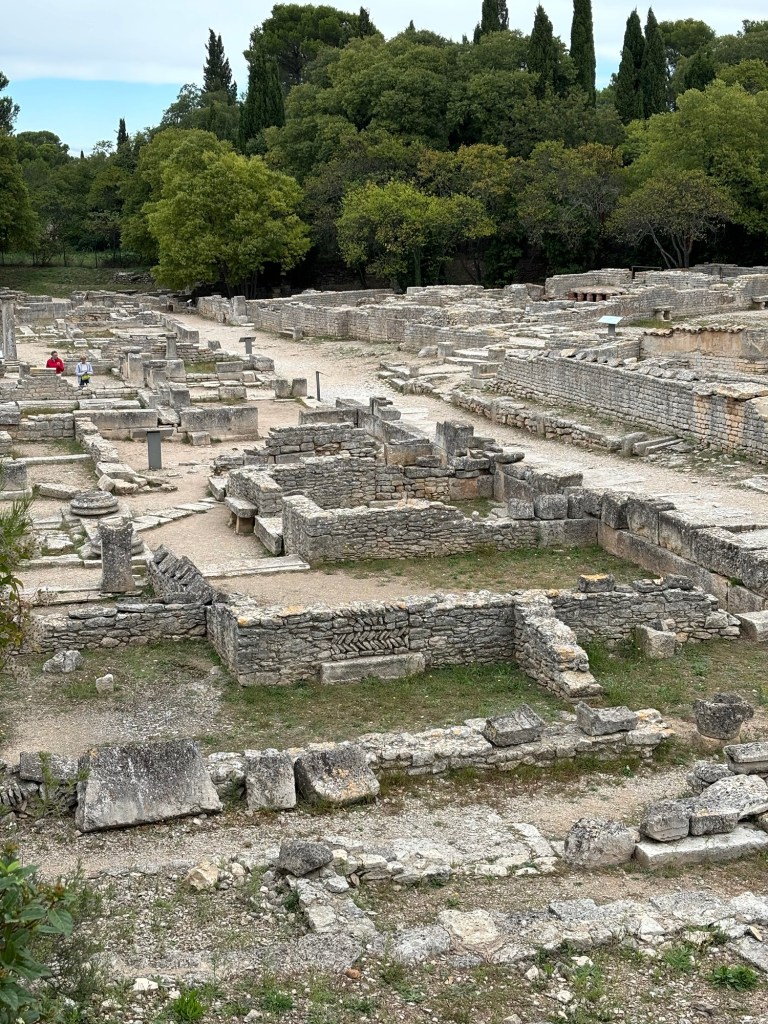
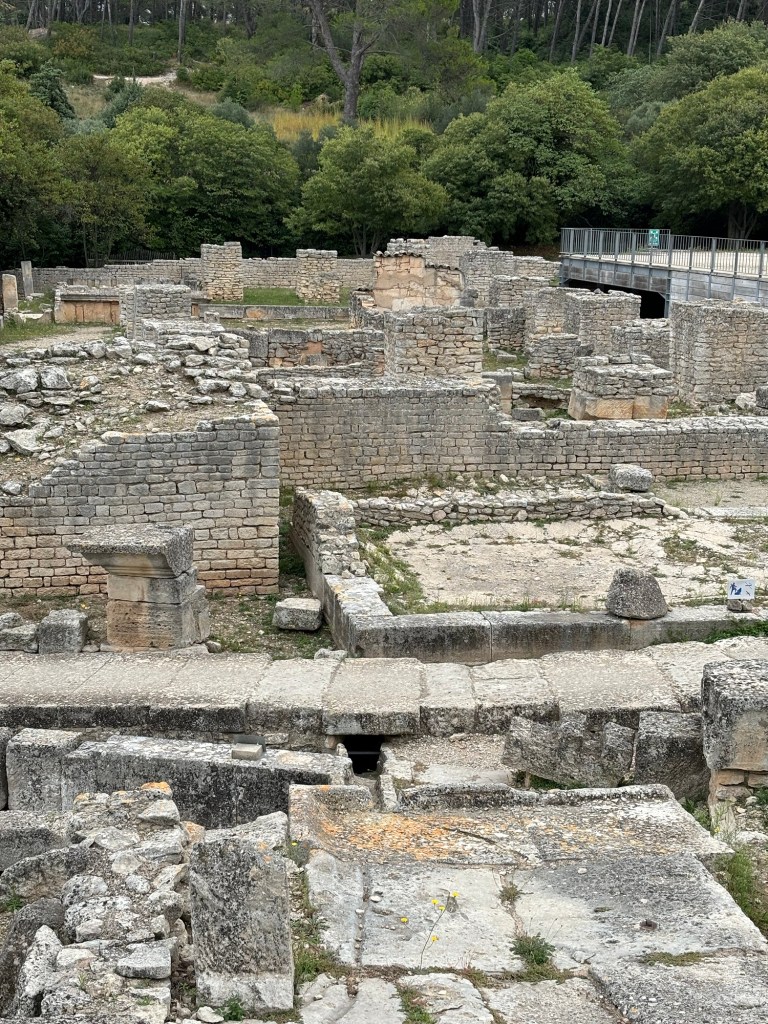
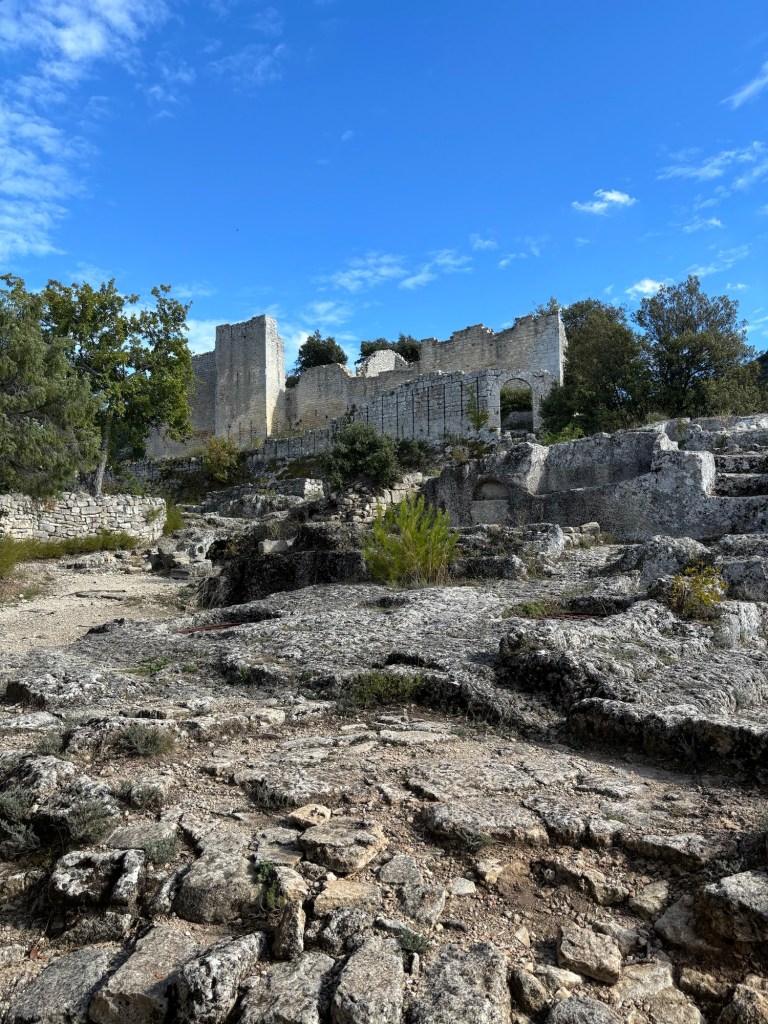
Our rendezvous point was an excavation site of an ancient Gaul/Roman village called Glanum. Using an audio guide we toured the ruins and marveled at the ingenuity of the ancient builders and the stone workmanship.

Then it was on to a big coach for a long drive south west through Nimes, Montpellier and across the Spainish border to Calella de Palafrugell. This is a former fishing village now popular with tourists and wealthy Spaniards seeking a second home for holidays.

The drive was very unspectacular as it rained most of the way so one’s attention was spent reading and nodding off.

Prior to having dinner in the town, a group of us walked with a local guild for an hour to learn of the areas history and evolution. Most interesting.

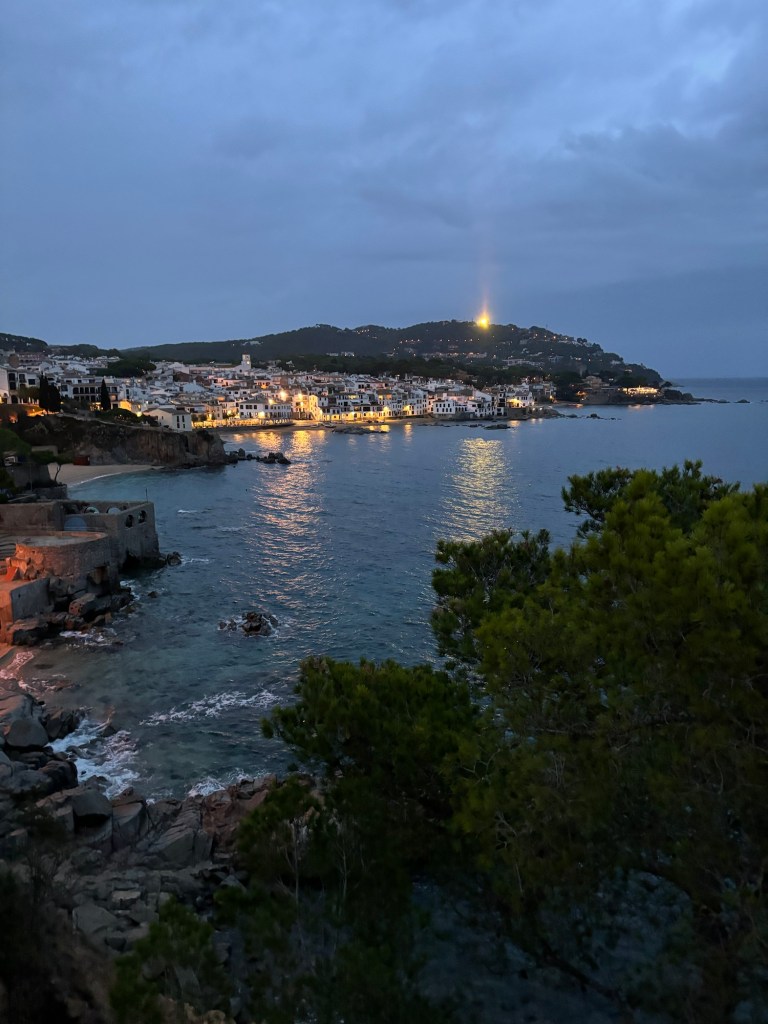
View from our hotel looking at the main beach area and restaurants.

Tomorrow promises to be a challenge as we will hike along the coastline for ~18 Kms over very undulating trails from cliff top to beaches.

Roussillon, Gordes, Saint Remy de Provence

Editors Note: some pictures may appear to be cut off. Tap on the photo to get the full exposure.

Another eclectic day of hiking trails, historic sites, ochre cliffs, wine tasting and the nuances of Provence.

We began at Le Pont Julien, a Roman built bridge in 3 BC. Incredibly the bridge continued to operate as a roadway until 2000 when a new bridge was built 50m away.

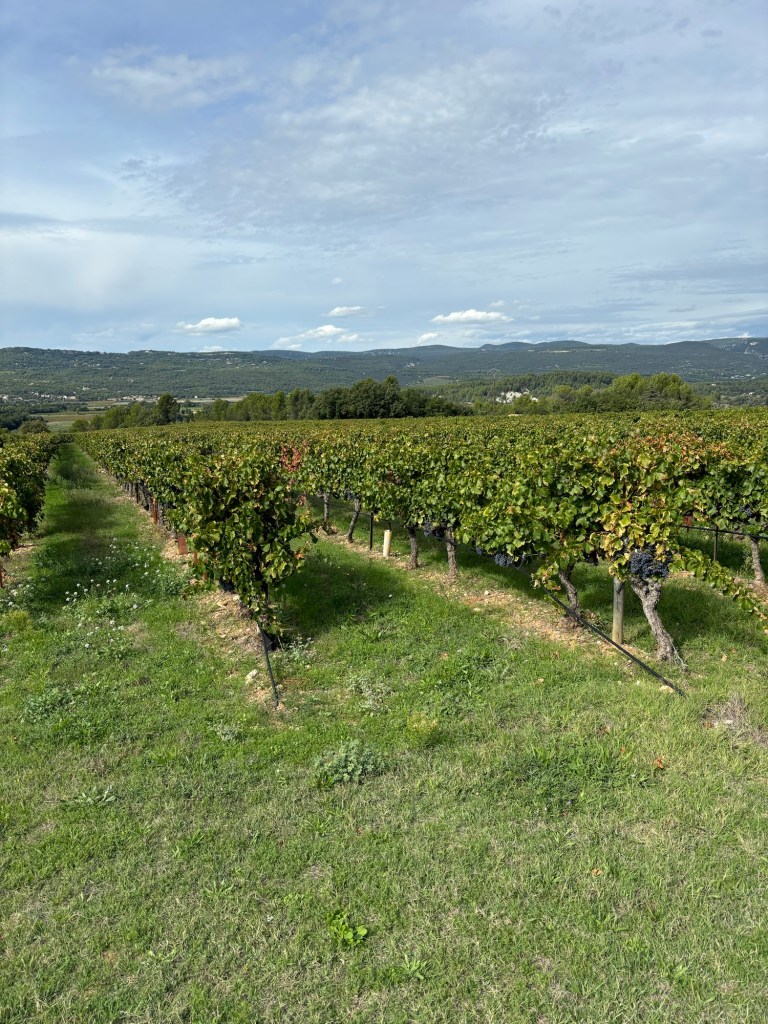
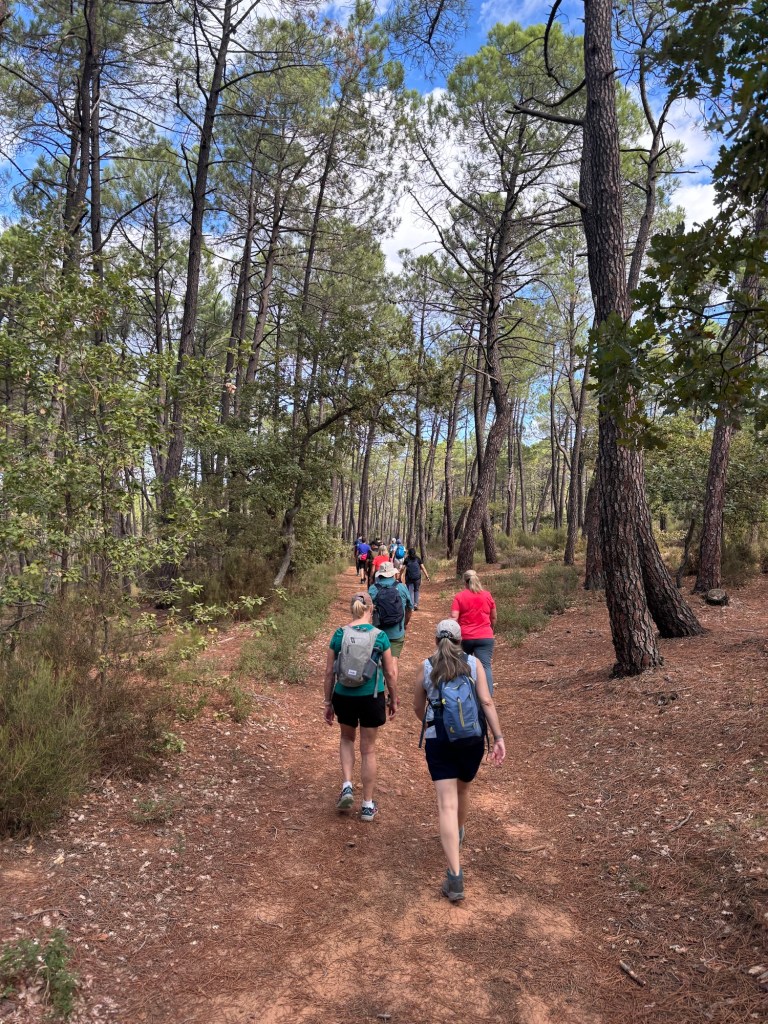
Then it was time to hike through the fields, vineyards and wood lots. The natural aromas of lavender, sage, thyme and pine provided a gentle reminder we were truly in Provence.

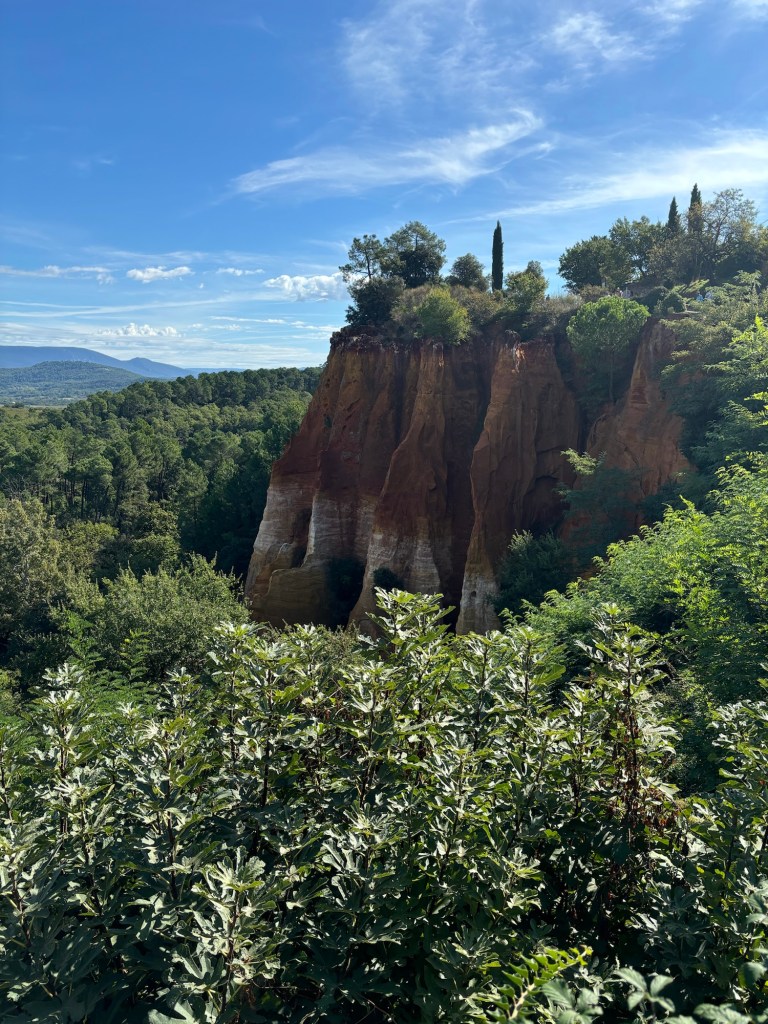
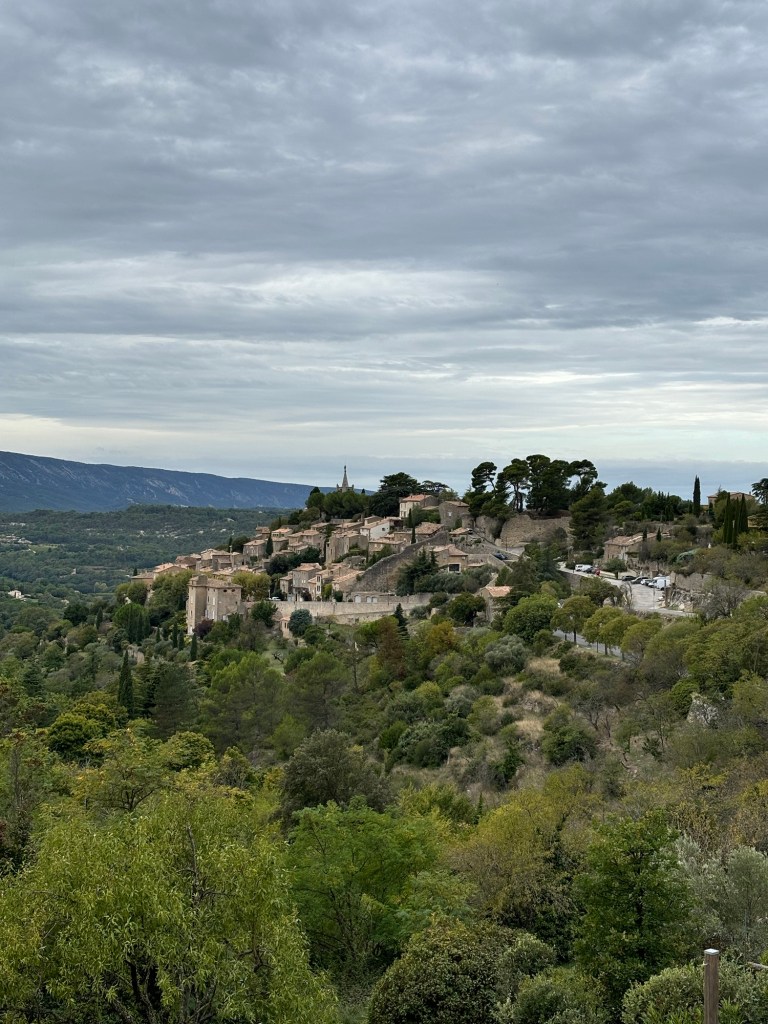
Our first destination was Roussillon, two hours away. A member of Les Plus Beaux Villages de France (the most beautiful villages). Wine, fruit orchards and the mining of ochres have been supplanted by tourism.

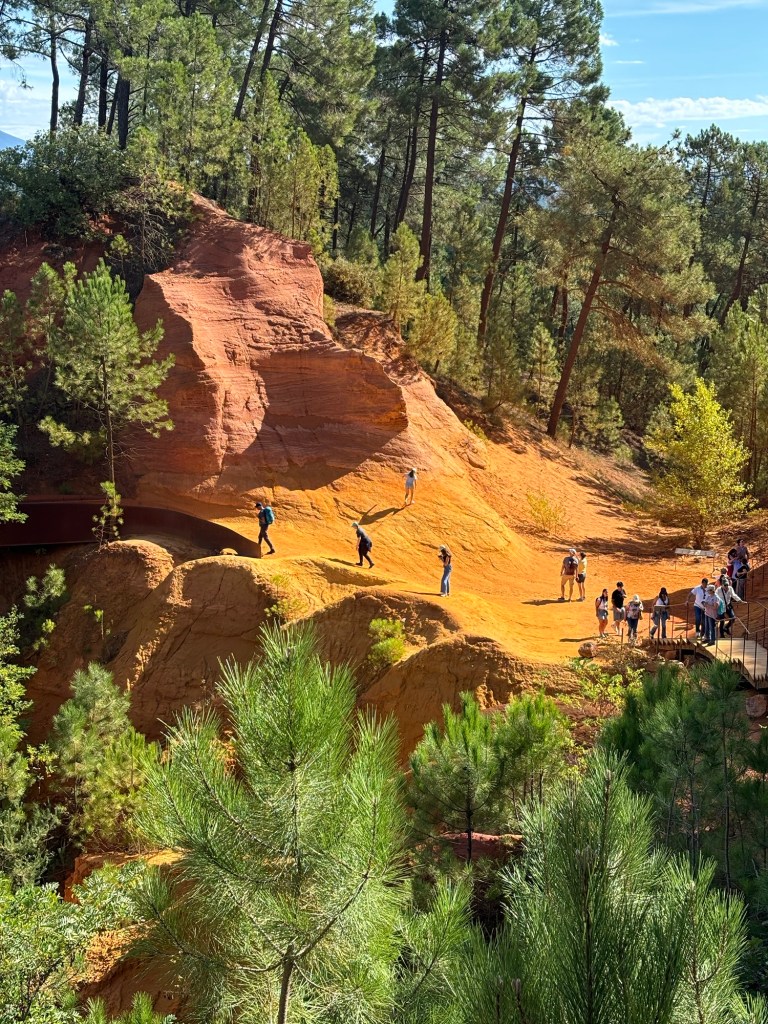
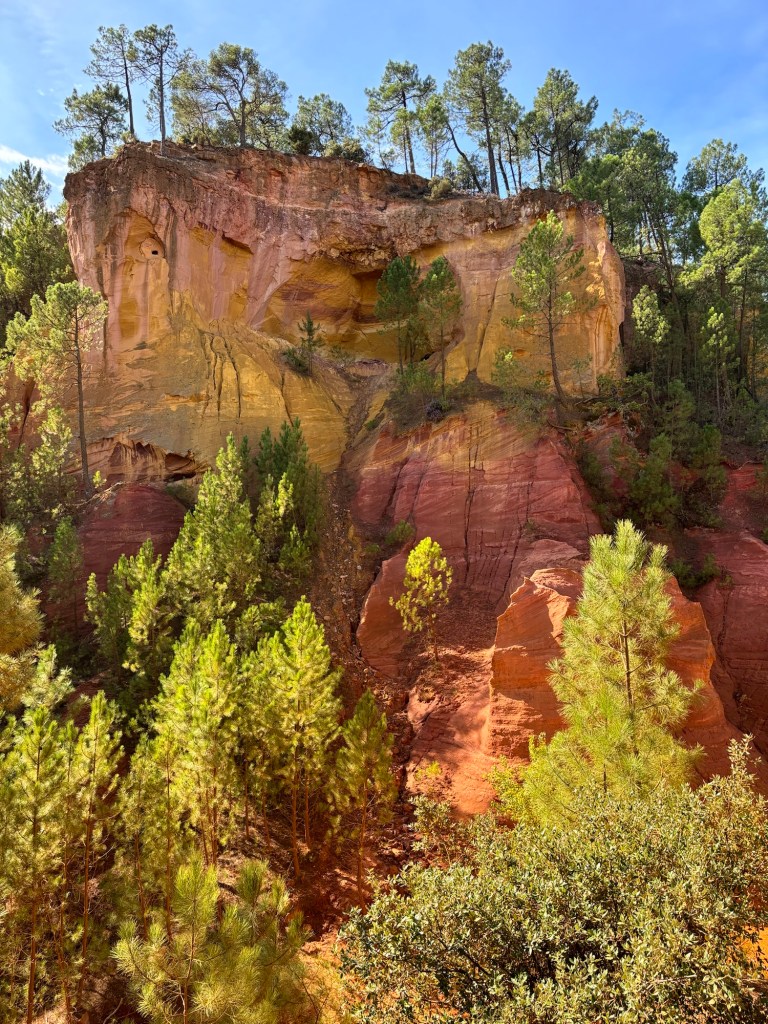
A short walk away, the ochre cliffs provided an amazing example of nature’s vivid palette. These hills were the source of pigments first used in the textile industry.

Lunch was a simple baguette eaten while sitting on a small wall – tres Franc.

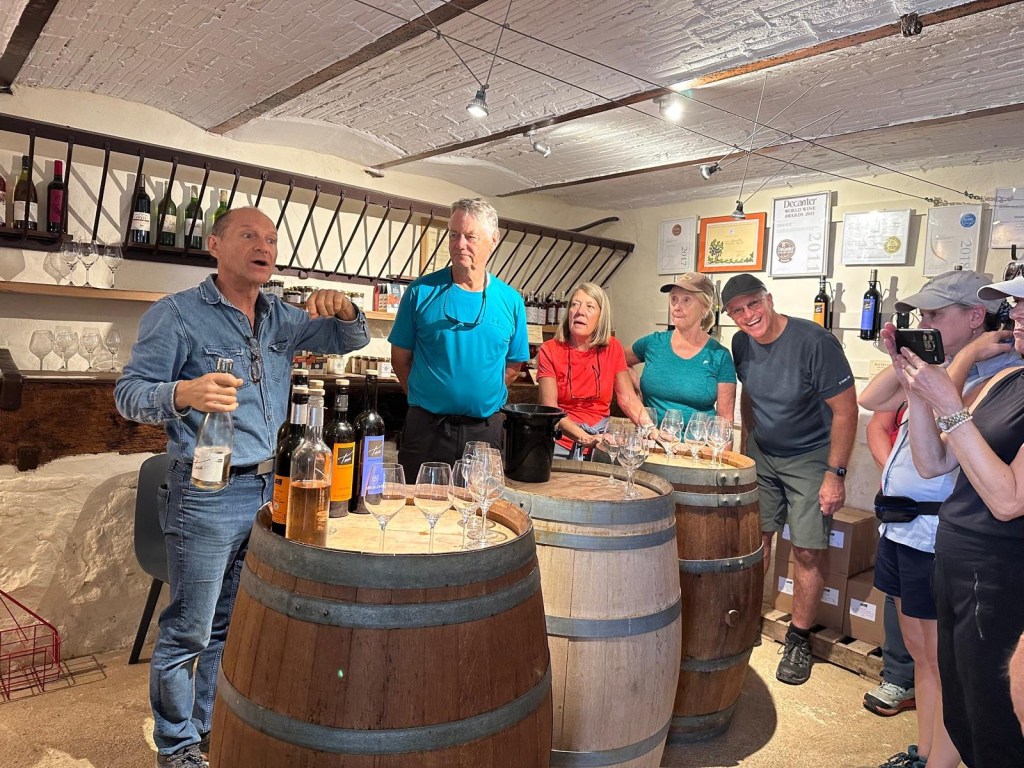
Back on the road to a most important stop, the Tara winery. There we tasted six different vintages and even Mark had to agree the Rose was quite delicious.

Back on the trail towards Gordes and more bushwhacking albeit mild at best and aromatic throughout (herds de Provence?).

At the base of the hill upon which Gordes sits the option to take a van the last 4.5 kms was offered. Only two of us refused the ride and we set off with one of the guides to climb up into the village.

The first third was a gentle incline on a well beaten gravel track. Then we turned uphill with a very steep incline. Legs and lungs protested loudly.

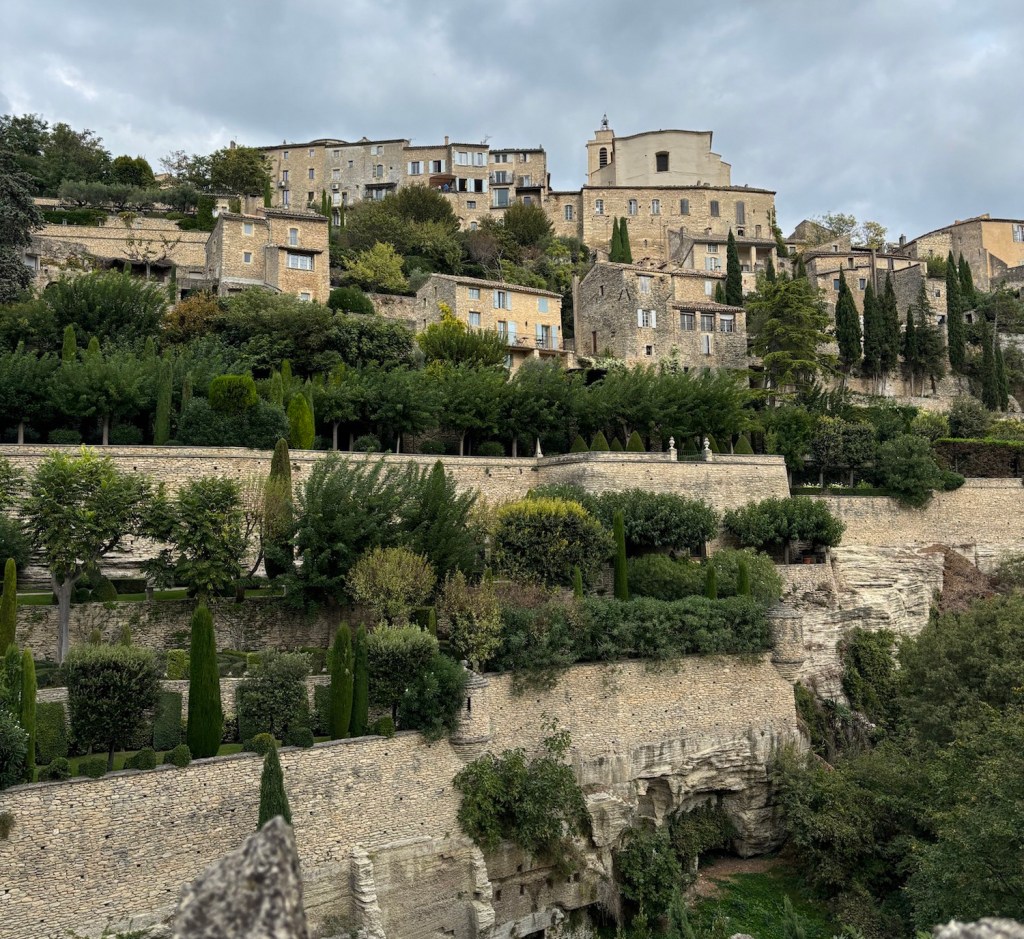
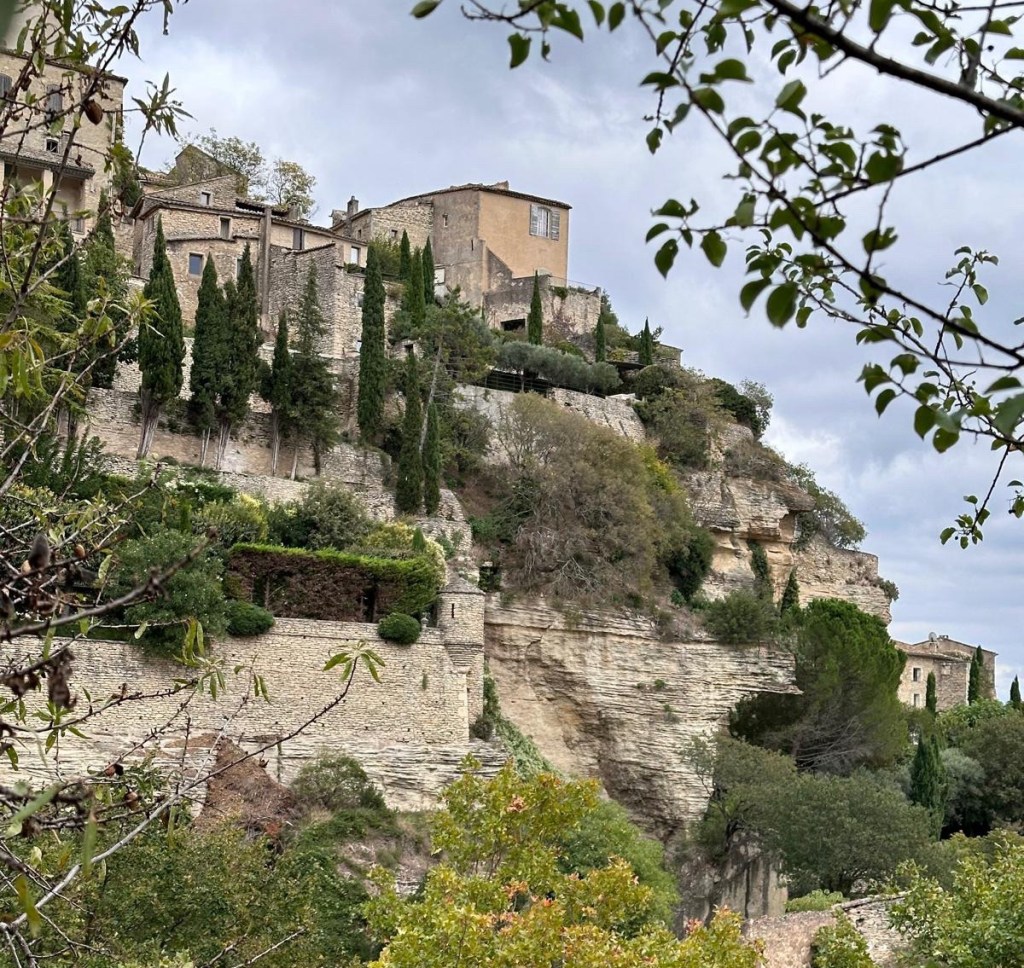
The town is literally built into and onto the cliffs. One has to wonder how the ancient architects managed and how the builders created structures with such lasting abilities.

A long day (first time I’ve hit just under 30,000 steps in one day) continued with a one hour ride to Saint Remy de Provence where we checked in to a 5* hotel. Unfortunately we didn’t have time to enjoy the spa but a nice casual dinner in town was a nice conclusion.

Bonnieux to Buoux & The Fort

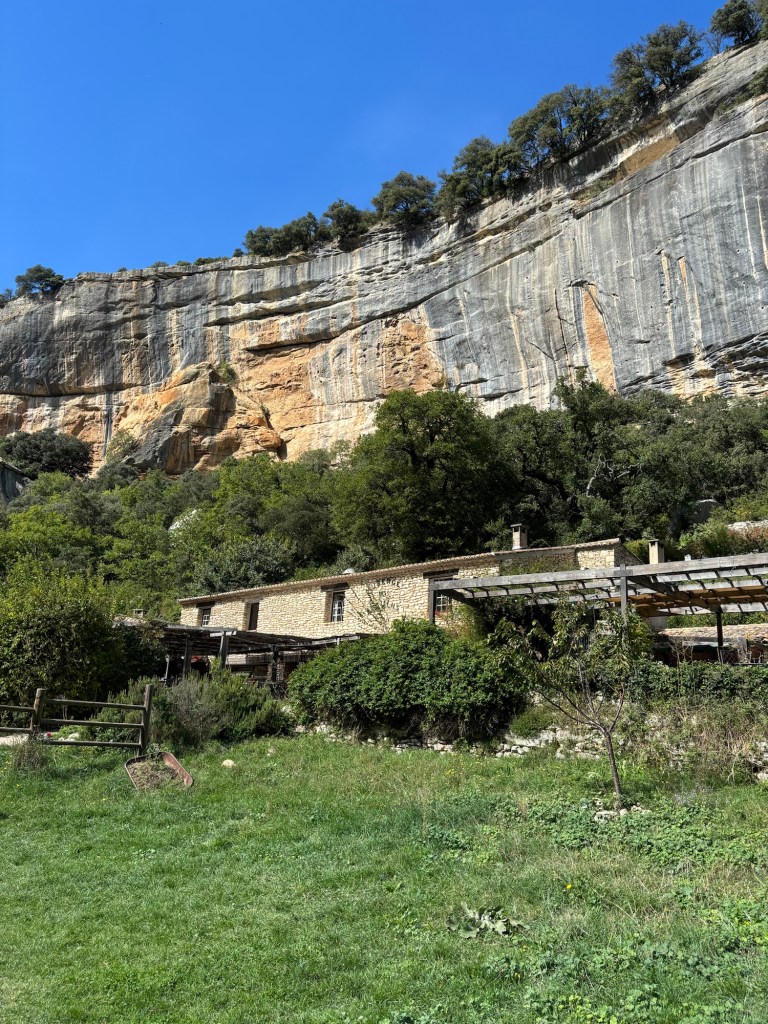
Today’s agenda was eclectic including a walking tour of Bonnieux, a hike along the cliffs to Buoux and a clamber up (and down) a steep hill/mountain to a 13th century fort 400 metres above the valley floor.

We were greeted by an enthusiastic transplanted English woman who walked us up through the entire village of Bonnieux, a 20 minute van ride from our hotel. Nary a fact or date was left out as we learned and looked at the history of this ancient enclave.

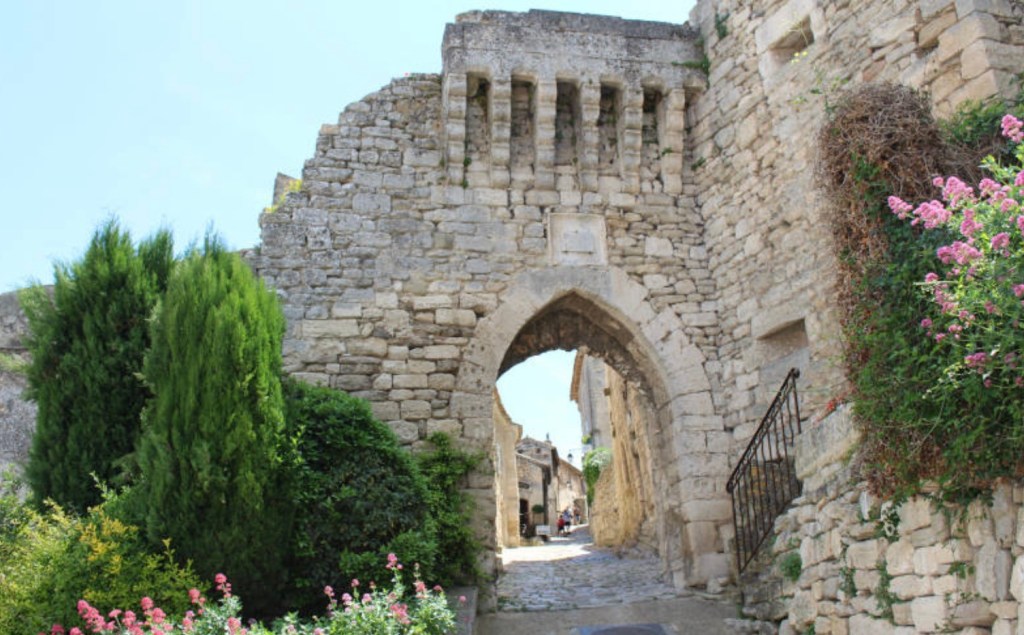
Known to have existed since at least 3 BC when the Romans built the still standing Pont Julien, the village was a compilation of narrow lane ways and ancient dwellings.

We then set off on the day’s trek heading to Buoux and the fort above it, a total of 17 Kms away.

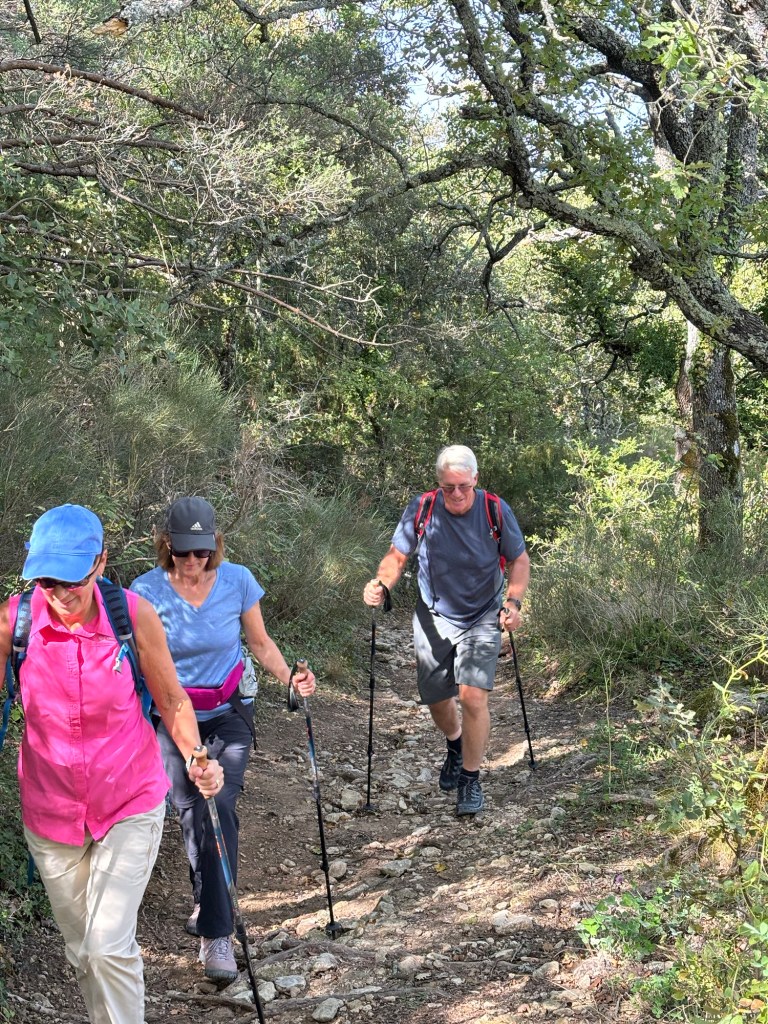
The hike covered a variety of styles of trails but most were easily handled given our use of hiking poles.

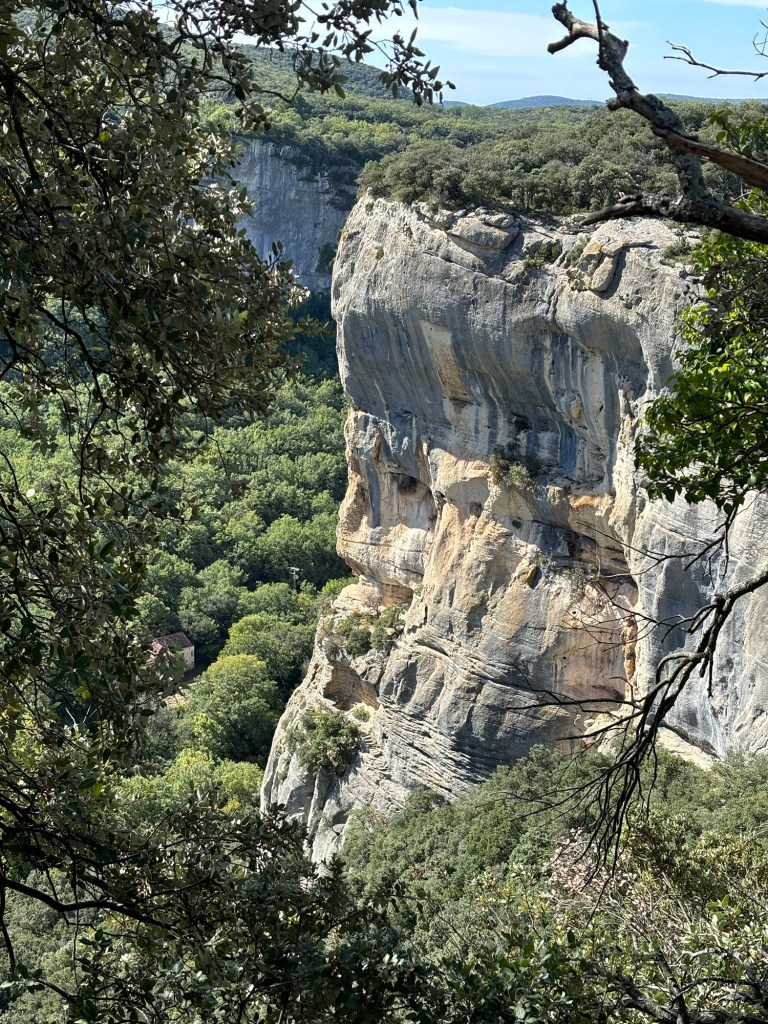
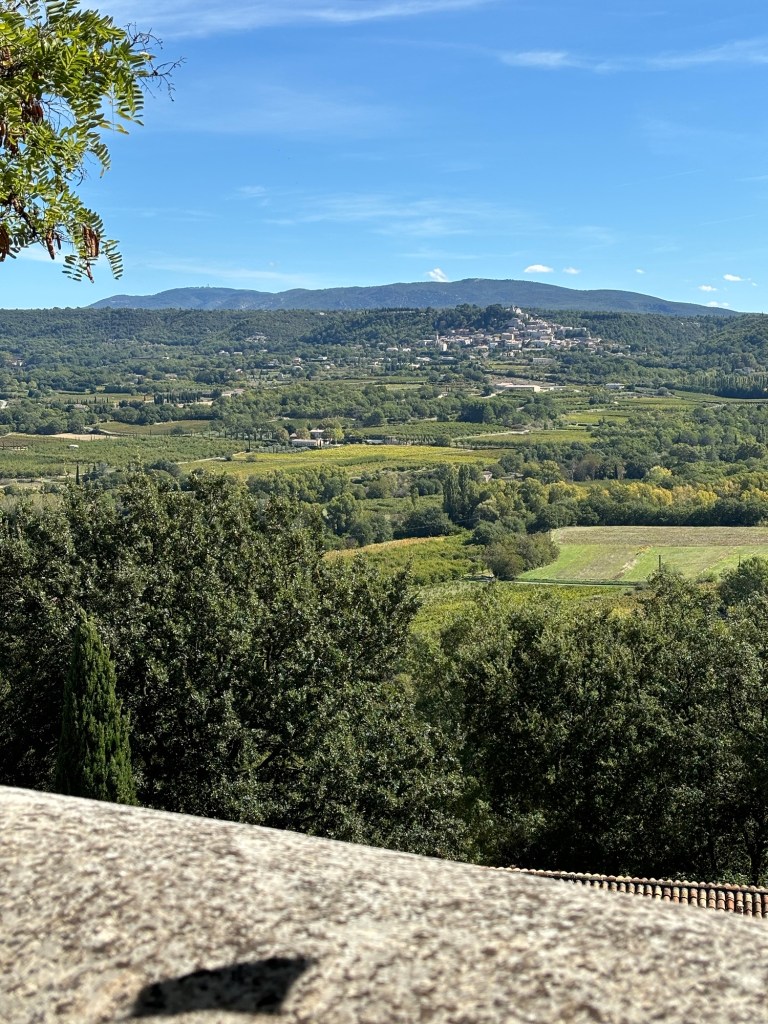
The route took us along the cliff tops overlooking parts of the Luberon Valley.

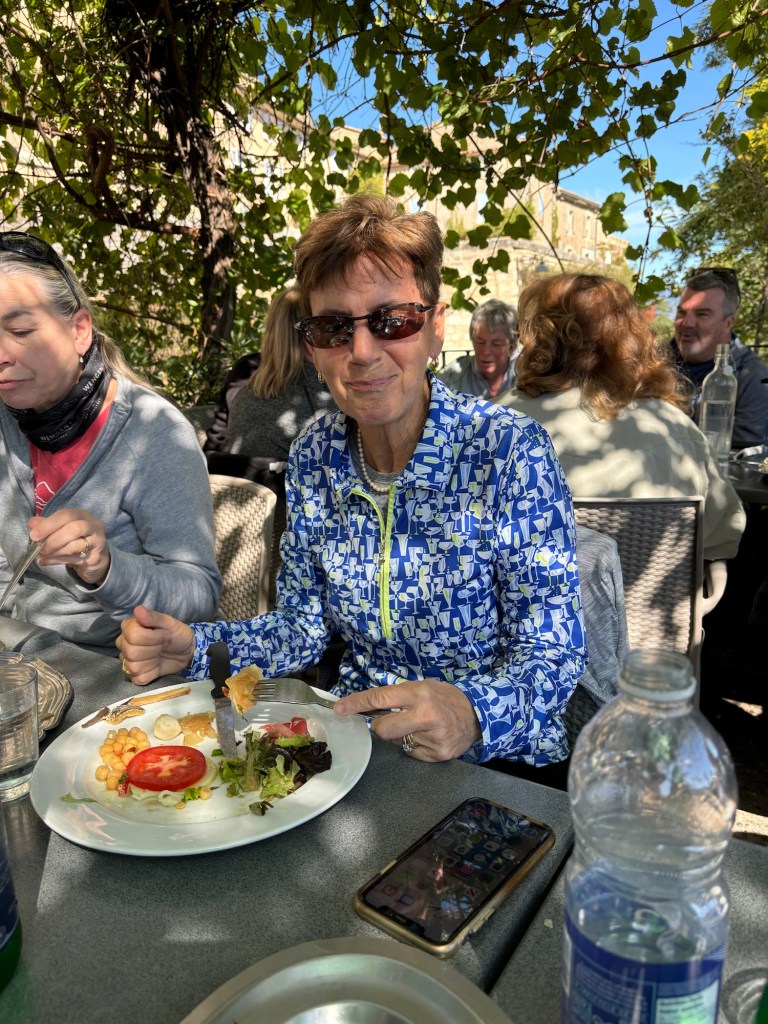
We passed through the hamlet of Buoux and descended to the valley floor where a welcomed lunch and rest awaited.

From the restaurant the canyon walls were very impressive.

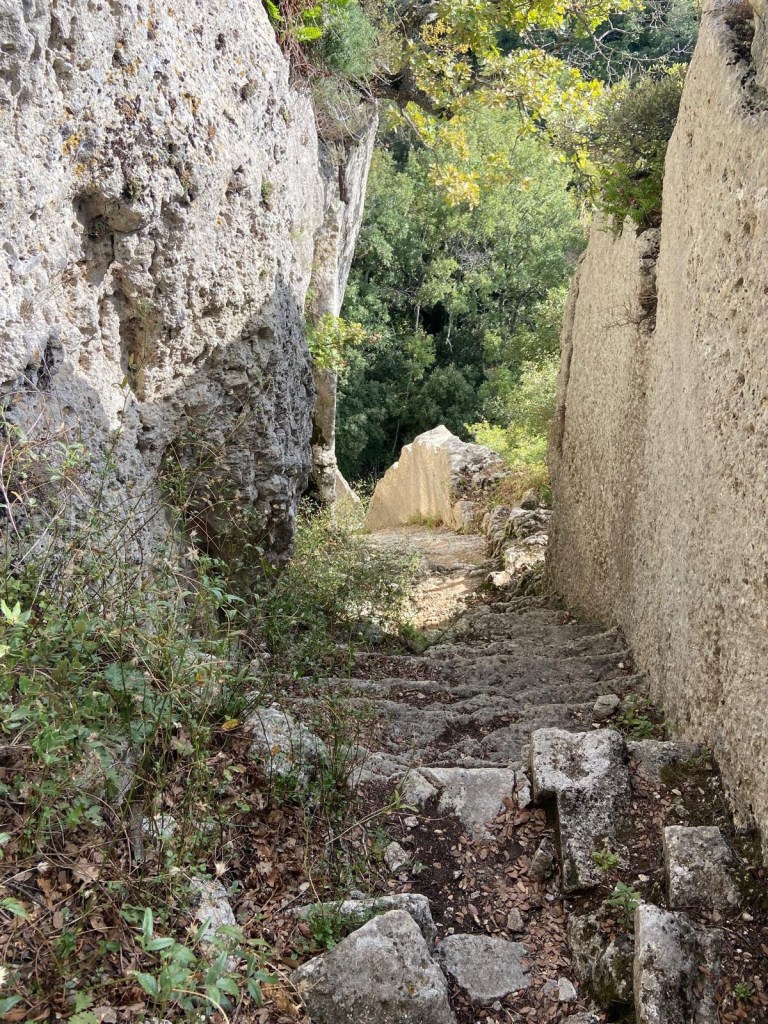
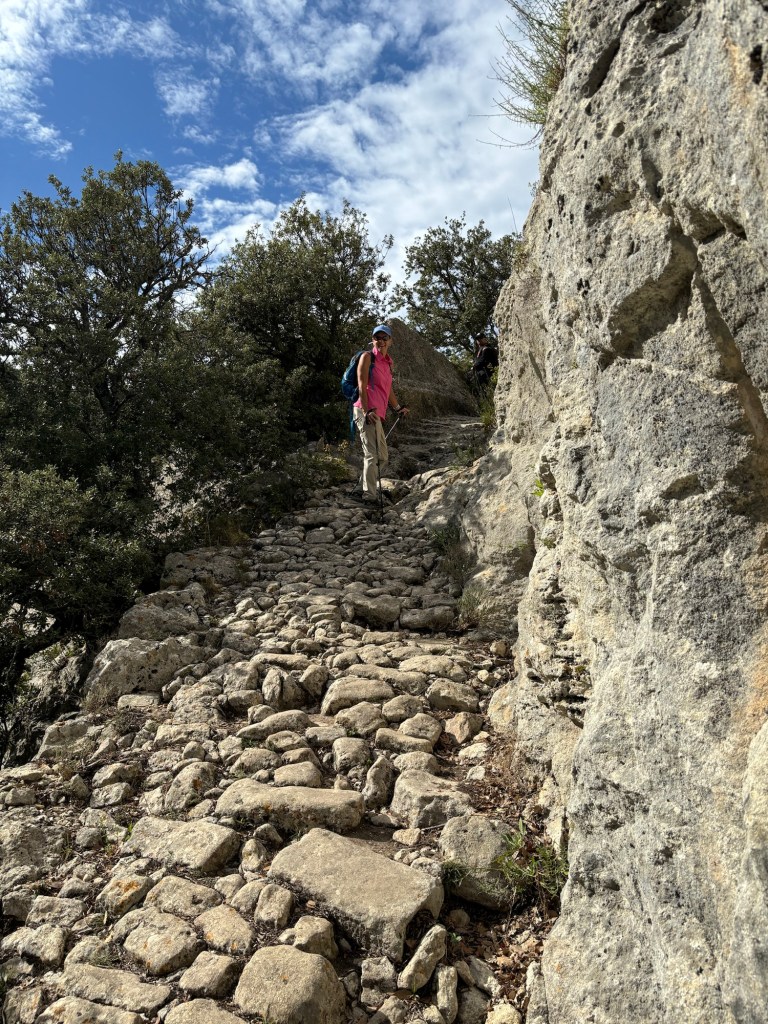
After lunch six of us chose to continue on foot up the mountain on the other side of the canyon to the remains of the 13th century fort (the rest of the group took the vans to the hotel). It was quite a challenge negotiating the rocky path while the return leg involved an incredibly steep stone staircase featuring a huge drop off on one side. Needless to say we hugged the wall!

The van met us following the descent and we were grateful to be shuttled to the hotel.

A gourmet dinner in the small town of Lumieres finished off a novel day. Tomorrow the hiking involves another mixed bag of trails as we make our way from the Pont Julien to Roussillon and Gordes before finishing in Saint Remy de Provence.

Lacoste to Menerbes

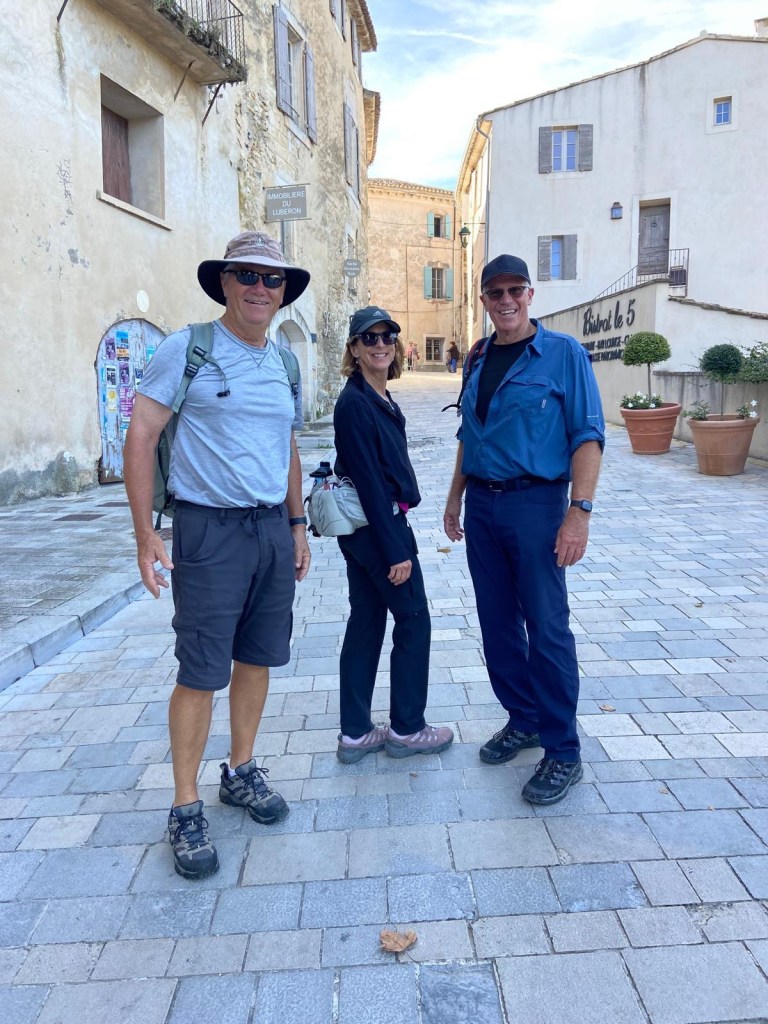
We met the tour group as well as one of our two guides at the Avignon train station. There are 16 hikers – 4 Canadians and 12 from the USA comprising a real mixture of ages and hiking experiences.

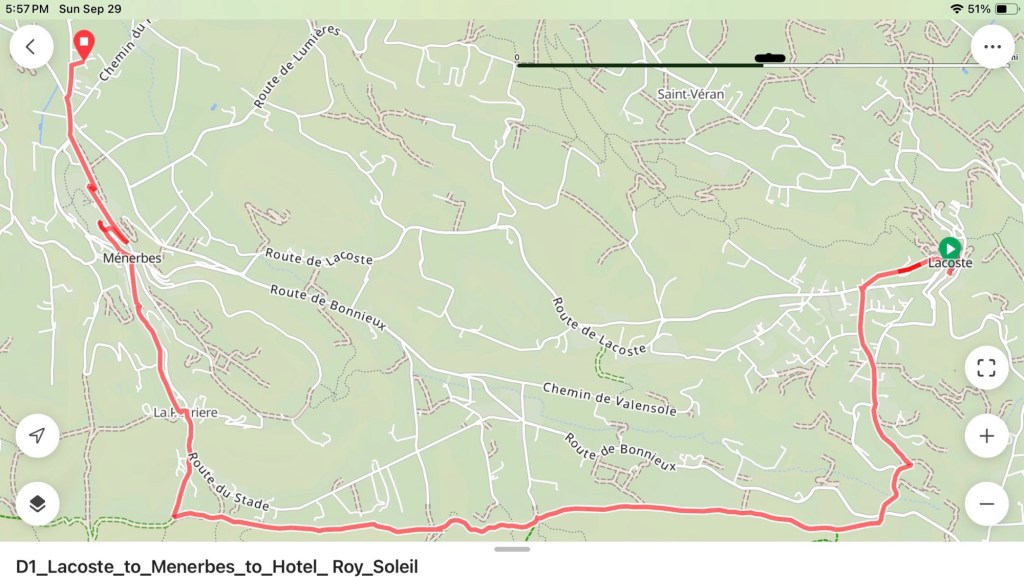
Today’s hike was a bit of a warm up comprising just over 12 Kms. But first we bussed to Lacoste, a hill top village 45 minutes east of Avignon. A delicious lunch awaited us in an outdoor restaurant overlooking a portion of the Luberon Valley.

From there we walked up into the town proper.

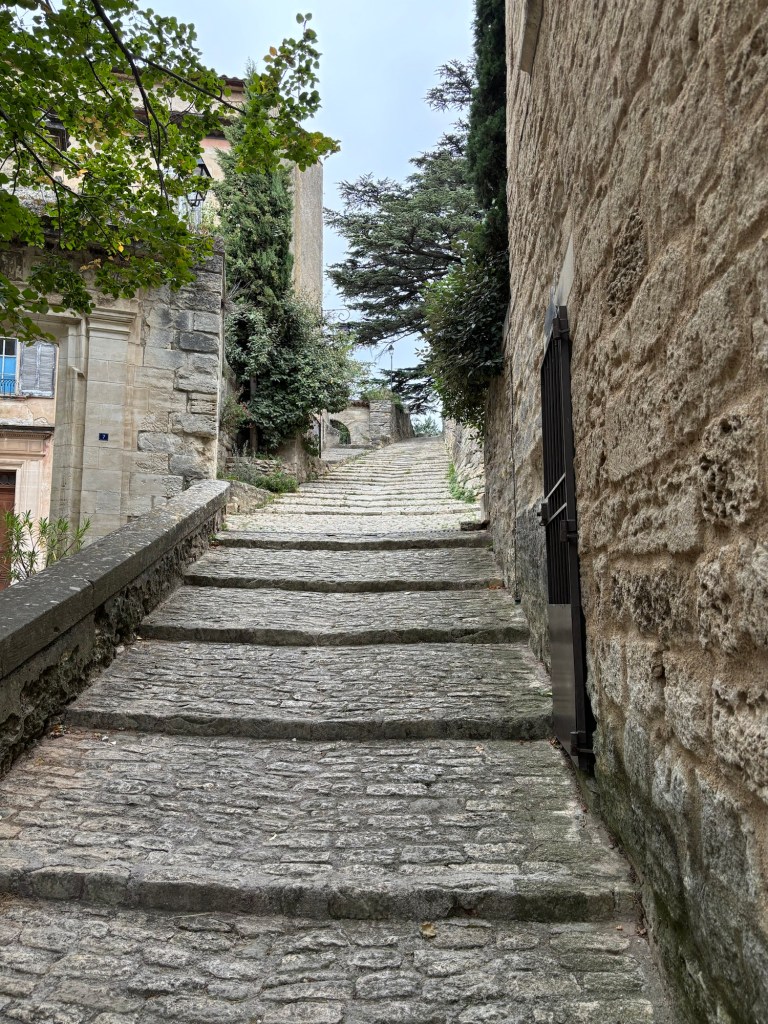
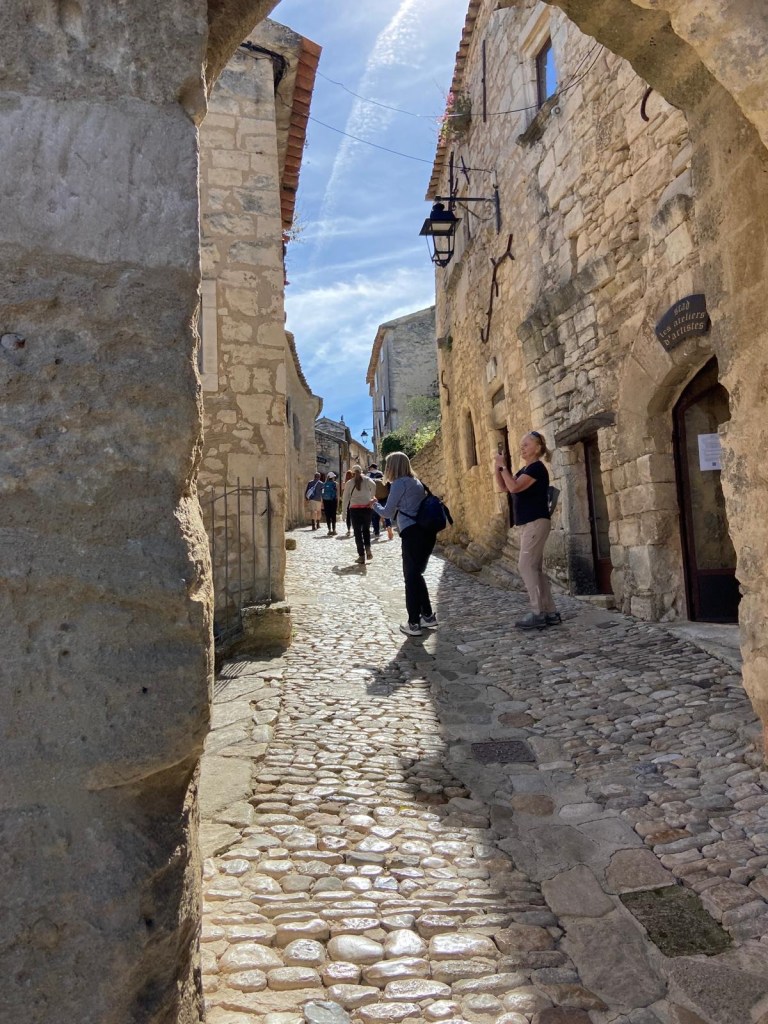
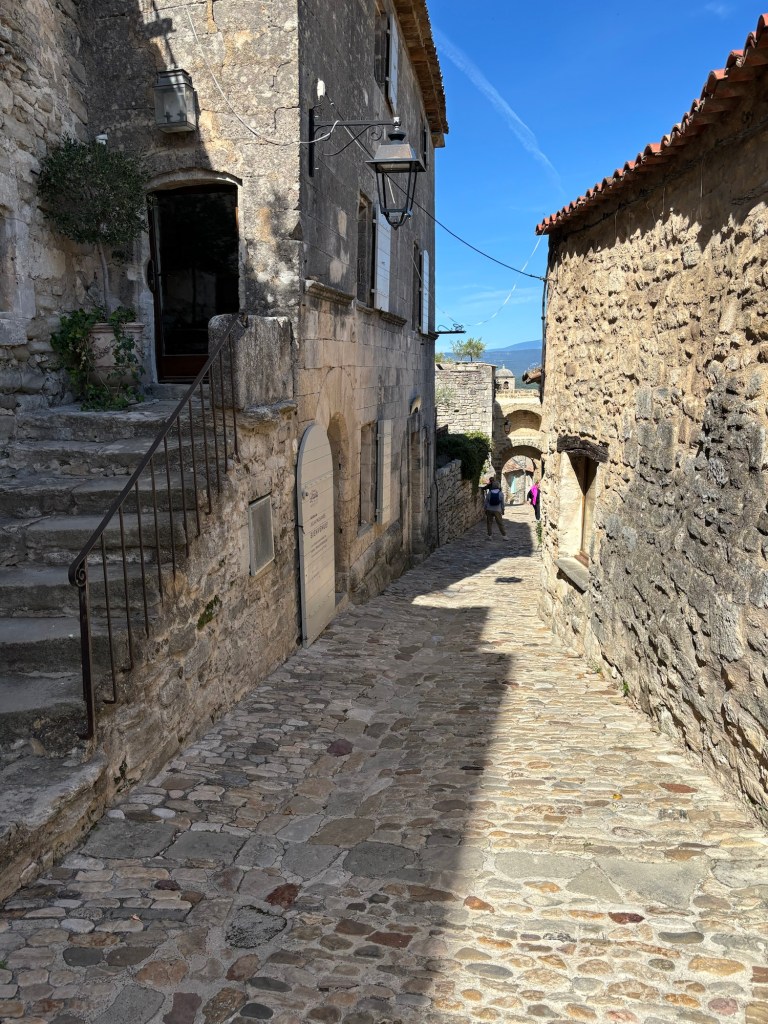
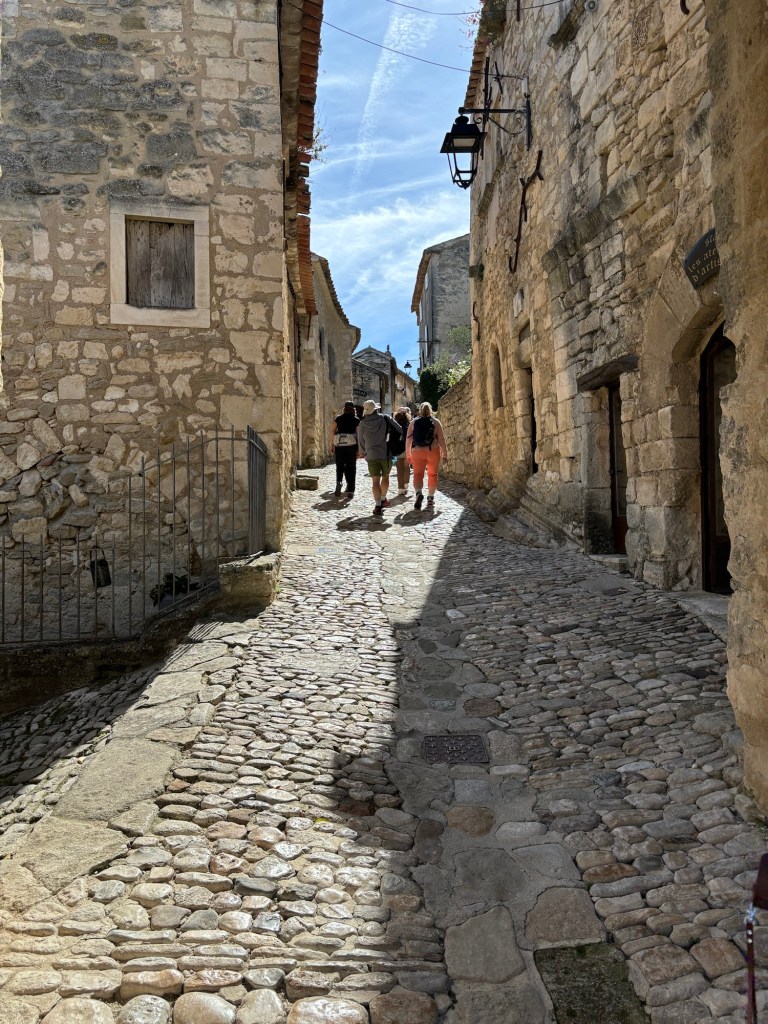
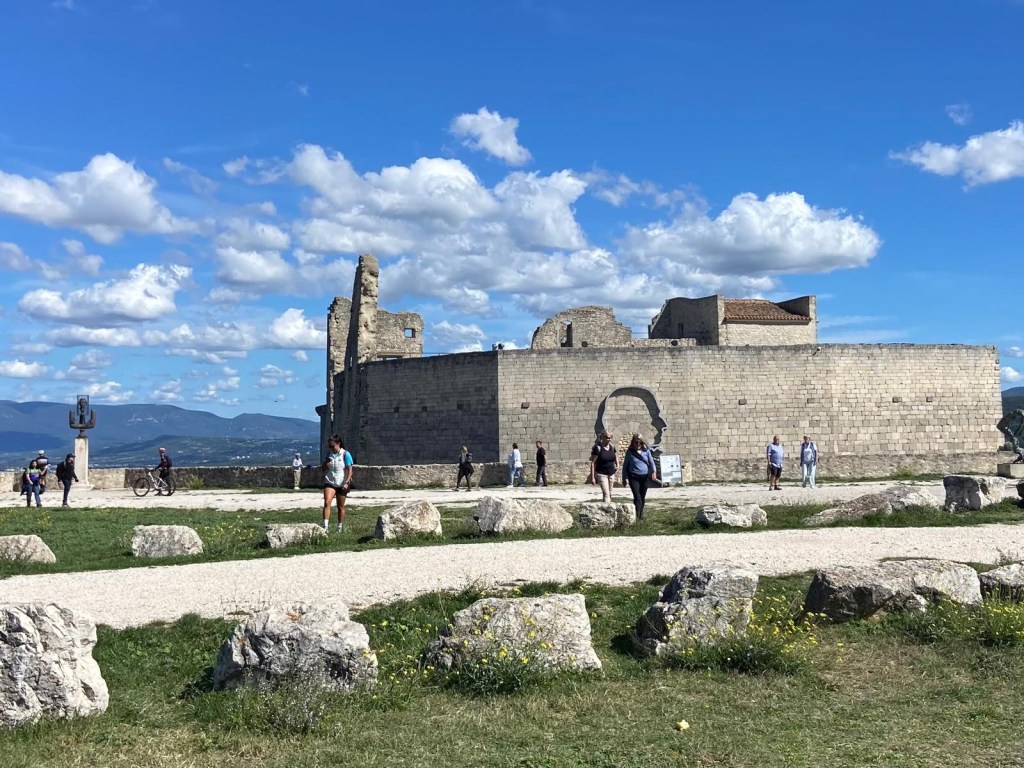
Narrow cobblestone streets and ancient buildings everywhere one looked. The climb to the top was quite steep and we shedded clothes as we went given the hot sunny weather.

At the summit were the remains of the castle once occupied by the Marquis de Sade, the 18th century writer who spent many years in prison for his deviant and corrupt writings.

Then we began our walk/hike to Menerbes and beyond to our hotel.

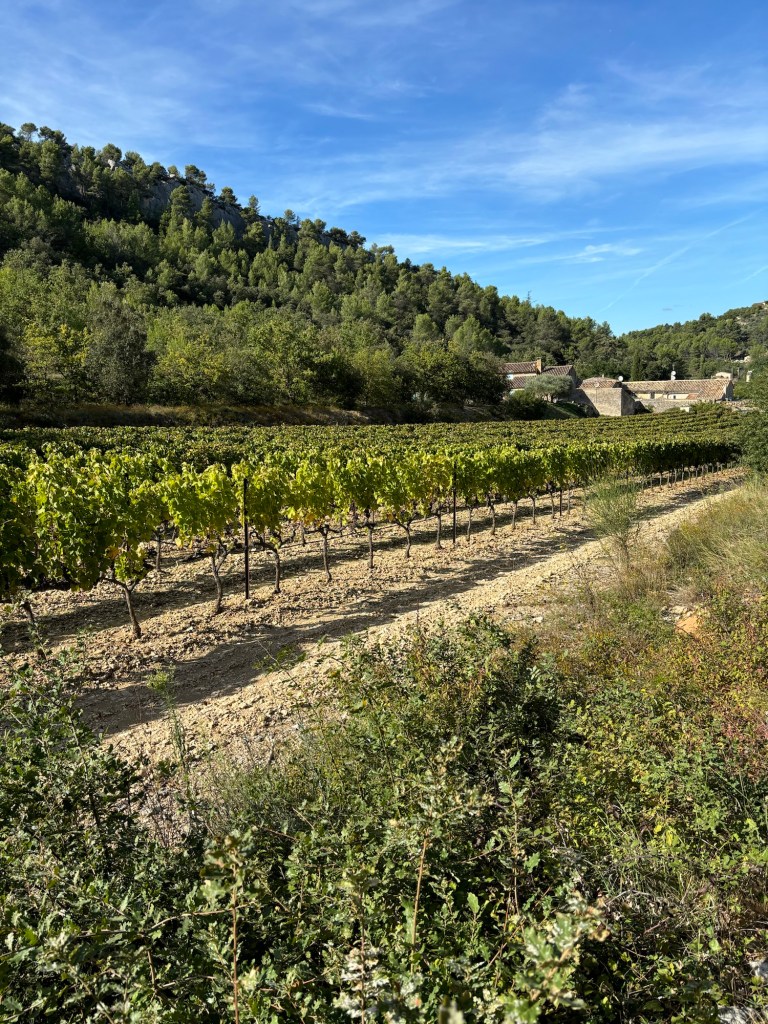
The trail was a mix of gravel roads beside farmer’s fields and the odd vineyard along with the occasional stretch of roadway.

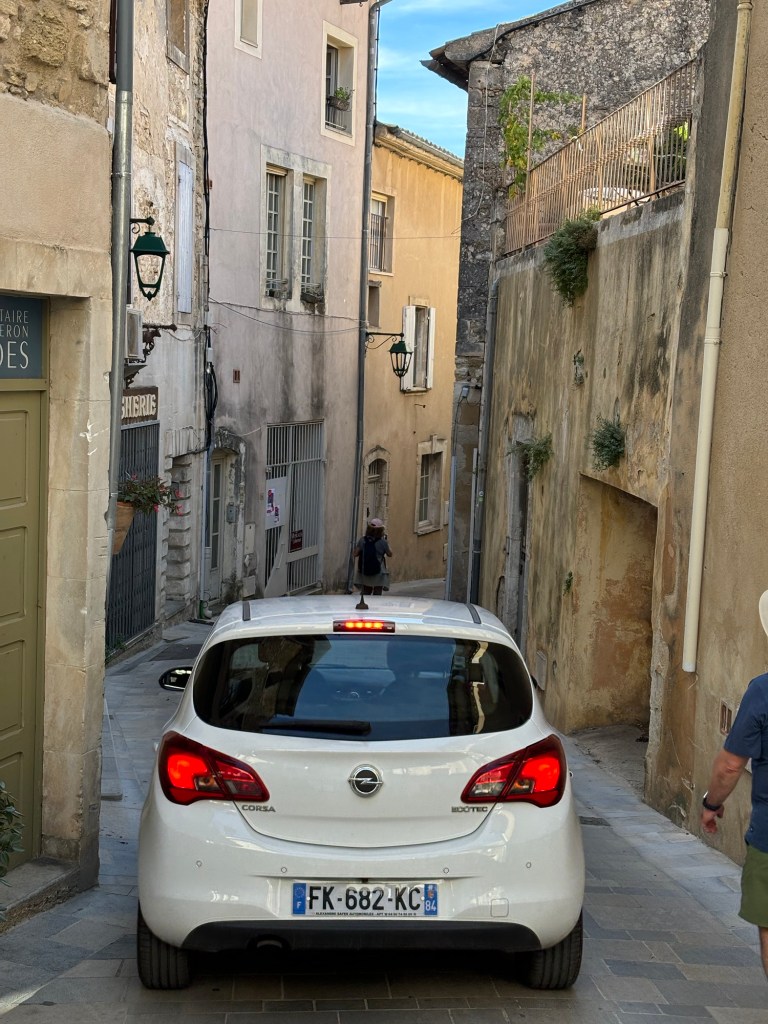
Then there was a steep climb up into Menerbes. There the roads were crazy narrow yet cars could ascend most of the way into the town.

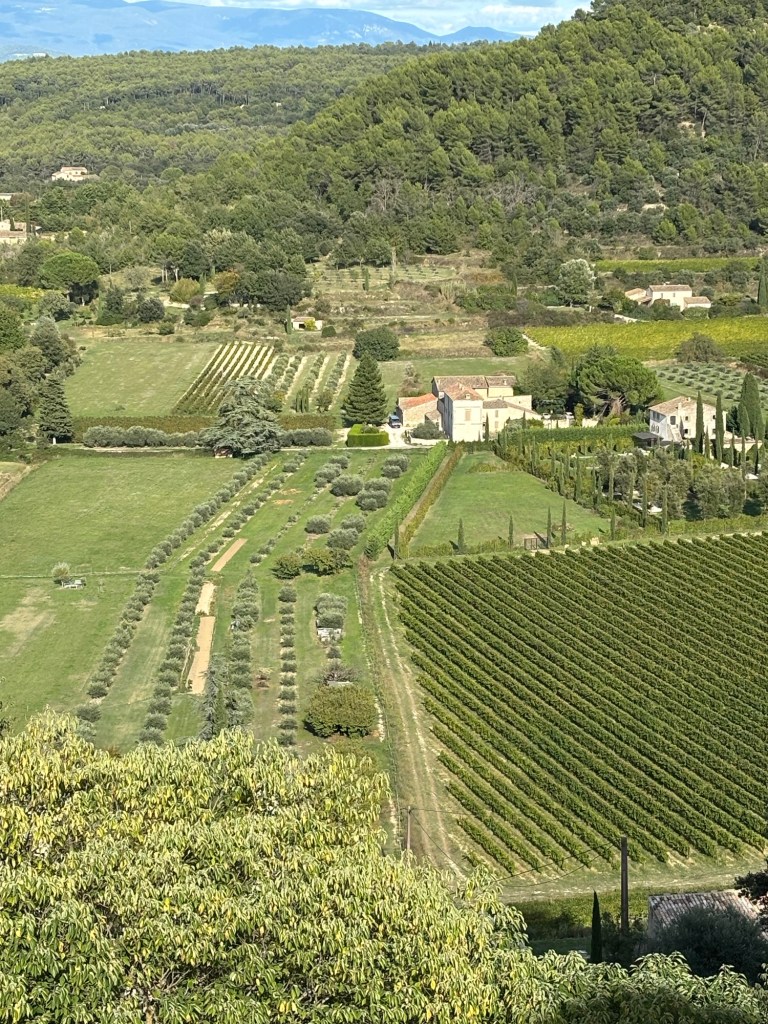
The view out over the Luberon valley was breathtaking as we wended our way down the back side of the hill/mountain to our hotel.

A very nice dinner as a group with plenty of the local wine capped off the day. Hopefully the remaining days of this portion of the trip are of the meandering type that we experienced today although tomorrow’s schedule is a bit more robust with two segments totaling 27 Kms.

Avignon

After a long overnight flight we navigated Charles de Gaulle airport and found the TVG train to Avignon. Although the seats were a little cramped the incredible speed and smoothness of the ride more than compensated.

A bit more wandering was required before we found the taxi stand and were treated(?) to a hair raising Tesla ride (103 km in a 30 zone at one point) to our hotel. Then it was off to the old town section of the city to link up with Doug & Louise Pegg (long time friends and travel buddies – Peru, Chile).

Between 1309 and 1377, during the Avignon Papacy, seven successive popes resided in Avignon and in 1348 Pope Clement VI bought the town from Joanna I of Naples. Papal control persisted until 1791 when during the French Revolution, it became part of France.

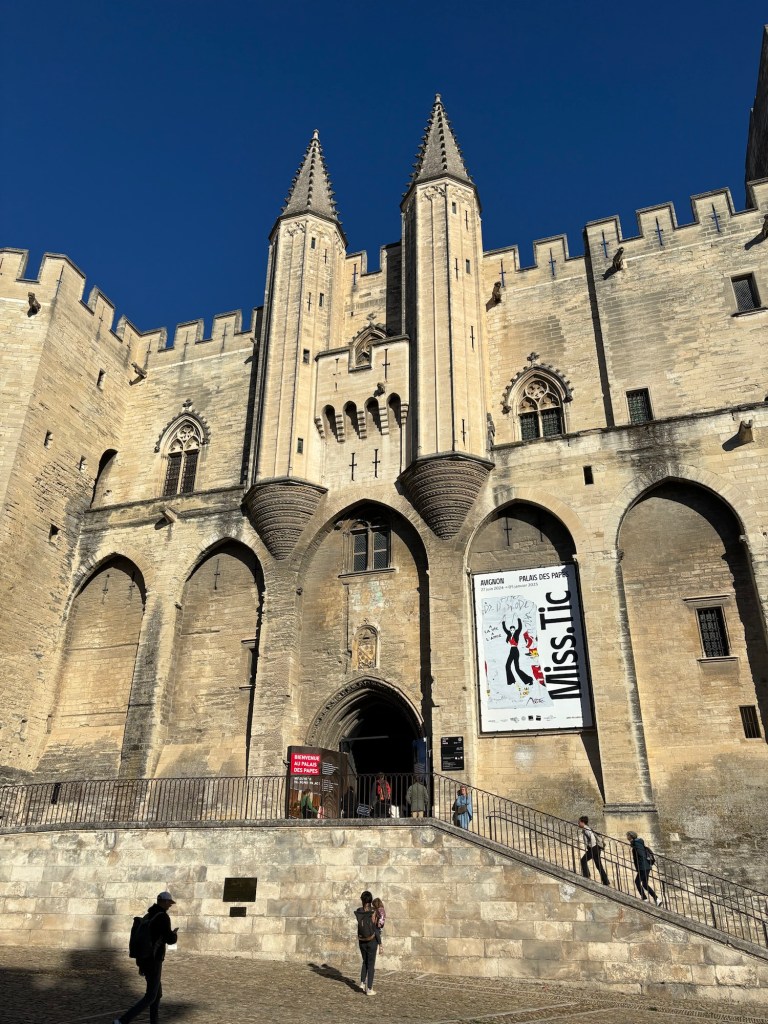
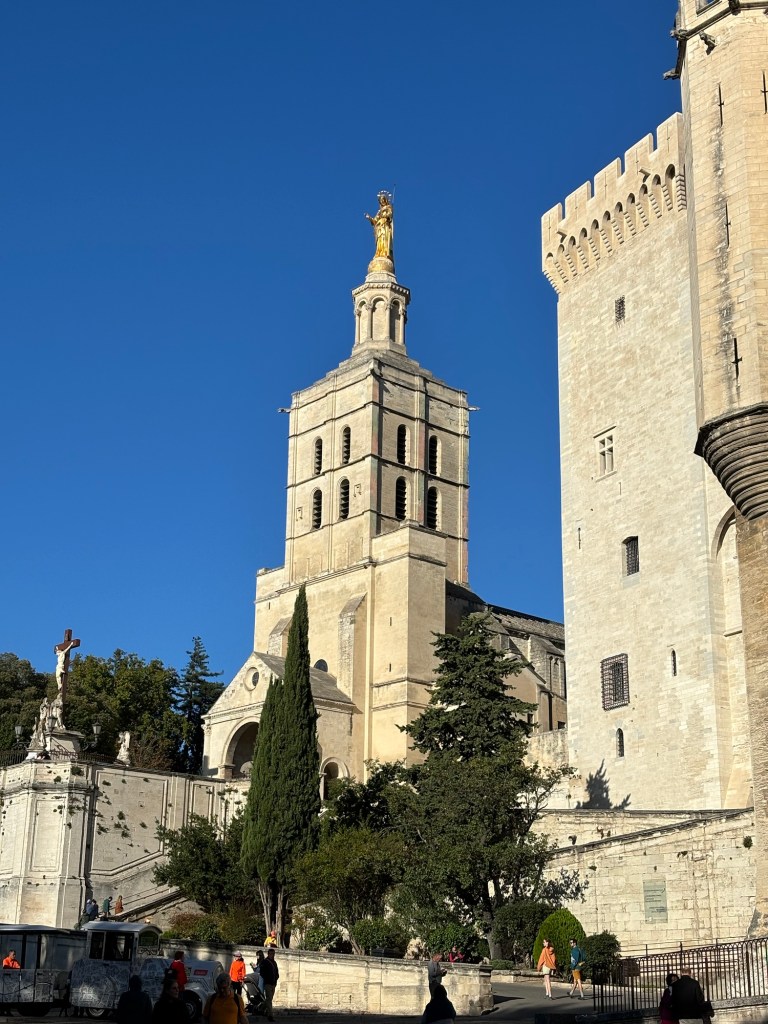
The old town is dominated by the Papal Palace.

The main square bustled with tourists despite the strong wind that had a dramatic cooling effect. We walked for a bit admiring a variety of very old buildings that surround the square.

A view from above the palace meant we could see down to the Rhône River and the famous Pont Benezet, better known as the Pont Avignon.

Built between 1177 and 1186, the bridge had 22 arches and spanned 900 meters. Destroyed during the siege of 1226, the bridge was rebuilt in stone and raised. The bridge was repeatedly damaged by floods and continually repaired. In 1668 it was deemed to be too dangerous and was closed to traffic. Today, only four arches of the original 22 remain.

A nice dinner in the old town and a less dramatic taxi ride back to the hotel ended a very long day.

Tomorrow we meet the tour and set off on our first hike which includes stopping at the castle of the Marquis de Sade. Yikes.

Planes, Trains, Boots & Bikes

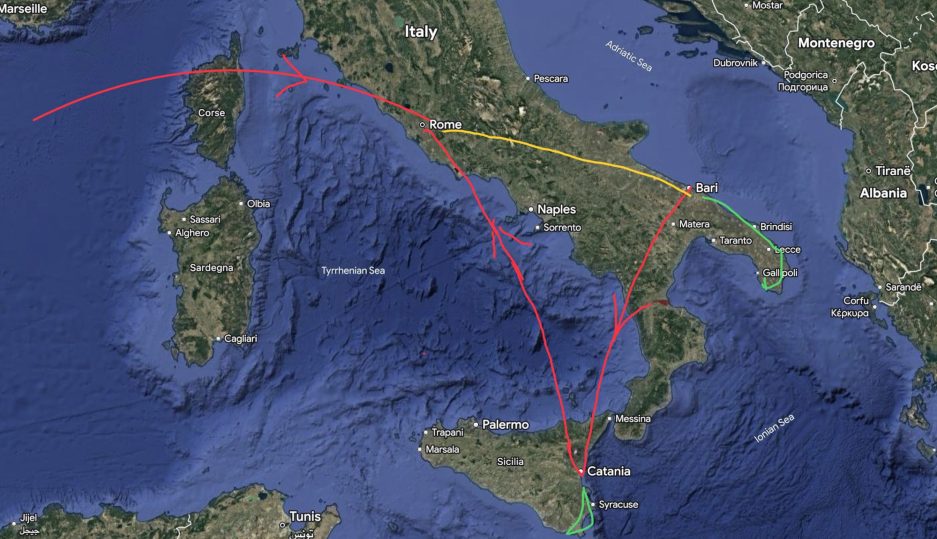
Our next adventure encompasses flying to France and linking up with a small group of like minded travellers in Avignon to hike around the southern area of Provence before relocating to the Costa Brava in Spain for more hiking. From there it’s on to Barcelona for a quick visit before taking an express train to Madrid where bicycles await for a week of cycling across the north of Spain ultimately landing in Porto Portugal.

Parts of me are sore and starting to chafe just reading the detailed itinerary of the trip.

Week One.

Week Two

Hopefully the physical exertions won’t preclude enjoying the countryside, culinary delights and local wine. Stay tuned.

Driving On Irish Roads

To fully appreciate the following description of the roads in Ireland, please first find Robin Williams monologue of golf on You Tube. My post will then make more sense. I’ve tempered the language to appeal to all audiences. You make the appropriate substitution.
This is a conversation between two Irishmen in advance of creating the road system. One is asking the questions, the other is responding.

So you know that people will want to move about the country to see family, shop and get to their fields.
Oh aye. Let’s build some roads to help them.
So the road will be sufficiently wide to let two cars pass comfortably in opposite directions.
Ack noooooo. Why make it so simple.
So what about having a shoulder to the road?

Ack noooo. That’s just a waste of pavement.

Well at least we can add space at the edge of people’s property.

Ack nooooo. People need to build stone walls right up to the edge of the road to have the biggest lawn possible.

Well what about telephone poles? They should be set back from the road.

Ack nooooo. Let’s put them on the edge of the road just because.

OK but then we should trim the hedges so one can see all the road.

Ack noooo. Let the hedges grow as close as possible so they can appreciate Irish greenery as it slaps the outside mirrors.

Alright but what about lines on the road to show the edge and middle of the road?

Ack noooo. That’s just a waste of paint. Let them decide what’s their side.

Given all the rolling countryside it will be easy to build roads in a straight line.

Ack noooo. We’ll put in dozens of tight, blind turns just to see what the driver is made of.

We will have to build separate roads for the farm tractors to move from field to field.

Ack noooo. Let the big buggers go where they want and at whatever speed they want.

So given all of these building ideas of course we’ll have a low speed limit to make it safe.

Ack noooo. The greater the speed the more fun. In fact, let’s give a country lane a speed limit of 100 KPH just to bring it all together.

One final question. Since most of the world has left hand drive we should follow suit.

Ack noooo. Let the foreigners figure it out as they go so we can send them home shaking their heads.

Having “survived” nearly a month driving a rental car on the “wrong” side, going down country lanes with ridiculously limited pavement, having zero visibility past hedges and sharp curves and facing oncoming cars doing the insane posted speed limit, we look forward to heading home in one piece. Ironically the Irish rental car system charges a daily insurance fee even if you decline any coverage. I guess their experience knows better. Safe travels to anyone who takes on the Irish road system. Cheers.