Ballyliffen – Glashedy Links

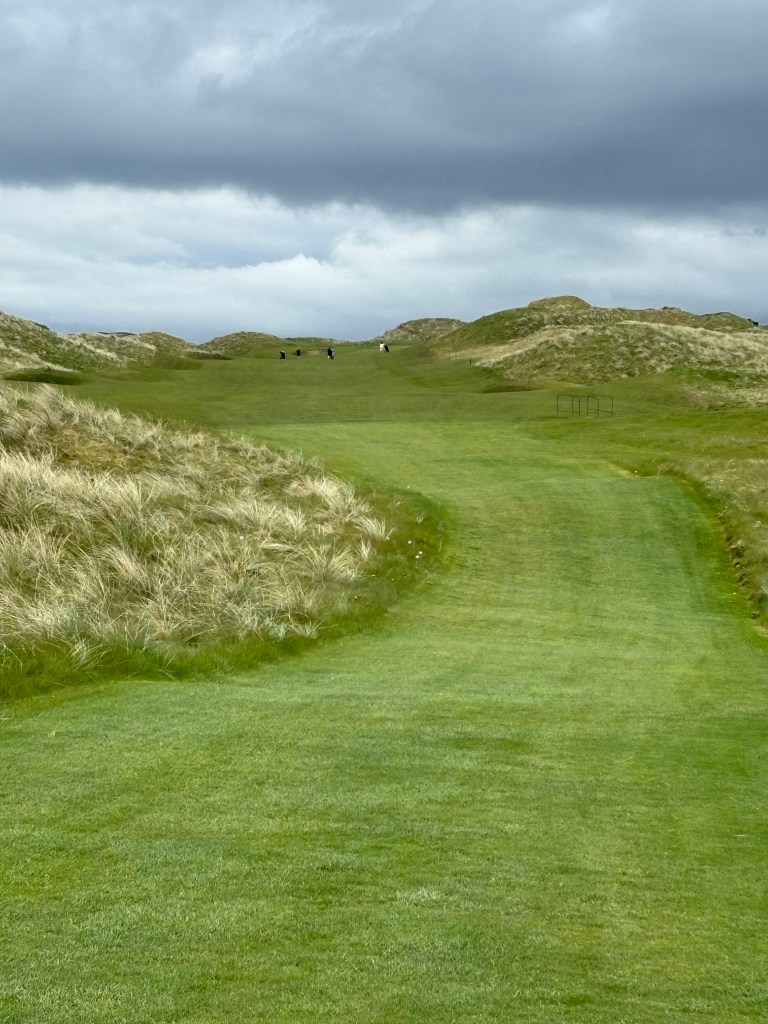
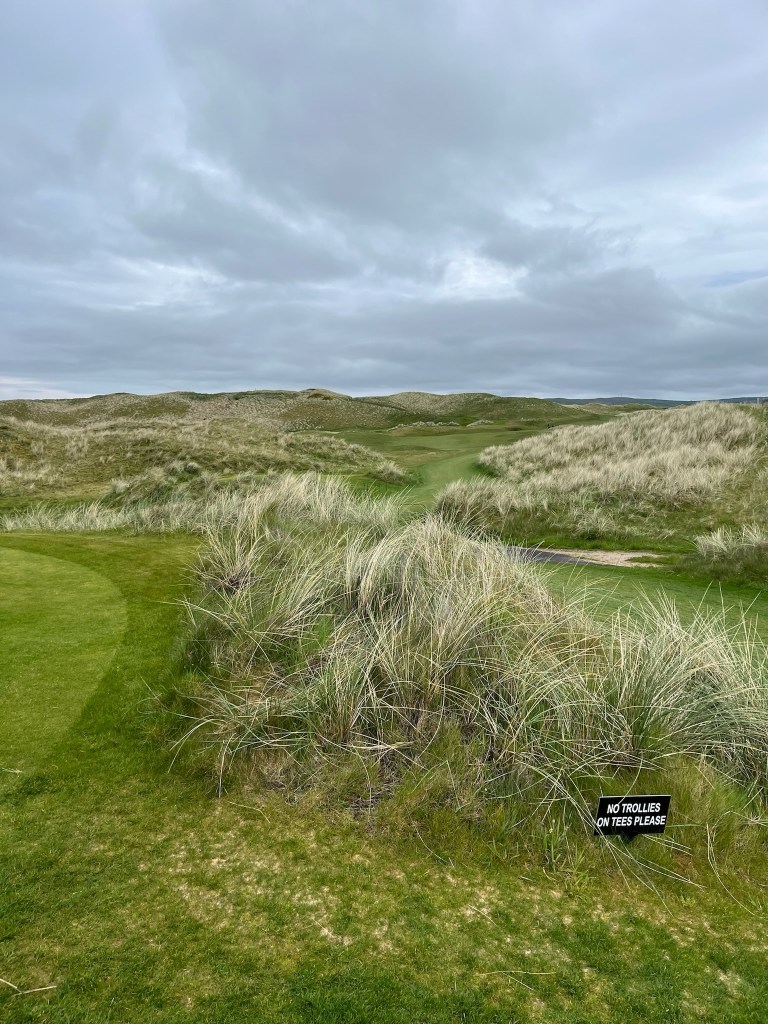
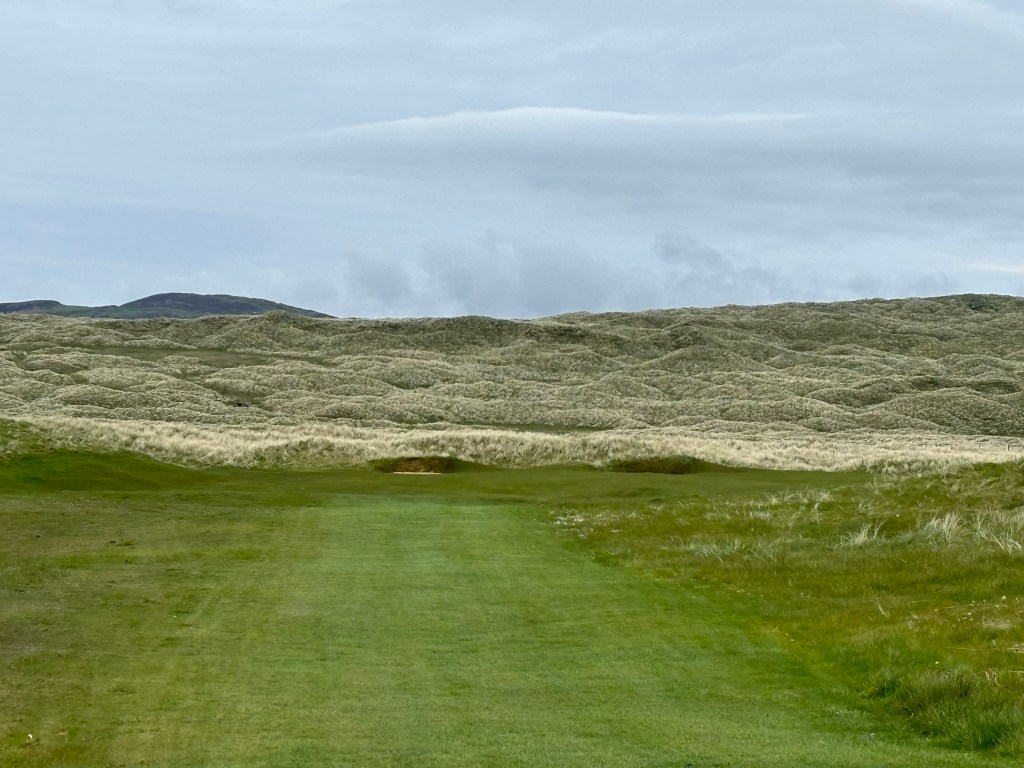
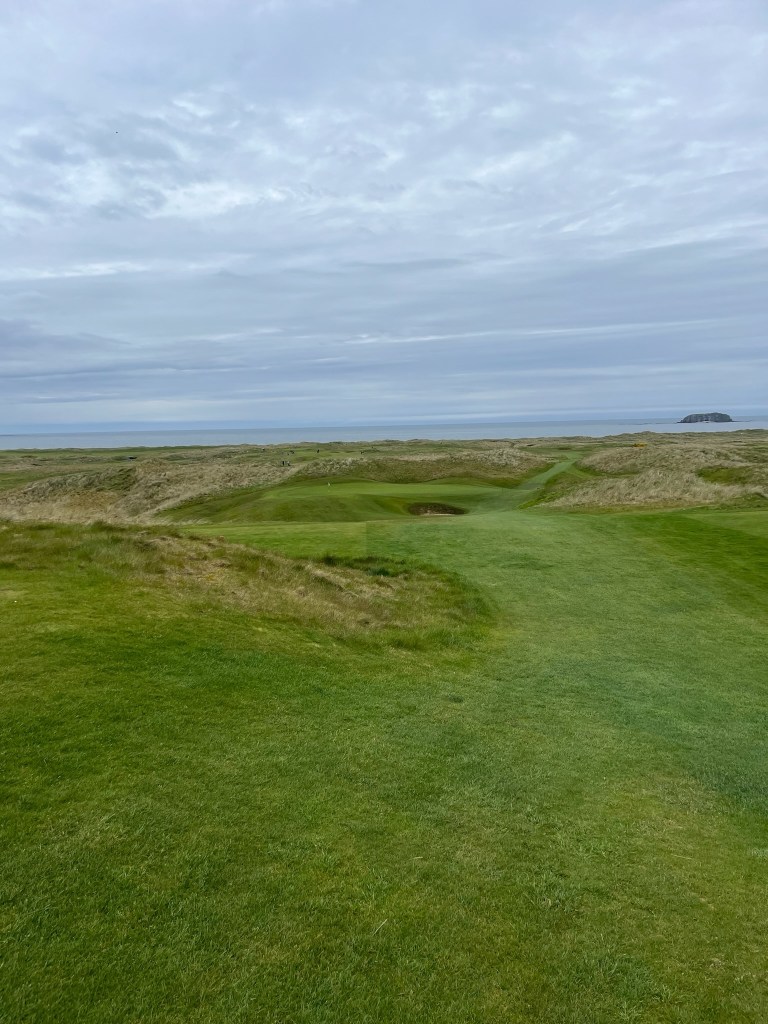
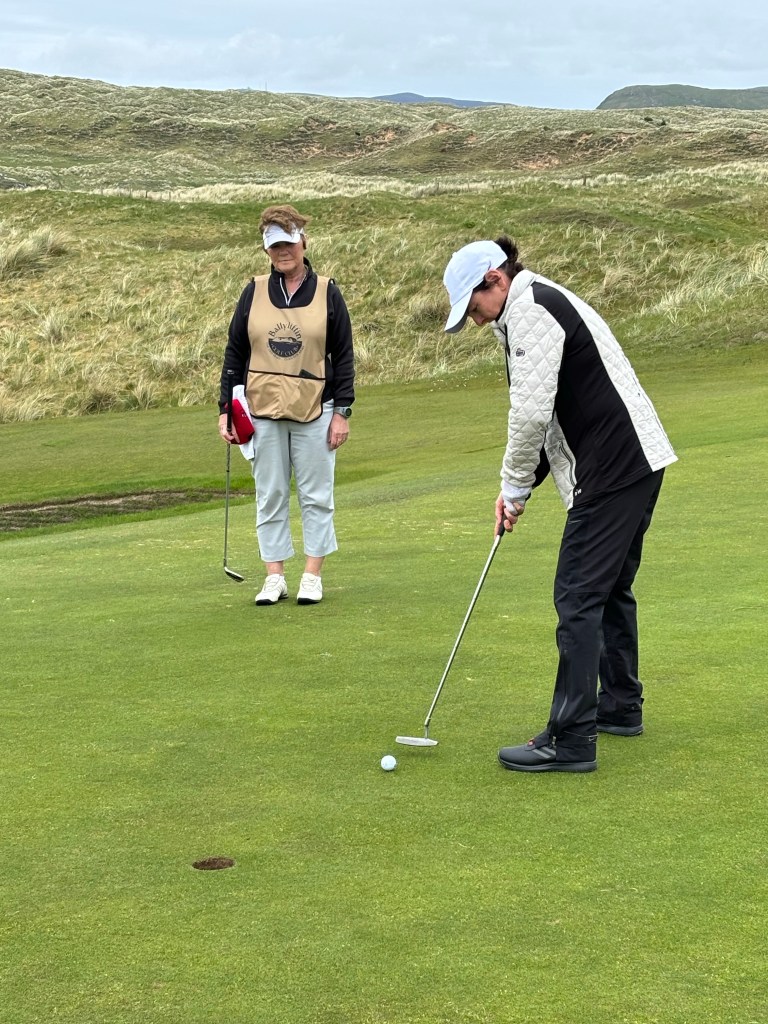
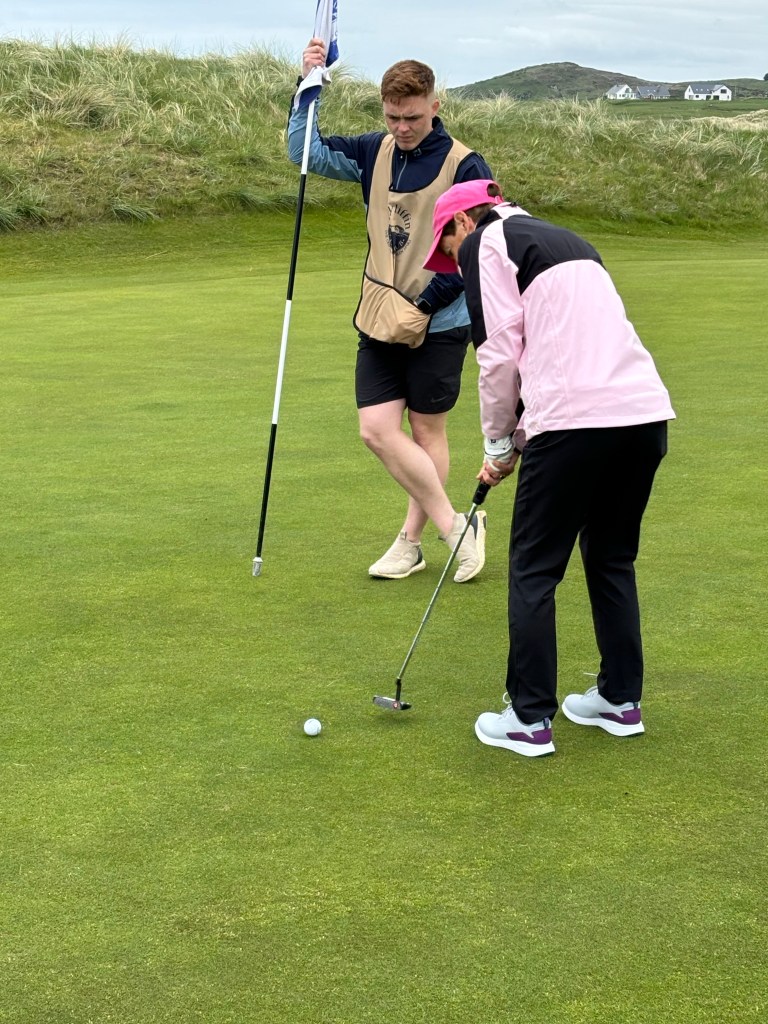
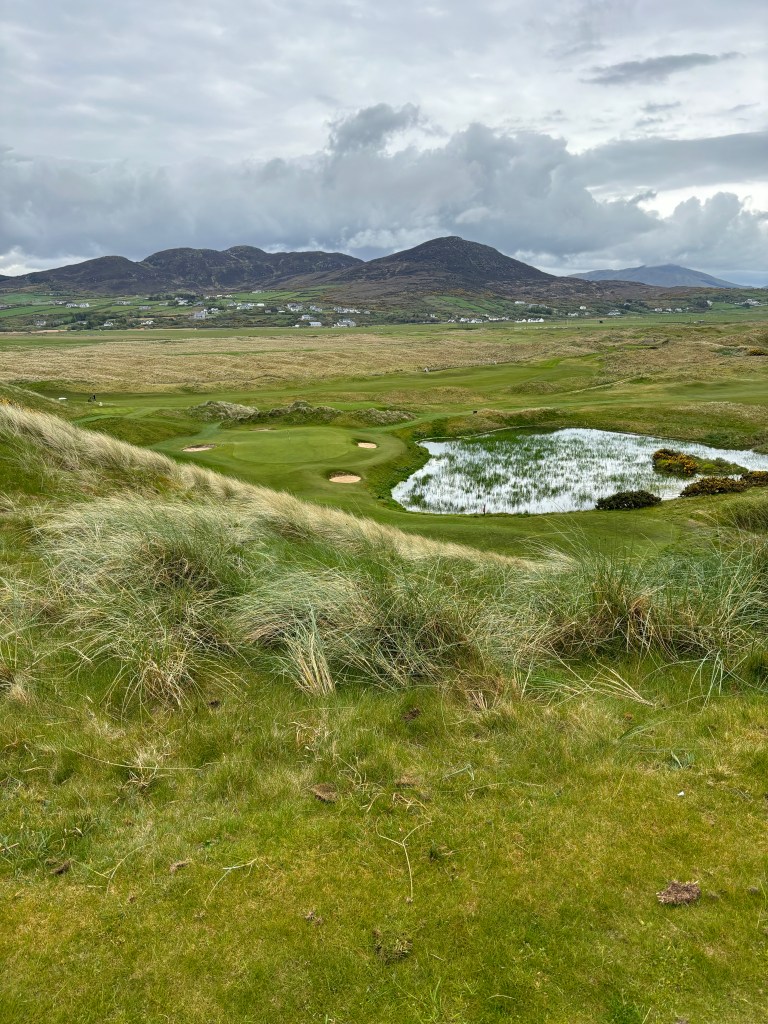
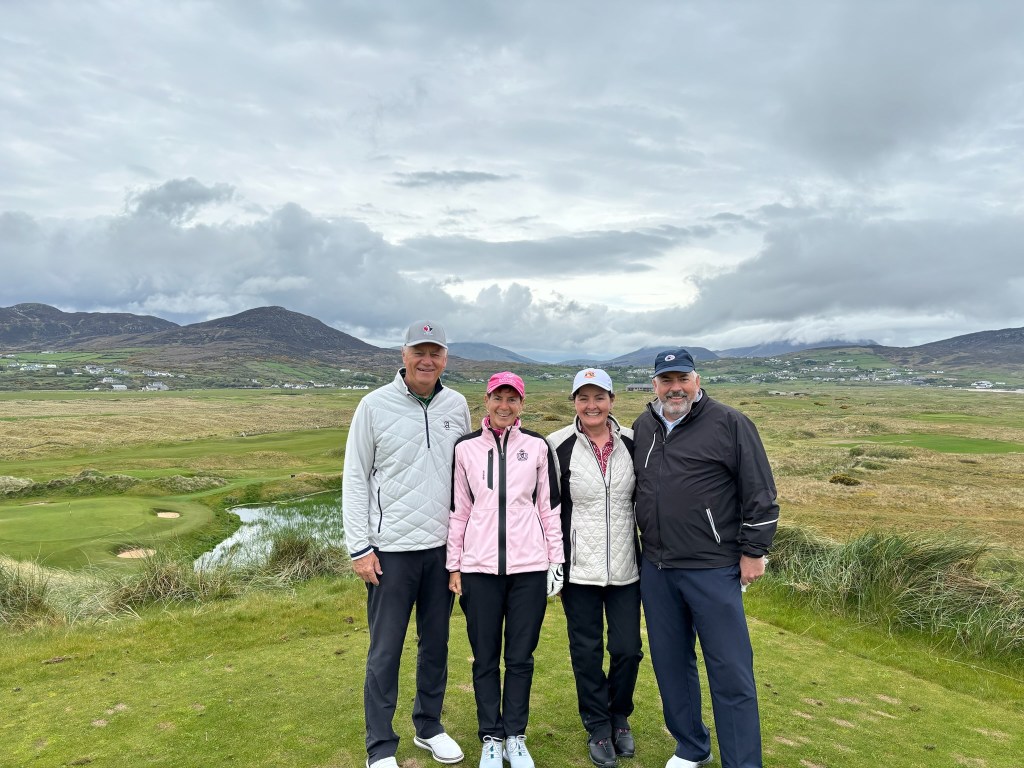
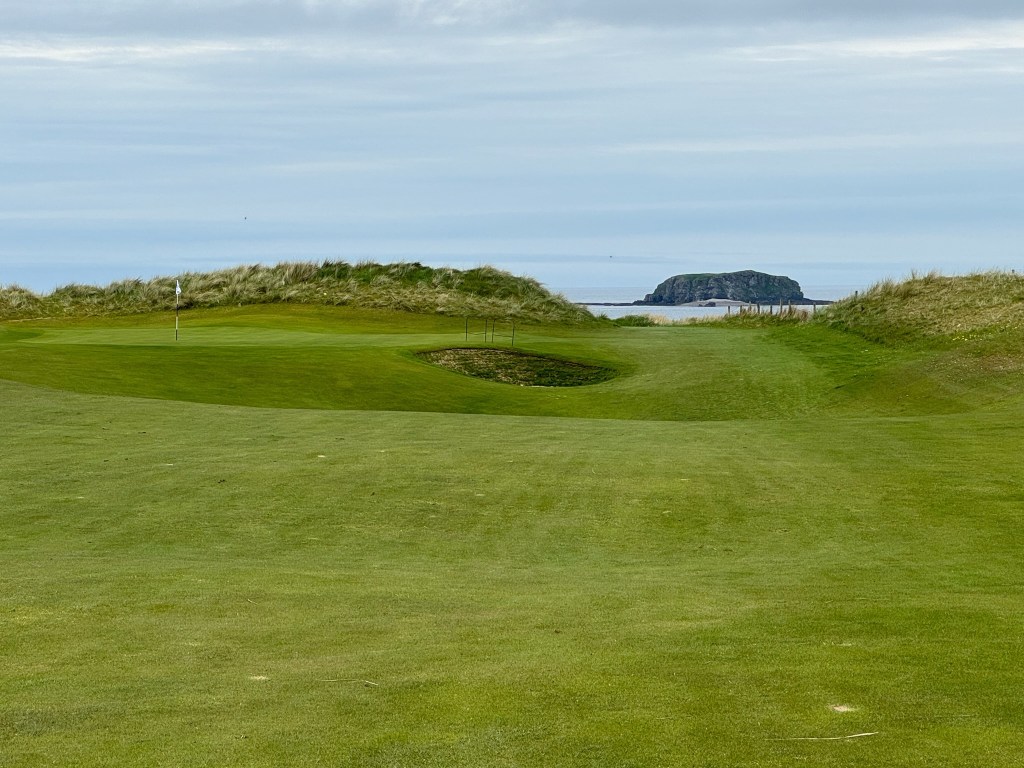
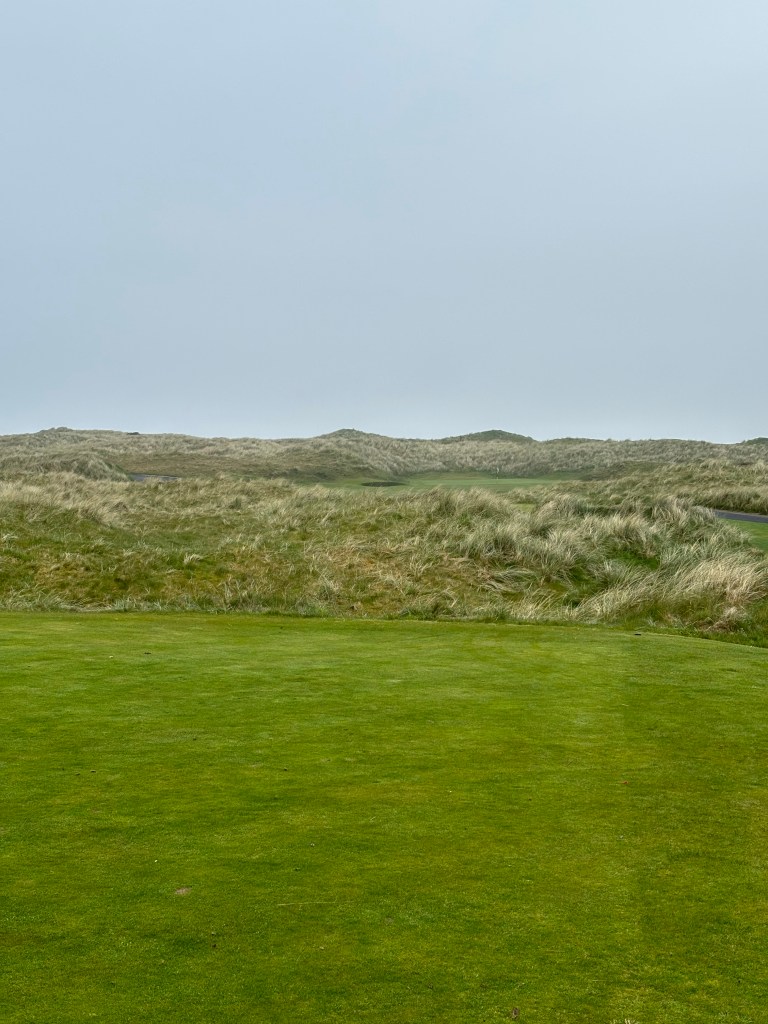
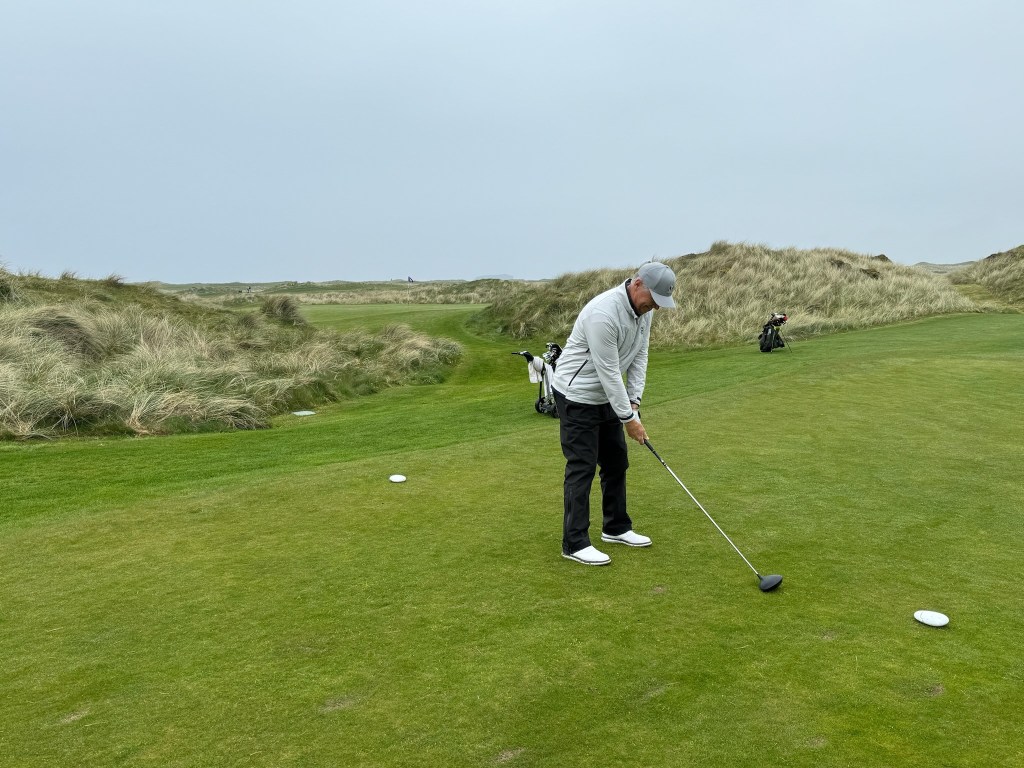
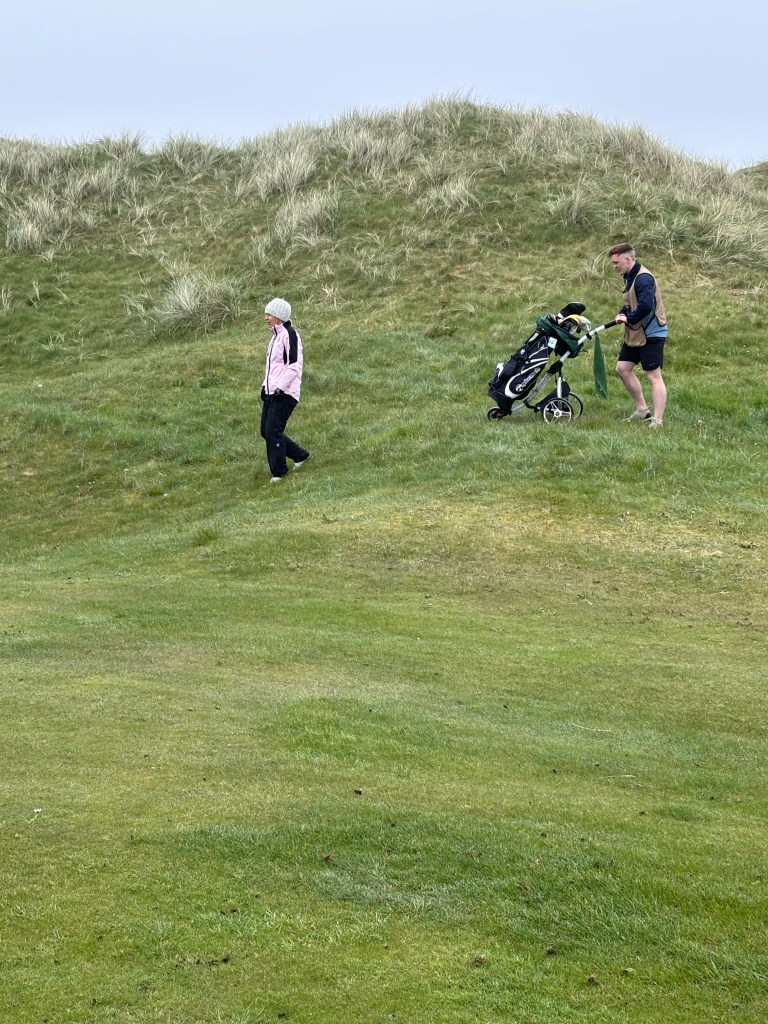
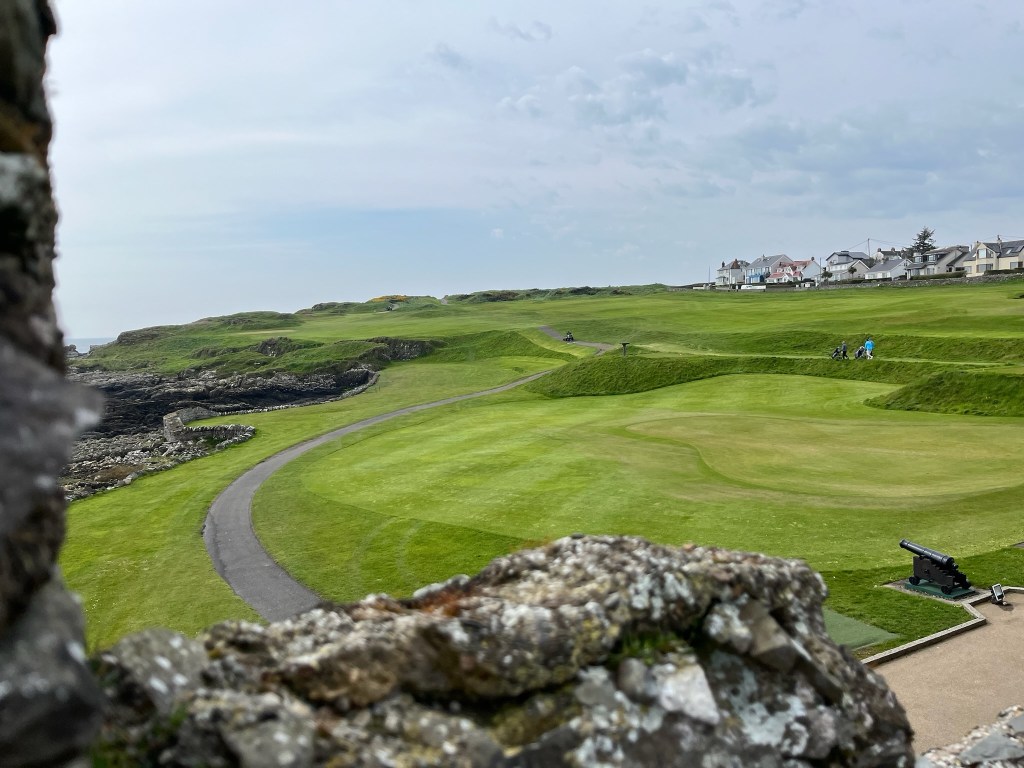
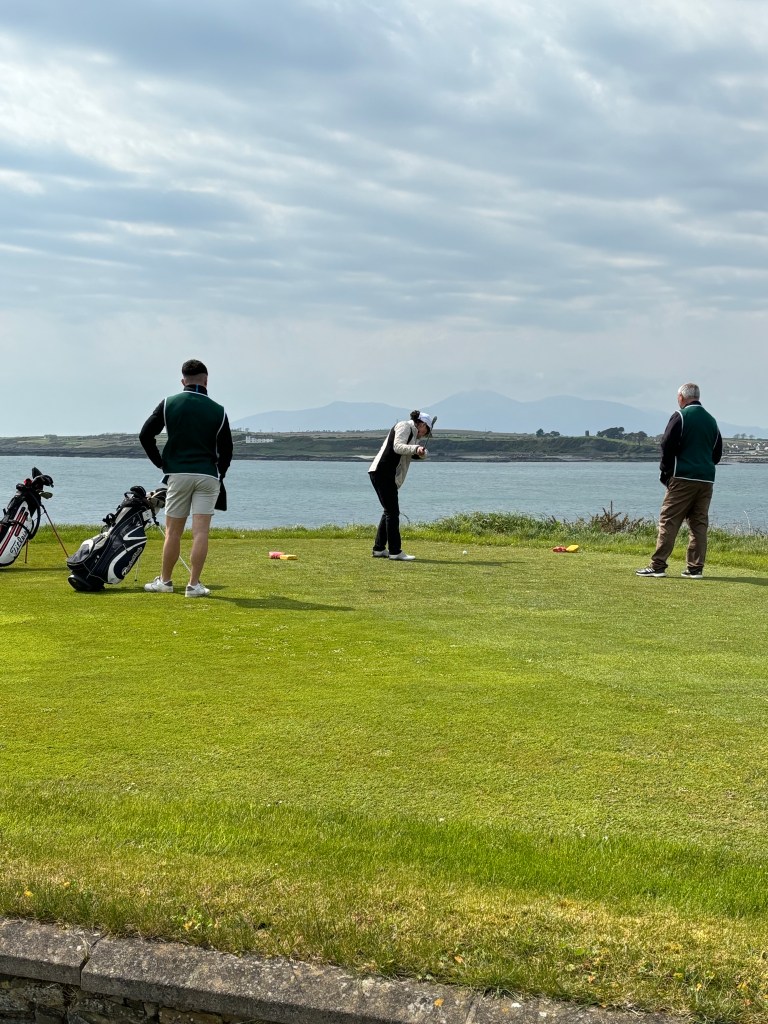
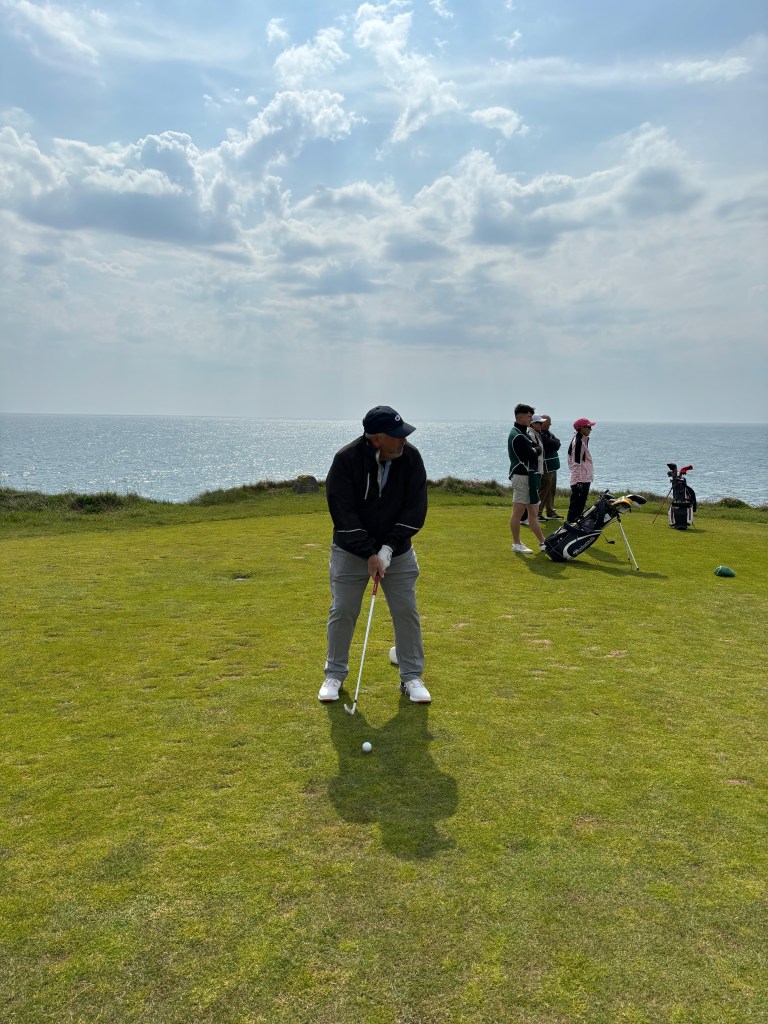
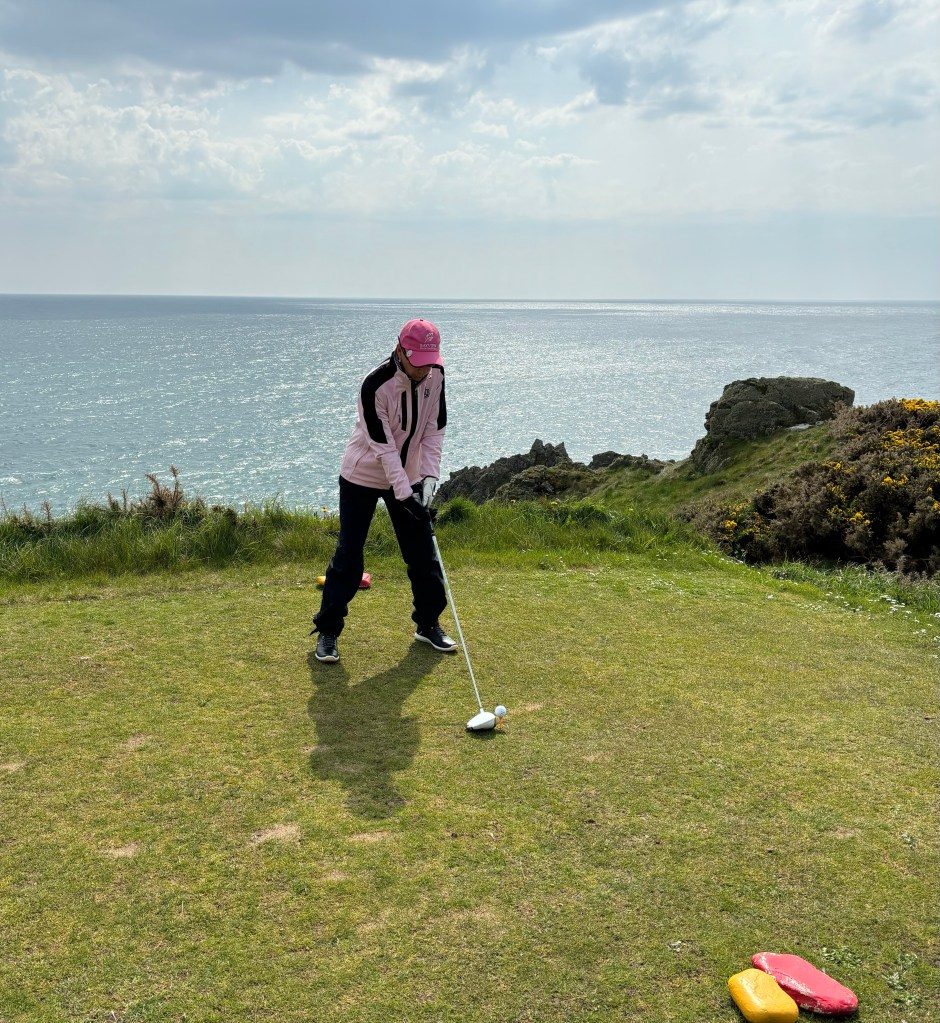
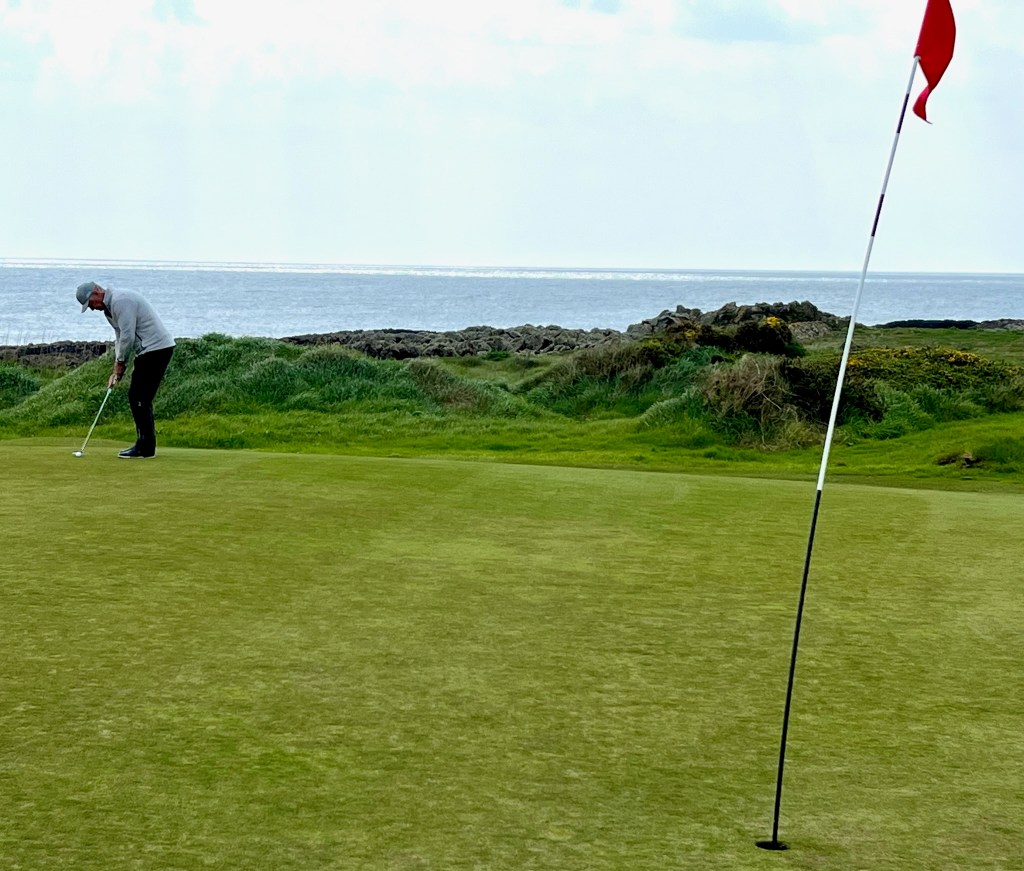
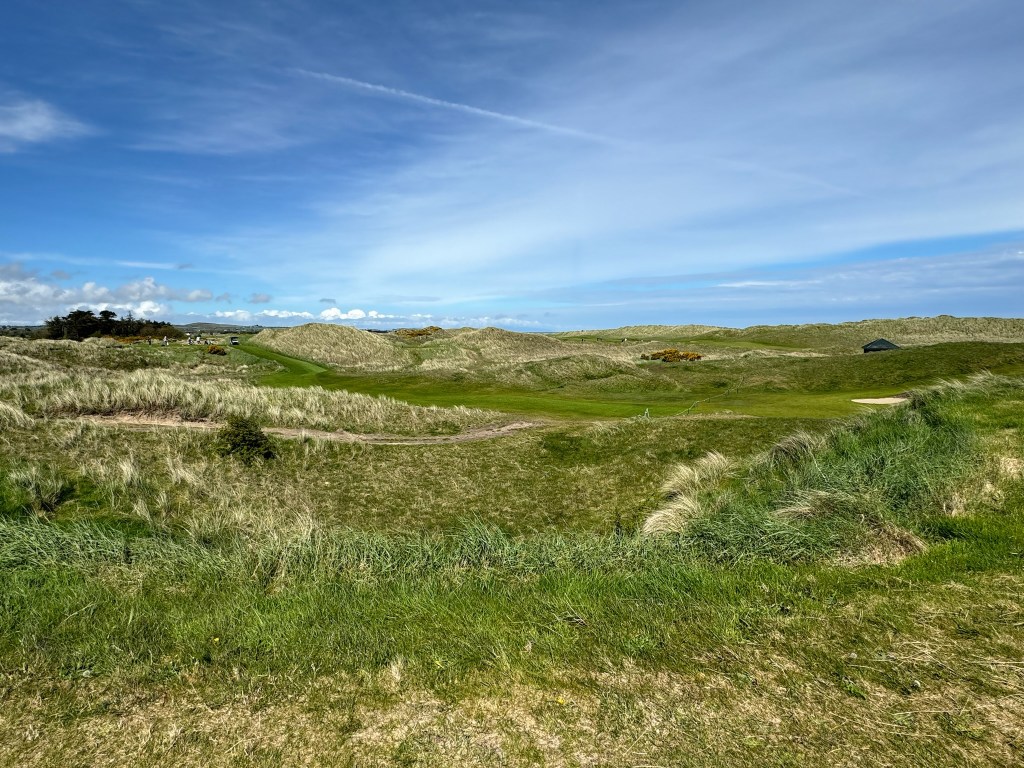
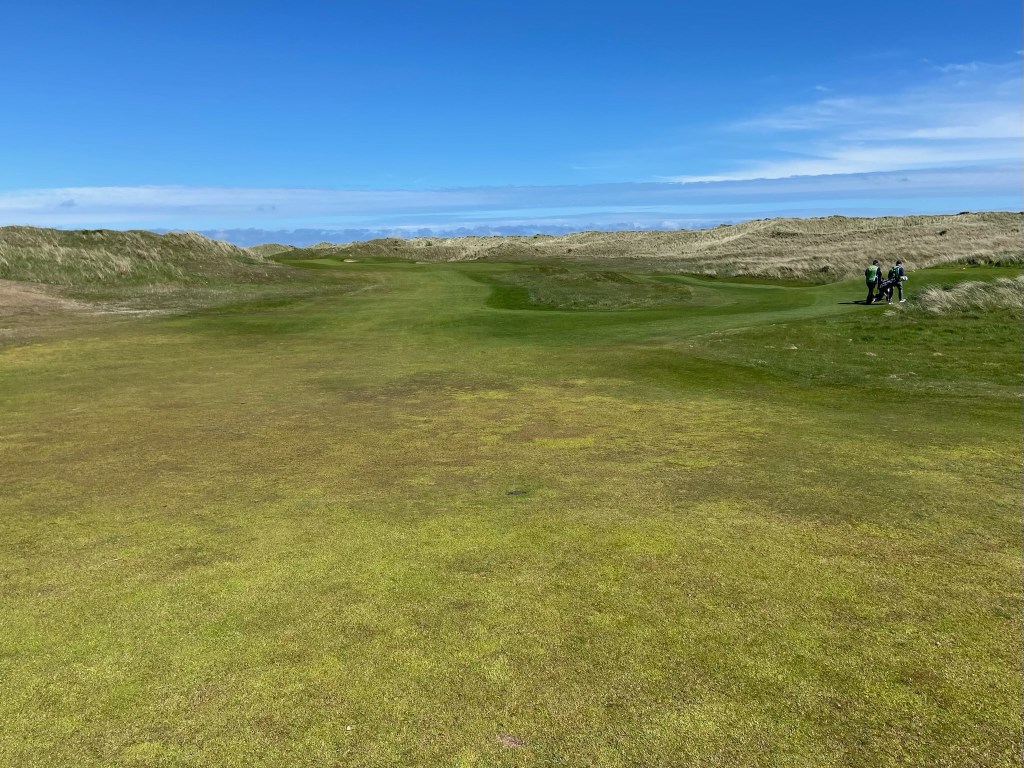
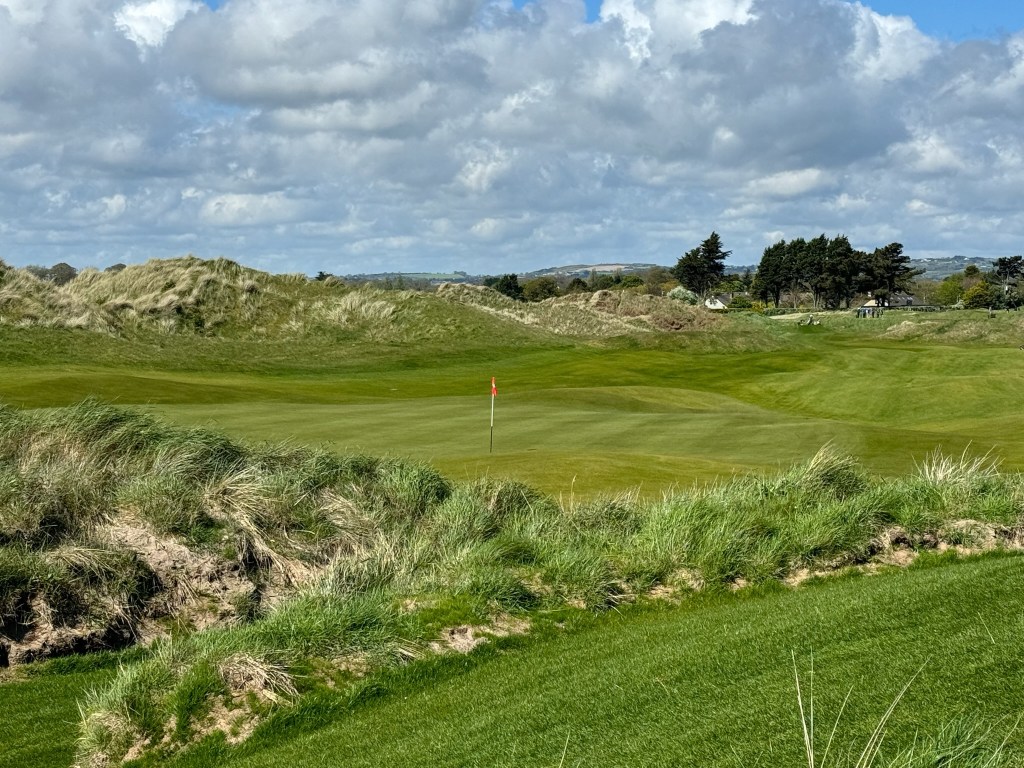
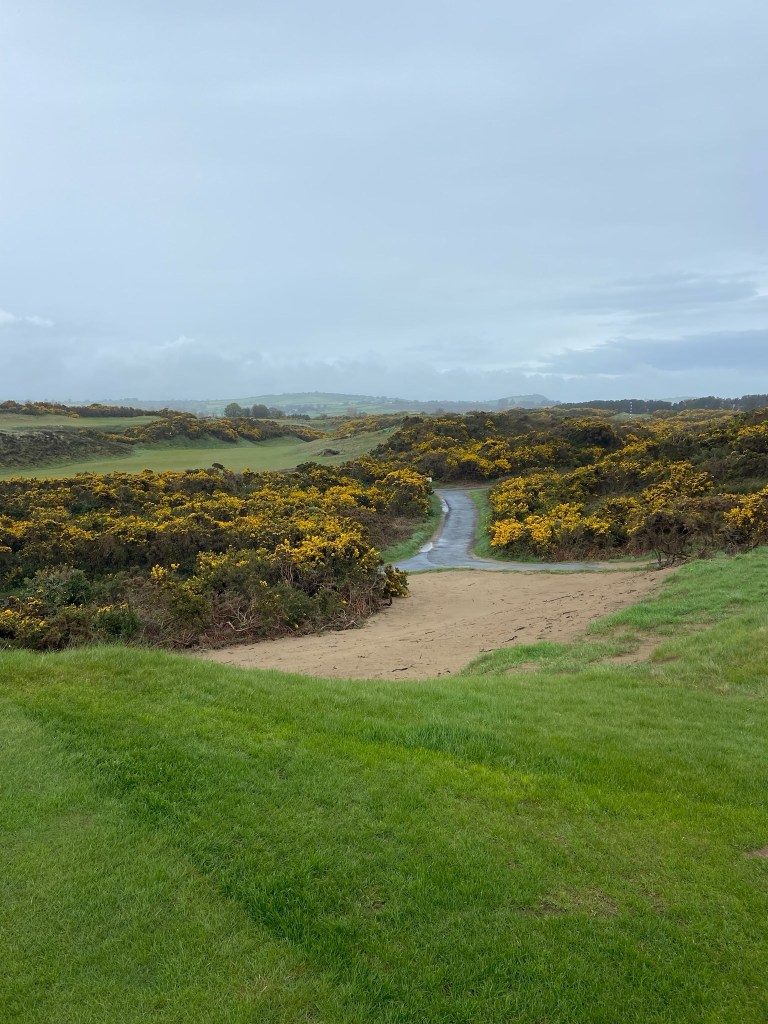
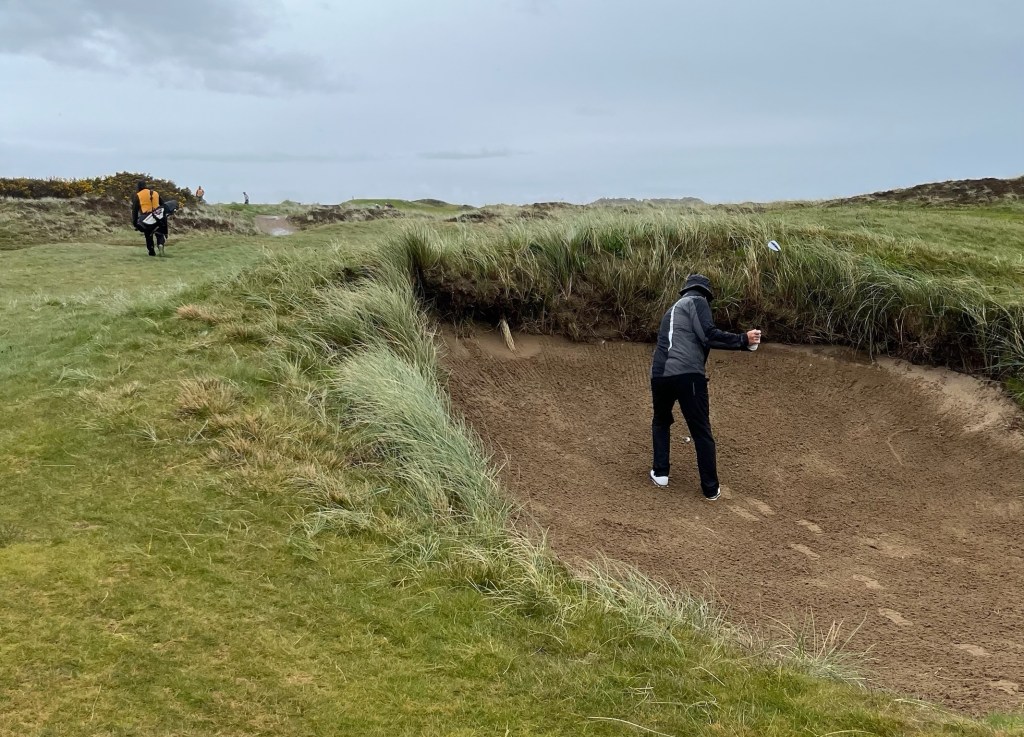
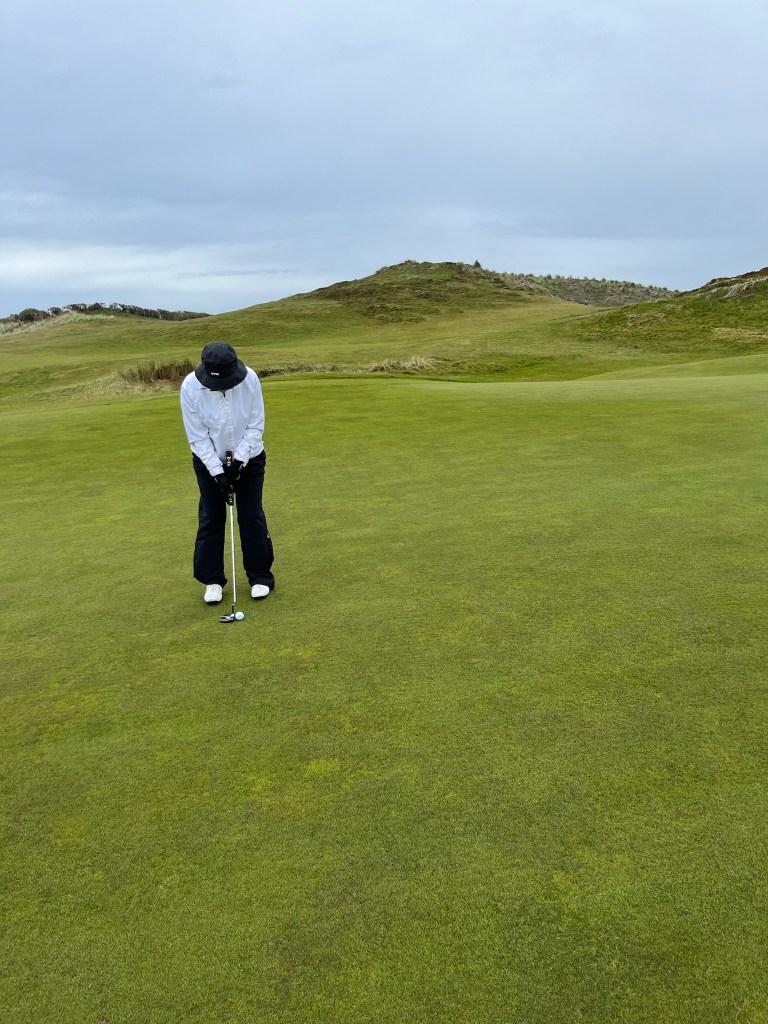
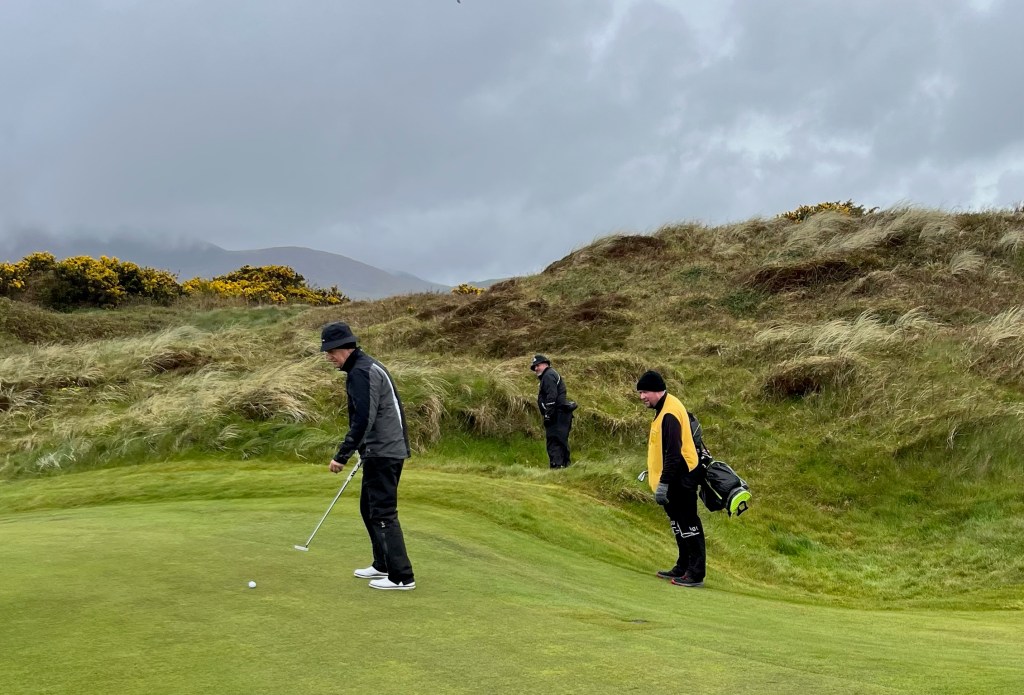
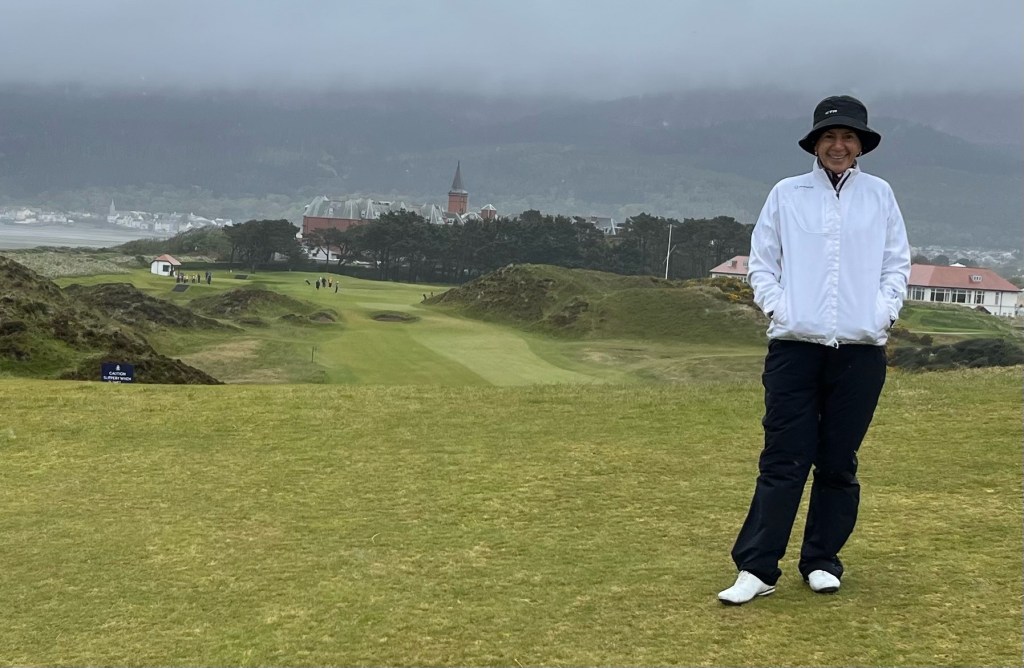
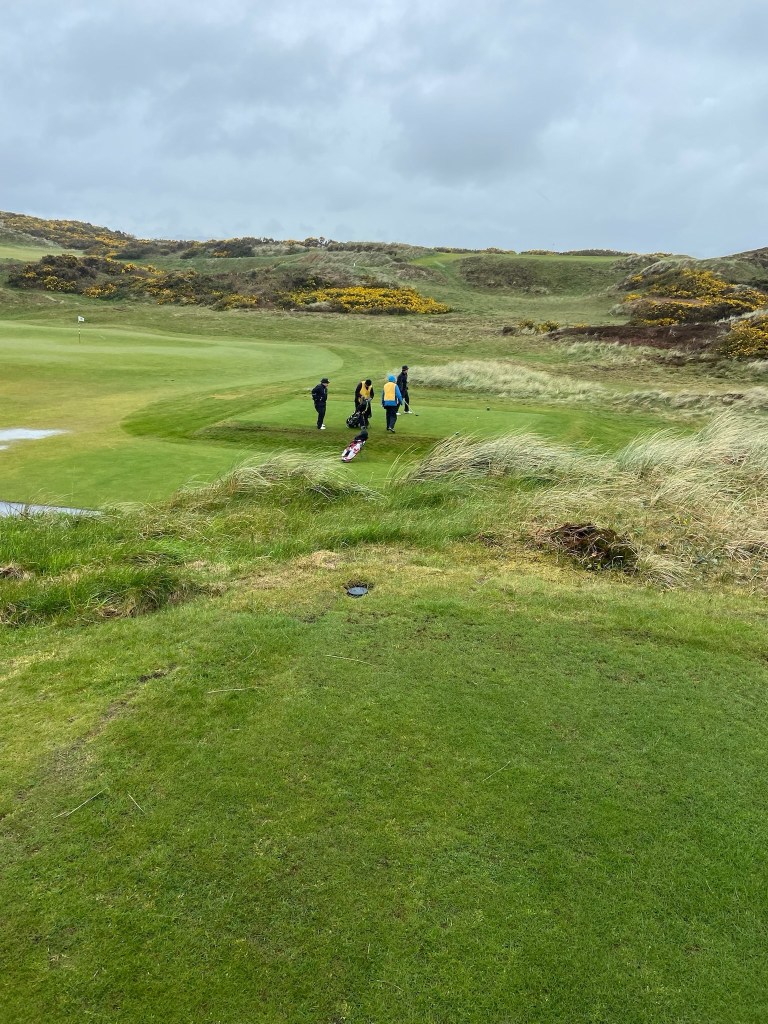
The second 18 at Ballyliffen was built in 1995. Unlike its sister, the Old Links, which involved minimal earth moving, Glashedy Links is definitely man made. The fairways are more familiar given their graded nature. Greens have drop offs and bunkers that collect slightly offline shots. It utilizes the natural elevation change on the east side of the property to great effect so there are uphill and downhill shots. Oh and the views are spectacular.

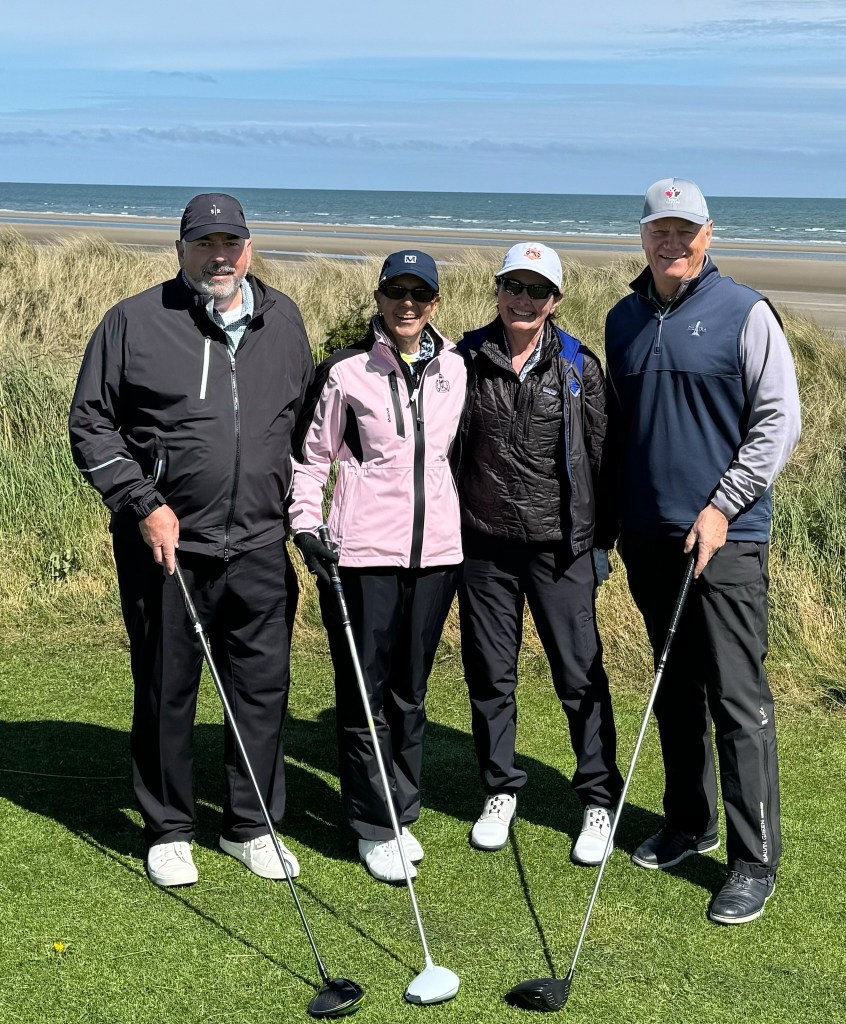
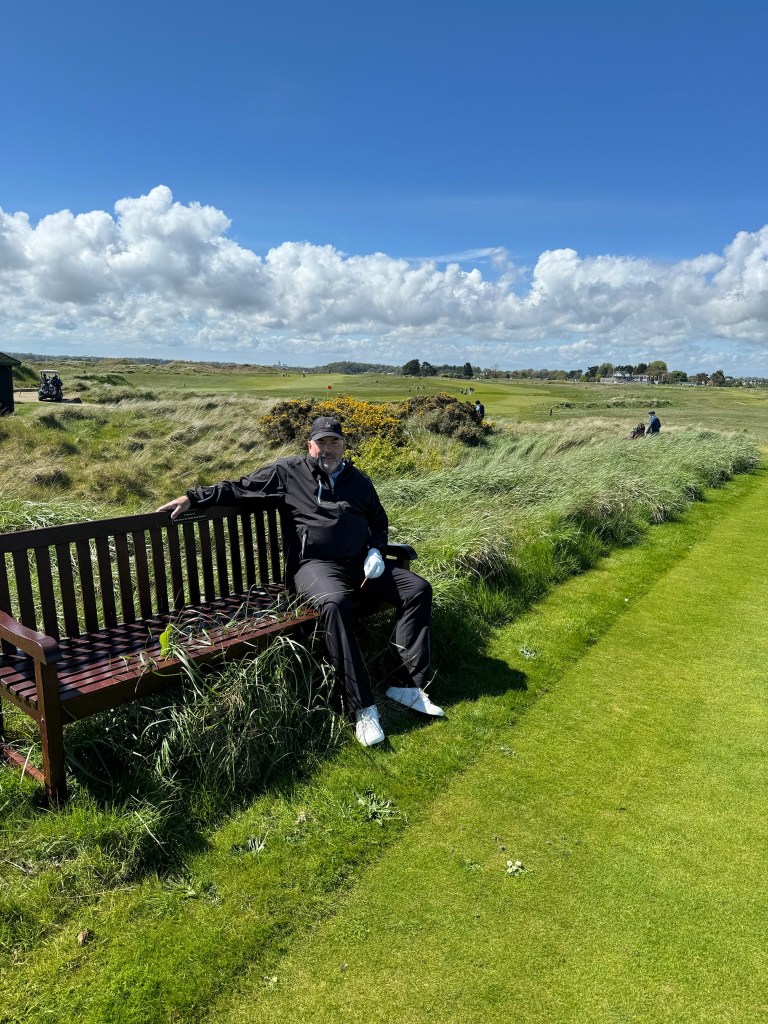
The day was relatively warm with minimal wind meaning less clothing layers.

The course was in very good condition as it prepares to host the British Amateur in mid June when 288 of the best amateurs in the world (you must have an index of at worst, +1.5 to enter) descend on Ballyliffen.
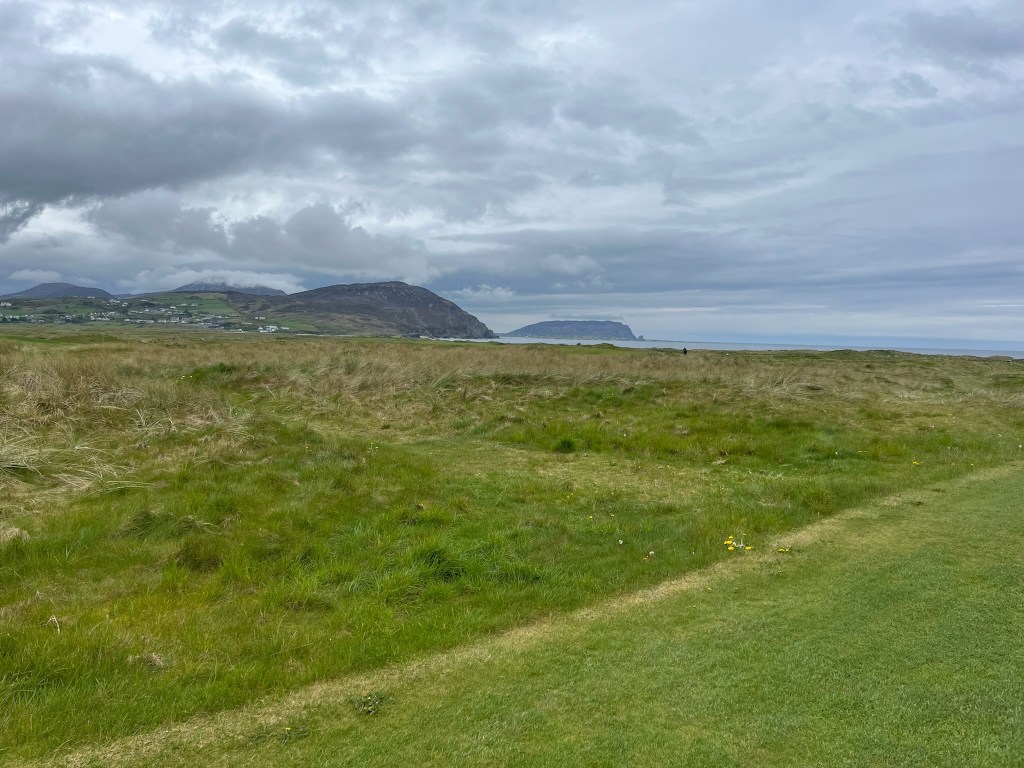
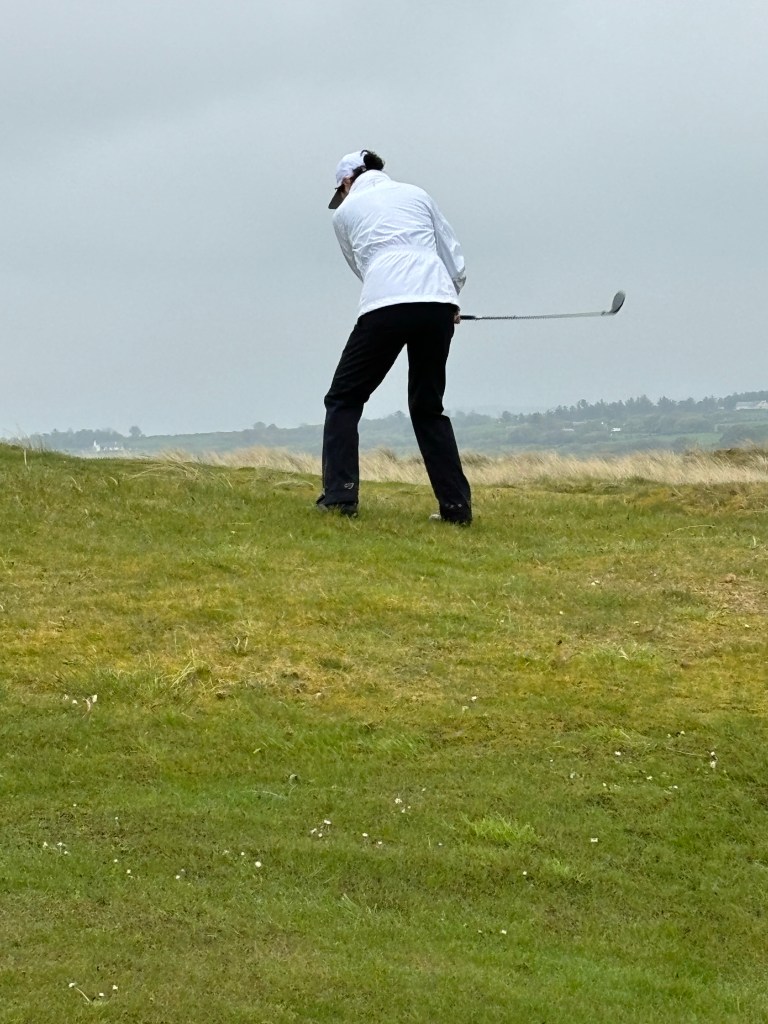
The fairways were ribbons carved out of the knee high fescue. The rough was spongy grass that played havoc with stance and ball contact.

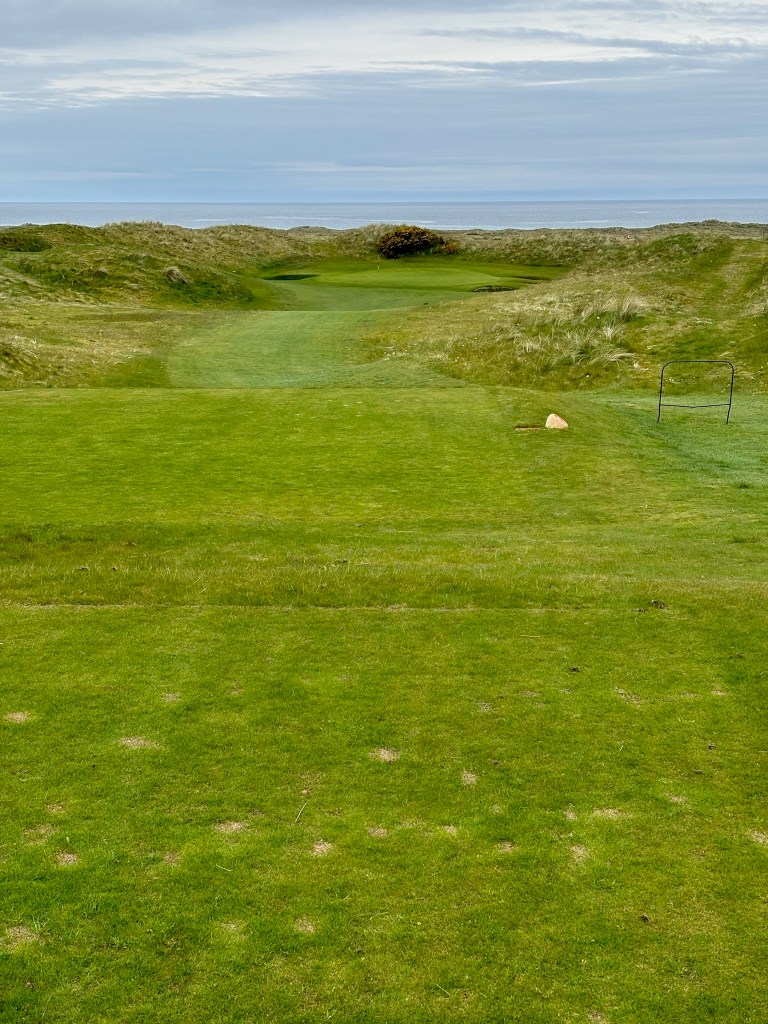
Our post round tea now includes a “where would you rank today’s course” debate. By majority, not unanimous, vote, Glashedy Links sits in third place.

Standings to date: Royal County Down, Ballyliffen – Old Links, Ballyliffen – Glashedy Links, Ardglass, County Louth – Baltray. Having said that, all are fantastic and have been a treat to play.

Tomorrow Royal Portrush.
Ballyliffen – Old Links

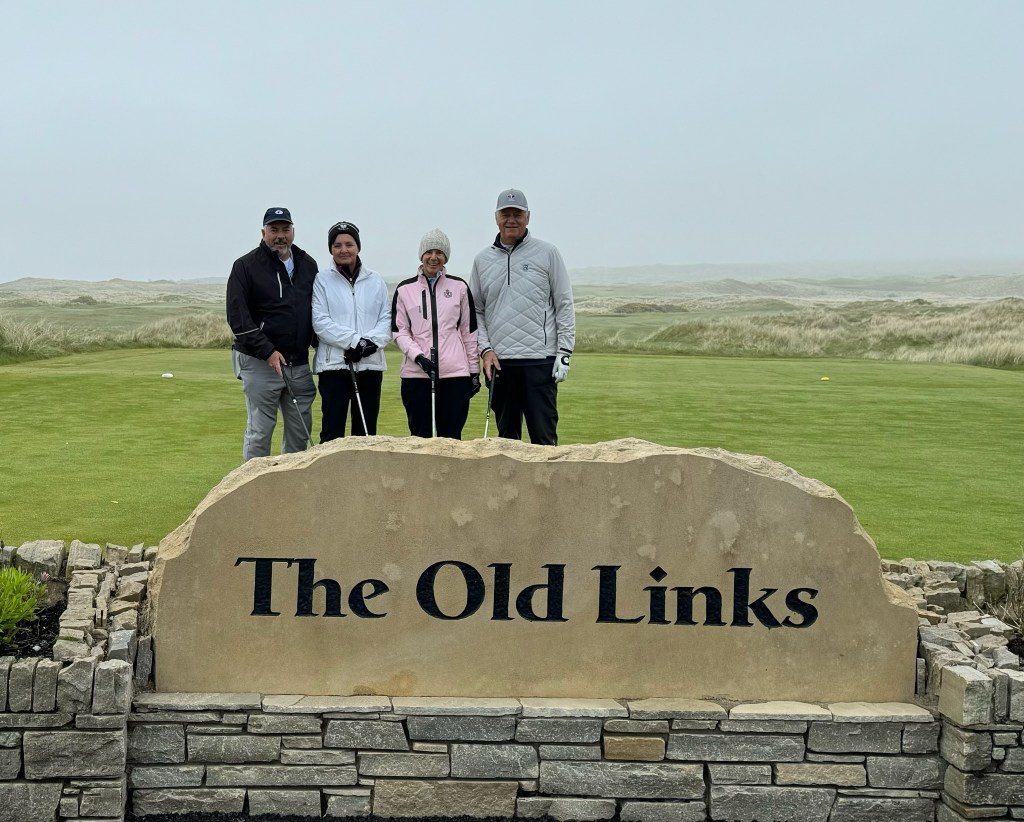
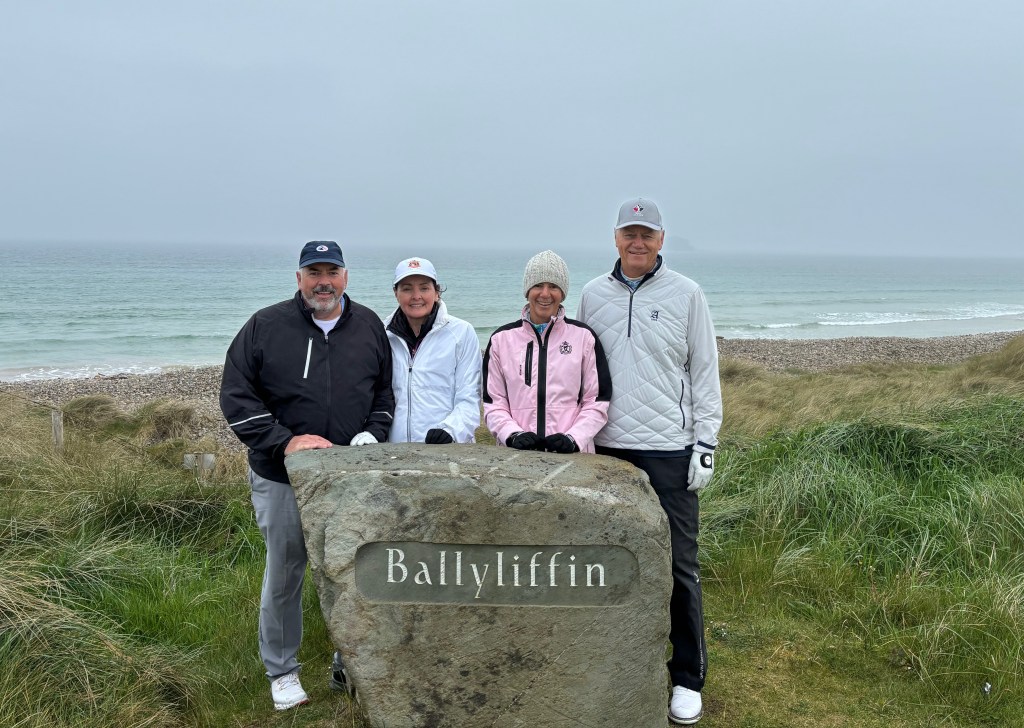
Ballyliffen, on the very, very north coast of County Donegal in Ireland, proved no four courses are alike (we’ve now play four different courses, each unique in one way or another). By Irish standards, the Old Links is not old having started as a 9 hole course in 1947. Additional land was purchased in 1970 and a new 9 holes was built, with the full 18 opening in 1973.

The two courses at Ballyliffen

With fingers crossed that the rain would hold off we drove the 45 minutes from Londonderry. There is no apparent border between Northern Ireland and the Republic of Ireland other than the speed limit signs suddenly change to Km/hr. Very little narrow lane driving today but just enough to warrant full attention.

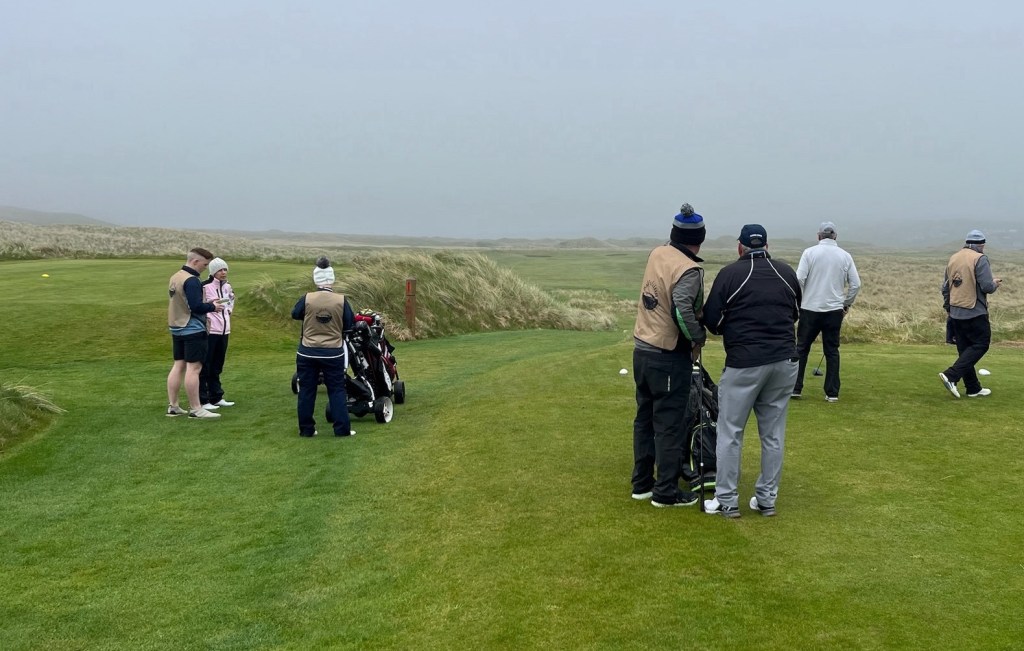
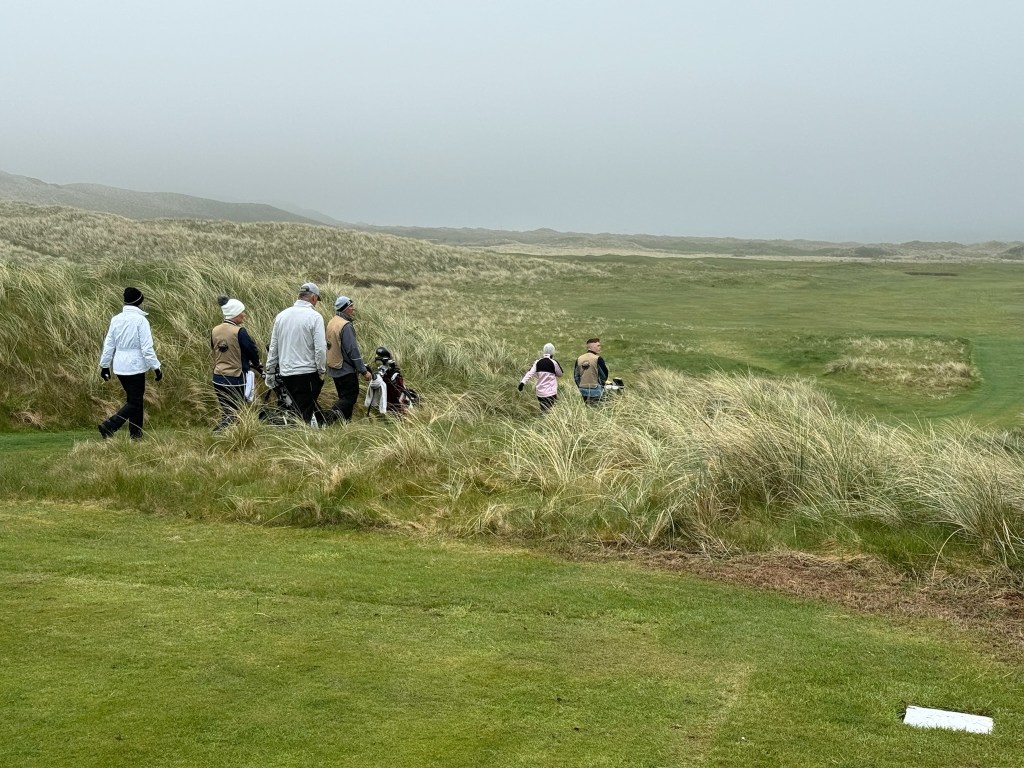
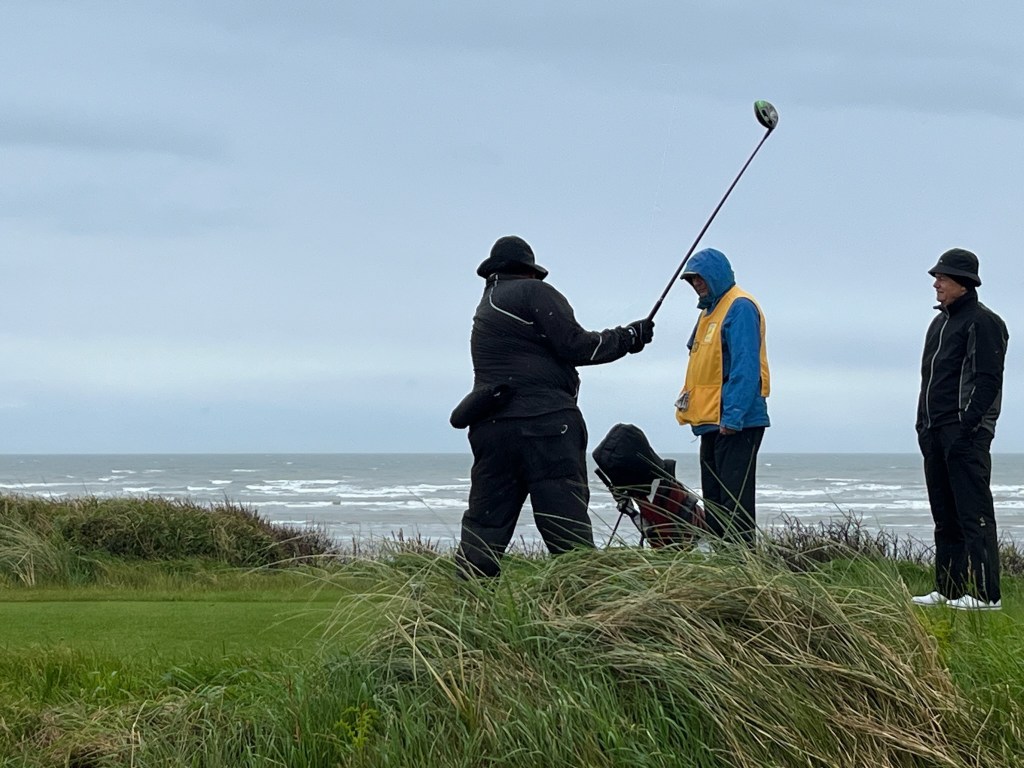
The course was blanketed by a layer of mist or an Irish marine layer. For the first few holes it was thick enough that without caddies we would have been lost. Our pictures don’t capture how misty it was.

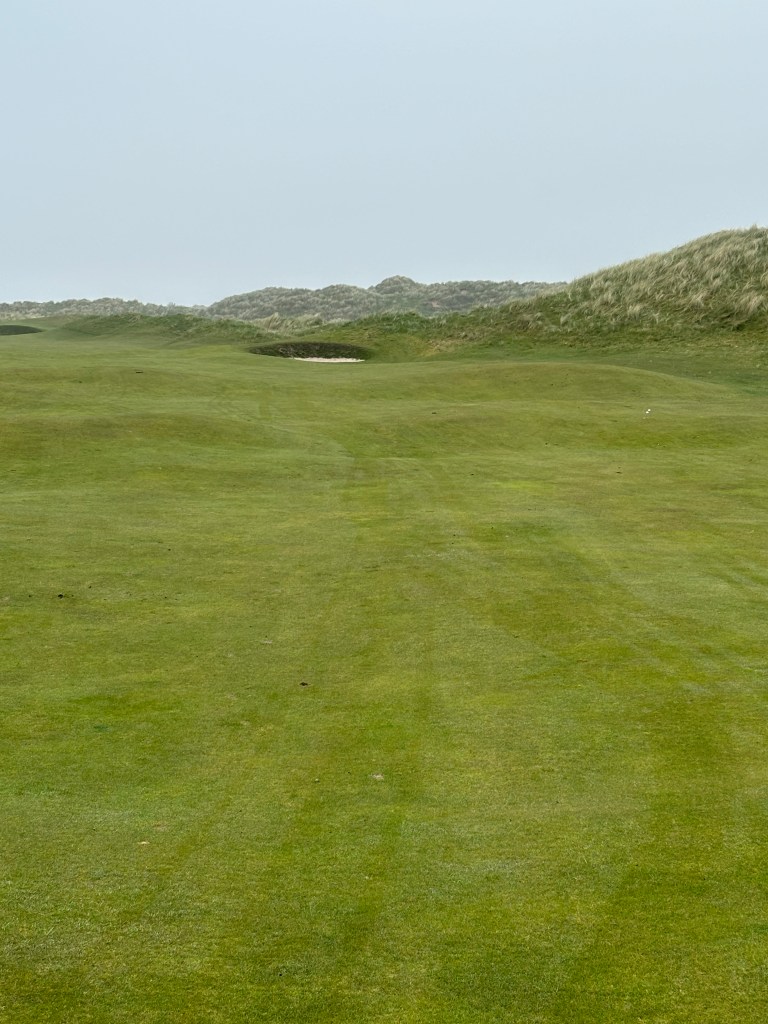
Fortunately it cleared enough that the true character of the land was revealed. Our pictures also don’t truly display the rippling fairways as the locals call them. Imagine a ski hill covered with moguls of different shapes and sizes, laid flat and covered with turf. Dozens and dozens of such bumps and mounds dotted most fairways. A flat lie or stance was the exception. It also meant some shots on the ground deflected well off line.

The rough was ROUGH with spongy fescue and tall grass everywhere.

We agreed, over our now traditional post round cup of tea, the Old Links was a very enjoyable experience and a first rate course.

We’re back at Ballyliffen tomorrow to play the other course, Glashedy, which is in fact the championship designated 18.

North Coast

A Pit Day, ie no golf, meant a strong list of tourist stops. From our townhouse Airbnb in Londonderry it was a 50 minute drive to the north coast. Spectacular weather – sunshine, 13C/56F and nary a breeze.

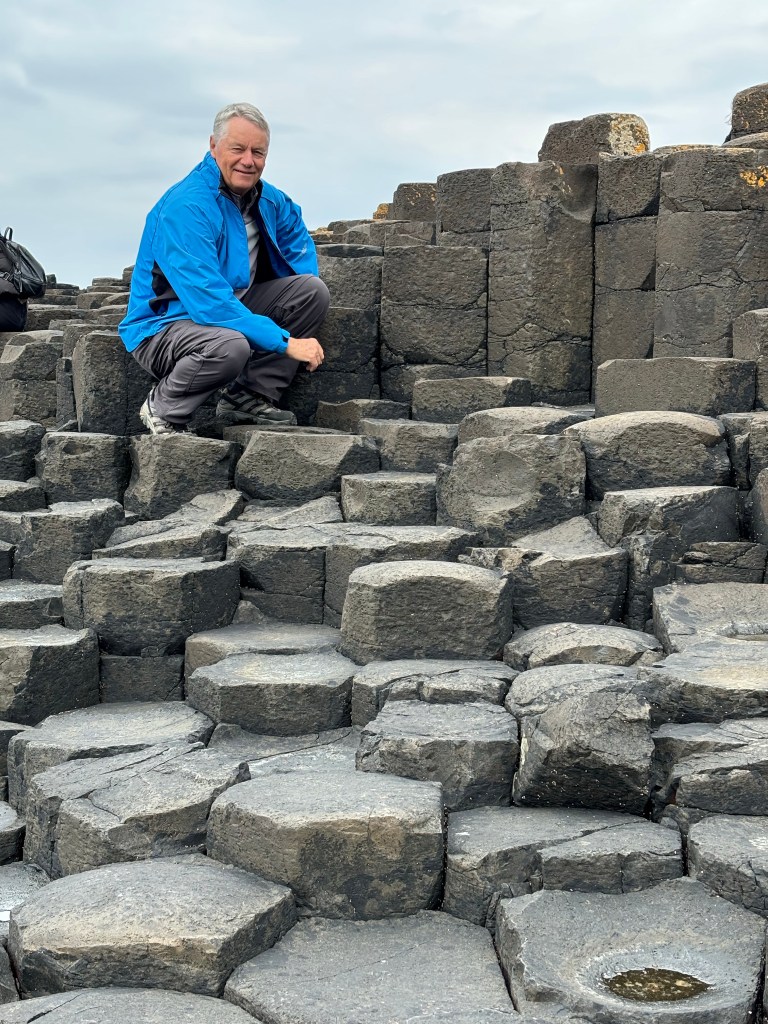
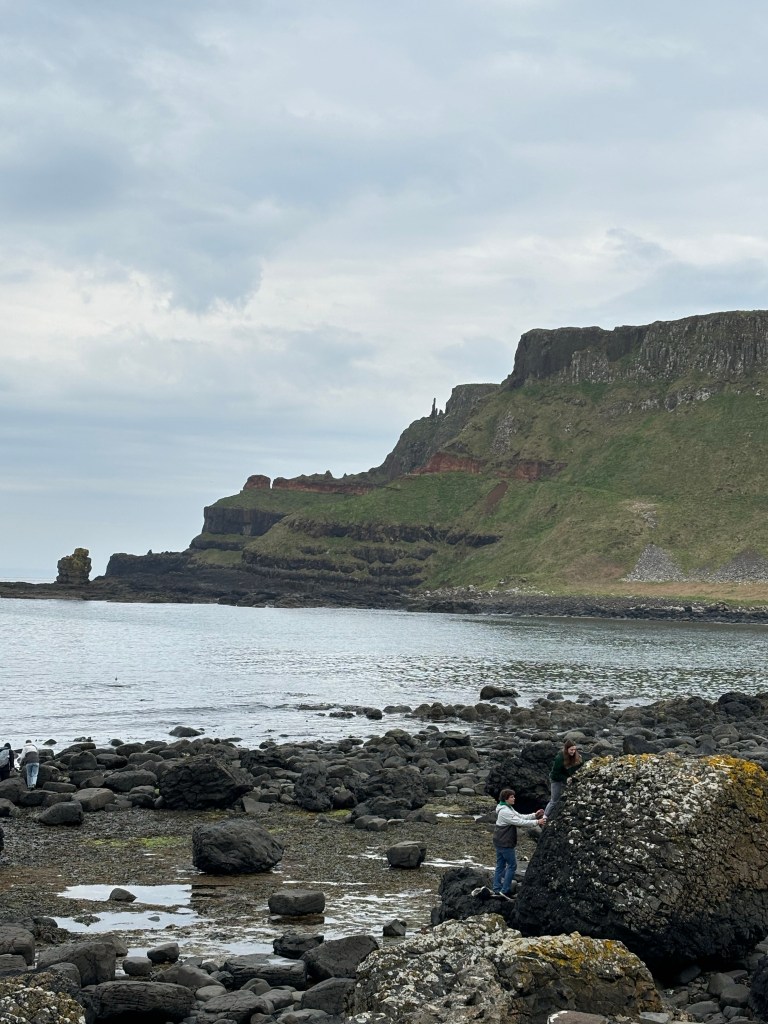
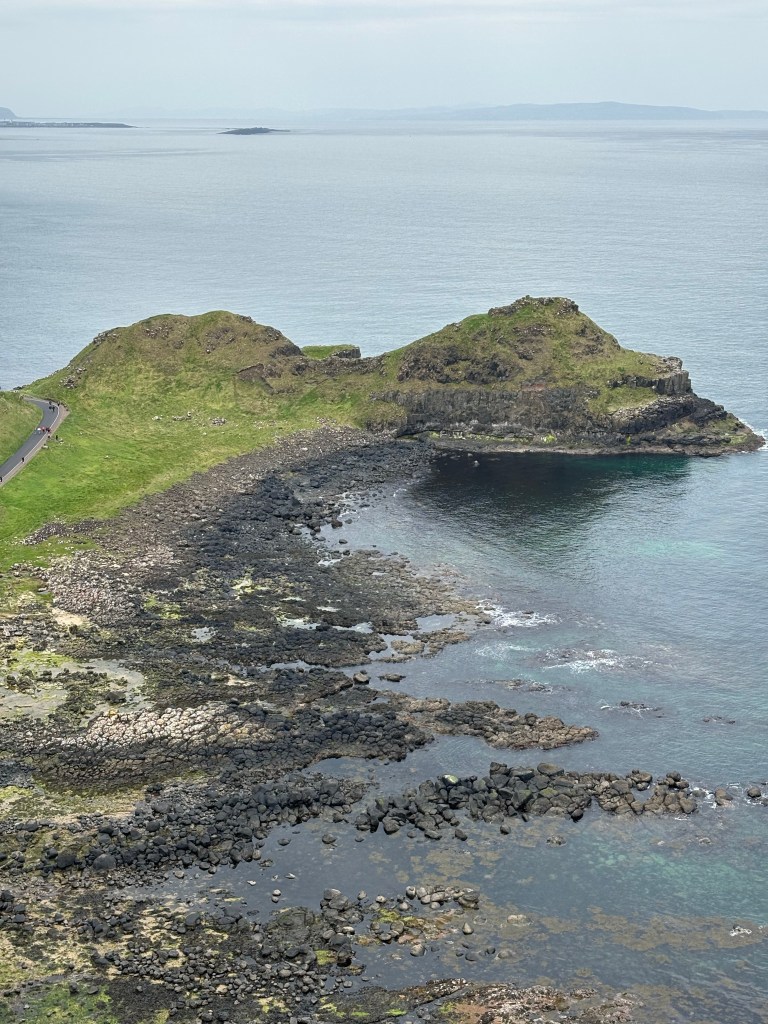
First stop, the Giant’s Causeway. A World Heritage site, movie set and geological marvel it has turned into a tourist magnet. Our tour guide, Emma, was a superb hostess with tons of information and insight. We walked down the hill past the various bays until voila.

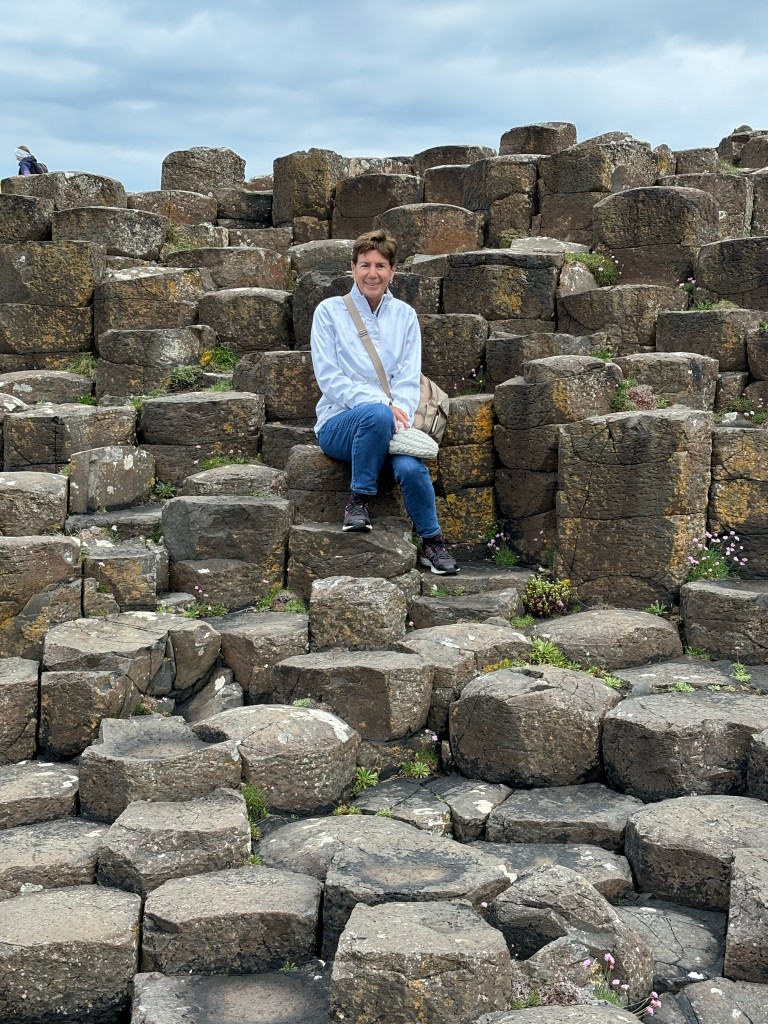
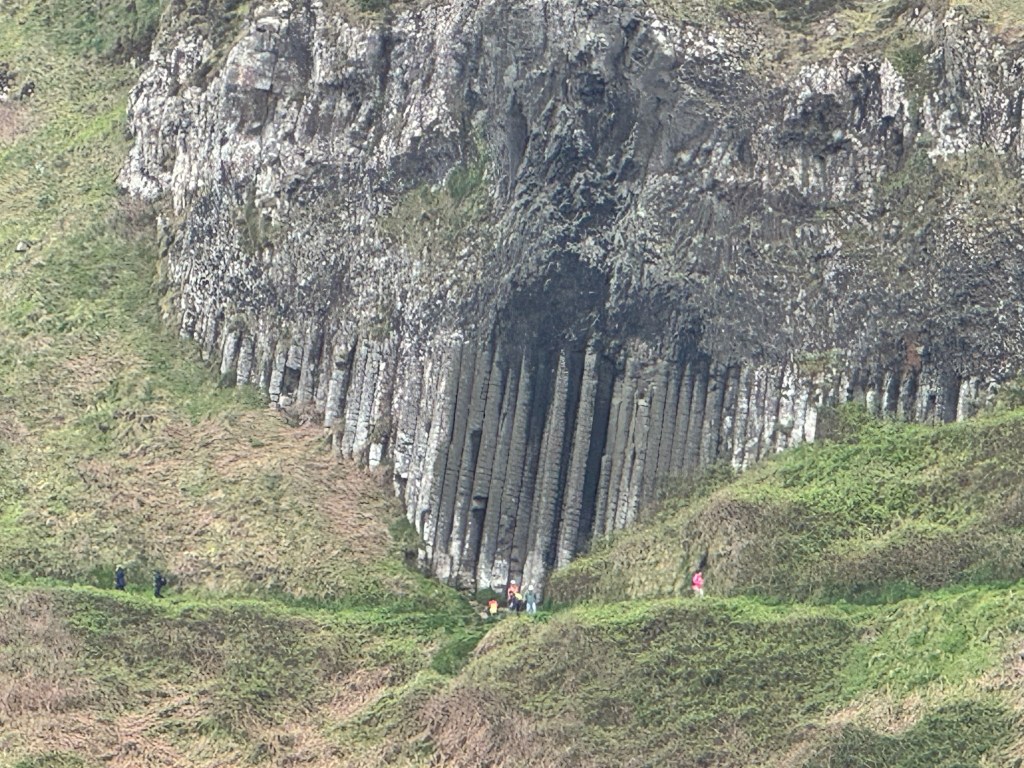
The hexagon shaped columns of basalt

The symmetry of the more than 40,000 columns is amazing but tourists kept cluttering up the pictures.

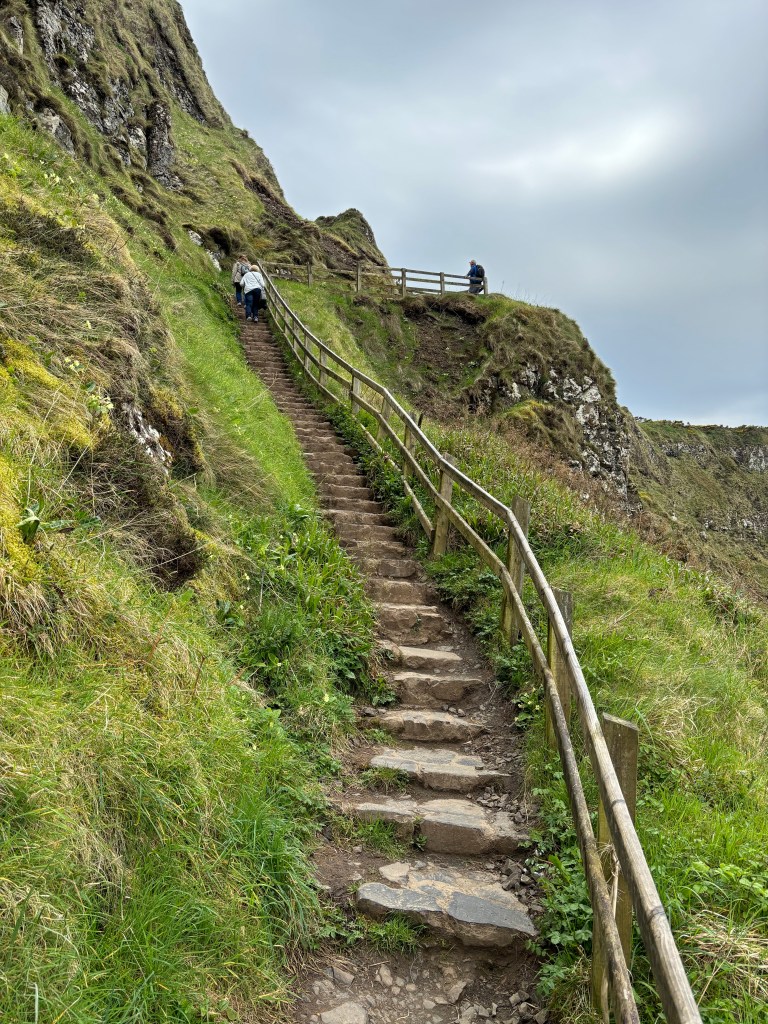
Then, per our normal, we chose to hike along the headland for different picture angles before ascending the cliff via a step stone stairway to reach the top trail.

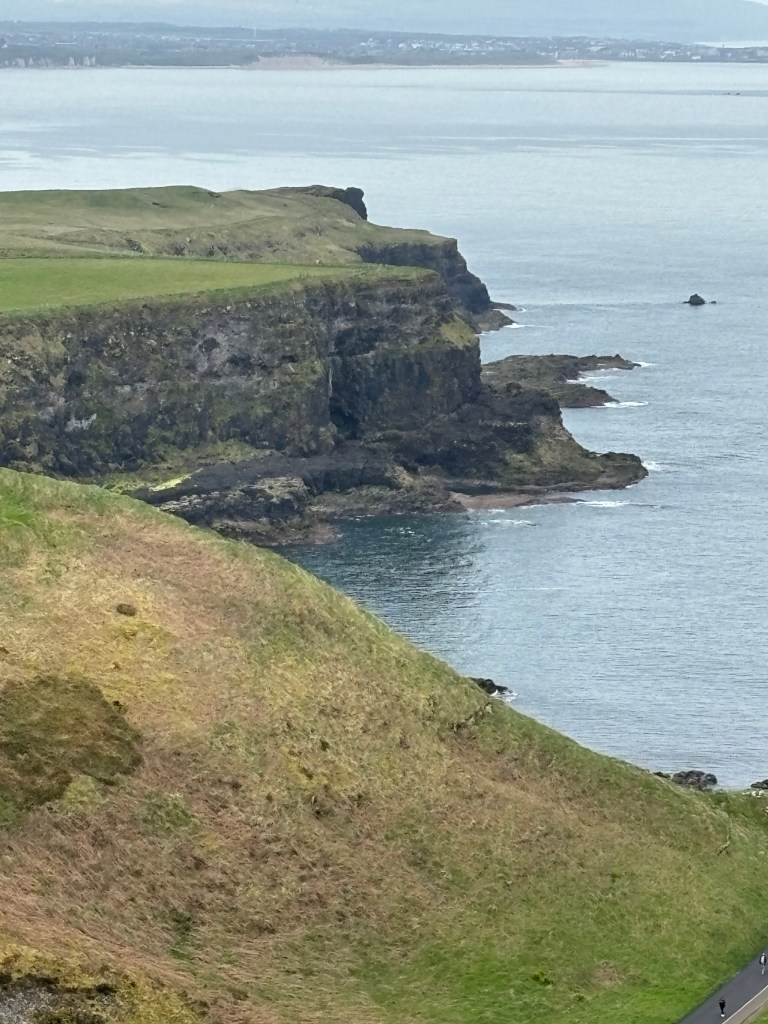
From the top, the views were amazing.

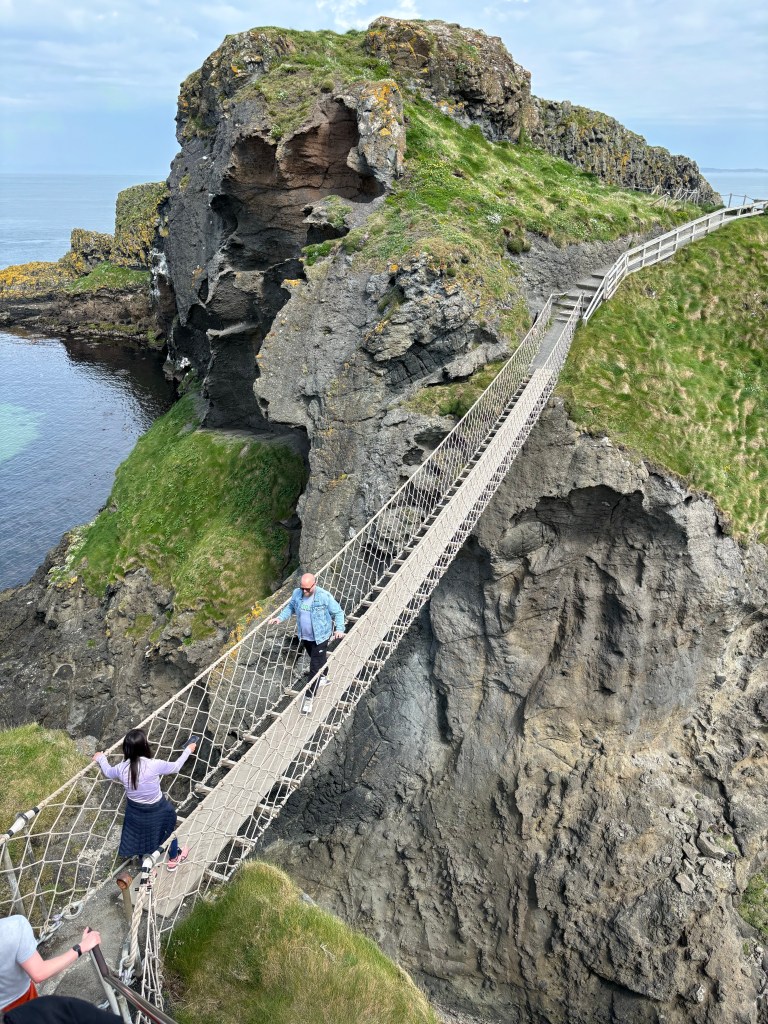
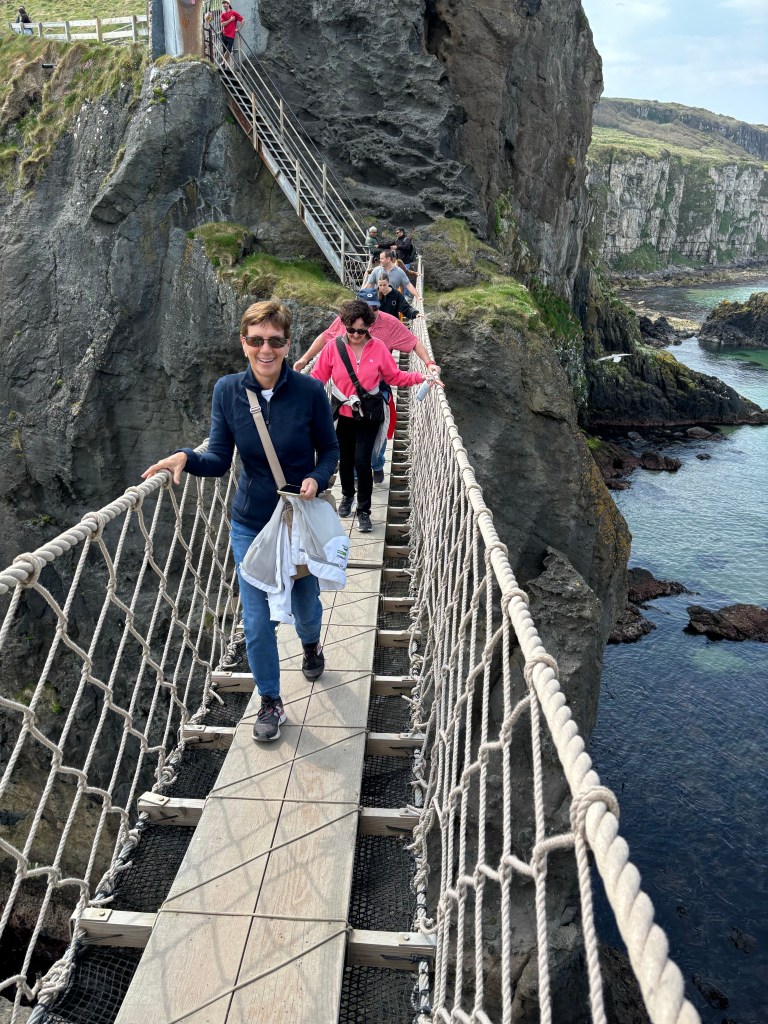
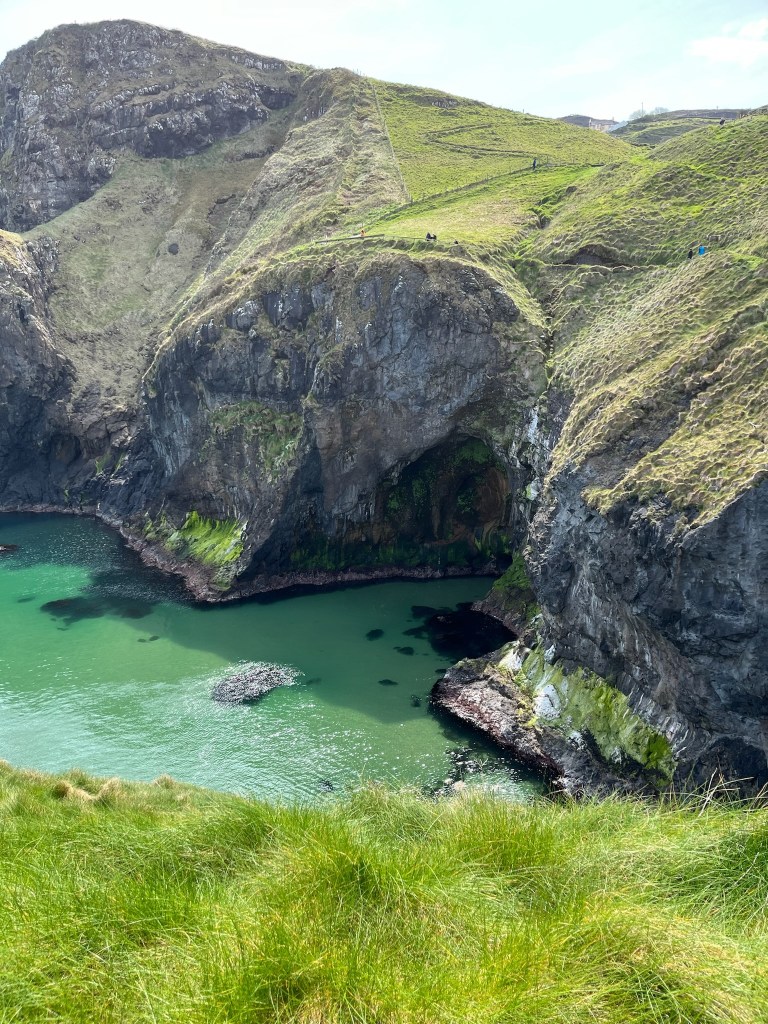
Back in the car and further along the coast is the Carrick-a-Rede rope bridge. Built to allow fishermen access to small islands off the coast in search of salmon runs, the bridge has existed for more than 250 years.

Looks stable but quite wobbly and bouncy

Again the tourists kept jumping into the frame.

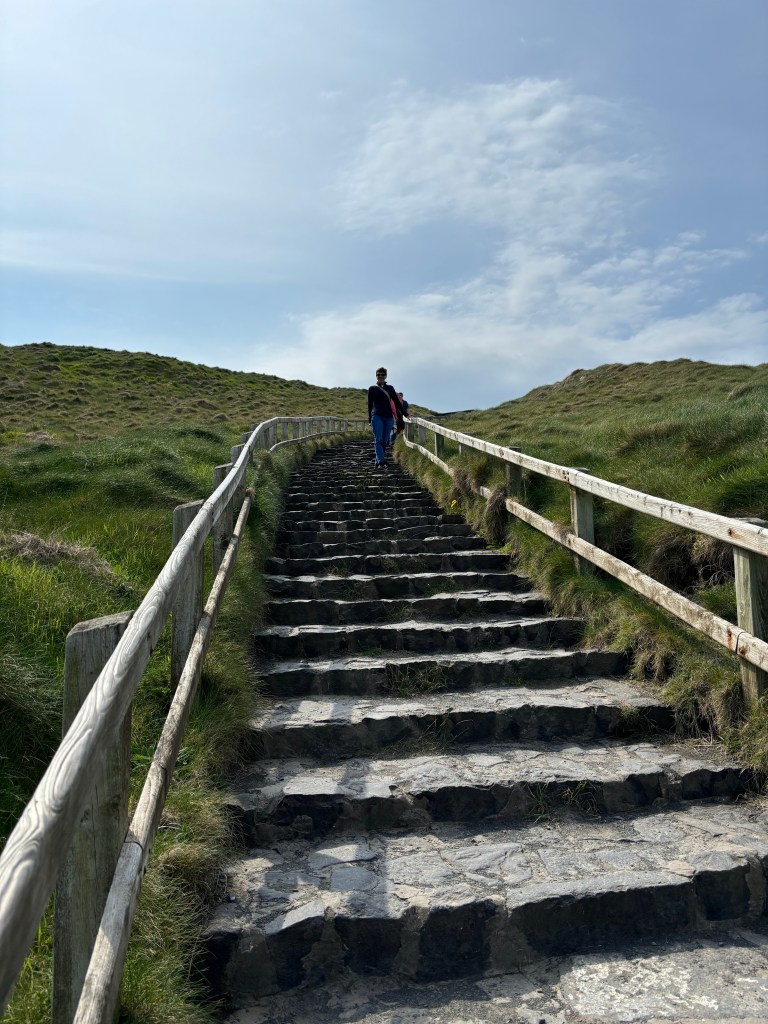
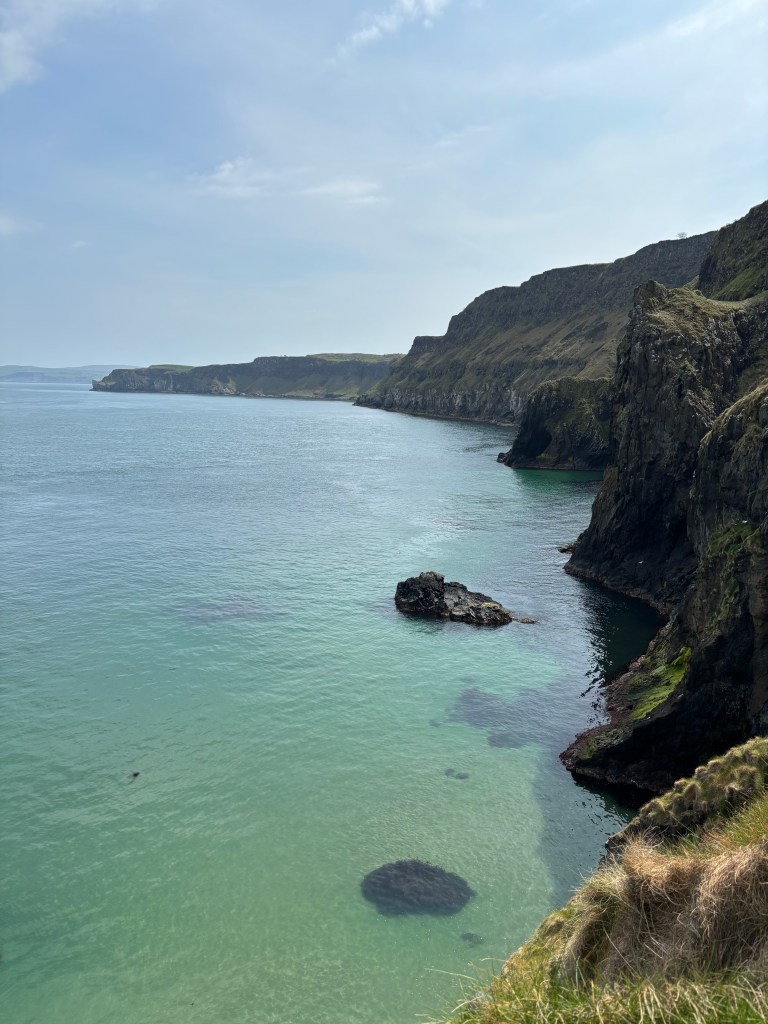
Climbing back up the hill from the bridge meant more stairs but again, the effort paid off in the views. On a clear day you can see across to Scotland!

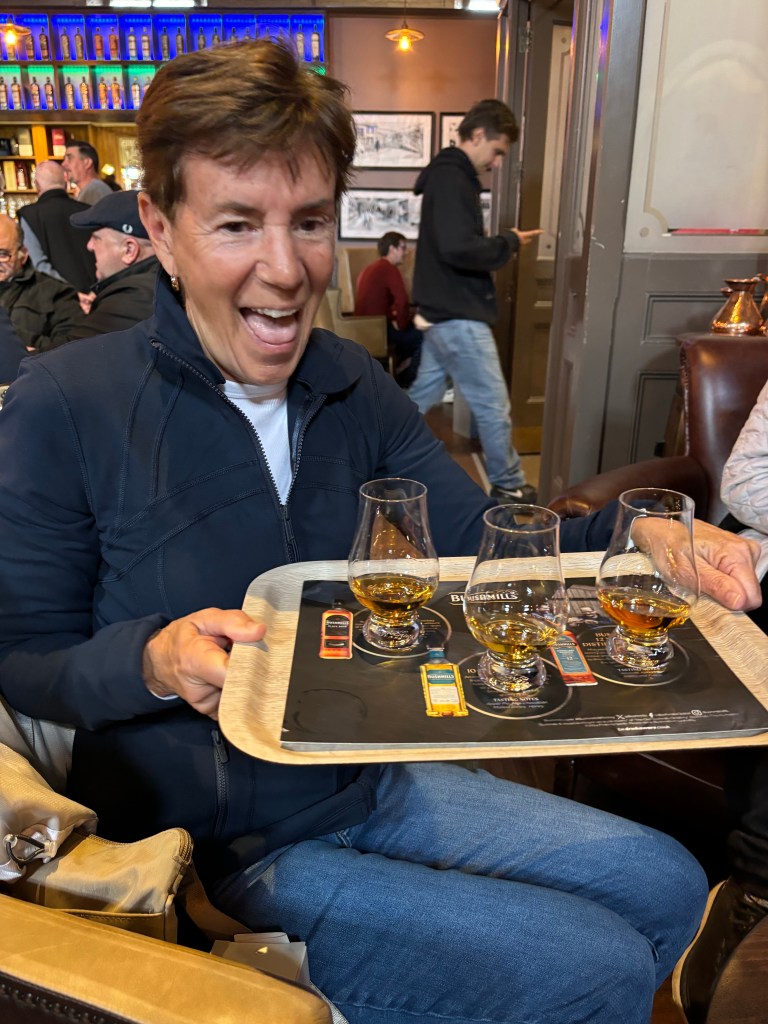
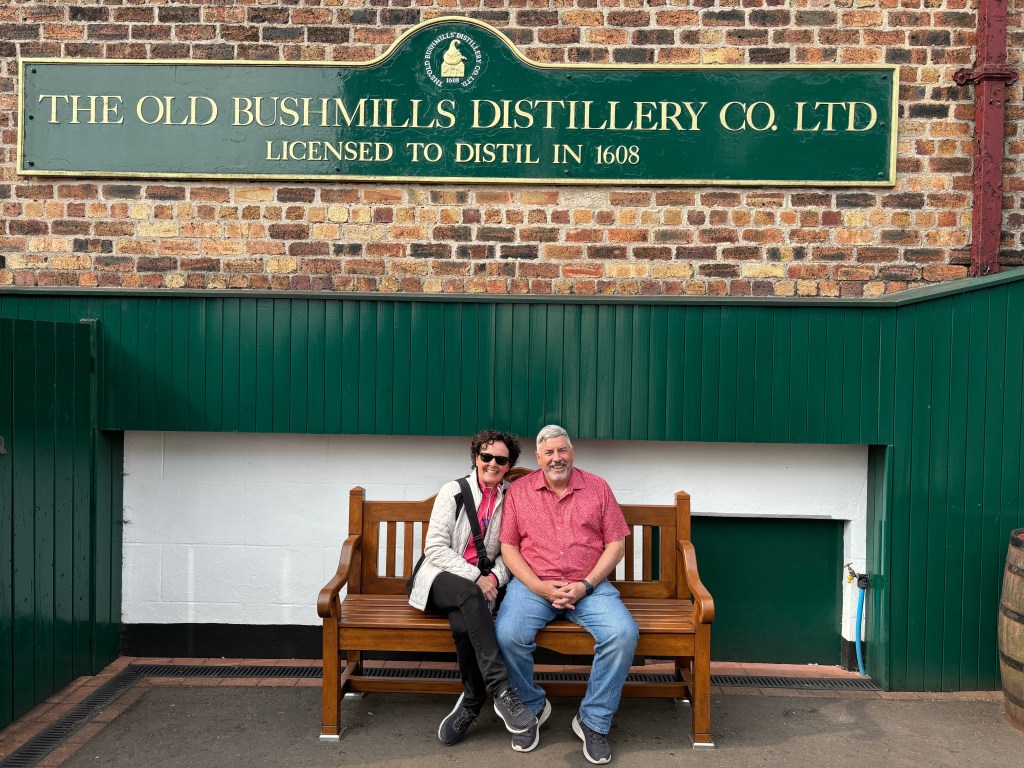
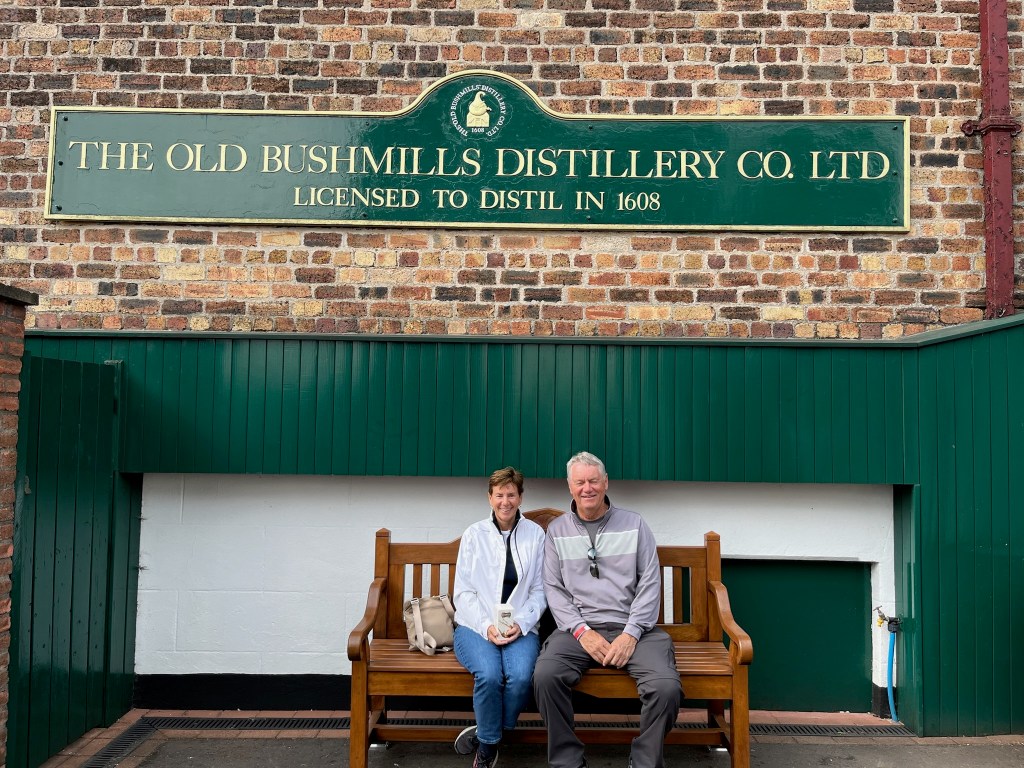
To finish the day we stopped at the Bushmills distillery for a tasting of a few of their products. All were deemed quite worthy.

Back to golfing tomorrow as we head north west to our first Round at Ballyliffen.

Ardglass Golf Course

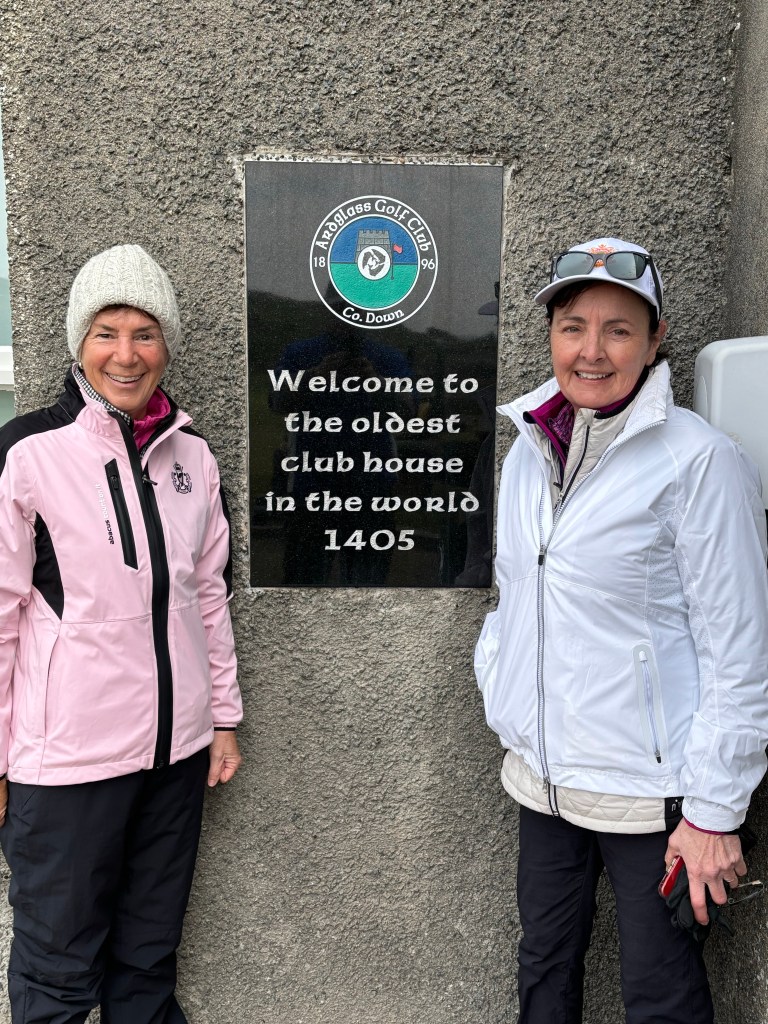
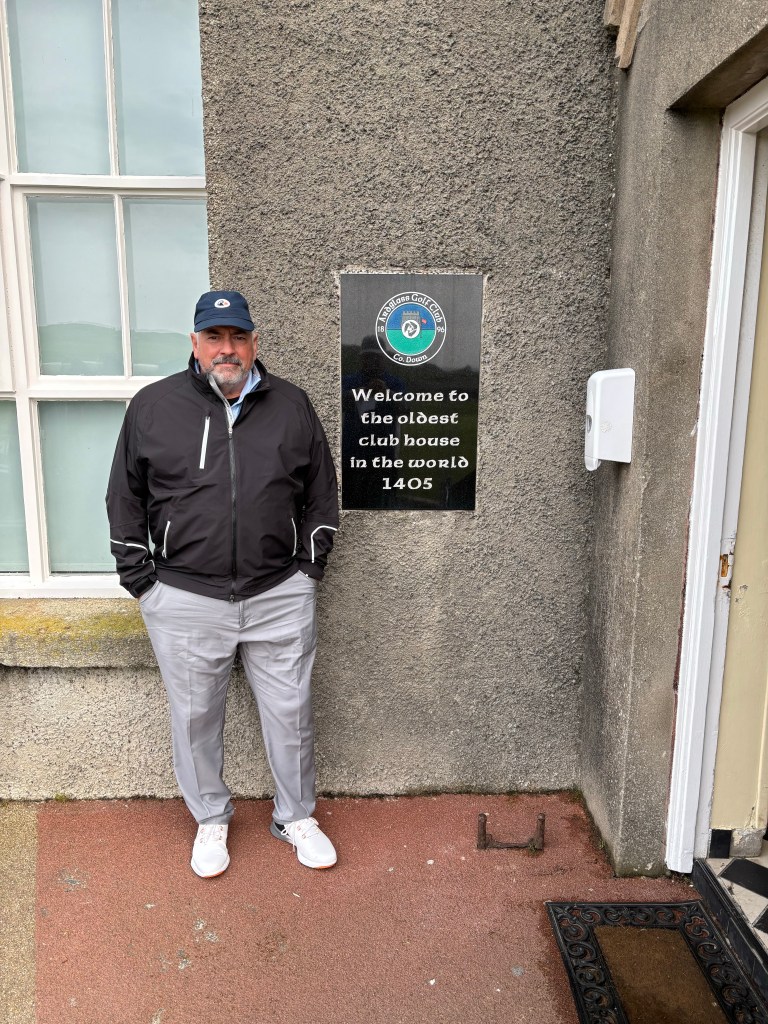
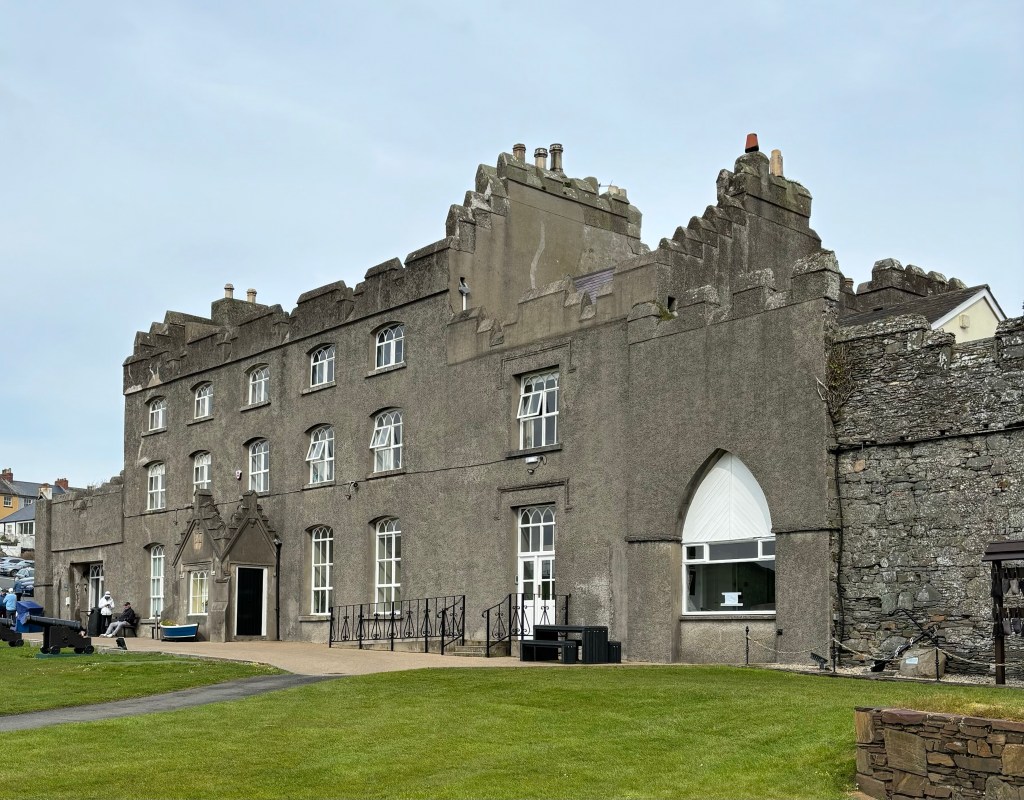
Ardglass, green mountains in Irish, hangs on the edge of the east coast 30 miles (yes they use miles in Northern Ireland) south east of Belfast. The Ardglass golf club began in 1896 and presented another distinct style and architecture versus our first two outings. It also holds the record of having the oldest building to house a clubhouse.

Ardglass Clubhouse
1405 !!!

Unlike our previous experiences Ardglass isn’t a links course but many holes skirt the sea and wind is a MAJOR factor.

Did I mention the wind. Typical is 8-12 mph. We had 25-30 although with the ups and downs of the terrain there were some sheltered areas. On top of the hill the par 3 17th at 163 yards dead into the wind played 50 yards longer.
A great day made better by the very comfortable temperatures and excellent caddies.

Following our round and a cuppa tea we set off for Londonderry, 2 1/2 hours north east. That will be our home for the next nine nights as we explore the north coast and enjoy six rounds of golf. Tomorrow is a “pit day”, I.e. no golf so lots of touristy things on the agenda.

County Louth GC – May 1/24

What a difference a day makes. We awoke to bright sunshine and a cloudless sky. The question was, would it last through the day, especially since we would be next to the sea at County Lough GC. The answer was a resounding YES.

About 40 minutes south of our current base in Dundalk, the drive was made easier by using the M1 which is the main highway along the east coast. There were still enough narrow country lanes, roundabouts and oncoming traffic of all sizes to ensure 100% concentration at the wheel.

Opened in 1892

Located where the Boyne River empties into the Irish Sea, County Louth is known to the locals as Baltray which is the nearby local village and is the 8th ranked course in Ireland. A two time host of the Irish Open and multiple major Irish championships, County Louth couldn’t be more different than the previous days round at Royal County Down. Massive sand dunes, rumpled fairways with more humps and bumps than you can count, blind shots both off the tee and to the green, steep runoffs around many tiny greens and did I mention – sunshine!

With the Irish Sea as a backdrop

County Louth has a local club charm with members acting as caddies and two lady greeters who answered any and all questions and wished you full craic during your round. Look up craic as it’s a core word in the Irish vocabulary.

Without caddies we would still be wandering around, unsure of where to aim and in fact, where the fairway or green might be.

Another day of some good shots and some rather head spinning misses. The sunshine and limited wind made for a most pleasant round.

Knock on wood the weather holds for tomorrow as we’re off to Ardglass GC and then through Belfast and into our next base, Londonderry tomorrow night.

Royal County Down – April 30/24

Ranked by many publications as the number one ranked golf course in the world, RCD was quite a start to our tour. A one hour drive through twisting, narrow country lanes and small villages heightened our anticipation. We anxiously kept checking the weather app as the rain beat down and the wind blew. Sadly both would only abate for short stretches for the rest of the day.

Opened 1889

After a brief warm up we met our caddies and it was off to the first tee. The colour coordination of our outfits was purely by chance. It was all about trying to stay warm and dry.

The course is dotted by masses of gorse which was in full bloom. Very attractive but very nasty.

The wind blew, the rain fell. Some good shots, some head shakers.

Looking down the 9th Fairway
Sorry! You want me to hit it where?

At the end we peeled off the rain gear and luxuriated in the warmth of hot tea and bowls of soup. Then, of course, the obligatory purchases of logoed shirts and for Mo, a serious upgrade of her rain jacket. We’re hoping that means the weather changes going forward and the jacket stays dry. All agreed despite the weather today it was a great experience and good fun.

Tomorrow, County Louth GC.

Trim Castle, Battle of Boyne – April 29/24

We said goodbye to Dublin, sadly, on a cloudy, windy, wet day. Picked up our rental car, (P&G have their own rental as there’s no vehicle other than a bus that can accommodate four travel golf bags, four suitcases, four people, etc.) and started north to Trim Castle. Remembering the left side driving rules and dealing with turning in a multi lane intersection was an early challenge.

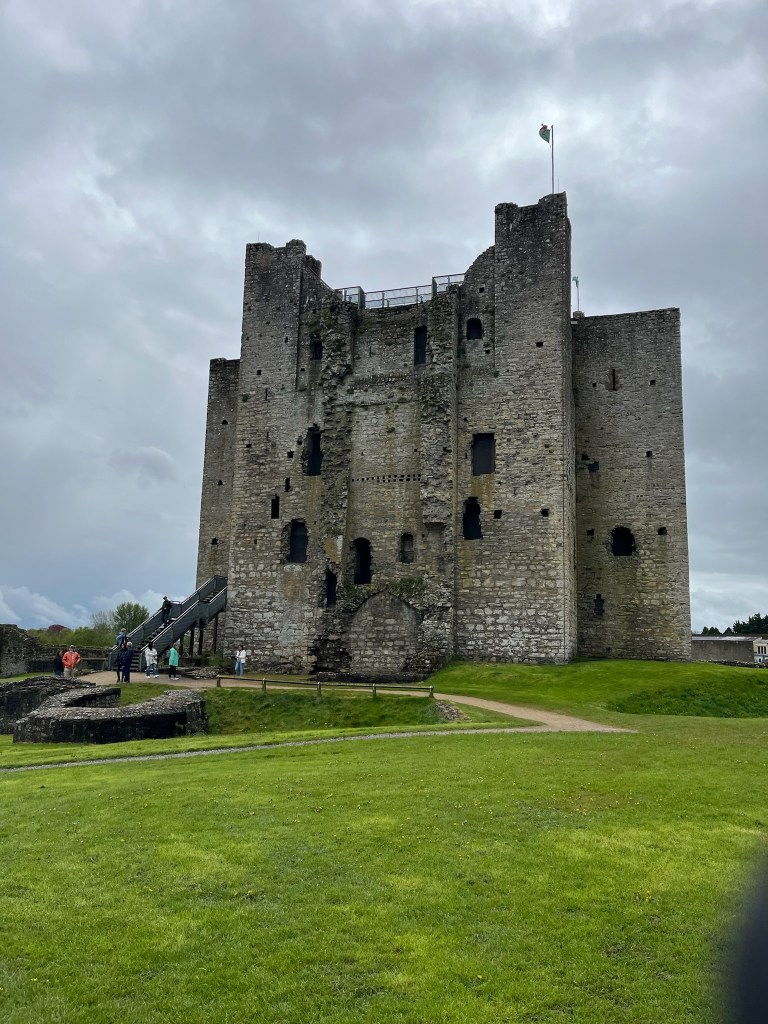
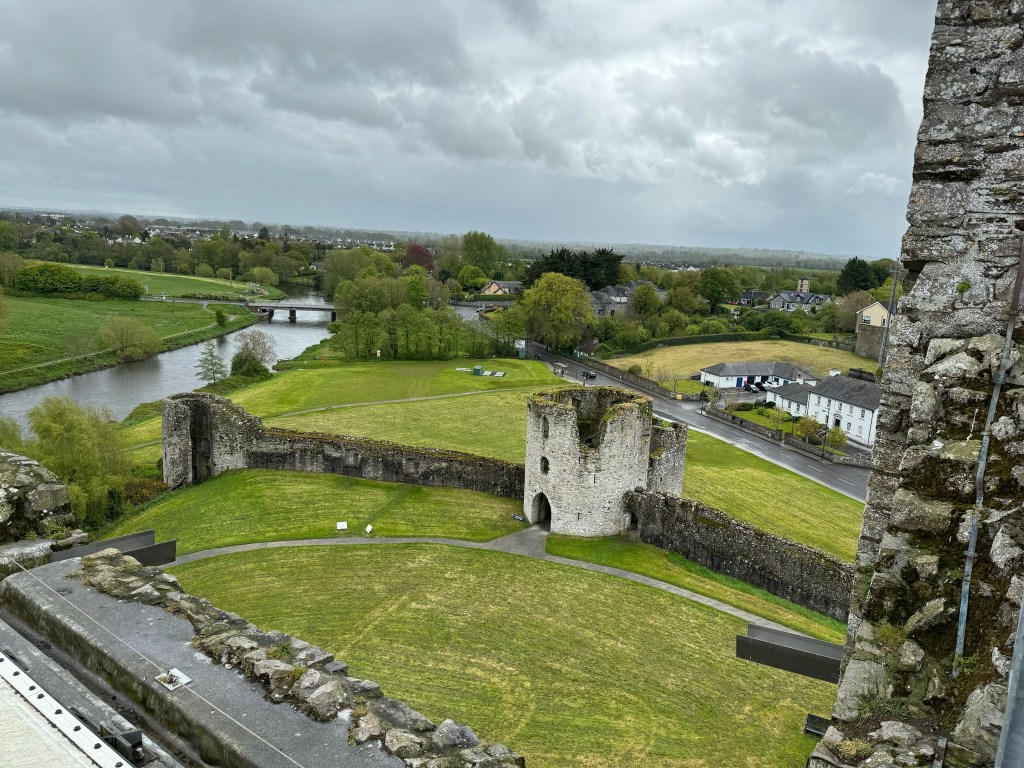
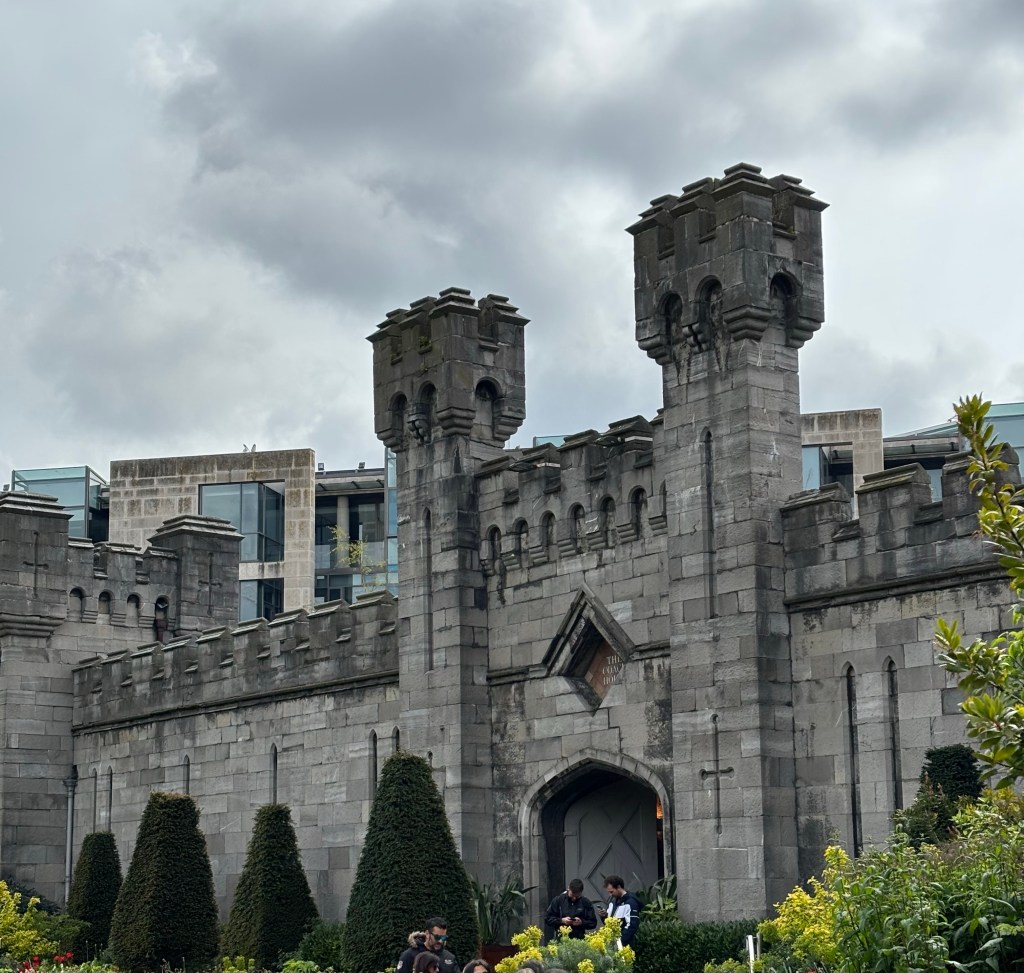
Built initially in the late 1100’s, the existing stone castle was completed in 1220. It is the largest and best preserved Anglo Norman castle in Ireland.

Trim Castle County Meath

The castle’s location on the River Boyne was determined by the presence of a place where the river could be forded. We were lead by a very enthusiastic guide who provided a rapid fire description of the castle’s history and architecture, including the fact the movie Braveheart was filmed there in 1995.

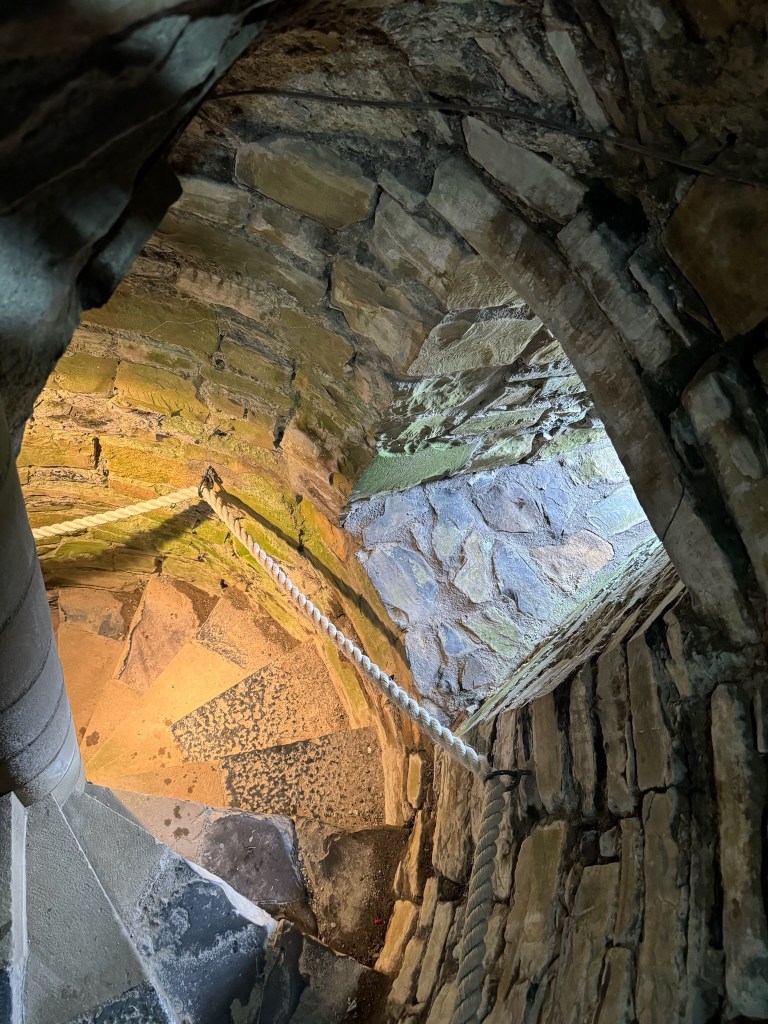
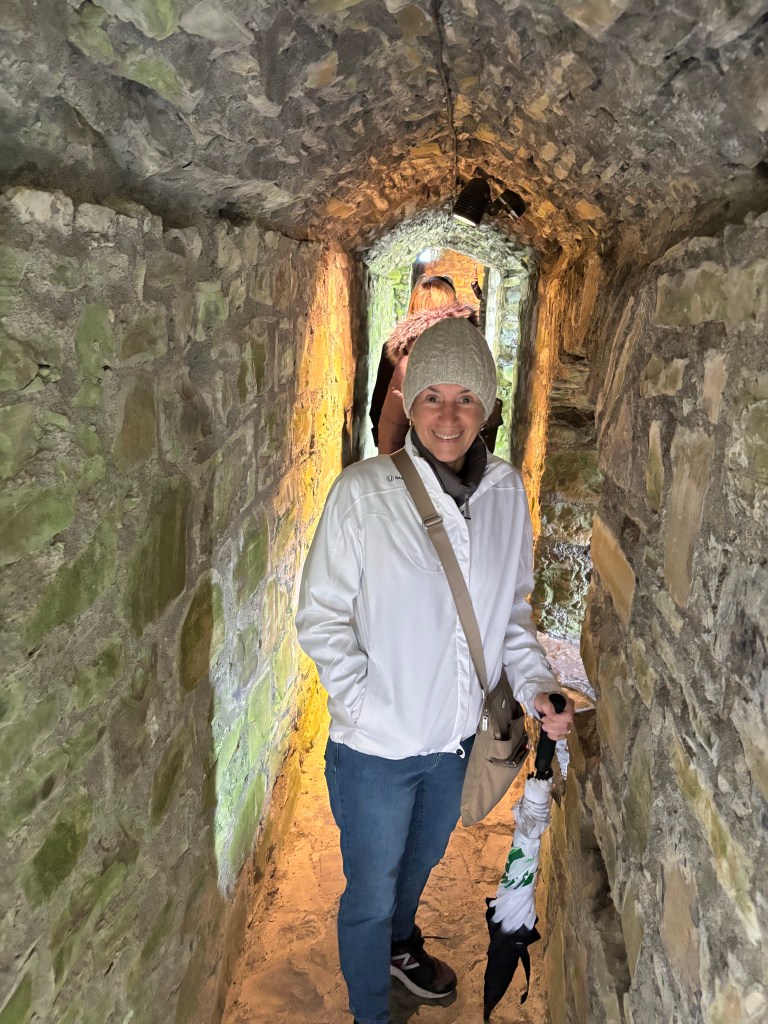
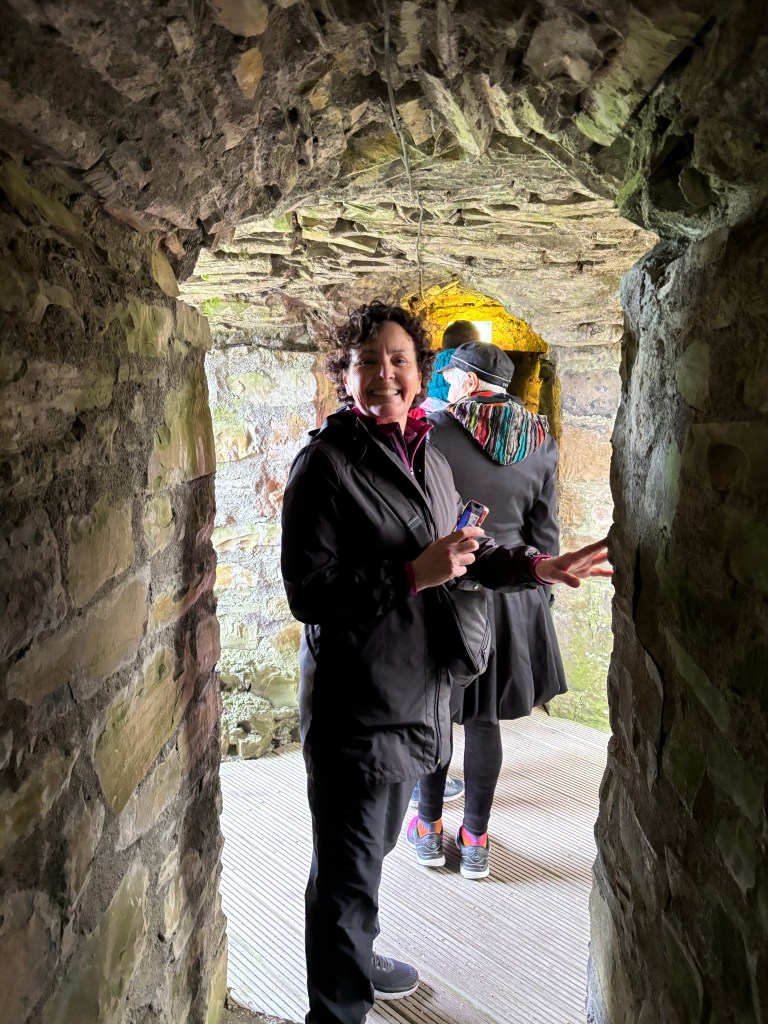
We climbed through the ruins and up a steep stone staircase that required hanging on to a rope banister, eventually ending up on the wind swept parapet.

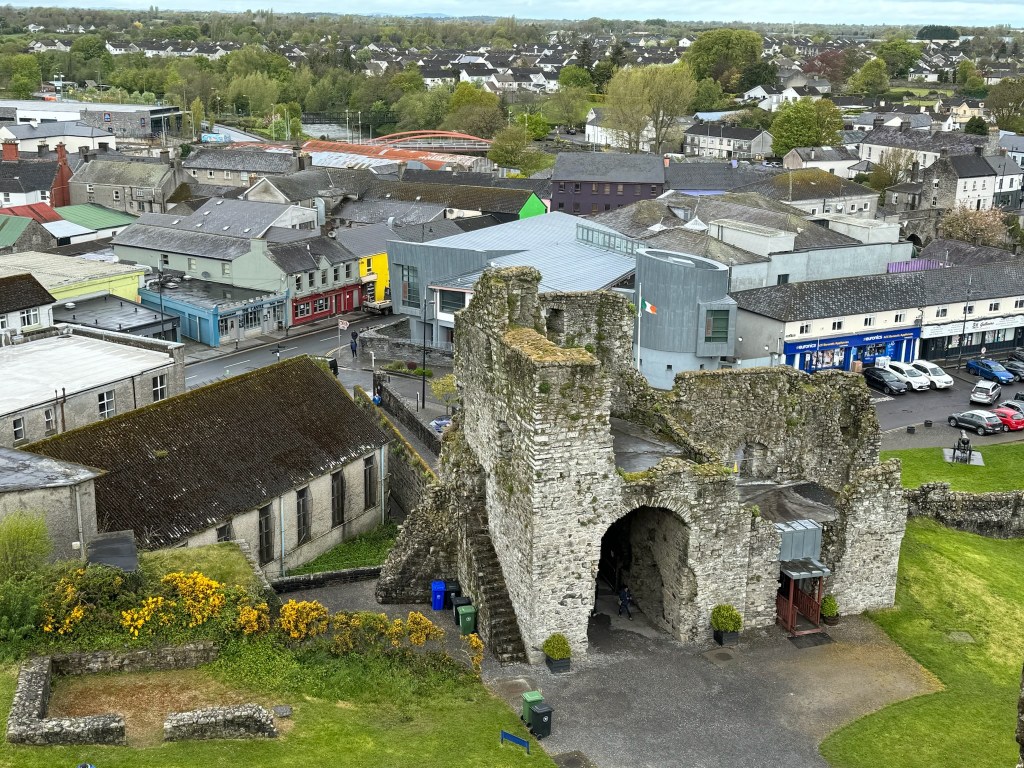
Parts of the wall surrounding the grounds of the castle including two gates still exist.

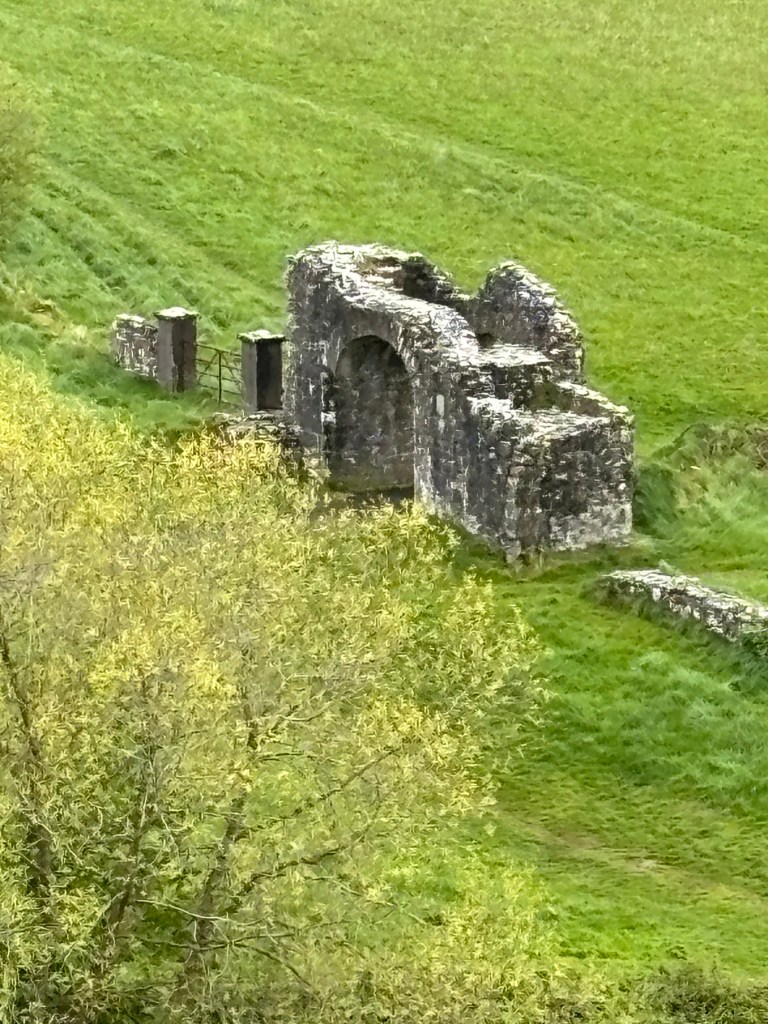
The castle is also surrounded by multiple ruins of other structures that existed outside the moated, walled boundary.

Next up was a short drive to the location of the Battle of the Boyne, fought in 1690 between William of Orange and James II. It was the largest battle ever fought on Irish soil, involving over 60,000 troops and had massive implications across Ireland, England and Western Europe given the warring sovereigns involved.

Once again a very knowledgeable guide connected all the threads of how and why 13 different nationalities fought in the war and the implications had James II been victorious.

The majority of the visitor centre was indoor displays and films, hence no photographs.

Back in the cars for the final leg of the day into Dundalk and our Airbnb for the next three days as our golf adventure gets underway. First up – Royal County Down.

Even More Dublin April 28/24

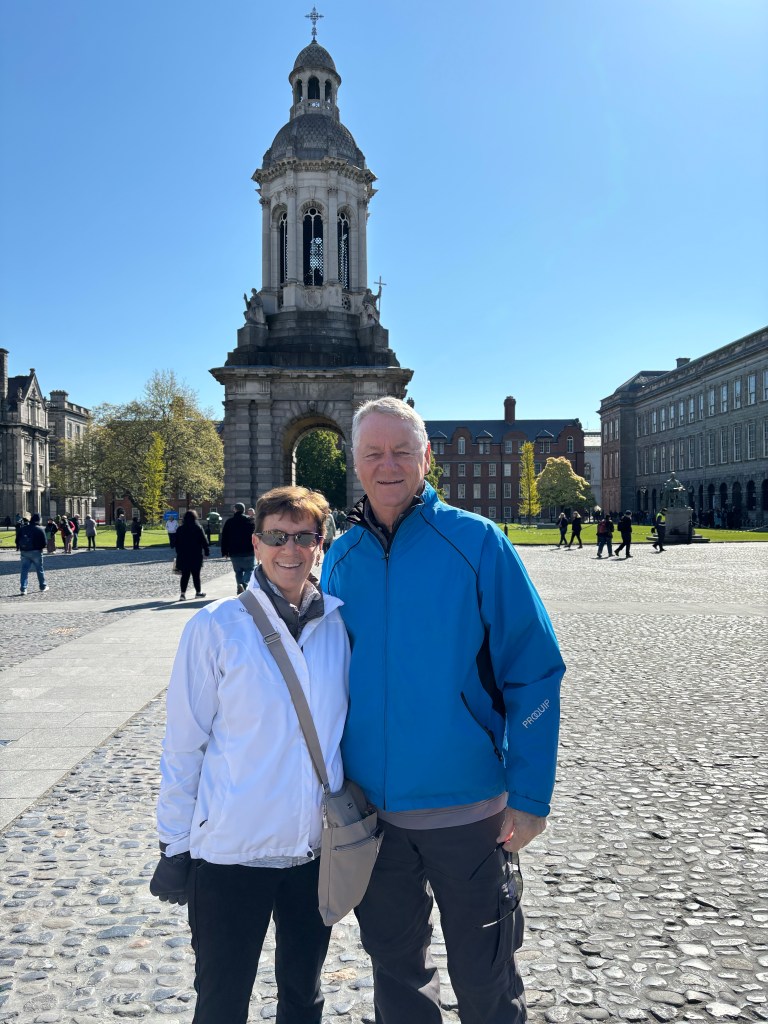
Our last full day in Dublin kept our streak of sun and blue sky going. It started off quite crisp but warmed up to a very comfortable 13C/56F. A semi brisk walk through the gardens of St. Patrick’s on our way to Trinity College.

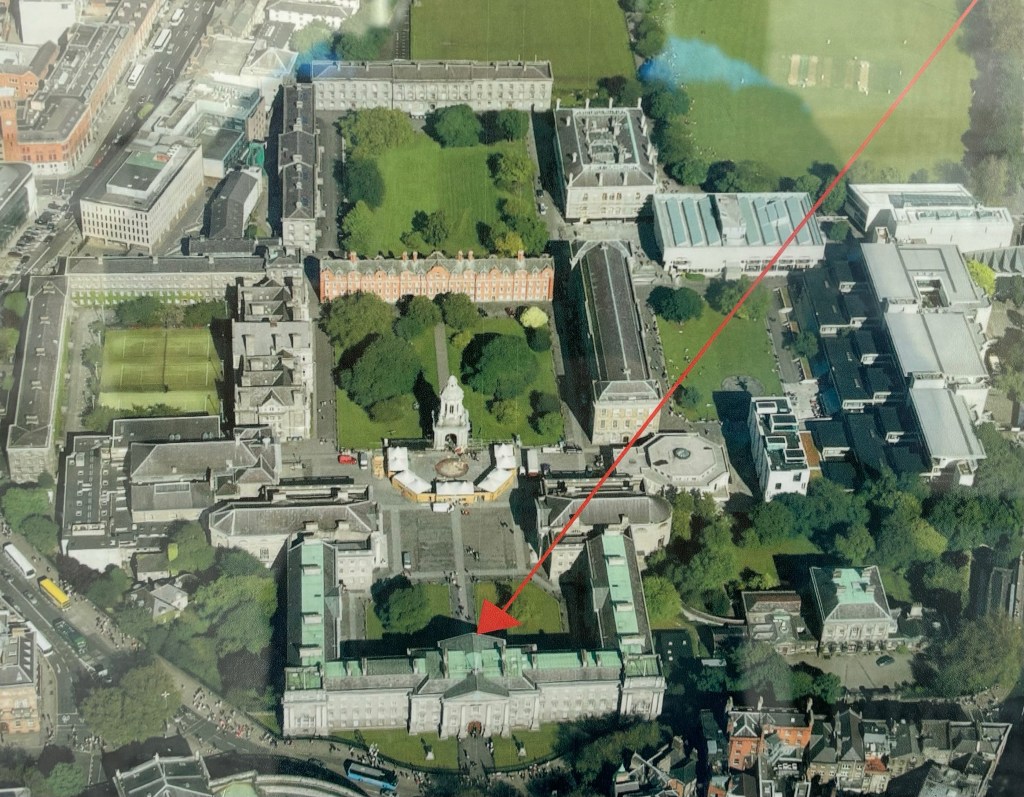
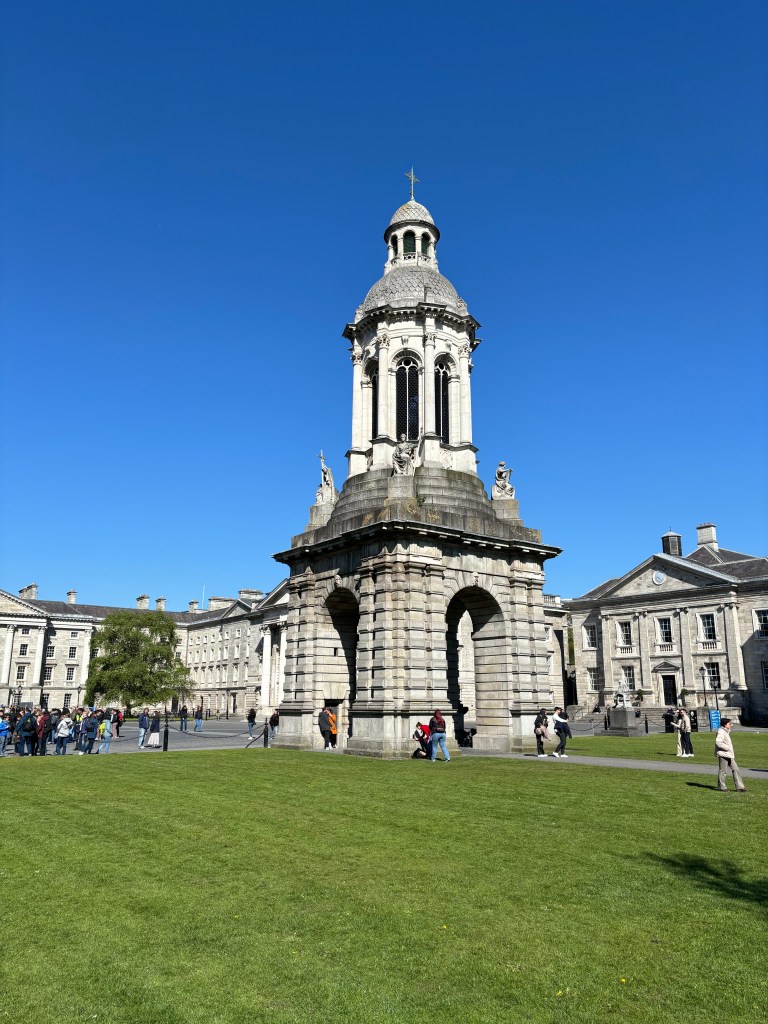
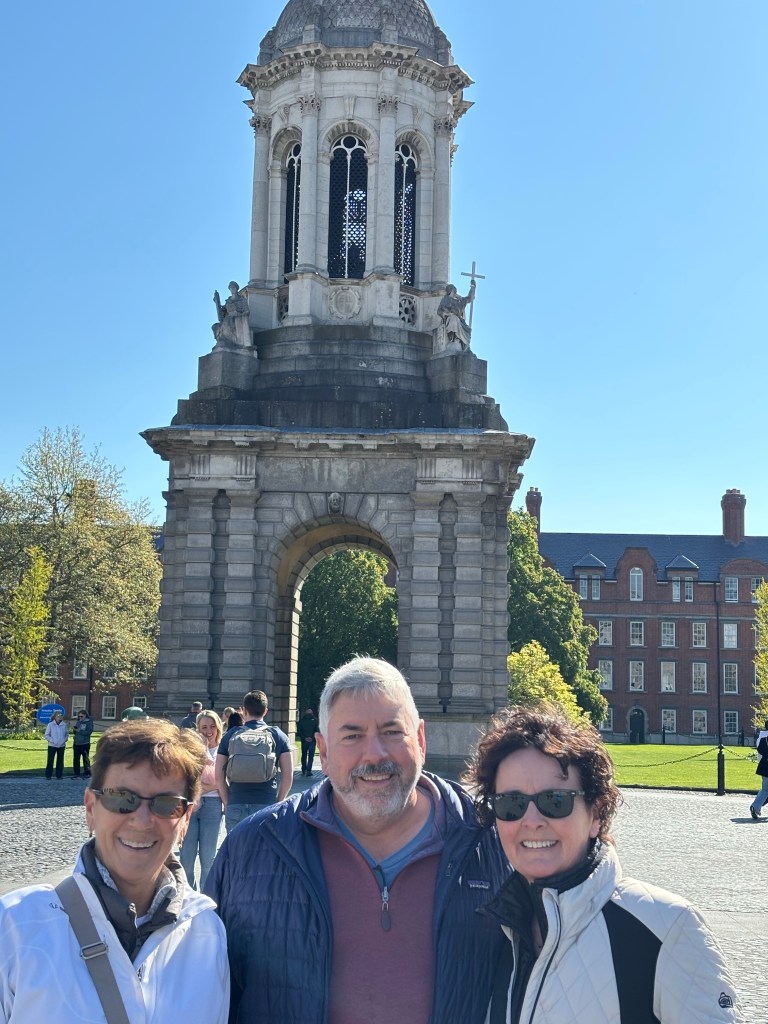
The five quadrangles of Trinity College
(a picture of a picture hence the red line)

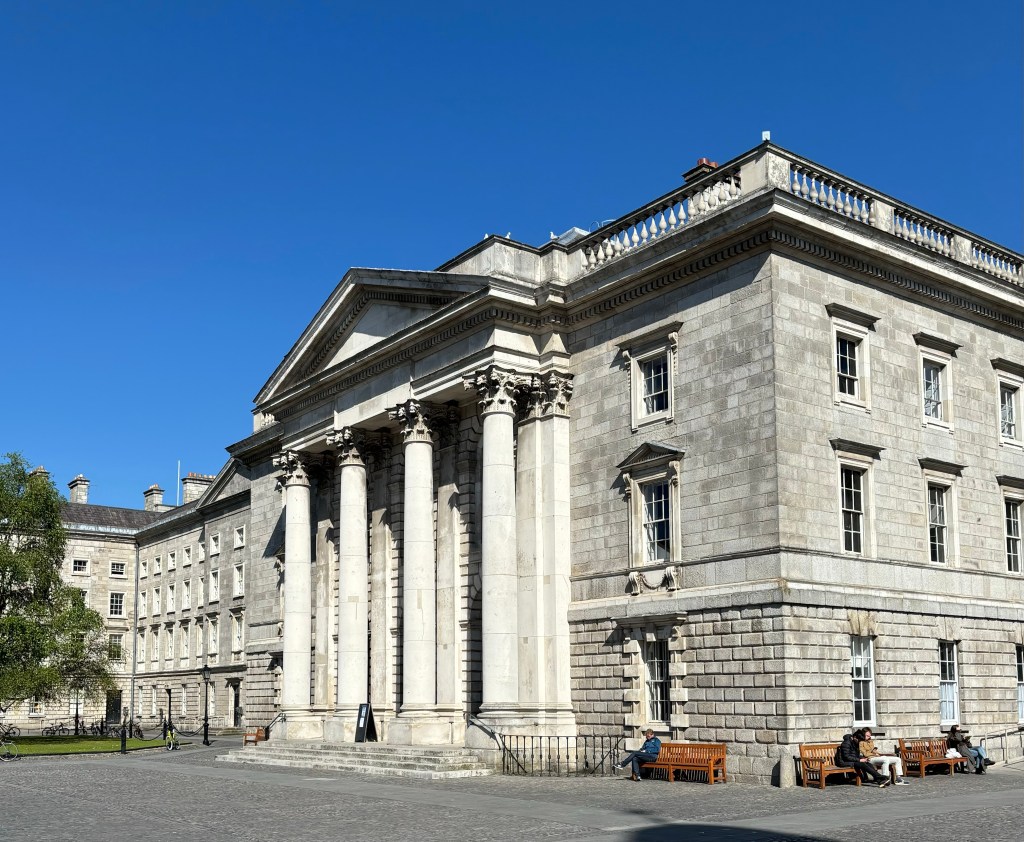
Started in 1592 by Elizabeth I (daughter of Henry VIII) as a University for Protestants in Ireland, Trinity College is one of oldest universities in the world (can you guess the oldest? Answer at the end).

Our visit was to see the Book of Kells, an illuminated manuscript and Celtic Gospel book in Latin containing the four Gospels of the New Testament. Although details surrounding its creation are a bit murky, consensus has it being made around 800 AD and subsequently surviving various relocations and poor handling before arriving at Trinity in 1661. It is comprised of 340 folios resulting in 680 pages written on high quality calf vellum. In 1953 the original “book” was separated and rebound in four separate volumes.

Pictures of the book in its humidity controlled glass case were not permitted hence no photos here. Suffice to say it is incredible in its detailed artwork.

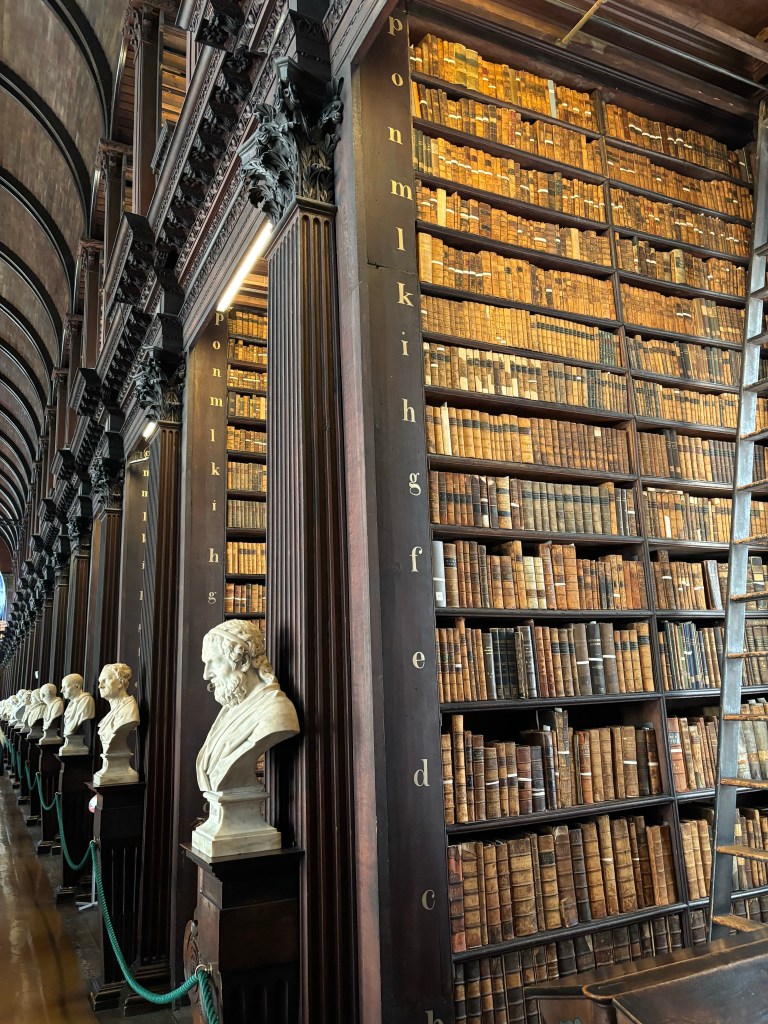
The second part of the tour involved visiting the university’s library called The Long Room. At nearly 65 metres in length, it is normally filled with 200,000 of the Library’s oldest books. Since 1801 the Library had been given the right to claim a free copy of every book published in Britain and Ireland hence the massive collection.

The Long Room library Trinity College
Some of the 200,000 books in the library

In 1743 14 Marble busts of great philosophers and writers were added to the Long Room. The collection now exceeds 50. The finest antique bust in the collection is of the writer Jonathan Swift by Louis Francois Roubiliac.

Another treasure in the Long Room is one of the few remaining copies of the 1916 Proclamation of the Irish Republic which set off the Easter Rebellion, eventually leading to Ireland’s independence in 1922.

There is also a medieval (late 1400’s) harp on display known as the Brian Boru harp. It’s the oldest of its kind in Ireland.

More wandering through central Dublin to wrap up the day. We’re approaching 60,000 steps in 2 1/2 days without having seen a golf course! Fingers crossed the weather holds as we start our journey out of the city on Monday.

Oldest university – Bologna, 1088

More Dublin April 27/24

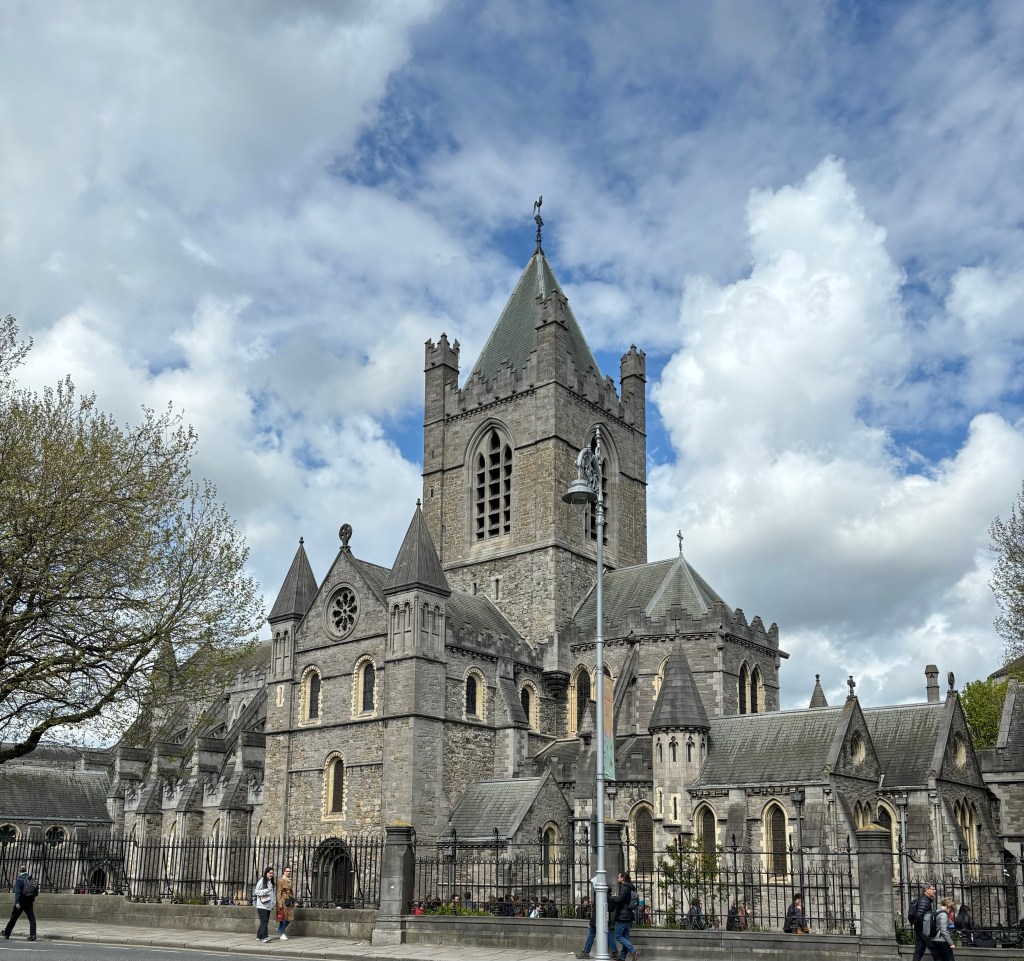
Sneaky cool weather on a day filled with walking and beer. Bright sunshine meant the locals and tourists were out in droves albeit 47F/8C meant multiple layers and gloves. We ambled to the north side of the river to meet our tour guide for a three hour walking tour of, naturally, the south side of central Dublin. James was an excellent historian and story teller as we visited numerous landmarks including the O’Connell bridge, Christ Church Cathedral, Dublin Castle, Viking settlement ground zero, St Patrick’s Cathedral, Trinity College and so. A long walk but very worthwhile.

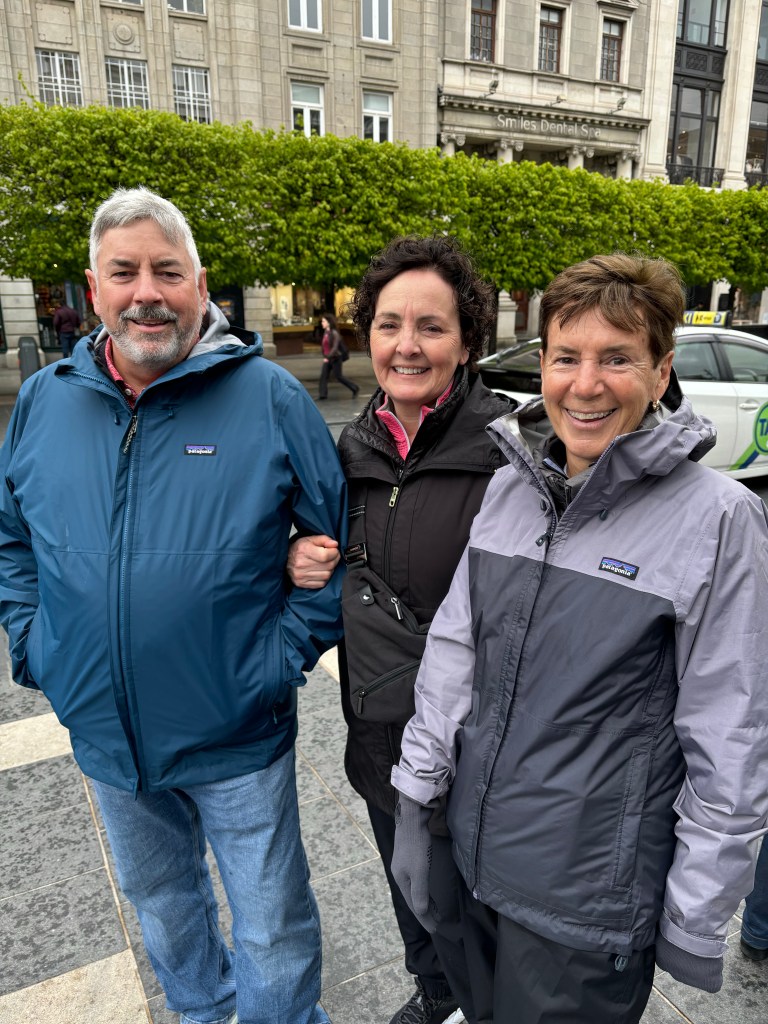
Bundled Up For Walking Tour
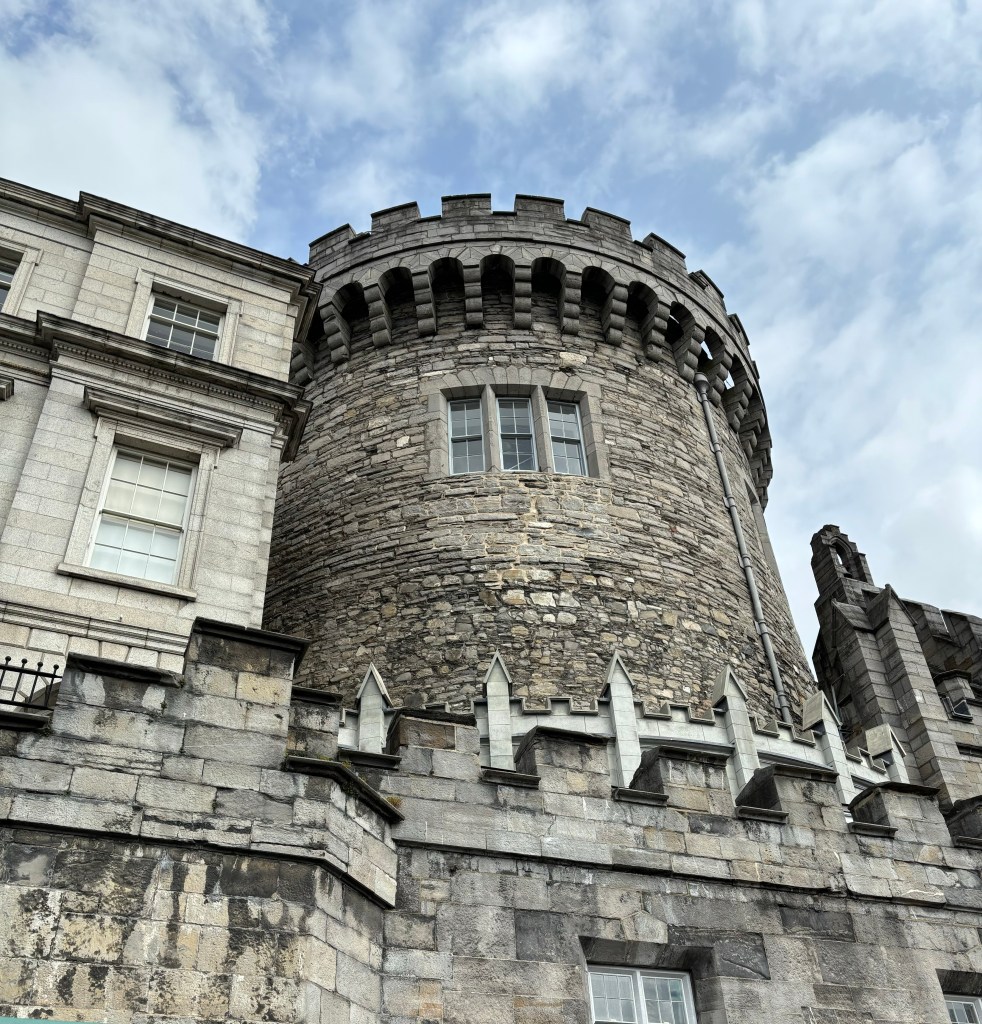
Christ Church Cathedral

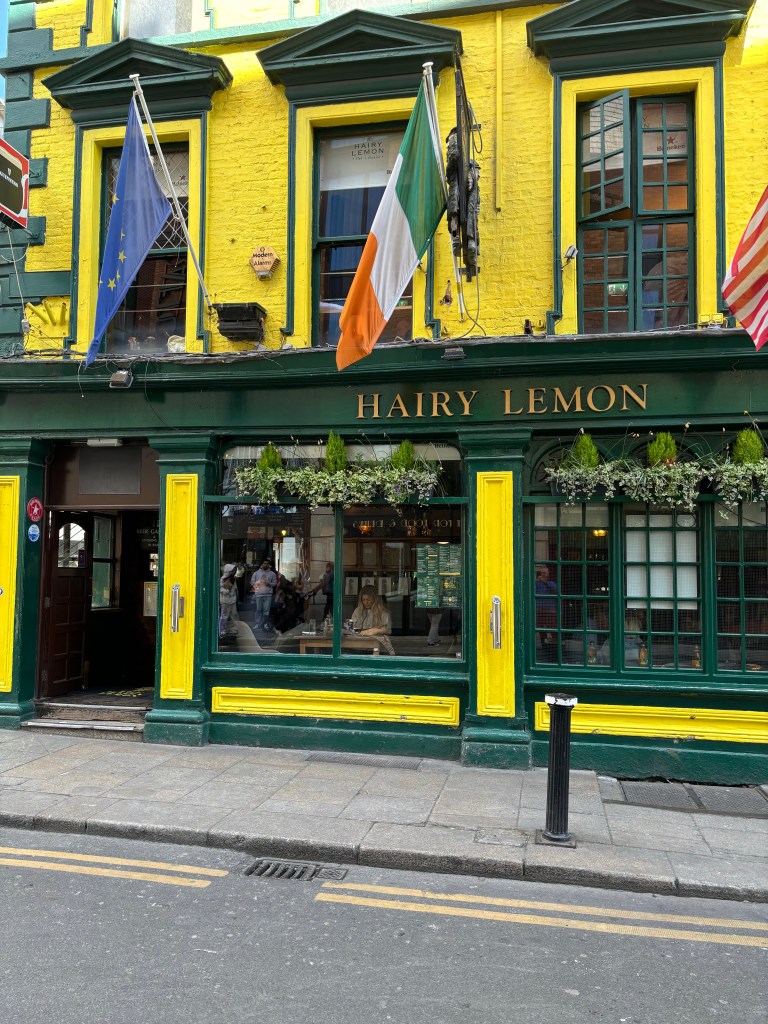
More walking after the tour to resolve eSIM cards for our phones and then a late lunch at one of the ubiquitous pubs in center town. I don’t want to know how it earned its name.

The What??

Then it was more walking to the epicenter of tourist attractions, the Guinness Storehouse.

Primary Entrance to St. James Gate

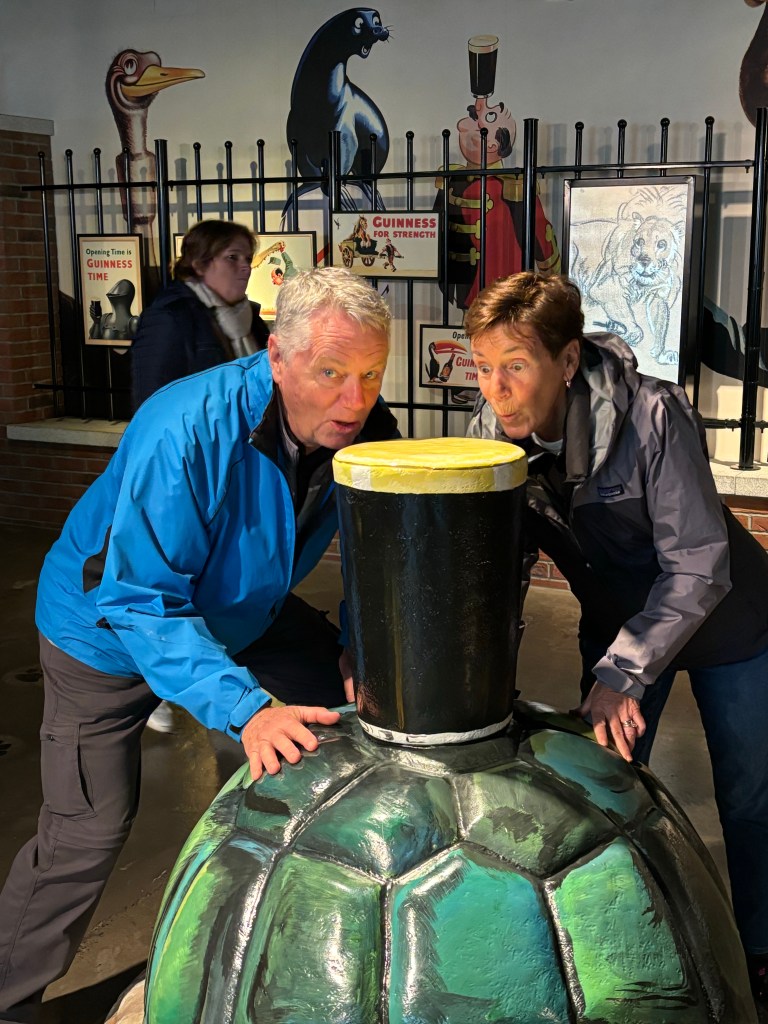
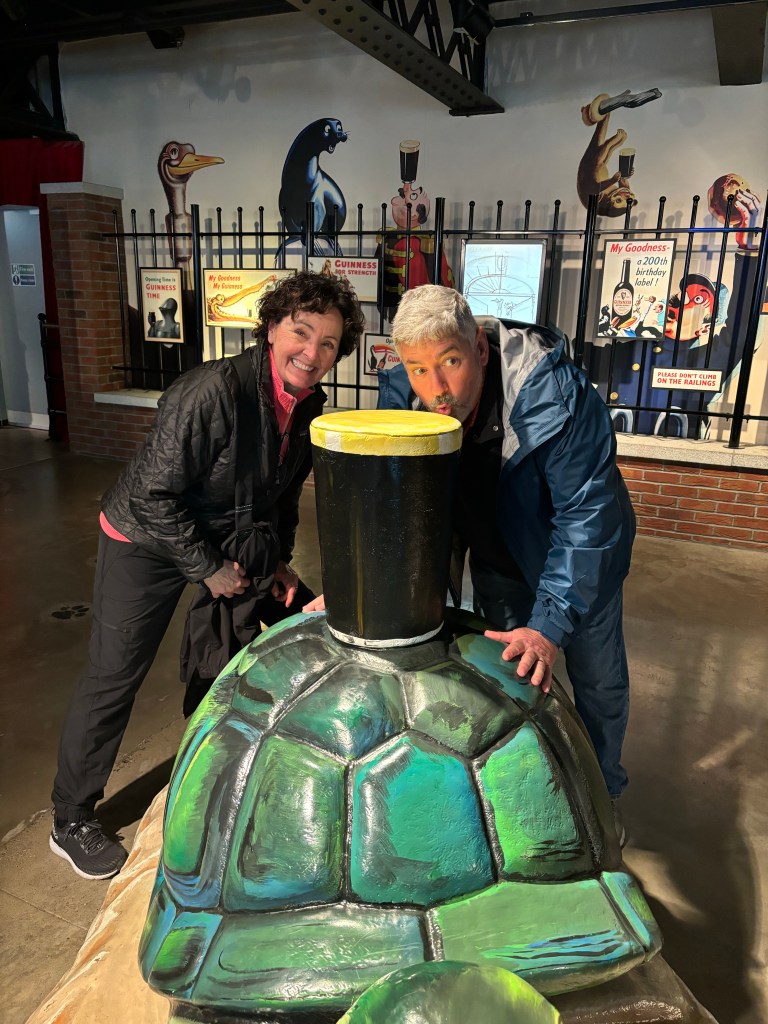
Little did we know we would be sharing our tour with a few thousand of our closest friends. What a madhouse! The tour requires you walk up four flights of stairs with each level providing a detailed description of the brewing process including raw materials, equipment, unique yeast, history and marketing. The volumes of input materials and output of beer are staggering.

The facility is mammoth and is only Guinness facility in the world to produce its best known beer, stout. Of course, tradition dictates the “right way” to pour a glass. One could learn as part of the tour.

The official instructions are: You want to hold the glass at a 45-degree angle beneath the tap’s spout. Pull the handle forward and let the stout flow, filling it up until you reach .75 inches below the top of the glass. Let it settle for precisely 119.5 seconds. Bring the glass to a 45-degree angle again, but push the handle backward this time until the head is “just proud of the glass.” Don’t let it overflow, and “never use a spatula to level the head.” That’s just blasphemy!

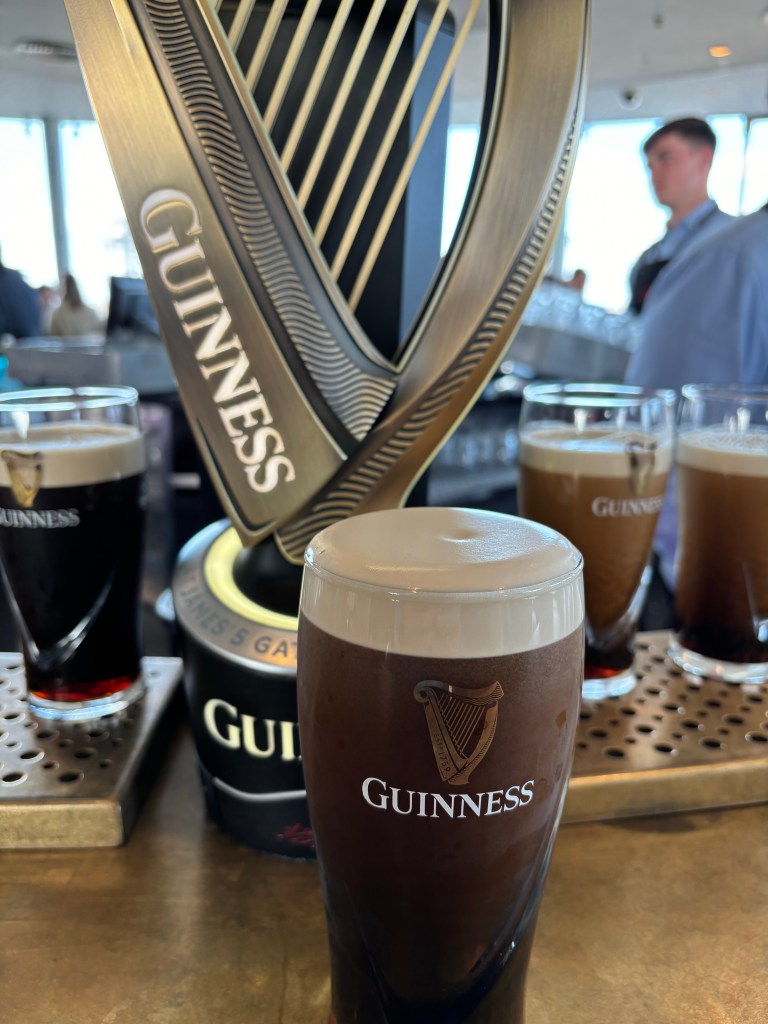
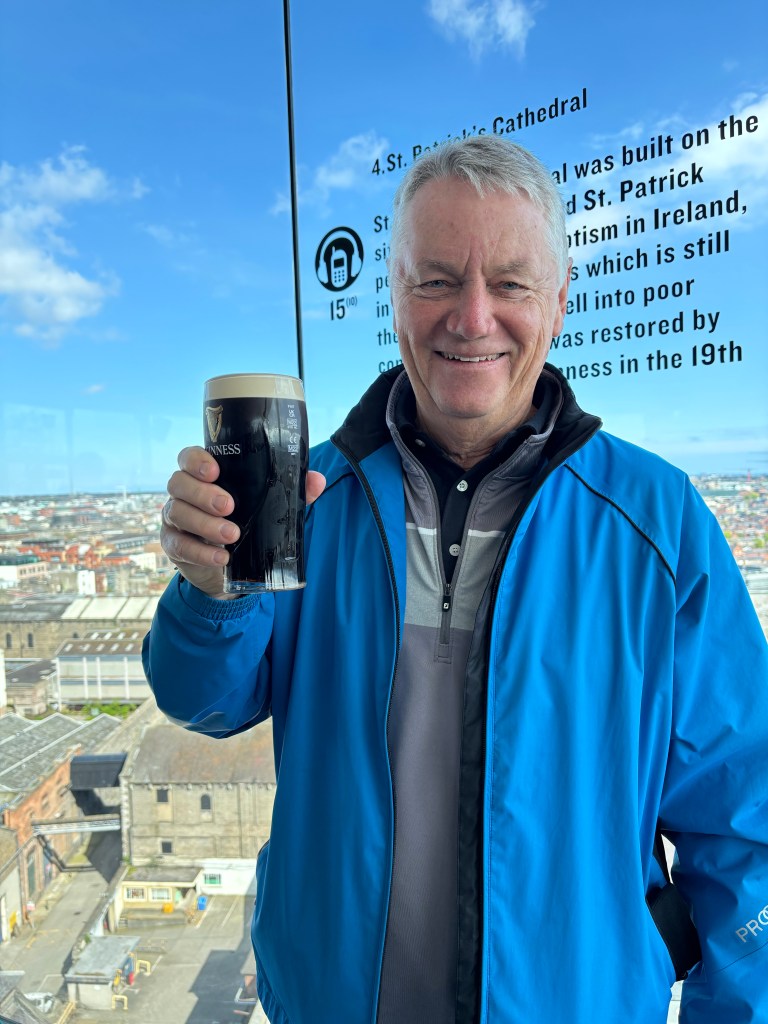
We then climbed three more flights to the roof top bar to enjoy the real thing. And yes, the bartender did follow the ritual.

The perfect gulp to take it to the middle of the G

An excellent Indian curry dinner capped off another great day. More tourist stuff in Dublin tomorrow. Count down to golf is underway though.
Dublin April 26/24

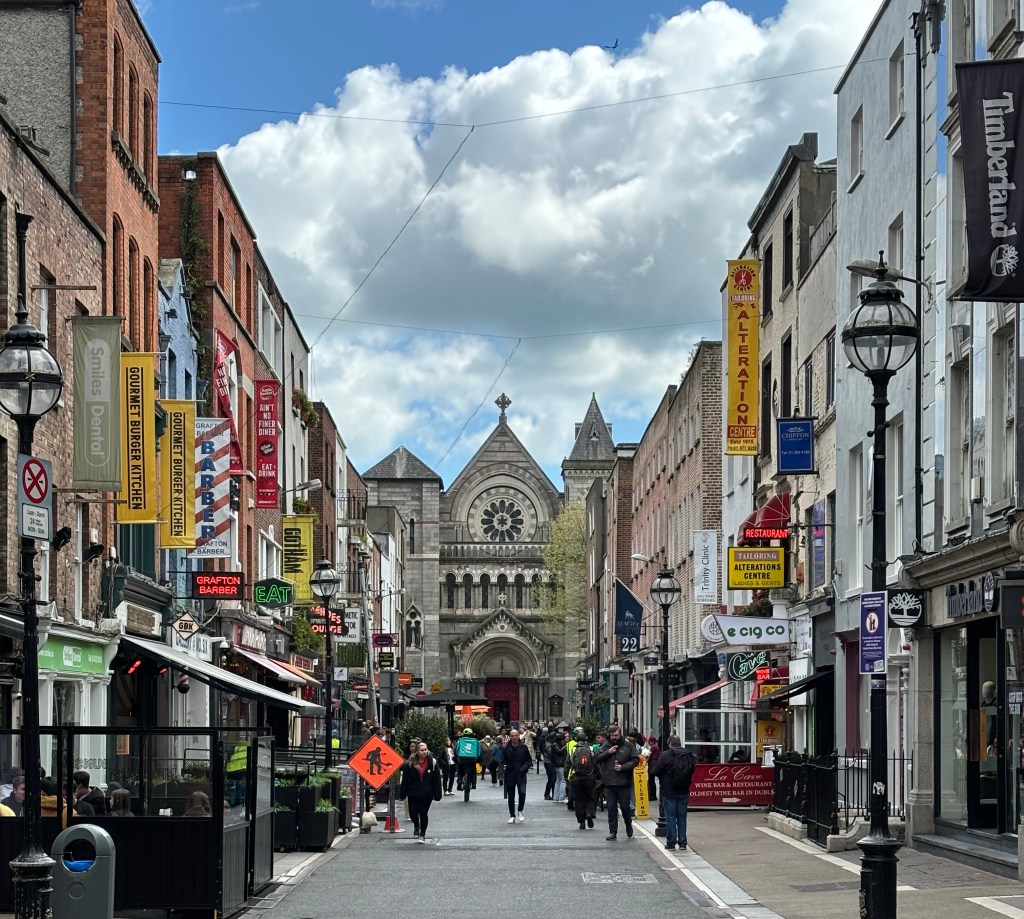
After meeting Peter & Gloria (hereafter P&G) at our central Dublin hotel we set off to explore the city. Bright sunshine and 50F/10C made it very comfortable. The crowds were out in force. The street busker scene is very active and the music surprisingly good. Grafton Street and its many side streets are pedestrian only and full of people, shops, bars and pubs.
Center Town Dublin

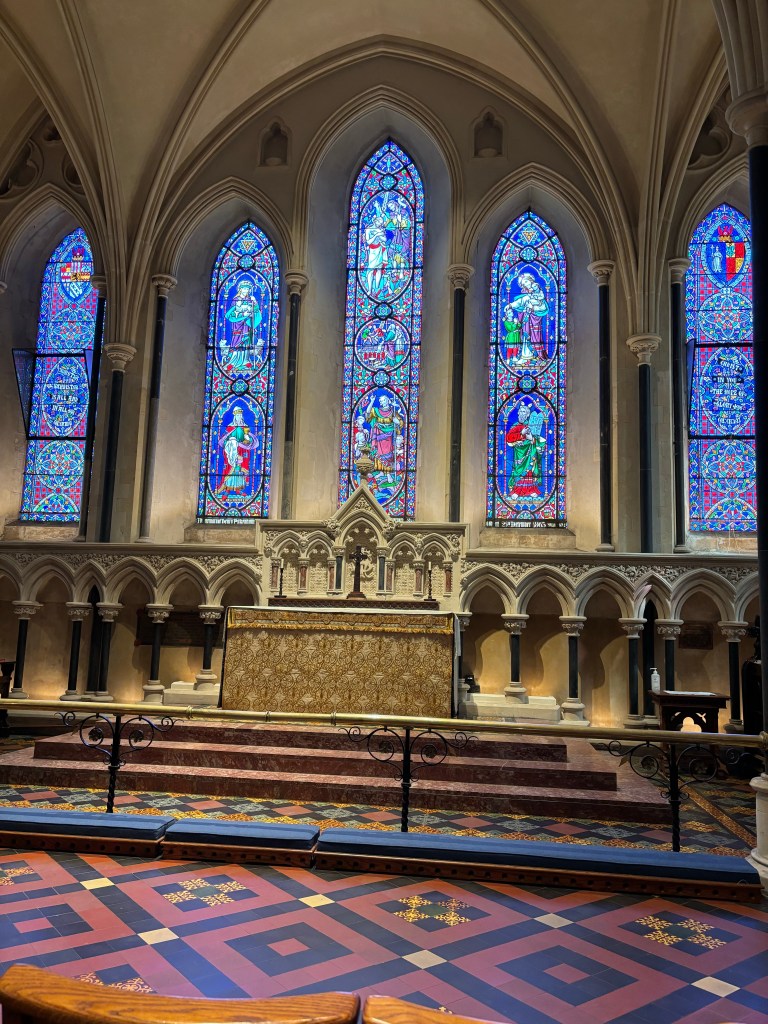
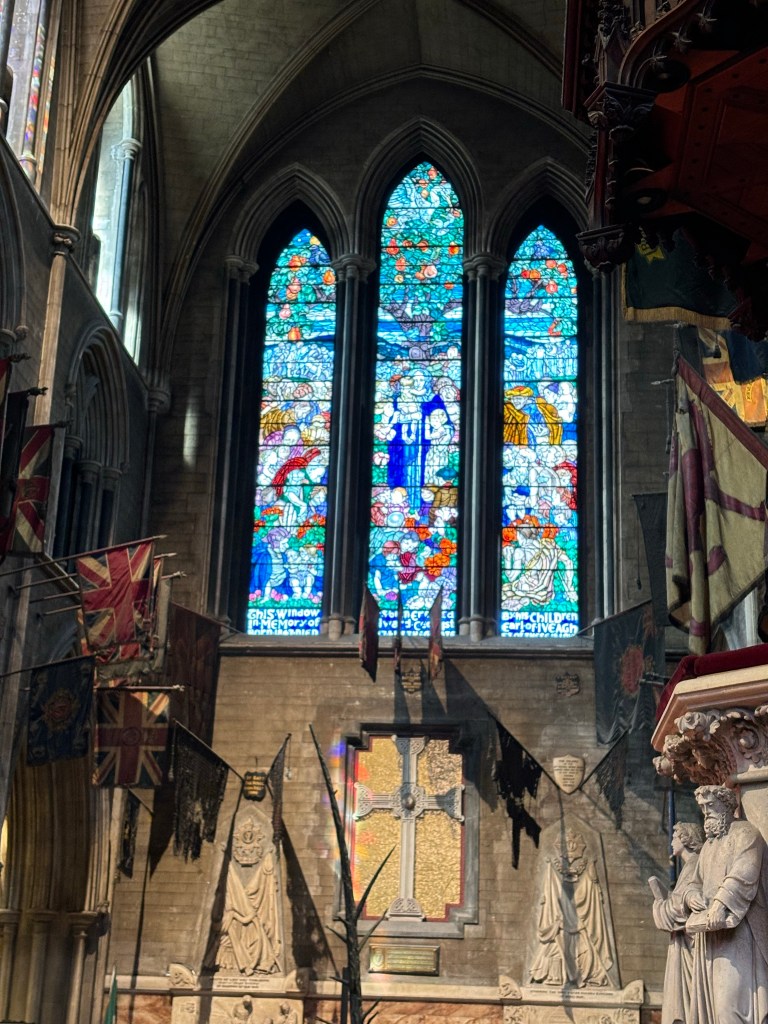
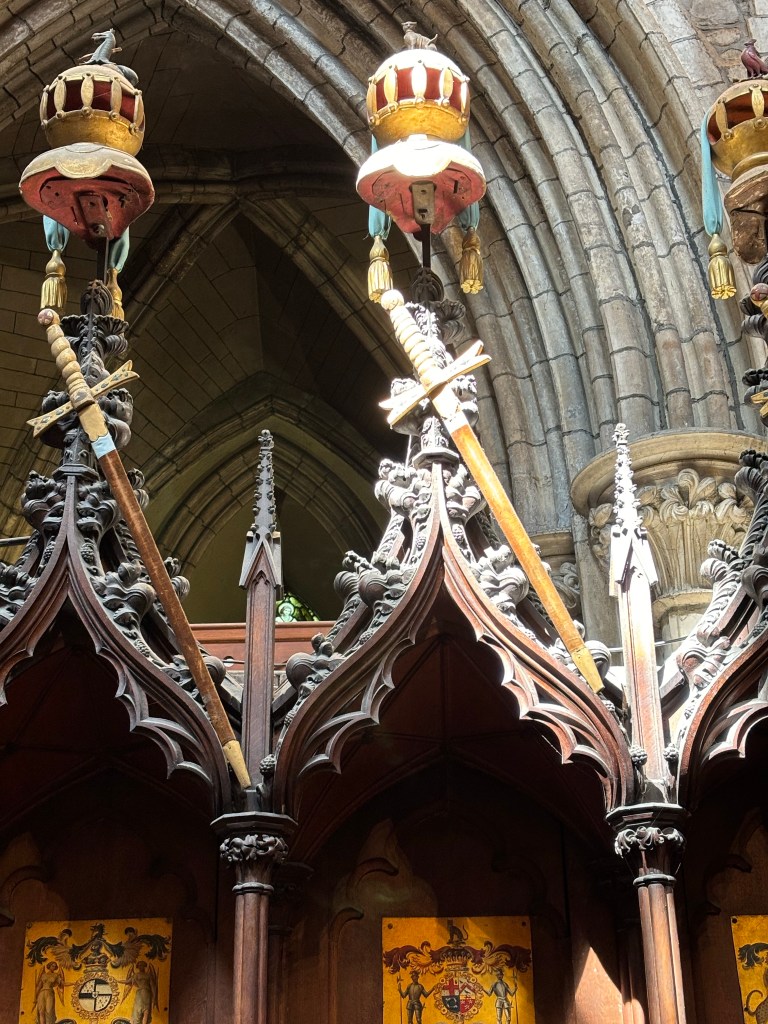
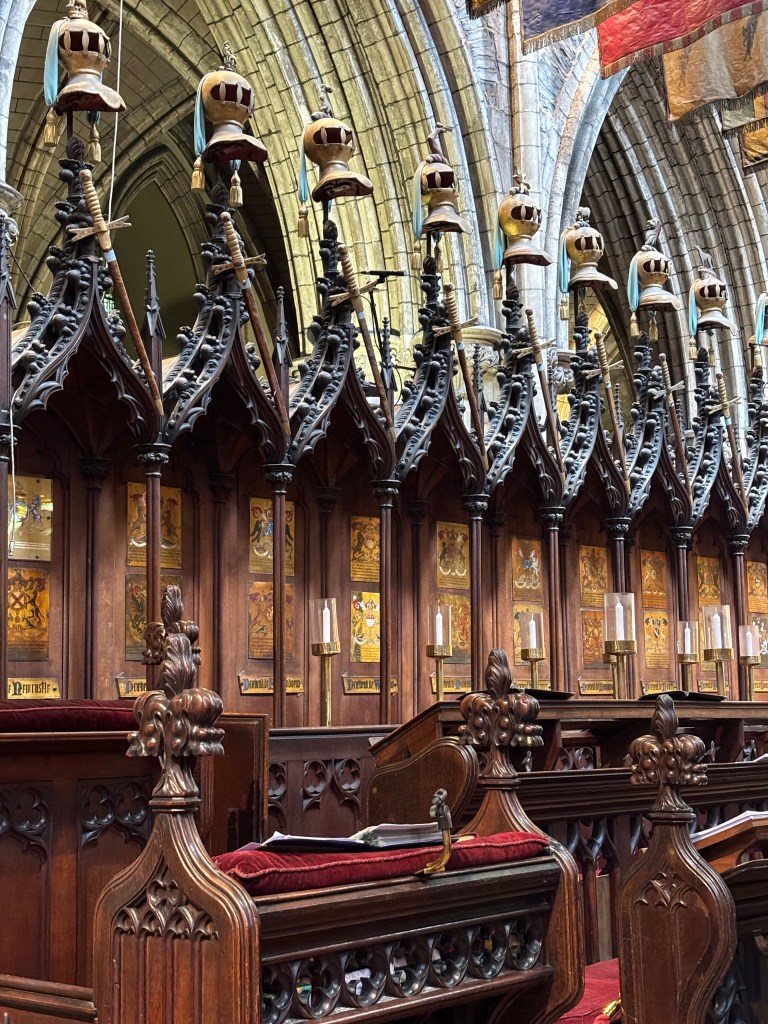
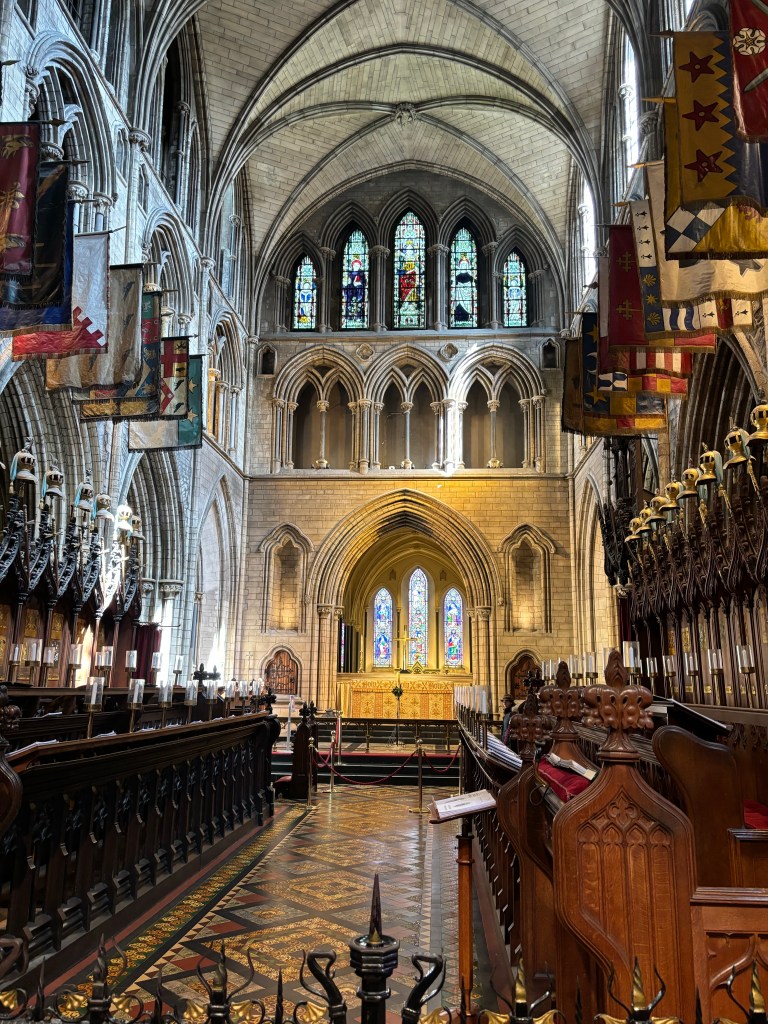
We then took a tour of St. Patrick’s Cathedral and were fortunate to enjoy 90 minutes with a very knowledgeable and enthusiastic tour guide. It was a tremendous history lesson.

St. Patrick’s Cathedral

Surprisingly, St. Patrick’s is a Protestant church and the stained glass and other artifacts are non secular. The building itself is also a very large cemetery with 500 bodies buried in the walls and floor (there is no basement crypt due to a river flowing across the original site).

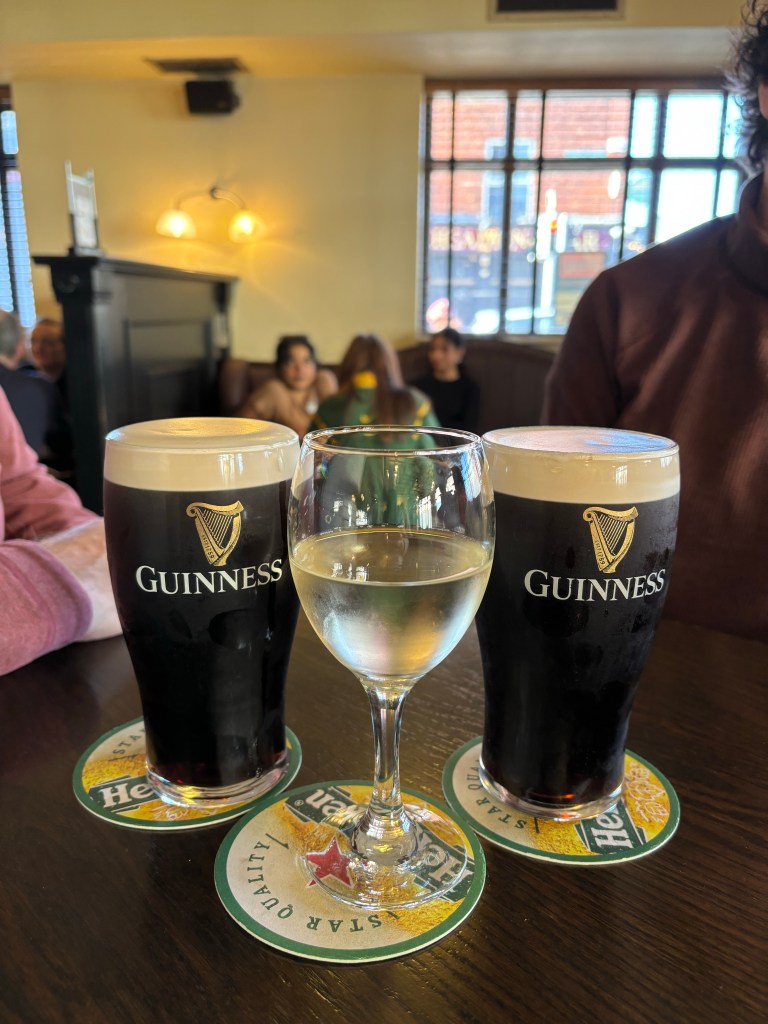
Our day finished with more walking to a non touristy pub for the first Guinness of our trip. It was a long day given the previous night’s lack of sleep on the plane. Tomorrow is more touring of Dublin and the Guinness brewery.