Travel Day #2 January 10th

The day started with good news that Doug Pegg was officially on his way having attended to a family health issue that needed his presence in Canada. We will meet up at the airport but after 11+ hours from Toronto he may be a bit drained.

We’re leaving Santiago to fly 3 1/2 hours south to Punta Arenas. From there we will travel overland on Saturday to the Torres del Paine national park where our Patagonia adventure will take place.

Friday morning in Santiago was a quiet slow time trying to figure out how to repack, local currency needs and transport to the airport. Tip – Uber is illegal in Chile but continues to operate. Thus some of the drivers are inexperienced hence the double circle of the airport plus a drive thru of the parking garage before we reached our target destination. Oh well, we got there and did meet Doug off the Air Canada flight.

The flight to Puntas Arenas was very basic however we flew over some spectacular countryside including snow capped volcanoes, glaciers and multiple bodies of water.
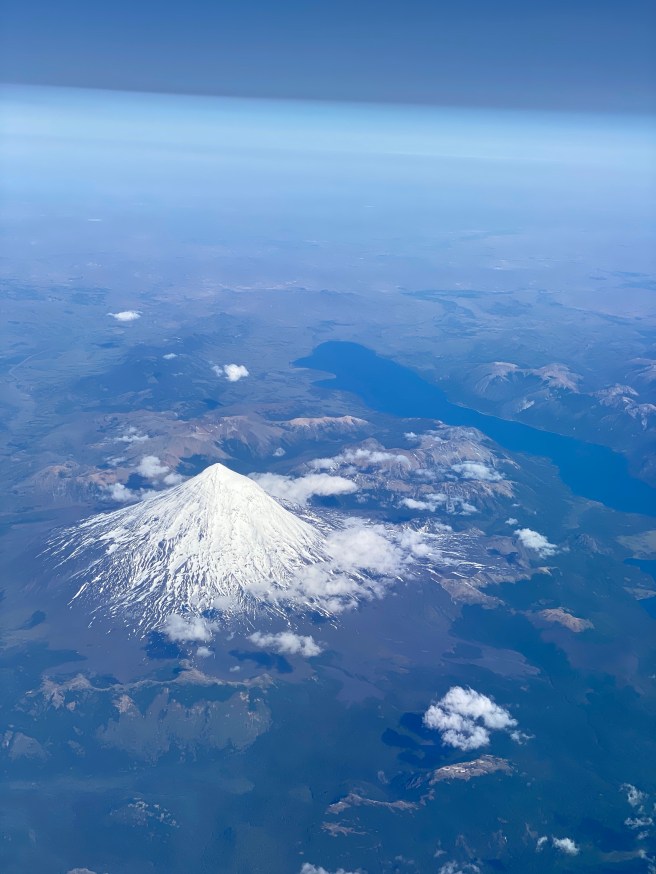
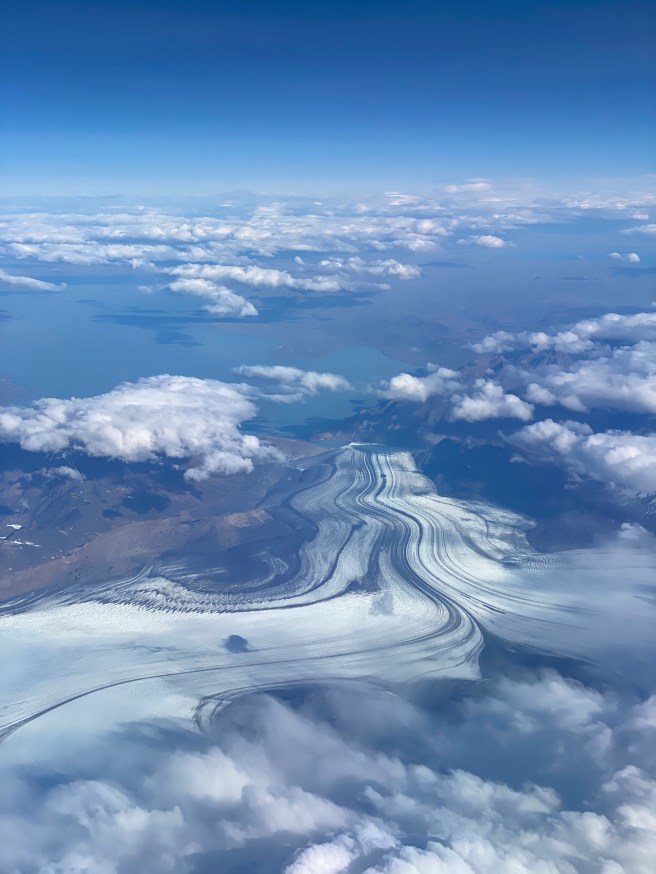
The difference between Santiago and Punta Arenas couldn’t have been more stark. We left dry, sunny, hot and landed in cold, wet, grey. The landscape here isn’t quite desolate but close.

We are roughly 1,400 Kms (880 mi) from the coast of Antarctica, just north east of Tierra del Fuego. The current population is about 135,000. Historically the area has been a fort controlling shipping around the bottom of South America (until the Panama Canal was built), a penal colony, the centre of a thriving sheep industry (Patagonia wool) and now a tourist hub for expeditions to Antarctica and Patagonia. Chile’s offshore oil industry, albeit modest, is also nearby. Interestingly the area attracted a large number of Croatians over the past 150 years and now 50% of the population are ethnic Croats.

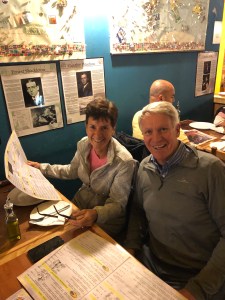
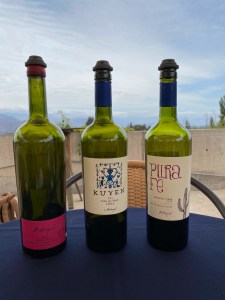
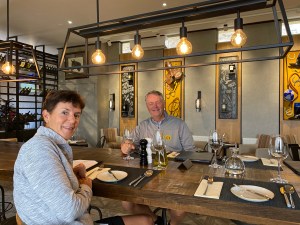
With Doug leading the way we stocked up on beverages for our impending week in the wilds (hopefully 8 bottles of fine Chilean wine will do for our planned daily happy hour). Dinner was in a fun decorated restaurant with maps showing the origin of visitors from around the world.

When we leave here our internet access will be extremely limited (non existent?) so it may be a while before the blog continues. Stay tuned.

To The Ocean January 9th

Up modestly early as our small (14 person) tour bus collected us first before making six additional hotel stops to fill all the seats. We headed out of town (no small feat given many traffic lights have been vandalized by protesters and now a young civilian corps has taken on the role of directing traffic – with a fair degree of success). Our goal is the coastal city of Valparaiso 127 km west of Santiago.

Our guide, Francisca, spoke perfect English which was the language of choice given her eclectic audience (5 Canadians, 3 Taiwanese, 2 Hong Kong, 1 Italy, 1 Russian, 2 Americans). The toll highway utilizes two long tunnels to cross the mountains that form the western boundary of the Central Valley and Francisca provided a myriad of information about Chile, past and present.

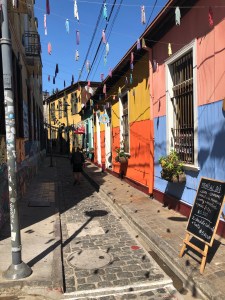
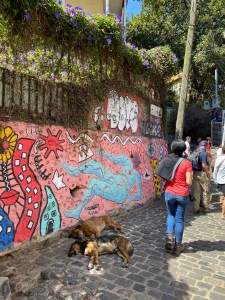
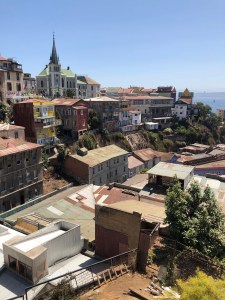
A large section of Valparaiso is protected by a UN Heritage designation meaning old buildings that still reflect the architecture of the 18th and 19th century immigrants from various European countries. The community has attracted an artists following and a favourite means of expression is painting the sides of buildings. Some was exceptional, some merely graffiti.

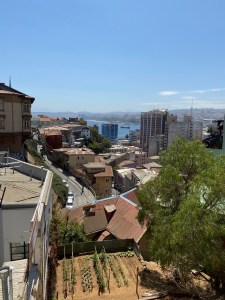
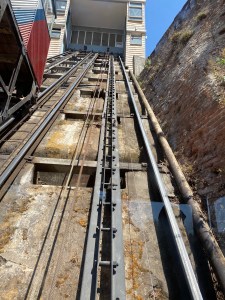
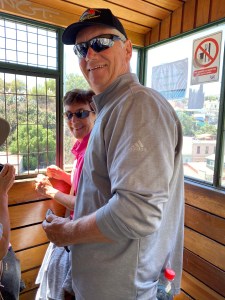
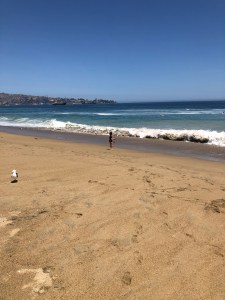
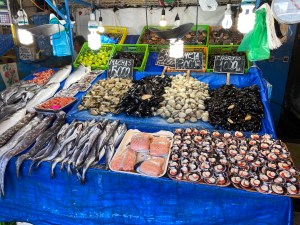
The city is built on 42 hills surrounding the port. We used a short funicular to get partway back down then went for a quick walk on the beach and a tour of the local fish market.

Back onto the bus and on to the town of Vina del Mar which is adjacent to Valparaiso. In the 19th century this was the summer home for wealthy residents of the country and many old mansions and castles exist today. Two tourist stops in town are a must; the floral clock and a Moai statue from Easter Island. This is one of three original statues not on the island (Washington and British museum).
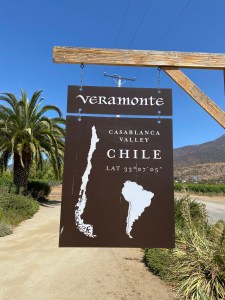
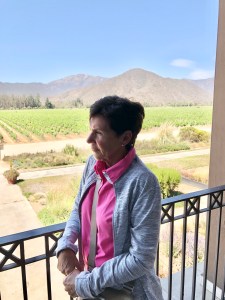
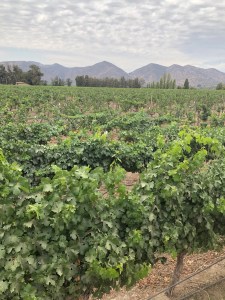
After a late lunch we headed east to the Casablanca Valley where the environment creates perfect growing conditions for grapes used in white wine production. Yes, yet another tasting! The Veramonte winery has a magnificent facility. The wines, not so much.

It was a quiet ride back to Santiago where we arrived, unfortunately, at the height of rush hour. It took ages to return all the passengers to their respective hotels and as we were last, it was early evening when we got ‘home’.

Wine Day January 8th

Apologies for the typos and grammatical errors but we’re just back from a 240 km, 10 hour, four winery tour that was simply spectacular.

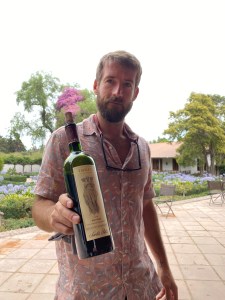
Our host, Mick, is a young American who, after a short pro snowboarding career, settled in Chile and has become an excellent trained sommelier specializing in exploring some of the boutique wineries in the Maipo Valley south of Santiago in addition to one or two of the big guys.

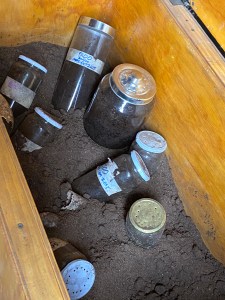
We began at the Antiyal winery, a small family run enterprise that is focused on biodynamic practices. Biodynamic wines are similar to organic wines, except they’ve gone several steps further and created a whole fertile ecosystem around the vineyard. Essentially, biodynamic wines begin from the soil the grapes grow in. Like organic wines, no synthetic intervention is used. The vineyard itself is a biodynamic farm involving self-sustainable uses of manure, flora and fauna. Everything is determined from a strict calendar, from planting to harvesting and takes takes into account lunar cycles as well as the position of the sun and planets. It sounds a bit much but, it works extremely well.

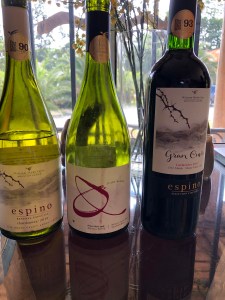
Back in the car and off to the Santa Rita winery which is anything but a boutique affair. It’s one of the largest wine firms in Chile and exports masses of product to North America. Mick continued to walk us through proper tasting techniques and how to discern various features of each wine. His selections from the large set of offerings were excellent across the board.

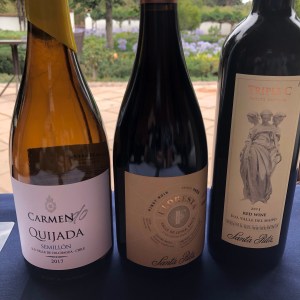
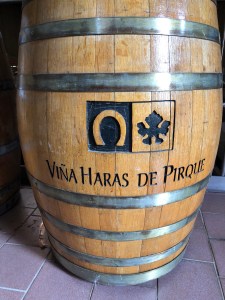
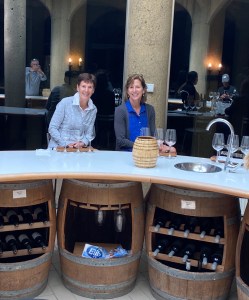
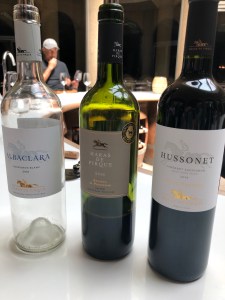
Onward ever onward to Haras de Pirque winery which was built on the site of a very successful thoroughbred horse farm. The owner took up wine making, converted most of the farm to vines and has created an incredible facility producing award winning wines. The on-site restaurant was great and we enjoyed, you guessed it, a glass of wine paired to our menu choices. Fantastic.

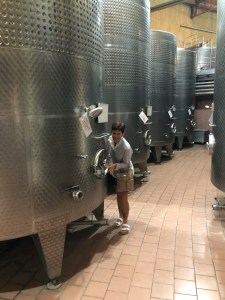
Then it was down into the production facilities to learn their processes.

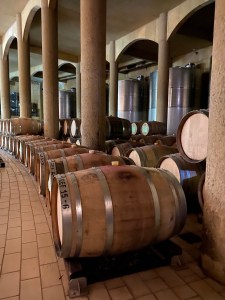
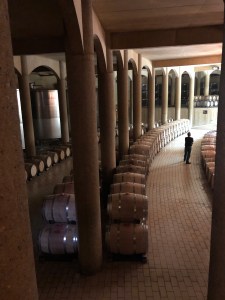
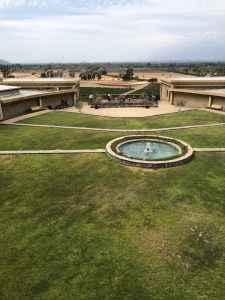
The barrel room was special and the tasting room even more so. The latter was located under a fountain which then formed a skylight.

By now we were a bit wobbly given the tasting pours were usually about 5 ozs and we were hesitant to leave a drop untouched. The spittoons remained bone dry. Our last stop was the William Fevre winery shop which was an intimate setting not adjacent to the vine fields. Mick made up a cheese and chocolate platter to show how flavours could change based on food pairings. It was eye opening.

Four wineries, the equivalent of nearly 7 glasses of wine each and a newfound appreciation for Chilean wines and the interesting people in the industry. A great day indeed.

Santiago January 7th

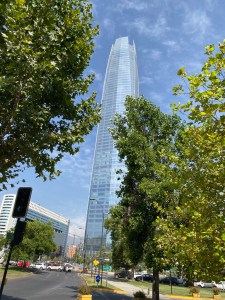
Quite the city. Nearly 7 million inhabitants (40% of the country), a thriving economy (building cranes everywhere), polite motorists (pedestrians actually get the right of way, very few horns beeping and yellow/red lights are respected).

Our day centred on the hop on/off bus to see two major sections of the city. Like many urban centres there are areas of the haves and have nots. There are huge swaths of residential areas where the housing can be described as ramshackle at best. Then there’s the haves with attractive homes and gleaming commercial towers.
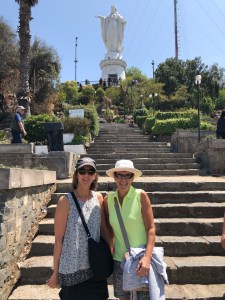
Our tour began in the Las Condes district which is an eclectic mix of very modern towers and attractive neighbourhoods. Interestingly every private residence is encircled by a wall with additional electric wires, spike tops and other defensive measures. Given the tremendous amount of vegetation everywhere, it doesn’t look as ominous as it sounds

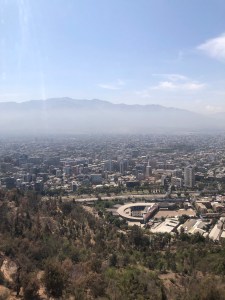
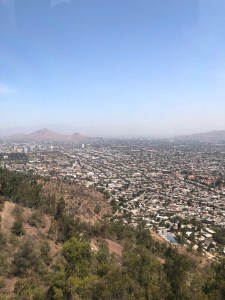
Santiago is built in a wide valley with mountains on both sides. The Parque Metropolitano occupies a hill peninsula that protrudes from the Andes westward into the valley with the city radiating outward in three directions. The mountains, urban sprawl and massive vehicle population means a terrible smog band hovers above the city. Fortunately today the air quality wasn’t bad enough to impact us.

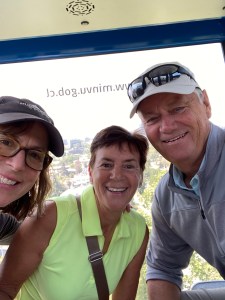
We took a cable car to the top of the Parque which allowed a panoramic view of the entire city.

At the top of the mountain is a church and 22m tall statue of Mary. This is probably the most popular tourist spot in the city.

The trip down on the west side is via an old funicular (circa 1925) leading to the El Centro (downtown) district.

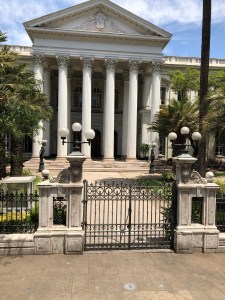
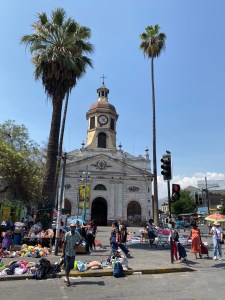
The old town contains the major government buildings, cathedral, markets, main plaza and shopping district. Unlike the open and flowing feeling elsewhere, these streets were jammed with vehicles and people. Our bus took 40 minutes to go nine blocks so we got off and spent the rest of the day on foot. Many of the buildings have graffiti denouncing the government and police. The word Libertad (liberty) was prominent. We presume this was the result of the recent civil unrest and demonstrations two months ago. Other than this spray paint there wasn’t any evidence of discord anywhere.

Then we hiked back to the funicular, up the mountain, back down in the cable car and finished off with a couple of Kms walk to our hotel. Our reward?

Travel Day January 6th

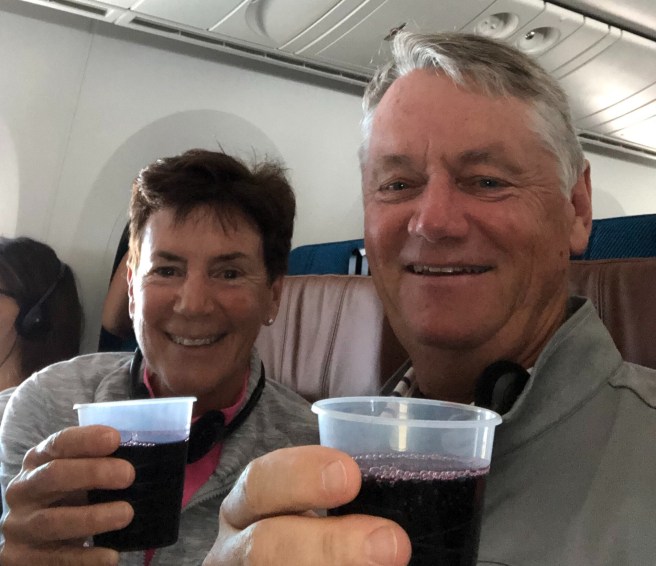
It’s a long way to Santiago Chile. From Miami between us we watched seven movies and enjoyed lunch and dinner (or was it two dinners – very confusing given the passage of time). It’s even even longer for Doug and Louise Pegg, our travelling companions, who are coming from Toronto. Based on a single experience I would give LATAM airlines a top rating for service and all aspects of the flight. OK we didn’t get crystal glasses but the Chilean wine was very nice.

And our first exposure to Santiago was a pleasant surprise as the highways are pristine and numerous even if the ride in from the airport was spent in some of the longest road tunnels in existence. Very unlike Lima!

Our lack of Spanish and the cabbies minimal English resulted in our being delivered to a lovely hotel albeit not the one where we had reservations. Seems there’s more than one Pullman hotel in the same general vicinity of the city. A short Uber ride later we finally “arrived”.

The crazy currency exchange rate means simple items cost thousands of pesos. For example the cab ride was 24,000 pesos which sounds outrageous but actually translates to $31 US/$40 CAD. It feels odd carrying a couple of hundred thousand of any currency.

Weirdly Chile is two hours behind the eastern time zone even though it’s geographically west so our long day got even longer. Tomorrow we will explore the city.

Chile – Wine And Patagonia Adventure.

Here we go again. Having enjoyed Peru last May we decided, what the heck. Let’s go further south. So we’re off to Chile.

Chile is extremely narrow east to west but massive in length – it stretches the equivalent from Cancun, Mexico to Hudson’s Bay in Canada’s north. This means multiple eco systems such as the Atacama Desert in the north, the towering Andes mountain range that forms the country’s eastern boundary, and the famous Patagonia region in the south. And, of course, the iconic Easter Islands in the Pacific.

Our itinerary includes touring Santiago, visiting various wineries, a trip to the Pacific coast to Valparaiso (a UN Heritage site), then south to Patagonia and the Torres del Paine national park where we will kayak amongst the ice floes, hike and mountain bike (hopefully mostly downhill). The Patagonia region stretches across southern Argentina as well but we’re staying exclusively in Chile. And for those who wonder about these sorts of things, other than Antarctica, Chile is the southernmost country in the world, outdistancing Australia and South Africa by hundreds of miles.

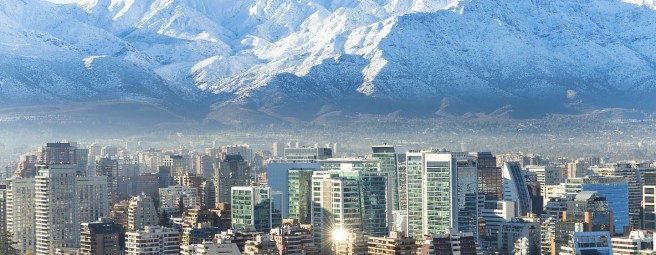
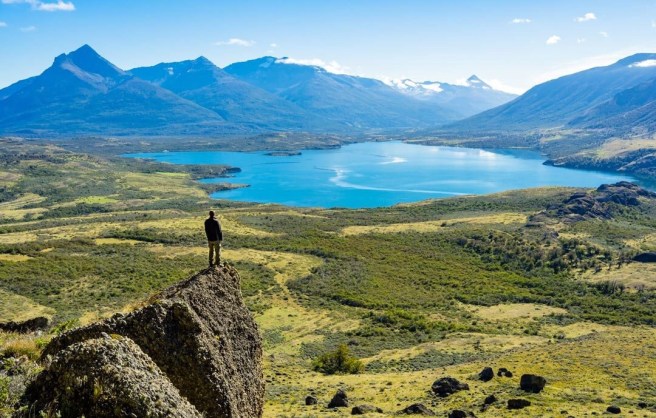
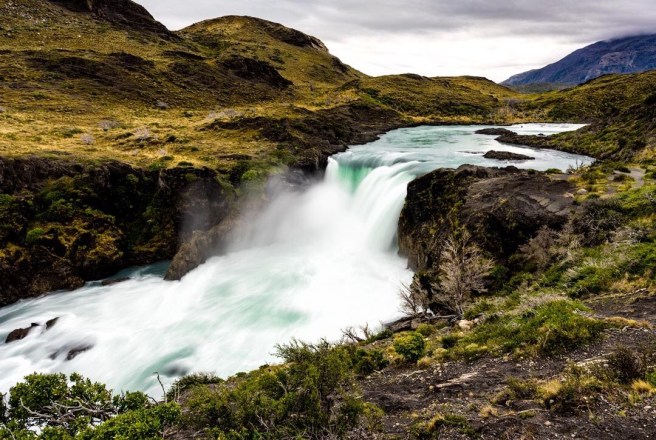
Despite the fact our internet access will be intermittent (especially in Patagonia) we hope to post regular updates on our travel blog. Here’s a sample of where we’re headed (photos taken by other travellers – hopefully ours are as good).

Lake Titicaca

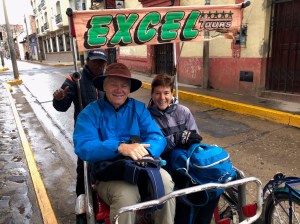
Monday May 13.  Due to a pending demonstration by agricultural workers we were told it would be necessary to take the poor mans version of a tuk tuk to the port. These taxis rely on the operators pedal power and the passengers sit on an open bench.

It was cold and our driver missed most of the potholes but not all. Fortunately for him much of the route was downhill.

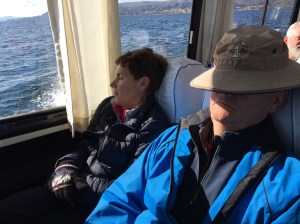
Our group was joined on the tour boat by another group and provided comfortable seating in an enclosed cabin, thank goodness, given an icy rain and wind descended on us.

Lake Titicaca, straddles the border between Peru and Bolivia and is one of South America’s largest lakes. It also is designated as the world’s highest commercially navigable body of water at 3,850 meters / 12,631 feet above sea level. Legend has it the Lake was the birthplace of the Incas.

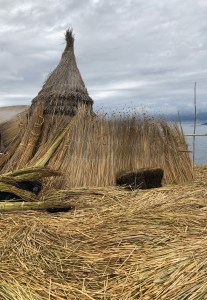
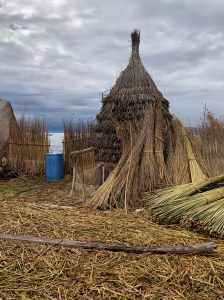
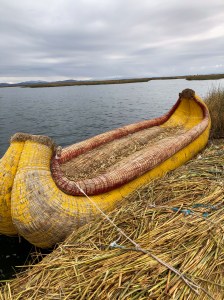
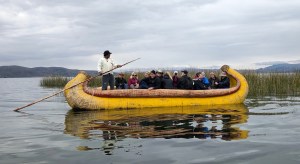
Our first stop was one of the approximately 120 floating Uris islands. Located about 7 – 10 Kms offshore where the water is still shallow, these structures are comprised entirely of reed found growing in the lake and the simple yet ingenious techniques used make them safe and secure. It’s hard to imagine but everything you see and come in contact with is made of reeds including the base.

Of course the fact these islands are floating necessitates a regular topping up of the base.  To do so requires the lifting of the houses which can apparently be done by hand by the residents.  The 184 sq metre (1,991 square feet) island we were on supported five families including a 103 year old grandmother.  Modern conveniences such as lighting have been added through the use of small solar panels but other than that it’s reeds, reeds and more reeds.  We went for a short ride on the reed boat which felt as sturdy as any small craft albeit softer.

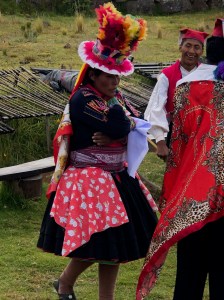
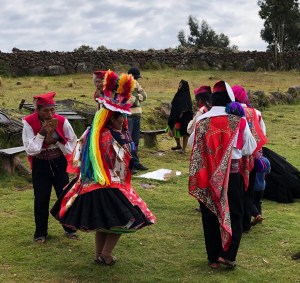
Next it was off to Taquile Island to learn how another cultural group has continued to use age old farming techniques and highly structured clothing symbols to maintain a unique identity. Here the males knit and the females weave. Different colours and items of clothing indicate ones marital status. Rituals and ceremonies dictate what one wears with one objective being to make it as bright as possible. Music and dancing, including enthusiastic visitors, are also a large part of life.

For those who enjoy eating quinoa, here’s what it looks like in the field.

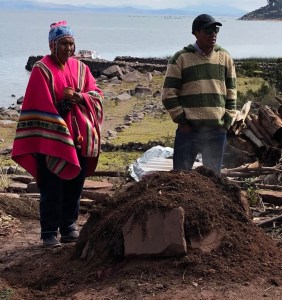
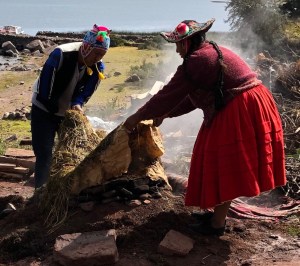
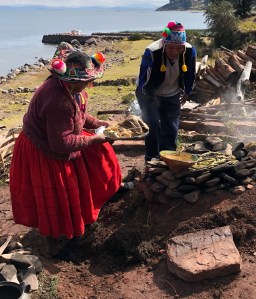
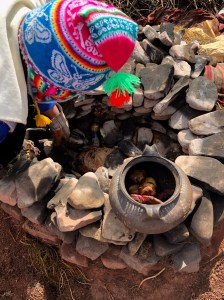
Our final stop was at the tip of the Capachica Peninsula for lunch cooked the old fashioned way – in a small semi subterranean rock cairn covered with dirt. Of course. One seriously hot fire, special stones and banana leaves to wrap some of the food were used. Cooking time is between 2 – 3 hours.  We enjoyed chicken, trout, different potato varieties, beans and bananas.  Delicious.


Back on the boat for the 1+ hour trip to Puno it was evident the last 15 days had caught up with us.

Tomorrow it’s off to Lima (1 1/2 hr flight) and sea level.  Looking forward to both aspects of our final day in Peru.


The Bus Ride

Sunday May 12.  Unfortunately we had to say goodbye to Cusco and pack up everything to relocate to Puno which is on the northwest shore of Lake Titicaca. More unfortunately, our means of transportation was our now 12 person bus with the luggage stacked up at the back and spilling onto the back seats. That in itself would have been fine (except in the case of a rapid stop).  Sadly though the trip was scheduled to take seven hours and the roads were less than ideal. Imagine a paved road with 1/2” of asphalt that has been beaten down by relentless traffic over the years (there’s only one road to Puno from Cusco). It felt like we were on a gravel road as one might find leading to a lakeside cottage. Except it went on for hours and hours!  There was the occasional respite but not much.

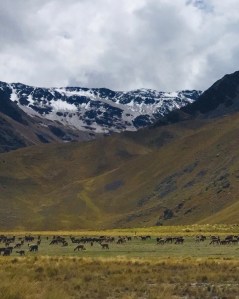
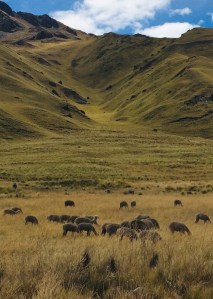
Puno is at the southern end of the Peruvian high plains and as such you could see the road stretch for miles in a straight line.  With the odd exception where one could see snow capped mountains, the surrounding foothills offered little in the way of distraction which made the journey seem even longer. We did see herds of wild llamas grazing by the road but that was it.

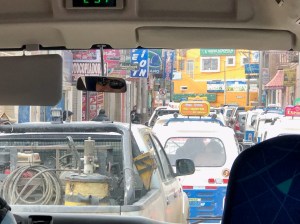
Puno, on the other hand is a relatively large city (138,000) with a huge percentage of the vehicles being tuk tuks.  These motorcycle cabs dart in and out of traffic, when it’s moving, and all credit to their drivers for somehow avoiding each other and any other metal objects.

We finally reached our hotel, played cards, had dinner and did our usual exhausted free fall into bed (having just learned the Raptors won on the last shot of the game). Tomorrow an eclectic day on Lake Titicaca begins with a 6 a.m. wake up. Oh yeah.

Cusco Peru

Saturday May 11.  A recovery day in a bustling city in the Peruvian highlands was just the tonic our bodies needed post Inca Trail. No crazy early wake up shouts, another hot shower, chairs with cushions and backs and only 12 steps down to the hotel restaurant for breakfast.  Luxury.
The Peggs had been in Cusco a year ago to visit their son as he wandered South America on a six month holiday so Doug acted as our tour guide. A guidebook description captures Cusco perfectly:  a beautiful schizophrenic city containing a devoutly Catholic community that is extremely proud of its Inca heritage.  Cusco was conquered by the Spanish in 1533 and fortunately retains multiple examples of centuries old Hispanic architecture.  Interestingly an earthquake in 1950 destroyed many colonial facades thereby exposing the Inca stonework hence the two coexist throughout the city.
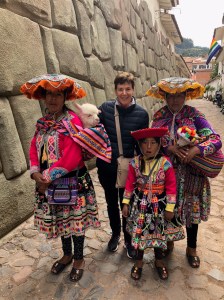
Today Cusco is a busy tourist town with a great vibe. There are hundreds (thousands?) of street vendors and countless souvenir shops on every street. Of course we fell for some of it.  Yes those are live baby alpacas.
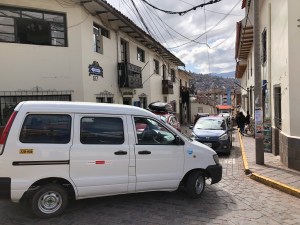
It includes a curious mix of broad boulevards and tiny cobblestone streets that work on the premise of whomever is further along a particular section dictates the direction of traffic. Needless to say we saw examples of gridlock where neither vehicle appeared to have any intention of backing up. We didn’t stick around to see how it got resolved.
One Inca building provided another example of their extraordinary masonry skills and included a famous stone with 12 finely cut edges – remember they didn’t have tools that explain how this precision was achieved.
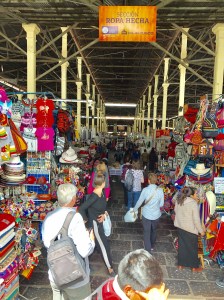
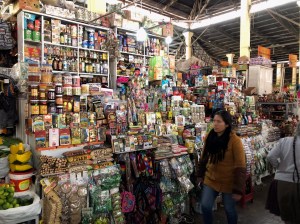
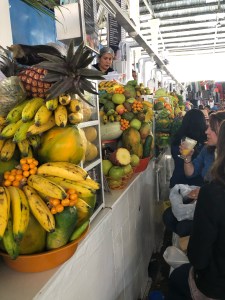
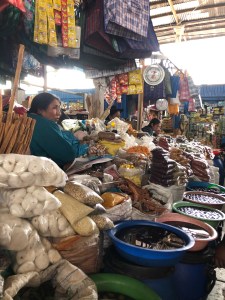
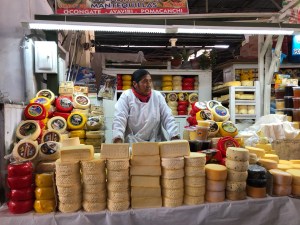
Cusco has an amazing market, both open and covered. It’s massive with various aisles offering a single grocery category.
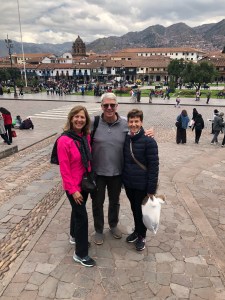
A hearty lunch followed by more recovery time at the hotel used up part of the afternoon. Then it was back out to visit a small section of one of the many Inca museums. We’re all running on fumes so it was a slow steady wander back through the main square and the hotel once more.
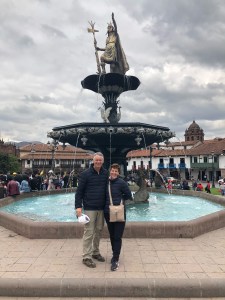
A team meeting explained our schedule for tomorrow – 7 hours in a bus heading to Puno on the shores of Lake Titicaca – then a few of us went back out for dinner.  The square was alive with marching bands and dancing which added a festive atmosphere.
Needless to say, sleep was very easy to come by.

Inca Trail Summary

Having had 48 hours to reflect I thought it would be interesting to show where we were and what we did.

For the four days we did between 26,800 and 35,238 steps per day. That’s from one of the trekkers fit bit so could be substantially different  for the rest of us. Given the wobbly legs, I feel like my numbers were WAY higher but who knows

The distance covered was 38.74 kilometres.  We had our heart rate measured mid hike and Mo and I were in the upper 90’s and our hemoglobin count was between 82 (Mark – marginal low end and 89 (Mo – excellent high end). The oxygen level was anywhere between 20 and 40% lower than at sea level

The elevation profile shown below is slightly different than the sign posts and guide comments. Our highest point was 4,215 metres/13,829 feet (thank goodness for Diamox- altitude medicine).

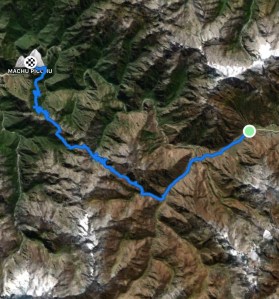
And finally, an overview of the route across the Andes from the start of the trail at Km 82 to Machu Picchu.

PS – we’re moving to a bungalow. No more stairs!