Monday May 13. Due to a pending demonstration by agricultural workers we were told it would be necessary to take the poor mans version of a tuk tuk to the port. These taxis rely on the operators pedal power and the passengers sit on an open bench.
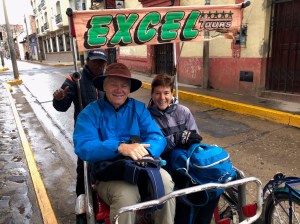

It was cold and our driver missed most of the potholes but not all. Fortunately for him much of the route was downhill.
Our group was joined on the tour boat by another group and provided comfortable seating in an enclosed cabin, thank goodness, given an icy rain and wind descended on us.
Lake Titicaca, straddles the border between Peru and Bolivia and is one of South America’s largest lakes. It also is designated as the world’s highest commercially navigable body of water at 3,850 meters / 12,631 feet above sea level. Legend has it the Lake was the birthplace of the Incas.
Our first stop was one of the approximately 120 floating Uris islands. Located about 7 – 10 Kms offshore where the water is still shallow, these structures are comprised entirely of reed found growing in the lake and the simple yet ingenious techniques used make them safe and secure. It’s hard to imagine but everything you see and come in contact with is made of reeds including the base.

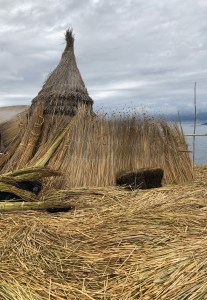
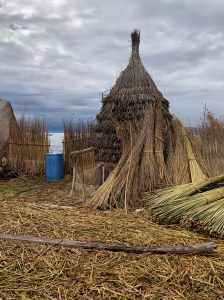


Of course the fact these islands are floating necessitates a regular topping up of the base. To do so requires the lifting of the houses which can apparently be done by hand by the residents. The 184 sq metre (1,991 square feet) island we were on supported five families including a 103 year old grandmother. Modern conveniences such as lighting have been added through the use of small solar panels but other than that it’s reeds, reeds and more reeds. We went for a short ride on the reed boat which felt as sturdy as any small craft albeit softer.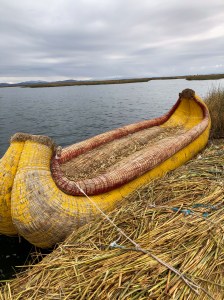
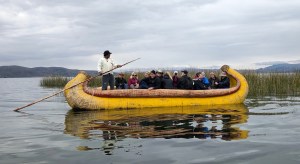
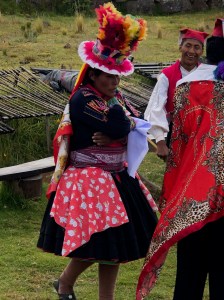
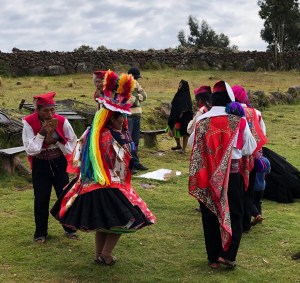
Next it was off to Taquile Island to learn how another cultural group has continued to use age old farming techniques and highly structured clothing symbols to maintain a unique identity. Here the males knit and the females weave. Different colours and items of clothing indicate ones marital status. Rituals and ceremonies dictate what one wears with one objective being to make it as bright as possible. Music and dancing, including enthusiastic visitors, are also a large part of life.


For those who enjoy eating quinoa, here’s what it looks like in the field.

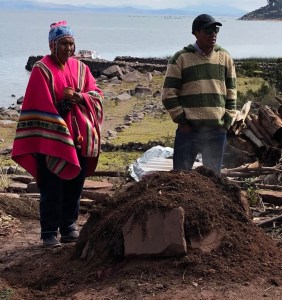
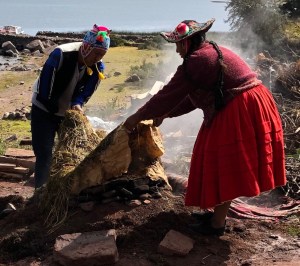
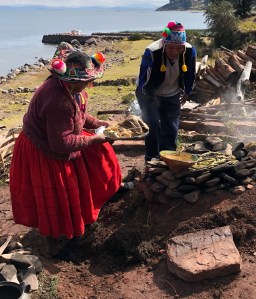
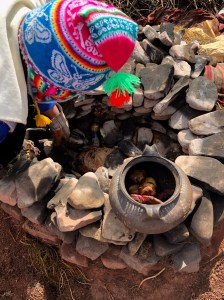
Our final stop was at the tip of the Capachica Peninsula for lunch cooked the old fashioned way – in a small semi subterranean rock cairn covered with dirt. Of course. One seriously hot fire, special stones and banana leaves to wrap some of the food were used. Cooking time is between 2 – 3 hours. We enjoyed chicken, trout, different potato varieties, beans and bananas. Delicious.


Back on the boat for the 1+ hour trip to Puno it was evident the last 15 days had caught up with us.
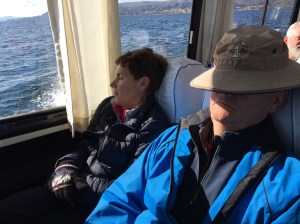
Tomorrow it’s off to Lima (1 1/2 hr flight) and sea level. Looking forward to both aspects of our final day in Peru.

 The Bennetts On Tour