Day 4 – Friday. A full day of travel awaited. Traffic, traffic and more traffic. Imagine trying to get to the airport in a city of 9M people, at rush hour using side streets because no highway exists. Oh, did I mention we were in a fairly large coach bus? Slow and occasionally unnerving given the game of traffic chicken is the norm.
Our flight actually involved a stop in Cusco before heading on to Puerto Maldonado, but not before the departure area was cleared while a bomb sniffing dog was brought in to examine a knapsack that had no apparent owner. That meant everything was delayed and an hour spent on the tarmac waiting for takeoff given the queue.
Flying into the highlands showed the dramatic landscape changes from dry brown desert to sharply shaped mountains with hundreds of deep river valleys to finally the plateau of Cusco (800K population).

Farms abound with the wide plateau being more green than brown. Given the narrowness of the valley the airport is in the middle of the city and the landing approach was a bit unnerving with the final turn seemingly scraping the hilltops.

A quick turnaround at Cusco then back in the air to Puerto Maldonado which is very close to the Bolivian border. Rather than hills providing the plane landing talking point, this time it was the proximity of the rainforest. A narrow strip of asphalt in a sea of green. On to a bus and off we went on a road, er no, a dusty track that bounced us around for nearly an hour before arriving at the Tambopata River which is a significant tributary of the Amazon River.

At that point the heavens opened and we had 10 minutes of monsoon type rain which pounded on the corrugated roof of the shelter we huddled under. Fortunately it stopped as quickly as it started and we set of in a motorized “canoe” for the 2 1/2 hour trek upriver.
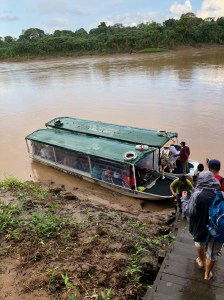
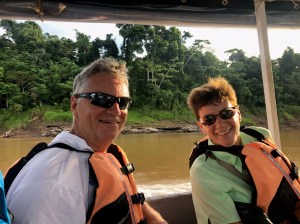
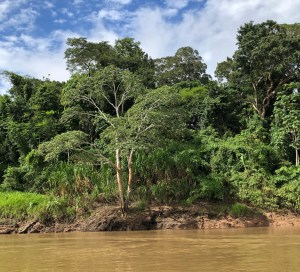
The rainforest and jungle (open areas or formerly rainforest where falling trees created open spaces that is then overgrown by dense brush) looked impenetrable on each bank.

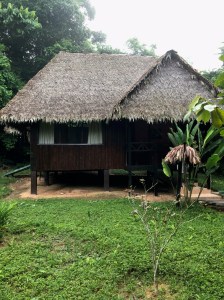
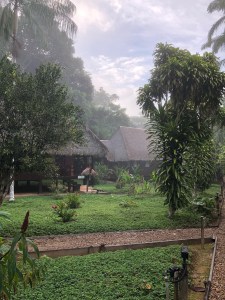
The camp (Tambopata Ecolodge) is comprised of 18 sleeping bungalows (total accommodation max 75), dining room and an under construction bar/meeting area. The main building is solar-powered for only a few hours a day with candles used for light elsewhere. The food is hot and there are bathrooms with showers in each bedroom. It’s surprisingly comfortable.
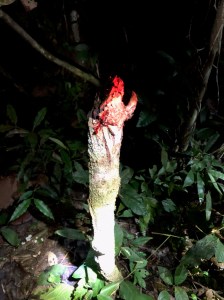
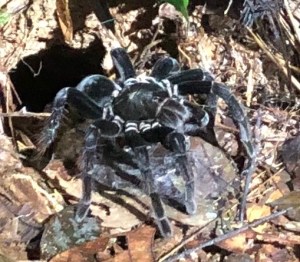
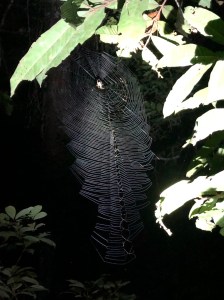
We were immediately introduced to the uniqueness of our surroundings by going on a night walk looking for insects and other nocturnal creatures – seriously. It was a success although seeing a tarantula up close was a bit off putting as was another spider described as being 20 times more poisonous than a black widow. I figured we were safe in numbers and with the various flashlights wouldn’t get lost. Mission accomplished.
Despite the oppressive heat and off the charts humidity, by late evening we were so tired it didn’t matter and thus slept relatively soundly even without the mosquito netting.

 The Bennetts On Tour